A new batch

I have ticked a few things off my To Do List for the day and can now settle down to read a bit.

I need, inter alia, to make some more notes about Augustine’s commentary on 1 John, which we will be tackling here on the blog as a Patristiblogger Project.

But before I crack the books, it is time to start a new batch of Mystic Monk sun tea!

20110531-044453.jpg

As you can see, it is just getting under way.

Which I shall drink it on ice, as Preserved Killick would say.

Don’t be a Puir Slow-Witted Gowk.

Refresh your coffee and tea supply before you run out.

UPDATE:

After a couple hours in the sun…

20110531-081655.jpg

Posted in Lighter fare, Preserved Killick, Puir Slow-Witted Gowk | Tagged , , ,
7 Comments

A question for the Pontifical Commission “Ecclesia Dei”

QUAERITUR:

Msgr. Guido Pozzo
Secretary of the
Pontifical Commission “Ecclesia Dei
Palazzo del Sant’Uffizio
00120 Vatican City

Reverend and Dear Monsignor,

The Instruction Universae Ecclesiae states in par. 8 that “the Motu Proprio Summorum Pontificum constitutes an important expression of the Magisterium of the Roman Pontiff and of his munus of regulating and ordering the Church’s Sacred Liturgy.”

Why, in this digital age, is Summorum Pontificum, released in 2007, available only in Latin and Hungarian on the Holy See’s website?

Please, Monsignor, urge that translations of Summorum Pontificum be made available on the Holy See’s website in the major modern languages generally recognized and used in the Roman Curia when important documents of the Holy Father’s Magisterium are released.

It would not be too soon to see these modern language versions in place on the vatican.va website before the Roman Curia’s traditional August break.

With gratitude for the work of the Pontifical Commission and with a promise of prayers for you and your collaborators, I am

Sincerely yours in Christ.

Fr. John Zuhlsdorf
wdtprs.com

Posted in "How To..." - Practical Notes, ASK FATHER Question Box, SUMMORUM PONTIFICUM, Universae Ecclesiae | Tagged , , ,
Comments Off on A question for the Pontifical Commission “Ecclesia Dei”

About Universae Ecclesiae and the Latin language

Over at Over at Fr Hunwicke’s Liturgical Notes I noted this from a few days ago.  A good read and with my own emphases and comments:

Universae ecclesiae, C S Lewis, and Bl John XXIII

I referred not long ago to the amusingly delicate way in which UE referred to the scandal that for more than a generation those being formed for the priesthood were – in flagrant disregard of CIC 249 – not made fluent in Latin (I am assured that things are better now). [Where?]

As long ago as 1933, C S (‘Patrimony’) Lewis advanced the suggestion that the attacks – even then – upon the position of Latin and Greek as the basis of education, might be part of a plot devised in Hell to subvert the Faith. In The Pilgrim’s Regress he reminds the reader that “till recently” members of our society “had been made to learn” these languages “and that meant that at least they started no further from the light than the old Pagans themselves and had therefore the chance to come at last” to saving Faith. “But now they are cutting themselves off even from that roundabout route … and suppressing every kind of knowledge except mechanical knowledge“. [Perhaps today we might say “knowledge of how to use electronic gadgets”.] He believed that this shift had much to do with the need of the educated classes to cope with the increasing disinclination of the lower orders to work in domestic service, and added “No doubt the great landowners in the background [scilicet devils] have their own reasons for encouraging this movement”.

You will not be surprised to be reminded that His Abysmal Sublimity Under Secretary Screwtape strongly advocated the policy of preventing each generation from learning from its predecessors: [Sounds like the results of a hermeneutic of discontinuity and rupture.] “Since we [devils] cannot deceive the whole human race all the time, it is most important thus to cut every generation off from all others; for where learning makes a free commerce between the ages there is always the danger that the characteristic errors of one may be corrected by the characteristic truths of another.” That is why the demise of sacred languages among the clergy and the clerisy is such a triumph for our Enemy.  [Do I hear an “Amen!”?]

Older readers may be reminded here of the teaching given to the Universal Church by Bl John XXIII in Veterum Sapientia. Here I have a problem. I would love to share all the important bits of this encyclical with you, but, after doing the two clicks necessary to bring it up on my screen, I realised that pretty well every word of this document is the purest gold. So … here are just a very few words in order to stimulate your resolution to do those two clicks yourselves. “No-one is to be admitted to the study of Philosophy or Theology except he be thoroughly grounded in [Latin] and capable of using it … wherever the study of Latin has suffered partial eclipse … the traditional method of teaching the language is to be completely restored. Such is Our will … the major sacred sciences shall be taught in Latin … if ignorance of Latin makes it difficult for some [seminary professors] to obey these instructions, they shall gradually be replaced by professors who are suited to this task …” What a good and holy old man he was!

‘Liberals’, of course, might point out that this document is not ex cathedra. I agree, because I think the word gradually is unnecessary. [ROFL!] As for sedevacantists who deny that the author of these wise words, Bl John XXIII, was truly pope, well, what I say is Burn the lot of them. It’s the only sort of language these people understand!*

*In case foreigners are distressed by the bloodthirstiness of my language, I should clarify the literary register, the genre, of the last paragraph. It is ‘humour’; and is in the spirit of the English satirical magazine Private Eye, which makes much comic use of the formula in my last sentence. (This is deemed, I believe, to be a phrase commonly used by London taxi-drivers in the course of their demotic exchanges of view with their ‘fares’.) I am not really in favour of burning anybody. Honest!

The document Fr. Hunwicke refers to, Veterum Sapientia, is not just any old document.  It is an Apostolic Constitution.  An Apostolic Constitution is the high form or level of a document the Church issues.  It isn’t a message, or instruction, or exhortation, or even an encyclical.

On the Vatican website, Veterum Sapientia is available to read only in Latin.  English?  Go here.

On the Vatican website, Summorum Pontificum is available to read only in Latin and Hungarian.

What sort of silly game is this?

Posted in SESSIUNCULA | Tagged , , , , ,
19 Comments

Prof. Peter’s and a scary thought about can. 1387

The Canonical Defender, Prof. Ed Peters, has posted something that shook me a little, when I think of the implications it could have for priests who are less than committed to the Church’s moral teachings.  He has an article in HPR which requires attention.

The 1983 Code of Canon Law states:

can. 1387 –  A priest who in the act, on the occasion, or under the pretext of confession solicits [sollicitat] a penitent to sin against the sixth commandment of the Decalogue is to be punished, according to the gravity of the delict, by suspension, prohibitions, and privations; in graver cases he is to be dismissed from the clerical state.

A great deal here turns on the meaning of “sollicitat“.  Sollicito means a range of things from “stir up, tempt, induce” to “incite one to do something”, often something wrong.  “To urge to wrong-doing”.

When I read that canon in the past, what always occurred to me is the situation in which some bottom-feeder of a priest might solicit something for himself from the penitent.  The more common notion of a “crime of solicitation”.

It didn’t occur to me that this canon could apply to a priest who has given advice leading the penitent to sin against the Sixth Commandment in some other way.

Imagine – or perhaps you don’t have to imagine – some priest saying that it is okay to use contraception for the purpose of avoiding pregnancy, that it is okay to masturbate, that it is okay to have homosexual sex, that it is okay to marry or remarry when not free to do so, etc.

It seems that can. 1387 applies to a priest who gives really bad advice in the confessional, saying or suggesting or proposing that the penitent do something or can do something against the Sixth commandment, that doesn’t involve himself at all.

There have always been some dodgy confessors and dirt-bag priests who think they know better than the Church, or to give some benefit of doubt, priests who through a misplaced “compassion” tell penitents things that are not true and thus endanger both their souls.

There have always been that sort of priest.

But the number of that sort of priest rose sharply in the chaotic wake of Vatican II.

Who knows how many people’s lives were screwed up as a result?

It is a matter of great consolation that so many priests are, in fact, faithful to their role in the confessional.  It is a matter of enormous consolation that younger priests are less and less inclined to make it up as they go.

To any priest out there who thinks it is okay in the confessional to fudge the Church’s teachings on things that we darn well know are sins and are clearly taught as such, you may be committing – in a different sense – the “crimen sollicitationis” spoken to in can. 1387.

Knock it off.

Otherwise, if someone calls you on it – and I hope they do if you persist in your ill-considered ways … good luck.
Posted in 1983 CIC can. 915, Wherein Fr. Z Rants | Tagged , , ,
18 Comments

QUAERITUR: To veil or not to veil.

From a reader:

I’m debating whether or not to start veiling at the Novus Ordo Mass I attend. [She is obviously talking about wearing a chapel veil or head covering in church during Mass.]

I find going to Mass puts me in the occasion of sin because there is so much cacophony and irreverence before and during Mass that I cannot stay focused. I have actually got lost in mid-prayer, forgotten what I was praying about, and not able to get myself back into focus. I also find myself having uncharitable thoughts and getting prideful when this happens. [You are not alone, friend.]

I feel like I need to wear it to help with my humility and to be a physical reminder to stay focused on why I’m there, but I keep having this underlying nagging voice telling me not to do it because it’s a sign of pride and I’ll stand out as being overly-pious.

I’m not talking about wearing something showy. I’m thinking more along the lines of a smaller black veil (it’ll blend in with my dark hair better than white) that is just long enough to cover my hair. I don’t want to stand out.

If I do veil, I know I’ll be the only person wearing a head covering, as my parish is not traditionally minded at all.

Does it sound like I’d be veiling for a valid reason, or should I be concerned that this is more rooted in pride? I don’t know what to think because my parish is so casual that even wearing my Sunday best makes me feel overly-pious.

I am in a quandary.  I sincerely understand the points she has raised.

I think we have to assume that the writer can’t go to another, more traditional parish where the use of the chapel veil would not be seen as so singular.

We could do a lot of “on the one hand” and “on the other” with this.  She clearly wants to do it, but doesn’t want to appear singular in the eyes of others.  She thinks it might help her during Mass, but in choosing to do it, that choice could itself become a problem.

As much as I am in favor of a return to this entirely optional custom, I am going to advise in this instance additional reflection with prayer before making this choice.  It seems to me that if dilemma still has such sharp horns for you, then perhaps this is not the right time to do it.

And there is really no rush or pressure to decide.  At the core of my advice on this point is, relax.  Don’t make this into a huge additional distraction for you at Mass, something to worry about when you go.  Giving this a little more time may allow you to make this choice with a little more confidence.

In an act of the purest optimism, I will open the combox so that some of you ladies who have more than likely gone through this same internal debate might chime in with your helpful insights.

Helpful, please.  Thoughtful and brief.

Posted in "How To..." - Practical Notes, ASK FATHER Question Box | Tagged ,
124 Comments

QUAERITUR: Does the debate over liturgy overlook the plight of the Church and the world?

The Instruction Universae Ecclesiae 8, on the implementation of the provisions of Summorum Pontificum (the emancipation proclamation for the older form of the Roman Rite), states that the Extraordinary Form, the Usus Antiquior, is a treasure for all.

With that in mind, take a look at the site of The Society of St. Hugh of Cluny, who have presented an English translation of an interview in the German daily Die Welt with the author Martin Mosebach.

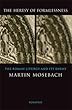
You will recall that Martin Mosebach is the author of the fine book The Heresy of Formlessness.

These two exchanges popped out for me:

Die Welt: How can the Roman liturgy in the “usus antiquior “ be offered today “to all the faithful “ if only a fraction of the faithful understand Latin?

Martin Mosebach: At all times only a few Catholics have been able to follow the Latin Mass word for word. Europe looks back on well over a thousand years of glorious Catholic culture without the people being able to understand Latin. They understand something more important: that in the rite the Parousia – the mystic presence – of the Lord takes place. Without this understanding, a person has understood nothing of the Mass, even if he thinks he understands every word. Moreover, for a long time there have been wonderful bilingual missals with which we can pray the mass with the priest. But it is indeed correct: the Old Rite requires a certain effort, a readiness to learn.[…]

Die Welt: How do you respond to the criticism that the debate over liturgy overlooks the plight of the Church and the world?

Martin Mosebach: The plight of the Church is precisely that she has forgotten where her center lies. Her mission is to proclaim the living Christ and the living Christ appears in the liturgy. If the liturgy is made subject to the fashions of the day, the living Christ becomes invisible. Then the Church is truly in a crisis.

Do I hear an “Amen!”?

Posted in "How To..." - Practical Notes, ASK FATHER Question Box, Brick by Brick, Our Catholic Identity, SUMMORUM PONTIFICUM, The future and our choices, Universae Ecclesiae | Tagged , ,
12 Comments

WDTPRS is (mostly) a Kumbaya Free Zone

From the great Laudator:

Perhaps the song Kumbaya is not really an African-American spiritual dating from the 1930s, but rather a vestige of an ancient Greek skolion, a drinking song. Could kumbaya be a corruption of the plural of Greek ??????? (kumbíon = small cup)? By this interpretation, “my Lord” in the song is an address to the symposiarch, the master of the revels. “Kumbaya, my Lord, kumbaya” is therefore a call for the symposiarch to supply more cups of wine. In Latin, “Pocula, magister bibendi, pocula!”

I’ll never hear the song in the same way again.

[wp_youtube]JdO3R5MlbxA[/wp_youtube]

The Wyoming Carmelites will never sing Kumbaya.

Therefore, refresh your supply of Mystic Monk Coffee today!

Posted in Lighter fare | Tagged ,
18 Comments

Have good news?

Give us all a boost by sharing your good news!

Posted in SESSIUNCULA |
60 Comments

Benedict XVI speaks to the new Council for “New Evangelization”

From CNA:

Crisis of ‘indifference’ shows need for New Evangelization, Pope says

Vatican City, May 30, 2011 / 10:47 am (CNA/EWTN News).- Pope Benedict stressed the urgency of evangelizing modern society, saying that Christians today face the task of reaching a world that grows increasingly apathetic to the message of the Gospel.

“The crisis we are living through,” he said, “carries with it signs of the exclusion of God from people’s lives, a general indifference to the Christian faith, and even the intention of marginalizing it from public life.” [If we don’t know who we ourselves are, then how can we talk to the world at large in any significant way?  We need a revitalization of our Catholic identity.]

The Pope made his remarks on May 30 to members of the Pontifical Council for Promoting New Evangelization, as they prepare for their upcoming synod in 2012. During the meeting, which will take place Oct. 7-28 next year, bishops and other participants from around the world will discuss the late Pope John Paul II’s vision of proposing the Christian faith in new ways.

Pope Benedict explained that “the term ‘new evangelization’ recalls the need of a new way of evangelizing, especially for those who live in a situation like today’s where the development of secularization has left deep marks on even traditionally Christian countries.”

He noted that “proclaiming Jesus Christ, the sole Savior of the world, is more complex today than in the past, but our task continues to be the same as at the beginning of our history. The mission hasn’t changed, just as the enthusiasm and courage that motivated the apostles and first disciples should not change.”

The Church’s message, he said, “needs to be renewed today in order to convince modern persons, who are often distracted and insensitive. That is why the new evangelization must find the ways to make the proclamation of salvation more effective, the salvation without with life is contradictory and lacking in what is essential.” [Start with liturgical worship.]

Pope Benedict observed a growing “phenomenon” of people in modern society “who wish to belong to the Church but who are strongly determined by a vision of life that is opposed to the faith is often seen.”  [But maybe they think they are “spiritual”?]

“It is important to make them understand that being Christian is not a type of outfit that one wears in private or on special occasions, but something living and totalizing, capable of taking all that is good in modernity.”

He emphasized that the entire Christian community “is called to revive the missionary spirit in order to offer the new message that persons of our times are hoping for.”

The “lifestyle of believers needs real credibility, as much more convincing as the more dramatic is the condition of the persons to whom it is addressed.”

Pope Benedict expressed his desire to council members that they outline “a plan to help the entire Church and the particular different Churches in the commitment of the new evangelization; a plan whereby the urgency of a renewed evangelization takes charge of formation, particularly that of the new generations, and is united to the proposal of concrete signs capable of making the Church’s response in this particular moment clear.”

Posted in New Evangelization | Tagged ,
12 Comments

Just say no to liturgical dance

With a tip of the biretta  o{]:¬) to Patrick Madrid, I share this from Stephen Colbert, as an exemplification of just how ridiculous liturgical dance really is.

Not “can be”… is.

[wp_youtube]oASYa-Wkroc[/wp_youtube]

Posted in Lighter fare, Liturgy Science Theatre 3000 | Tagged ,
47 Comments