I made chicken the other night. I am eating left-overs.
Sandwich from toasted bread with chopped garlic, watercress, goat cheese, chicken.


I found a sweet tooth today. Chocolate chip cookies in a pale imitation of my mother’s masterpieces.
Espresso.

I made chicken the other night. I am eating left-overs.
Sandwich from toasted bread with chopped garlic, watercress, goat cheese, chicken.
I found a sweet tooth today. Chocolate chip cookies in a pale imitation of my mother’s masterpieces.
Espresso.
From a reader:
My friend was just ordained to the Diaconate, and will be ordained to the Priesthood next year. This leaves me with a question regarding etiquette when addressing him now, and then later when he’s a priest.
Being that we’ve been friends since junior high, I’m left wondering if I’m supposed to start calling him Deacon N and later Father N out of respect for him, his changed state in life, and his vocation, or if it’s still fine to not use titles unless we’re doing something liturgical?
Definitely call him “Father” in public. In private too, until he makes it clear how the two of you are going to do this. He’ll let you know.
I am glad you were concerned enough to ask.
Aside: I am concerned about the erosion of decorum in our times. I would not be sad to see, rather hear, a return of the use of honorifics or titles even, say, between spouses. Think… Jane Austen:
It is a truth universally acknowledged, that a single man in possession of a good fortune must be in want of a wife.
However little known the feelings or views of such a man may be on his first entering a neighbourhood, this truth is so well fixed in the minds of the surrounding families, that he is considered as the rightful property of some one or other of their daughters.
“My dear Mr. Bennet,” said his lady to him one day, “have you heard that Netherfield Park is let at last?”
[…]
I times past spouses would, in other languages, address each other by “vous”, “Sie”, “Voi/Lei”.
O tempora.
 You have probably seen news about the case of a priest in the Diocese of Kansas City-St. Joseph who had photos from different sources, some he took, of children.
Bp. Robert Finn is taking some heat about Fr. Ratigan, a bloke with some obvious issues. There are questions about how the priest was handled by the diocese.
Bp. Finn has made public statements, for example here. This statement has a lot of the facts of the case.
Leaving aside for a moment the issue of how the facts and concerns were reported to the bishop’s office and to the bishop himself, as I read in the news reports and statements from Bp. Finn and the diocese, a) in the first stage of inquiries made by the diocese the photos the priest had and which were given to the diocese did not arrive at the legal definition of child pornography and b) there were no victims of sexual abuse, c) while concerns were raised about Fr. Ratigan, he didn’t seem originally to have broken civil laws, d) only later were more photos discovered – previously unknown – which did, in fact, meet the definition of child pornography.
As I read it, the media is pressing that the policies and procedures of cases of sexual abuse of children, or possession of child pornography, were supposed to be applied, even before the priest had been found to have broken laws. As I read it, it is claimed that the bishop should have done something about this child-abusing child-pornography fiend, even before the priest was determined to have been either. They should have applied provisions before they knew they were to be applied.
If I am mistaken about that, I hope to be corrected. I think the priest right now is in jail for the pornography, but I don’t think he has actually been accused of child abuse.
That said, I think that once the diocese had received the information they did at first get, the diocese probably should have asked for a more thorough investigation. A lot depended, however, – I can’t believe I am writing this cliché – on what Bp. Finn knew and when he knew it. Sometimes that phrase actually is applied to men who are good a diligent! It seems that Bp. Finn was not shown everything that was presented to the diocese for consideration regarding this priest.
In any event, once all of the situation was revealed, the system kicked into action. The priest is now in jail and the diocese has obviously suspended him. It think it is pretty clear that this priest’s life is at present in a near total ruin.
A friend in the Diocese of Kansas City-St. Joseph with a fine blog, Serviam, has an interesting take on the situation building like a Missouri diocesan wall cloud.
More Double Standards From The Media
by RJS | 27th May 2011
I [RJS] recently posted this question in the comments section of a KC Star article dealing with the latest turn in the Fr. Ratigan case. As I don’t expect an intelligent response there, I thought I might ask the same question here. :-) [We’ve all seen the mindless and even demonic hatred of the Church and of Christianity and of anything Catholic in the comboxes of secular news sources.]
Someone help me understand something please. This reminds me of the “burn the witch” scene in Monty Python and the Holy Grail. What we have here is a priest who took pictures, likely downloaded others and obviously needs help. We have a diocesan office who did not do a good job of policing and following its established policies. However there are no allegations of abuse (which is what the policies were primarily designed to eliminate). [The policies, it seems, didn’t quite fit a bloke like this.]
[NB] Meanwhile, statistics show that children are up to 100x more likely to be sexually abused in public schools. Yet there are no media circuses, no cries of “I’m leaving the public schools”, no calls for resignations, no “SNAT” (which is surprising since it would provide a much more consistent revenue stream) and more concerning – no published policy on abuse prevention on the NEA website, the KCMO School District site, the Shawnee Mission School District site or others.
Why the double standard? Or is it simply a back-handed compliment to the Catholic Church that it is expected to maintain a higher moral standard that was long-ago written off in our public schools?.
Please do say some prayers every day for the near future for Bp. Finn.
The media and, no doubt, the FIshwrap, are going to put him through the grinder for all manner of things imagined not to have been done properly.
Also, say a prayer for that priest, who has issues. Along the line he tried to commit suicide.
Don’t expect to see much reason applied during this media storm. I once heard Card. George make the comment that Americans are simultaneously hedonistic and puritanical.
Another thing… I know a lot of priests who are nearly terrified of being around children of any age. What a sad sad sad state of affairs.
Lastly, by all means discuss this also at SERVIAM.
UPDATE 28 May 1319 GMT:
In a comment below we read:
[W]hen is it incumbent upon the citizen who is reporting the facts to “ask” the police to carry out a more thorough investigation?
So, it seems easy to pass the buck to the bishop.
But if you as, say, a school administrator, suspect that someone is doing something wrong, should the first call be to the police (in countries where is still reasonable treatment of the Church by the state) and the second call be to the bishop? If, later, something were found to be truly wrong with that, for example, priest. wouldn’t the school administrator actually be the one to blame for the situation?
Just wondering.
The Franciscan Friars of the Immaculate created an app for the 1962 Breviarium Romanum. It is now available, FREE, for the iPhone, iPod touch, and iPad.
This may be a way for some of you to get more familiar with the older form of the Office.
There are some typos, throughout, but that doesn’t make much of a difference if you pay attention. I am sure they will be corrected along the way. We hope.

You can download texts a week in advance, and thus use it even when you don’t have a connection.
The texts in order, so you don’t have to flip back and forth between pages. The size of the text can be changed.

There is the option of a parallel English translation.

Since the Vatican’s website has only Latin and Hungarian for Summorum Pontificum, this app has Latin, Hungarian and English. So the app is one up.
You can adjust the size of the text.

Text smaller.

There is a section with additional prayers useful to priests, such as certain commonly requested blessings and prayers for before and after Mass.

And…

They accept donations. If you get it, give.
The app can be found here.
More information can be found here.
WDTPRS KUDOS!
I have been trying to recapture some verve for cooking. The kitchen hasn’t been very interesting lately.
But yesterday, with the help of a couple donations which came in for my 20th anniversary of ordination, I picked up some groceries and set to work, also using something I have had for a while and needed to use. This was, in a sense, a collective project with readers here who have sent things from my wishlist or have given donations. And I do remember, as I use things, that people sent them.
Some ingredients.

“But Father! But Father!”, some of you are assuredly saying. What’s in the little jar?”
You’ll see.
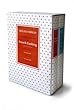 I decided to work from the basis of a recipe in Julia Child’s Mastering the Art of French Cooking, vol. 1 (sent by a reader).
I worked with Suprêmes de volaille à brun, Chicken breasts sautéed in butter… with a variation.
The first step was to clarify the butter. To clarify butter you melt it and as the solids and fats foam up, you remove them. You can cook at a higher temperature with clarified butter because it doesn’t have the stuff in it that burns.

Once it was well-foamed and as it was just starting to darken, I put it though a sieve of fine wire mesh covered with cheesecloth I moistened with water.

TIP: If you moisten the cloth with water first, it won’t absorb the butter.
I started to sautée a variety mushrooms. Don’t put too many in at once or they steam each other, rather than browning.

Chicken breasts dredged in flour, with some salt and pepper.
Into the clarified butter they go. Watch your temperature. Clarified butter heats to a higher temp than regular, but it will burn of you are not careful.

I gave them about 5 minutes per side, until they were springy to the touch.
Once removed to a platter, I added chopped parsley and tarragon and deglazed with about a 1/4 cup of Madeira and a squeeze of lemon.

Then came a couple small spoons full of stuff from the jar.

Black truffle paste.
I brought a passle of these small jars from Italy and they have been living patiently in my fridge for they apotheosis.
Reduce.

I added the mushrooms, which had cooperated by carmelizing.
Plated up with steamed Brussels sprouts, I wound up enjoying….
Butter sautéed chicken breasts and mushrooms with black truffle and tarragon infused Beurre noisette and Madeira reduction.

I also had some crusty bread with chopped garlic in it, warmed in the oven, for the sake of cleaning up that butter. I didn’t make the bread. I am a hopelessly lousy baker.
A 2007 Château Greysac Médoc, which I found on sale, pulled this all together.
Then I extracted from out the humidor one of my last 2000 Upmanns which were a gift from my mother back when.

Thus, dessert was a couple ounces of Lagavulin 16 and the Upmann.

Just a glimpse of Penjing’s trunk in the background.
Once in a while it is nice to aim a little higher than grilled cheese and tomato soup, which I will probably have today, it being Friday as I write.
So, that was supper on 26 May 2011, my 20th anniversary of ordination.
Thank you for your kind attention and collaboration.
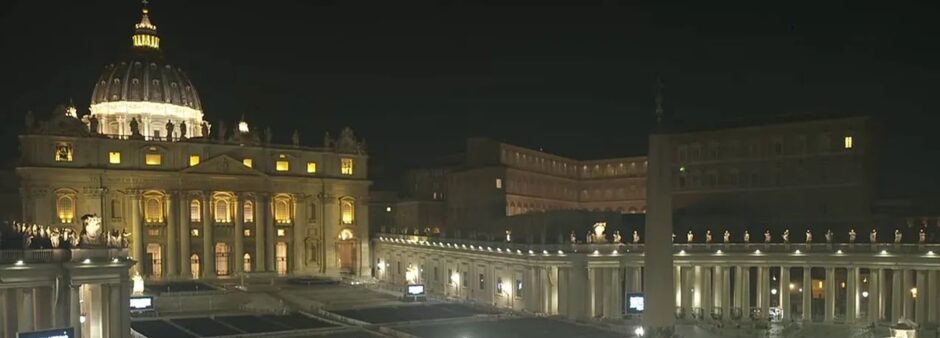
Here are a few screenshots from the live Z-CAM which I have running again. I still have some technical problems, but it is running. I have chaplets of the Rosary in Latin, prayers for the Pope, and other prayers.


And I am happy to report that Ray has found a girlfriend.

They come to the feeder together.

You may have seen this yesterday.
POPE ENTRUSTS ITALY TO VIRGIN’S PROTECTION
VATICAN CITY, 27 MAY 2011 (VIS) – Yesterday afternoon in the Basilica of Santa Maria Maggiore, Benedict XVI presided over the praying of the Rosary together with the bishops of Italy, entrusting the people of Italy to the Virgin. The Italian bishops were gathered for a General Assembly on the occasion of the 150th anniversary of the political unification of Italy.
After praying the Luminous Mysteries, Benedict XVI addressed the Italian bishops, recalling that this basilica “is the first in the West dedicated to the Virgin Mother of God”, and that on 1 January 2000, Pope John Paul II opened the Holy Door “entrusting the Jubilee Year to Mary. Today we also wish to cross the threshold of this Most Holy “Door”, which is Christ, and we ask the Virgin Mary to sustain our journey and to intercede for us”.
“The dispositions of the Virgin’s heart – listening, receptiveness, humility, faithfulness, praise, and waiting -“, he said, “correspond to the inner provisions and the gestures that shape Christian life. Aware that they express what God desires of the Church, they are what nourish her”.
“Faith, in fact”, he continued, “is not alienation. The experiences that poison the dignity of humanity and the quality of social life are other [than faith]. … Italy, celebrating 150 years of political unity, has reason to be proud of the presence and outreach of the Church, which does not pursue privileges nor intend to substitute the responsibilities of political institutions. Respectful of the State’s legitimate secularity, the Church is attentive to sustaining the fundamental rights of the human person. Among these are foremost ethical instances and therefore the openness to transcendence, which constitute values prior to any state jurisdiction because they are inscribed in the very nature of the human person“.
The Church recalls “the duty to promote and protect human life in all its stages and to concretely support the family“. In this context he referred to the problem of unemployment “that compromises the serenity of planning for family life in young persons, seriously damaging the authentic and harmonious development of society”.
The Pope urged the prelates to encourage “the faithful laity to overcome every spirit of small-mindedness, distraction, and indifference, and to participate in social life in the first person. Promote the formation of initiatives inspired by the Church’s social doctrine so that those who exercise political and administrative responsibilities do not fall victim to the temptation to exploit their positions for personal interest or the thirst for power”.
“Taking education as the theme of this decade’s pastoral commitment, you have sought to express the certainty that Christian existence – the good life of the Gospel – is precisely the demonstration of an accomplished life. In this way you assure a service that is not just religious or ecclesial but social as well, contributing to building the city of humanity. Take heart, then! In spite of every difficulty, ‘nothing is impossible for God'”.
Benedict XVI concluded by entrusting the Italian peoples to the protection of Mary “Mater unitatis”, so that the Lord might grant them “the invaluable gifts of peace and fraternity, and therefore harmonious development. That political forces might also be helped to live this anniversary of Unity as an occasion to strengthen the national union and to overcome every prejudicial conflict. That diverse and legitimate sensitivities, experiences, and perspectives might be rebuilt in a wider picture in order to seek together that which truly contributes to the good of the country. That the example of Mary might open the path to a more just, mature, and responsible society, capable of rediscovering the profound values of the human heart.
I hope elsewhere in his talk the Holy Father spoke to the bishops about our liturgical worship.
We need a Church wide “Marshall Plan”. No renewal of the Church can take place without a revitalization of our Catholic worship. Without a renewal of worship, all our other efforts will be lacking.
We are beset from within and from without. At the same time, our obligations to strive for greater holiness and fidelity within the Church, and to bring the Good News and Christ to the rest of the world, both remain. We must be renewed internally, so as to be effective externally. This is an ad intra imperative (Catholics considered as Catholics among themselves) and also an ad extra mission (Catholics considered in relation to the wider world).
Catholics, as Catholics, have been shoved out of the public square. They are more often than not excluded from contributing to discussion of the burning questions of our day. This is usually because Catholics themselves, as Catholics, excluded themselves from contributing a genuinely Catholic voice because they are either dissenters or because they are weak or because they are ignorant or because they are cowardly.
Catholics must contribute to the discussion in the public square, or as Pope Benedict called this phenomenon the “digital continent”. We have an obligation, each of us according to our vocations, to shape the world around us to the extent we can. Holy Church has a God-given mission to teach both ad intra and – of course – ad extra.
The ad intra dimension entails Catholics knowing who they are and what they believe. If we don’t know who we are as Catholics, we will never be able to articulate anything clearly about the burning questions of our day and make a contribution as Catholics according to our vocations. If we don’t know these things, if we are not firm in them, then we are vulnerable to every manner of marginalization and, don’t doubt it, persecution.
We will be marginalized and persecuted anyway. We may as well strive for holiness and salvation within the hardships we will inevitably face as living signs of contradiction.
There is an incremental erosion of human, common sense values taking place. At a certain point, the erosion will pick up speed and, suddenly, we will wake up in a new kind of world. Similarly, the process of revitalizing our identity and our Church will also take time. Our gains will be slow and incremental. Brick by brick. And, in worldly terms, we may make no discernible progress in our lifetimes.
For the near future, we must not be complacent or one day soon we will find we are living a nightmare.
In Benedict XVI’s Motu Proprio Summorum Pontificum, the emancipation proclamation for the older Extraordinary Form of the Roman Rite, we have a mighty gift and tool to help us revitalize our Catholic worship, to reconnect with our tradition and identity as worshiping Catholics. Summorum Pontificum will be one of the important events of Pope Benedict’s pontificate. In a new, corrected English translation of the Missale Romanum for the Ordinary Form, we have another great tool to help many Catholics hear more clearly what Holy Church, and Christ through her, desires to convey in her official liturgical worship of Almighty God.
No renewal of Holy Church and our identity, our ability to contribute to and shape the world around us as Catholics, is possible without a renewal of our liturgical worship.
We must have wide-spread use of the Extraordinary Form, greater use of Latin and our traditional liturgical elements in the Ordinary Form, and – in the English-speaking world – a warm embrace for the new, corrected English translation of Holy Mass.
To save our world we must save our liturgy.
And even if the world is slipping beyond our reach, we must nevertheless relentlessly seek through grace and elbow grease the salvation of our souls and those of our loved ones and as many as will come with us.
From a reader:
Is it proper to hold Exposition of the Blessed Sacrament in a classroom at the high school when 30 feet out the back door is the church and our Perpetual Adoration Chapel, where the Blessed Sacrament is exposed 24/7? Previous pastor didn’t allow it, current pastor does.
That just doesn’t sound right, does it. Unless…
I assume that the “classroom” has been more or less permanently converted into a chapel. In that case, it may be okay to do so.
But you say there is already a chapel for Perpetual Adoration….
It sounds to me as if the priest there is trying make sure that students and teachers in the school have access to the Blessed Sacrament exposed, so that they don’t have to leave the building. That is laudable.
Provided that the classroom has been converted into a chapel, I don’t think such a thing would be forbidden. The only problem I could foresee is having exposition in two places on the same campus. That sounds odd to me. Still, provided that everything is handled reverently and there is amble protection for the Blessed Sacrament, and It is not alone for long periods, I cannot see why there could not be exposition in a school chapel.
During the preparation of the new translation, some defenders of the old way of doing things, the so-called “dynamic equivalence” method of translation, carped about the new goal of greater accuracy would be tooo haard for people in the pews. Basically, they thought you were too dumb to understand the prayers and so they wanted them to remain dumbed-down. A liberal cause célèbre was the word “ineffable”. Surely none of could understand “ineffable”. You might leave the Church if our translation used “ineffable”.
This is from a reader:
I teach Latin at a Catholic high school. We are reading Book IV of the Aeneid, and we just came across the verb “effor, effari, effatus sum” highlighted in the vocabulary entry. After the vocabulary quiz on this word and several others, I was pointing out some derivatives, and for this one I asked both classes of juniors what “ineffable” means. In each class a few hands shot up immediately: they had “ineffable” in their vocabulary books for their English course just a week earlier, and they made the connection to the Latin. I guess the dynamic equivalence folks underestimate how well high school English has prepared some for the new translations in November.
The National Catholic Reporter reports the death of their editor in chief and publisher.
Joseph Feuerherd, NCR editor in chief and publisher, died this morning after an 18-month battle with cancer. He was 48. Funeral arrangements are pending.
Feuerherd died at 8:41 a.m. Eastern time at the Montgomery Hospice’s Casey House in Rockville., Md. His family was at his side.
I am sure I echo the sentiments of all the readers here, that we will say a sincere prayer for the repose of Mr. Feuerherd’s soul and consolation for his family and friends.
May God show him mercy. May he rest in peace.

Coat of Arms by D Burkart
 moon1234 on Pagliarani and Leo at Tanagra: “The dominion has not surrendered in war in 2000 years (as they see their defeat coming).”
 on Pagliarani and Leo at Tanagra: “Okay, that comment by TheCavalier just made my day. That and any comment that starts with the simplistic “I suspect…”
 on ROME 26/5– Day 54 & 55: double: “Black to move and mate in 4 1) … Ng3+ 2) KxBh2 (forced) Nf1+ 3) Kg1 (or Kh1 or Kh3)…”
 on Thoughts about the collision of the Holy See and the SSPX. Wherein Fr. Z rants.: “My Good Fr. Z – I think you touched on something vital in your very interesting post. As an outsider…”
 on Pagliarani and Leo at Tanagra: “I suspect that most of this could be resolved in an afternoon if, instead of asking for an audience, Pagliarani…”
 on Pagliarani and Leo at Tanagra: “My hope would be after such prayer that he would be open to cooperation with divine grace so that “the…”
 on Pagliarani and Leo at Tanagra: “@Lurker 59 To support your position, I don’t have any hope that my bishop will allow the confirmation of my…”
 on Pagliarani and Leo at Tanagra: “Doing such requires hope, even a fool’s hope. The reason you don’t see a common place of individuals taking the…”
A Daily Prayer for Priests










They find you a pro-life agent in your area who commits to giving a portion of the fee to a pro-life group!

PLEASE subscribe via PayPal if it is useful. Zelle and Wise are better, but PayPal is convenient.
A monthly subscription donation means I have steady income I can plan on. I put you my list of benefactors for whom I pray and for whom I often say Holy Mass.
In view of the rapidly changing challenges I now face, I would like to add more $10/month subscribers. Will you please help?
For a one time donation...



Help Monks in Wyoming (coffee – UPDATED LINK) and Norcia (beer) and the wonderful "Soap Sisters" of Summit, NJ!


Please follow me on Twitter!










Visits tracked by Statcounter
since Sat., 25 Nov. 2006:

