Sunday Supper: The Christmas Pudding Adventure continues

Sunday Supper: The Christmas Pudding Adventure continuesWe should make a special occasion of Sunday Supper, using the time for family and friends… connecting in the best way, at the table.

I have a follow up for you.

You may recall that I was resolved to make a Christmas Pudding.  I made it!  I said I would show more “later”.  That was in early December.  Here is the update.

When I finished steaming the pudding for a few hours.  I let it cool a bit, added plenty of brandy, wrapped it up, and put it in the wine-cellar in an old wooden wine case lest any invasive critters get in.

Today I checked it out.

“But Father! But Father!” some of you are saying, especially those of you across the pond who know what I mean by this sort of pudding.  “Why didn’t you eat this for Christmas?”

Sunday Supper: The Christmas Pudding Adventure continuesI was on the road for most of that time and unable to do anything like that.  (I am grateful, however, to Prof. P in NYC who gave me a little pudding for Christmas!  Kudos to him!)  Also, I knew that there would be a meeting of my literary group at the end of January (we are focused on Gerard Manly Hopkins at the moment).  I am to cook for the meeting.

Because it is before the Feast of the Purification, I feel justified to serve a Christmas Pudding for dessert, just as we are justified to sing the Alma Redemptoris Mater until  2 Feb.

Sunday Supper: The Christmas Pudding Adventure continuesBut this happens not today, Sunday, but rather tomorrow, Monday.  So, this is for Monday Supper, but the theory is the same.

“But Father! But…”,…..

SHHH!
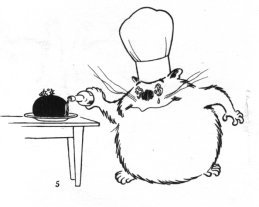
Sunday Supper: The Christmas Pudding Adventure continuesI am making – those of you who speak Italian should swallow and put your Mystic Monk Coffee down –  Strozzapreti alla putanesca.

I will follow this with a chickens roasted with lemon and rosemary, which I have growing in abundance inside.   I think I will serve a big green salad with this, rather than go with more starch, such as potatoes.  Let’s keep it simple, to make room for the pudding!

I will probably make a “hard sauce”.

Sunday Supper: The Christmas Pudding Adventure continuesAlso, thanks to frequent reader and contributor (to both the combox and the donation button!) EC, I have real HOLLY to put around the pudding!

The holly is a bit long in the tooth, but it still has bright red berries and prickly green leaves.  Very festive for such an uninviting vegetable.

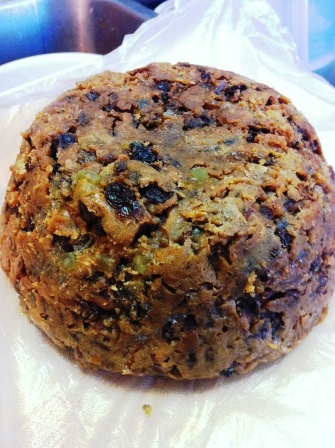
And now, friends, here is the pudding, redivivus.

I put lots of stuff in it, obviously.
Sunday Supper: The Christmas Pudding Adventure continues

Having never made – nor eaten – one of these in situ, I am guessing that this is as it should be.  Pictures I have seen suggest that these puddings are often darker.  I am guessing that is because of the different sugar used.  Oh well.

I will set it to steam for a few hours tomorrow.

Finally… it smells like I imagine heaven’s kitchen might smell.

I think I will take the holy off before I light the pudding on fire.

Also, I wonder how much more brandy I should add…. hmmmm….
Sunday Supper: The Christmas Pudding Adventure continues

Posted in Fr. Z's Kitchen | Tagged
38 Comments

PRAYERCAzT: Sunday Vespers, with lots of frills (Liber Usualis) – 3rd Sunday after Epiphany – Fr. Z rants a little.

Lots of frills this time, for the tired brethren.

However, I did something different time. I sang the whole thing from beginning to end using the Liber Usualis.

NOTE: Most of the year people will sing the Salve Regina rather than the Alma Redemptoris Mater (Christmas season).  I include, therefore, the Salve.

[UPDATE: A couple people have freaked out that I didn’t do the Alma Redemptoris Mater with the response for after 1st Vespers of Christmas to the Feast of the Purification.  They may not have read this post.  Therefore, I am including, in the media player below, the whoooole thing but with the Alma Redemptoris Mater.  So there!]

A group of men is getting Sunday Vespers in the older, traditional form of the office, going in NYC.  I thought something like this might be helpful for them as they get familiar with the chants.  Since this is one of those green Sundays which has psalms that are repeated often during the year, I figured this would be a good time to record something for them to review as they start learning psalm tones, etc.  Repetita iuvant.

Let’s also have a look at the Second Vatican Council’s Constitution on the Sacred Liturgy, Sacrosanctum Concilium (my emphases and comments):

99. Since the divine office is the voice of the Church, that is of the whole mystical body publicly praising God, those clerics who are not obliged to office in choir, especially priests who live together or who assemble for any purpose, are urged to pray at least some part of the divine office in common.

All who pray the divine office, whether in choir or in common, should fulfill the task entrusted to them as perfectly as possible: this refers not only to the internal devotion of their minds but also to their external manner of celebration.

It is, moreover, fitting that the office, both in choir and in common, be sung when possible.

100. Pastors of souls should see to it that the chief hours, especially Vespers, are celebrated in common in church on Sundays and the more solemn feasts. And the laity, too, are encouraged to recite the divine office, either with the priests, or among themselves, or even individually.  [Get that?  Vespers on Sundays?  At least in cathedrals of dioceses and ‘major’ churches where there are greater resources.  There it is in Sacrosanctum Concilium.  What part of this is hard to understand?  Nothing is more in the Spirit of the Council than to have sung Vespers on a Sunday.]

101. 1. In accordance with the centuries-old tradition of the Latin rite, the Latin language is to be retained by clerics in the divine office. But in individual cases the ordinary has the power of granting the use of a vernacular translation to those clerics for whom the use of Latin constitutes a grave obstacle to their praying the office properly. The vernacular version, however, must be one that is drawn up according to the provision of Art. 36.  [In other words, the cleric has to go to the bishop and say “I can’t understand Latin.  Please give me permission to use a translation”.  The bishop then would say “But Father! But Father!”, with a furrowed brow, “You studied Latin in seminary, right?  Doesn’t the Code of Canon Law require that seminarians be “very well trained” in Latin? Father, I now quote can. 249 – Institutionis sacerdotalis Ratione provideatur ut alumni non tantum accurate linguam patriam edoceantur, sed etiam linguam latinam bene calleant necnon congruam habeant cognitionem alienarum linguarum, quarum scientia ad eorum formationem aut ad ministerium pastorale exercendum necessaria vel utilis videatur.   But since you, Father, say you don’t know Latin, here it is in English… ‘The program for priestly formation is to make provision that the students are not only carefully taught their native language but also that they are well skilled in the Latin language; they are also to have a suitable familiarity with those foreign languages which seem necessary of useful for their own formation or for the exercise of their pastoral ministry.’  If you, Father, are a priest of the Latin Church, why don’t you know the language of your Church?  Am I… I the diocesan bishop to blame?!? …. …. Don’t answer that.  Yes, Father, you have permission to use the vernacular for your office.”  ]

2. The competent superior has the power to grant the use of the vernacular in the celebration of the divine office, even in choir, to nuns and to members of institutes dedicated to acquiring perfection, both men who are not clerics and women. The version, however, must be one that is approved.

WDTPRS applauds those who wish to sing the office in Latin.

Finally, I have a few suggestions for singing chant, psalms, etc.

In no particular order.

  • Try to soften your volume a bit at the ends of phrases so you leave the impression that you are not really trying to holler.
  • Soften the high notes a bit, so you don’t hammer them.
  • You can start a phrase a bit softer and then increase your force during the middle part of the phrases, but rein yourself in at the ends.
  • Don’t race and don’t plod.  It is hard to describe the right rate.  Each genre of chant has its own purpose.  Remember that all chants are actual texts.  They are language.  Too slow and you lose the sense of the language.  Too fast and you don’t respect the content.  Keep it moving.  Psalms are quicker than other chants, but don’t race.  There is no prize for the first to finish.
  • Don’t sing in different octaves.  Get everyone on the same pitch… no really.  You can do it.
  • I don’t like mixed chant, that is male and female voices singing together.  I just don’t.  I think there should be a schola for men and a schola for women.  I love chant sung by women!  When it is good, it has an ethereal quality that men can’t accomplish.  Segregation, I say.  Separate but equal.
  • Don’t let the perfect be the enemy of the good.  At the same time, if someone can’t hit the pitch… really can’t… is really tone deaf… be diplomatic, but find them some candle to carry even as you remove the book from their hands. If you know you aren’t singing well… can’t get those notes, perhaps there is another way in which you can help.  There are lots of cool things to do during Vespers and Mass.  Necessary things.
  • When you are singing in a group, for the love of God, LISTEN TO EACH OTHER!  Look UP once in a while to be sure you know what is going on!
  • Be careful when singing psalms not to drift flat.  This is pretty common when people AREN’T LISTENING or paying attention to each other or to the cantor(s), who will usually have a good sense of pitch.  LISTEN.   Going flat is excruciating to people who have to listen.
  • You are not Caruso.   You are not Renee Fleming.  You are not Jussi Bjorling.  Sing with everyone else, for PITY’S SAKE!  You (WE) don’t want to hear YOU.  We want to hear you merged with, singing with, every one else, singing exactly the same thing, at the same time, on the same pitch, with the same force.  If you are not designated to sing a solo bit, then get a grip!  This isn’t about you, anyway.

Thus endeth the rant.

Posted in "How To..." - Practical Notes, PRAYERCAzT: What Does The (Latin) Prayer Really Sound L, Wherein Fr. Z Rants | Tagged , ,
28 Comments

A thought for the “Lord, I am not worthy” at your next Mass

No one is, in the strictest sense, “worthy” to receive Holy Communion.

Yet the Lord wished it to be so, and so, he makes us “worthy” in our membership in His Mystical Person by our membership in the Church, by baptism, and, for our part, our dispositions.

We must discern what it is to receive Communion.  Who am I?  What am I doing?  Who is IT?  What is He doing?

In times past, people addressed the problem of their clear unworthiness by only a rare reception of Holy Communion.  And yet it seemed that the Lord desired more for us.  Therefore St. Pius X worked to expand our view of receiving Communion, and the frequency of Communion.

But there is another excess now. Many people – dare I suggest most? – go to Holy Communion without a sense of discernment, or even a second thought.

Here is a thought for a striking point of Mass.  Striking, for we literally strike ourselves, or should.  Augustine speaks of how when the people of Hippo struck their breasts it sounded like thunder in the church.

It is striking also for what it may mean in our dispositions.

From a sermon of Ronald Knox:

[W]hen the priest, just before communion, says the threefold Domine non sum dignus in your name, you should imagine our Lord himself as holding back, keeping you waiting for a little, so as to test your dispositions.  He often did that, didn’t he, before consenting to perform a miracle; ….

But, when I speak of testing our dispositions, do I mean that he looks into our hearts and expets to find his own likeness already there?  Must we already be humble with a humility like his, already be unwearied in his service, already  be perfectly resigned to all the suffereing which may befall us, or be told that we are not fit to receive him?  If I meant that, if I meant that holy communion is a privilege reserved, at least commonly, for an élite of almost perfect souls, then I should be falling back into the error of the Jansenists, and I should be wronging the memory of that great Pope who has just been raised to the altars of the Church.  For whatever else St Pius the Tenth is remembered, he will be remembered for having thrown open the gates of the sanctuary to hesitating and struggling soul; to the unworthy who know themselves to be unworthy.

No, the dispositions I am speaking of are not those which quality us to receive holy communion; we go to holy communion in order that those dispositions may be formed in us.  Only, we must want them to be formed in us.  The trouble, you know, about you and me is not that we aren’t saints, but that we don’t want to be saints.  Lord, I am not worthy, because I am not humble; but I do want to be humble.  Lord, I am not worthy because I am backward and slothful in your service; but I hate my backwardness, I hate my sloth.  Lord, I am not worthy, because I am a bad sufferer;  but how I wish it were otherwise!  Let it be otherwise, Lord; speak the word only, and they servant shall be healed.

Posted in "How To..." - Practical Notes, Our Catholic Identity | Tagged ,
25 Comments

The Feeder Feed: freeeeezing cold edition

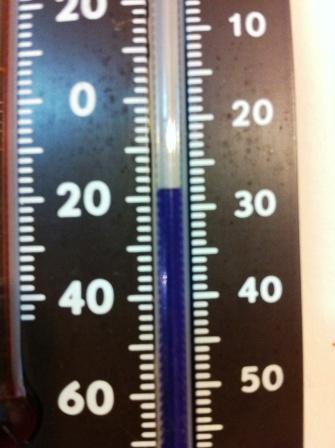
TwitterIt is cooooold here and all the visitors are doing their puff-ball imitation.  They fluff up their feathers to hold in their body heat.

They need a lot to eat in this sort of weather, and they are eating!

Some shots.

As I type it is -18°F (-28°C) and there is a fairly strong breeze.

The Feeder Feed: freeeeezing cold edition

Vote for Fr. Z!Think about it.

Here is a candid shot of Cardinal “Ray”.

The Feeder Feed: freeeeezing cold edition

Mr. Red-Breasted Woodpecker is fluffed-up and looking for the nuts, which have a higher fat content.

The Feeder Feed: freeeeezing cold edition

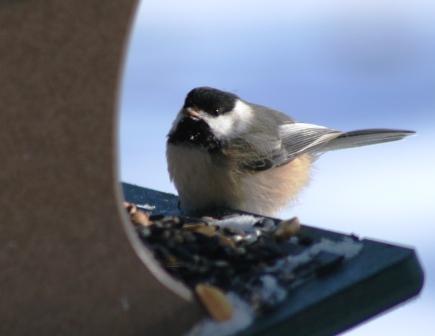
Chickadees galore.  They are my favorites.

The Feeder Feed: freeeeezing cold edition

The food bin is starting to get low.  I will have to get more soon.

Feed the birds!

The Feeder Feed: freeeeezing cold edition

Here is a Chickadee gnawing on something or other, probably a peanut.

The Feeder Feed: freeeeezing cold edition

Downy Woodpecker hanging hacking away at some very hard suet.

The Feeder Feed: freeeeezing cold edition

A note of thanks to those in the past who have contributed.   I feed them solely from donations.

Posted in The Feeder Feed | Tagged
17 Comments

New… Newer… Newest Evangelization

We have yet to see action from the Vatican’s new office for “New Evangelization”, which was created… to.. ehem…. to… well… Archbp. Fisichella is the President of the new office to help promote a restoration of the Faith in places where once it was strong and now is diminishing.

I call it the Council Pro Re-Propaganda Fide.

Here is a piece from Ironic Catholic which is sprinkled here and there with some salt grains:

Vatican City: The Vatican Office of Evangelization, inspired by the worldwide phenomenon that is WikiLeaks, has created a website intended to penetrate the deep secrets of Catholic Christianity. Angled to the “wandering spiritual seeker,” it is called WikiSeeks.

“Young Fr. Eamon over there was telling me about the WikiLeaks popularity, spilling out all this secret material all over the web, and I thought–hey, the faith is public and always has been, but no one seems to know that. You know, The DaVinci Code and all that crap. So why don’t we set up a website ‘revealing’ all our secrets? A few defenses of the faith? Mysteries explained?” enthused Cardinal Giovanni Bianci. “We’re releasing one doctrinal defense a day through twitter. If Francis de Sales spread the good word through trifolds, well, we can try newfangled media as well!” [That’s actually a pretty good idea.]

Fr. Eamon Donahue blushed, and added, “We’re calling it the Newer Evangelization around the office.”

Cardinal Bianci argued there was a hearty debate about whether to publish the site in Latin or a variety of common languages, but it was decided in the interest of transparency and retweets they would begin with English, with mirror sites in Mandarin and Spanish. [Parents… force your children to study Mandarin.]

An added benefit, noted Fr. Eamon, is that the office can detect interest in and response to the doctrinal defenses through the retweets. “We’re especially pleased that the resurrection of our Lord received 2,459 retweets. But we’re commissioned to the ends of the earth, so we think that number is just the beginning. We daily beg the Holy Spirit to move the sinsick souls of Twitter to retweet WikiSeeks.”

One typical follower on Twitter, Born2Search, posted this response to a recent tweet on predestination on his Twitter wall: “I’M SOO GREATFUL 2 U COO PRIESTS 4 CLEARING ^ TH PATH-MY SOUL REJOYCES-AMEN & ROCK ON #WIKISEEKS! [yahhhhh… that’s sounds about right.]

Fr. Eamon admits there has been an unexpected downside. “Apparently the Sikhs wanted to create a site by that name, and while they can–the words are differently spelled–they think the two sites will create too much confusion. The Office for Interreligious Dialogue is kind of in a holy huff at us.”

Julian Assauge could not be reached for comment.

–I.C.

Posted in Lighter fare |
16 Comments

QUAERITUR: Nitwit priest changes the words of absolution. Wherein Fr. Z really rants.

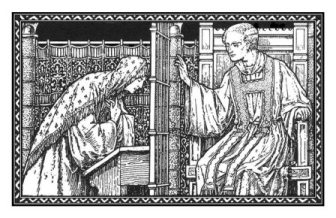
QUAERITUR: Nitwit priest changes the words of absolution. Wherein Fr. Z really rants.From a reader:

I am deeply distressed over this. I went to Confession today and for
the absolution, the priest said “…and I forgive you of all your
sins…” instead of “..I absolve you of your sins..”

Is my Confession
valid and am I still in a state of mortal sin and thus unable to
receive the Eucharist? Please help me with this issue Father. Thank
you very much.

Friend, I am so sorry you had this experience.  Please don’t let it put you off going to confession.

I am not the Congregation for the Doctrine of the Faith, which is the dicastery that makes determinations about the validity of sacraments.

That said, I suspect that the absolution was valid.  I suspect your sins were forgiven.  NB: In 2021 I have revised my view.  HERE  If you are not sure, go to confession again, explain what happened, and confession your sins, preferably to a different priest.

If opportunity presents itself, I would calmly and respectfully ask the priest why he uses words for absolution that are not in the book.  If you are distressed and worried and this is going on everytime you go, despite your inquiries,  ask your local bishop if that absolution was valid.

You have the right to ask.  You have the right properly celebrated sacraments.

During confession you can, by the way, tell the priest that you would prefer that he use the actual words of absolution as they are printed in the approved book.  Perhaps take a copy with you, just in case.

At this point, however, I will repeat what I have said a zillion times here.

PenancePriests should stick to the words in the book.

For the love of God… WHY IS THIS HARD TO DO?

When priests make changes on their own authority they run the risk of leaving the faithful in doubt about what just happened.

We are not talking here about changing a word in a collect, or riffing in some part of the Eucharistic Prayer.  We are talking about the actual form of a sacrament… the Sacrament of Penance.

The Sacrament of Penance is the point of contact for a Catholic and mystery in which a Catholic is at his most vulnerable.  Why introduce an illicit change, in some cases invalidating change, which could cause a person to a have doubts about having been forgiven their mortal sins?

If a priest can’t follow the book for the forms of sacraments, at the moment of the consecration during Mass, during the pouring of water at baptism, when absolving a penitent… then perhaps the bishop should remove that priest’s faculties until he is made to understand both what to say and do and why he says it and does it.

Just say the black and do the red and you avoid all of this.  It is so easy.

Here’s my little love letter to clerics:

Dear Reverend Fathers and Most Reverend Bishops,

These are my suggestions to you when it comes to the forms of sacraments, especially the Sacrament of Penance.

Review the form of the sacrament, the words of absolution.

If you are surprised by what you find, I suggest memorizing them and then using them as they are written.

If you aren’t surprised but think you are going to improve on them: think it through again.

Just say the words as they are.

Otherwise, an increasingly well-informed member of the lay faithful may just challenge you and, unsatisfied and thoroughly irritated with your arrogant and probably wide back-side, may also write a letter to the Congregation for the Doctrine of the Faith… from whom you do not want to hear.   I know some of the people who work there. They are very interested in stories like this.

If you are, reverend gentlemen, changing the words of absolution, pull your heads out of that dark place and knock it off.

With fraternal respect,

Fr. Z

This sort of thing makes me see the red and think the black.

Posted in "How To..." - Practical Notes, ASK FATHER Question Box, Biased Media Coverage, Wherein Fr. Z Rants | Tagged , ,
55 Comments

Virtual Prayer for Pope Benedict Project. How you can help.

Oremus pro PontificeI want to try an experiment.  Virtual Prayer for Pope Benedict.  “Oremus pro Pontifice nostro Benedicto!”

I have a recording of the Prayer for the Pope on the Z-Cam’s live stream.  It rotates through the playlist.  But I make the responses myself.

I would like to a virtual congregation of you, readers of the blog and listeners of the stream.

If you want to participate, you have to record yourself and send it to me by email.  It would be best to send an mp3.  In your email subject line put: VIRTUAL CONGREGATION.

I don’t have to covert mp3 files.  They are best.  I like mp3s.  I don’t like non-mp3s.  Mp3s find favor and others don’t.  Being the easiest to work with, Fr. Z prefers mp3s.

EMAIL ADDRESS HERE.  (I don’t think you can attach files when sending me mail through the “Contact” button, above.)

We will use Latin.

I will use software to edit them together to create a virtual congregation responding.

Here are the responses you should record… in order… with about 5 seconds between each one.

It might take a while to put this together, but it could be a good project.

IMPORTANT UPDATE:

I have received a few files.  I should have anticipated that everyone would read at a different pace.

Here is the base file I am working from.  HERE.

If you put on head phones and listen to this as you record, we will be much much closer together and it will be much much easier to edit together.

Here’s how it goes:

Fr. Z. Oremus pro Pontifice nostro Benedicto.

YOU: Dominus conservet eum, et vivificet eum, et beatum faciat eum in terra, et non tradat eum in animam inimicorum eius.

Fr. Z: Pater noster qui es in coelis,
sanctificetur nomen tuum;
adveniat regnum tuum,
fiat voluntas tua,
sicut  in coelo et in terra.

YOU: Panem nostrum quotidianum da nobis hodie,
et dimitte nobis debita nostra,
sicut et nos dimittimus debitoribus nostris.
et ne nos inducas in tentationem
sed libera nos a malo.  Amen.

Fr. Z: Ave Maria, gratia plena; Dominus tecum: benedicta tu in mulieribus, et benedictus fructus ventris tui Iesus.

YOU:
Sancta Maria, Mater Dei ora pro nobis peccatoribus, nunc et in hora mortis nostrae. Amen.

FR. Z: Deus, omnium fidelium pastor et rector, famulum tuum Benedicto., quem pastorem Ecclesiae tuae praeesse voluisti, propitius respice: da ei, quaesumus, verbo et exemplo, quibus praeest, proficere: ut ad vitam, una cum grege sibi credito, perveniat sempiternam. Per Christum, Dominum nostrum.

YOU: Amen.

Posted in "How To..." - Practical Notes | Tagged
22 Comments

PZ Myers, low life

I picked this up from CMR. He didn’t provide a link, for reasons which will be obvious.   Posting like this is rather like picking up after some large dog during walkies.

You will unfortunately remember PZ Myers, pond scum, who wanted someone to send him a consecrated Host so that he could desecrate It.   Now he shares his thoughts about abortion.

First, never quote Mother Teresa at me — she was an evil hag who worshipped poverty, who did not help people except to encourage them to suffer more for her faith, while she lived in comfort and traveled far and wide to receive the accolades of the gullible. I would never find the words of that wicked woman persuasive. [I had the unfortunate experience of a priest who used to talk about the Little Sisters of the Poor and the Hawthorne Dominicans like this.  I still have holes in my back from that … fellow.  But he is not nearly as disgusting as this guy.]

Secondly, the standard bullying tactics of waving bloody fetuses might cow the squeamish, but I’m a biologist. I’ve guillotined rats. I’ve held eyeballs in my hand and peeled them apart with a pair of scissors. I’ve used a wet-vac to clean up a lake of half-clotted blood from an exsanguinated dog. I’ve opened bodies and watched the intestines do their slow writhing dance, I’ve been elbow deep in blood, I’ve split open cats and stabbed them in the heart with a perfusion needle. I’ve extracted the brains of mice…with a pair of pliers. I’ve scooped brains out of buckets, I’ve counted dendrites in slices cut from the brains of dead babies.

You want to make me back down by trying to inspire revulsion with dead baby pictures? I look at them unflinchingly and see meat. And meat does not frighten me.

I will keep the combox closed on this.

Stop and pray for this man.

I fear he will go to hell.

Posted in SESSIUNCULA |
Comments Off on PZ Myers, low life

Do we need a “Syllabus” on the Council?

The UK’s best Catholic weekly (which still has its digital subscription special going, a year for a “tenner”!) the Catholic Herald has an article by William Oddie about the proposal made by Bp. Athanasius Schneider about a Syllabus both of errors and of guidelines concerning the interpretation of Vatican II.

My emphases and comments.

The call for a new Syllabus of Errors, this time on Vatican II, should be heeded

Pio Nono’s Syllabus Errorum has had an undeservedly bad press: it is still relevant today
By William Oddie

The recent declaration of the beatification of Pope John Paul II reminded me of one attack on him sparked off by another beatification, that of Pius IX. One of the articles of indictment in John Cornwell’s [a peddler of codswallop] very hostile book about the late pope was that this was “an early item of poor judgment”, since Pio Nono “was chiefly famous for calling the First Vatican Council, which declared the dogma of papal infallibility and papal primacy, although he was known for his infamous syllabus of errors which denounced democracy, pluralism, workers’ unions and newspapers. A fine exemplar for the 21st century to be sure!”

Cornwell, of course, got it wrong about papal primacy, [and pretty much everything else he says] which had from the earliest centuries been taken for granted: it was no purpose of the Council to “declare” it. As for papal infallibility, that, too, was widely believed; Vatican I simply defined it formally. But he also got the Syllabus of Errors wrong: not one article of it mentions democracy, workers’ unions or newspapers, and if it rejects “pluralism” (not a concept anyone at the time was familiar with) it is mostly in the sense that any religion which claims to be true rather than a matter of opinion rejects it.

The Syllabus of Errors has had a bad press over the years: but this should not deter the present Pope from responding positively to a recent request for another Syllabus, this time one spelling out the errors that have circulated within the Church about the Second Vatican Council. This request was made by the patristics scholar Bishop Athanasius [excellent name for a theologian bishop] Schneider [You can listen to it in its entirety HERE.] at an important conference held last December in Rome, “for a correct hermeneutics of the Council in the light of Church Tradition”. I quote simply the passage in which Bishop Schneider calls for a document clearly spelling out the errors of the post-conciliar years:

“In recent decades there existed, and still exist today, groupings within the Church that are perpetrating an enormous abuse of the pastoral character of the Council and its texts… Keeping in mind the now decades-long experience of interpretations that are doctrinally and pastorally mistaken and contrary to the bimillennial continuity of the doctrine and prayer of the faith, there thus arises the necessity and urgency of …  a sort of “Syllabus” of the errors in the interpretation of Vatican Council II.

“There is the need for a new Syllabus, this time directed not so much against the errors coming from outside of the Church, but against the errors circulated within the Church by supporters of the thesis of discontinuity and rupture, with its doctrinal, liturgical, and pastoral application.

“Such a Syllabus should consist of two parts: the part that points out the errors, and the positive part with proposals for clarification, completion, and doctrinal clarification.”

This seems to me so obviously a good idea that no more needs to be said by me here. I would like to add just one thing, however. A century of modernist propaganda against Pio Nono has left the impression that the original Syllabus Errorum was so laughably reactionary a document that any attempt to repeat such an exercise should be rigorously avoided. The fact is that almost nobody today has read it, so how do they know? When I was preparing my Spectator review of Cornwell’s book (quoted above), I thought, in view of his contemptuous remarks about it, that I ought to look at this notorious text. [Imagine!  Actually reading the text!] What I found was a document of mostly impeccable [wait for it…] Catholic common sense, designed to defend Christian theology in a time of heavy rationalist attacks. Here, for instance, are extracts from the opening section. I haven’t space to quote it all: read it for yourself, [a good idea… so I will cut out his quote, below] here; all the following items, remember, are what Pio Nono is declaring to be errors:

[…]

Pio Nono was fighting for the Church’s life. Under the circumstances, the famous article 80 of the Syllabus – which condemns as an error the proposition (with which, presumably, most Tablet liberals would enthusiastically agree) [Tabula delenda] that “The Roman Pontiff may and ought to reconcile himself to, and to agree with, progress, liberalism and modern civilisation” – seems not only reasonable enough but beyond any question; it might be added that it is also entirely relevant to our own times: as Pope John Paul often said, Christians today are called on to be “signs of contradiction” in the face of secular culture. Article 80, in fact, sums up succinctly the real point at issue, even today, between the Church and the modern world.

It is particularly relevant to the erroneous interpretations of the Second Vatican Council which Bishop Schneider has called on Pope Benedict to correct in a new Syllabus. I very much hope the Pope responds to this call; and that the new Syllabus will be as relevant to the Church in this new post-conciliar situation as the original Syllabus of Errors was in its own day and remains even now. I also hope that one day quite soon he will announce the forthcoming canonisation of that great and holy man, Blessed Pius IX.

Such a Syllabus would be useful.

No?  Yes?

Posted in The Drill | Tagged , ,
52 Comments

Benedict XVI’s 2nd volume of ‘Jesus of Nazareth’ coming soon!

Benedict XVI's 2nd volume of 'Jesus of Nazareth' coming soon!The second volume of the Holy Father’s work Jesus of Nazareth will be released for Lent 2011, with a date of 15 March.

This volume will focus on the period the Lord’s life from the entrance into Jerusalem to His resurrection.

The book may be “pre-ordered” through amazon.com.   Click HERE.

The first volume is HERE.

Benedict XVI's 2nd volume of 'Jesus of Nazareth' coming soon!

I found, in the first volume, the Holy Father’s exposition of the problems with an unbalanced “historical-critical” approach to Scriptures masterful and invaluable.  Also, he has a succinct explanation of how we are to understand “inspiration” and Scripture.  His reflections on the temptations of the Lord was rich.

I suggest that these would be good gifts to priests, useful for their preaching.   Both volumes would be useful for your Lenten reflections.

Lent is coming, you know.  So is the Pope’s new book.

Posted in REVIEWS, The Campus Telephone Pole | Tagged ,
13 Comments