“Oremus Pro Pontifice” stuff

REQUEST: If you have ordered or received some of these buttons or mugs, etc., or any other Z-stuff – could you send photos?  Also, send a note if any of these has started or helped a conversation.!

___

In light of the attacks on Pope Benedict which are sure to continue in the media, I thought it would be a good idea to pray more frequently for the Holy Father and to help you remind others to do the same.

Here are some trinkets which you might consider in this cause.

With the help of "Vincenzo", the official WDTPRS photoshopper, I made a cafepress store for buttons and the like.

"Oremus Pro Pontifice" stuff

If you are in the USA…

Get Pro Pontifice stuff here."Oremus Pro Pontifice" stuff

If you are in the UK…

You can get the Pro Pontifice stuff here."Oremus Pro Pontifice" stuff

If you are an Aussie …

You can get Pro Pontifice stuff here."Oremus Pro Pontifice" stuff

If you are a Canadian …

You can get Pro Pontifice stuff here."Oremus Pro Pontifice" stuff

There are also mugs and a hat and some shirts and the like.

There are as well packs of 100 buttons in different sizes which you could distribute to people.

From the the Enchiridion of Indulgences, #25:

A partial indulgence is granted to the Christian faithful who, in a spirit of filial devotion, devoutly recite any duly approved prayer for the Supreme Pontiff (e.g., the Oremus pro Pontifice):

V. Let us pray for our Pontiff, Pope Benedict.

R. May the Lord preserve him, and give him life, and bless him upon earth, and deliver him not to the will of his enemies.

Our Father.  Hail Mary.

Let us pray.

O God, Shepherd and Ruler of all Thy faithful people, look mercifully upon Thy servant Benedict, whom Thou hast chosen as shepherd to preside over Thy Church. Grant him, we beseech Thee, that by his word and example, he may edify those over whom he hath charge, so that together with the flock committed to him, may he attain everlasting life. Through Christ our Lord. Amen.

Play video

See all Z-Stuff here.


Posted in SESSIUNCULA |
5 Comments

Pelosi to receive award from Planned Parenthood

From LifeSite…. you can’t make these things up.

Catholic Pelosi to Receive Planned Parenthood Award for Stopping Stupak Abortion Funding Ban

By John Jalsevac

July 15, 2010 (LifeSiteNews.com) – U.S. House Speaker Nancy Pelosi, a self-professed devout Catholic, will receive an award from abortion giant Planned Parenthood at a reception Thursday evening. The award will be given in recognition of her efforts in passing the federal health care legislation, and, in particular, for her help in ensuring that the Stupak abortion funding ban was not inserted in the bill.

A spokesperson for Planned Parenthood confirmed with LifeSiteNews.com that Pelosi would be receiving the Champion for Women’s Health award, which recognizes "efforts to support women and their reproductive health."

Congresswoman Rosa DeLauro (D-CT), and Senator Debbie Stabenow (D-MI) will also receive the award. […]


What do the bishops of these Catholic women have to say about this award?

UPDATE:

Correction… Stabenow is Methodist.

Posted in Clerical Sexual Abuse | Tagged
38 Comments

The Feeder Feed: Oriole edition

A different way to present the feeder:Twitter

I still need to figure out the settings on the camera so that I don’t have to convert the video to something I can post easily using the Podpress plugin for WordPress.

Anyone with experience of these things?

Posted in SESSIUNCULA, The Feeder Feed | Tagged
12 Comments

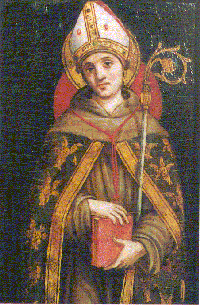
Of St. Bonventure and how Pope Benedict is “Bonaventuran”

Today is the feast St. Bonaventure.

You might check out an oldie PODCAzT I did in 2008.

PODCAzT 64: Bonaventure on Christ “the door”; Interview – Fr. Timothy Finigan

Also, I posted this back in 2006 about how the "Pope of Christian Unity" is influenced by St. Bonaventure.  A few years have passed, so I think this should be reviewed and verified:

Are you looking for insight into how Pope Benedict is going to treat the SSPX or make other decisions concerning dissent or practices that require correction?  We can learn something about how Pope Benedict operates through a glimpse at how he studied St. Bonaventure.  As you know, today is the Feast of St. Giovanni di Fidanza, otherwise known as Bonaventure Bagnoregio (+1274), Doctor of the Church.

Way back when, His Holiness Pope Benedict explored St. Augustine’s theology of the House and People of God (Volk und Haus Gottes in Augustine Lehre von der Kirche, 1954).  Steeped in Augustine, Joseph Ratzinger made significant theological/ecclesiological contributions to the Second Vatican Council.  After his work on Augustine, Ratzinger turned his considerable attention to St. Bonaventure for his Habilitationsschrift (his second doctoral dissertation).  Ratzinger was interested in exploring questions having to do with the relationship of salvation history to metaphysics. In other words, how are God’s nature and this universe created under God’s plan related?   In short, Ratzinger (and many others) were interested in a theology of history.  It was natural to turn to St. Bonaventure for these questions.  His work called Geschichtstheologie des heiligen Bonaventura or (The Theology of History in Saint Bonaventure) was published in 1959.

BonaventureBack in the 13th century, Bonaventure, in his role as a theologian and the Minister General of the Franciscans, had written about this subject as part of a response to the Calabrian writer Joachim of Fiore.  Joachim and his followers were creating great tensions amongst the Franciscans themselves and theology at large.  Joachim was making claims that the world was about to enter into a new “charismatic” phase, a reign of the Holy Spirit, during which people would receive unmediated graces.  For Joachim, St. Francis of Assisi had been the forerunner of this new age.  While St. Thomas Aquinas’ response totally rejected Joachim’s ideas, Bonaventure’s own response in Collationes in Hexameron sought to apply corrections to the theory.  The radical followers of Joachim were interpreting Joachim in a way that was contrary to the Church’s theological tradition.  Bonaventure, on the other hand, attempted to interpret Joachim’s ideas in a manner consonant with tradition.

In the 20th century, as a theologian, Joseph Ratzinger used the same technique as Bonaventure.   He sought to correct rather than reject.  For example, Ratzinger sought as a theologian to make good use of what could be salvaged from Liberation Theology which, as the Prefect, he had had to correct but also repress in some of its aspects.  For example, in his work A New Song For The Lord, Ratzinger lays the groundwork for a liturgical theology taking ideas from positive ideas gleaned Liberation Theology.    I think it is fair to say that, as Prefect, Ratzinger came to know Liberation Theology better than anyone else in the world, including its own proponents.   He was in a good position, therefore, to make judicious use of the good things that Liberation Theology produced while rejecting the dross.
Another example might be to go back to his first encyclical Deus caritas est and consider his discussion of eros and agape.  This and the exitus/reditus theme were constant considerations of the neo-Platonising theologians of the Augustinian tradition, such as Bonaventure.   But I digress…

This could be instructive about Pope Benedict’s modus operandi both as a theologian and as a disciplinarian and, now, legislator, etc.  It might be useful to regard Pope Benedict through this lens as he follow his dealing with the SSPX and matters of liturgical discipline, even curial appointments.  It might be helpful to keep in mind when thinking about how Pope Benedict acts to remember that he is in some respects “Bonaventuran” and decidedly eclectic in his influences.  I am not alone in making this observation.   There was an interesting article about this idea last year in Commonweal (not my usual reading material, please note) by Joseph A. Komonchak. 

Posted in Linking Back, Pope of Christian Unity | Tagged
4 Comments

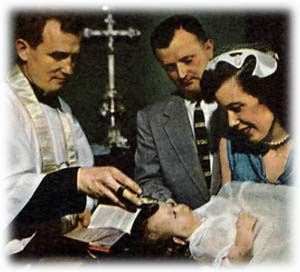
QUAERITUR: Baptisms in Advent

QUAERITUR: Baptisms in AdventFrom a reader:

Our fifth child is due on November 24.  To allow for the possibility that he might be late, we attempted to schedule a private baptism on Gaudete Sunday. My pastor says that no baptisms can be celebrated during Advent or Lent.  I don’t know if this is a norm or just his understanding. What are my obligations here?  Am I misunderstanding that it is my duty to have the child baptized within 3 weeks or so. My pastor is actually moving towards embracing tradtion, and I don’t know if this is a fight (however minor) that I should pick. 

This is not something to "pick a fight" over.

To my knowledge, there is no legal prohibition of baptism during Advent.

At the same time, it was the tradition of the Church not to baptize or marry (solemnly) during Advent and Lent. These seasons have their character and that character, which is penitential, should be respected.  Of course none of this applied to emergency baptisms or, ehem, marriages that had to take place rather quickly or mixed marriages (which were usually informal and often not in church).

Back to baptism.  There is no hard and fast rule about the length of time after birth for the baptism of a newborn.  In centuries past, due to high infant mortality and a strong sense of the critical importance of baptism for salvation, people would sometimes take infants directly to church for nearly immediate baptism.  Infant mortality rates have dropped in most places (may God be praised) and, alas, so as the sense of the need for baptism for salvation.  People are taking longer to bring their bundles of joy to church.

His dictis, if your pastor is concerned about the character of Advent, you might consider hanging on just a little longer and having your baby baptized around the time of Epiphany, which is associated with three manifestations of the Lord’s divinity, including His baptism.  In the new, post-Conciliar calendar, there is the Feast of the Baptism of the Lord which marks the conclusion of the Advent/Christmas cycle.

Posted in ASK FATHER Question Box | Tagged ,
55 Comments

Some comments on the new norms concerning Graviora Delicta

The Holy See has revised some norms concerning "exceptionally serious" crimes against faith and morals.

All the delicts will be handled by the tribunal of the Congregation for the Doctrine of the Faith.  Besides the Church’s three great tribunals (Segnatura, Rota, Penitentiary), Congregations also have juridical sections.  The CDF has both a doctrinal section and a juridical section.

The revised norms were approved by Pope Benedict XVI on 21 May.  They were distributed to all the bishops.

Among the major changes are an increase in the "statute of limitations" for certain crimes from to 20 years and also the possibility of waiving the limitation completely depending on the case.  Requests can be made to the Pope to dismiss clerics from the clerical state without an canonical trial. Also, the CDF will now be able to try and judge cardinals, patriarchs, and bishops at the Popes behest.

Keep in mind that the new norms deal with crimes against morals, but also of faith.  In addition to the sexual abuse of minors crimes – which will probably be the sole focus of much of the press – the new norms also cover heresy, apostasy, schism, not just direct but also indirect violation of the seal of Confession, recordings of a sacramental confession done with malice, the attempted ordination of a woman to Holy Orders, and the acquisition, possession or distribution of pornographic images of minors under the age of 14, a clerico turpe patrata [shamefully accomplished by a cleric], in any way and by any means.”

The following graviora delicta – more serious crimes – are reserved to the CDF:

  • throwing away, taking or retaining the consecrated species for a sacrilegious purpose, or profaning the consecrated species (Tell that to priests and others who know better when they pout the Precious Blood down sacristy sinks and sacraria!)
  • attempting the liturgical action of the Eucharistic sacrifice or the simulation thereof [citing Canon 1378, this norm applies to persons who have not been ordained priests] (Read: pretending to say Mass)
  • concelebrating the Eucharistic Sacrifice together with ministers of ecclesial communities which do not have Apostolic succession nor recognize the Sacramental dignity of priestly ordination (what has been called communicatio in sacris)
  • The more grave delict of the attempted sacred ordination of a woman is also reserved to the
    Congregation for the Doctrine of the Faith.  Those who attempt to ordain and be ordained incur automatic excommunication.
  • consecrating one matter without the other in a Eucharistic celebration or both outside of a Eucharistic celebration
  • absolution of an accomplice in the sin against the sixth commandment of the Decalogue
  • solicitation to sin with the confessor against the sixth commandment of the Decalogue, in the act of, context of or pretext of the Sacrament of Penance
  • direct violation of the Sacramental seal
  • the violation of the sixth commandment of the Decalogue, committed by a cleric with a minor under the age of 18.
  • All of these things are sins again faith and/or morals.  Sometimes one, sometimes both.

    One of the reasons why the norms have been so complicated in the past, and words such as "secrecy" have been used – to the delight of Hell’s Bible which distorted the reality behind the objective of secrecy – was to protect the dignity of the sacrament of penance, the internal forum, and the people involved.

    NOTA BENE:

    Another thing you will perhaps will see in the press, secular and Catholic, are criticisms of the list of crimes.  They may complain that, for example, trying to ordain a woman is not nearly as horrible as abusing a minor and it shouldn’t simply be lumped in with other sins, as if they all did they same damage.  In a sense, they are right, especially from the perspective of the victim of abuse.  But they are wrong from another perspective.  Critics might assert that pouring the Precious Blood down the sink or selling a Host or pretending to ordain a woman is a "victimless" crime, bad to be sure but really not that bad.  They are wrong. 

    There are still victims: the whole Church suffers because all the crimes involved attack who and what the Church is. 

    The crimes do belong together when seen in the correct perspective.

    All of the crimes here involve sacred things. 

    Even the crime of abusing a minor outside the context of confession involves something sacred because it involves an ordained person, a sacred person. 

    Abuse of the Blessed Sacrament is the worst of all, because it involves God truly sacramentally present.  Simulation of Mass or Ordination or any other sacraments is an abuse of the sacred.  All these crimes tear at the very heart of the Church herself and they therefore merit being called graviora or "more serious". 

    The abuse of the young can leave hideous scars.  These crimes are so serious that they demand the most serious attention and measures.  They also deserve serious attention not just because of the harm done to the individual victims but because, since they involve priests (and sometimes the sacrament of penance when people are at their most vulnerable) and therefore the fabric of the Church herself.

    That said, John Allen, the fair-minded and nearly ubiquitous columnist still sadly writing for the NCFishwrap, covering the presser for the release of the documents, reported that:

    At a Vatican briefing this morning, Maltese Monsignor Charles Scicluna, an official at the Congregation for the Doctrine of the Faith, denied that the Vatican equates women’s ordination with the sexual abuse of children. An illicit ordination, Scicluna said, is a “"sacramental" crime, while abuse is a "moral" crime.

    Frankly, I think that attempted ordination of women and abuse of the Blessed Sacrament, violation of the seal are all also moral crimes. But let’s move along.

    Since graviora delicta are so terrible, there is now a more robust way of dealing with them. 

    Also, modern communication methods and travel make it possible to move more swiftly. 

    Furthermore, the lengthy process of dismissal of a priest from the clerical state had to be unsnarled. In justice, the norms had to be revised. 

    Furthermore, measures had to be taken to protect the good name of those who were falsely accused, as has been known to happen.

    In any event, there is also a long history of the development of these new norms available, which you would do well to read in order to gain some perspective about what the Holy See has done in the past and what it is doing now.

    Some links.

    UPDATE 19:56 GMT:

    I mentioned that some would freak out that women’s ordination was included in the list.  Note in Hell’s Bible‘s article by Rachel Donadio:

    But in a move that infuriated victims’ groups and put United States bishops on the defensive, it also codified “the attempted ordination of women” to the priesthood as one of the church’s most grave crimes, along with heresy, schism and pedophilia.

    And as I have said in these electronic pages many times, for Pope Benedict’s detractors and the Church’s habitual critics, nothing the Church does can ever be good enough.  To wit:

    Bishopaccountability.org, which tracks cases of sex abuse by priests cases worldwide, said the changes “amount to administrative tinkering of a secretive internal process.”

    Then there is this from deservedly excommunicated Roy Bourgeois, Maryknoller and perhaps not yet ex-priest:

    “What I did, supporting the ordination of women, they saw as a serious crime,” Father Bourgeois said. “But priests who were abusing children, they did not see as a crime. What does that say?”

    It is patently false that the Church didn’t see the abuse of children as a crime. 

    Roy Bourgeois is a liar and Hell’s Bible doesn’t correct the manifest lie because it the truth in this matter isn’t the news that fits.

    Thus, the journalistic integrity of Rachel Donadio, Laurie Goodstein, and her editorial overlords at Hell’s Bible.

    Posted in Brick by Brick, Clerical Sexual Abuse, Our Catholic Identity, The Drill | Tagged
    39 Comments

    Chances are you’ll next hear something anti-Catholic if first you hear…

    CMR has an amusing post which you should check out.

    Top ten clues that you’re about to hear something anti-Catholic. …

    Broken down by percentage points here are the chances you’re about to hear something anti-Catholic if you hear:

    • 44% chance if someone says "I’m not religious but I’m very spiritual."
    • 49% chance if someone says, "The Pope during WWII…"
    • A 53% chance if someone says "I read in the New York Times…"
    • 57% chance if someone says "I don’t need an intermediary between me and God…"
    • 68% chance if a representative of Barack Obama’s Faith Based Advisory Council office is quoted.
    • 83% chance if you hear from your television, "You’re watching Hardball…"
    • 84% chance if someone says "Richard Dawkins said…"
    • 89% chance if someone says "I don’t normally watch "The View" but Joy Behar said…"
    • 94% chance if there’s any mention of a flying spaghetti monster.
    • 98% Any mention of The Inquisition or the Crusades.
    • 100% If someone says "I was raised Catholic so…" anything that follows is guaranteed to be anti-Catholic.

    Don’t forget Galileo…

    Kudos to CMR for the chuckle.

    Posted in Lighter fare, Our Catholic Identity |
    38 Comments

    Obamacare in fact funds abortions

    I hope the sisters of the CHA are proud of themselves.

    I found this story on the site of Jill Stanek.

    Obamacare to fund abortions in Pennsylvania; heat on Dahlkemper

    Quote:

    … less than 4 months after Obamacare’s passage, and with Obama his executive order supposedly banning public funding of abortions, we get confirmation it was a fraud.

    Posted in Emanations from Penumbras | Tagged
    32 Comments

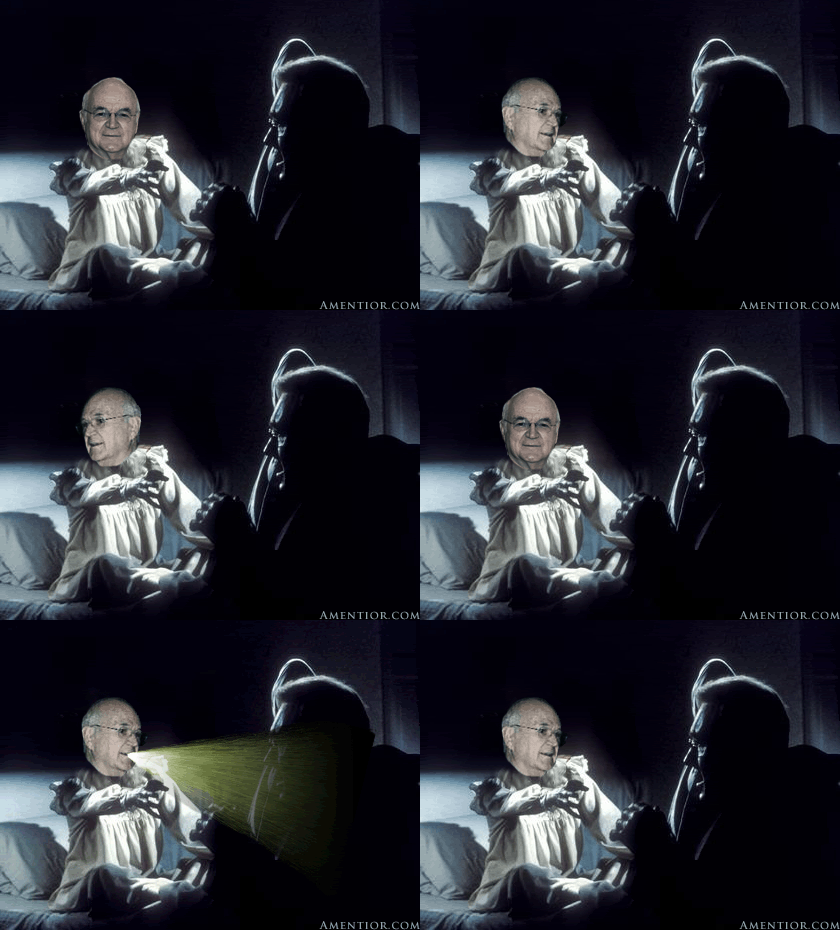
    Does McBrien believe in the Devil and in the reality of possession?

    National Catholic Fishwrap‘s darling McBrien (the one who ridicules Eucharistic Adoration and those who participate in it) now makes fun of exorcism and demonic possession. 

    McBrien think that the only type of exorcism that matters is the pre-baptismal exorcism in the baptismal rite.

    Therefore, as a propaedeutic, we can first read this, extracted from the Rite of Baptism in the older, traditional Rituale Romanum, with which McBrien was presumably baptized:

    Let us pray.

    Almighty, everlasting God, Father of our Lord Jesus Christ, look with favor on your servant, N., whom it has pleased you to call to this first step in the faith. Rid him of all inward blindness. Sever all snares of Satan which heretofore bound him. Open wide for him, Lord, the door to your fatherly love. May the seal of your wisdom so penetrate him as to cast out all tainted and foul inclinations, and let in the fragrance of your lofty teachings. Thus shall he serve you gladly in your Church and grow daily more perfect; through Christ our Lord.

    And now the post-baptismal mumblings of McBrien with my emphases and comments.

    Does McBrien believe in the Devil and in the reality of possession?Conference on exorcism will make your head spin

    by Richard McBrien on Jul. 12, 2010

    Many years ago, when the National Catholic Reporter was a young newspaper, it ran a feature in the left-hand column of Page 1 that highlighted embarrassingly dumb items that had recently appeared in parish bulletins and other ecclesiastical documents.

    If that feature were still active, I would have an entry to submit. [So. Would. We.]

    In a letter dated May 18 of this year and addressed to "Eminences" and "Excellencies" of the U.S. Conference of Catholic Bishops, Bishop Thomas Paprocki, self-described as "Bishop Designate of Springfield in Illinois," [Why make an issue of their titles?  This is merely rudeness.] announced that the bishops’ Committee on Canonical Affairs and Church Governance, of which Paprocki is chairman, is sponsoring a special Conference on the Liturgical and Pastoral Practice of Exorcism, to be held in Baltimore in early November, just before the bishops’ semiannual meeting.

    [And now the wheels come off McBrien’s walker.]

    Those with a deep interest in Catholic issues will recognize immediately how pertinent and even urgent this conference will be, given the present state of the church and the world, what with the ongoing wars in Iraq and Afghanistan, and the tragic oil spill and loss of 11 lives in the Gulf of Mexico. [Huh?]

    For those less engaged in religious matters, an exorcism is an act by which an evil spirit is expelled from a person who is demonically possessed. The act also has a less dramatic function in the baptism of adults: when candidates are enrolled in the order of catechumens, during the period of the catechumenate itself, and during the three "scrutinies" that take place on the third, fourth and fifth Sundays of Lent, prior to the catechumens’ baptism at the Easter Vigil. [Not if you are using the older Roman Ritual, in which the exorcism section is actually serious.]

    The letter from Paprocki advises, "The conference is open to bishops and those priests or officials whom a bishop wishes to designate to attend," including those whom bishops have authorized to perform exorcisms, evidently apart from the sacrament of baptism. [Yes… evidently.]

    However, there is one session open only to bishops. One can only speculate what sort of topics will be addressed in this closed session. [I suspect some of it will be spent convincing bishops of the reality of demonic possession.]

    "The conference will address not only the theological and scriptural foundations of the rite of exorcism," the letter continues, "but it will also provide the necessary, practical insights into the many liturgical, canonical and pastoral issues associated with exorcisms and the church’s battle against the demonic presence in the world and the lives of the Christian faithful."

    [This next part suggests to me that McBrien does not believe in post-baptismal demonic possession.] The fact that the conference will be less concerned with the baptismal aspects of exorcism than its more "Hollywood" dimensions is made clear by the schedule of events.

    The first afternoon session will focus on "the phenomenon of evil in contemporary culture; [I believe there may be a breakout session on the National Catholic Reporter and the Notre Dame theology department.] and responses and resources available to address the presence of evil, particularly through the use of exorcism." No mention of baptism here.  [McBrien is still struggling after the fundamental point: the workshop is on – wait for it – exorcism, not baptism.]

    In the evening there will be a discussion of cases and responses "from a practical standpoint." As opposed to a theoretical standpoint? [McBrien probably thinks that exorcism is never necessary.  He also ridicules Eucharistic Adoration.]

    On the second morning, there will be a "detailed presentation of the practice and use of the rites associated with exorcism [and these rites, again, will apparently have nothing to do with the sacrament of baptism], [Apparently McBrien still hasn’t figured out that this workshop is not in fact about the rite of baptism.  Rather, it is about exorcism, which is why it is billed as a workshop on exorcism.] strategies for pastoral care [how to deal with those possessed by the Devil?], [In a word, yes.  Keep in mind that McBrien and his crowd generally don’t believe in the Devil.  They reduce "the Devil" to a sort of metaphor for evil.  Are they in for a surprise!] and an examination of other phenomena related to the presence of evil" (what these "other phenomena" might be is evidently left to the imaginations of the conference attendees). [I imagine it has something to do with, say, plagiarism and its roots.]

    The session designated for bishops only (in italics), on the second afternoon of the two-day conference, will present and discuss "matters of special interest to bishops related to the phenomenon of evil and the use of the rite of exorcism."

    One wonders if this session will address the scandal of sexual abuse of children and other young people by priests and the subsequent cover-up of such crimes by bishops themselves, their intimidation of victims and their families, their hiding behind lawyers, and their irresponsible movement of predatory priests from assignment to assignment, without any warning to potential victims or even to pastors.  [Wasn’t there some dust up in the theology department at Notre Dame when McBrien was in charge?  I don’t remember the details, but I am sure some of you readers do.  And, just to stay on target, the workshop is about – wait for it – exorcism, and not about clerical sexual abuse of children.  Is McBrien suggesting that bishops and priests involved in these things needed an exorcism?]

    Bishops will undoubtedly be relieved to learn that there is no registration fee for those who wish to attend only this second afternoon session.

    Paprocki hopes that many bishops and their designated officials will participate in this "important" conference. Those who need further assistance can contact a lay employee in the committee office or another staff person, a relatively young monsignor. He may be a fine person who will eventually be appointed a bishop himself. [What is that last bit… envy?]

    The priest who sent me a copy of this letter wrote across the top, in capital letters, "CAN YOU BELIEVE THIS? IN 2010."

    His question was rhetorical, of course.

    Does McBrien believe in the Devil and in the reality of possession?Can you believe your are reading this garbage in 2010?

    Perhaps what frightens McBrien so much about the Rite of Exorcism is that it includes the Athanasian Creed.

    As a closer, among the mighty prayers of the older rite of exorcism:

    I exorcise you, most unclean spirit, every incursion of the enemy, every phantasm, every legion, in the name of Our Lord Jesus + Christ to eradicate and put you to flight from this creature of God.  + He commands you, who ordered you to go down from the heights of the heavens into the depths of the earth.  He Himself commands you, who commanded the sea, wind and storms.  Listen, therefore, and be afraid, Satan, foe of faith, enemy of the human race, bringer of death, snatcher of life, bender of justice, root of evils, spark of vices, seducer of men, betrayer of peoples, inciter of envy, origin of avarice, cause of discord, stirrer of sorrows: why do you stay, and resist, since as you know, the Lord Christ is undoing your paths?  Fear Him, who was immolated in Isaac, given for a price in Joseph, slain in the lamb, crucified in man, and finally was the vanquisher of hell.  [Tracing Crosses on the forehead of the obsessed.]  Recede therefore in the name of the Father + and of the Son + and of the Holy Spirit +: give place to the Holy Spirit, through this sign of the Holy Cross of Jesus Christ our Lord: who lives and reigns with the Father and the Holy Spirit, God, for all ages of ages.


    Posted in SESSIUNCULA |
    72 Comments

    New Michael Voris video and WDTPRS POLL

    The latest from Michael Voris.

    Watch this first.

    Play video

    Then vote in the poll and….

    … tell us about your vote in the combox!

    {democracy:73}

    Posted in POLLS | Tagged
    110 Comments