Remember that the meaning of the pallium is a hermeneutic (interpretive lens) for the sermon, as is the presence of representatives from the Orthodox Ecumenical Patriarch.
I am also wondering if perhaps… perhaps… one of the "Leonine Prayers" might not also be involved…
Dear brothers and sisters!
The biblical texts of this Eucharistic Liturgy of the Solemnity of Saints Peter and Paul, in their great wealth, highlight a theme that could be summarized thus: God is close to his faithful servants and frees them from all evil, and frees the Church from negative powers. It is the theme of the freedom of the Church, which has a historical aspect and another more deeply spiritual one. ["… and for the liberty and exaltation of Holy Mother Church…." ]
This theme runs through today’s Liturgy of the Word. The first and second readings speak, respectively, of St Peter and St Paul, emphasizing precisely the liberating action of God in them. Especially the text from the Acts of the Apostles describes in abundant detail the intervention of the Angel of the Lord, who releases Peter from the chains and leads him outside the prison in Jerusalem, where he had been locked up, under close supervision, by King Herod (cf. at 12.1 to 11). Paul, however, writing to Timothy when he feels close to the end of his earthly life, takes stock which shows that the Lord was always near him and freed him from many dangers and frees him still by introducing him into His eternal Kingdom ( see 2 Tim 4, 6-8.17-18). The theme is reinforced by the Responsorial Psalm (Ps 33), and also finds a particular development in the Gospel of Peter’s confession, where Christ promises that the powers of hell shall not prevail against his Church (cf. Mt 16:18).
Observing closely we note a certain progression regarding this issue. In the first reading a specific episode is narrated that shows the Lord’s intervention to free Peter from prison. In the second Paul, on the basis of his extraordinary apostolic experience, is convinced that the Lord, who already freed him "from the mouth of the lion "delivers him" from all evil", by opening the doors of Heaven to him. In the Gospel we no longer speak of the individual Apostles, but the Church as a whole and its safekeeping from the forces of evil, in the widest and most profound sense. Thus we see that the promise of Jesus – "the powers of hell shall not prevail" on the Church – yes, includes the historical experience of persecution suffered by Peter and Paul and other witnesses of the Gospel, but it goes further, wanting to protect especially against threats of a spiritual order, as Paul himself writes in his Letter to the Ephesians: " For our struggle is not with flesh and blood but with the principalities, with the powers, with the world rulers of this present darkness, with the evil spirits in the heavens"(Eph 6:12). [Which is why there are still martyrs.]
Indeed, if we think of the two millennia of Church history, we can see that – as the Lord Jesus had announced (cf. Mt 10.16-33) – Christians have never been lacking in trials, which in some periods and places have assumed the character of real persecution. These, however, [NOTA BENE…] despite the suffering they cause, are not the greatest danger for the Church. [Here is the core…] In fact it suffers greatest damage from what pollutes the Christian faith and life of its members and its communities, eroding the integrity of the Mystical Body, weakening its ability to prophesy and witness, tarnishing the beauty of its face. [Again, we are into our identity as Catholics. We can be undermined from without and from within.] This reality is already attested in the Pauline Epistle. The First Epistle to the Corinthians, for example, responds to some problems of divisions, inconsistencies, of infidelity to the Gospel which seriously threaten the Church. [This is definitely a threat from within, though also no doubt under the influence of secular values, conformity to the "wisdom of this world".] But the Second Letter to Timothy – of which we heard an excerpt – speaks about the dangers of the "last days", identifying them with negative attitudes that belong to the world and can infect the Christian community: [Dangers from without, which nevertheless slither in.] selfishness, vanity, pride, love of money, etc. (cf. 3.1 to 5). The Apostle’s conclusion is reassuring: men who do wrong – he writes – "will not make further progress, for their foolishness will be plain to all" (3.9). There is therefore a guarantee of freedom promised by God to the Church, it is freedom from the material bonds that seek to prevent or coerce mission, both through spiritual and moral evils, which may affect its authenticity and credibility. [Perhaps the Holy Father is being a little more optimistic here than, say, an Augustinian perspective easily admits. It may be that the foolishness of the wicked is not "plain to all" today, precisely because we are living in a time when there is a very weak sense of objective truth.]
The theme of the freedom of the Church, guaranteed by Christ to Peter, also has a specific relevance to the rite of the imposition of the pallium, which we renew today for thirty-eight metropolitan archbishops, to whom I address my most cordial greeting, extending with it affection to all who have wanted to accompany them on this pilgrimage. [NB:] Communion with Peter and his successors, in fact, is the guarantee of freedom for the Church’s Pastors and the Communities entrusted to them. [This might not be a guarantee of freedom in the material sense. Consider Card. Kung or Card. Mindszenty. This must focus on the deeper sense of freedom.] It is highlighted on both levels in the aforementioned reflections. Historically, union with the Apostolic See, ensures the particular Churches and Episcopal Conferences freedom with respect to local, national or supranational powers, that can sometimes hinder the mission of the ecclesial Church.[Yes, there is a sense in which union with Rome can be helpful from the diplomatic and political point of view.] Furthermore, and most essentially, the Petrine ministry is a guarantee of freedom in the sense of full adherence to truth and authentic tradition, so that the People of God may be preserved from mistakes concerning faith and morals. [Which must must must involve union with our past, must involve continuity.] Hence the fact that each year the new Metropolitans come to Rome to receive the pallium from the hands of the Pope, must be understood in its proper meaning, as a gesture of communion, and the issue of freedom of the Church gives us a particularly important key for interpretation. [The symbolic "’yoke" and "bond" placed on the Archbishop is a sign of freedom. Not freedom from, but freedom within.] This is evident in the case of churches marked by persecution, or subject to political interference or other hardships. [Political interference…. Belgium also?] But this is no less relevant in the case of communities that suffer the influence of misleading doctrines or ideological tendencies and practices contrary to the Gospel. Thus the pallium becomes, in this sense, a pledge of freedom, similar to the "yoke" of Jesus, that He invites us to take up, each on their shoulders (Mt 11:29-30). While demanding, the commandment of Christ is "sweet and light" and instead of weighing down on the bearer, it lifts him up, thus the bond with the Apostolic See – while challenging – sustains the Pastor and the portion of the Church entrusted to his care, making them freer and stronger. [When the Pope puts the pallium on a man, he refers to it as a "spur of fortitude".]
I would like to draw a final point from the Word of God, in particular from Christ’s promise that the powers of hell shall not prevail against his Church. These words may also have a significant ecumenical value, since, as I mentioned earlier, one of the typical effects of the Devil is division within the Church community. [In this sense, it might seem as if the devil has prevailed, at least for a time.] The divisions are in fact symptoms of the power of sin, which continues to act in members of the Church even after redemption. But the word of Christ is clear: " Non praevalebunt – it will not prevail" (Matt. 16:18). The unity of the Church is rooted in its union with Christ, and the cause of full Christian unity – always to be sought and renewed from generation to generation – is well supported by his prayer and his promise. [So, all who are in union with Christ in some sense, also have some sense of unity.] In the fight against the spirit of evil, God has given us in Jesus the ‘Advocate’, defender, and after his Easter, "another Paraclete" (Jn 14:16), the Holy Spirit, which remains with us always and leads the Church into the fullness of truth (cf. Jn 14:16; 16:13), which is also the fullness of charity and unity. [Of which the pallium is a symbol.] With these feelings of confident hope, I am pleased to greet the delegation of the Patriarchate of Constantinople, which, in the beautiful custom of reciprocal visits, participates in the celebrations of the patron saints of Rome. Together we thank God for progress in ecumenical relations between Catholics and Orthodox, and we renew our commitment to generously reciprocate to God’s grace, which leads us to full communion.
Dear friends, I cordially greet all of you: Cardinals, Brother Bishops, Ambassadors and civil authorities, in particular the Mayor of Rome, priests, religious and lay faithful. Thank you for your presence. May the Saints Peter and Paul help you to grow in love for the holy Church, the Mystical Body of Christ the Lord and messenger of unity and peace for all men. May they also help you to offer the hardships and sufferings endured for fidelity to the Gospel with joy for her holiness and her mission. May the Virgin Mary, Queen of Apostles and Mother of the Church, always watch over you and especially over the Ministry of metropolitan archbishops. With her heavenly help may you always live and act in that freedom that Christ has won for us. Amen
As I read this through, it occurred to me that while this sermon is clearly rooted in the Scripture readings for the Mass and the prayers for the pallium imposition, it also resonates with that prayer from the Leonine Prayers. That is to say, the themes that develop are not unlike those one might have in mind were one to be praying the Leonine Prayers frequently.
Remember: Benedict XVI is the Pope of Christian Unity.

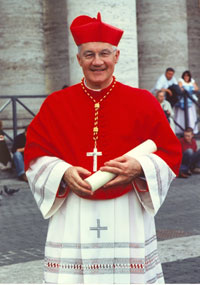 The usual stream of pre-summer break appointments is flowing from the Holy See.
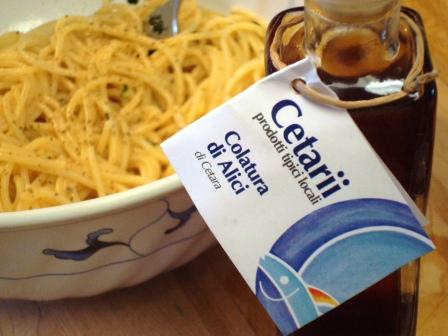
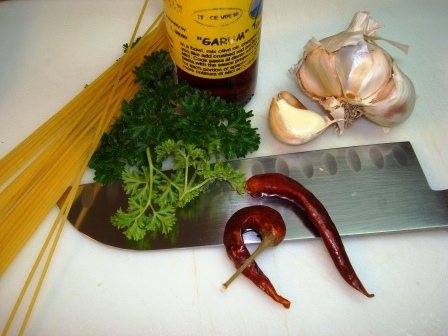 Lectures were presented on “the benefits of Garum sauces and nuoc mam”, “the Garum amphorae and the trade of cured products”, “The Garum, the salting and the purple in Djerba, as well as the analysis of industry index of Garum and curing in Neapolis.
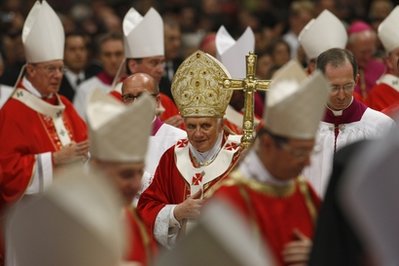 What did the Pope of Christian Unity really say to new Archbishops and to the delegate of the Ecumenical Patriarch?
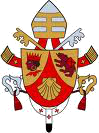
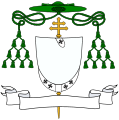
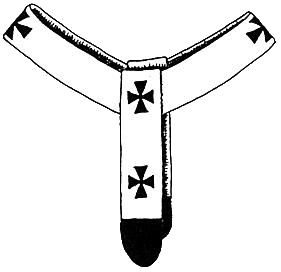 Today during Holy Mass in the Basilica of St. Peter, near to Peter’s tomb, the Holy Father gave the pallium to new metropolitan archbishops.
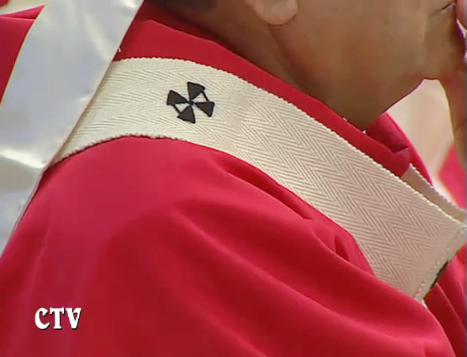 It is interesting that in recent decades this oath is witnessed by the Ecumenical Patriarch of Constantinople or by his delegate.
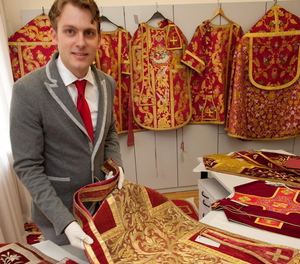 A sign that things are changing.


 Fr. John Zuhlsdorf on Daily Rome Shot 1117 – A *POLL* about 2026-27: “Sorry… my bad. It is indeed SIX. 1. Rh8+! Kxh8 2. Qh2+ Kg8 3. Qh7+ Kf8 4. Qh8+ Ke7 5.…”




























