What Would Pres. Bartlett Do?

President Bartlett would not fire Gen. McChrystal.

BTW… here is another example of a volcano influencing history.

It seems McChrystal and staff were stuck together for a long time because of the volcano in Iceland.

Oops.

Do you get the feeling that for the last three years we have been living in the last couple episodes of The West Wing?  I mean… a West Wing that makes the Bartlett administration seem almost… Right Wing?

Posted in SESSIUNCULA | Tagged , , ,
47 Comments

RECENT POSTS OF INTEREST

Please be sure to check these entries:

Please consider supporting the blog with a donation.

RECENT POSTS OF INTEREST

Follow me on Twitter:

RECENT POSTS OF INTEREST

Also, pray for Pope Benedict XVI

And you priests out there…

RECENT POSTS OF INTEREST

Posted in Linking Back, SESSIUNCULA |
Comments Off on RECENT POSTS OF INTEREST

L’Osservatore Romano on The Blues Brothers… for English readers

L'Osservatore Romano on The Blues Brothers... for English readersYou might have read that the Vatican’s increasingly strange newspaper L’Osservatore Romano had a fluff piece on that famously "Catholic" movie The Blues Brothers.

I like The Blues Brothers.  After all these years it still makes me laugh… perhaps because it reminds me of my youth… but I digress.

I didn’t post about this little trip to the zoo by L’Osservatore Romano when it came out because I a friend of mine in Italy was preparing an English translation of the pieces.

Sorry about this, but here they are.

To make this more substantive, feel free to add your favorite Blues Brothers lines and moments in the combox together with your comments on these quirky articles.

I can attest that my friend enjoyed the When we were traveling through Chicago we made sure to stop for a photo-op at the Cook County Courthouse. For the record, here are the pieces on , for your disedification (from the original Italian by a guest translator):

On a mission from God (and cinema) by Emilio Ranzato

You don’t enter myth by chance. If still today a black suite and a pair of black sunglasses will sooner recall the John Belushi-Dan Aykroyd duo rather than Quentin Tarantino’s Reservoir Dogs or the alien hunters of Men In Black it’s because under its breezy surface The Blues Brothers reveals itself as an incredibly shrewd and insightful piece of work. As is often the case with masterpieces, it is a mix of different influences catching a series of elements that were going to impose themselves in the following years. First of all, them: Jake and Elwood. Brothers without a family or real ties. And even without a real job. A perfectly autonomous splinter cell wandering about America like a drifting mine. Always dressed the same, almost always inexpressive, their mask fits perfectly the early ’80’s trend in American film-making. The re-born Hollywood industry on the one side, and Reagan’s will to reconsolidate the ideological home front on the other side by discouraging dissenting or too politically oriented voices secured the triumph of disengaged cinema centered on extremely distinctive characters and as iconographic ones as comics superheroes, with which they shared even special powers and abilities. It was the season of Star Wars and E.T., of Indiana Jones and the time-travels of Back To The Future, of Ghostbusters and the nasty Gremlins, of the endless sequels of Rocky and the lone-warriors like Rambo – the only concession to more serious issues in theory, but in fact with nearly grotesque implications and strongly patriotic anyway.

John Landis’ movie is part of the same genre as evident by the presence of Princess Leila/Carrie Fisher as Jake’s bellicose former fiancee, as well as Steven Spielberg’s cameo at the end of the movie. But while The Blues Brothers took advantage of such a trend towards rather childish blockbuster productions, at the same time it satirized them, also by adding another ingredient of great success in that time’s cinema: the surreal comicality that will make the fortune of the demential subgenre of movies like Airplane!  but is also traceable back to a noble tradition of comic cinema, as that of the Marx brothers and even to the old slapstick – that is the physical comicality of silent movies – from which the characters derived their anarchical ability to destroy everything on their path.

 “Where’s the Cadillac? The Caddy? Where’s the Caddy?”, Jake asks Elwood in one of the first scenes of the movie. “I traded it” is Elwood’s answer. “You traded the Bluesmobile for this?” says Jake of the police car with which his brother – very tactfully  – has just picked him up at the prison. “No. For a microphone”, explains Elwood. “A microphone?!?” insists an increasingly disconcerted Jake, only to conclude:”Okay, I can see that.” Such an exchange sets the tone of the whole movie from the onset. No wonder that they will later emerge from the rubble of a building and say “It’s almost nine o’clock. We gotta go to work”, after having brushed themselves off quickly. Or when they’ll speed away from police cars through a shopping mall while commenting on the items for sale .

Yet Landis’ movie didn’t let itself be absorbed so much by this extreme humor which was limited to the main characters as it did strive to outline a credible scenario, starting with an urban setting open to notes of almost documentary realism thus creating a daring but highly effective contrast. Above all, the movie provided the stylized duo with an absolutely original subject, with little in common with comic cinema. A close look will reveal themes of considerable depth which by the way help making sense of the Catholic context represented by the orphanage run by nuns and by the “mission from God” they are committed to. There’s the theme of the return of the prodigal son, of redemption, to be achieved through sacrifice, of proselitism, when they rescue the old members of the band from frustrating and embarrassing situations to bring them back to their true vocation. Especially the latter is a theme that follows a pattern of art films like Seven Samurai, but is also reflective of a main theme of the American movie narrative, that is the redemption of the lost soul that runs through the history of the silver screen from The Searchers to Taxi Driver. Besides, The Blues Brothers is of course a great musical, daringly produced with largeness of means at a time when only to mention such genre was cause for sneer among the public. While dance numbers are few and sketchy, the whole movie is underpinned with a choreography made of the steady rhythm of images, of the visual, almost pyrotechnical rendering of the destructions in  which the characters indulge, the appearances of an impressive series of stars of black music in perfect sync with the narrative phases of the plot. As to how all these ingredients manage to blend in a coherent body, that’s the mystery of masterpieces. Without a doubt, beside the unforgettable Belushi, much credit must be given to two underappreciated talents like Landis and Aykroyd. Despite having authored only comedies and having soon gone down a descending parable, the former has been a true author, at the same time an innovator and an expert of the old cinema, as demonstrated by his classical but fast-paced and inherently musical language. The latter, who co-authored the screenplay with the director, has been a versatile actor who was also nominated for an Academy Award for Driving Miss Daisy (Bruce Beresford, 1989) – after having revolutionized American TV as author of the Saturday Night Live Show. The parable of the Blues Brothers will then end where it started: in jail, on the notes of Elvis Presleys’ very appropriate Jailhouse Rock. But only after having completed their two-fold  mission: saving the orphanage and entering the history of cinema.

Let’s pause here for a favorite Catholic moment – in Italian – from The Blues Brothers!

Play video

And now back to the Editor of L’Osservatore Romano, whom I thought I knew…

A Catholic movie, by Gian Maria Vian

Is The Blues Brothers a Catholic movie? Clues abound in a production where details are in no way accidental, starting with a framed picture of a young and strong John Paul II in the house of “Blue Lou” Marini’s landlady, black-robed and with a Sicilian accent, and therefore Catholic. Doubtlessly Catholic like Alan "Mr. Fabulous" Rubin, of Polish descent and especially like the brothers Jake and Elwood Blues. And it is their most implacable foes who note it, the detestable Illinois Nazis.

As a matter of fact Jake and Elwood grew up at the orphanage dedicated to St. Helena and the Holy Shroud –  run by the scary but in her own way loving Sister Mary Stigmata, aka “The Penguin” – now at risk of closing because of $5,000 in unpaid taxes. But for the two of them that Catholic institution – in whose basement the old clerk Curtis used to play the blues harp for them, as they recall fondly – is all their family and so they decide to save it and its little guests whatever it takes. But how to do that without going too much astray from the values instilled by the nuns and still held as valid despite the occasional transgression? The light from above comes at the Triple Rock Baptist Church to where Curtis directed them and where they hear a sermon by Rev. Cleophus Brown on the need to make good use of one’s own life. And it will be precisely the Protestant cleric to acknowledge Jake’s change (“You have seen the light!") which unleashes a charismatic rock wave among the congregation and most important will lead the brothers to reunite “the band” to raise the money necessary to save the orphanage. When with the little orphans – and “The Penguin – the brothers are capable of moving attentions: for instance Elwood does not forget the cheap cheese cream an elderly friend had asked for and there’s nothing more important to them than “the mission from God”- Elwood will even renounce a date with a charming girl for it – and the mission eventually succeeds thus giving the history of cinema and music a memorable, and in fact Catholic movie.

Posted in SESSIUNCULA |
32 Comments

QUAERITUR: concelebration and seeing the elements – and Fr. Z rants

QUAERITUR: concelebration and seeing the elements - and Fr. Z rantsFrom a priest reader:

I’ll get right to the point: is it not required that a concelebrant be able to see the matter he is consecrating? I am certain that it is, but I am not able to defend this thesis with citations.

I would ask this: 

What about the blind?

Can a blind priest say Mass?

Does a priest validly consecrate hosts in a ciborium on the corporal, clearly intended to be consecrated, if the ciborium is left covered?

So, a priest does not have to see the elements to consecrate them validly.

However, should a priest see the elements?

Ideally, I suppose, yes.  I don’t know about legislation that requires that.  Perhaps a reader knows.

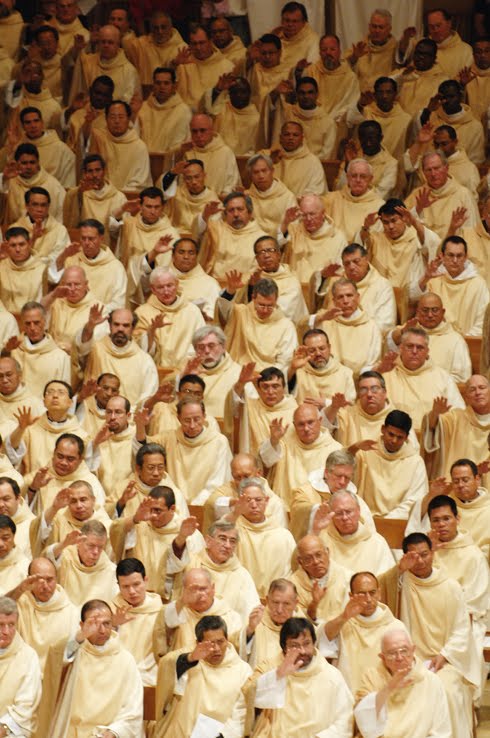
What if the priest concelebrant is so far away that he can’t see the elements?  What if he is just one of a big crowd stuck behind a taller priest who blocks his view?

I think this also gets us into the icky question of what the effective range of a consecration is. 

How far does a priest launch his valid javelin-like consecration, along with all those other sort of simultaneous launchings, in mega-concelebrations?

I don’t know the answer to that.  God does.

Some say that concelebration underscores the unity of priests in the priesthood, or of priests with the bishop.  Ironically I have found that the priests who have treated me the worst are the priests who insisted on concelebration the most, while the priests who were themselves less inclined to concelebrate or press it on others were the most fraternal.  They would set you up for Mass and sometimes even serve it for you, as well.  That is a sign of unity in my book.

Concelebration will be around for quite a while.  So, let it be done with dignity and respect for individual priests.

Concelebration should be safe, legal and rare.

Posted in ASK FATHER Question Box, Mail from priests, Wherein Fr. Z Rants | Tagged
41 Comments

The war on fatherhood

Usually the average parish bulletin "pastor’s page" is… well… suboptimal.

But not at the little parish St. John’s on the east side of St. Paul, MN where the mighty Fr. George Welzbacher is pastor.

He has a highly crafted Pastor’s Page with frank commentary on current events.

From his 20 June offering we find this excerpt (his emphases):

The liberal media (now blatantly anti-Christian) will of course have none of this. [Fr. W is talking about the importance of traditional fatherhood….] The latest issue (July-August, 2010) of The Atlantic"The End of Men: How Women Are Taking Control of Everything". The thesis of the cover story is reinforced with a concurrent short article entitled "Are Fathers Necessary?" The author of this short article, one Pamela Paul, an "authority" on parenting-her most recent book is called Parenting, Inc.-sums up her "take" on the current social scene with these words of comfort: "The bad news for Dad is that despite common perception, there’s nothing objectively essential about his contribution. The good news is, we’ve gotten used to him." (Earlier in her short essay she cites the sociologist Judith Stacey and the demographer Timothy Biblarz to the effect that "Two [lesbian] women who chose to become parents together seemed to provide a double dose [undoubtedly so!] of a middle-class ‘feminine’ approach to parenting". Stacey and Biblarz, Ms. Paul notes further, are agreed that : "based strictly on the published science, one could argue that two women parent better on average than a woman and a man, or at least than a woman and a man with a traditional division of family labor."

So there! Thank heaven for "published science"!


I want to loop you back into this as well.

Posted in The Drill | Tagged ,
16 Comments

Loome’s Booksellers and Twitter issues

I have written about Loome’s Theological Booksellers – near my native place in Minnesota – on more than one occasion (e.g., here and here).

They are now on Twitter and Facebook.  Please give them a boost!

But wait!  There’s more!

I am also on Twitter!

Follow @fatherz

Help me spike my stats too?
 

Posted in SESSIUNCULA | Tagged
4 Comments

Bp. Morlino (D. Madison) staffs more parishes with traditional priests

For your brick by brick file…

I have written about Madison’s bishop, Most Rev. Robert Morlino before (for example here and here).

Pro-abortion activists, aging-hippie liturgy types, and proponents of wymynprysts really dislike this guy. 

All the more reason to support him in prayer and with notes of encouragement.

Bp. Morlino is taking fire in the press for his decision to staff more parishes with priests from a traditional institute of men called the Society of Jesus Christ the Priest (based in Spain and not to be confused with the Institute of Christ the King).

This group roused the ire of some liberals in one parish when they properly phased out service at the altar by altar girls and by recuperating the use of – wait for it – LATIN in our Latin Rite worship.

They are accused of [CLICHE WARNING] trying to turn back the clock.

There is an article on Bp. Morlino’s latest efforts to staff parishes … would the alternative be to close them? … with members of the Society of Jesus Christ the Priest in the Wisconsin State Journal:

Bishop Morlino criticized over plan to bring in conservative priests

DOUG ERICKSON
Posted: Monday, June 21, 2010

The effort by Madison Bishop Robert Morlino to staff several Catholic churches in the diocese with priests from a conservative Spanish society has met resistance in another community.

About 200 members of St. Mary’s Parish in Platteville met with Morlino at the church Monday night to question his decision to bring in three priests from the Society of Jesus Christ the Priest to lead the church. [I would like to know the mean age of the people who came.]

A diocesan official and parishioners who attended the 90-minute meeting described it as largely civil but occasionally heated, with Morlino apologizing toward the end for having raised his voice earlier in the meeting.

“It was a tough evening for everyone,” said diocesan spokesman Brent King.

The society, based in Murcia, Spain, is known for a staunch, traditional approach to Catholic practice. There are now eight society priests at seven parishes in the diocese.

At other churches where they serve, the priests have prohibited girls from being altar servers, dispensed with the common Catholic practice of using trained lay people to assist with Communion and added Masses celebrated only in Latin.  [To be clear: male service is the norm, Extraordinary Ministers of Communion should not be used unless there is real need, and Latin is the language of the Church’s worship.]

Morlino invited members of the society to begin serving in the diocese in 2006, primarily in the Sauk City area. Some parishioners praise the priests for deepening their faith and bringing discipline to wayward Catholics; others have left the church, saying the priests’ approach is regressive and too rigid. [bzzzz]

“To me, it seems like a step backward,” said Fay Stone, a St. Mary’s member. The priests’ approach is “quite different than we have become accustomed to,” she said.  [When the earthquake hit the Church in the ’60’s and ’70’s people weren’t used to the changes then either.  But no one cared about the people who didn’t like the changes back then.]

The parish has about 700 families.

Monsignor James Bartylla, the diocese’s second in command, [probably means Vicar General] said in an interview Monday the priests are a good fit for Platteville because their gifts align with aspects of the parish.

Priests from the society are known as good school administrators, Bartylla said, and St. Mary’s has a K-8 parochial school. The society has a special mission to encourage young men to enter the seminary, and the priests will lead St. Augustine University Parish, the campus ministry at UW-Platteville, in addition to St. Mary’s.

“It’s a great blessing in this time of a priest shortage to have these priests here,” Bartylla said. [Or… the diocese could just start closing places.  Would the people want that too?  Or do they simply want a Church which conforms to them?]

[…]

Some parishioners say the timing is bad. The congregation is in the midst of a capital campaign to buy the building it currently rents for its parochial school. The school also is in the process of hiring a new principal.

“With the more conservative priests arriving and a change in the principal, there’s just some unease with the amount of change at one time,” member Lee Eggers said.

Some parishioners also are miffed that the new principal may end up being the father of a society priest. [That’s interesting.] A parish search committee wasn’t aware of that possibility and had verbally offered the position to someone else.

[Read more about that issue on the linked website… let’s stick to the liturgical issues here.]

[…]

Member Barb LeGrand said she went into the meeting very worried that trained lay people such as herself would no longer be allowed to offer Communion to the homebound, a ministry the church has offered for 20 years.  [It is not a right.]

After the meeting, LeGrand said she was feeling slightly upbeat because Pascual had agreed to meet with her and others about the ministry’s future. “He seems like a very nice man,” she said of Pascual, whom she met for the first time Monday.

King said he does not anticipate the bishop will change his mind on the new priest appointments. The message from the bishop to parishioners was to get to know the priests and give them a chance to explain why they make the decisions they do, King said.

“It’s our hope that, given the opportunity, the parishioners will grow to love the priests and the priests will love the congregation,” King said.

I am sure things will work out, given time, good will and common sense.

More kudos for Bp. Morlino!

Posted in Brick by Brick | Tagged ,
36 Comments

Card. George’s interview with John Allen: “the nature of the Church”

The fair-minded nearly-ubiquitous John Allen, sadly still with the National Catholic Reporter, posted the transcript of his interview with His Eminence Francis Card. George of Chicago, now President of the USCCB.

There has been a question about what Card. George said during an executive session of the USCCB, as reported by CNA (READ THIS).

The Catholic Healthcare Association (CHA) undermined the authority of the bishops by supporting Obamacare, which the bishops say leaves open the use of taxpayer money for the most extreme form of child abuse: abortions.

Mr. Allen posted, at the end of the transcript,… (my emphases):

ALLEN: From your point of view, is this ultimately an ecclesiological question – who speaks for the church?

CARD. GEORGE: Yes, exactly. Our disagreement may be narrow, but it’s a narrow difference that has exposed a very large principle. It affects the nature of the church, and therefore it has to concern the bishops.

I know this comparison may seem dramatic, but a few years ago Cardinal von Galen of Munster [Germany] was beatified. Under the Nazis, von Galen not only condemned euthanasia as an unethical procedure, but he also condemned the laws which permitted it. Today we think of him as a hero, and rightly so. This is the question that has to be raised: Are we to offer moral teaching solely about actions, or also the laws which permit and foster them?

Let’s loop back into to serious problems with the members of the Leadership Conference of Women Religious (LCWR).  There is a good deal of overlap between the LCWR and the CHA.

There are deep points at stake.  They concern the nature of the Church and also the protection of and justice for children.

Women religious have also been guilty of sexual abuse of children. BUT…. they used the abuse of children by men to advance their own agenda.

They want to speak for the Church. They want women priests. 

The horrible irony is that these liberal women religious watched the very male clerics they envy and criticize get hammered for sexual abuse of children, they lambasted the male clerics for covering it up, and now we find the women did exactly the same thing.  Just ask SNAP.

Dioceses and religious orders of men have been bled white from law suits.  Are the women religious next?

Read this entry, in which I refer to decidedly non-traditional, non-conservative sources about the problem:

LCWR’s long-standing coverup of sexual abuse of children by nuns

They are trying to crack the Church’s discipline (celibacy) and teaching (male priesthood). 

The Apostolic Visitation of the women religious in the USA is a serious and necessary undertaking.

Read this too.

A magisterium of nuns

Posted in SESSIUNCULA | Tagged ,
6 Comments

Singer Andrea Bocelli: Doctor Told Mom To Abort Me

My friend Greg Burke, the Rome correspondent for Fox News, had a great piece on Live Shots the other day.

Andrea Bocelli: Doctor Told Mom To Abort Me

June 9, 2010 – 7:21 AM | by: Greg Burke

Singer Andrea Bocelli, one of the best-known Italians in the world, has publicly thanked his mother for not aborting him.

In a YouTube video posted by an American pro-life group, Bocelli was playing the piano in a charity performance for Haiti. He told the story about how a young pregnant woman went into the hospital with appendicitis.

Bocelli said doctors put ice on her stomach, and later suggested she have an abortion, since they believed the baby would be born with some disability.

“But the young brave wife decided not to abort, and the child was born,” the singer recounted, sitting at the piano. “That woman was my mother, and I was the child.”

Bocelli, who has sold more than 70 million records, was born partially blind, with congenital glaucoma. When he was still a boy he lost his sight completely.

“Maybe I’m partisan, but I can say that it was the right choice,” the singer said. “I hope this could encourage any mothers who sometimes find themselves in difficult situations, in those moments when life is complicated, but want to save the life of their baby.”

Despite the strong influence of the Catholic Church in Italy, there’s very little debate about abortion in the country, and it’s hardly even an issue in political campaigns.

Bocelli was born in 1958, and abortion was not legalized in Italy until 20 years later, leading some Italian bloggers today to charge that the singer was making the story up.

(This video is no longer available.)

Posted in Emanations from Penumbras | Tagged
6 Comments

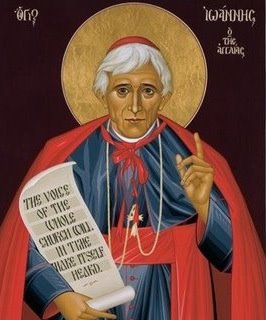
WDTPRS: Collect for Bl. John Henry Newman and “Lead, Kindly Light”

WDTPRS: Collect for Bl. John Henry Newman and "Lead, Kindly Light"On the Italian site Oratoriani I found that the Congregation for Divine Worship and Discipline of the Sacraments on 15 June approved the liturgical texts for the Memorial of (soon-to-be) Blessed John Henry Newman.

Here is the COLLECT for the Memorial, which could perhaps be on 9 October, the day in 1845 he was brought into greater light and received into Holy Catholic Church at Littlemore.  The Common of Pastors will be used. 

Remember that the feasts of "blesseds" are not for the whole Latin Church.  They are usually just local feasts or feasts for interested religious institutes. 

At first, this memorial will only be used by Oratorians, the Oratorian Confederation. I don’t believe the local Church of the Archdiocese of Birmingham will use this memorial, even though that is where the tomb of Bl. John Henry is found.  Local Churches will have to request the use the memorial.

LATIN:
Deus, qui beátum Ioánnem Henrícum, presbýterum,
lumen benígnum tuum sequéntem
pacem in Ecclésia tua inveníre contulísti,
concéde propítius,
ut, eius intercessióne et exémplo,
ex umbris et imagínibus
in plenitúdinem veritátis tuae perducámur
.

Buried in the entry for confero in our Lewis & Short Dictionary we find "With the access. idea of application or communication, to devote or apply something to a certain purpose, to employ, direct, confer, bestow upon, give, lend, grant, to transfer to (a favorite word with Cic.)."  The problem is that contulisti here has the sense of "grant", but then we also have to deal with concede down the line, which also normally comes off as "grant".  So, I will stick with "grant" for confero and then use a word a certain bishop in Pennsylvania might not like for concede.

An imago is certainly an "image" or "copy", it is also a "ghost, likeness, echo, semblance, appearance" or "shade".

WDTPRS LITERAL VERSION:

O God, who granted blessed John Henry,
a priest following Your kindly light,
to find peace in Your Church,
graciously vouchsafe,
by his intercession and example,
that we may be drawn from shadows and shades
into the fullness of Your truth.

You will notice right away the reference to the a poem written by Ven. John Henry in 1833 later rendered as a popular hymn, Lead Kindly Light.

You might know the story of its writing.  When the young Newman was traveling in Italy he fell ill. He experienced a time of great emotional and spiritual discouragement. When a nurse asked him what troubled him, he responded, "I have work to do in England."  Eventually he got passage on a boat home, but they were constrained to heave to, slowed by a thick fog and nearby cliffs.  Trapped in the fog, on June 16 Newman wrote The Pillar of the Cloud:

WDTPRS: Collect for Bl. John Henry Newman and "Lead, Kindly Light"Lead, Kindly Light, amid the encircling gloom
          Lead Thou me on!
The night is dark, and I am far from home—
          Lead Thou me on!
Keep Thou my feet; I do not ask to see

The distant scene—one step enough for me.

I was not ever thus, nor pray’d that Thou
          Shouldst lead me on.
I loved to choose and see my path, but now
          Lead Thou me on!
I loved the garish day, and, spite of fears,

Pride ruled my will: remember not past years.

So long Thy power hath blest me, sure it still
          Will lead me on,
O’er moor and fen, o’er crag and torrent, till
          The night is gone;
And with the morn those angel faces smile

Which I have loved long since, and lost awhile.


A version of the hymn, just to help you ponder.

[NB: A contact tipped me that on the Oratorian site an earlier version of the CDWDS version had been posted.  It has been corrected.]

CDWDS VERSION:
O God, who bestowed on the Priest blessed John Henry Newman
the grace to follow your kindly light
and find peace in your Church;
graciously grant that,
through his intercession and example,
we may be led out of shadows and images
into the fulness of your truth.

In this world we walk by faith, not by sight. 

We peer towards mystery through the dark glass, through the crack in the rock, through chink in the garden wall. 

The hope of Christians draws us to the One who will draw us forth from this shadowy place into His marvelous light.

Holy Church is our surest path to that which is good and true and beautiful.

UPDATE:

A comment below states that ex umbris et imaginibus in veritatem was Ven. John Henry’s epitaph.

However we put this, "from shadows and shades into truth", "from out of shadows and reflections into truth", "from shadows and phantasms into truth", "from illusions and approximations into reality"… this has a rather Platonic ring to it. 

For Newman this certainly also meant something like "from the Church of England and from Anglo-Catholic to the Roman Catholic Church".

You might imagine yourself, if you have your Platonic hat on, moving away from the back of the cave, turning around, and heading out of the cave to your source.

At the heart of the Platonic and Augustinian paradigm is conversion – the turning point at which we, who are moving out and away, begin to return.

This is a paradigm found in many of the Latin Church’s more ancient prayers.  It is also found in the experience of the penitent and of the worshiper at Holy Mass.
Posted in Saints: Stories & Symbols, WDTPRS | Tagged ,
34 Comments