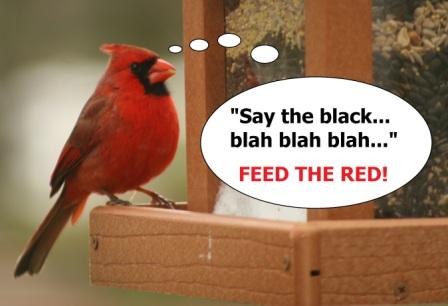
For your neurosis and/or trip planning needs

Just today I was exchanging email with a priest in England about my hopping over for a visit to Old Blighty and my friends there. 

Then I hear about nearly all flights canceled because of the Icelandic volcano….Eyja… Eyjaja… Eyafjallajokull.

Then I found this interesting story on Market Watch:

LONDON, Apr 15, 2010 (BUSINESS WIRE) — A major eruption of Italy’s Mount Vesuvius could result in 8,000 fatalities, 13,000 serious injuries and total economic losses of more than $24 billion, according to a new study supported by the Willis Research Network (WRN) that puts Vesuvius at the top of the list of Europe’s 10 most dangerous volcanoes.


Ka-BLAM!

There is a handy list of dangerous volcanoes near tourist places for your neurosis and/or trip planning.


Posted in Global Killer Asteroid Questions, SESSIUNCULA | Tagged , ,
20 Comments

Pope Benedict talks about the rite of Mass, inculturation, mystery!

Our friends at Rorate have given us part of the Holy Father’s ad limina address to bishops of Brazil.   Let’s have a look with my E & C.

Wonderful words on the true meaning of active participation

Today’s speech of the Holy Father to the Bishops of Brazil (North II Region) in their ad limina visit was a true course on sacred liturgy, active participation, inculturation, and the Holy Mass. We particularly refer to the 4th, 5th, and 6th paragraphs of his address (in Portuguese).

VIS excerpts; complete translation coming up:

    Speaking of the Eucharist, the Pope recalled that it constitutes "the centre and permanent source of the Petrine ministry, the heart of the Christian life, source and summit of the Church’s mission of evangelization. You can thus understand the concern of the Successor of Peter for all that can obfuscate this most essential point of the Catholic faith: that today, Jesus Christ continues alive and truly present in the consecrated host and the chalice." [NB: "most essential".  When we speak of "the Eucharist" we need to keep in mind both the Sacrament and its celebration.]

    "Paying less attention at times to the rite of the Most Holy Sacrament [i.e., Holy Mass] constitutes," he said, "a sign and a cause of the darkening of the Christian sense of mystery, [EHEM… sound familiar?!?  Not only is this redolent of the whole "Save The Liturgy – Save The Word" thing I have been pushing forever, it also directly bears on what I have pounded for several years, ever since the unveiling the the text of Summorum Pontificum: if our worship does not bring us to an encounter with mystery, then it has failed.] such as when Jesus is not the centre of the Mass, [stressed by ad orientem or ad Deum worship] but rather a community preoccupied with other things instead of being taken up and drawn to the only one necessary: their Lord."  [Fantastic.]

    Benedict XVI emphasized that "if the figure of Christ does not emerge from the liturgy … it is not a Christian liturgy". [OORAH!] This is why, he added, "we find those who, in the name of enculturation, fall into syncretism, introducing rites taken from other religions or cultural particularities into the celebration of the Mass."  [It loses its proper identity.  And we, therefore, lose our identity.  This is rich fare.]

    As Venerable John Paul II wrote, "the mystery of the Eucharist is ‘too great a gift’ to admit of ambiguities or reductions, above all when, ‘stripped of its sacrificial meaning, it is celebrated as if it were simply a fraternal banquet’."

    The Pope highlighted that "behind many alleged motives, there exists a mentality that is incapable of accepting the real possibility of divine intervention in this world to assist human beings. [That is modernism.]  … Admitting God’s redeeming intervention to change our situation of alienation and sin [The Holy Father is speaking of sin more often.  And I predict he is also going to be speaking more about worship.] is seen as fundamentalism by those who share a deist vision and the same can be said about the sacramental sign that makes the salvific sacrifice present. For such persons, the celebration of a sign that corresponds to a vague sentiment of community would be more acceptable."  [A "vague sentiment of community"… embodied by versus populum worship and the clericalization of the laity, non-sacral language, music reduce to the lowest denominator.]

    "Worship, however," he continued, "cannot come from our imagination: that would be a cry in the darkness or mere self-affirmation. [Here it comes:] True liturgy supposes that God responds and shows us how we can adore Him. ["how we can adore Him"… i.e., proper worship] … The Church lives in His presence and its reason for being and existing is to expand His presence in the world."

There are times when I feel like I am shouting down a well.  

Then someone like this comes along.

The Holy Father introduced this section by mentioning his own office, the Petrine office of the Successor of Peter.   Then he goes on to talk about proper worship in the rites of Holy Mass.  Then he speaks of evacuation of the meaning of the rites and the effect on people when the rites lose their proper orientation. 

This seems very much in keeping with what I have been saying about his "Marshall Plan" for Holy Church during his pontificate.

Posted in Our Catholic Identity, Pope of Christian Unity, SUMMORUM PONTIFICUM |
17 Comments

Card. Ruini on the source of Pope Benedict’s insistence on liturgy

Card. Ruini on the source of Pope Benedict's insistence on liturgyAgain I return to a constant theme of WDTPRS: Pope Benedict ‘s "Marshall Plan" to revitalize Catholic identity, our worship being the tip of the spear.   We need to do this in order to keep the Church as a strong and good influence in the public square.  If we don’t know who we are, why should anyone bother to listen to us?

Below, you will find comments of His Eminence Camillo Card. Ruini.  The context of these comments is, of course, the present controversies and attacks on the Holy Father.  However, Card. Ruini pointed out something of interest to WDTPRSers.  Excerpt:

"It’s not only about announcing and testifying of God as our creator and savior," he explained, rather "It’s about … trusting him and putting ourselves in his hands, therefore praying and making space for him, his presence and his grace, in our entire lives.

"Here, the great insistence of Benedict XVI on the liturgy has its origin," he underscored.

Here are other things from Card. Ruini as reported by CNA with my emphases and comments.

Cardinal Ruini speaks on Pope Benedict and ‘cleaning’ of the Church

Vatican City, Apr 15, 2010 / 05:39 pm (CNA/EWTN News).- This "isn’t the first time the Church has suffered," Cardinal Camillo Ruini said as he reflected on the current state of the Church in an interview with the Italian paper La Repubblica on Thursday.

Responding to a question about the "dramatic moments" the Catholic Church is living through as Pope Benedict XVI approaches the fifth year of his pontificate, Cardinal Ruini said, "It’s is undoubtedly a period of suffering and of trial for the Church, that at the moment revolves around the question of pedophilia."

"But it isn’t the first time the Church has suffered," he added. In the past, there have been other trials, other sufferings, always overcome by Providence." [Do I hear an "Amen!"?]

In the current situation, the cardinal said, "there are the objectively very serious sins of some priests and there is a strong desire to put the entire Church and especially the Pope on the bench of the accused: a profoundly unjust and unfounded thing, because Benedict XVI is exactly the opposite of that which they wish to make him appear (to be)."

Reflecting on the scope of the words of Pope Benedict during the Stations of the Cross in 2005 when he spoke of a "cleaning" that needed to take place in the Church, the cardinal said that while pedophilia is a part of the needed cleaning, "it would be mistaken" to read into that statement as strictly pertaining to sexuality.

The "cleaning" mentioned by Pope Benedict should be considered as "a challenge that concerns all of our Christian life, beyond that of priests, and it’s a challenge that, as Jesus has taught us, one can hope to win only concentrating before all on Him, (and) therefore on humility and prayer," the cardinal said.

During the interview, Cardinal Ruini said he observes a "profound continuity" between Pope Benedict and two of his predecessors, Popes John Paul II and Paul VI. The current Pope, he noted, can also be noted for the priority that he gives on evangelization.

"It’s not only about announcing and testifying of God as our creator and savior," he explained, rather "It’s about … trusting him and putting ourselves in his hands, therefore praying and making space for him, his presence and his grace, in our entire lives.

"Here, the great insistence of Benedict XVI on the liturgy has its origin," he underscored.

Cardinal Ruini recognized the Holy Father’s acumen as a "grandissimo" theologian, an "extraordinary homilist and catechist," and, he said, contrary to the thoughts of some, "it’s mistaken to think that he takes little care of the government of the Church."  [I think Card. Ruini is right to mention this.  However, I think it is also the case that Papa Ratzinger hasn’t always had the greatest success in administration.]

Cardinal Camillo Ruini is a former president of the Italian Bishops’ Conference and is now working on the Italian bishops’ "Cultural Project," maintaining the Church’s presence within contemporary discussion. [Get that?  Maintain the Church’s presence "within contemporary discussion".  Keep the Church’s voice in the public square.] He was recently named by Pope Benedict XVI to head the investigation commission on the possible Marian apparitions at Medjugorje.

WDTPRS likes the Cardinal’s mention of liturgy.


Posted in Clerical Sexual Abuse, Our Catholic Identity, Pope of Christian Unity | Tagged
8 Comments

“Why not bomb the Vatican, and riddle the Pope with bullets as he staggers out of the flames?”

"Why not bomb the Vatican, and riddle the Pope with bullets as he staggers out of the flames?"The following is amazing, even for those of us who are used to reading unhinged hate-speech.

The Australian Broadcasting Corporation reveals its true colors.

I know about Godwin’s Law, but I suspect they may be Nazis sympathizers, given their hatred of the Church. Not sure about that, but their rhetoric suggests it.  It is dangerous to introduce the reductio ad Hitlerum at any time, but… by gum.. sometimes it fits!

I won’t add comments, but I will edit.

A tale of two battles

No-one has yet suggested bombing the Vatican and pursuing the Pope through the sewers of Europe till he is caught and riddled with bullets in order to stop priests buggering choirboys in Boston, Chicago, Dublin and Sydney. But a precise mirror image of this is how we behaved in Afghanistan.

If we bomb it flat, we were told, and pursue Bin Laden through the caves of Tora Bora and the mud huts of Waziristan until he is caught and riddled with bullets, al-Qaeda won’t hijack planes and blow up trains any more. And the world will live at peace.

[…]

Let’s consider for a while the comparable crimes, or iniquities, or sins, or misdeeds, or culpable errors of Osama bin Laden and the Pope. Osama’s followers killed 3,000 people in New York and around 700 more by terrorist acts in London, Bali, Madrid and Mumbai in the past eight years and desolated maybe 20,000 lives of the relatives of the dead.

The Pope’s followers desolated, perhaps, 100,000 lives (or this is my guess) by sexual depravity in the past 80 years and killed, perhaps, (this too is my guess, I ask for yours) no more than 5,000 smashed and embittered Catholic boys and girls they drove to suicide or drunken oblivion and early death in those years.

The crimes are comparable pretty much and well-attested and well known from enquiries here and in Germany, the US and Ireland. Why then do we not bomb the Vatican and obliterate Italy for harbouring this criminal mastermind, this known protector of evil predators? Why do we not pursue him through the sewers of Europe and riddle his corpse with bullets?

Can it be, perhaps, because we think Italians and Germans are in some way superior to Afghans or Saudis or Palestinians? Can it be because we believe Catholic priests have a right to hurt little boys and Taliban mullahs and chieftains no right to hurt little girls and young women?

Why do we do this? Why are we not bombing the Vatican?

[…]

If an Australia-wide child care corporation had been shown to have covered up 1000 cases of child rape by its teachers it would have been wound up, its assets seized and sold, its CEO arraigned for criminal neglect, its employees held for questioning, the offending perverts jailed or put in madhouses, its name eternally stained.

Yet precisely this kind of crime has occurred in another institution responsible for the care and shaping of children, the Catholic Church.

Should it be outlawed?

Or is it, simply, too big to fail?

Just asking.

It is worthwhile, I think, to make these connections, of how forgivingly we treat the First World rich and the contrasting way we treat the Third World poor. How we treat the crimes of Christians and of heathens in very different ways. It shows how crazy we have lately come to be, and how justly we are despised by the Islamic world, and the Communist world, and many of our former colonies.

If we do this violence to the Taliban for the way they treat their women and children, why not the Catholics too?

Why not bomb the Vatican, and riddle the Pope with bullets as he staggers out of the flames?


If you can exercise some self-editing, make comments somewhat deeper than "nasty poopy-head should be fired", this could make for an interesting discussion.

I read something not long ago, a comment by … perhaps… George Weigel? … that there was a remarkable similarity to some of the recent anti-Catholic rhetoric and editorial cartoons to the anti-Catholicism during the rise of the Nazi Party in Germany.

It might be interesting to find some examples and gather them for the sake of our opportune knowledge.

Posted in Biased Media Coverage, Clerical Sexual Abuse, Throwing a Nutty |
78 Comments

The Feeder Feed, et al.

From the Feeder.Twitter

Here is, I am pretty sure Chipping Sparrow, who likes millet.

The Feeder Feed, et al.

Not sure who this is.

The Feeder Feed, et al.

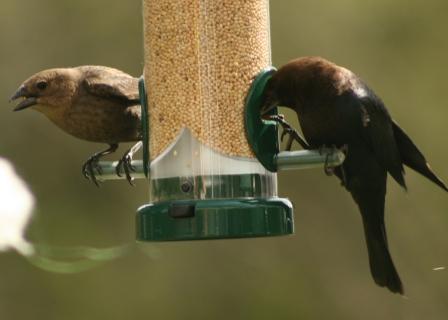
Mr. and Mrs. Cowbird, though I wish they would find another food source.

The Feeder Feed, et al.

Today I spotted the first Long-billed Thrasher, or Taxostoma longirostre, appropriate for 15 April in so many ways.

The Feeder Feed, et al.

Then there is Carrusfederatus expressus, always a welcome sight. 

Though this species doesn’t come nearly as often as I would like.

The Feeder Feed, et al.

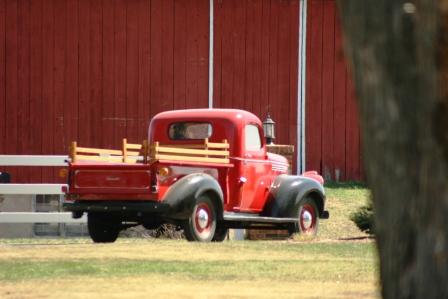
There is also, Carrusruber parvus.

The Feeder Feed, et al.

Nice color scheme… that.

Not to be outdone …The Feeder Feed, et al.

The Feeder Feed, et al.

Posted in The Feeder Feed |
14 Comments

The other point of view

Given that I know my computer is actively working against me… I think I understand this.

The other point of view

Posted in Lighter fare |
2 Comments

Holy Father in spontaneous sermon to Pont. Biblical Commission – great stuff

Holy Father in spontaneous sermon to Pont. Biblical Commission - great stuffThe Holy Father gave a spontaneous sermon to members of the Pontifical Biblical Commission today during a Mass (ad orientem in the Pauline Chapel) for their meeting.

I wish he would do this more often.
Audio here (from sometime poster here Chris Altieri):

From the site of Vatican Radio with my emphases and comments:

15/04/2010 16.14.41

Pope Benedict XVI Reflects on True Freedom, Grace of Penance in Pauline Chapel Homily to Biblical Commission

(15 Apr 10 – RV) At 7:30 Thursday morning Rome Time in the Pauline Chapel of the Apostolic Palace, Pope Benedict XVI celebrated Mass with the members of the Pontifical Biblical Commission. He delivered a homily in which he spoke of true freedom as rooted in knowledge of and loving obedience to God, as well as the grace of true penitence, the need for pardon, renewal and transformation. We have this report…

The Members of the Pontifical Biblical Commission are holding their Plenary Assembly this week at the Domus Sanctae Marthae.

The meeting opened Monday, and the 5 days of reflection are focusing on the theme of “Inspiration and Truth in the Bible.”

At Mass with the members Thursday morning, Pope Benedict XVI delivered a homily on the relationship of truth and freedom in the context of God’s relationship to human being and human society. [Perhaps more members of the press corps should have been invited.]

Speaking without a prepared text, [He is really good when speaking off the cuff.] the Holy Father said that in modern times we have seen theorized an idea of man according to which human being would be, “free, autonomous, and nothing else.”  [Which in the 20th century lead to some terrifying results.  How much blacker will our own times be?]

This supposed freedom from everything, including freedom from the duty of obedience to God, “Is a lie,” said Pope Benedict, a falsehood regarding the basic structure of human being – about the way women and men are made to be, “because,” he continued, “human being does not exist on its own, nor does it exist for itself.”  [Concise.  Clear.  We need to consider the difference between "freedom from" and "freedom to".  In his "inaugural" sermon in April 2005, the Holy Father spoke to young people encouraging them when you say yes to God you are not giving up something of yourself.  You are gaining truer freedom.]

The Pope said it is a political and practical falsehood, as well, because cooperation and sharing of freedoms is a necessary part of social life [Which needs a) recognition of who man truly is and b) a recognition that your neighbor is truly human, with dignity.] – and if God does not exist – if He is not a point of reference really accessible to human being, then only prevailing opinion remains and it becomes the final arbiter of all things. [A good basis for why we also must not have ephemeral worship.]

Citing the Nazi and Communist regimes of the 20th century as examples, Pope Benedict said such dictatorships can never accept the notion of a God who is above ideological power ["But… Holy Father! Holy Father!", some of you will exclaim.  "Isn’t that what is going on now? Even after the fall of Nazism and the Soviet? Are you trying to warn us about something you see happening?" ] – and he also stressed that in the present, there are subtle forms of dictatorship like that of a radical conformism, which can lead to subtle and not-so subtle aggression toward the Church.  [To wit: the war of the MSM on the Church going on right now.  Conformism to… what… the dictatorship of relativism?]

The Holy Father also stressed that for Christians, true obedience to God depends on our truly knowing Him, and he warned against the danger of using “obedience to God” as a pretext for following our own desires. [Good one.]

“We have,” he said, “a certain fear of speaking about eternal life.”  [Reflecting on the Four Last Things can clarify your values pretty quickly.  I often wonder if priest and bishops who harmed children thought about the Last Things… ever.]

“We talk of things that are useful to the world,” continued Pope Benedict, “we show that Christianity can help make the world a better place, [the Church as reduced to instrument of social change] but we do not dare say that the end of the world and the goal of Christianity is eternal life – and that the criteria of life in this world come from the goal – this we dare not say.”  [I do.  I sure did in a recent parish mission I gave in NY toward the end of Lent. Some people were a little flustered, I understand!]

We must rather have the courage, the joy, the great hope that there is eternal life, that eternal life is real life and that from this real life comes the light that illuminates this world as well. [Joy is a sign of the Holy Spirit at work.]

The Pope noted that, when we look at things this way, penitence is a grace – even though of late we have sought to avoid this word, too.  [But I bet we are going to hear it more and more.]

Now, under the attacks of the world, which speak to us of our sins, [I think we know what that is about…] we see that to be able to do penance is a grace – and we see how necessary it is to do penance, that is, to recognize what is wrong in our lives: to recognize one’s sin, to open oneself to forgiveness, to prepare for pardon, to allow oneself to be transformed.  [Remember: This is to members of the Pontifical Biblical Commission who are thinking about "Inspiration and Truth in the Bible".  The Holy Father has some things on his mind.]

The pain of penance, the pain of purification and transformation – this pain is grace, because it is renewal – it is the work of the Divine Mercy.

Pope Benedict concluded his homily with a prayer that our lives might become true life, eternal life, love and truth.  [But apparently only though the path of pain and penance.  So true.]

The Plenary Meeting of the Pontifical Biblical Commission is underway through the end of the week.


In the audio recording the Holy Father’s voice sounds a bit rough.

Posted in Pope of Christian Unity, SESSIUNCULA, The Drill | Tagged ,
19 Comments

PRAYERCAzT: Nones and Vespers (BrevRom)

More no frills Nones and Vespers.

I just turned on the mic and read Nones and Vespers.

With one frill… I sing the Vespers hymn this time.  I am used to the newer melody from the Liber Hymnarius, so I had to concentrate a bit through this.

FEEDBACK:

From a priest reader:


You recent recordings of the Lauds and Vespers your site are a great help to me practicing my latin.  I only had a year of latin in the seminary.  I also miss the recordings of the propers you posted some time ago.  They were a great help preparing to celebrate Mass in the extraordinary form. 


I just didn’t have a sense that priests were using those.

Posted in PRAYERCAzT: What Does The (Latin) Prayer Really Sound L |
3 Comments

Brick by Brick in Oakland, CA

For your Brick by Brick file a reader in the Diocese of Oakland wrote:

His Excellency, Oakland Bishop Salvatore Cordileone, will visit St. Margaret Mary’s Church for the second time on May 20, 2010 (Thursday). Bishop Cordileone will administer the Sacrament of Confirmation in the Traditional Rite (Extraordinary Form), followed by a Pontifical Low Mass and then Reception at the Father Kozina Hall. This is the 3rd Pontifical Event in the Extraordinary Form by His Excellency on his first year as Shepherd for the Diocese of Oakland (the 1st was September of last year during St. Margaret Mary’s 20th Anniversary of the Indult Mass where he had his first Solemn Visitation and Pontifical High Mass at the throne, followed by the Ordination to the Priesthood of Fr. Jose Zepeda, FSSP, at St. Jarlath’s Church last December). 

Also, I am told by another source in that area that His Excellency also has a "Say The Black – Do The Red" coffee mug.

There are many reasons to like Bishop Cordileone it seems.

Brick by Brick in Oakland, CA

Posted in Brick by Brick, SUMMORUM PONTIFICUM | Tagged , ,
15 Comments

Save The Liturgy – Save The World: a gloss on observations of Card. Cañizares

Save The Liturgy - Save The World: a gloss on observations of Card. CañizaresRegular readers here may… just possibily… recall that I drone on and on about what I think is Pope Benedict’s "Marshall Plan" for revitalizing Catholic identity after the devastation caused over the last 40+ years. 

The Holy Father has, I say, an objective in this pontificate.  We must revive and strengthen our Catholic identity within our Catholic Church communities and as individuals (ad intra) so that we can contribute something worthy of being heard in the public square.  If we do not, the process of driving our Catholic voice out of the public square will continue unabated.

It is precisely because Pope Benedict is working in this way that we see today a rise in yellow attack journalism from the MSM: Pope Benedict has been making progress and he must be stopped at all cost.

A necessary aspect of this "Marshall Plan" must be to revitalize out worship. 

We need a clearer liturgical worship of God in keeping with our tradition.  Our Catholic identity depends on it to the point that, if our worship is not sound and faithful to the Church’s prescriptions, and in continuity with our tradition, it is hard to make the claim that we are Catholic.

Some people have challenged my views.  Usually they are of the "rupture" liturgical camp, rather than the "continuity" camp.

On this note, I found this in the present number of The Catholic Herald, the UK’s best Catholic weekly.

Edward Pentin has a piece entitled "A meeting with ‘Little Ratzinger’", nickname for His Eminence Antonio Card. Cañizares Llovera, Prefect of the Congregation for Divine Worship and Discipline of the Sacraments.

Nota bene:
 

Being of similar mind to Benedict XVI he naturally has the same approach to the liturgy which he sees not only as important for the Church, but also for the world at large.

"Benedict XVI reminds us that the first document of the Second Vatican Council was Sacrosanctum Concilium [the Constitution on the Sacred Liturgy], and the last document was Gaudium et Spes, [the Pastoral Constitution on the Church in the Modern World –  should be Gaudium et spes… ]." he said.

"If we want to be present as Christians in the world, to form and renew the world, to bring peace, freedom et cetera, we cannot do that without leaning on the liturgy, on Sacrosanctum Concilium. For this reason, the Holy Father is very committed to renew the liturgy, to recover Sacrosanctum Concilium."

By "recover" Sacrosanctum Concilium, I am sure he means "read it properly for a change", in continuity with tradition rather than as a break or rupture in what the Church has always done in our worship of God. 

Posted in Brick by Brick, Our Catholic Identity, Pope of Christian Unity, SESSIUNCULA, SUMMORUM PONTIFICUM | Tagged ,
4 Comments