The Holy Spirit probably does not choose Popes. As Joseph Ratzinger explained before his own election, the Holy Spirit guides the choice of a Pope, or a Council for that matter, so that we don’t inflict irreparable damage on ourselves.
Each pope comes to the See of Peter with his own strengths.
Hell’s Bible, the New York Times, ran an op-ed today by Ross Douthat. I drill into it here.
After that, I drill at a response of a kind by Rod Dreher.
My emphases and comments:
Op-Ed Columnist
The Better Pope
By ROSS DOUTHAT
Published: April 11, 2010
The world didn’t always agree with Pope John Paul II, but it always seemed to love him. Handsome and charismatic, with an actor’s flair and a statesman’s confidence, he transformed the papacy from an Italian anachronism into a globe-trotting phenomenon. His authority stabilized a reeling church; [Along with his undermining the Soviet Bloc and his writing on the human person, this is the most important thing he did as Pope: in my opinion he averted a schism.] his personal holiness inspired a generation of young Catholics. “Santo subito!” the Roman crowds chanted as he lay dying. Sainthood now!
They will not chant for Benedict XVI. The former Joseph Ratzinger was always going to be a harder pontiff for the world to love: more introverted than his predecessor, less political and peripatetic, with the crags and wrinkles of a sinister great-uncle. [?] While the last pope held court with presidents and rock stars, Cardinal Ratzinger was minding the store in Rome, jousting with liberal theologians and being caricatured as “God’s Rottweiler.” His reward was supposed to be retirement, and a return to scholarly pursuits. Instead, he was summoned to Peter’s chair — and, it seems, to disaster.
[…]
But there’s another story to be told about John Paul II and his besieged successor. The last pope was a great man, but he was also a weak administrator, a poor delegator, and sometimes a dreadful judge of character. [I think more has to be said about that. I will say it below this piece.]
The church’s dilatory response to the sex abuse scandals was a testament to these weaknesses. So was John Paul’s friendship with the Rev. Marcial Maciel Degollado, the founder of the Legionaries of Christ. The last pope loved him and defended him. But we know now that Father Maciel was a sexually voracious sociopath. And thanks to a recent exposé by The National Catholic Reporter’s Jason Berry, we know the secret of Maciel’s Vatican success: He was an extraordinary fund-raiser, and those funds often flowed to members of John Paul’s inner circle. [I wonder if this is fair? Most of what Pope’s know about people is filtered through the intermediary of lieutenants. In this case former Sec. State Angelo Card. Sodano was the great advocate of the Legionaries. Let’s move on.]
[… [deals with how Ratzinger rebuffed the Legionaries and wanted to investigate] ]
So the high-flying John Paul let scandals spread beneath his feet, and the uncharismatic Ratzinger was left to clean them up. This pattern extends to other fraught issues that the last pope tended to avoid — the debasement of the Catholic liturgy, [Do I hear an "Amen!"?] or the rise of Islam in once-Christian Europe. [Some people think that Benedict was ill-advised, literally, in the matter of the Regensburg Address. I think the Pope knew what he was doing.] And it extends to the caliber of the church’s bishops, where Benedict’s appointments are widely viewed as an improvement over the choices John Paul made. [Maybe in the choice of bishops in certain areas of the world, but I think the question is more complicted, as I will explain. I don’t think that Pope Benedict is entirely happy in the choice of some of his closest collaborators, however.] It isn’t a coincidence that some of the most forthright ecclesiastical responses to the abuse scandal have come from friends and protégés of the current pope.
Has Benedict done enough to clean house and show contrition? Alas, no. Has his Vatican responded to the latest swirl of scandal with retrenchment, resentment, and an un-Christian dose of self-pity? Absolutely. Can this pontiff regain the kind of trust and admiration, for himself and for his office, that John Paul II enjoyed? Not a chance.
But as unlikely as it seems today, Benedict may yet deserve to be remembered as the better pope.
About the issue of John Paul and his achievements, the choice of bishops today compared to the nominations made under John Paul II…
I think that when John Paul II came to the See of Peter, the Church was in the verge of splintering. I think that one of the late Pope’s greatest accomplishments was to drag us back from the edge of schism. One of the things he did was bypass elements of the hierarchy and appeal to people directly. Another thing he did, over many years, was shift the balance of the world’s episcopate. He slowly began to approve the nominations of men who were more men of the Church than men of the world. He could not simply do his own thing in the case of nominations, in my opinion, because there was for a long while a real danger of revolt from the left, the liberal camp in the episcopate, not just in the academy or rank and file of clergy. I think this explains in part why the late Pope seemingly inexplicably was willing to promote men he had to have known were something like enemies to his views about the direction of the Church and her teaching, especially about human sexuality. Thus, he had to work slowly, over the decades he seemed he knew from the very beginning of his pontificate would be granted to him. He slowly shifted the episcopate, focusing especially on regions such as the central part of the USA (in the vitally important anglophone world), and spreading outward from there. He made incremental changes and, over time, they worked. The episcopate and college of cardinals as of April 2005 was quite different from that of 1978.
When people suggest that Pope Benedict is better at certain things, we have to remember that Pope’s not only have different strengths, but they also have different challenges. Also, Joseph Card. Ratzinger was a close adviser to John Paul II. I cannot help but think that his influence figured in some of what I suggest above.
That is, in brief, something of what I think about issues raised in the piece above.
Now, let’s have a glance at Rod Dreher reacting to Ross Douthat’s column in Hell’s Bible:
Benedict: Probably better than John Paul II
Monday April 12, 2010
…at poping, that is. Ross Douthat, the non-ridiculous Catholic on the Times columnist roster, makes an important point that can’t be said often enough: though John Paul II was by far the more charismatic figure, Benedict XVI will likely be remembered as the better pope. Excerpt:
[…]
Try to imagine what would be happening today if a healthy, vigorous John Paul II were sitting on the Throne of Peter today, dealing with this latest crisis. We know what we’d get from the Pope and his inner circle: very little except more denial. [Really? I don’t know that. Remember how a younger Holy Father dressed down his countrymen when he returned to Poland after the fall of the Soviet Bloc.] But the public reaction would, I think, be much different. It’s easy to attack Pope Ratzinger; he’s nowhere near the rock star that Pope Wojtyla was, [True.] he’s German (it’s still shamefully easy to smear all Germans with the Nazi stereotype), he’s known to be an orthodox Catholic who takes doctrinal integrity and Church discipline more seriously than his predecessor did — something that’s very much to the good, given how standards in the institutional church had gone to the dogs over the past few decades. Indeed, I think one reason why so many orthodox Catholics have been so quick to defend the Pope in this, even to what I think is an unreasonable degree, is because he is rightly seen as the competent administrator who was going to clean up the messes John Paul left. [I keep reading this claim in various articles. I think that is not an accurate accessment. Papa Ratzinger is not a micromanager. There has been administrative stumbling during this pontificate. Pope Benedict has not in fact "cleaned up the Curia".] You cannot look at the disgusting scandal with the Legionaries of Christ that John Paul let fester, and that Cardinal Ratzinger moved to clean up, even before John Paul had died, without grasping that we are dealing with a different pontiff.
Despite being an easy target for unjust treatment by critics – and I say this as someone who doesn’t think Benedict is going nearly as far as he must to deal with the "bishop problem" – there is a sense in which people who want to see actual repentance and reform in the Church over the child sex abuse scandal, instead of show trials and theater, [Ummmm… what would that look like, exactly? What would "actual repetence" look and sound like? Would there not be a greater risk of "show trials" and "theater" if dramatic gestures were made rather than steady quiet reform and change?] should be pleased by the fact that the current Pope is not the charismatic figure that John Paul was. It makes it easier to see him as a man, not a celebrity "demigod" figure. Most Catholics have an enormous reverence for the person of the Pope, and this is appropriate. But JP2 was hero-worshipped to an unhealthy degree.
In the summer of 2002, reeling from the psychological shock and trauma of 9/11, and the child sex abuse scandal, which began breaking in January of that year, with the Geoghan trial in Boston, I was having enormous trouble sleeping because of residual anger and anxiety. Lots of tooth-grinding in my sleep, that sort of thing. My wife urged me to go talk to a Catholic psychotherapist about my inner turmoil. So I did. My third visit occurred after I published a Wall Street Journal op-ed saying that John Paul had failed the American church. Excerpt:
When considering how this intolerable state came to pass, all roads lead to Rome. In Catholic teaching, the chief responsibilities of a bishop, including the Bishop of Rome, are to teach, sanctify and govern. John Paul has taught and sanctified zealously; his evangelical travels have inspired millions, and his writings about the nobility of human love are a treasure for all mankind.
Yet this pope has largely failed to use the disciplinary authority of his office. This statement will surprise those who see the pope as authoritarian, but it is true.
In serious matters, such as priestly sexual misconduct, abuses in the liturgy, corruption in seminary life, and the rejection of church teaching by Catholic universities and hospitals, the pope has explicitly recognized the crisis, given clear directions for its correction – and done nothing when his orders were ignored or undercut by subordinates in this country. [That is happening with this present Pope as well…. but less than before.] Over the last 30 years, faithful Catholics have found a variety of ways to make known to the Holy See their urgent concern, but most often to no avail.
Even if it has been possible to believe that John Paul had been ignorant of the rape of children, the worst of all scandals, that is obviously no longer the case. [BTW… I remember at the time of the big blow up in 2001/2, when all the US official went to Rome, a couple people who came out of a meeting with the late Holy Father were still shaken about the loud dressing down they got with real anger at how some of them had lied to him about the state of affairs. Anecdotal? Yes. Verifiable from another source? Maybe some day. But it is stuck in my memory as a story I received from someone in the room.] The situation of Catholics in Boston is enough to make one weep. Cardinal Bernard Law claims to have offered his resignation, only to have it refused. Rome allows him to remain in office, though his mendacity and corruption are there for all the world to see, and the credibility of the church in Boston is destroyed.
Who keeps him there, and why? Who retains in office a host of American bishops defiled by their indifference to the victims of depraved priests under their authority? Who could remove them with a stroke of his pen? [While that it true, that is a bit of a simplification. The men have to be replaced quickly, and the vetting process isn’t done by the Pope on his own: he depends on others who at different levels may not share his vision. Also, what to do with the men who were removed? We don’t advance physical euthanasia after the application of ecclesiastical euthanasia. Get the out? Sure. But it isn’t just the stroke of a pen.] It is hard to judge John Paul, because we don’t know what he’s had to fight behind the scenes. [As I said.] Still, I find it impossible any longer to give him the benefit of every doubt, as is the custom of many papal loyalists. John Paul must bear partial responsibility for the catastrophe that has befallen us. [BTW… has anyone mentioned Pope Paul VI? He was Pope for a long time, even during the time much of the abuse was going on. Do we talk about John XXIII? There is a little matter of a Council that got out of control when the schemata were rejected and it was launched without a clear vision or pilot at the rudder. What about Pius XII? Wasn’t he in charge when some of the future child abusers were being formed in seminaries that were perhaps oppressively informed by a certain cross-section of clergy inbued with jansenist tendencies? There is a lot of blame to go around. I haven’t seen Paul VI brought up very often, however.]
When I sat down in the chair across from the therapist (who, I should point out, was at the time affiliated in some way with the now-disgraced Legionaries of Christ, favorites of John Paul, and reported bribers of his inner circle), he tore into me for this column. He yelled at me that I was "a new Luther," that I was going to lose my family if I persisted in criticizing the Holy Father, that I was under demonic influence, and so forth. I argued back. There’s nothing quite like your therapist — a man who took you on as a patient in part because you were seeking help dealing with anger at Church officials over child sex abuse – literally screaming at you that you’re in danger of going to hell for having published a criticism of the Pope. Needless to say, that was the last time I saw that therapist, or any therapist. That shocking experience taught me how pathological John Paul II’s cult of personality could be, [It sounds as if the writer has some things he is still working out about this whole thing. There is some pain in these words.] even among intelligent people who ought to have known better. While it pains me to see the current pope subject to cheap attacks by petty controversialists, in the end the absence of a personality cult is one reason why it’s better that Ratzinger and not Wojtyla is in charge during this crisis.
UPDATE: Just to clarify the point, I believe that prior to 2002, Ratzinger was part of the problem, not the solution. [Let’s see if he can make a solid argument for that. I don’t buy it, personally. But let’s see.] It has been reliably reported that the 2002 US scandals pierced the fog of denial that he and others in Rome had been living in. But you can’t relive the past, and I don’t think people should be surprised if more documents surfaced showing Card. Ratzinger taking a much softer line on pedophile priests in the past than he would today. [Is it possible that the writer hasn’t made the proper distinctions yet about what Ratzinger’s actual role in his office was? Was the competence of his dicastery was?] If Ratzinger defenders are depending on the current pope never being linkable in any serious way to softballing a pederast priest, in the routine manner of the bishops for so many years, they are going to be doomed to making narrow legalistic arguments that will fail in the court of public opinion (which is the only one that counts). [HUH? The court of public opinion is the only one that counts? I beg to differ. It is surely important, in this life, but it counts for nothing in the final analysis. Furthermore, what some people call "narrow legalistic arguments", in a negative sense, is actually to make proper distinctions for the sake of understanding the truth of the situation. Qui bene distinguit bene docet.] Far better for Pope Benedict to give a major speech admitting forthrightly to grave errors in the past, personally and corporately, and pledging real reform. Of course he can’t give that speech unless he actually plans to undertake some sort of house-cleaning among the bishops to show that his are not just words. [And will that be enough for the AP/NYT driven court of public opinion? Not on your life. They would probably just label a house-cleaning as the former Hitler Youth’s own Night of Long Knives, and shout "SEE!? Rottweiler!" I agree that there must be a purification of the episcopate. But it must be done with Romanità. If I were Pope, I would form a small corps of monsignori tasked to obtain some resignations… I think I would recruit them from, say, Sicily. They seem to know how to do this sort of thing quietly, with a smile. "Eccellenza… our Holy Fadher isa greatly concerned fora your healt." One sits down a little too close to the bishop. The other, still standing, opens his jacket, reaches in and draws out a beautiful Waterman fountain pen and thick, folded sheet of paper. The bishop’s eye is drawn to the momentary bloody-red flash from the stone in the visitor’s cuff-link. "You would, Monsignore, give greata consolation to da Holy Fahder were you to step down anda den… how you say Monsignore Brazzi? … shtare rinda?…" "Stay insida you house", intones Msgr. Brazzi at the bishop’s side… never taking his eyes from the bishop’s face. "…rinda … inside… nota go out…." "’Inside’… yes… daats eeet", repeats the standing visitor, the pleats of his pants like knives. "You reada da Mass. You reada da books. You eata da lunch. You pray da Rosario. You confessare. Rinda. No agitazioni. You worka hard… tooo haaard fora too many yeers. Time to rest.. fora your healt. You see, Eccellenza Reverendissima, we are only concerned fora your healt. You wait quiet, maybe now and den talka to police when dey come? Giornalisti later… after polizia." The bishop swallows hard and, trying to summon some courage blusters, "What is your name, Father!? I will…" The dark-haired monsignor leans over the desk toward the bishop, who falls back into his high backed leather chair. "My name is Monsignore Vito Andolini. E chist è pe tia!" He hands the bishop the Waterman. Meanwhile, in a different office of the same chancery, another pair of monsignori are speaking with the auxiliary bishop – infamous liturgical weirdo – about the likelihood of promotion to a soon to be created role as Apostolic Envoy to the Pirates of the Gulf of Aden. "Who better than you? … Eccellenza? You feeling, alrighta?" His hand reaches past the sharp-lapel and into the inner pocket of his well-tailored jacket. Okay, okay…. after that little day-dream I think I might need some therapy too. But,…. you geta my pointa. Huge public displays might not be the best approach.] Maybe he can’t bring himself to do that. Maybe he really can’t do that, in any practical sense (which would raise interesting questions about papal authority in practice, versus in theory). [And it would demonstrate that the press forced the Church to do something. Then… Katie, bar the door!] My point, though, is humility and repentance would be a strength to the Pope in this crisis. [and he hasn’t done that enough? Hard to say.] I think any competent public relations expert would tell him that. But the Vatican’s PR sense is fifth-rate. You may believe that it’s beneath the Holy See to worry about PR, but you would be very, very wrong. [When the Church was still strong in its identity, it’s worship, missionary zeal, works of mercy, and did I mention worship? … were its PR.] That’s not how power and authority works in the world today. I’ll write more about this later, when I discuss James Davison Hunter’s book, and why all this matters a lot to me personally, even though I’m no longer a Catholic. [… no longer a Catholic…]
Thought provoking to be sure.




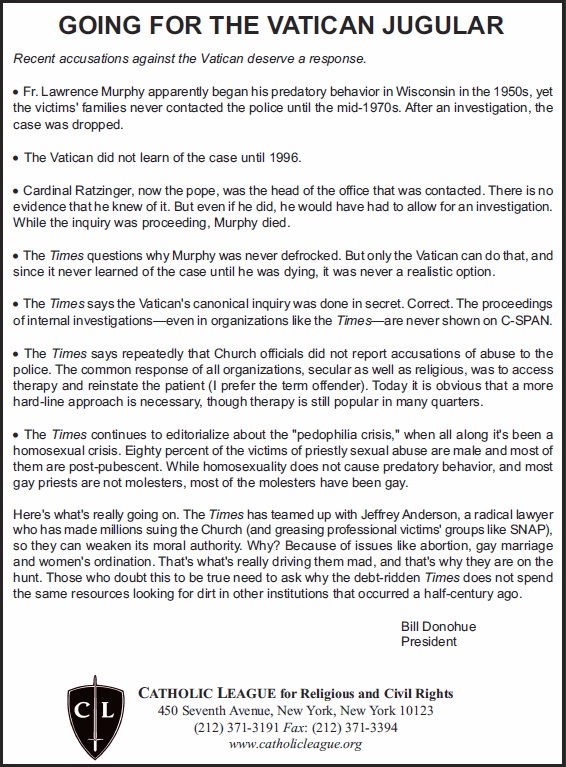
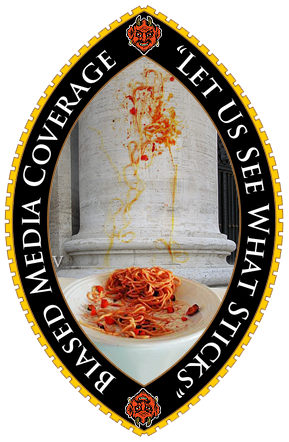 We’ve all seen that for weeks now, and especially during Holy Week, Catholics have been subjected by the secular and liberal catholic media to yet another onslaught of old stories about the Catholic Church and clerical sexual abuse.
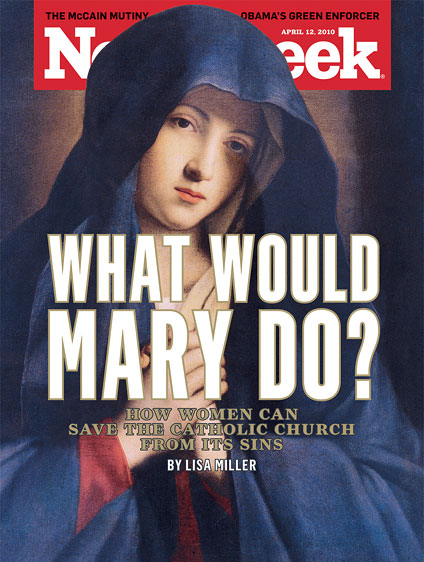 The MSM, for reasons all too clear, has focused on celibacy and on the male priesthood as the causes of this crisis. The only way to debunk this argument is to show how widespread this crisis is among married clergy in denominations where women are ordained and where they take part in church government.


 Fr. John Zuhlsdorf on Daily Rome Shot 1117 – A *POLL* about 2026-27: “Sorry… my bad. It is indeed SIX. 1. Rh8+! Kxh8 2. Qh2+ Kg8 3. Qh7+ Kf8 4. Qh8+ Ke7 5.…”




























