PODCAzT REMINDER: a hymn for Christ the King dissected

I dissected a hymn to Christ the King in PODCAzT 74.

Posted in PODCAzT |
Comments Off on PODCAzT REMINDER: a hymn for Christ the King dissected

PRAYERCAzT REMINDER: Christ the King (1962MR)

For those priests who may be called on tomorrow to sing the Mass for the Feast of Christ the King (the Last Sunday in October in the older, traditional Roman Calendar), there is a PRAYERCAzT available.

Posted in PRAYERCAzT: What Does The (Latin) Prayer Really Sound L |
Comments Off on PRAYERCAzT REMINDER: Christ the King (1962MR)

Card. Turkson replaces Card. Martino

I am sure you heard, but Card. Turkson has replaced Card. Martino at the Pont. Council for Justice and Peace.

In a rather unusual move, the Holy Father announced this viva voce at a lunch for the members of the Africa Synod.

Today is, moreover, the onomastico of the now former head of Justice and Peace, Raffaele Card. Martino.

This was like the other shoe dropping once Mario Toso was appointed Secretary of the same Council.

#   RINUNCIA DEL PRESIDENTE DEL PONTIFICIO CONSIGLIO DELLA GIUSTIZIA E DELLA PACE E NOMINA DEL NUOVO PRESIDENTE

Il Santo Padre ha accolto la rinuncia presentata per raggiunti limiti d’età dall’Em.mo Card. Renato Raffaele Martino all’incarico di Presidente del Pontificio Consiglio della Giustizia e della Pace ed ha chiamato a succedergli nel medesimo incarico l’Em.mo Card. Peter Kodwo Appiah Turkson, finora Arcivescovo di Cape Coast (Ghana).

Posted in SESSIUNCULA |
7 Comments

WDTPRS: Christ the King (1962 Missale Romanum)

From my weekly column in The Wanderer:

What Does the Prayer Really Say?  Last Sunday in October – Christ the King (1962 Missale Romanum)

[…]

Each year Holy Church presents to us the history of salvation, from Creation to the Lord’s Coming (His First and also His Final Coming).  At this time of year, as we move in the Northern Hemisphere into the darkness of autumn and winter, as we head toward the end of the liturgical year, we more and more in the Church’s liturgy consider the Four Last Things: death, judgment, heaven and hell.   This feast reminds us that the Lord Jesus is indeed coming and that He will not come as “friend” or “brother” or “gentle shepherd” with hugs and a fluffy lamb on His shoulders.  He will come as King and our Judge.  The Dies Irae prayed at Requiem Masses identifies Christ as “King of Fearful Majesty” and “Just Judge”.  He is of course a King and Judge of mercy to those who submit themselves to His rule. 

What will His coming be like?  If not with hugs and fluffy lambs, will it be all trumpets and angels with harps and banners?  Consider the description of His Coming in 2 Peter 3: 10-12 (Douay-Rheims):

“But the day of the Lord shall come as a thief, in which the heavens shall pass away with great violence and the elements shall be melted with heat and the earth and the works which are in it shall be burnt up. Seeing then that all these things are to be dissolved, what manner of people ought you to be in holy conversation and godliness? Looking for and hasting unto the coming of the day of the Lord, by which the heavens being on fire shall be dissolved, and the elements shall melt with the burning heat?”

Christ Jesus will judge us all, dear friends, and submit all things to the Father (cf. 1 Cor 15:28).  Having excluded some from His presence, our King, Christ Jesus, will reign in majestic glory with the many who accepted His gifts and thereby merited eternal bliss.

In the post-Conciliar, Novus Ordo calendar, the Solemnity of Christ the King is the last Sunday of the liturgical year, just before Advent begins.  In the traditional Roman calendar it falls on the last Sunday of October.  The feast was established by Pope Pius XI in 1925, as Pius Parsch says in The Church’s Year of Grace, to “renew in the minds and hearts of the faithful the ancient concept of Christ as divine King who, enthroned at the right hand of the Father, will return at the end of time in might and majesty.”  It also falls during October, a month of celebration for Communists, who impose radical atheistic materialism.  The different editions of the Missale Romanum give different emphases to this feast, though both look to the end times and the definitive coming of Christ’s Kingdom.

Since all of the prayers are of relatively modern origin, those for the older, traditional Mass and the Novus Ordo both written in the 20th century, we can dispense this week with abstruse references to 9th century sacramentaries.  I am sure you will miss them.

This week we can do something a little different.  I want to put the three main orations of the older, traditional Missale Romanum along with those of the so-called Novus Ordo.  We will forsake the Latin this time as well as vocabulary from the never to be neglected Lewis & Short Dictionary.  Since the1973 lame-duck ICEL versions don’t convey what the Latin really says, I will dig into the WDTPRS archive for our own slavishly literal renderings of the prayers.  For the translations of the older prayers, we can use the version in the beautifully bound hand missal from Baronius Press, The Daily Missal and Liturgical Manual (2007).

What is the point of this exercise?  Let’s see what theological changes were made to the feast by the reformers.  How we pray has a reciprocal relationship with what we believe: change the prayer and you change the belief.

OLDER COLLECT (1962MR)
Baronius Press:
Almighty and everlasting God,
who in Thy beloved Son,
the King of the whole world,
hast willed to restore all things,
mercifully grant that all the families of nations
now kept apart by the wound of sin,
may be brought under the sweet yoke of His rule.

In this Collect Christ is King “of the whole world” (Latin: universorum Rex) and the goal is that all nations be brought under His “yoke”, His rule.  The “yoke” from the Latin word iugum, is a symbol of subjugation. The ancient Romans made conquered armies pass under a yoke as a sign of their status.

NEWER COLLECT (2002MR)
LITERAL VERSION:
Almighty eternal God,
who desired to renew all things
in Your beloved Son, the King of the universe,
graciously grant
that the whole of creation, having been freed from servitude,
may zealously serve Your majesty and praise You greatly without end.

The first part of the prayer is the same as the older version, as you can see even from the different translations.  In the second part, however, instead of a reference to “nations”, we hear of “the whole of creation”.  Instead of “nations” being subjected to the King, “creation” is freed from the bondage caused by the Fall and sin.  In the older prayer there is an emphasis on this world, probably because of the rise of atheistic Communism.  In a sense, the older prayer has strong political overtones. The newer prayer has in mind the Prince of this world, the Enemy who dominates material creation until the end times, when Christ will return.  Both prayer have an eschatological vector to them, however.  They both aim at the ultimate triumph of Christ.

OLDER SECRET (1962MR)
Baronius Press: 
O Lord, we offer Thee the Victim of man’s redemption:
grant, we beseech Thee, that Jesus Christ Thy Son our Lord,
Whom we are immolating in this sacrifice,
may Himself bestow on all nations the gifts of unity and peace.

Once again we see the emphases on “nations”, meaning not just the Gentiles, or non-Jews, but on the actual nations of the earth.   Furthermore, the Latin has “nations” capitalized, “Gentes”.

NEWER SUPER OBLATA (2002MR)
LITERAL VERSION:
O Lord, offering to You the victim sacrifice of the reconciliation of humanity,
we are praying submissively that Your Son Himself
will grant all peoples the gifts of unity and of peace.

Again, the first part of the prayer is same as the older.  In the Latin there are minor changes, but it is effectively the same.  The second part, however, shows the theological change desired by the snipping and pasting experts of Fr. Bugnini’s Consilium.  In the older prayer there is an explicit appeal to “sacrifice” with also a strong verb “immolate”.  This sacrificial language was removed from the newer prayer.  But this prayer retains the reference “nations” (gentes).

OLDER POSTCOMMUNION (1962MR)
Baronius Press:
We have received the food of immortality and beg, Lord,
that we who are proud to fight under the banner of Christ our King,
may reign with Him for ever in His realm above.


There is clear military imagery and language.  We have a sense from this prayer that we are soldiers of a Militant Church under a great Captain and King.  We have been given food for the march to battle and glory.

NEW POST COMMUNION (2002MR)
LITERAL VERSION:

Having been remodeled according to the nourishment of immortality,
we beseech You, O Lord,
that, we who glory in obeying the mandates of Christ the King of all things,
will be able to live with Him without end in the heavenly kingdom.


The first part of the prayer and the very last part are essentially the same as they were before the Conciliar reform.  The middle part eliminates the military images.  Instead of fighting through the victory and glory in heaven, we “live” (vivere) with Him in the heavenly kingdom.

All in all, it is hard to find fault with the newer prayers for the Solemnity of Christ the King, celebrated at the end of the liturgical year.  The change of placement of the feast and the change of the theology of the prayers probably reflect the soft approach to Communism adopted by Rome in those years, called ostpolitik, a conscious de-emphasis of triumphant language and imagery.  It is as if the writers of the newer prayers did not want to give the impression that Christ was to be accepted as Lord and King by political entities in this earthly existence.

Posted in SESSIUNCULA, WDTPRS |
8 Comments

liberal LCWR sisters are lawyering-up

From a reader:

I just wanted to pass onto you this tip I received about the Apostolic Visitation of U.S. Women Religious.  The second part of the questionnaire sent by Mother Clare Millea to superiors general of the American women religious orders was sent this past month.  The deadline for orders to complete these questionnaires is November 1.  However, many of the LCWR-friendly orders, having read the questionnaire and "lawyered up" with canon lawyers who have advised them of their rights and responsibilities, will be informing Mother Clare that they will need "more time" to complete the questionnaire.

Needless to say, the Sisters are going to have their canonists review their carefully answered responses before submitting them. It will be interesting to see how Mother Clare and company react to this delay and what implications it will have on these communities, who are obviously extremely concerned about what the future holds for them.

That is from a reader.

Posted in SESSIUNCULA | Tagged
56 Comments

A “back door ecumenical gesture”

There is a very instructive article in The Times about the Anglican Provision.

In their latest meetings the Anglicans made no serious provisions for Anglican traditionalists.

There is an interesting parallel here for Rome and the SSPX years ago.  With the exception of The Roman Curia made no serious provisions for Catholic traditionalists.   Only.. there was no one to offer them a home.

And now we will be edified by the spectacle of liberals who out-Herod Herod.

My emphases and comments.

From The Times
October 24, 2009
Lord Carey ‘appalled’ by Pope’s treatment of Dr Rowan Williams

Ruth Gledhill, Religion Correspondent

Lord Carey of Clifton has called on his successor as Archbishop of Canterbury to complain to the Pope in person about not being consulted over plans to admit disaffected Anglicans to the Roman Catholic Church.  [First… that’s not going to happen.  Second, there is no way Archbp. Williams didn’t know this was coming.  My spies say that some time ago Williams was in Rome lobbying against this.   Just like a man tied to a train track he might not have know when, but he knew that it was coming.]

Lord Carey warned that the Pope’s strategy could damage relations with the Vatican.  [Remember that I wrote that the liberals would whine that this is not true ecumenism.  But… we have the Pope of Christian Unity.]  Lord Carey, who stepped down in 2002, urged Dr Rowan Williams to protest strongly when he visits the Pope in Rome next month.

Lord Carey was speaking after the joint press conference this week between Dr Williams and the Catholic Archbishop of Westminster, the Most Rev Vincent Nichols, to announce the move. Under an apostolic constitution decree, the Pope will set up personal ordinariates, or extra-geographical Roman Catholic dioceses, such as those that already exist in the military, to take in former Anglicans who oppose women bishops and accept the Petrine ministry of Rome.

Dr Williams appeared distressed when he said at the press conference, hosted by the Roman Catholic Church in Eccleston Square, that he had known nothing of the initiative until two weeks ago. [Ha.] He was notified formally [that’s the key… "formally"…] only when Cardinal William Levada, Prefect of the Congregation for the Doctrine of the Faith, visited last weekend to fill in some of the detail.

The Times understands that the former Archbishop of Westminster, Cardinal Cormac Murphy-O’Connor, [this is interesting…] a former co-chairman of the AnglicanRoman Catholic International Commission, known as Arcic, tried unsuccessfully to stop the apostolic constitution being published. [Amazing… the Catholic Archbishop tries to stop this.  He couldn’t.  But note that the new was not announced until he had stepped down.] His protests and others’ concerns delayed its publication, intended for last February.

The two archbishops presented the constitution as “a response [It’s a response.] by Pope Benedict XVI to a number of requests over the past few years to the Holy See from groups of Anglicans who wish to enter into full visible communion with the Roman Catholic Church”.

They said: “The announcement … brings to an end a period of uncertainty for such groups who have nurtured hopes of new ways of embracing unity with the Catholic Church.”  [Ok.  Uncertainty is, in large part, over.  So… what will the Anglicans who said they wanted unity do?]

Lord Carey said that he, too, had been caught unawares by the development, which some insiders believe has dealt a death blow to 40 years of official ecumenical dialogue under the auspices of the Council for Christian Unity, [What does that say for the Council for Christian Unity?  But… we have the Pope of Christian Unity.] if not to the Anglican Communion itself. The council was not involved in preparing the constitution.

He sought, however, to make the best of the development. “I give it a very cautious welcome,” he said. “It is worth considering because there are a number of deeply worried, anxious Anglo-Catholics who do not believe they have a constructive future in the Church of England with the ordination of women as bishops.  [Right!  They were shunned and ridiculed.  In a sense, there is a parallel with what happened with Catholic traditionalists here.]

“I was pastorally concerned for them when I was Archbishop of Canterbury. I know Rowan is as well. So this could go a long way to helping.”

The Times has learnt it was reports of bishops emerging in tears from the General Synod meeting last July that rejected all provision for traditionalists that finally provoked Rome into offering them a home.  [Sound about right?]

Lord Carey said that there were two positive aspects to the new Apostolic Constitution. “This initiatve is almost a back door ecumenical gesture.  [Or a real ecumenical gesture.] What we have seen is [wait for it… ] the failure of the final report of Arcic. Straightforward ecumenism at the theological level is going nowhere. [Exactly.] This fresh initiative could have surprising consequences.”

George Austin, former Archdeacon of York, said: “Rome has done this cleverly because [wait for it…] the Catholic bishops in England are liberal. [Get outta town!] The Pope has shown considerable leadership. [Remember this following phrase?] That is what Popes do.  [Remember how we used this in the context of the Pope receiving Pres. Obama?  That is what Pope’s do.] What has surprised me is the sort of people, and number, who have said they will leave.”

The previous decades of ecumenical relations and ARCIC etc. didn’t do nothing to create the climate where the Pope’s Provisions are nothing.  The Pope is going to keep the official dialogue going.   The Church of England was warned explicitly by Card. Kaspar that there would be serious setbacks if the Church of England stayed on its course.   Still, over the decades a great deal was accomplished at the affective level to bring us to this point.

Ecumenical work takes place on many levels, official and non, global and local and academic and religious and ecclesial, etc.  But at a certain point, a move had to be made.  The obstacles that remain on the official level with the Church of England are not going to be easily resolved, are they.

We now, however, have a Pope of Christian Unity.

Posted in SESSIUNCULA, The Drill | Tagged , , , ,
18 Comments

I need some education on an Anglican/Catholic point

I was under the impression that some – perhaps not all – Anglican priests who entered the Catholic Church as priests were ordained as Catholic priests conditionally.

I imagine that most, if not all, were ordained absolutely, without the condition.

Does anyone have any clarity about this?

Let’s restrict comments to the topic and to knowledgeable, informed answers, please.

Posted in SESSIUNCULA |
44 Comments

WSJ: liturgical diversity

From the WSJ with my emphases and comments:


The Pope Lets a Thousand Liturgies Bloom [This is an echo of a famous phrase that helped to spark the so-called "Hundred Flowers Campaign" in Communist China.  "Let a hundred flowers blossom, let a hundred schools of thought contend".  The idea was that this would make socialism stronger.  However, it also led to horrors as officials used the opportunity to flush out dissidents.]

 By FRANCIS X. ROCCA

Vatican City

The Vatican’s announcement this week that it will allow former Anglicans who join the Catholic Church to retain a collective [I pay attention to vocabulary when reading.  Funny he should use "collective" after that title.] identity, using many of their traditional prayers and hymns in their own specially designed dioceses, is an event with profound implications for both Anglican and Catholic life.

The decision, made to accommodate Anglicans upset with their church’s growing acceptance [Aren’t they just so diverse and tolerant?] of homosexuality and of women clergy, is likely to transform ecumenical relations between the churches. It will also heighten the internal Catholic debate over the requirement of priestly celibacy (which is to be routinely waived for married Anglican clergy who convert under the new rules, extending an exception made on a limited basis till now).  [I don’t know, but I get the sense that the press will try to whip that part into a froth of spittle and tears, but in reality it will remain a less important point in the more serious discussions that follow.  Not sure.  Just my sense of things right now.]

Perhaps the most striking effect of the Vatican’s move is the likelihood that, within the next few years, [some] Catholic [former Anglican] priests around the world will be celebrating Mass in a form that draws largely from the Book of Common Prayer. This resonant text, in its many versions, has informed Anglican worship since shortly after King Henry VIII led the Church of England away from Rome nearly five centuries ago.

Startling as that may sound, the Vatican’s adoption of a liturgy with Protestant origins is merely the latest—and hardly the most exotic—addition to the Catholic church’s liturgical smorgasbord. [Not exactly a respectful way to put it.] The range of worship forms has grown ever wider in recent years as the global church has become ever more diverse.  [So, the Catholic Church is diverse!]

Millions of Charismatic Catholics today, most commonly in Latin America but also in Africa and the Philippines, regularly attend spectacular Masses featuring Pentecostal-style faith healing, speaking in tongues and preaching that echoes the upwardly mobile aspirations of the Prosperity Gospel. [They do.  But should they?] Catholic Masses in sub-Saharan Africa typically feature exuberant dancing, not only by designated performers but by the congregation at large, and music derived from popular local traditions.

In the U.S., too, Catholic worship shows local influences, with many parishes resembling evangelical megachurches, not only in their theater-like architecture and wide range of community services but in the prominent role of lay people as administrators and eucharistic ministers. [Incorrect use of the term… but keep going.]

Pope Benedict XVI, even before he decided to extend the availability of Catholic "Anglican Use" liturgy, had made another, equally dramatic contribution to the church’s liturgical diversity. More than two years ago, the pope lifted virtually all restrictions on celebration of the so-called Traditional Latin Mass, also known as the Tridentine Mass, which had fallen out of use amid the modernizing reforms that followed the Second Vatican Council (1962-65), when Catholics around the world began worshipping in their local languages.  [Keep pushing through …  keep going…]

All these variations represent efforts by the world’s largest church to maintain unity among its 1.1 billion members, while extending their ranks. Charismatic Catholicism has proved an effective competitor to Protestant Pentecostalism in the developing world. The revival of the Tridentine Mass was an explicit overture to the schismatic ultratraditionalist [yawn] followers of the late Archbishop Marcel Lefebvre, just as Catholic Anglican Use liturgy has been designed to draw back a less recently departed group.

It may seem ironic that Pope Benedict should be presiding over such diversification of worship. After all, as head of the Vatican’s doctrinal office for more than two decades prior to his 2005 election as pope, then-Cardinal Joseph Ratzinger built a reputation as the church’s most vigilant guardian of orthodoxy, receiving [from idiots who didn’t know him] the nickname "God’s Rottweiler."

Benedict is hardly permissive when it comes to liturgy. [There are limits, you know.  At a certain point worship ceases to be Catholic… or even rational.] The Neocatechumenal Way, a growing international movement that the pope has long praised for its vigorous work in evangelization, was forced to modify some of its most distinctive practices—such as taking Communion in the form of a large loaf of bread shared around a table—before receiving final Vatican approval last year. The pope has also warned against liturgical dance that turns the Mass into a form of entertainment [because it ceases to be Catholic worship] and has made clear his preference for tradition when it comes to music (Gregorian Chant) and the distribution of Communion (on the tongue while kneeling, rather than the more recent practice of receiving the host in the hand while standing). [Keep in mind that those kneeling and Communion on the tongue are really still the norm, to which exceptions have been tolerated.]

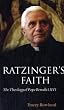
Yet according to the theologian Tracey Rowland, [author of an exceptional book on Ratzinger’s theology.  I recommend the book!] one of the pope’s mostWSJ: liturgical diversity informed and accessible scholarly interpreters, Benedict is a genuine "liturgical pluralist," ready to countenance any rite that "can be traced back as an organic development of apostolic provenance." The key concept, Ms. Rowland says, "is organic development. What he’s really against is your parish liturgy committee getting together and saying, ‘let’s do something different.’ "

Though even most Catholics are not aware of it, many sanctioned modes of worship have co-existed within the church over its 2,000-year history. The Ambrosian Rite, celebrated only in certain parts of northern Italy, with its own special prayers, vestments and type of chant, is one of the most ancient, dating back at least to the fourth century. Not to speak of the many Eastern Catholic Churches in full communion with Rome, which share a rich liturgical heritage with Eastern Orthodoxy. The Charismatic movement, of course, with its speaking in tongues and emphasis on "gifts of the Spirit," harks all the way back to the Acts of the Apostles and the Epistles of Paul.

An emphasis on uniformity of worship is a relatively recent development in Catholicism, Ms. Rowland notes. The 16th-century Council of Trent, which imposed a number of reforms on the whole church to fend off the rising challenge of Protestantism, prescribed the form of the Latin Mass that Catholics used almost exclusively for more than four centuries thereafter. By sanctioning the current trend toward liturgical diversity, Benedict is leading his church forward in the spirit of its oldest traditions.
—Mr. Rocca is the Vatican correspondent for Religion News Service.


A rather messy article.  Starts in one way but ends in another with a tenuous connection.

And what was going on with that Hundred Flowers thing?  Just being clever?

Did the Hundred Flowers thing work here?  Is it applicable?

The other day I rather provocatively labeled used "Anschluss" in conjunction with the Anglican provisions.  Is this the same thing?

Posted in The Drill | Tagged , ,
42 Comments

Personal prelature for SSPX?

From CNA with my emphases and comments.

Vatican could convert Lefebvrists into personal prelature, says Fellay

Santiago, Chile, Oct 22, 2009 / 01:03 pm (CNA).- In an interview with the Chilean daily, “El Mercurio,” the Superior General of the Society of St. Pius X, Bernard Fellay, acknowledged that the Vatican is considering the possibility of converting the Lefebvrist group into a personal prelature [get that?] as part of the discussions aimed at bringing about reconciliation. Fellay, who visited members of the SSPX movement in Chile, is one of four bishops whose excommunication was lifted by Pope Benedict XVI last January. Asked about the speculation that the Society of Pius X could be made into a personal prelature similar to Opus Dei, Fellay responded, “There is a lot of truth to that. I think the Vatican is moving towards that kind of canonical solution.”

He also noted that the controversy unleashed by Bishop Richard Williamson’s statements on the Nazi holocaust “was a well-planned attack, not against the Society, but directly against the person of Pope Benedict XVI, in order to tarnish his gesture.”

All very consistent with what I have been writing for quite a while.

Remember, Benedict XVI is the Pope of Christian Unity, willing that we be stretched for unity’s sake without giving up anything essential in who we are as Catholics.

Posted in SESSIUNCULA | Tagged ,
46 Comments

Ode to Autumn

Ode to Autumn

by John Keats

Season of mists and mellow fruitfulness,
    Close bosom-friend of the maturing sun;
Conspiring with him how to load and bless
    With fruit the vines that round the thatch-eves run;
To bend with apples the moss’d cottage-trees,
    And fill all fruit with ripeness to the core;
        To swell the gourd, and plump the hazel shells
    With a sweet kernel; to set budding more,
And still more, later flowers for the bees,
Until they think warm days will never cease,
        For Summer has o’er-brimm’d their clammy cells.

Who hath not seen thee oft amid thy store?
    Sometimes whoever seeks abroad may find
Thee sitting careless on a granary floor,
    Thy hair soft-lifted by the winnowing wind;
Or on a half-reap’d furrow sound asleep,
    Drows’d with the fume of poppies, while thy hook
        Spares the next swath and all its twined flowers:
And sometimes like a gleaner thou dost keep
    Steady thy laden head across a brook;
    Or by a cyder-press, with patient look,
        Thou watchest the last oozings hours by hours.

Where are the songs of Spring? Ay, where are they?
    Think not of them, thou hast thy music too,–
While barred clouds bloom the soft-dying day,
    And touch the stubble-plains with rosy hue;
Then in a wailful choir the small gnats mourn
    Among the river sallows, borne aloft
        Or sinking as the light wind lives or dies;
And full-grown lambs loud bleat from hilly bourn;
    Hedge-crickets sing; and now with treble soft
    The red-breast whistles from a garden-croft;
        And gathering swallows twitter in the skies.

Posted in Poetry |
12 Comments























