
It seems that Magnus Magnus has made a statement.

He’s a puzzle.
And here’s a puzzle.
Black to play.

Interested in learning? Try THIS.

Support the wonderful Dominican sisters!


It seems that Magnus Magnus has made a statement.
He’s a puzzle.
And here’s a puzzle.
Black to play.
Interested in learning? Try THIS.
Support the wonderful Dominican sisters!
In the 1962 Missale Romanum there are prayers “in order to repel storms”. I am using these prayers now in the face of hurricane Ian.
The prayers are ancient, to be found in the 5th c. Gelasian Sacramentary (PL 74) in “XLVII. ORAT. POST TEMPESTATEM ET FULGURA.” I also found that the Postcommunion was once used as a kind of Oratio super populum “In dedicatione loci illius ubi prius fuit synagoga… In the dedication of a place where before there was a synagogue.”
COLLECT
A domo tua, quaesumus, Domine, spiritales nequitiae repellantur: et aëreárum discedat malignitas tempestatum. Per Dominum.
Spiritales from spiritalis can have to do with the spiritual life. However, it also, in its first classical meaning, deals with breathing and wind and air. Malignitas definitely conveys “ill-will, malice, envy” and “stinginess”. Discedo, first of all, is “divide, part asunder” and then “leave, forsake” and “go away”. In military terms “decamp”.
Super literal:
We beseech You, O Lord, that the blasts of evil be driven from Your house: and the wickedness of the airy storms depart.
One English translation I found:
We beg you, Lord, to repel the wicked spirits from your family, and to ward off the destructive tempestuous winds.
One of the reasons why the Apostles were so frightened on the waters during the storm is because of the ancient belief that evil spirits (demons) could inhabit the waters and winds. And, when they saw the Lord walking on water, they at first didn’t know what to think.
SECRET
Offerimus tibi, Domine, laudes et munera, pro concessis beneficiis gratias referentes, et pro concedendis semper suppliciter deprecantes. Per Dominum.
O Lord we off You praises and gifts, giving thanks for the benefits that You have granted, and always suppliantly begging for those which are to be granted.
Note the humility of the petition. It isn’t quite like what we had for so long, and still have occasionally in the Novus Ordo: “O God, you are big. Help us to be big too.”
POSTCOMMUNION
Omnipotens sempiterne Deus, qui nos et castigando sanas, et ignoscendo conservas: praesta supplicibus tuis; ut et tranquillitatibus huius optatae consolationis laetemur, et dono tuae pietatis semper utamur. Per Dominum.
Almighty eternal God, who heal us by chastising, and preserve us by forgiving, grant to Your supplicants that we may both rejoice in the tranquil times of this hoped for consolation and also always make good use of the gift of Your mercy.
Another version:
Almighty and merciful God, who heal us by your chastisement and save us by your forgiveness; grant that we, your suppliants, may be heartened and consoled by the tranquil weather we desire, and so may ever profit from your gracious favors; through Christ our Lord.
The impact of the consistory list continues.
Please remember me when shopping online. Thanks in advance.
I saw a terrific puzzle.
White to move. The situation looks pretty dire for white. One move changes everything. Find it and explain. Again… tempo!

Priestly chess players, drop me a line. HERE
I got my part for my Mac, but I don’t know if I’ll have time to work on that with everything I have to do to prepare to depart for Rome and batten down for the storm and my absence.
Meanwhile…
A Dutch diocese has announced that 99 of its churches need to close in the next five years.
“Communities that still feel some vigor in them will have to be asked to wind down, and this is a difficult thing,” @jjvpeperstraten told @PillarCatholic ??:https://t.co/cg7ZsMx4Iq
— Luke Coppen (@LukeCoppen) September 26, 2022
And…
Francis apologists be like
“MYTH: Francis banned Latin Mass”
FACT CHECK: Francis is allowing one Latin Mass a month at 3am
Why do RadTrads do nothing but lie?????”
— Alberto (@FlatCath) September 25, 2022
And…
The new Prime Minister of Italy.
Wow. pic.twitter.com/fkKTM8I9Fs
— Aaron Ginn (@aginnt) September 26, 2022
Certain prelates in the Vatican will be quivering in their ballerina slippers.
 Please retweet and share around. The buttons are just up there… ↑ … see e’m?
Tropical Storm Ian is coming.
It will probably be Cat FOUR.
Here’s an action item for you believing priests and bishops out there. With confidence we can pray the prayers which the Church has designated against storms.
I believe what the Church believes. Do you?
Therefore….
BISHOPS OF THE GULF COAST AND INTERIOR: Stand on the steps of your respective cathedral churches, dressed in cope and miter and, surrounded by clergy, with crosiers in hand, pronounce from the traditional Rituale Romanum the Litany of Saints with the deprecatory prayers against storms. [below] Ring the cathedral bells.
Bells are sacramentals. They are “baptized” and given names. They speak. In valleys of mountainous countries, as storms approached, people would ring the bells and pray the Litany. That’s one of the reasons why we have consecrated bells!
You all talk to each other: perhaps coordinate your timing.
I know that in every chancery at least one person reads this blog, probably more. Readers, especially if you know your bishops personally, ask them to do this.
Look, you bishops out there… I know you are nervous about Rome frowning on you because you used a traditional book. You don’t have to publicize it. If you are nervous, do in it private. BUT DO IT.
For the love of God and those in your charge. Use the God given office and authority of a successor of the Apostles and PRAY DOWN THIS STORM!
PRIESTS OF THE GULF COAST AND INTERIOR: Ditto. Also, if you have blessed bells, ring the bells of your churches against the storm.
PEOPLE OF THE GULF COAST AND INTERIOR: Get on your priests about this. The prayers of priests and bishop are powerful. Also, ask your holy angels to protect you and to help you make prudent decisions.
Fathers, Bishops…
Use the old Roman Ritual (yes, the traditional book – you can do it! – it’s the real deal!) and pray the Litany with the deprecatory prayers against storms. A procession could be done around the grounds of the cathedral or even indoors… even with a very few.
You don’t have to be directly in the line of the storm to pray for others!
PROCESSION FOR AVERTING TEMPEST [Better in Latin, but here is the English.]
The church bells are rung, and all who can assemble in church. Then the Litany of the Saints is said, during which – at the right moment, namely, after the invocation, “That you grant eternal rest to all the faithful departed, etc.”, the following invocation is said twice:
From lightning and tempest, Lord, deliver us.
At the end of the litany the following is added:
P: Our Father (the rest inaudibly until:)
P: And lead us not into temptation.
All: But deliver us from evil.
Psalm 147
P: Glorify the Lord, O Jerusalem; * praise your God, O Sion.
All: For He has strengthened the bars of your gates; * He has blessed your children within you.
P: He has granted peace in your borders; * with the best of wheat He fills you.
All: He sends forth His command to the earth; * swiftly runs His word!
P: He spreads snow like wool; * He strews frost like ashes.
All: He scatters His hail like crumbs; * the waters freeze before His cold.
P: He sends His word and melts them; * He lets His breeze blow and the waters run.
All: He has proclaimed His word to Jacob, * His statutes and His ordinances to Israel.
P: He has not done thus for any other nation; * He has not made known His ordinances to them.
All: Glory be to the Father.
P: As it was in the beginning.
P: Our help is in the name of the Lord.
All: Who made heaven and earth.
P: Lord, show us your mercy.
All: And grant us your salvation.
P: Help us, O God, our Savior.
All: And deliver us, O Lord, for your name’s sake.
P: Let the enemy have no power over us.
All: And the son of iniquity be powerless to harm us.
P: May your mercy, Lord, remain with us always.
All: For we put our whole trust in you.
P: Save your faithful people, Lord.
All: Bless all who belong to you.
P: You withhold no good thing from those who walk in sincerity.
All: Lord of hosts, happy the men who trust in you.
P: Lord, heed my prayer.
All: And let my cry be heard by you.
P: The Lord be with you.
All: And with your spirit.Let us pray.
God, who are offended by our sins but appeased by our penances, may it please you to hear the entreaties of your people and to turn away the stripes that our transgressions rightly deserve.We beg you, Lord, to repel the wicked spirits from your family, and to ward off the destructive tempestuous winds.
Almighty everlasting God, spare us in our anxiety and take pity on us in our abasement, so that after the lightning in the skies and the force of the storm have calmed, even the very threat of tempest may be an occasion for us to offer you praise.
Lord Jesus, who uttered a word of command to the raging tempest of wind and sea and there came a great calm; hear the prayers of your family, and grant that by this sign of the holy cross all ferocity of the elements may abate.
Almighty and merciful God, who heal us by your chastisement and save us by your forgiveness; grant that we, your suppliants, may be heartened and consoled by the tranquil weather we desire, and so may ever profit from your gracious favors; through Christ our Lord.
All: Amen.
He sprinkles the surroundings with holy water.
Bishops, priests!
You don’t have to advertise this or call in the TV cameras (though that would be great, too). JUST DO IT.
C’MON! What do you have to lose?
From a reader…
QUAERITUR:
Do you know of anyone who prints missals in large print? My wife has what is called low vision. Perhaps one of your regular readers knows this.
Looking around a little I found these.
St Joseph Daily and Sunday Missal Large Type Editions Complete Gift Box 3-Volume Set
Daily Roman Missal – LARGE PRINT Black Leather Bound
1962 Traditional Catholic Sunday Missal Booklet Large Print Edition
Please pray down the hurricane advancing into the gulf. Apart from the damage it can cause, it could interfere with my departure for Rome.

Note the Latin! There’s a story there. For larger, left-click and open in a new tab.
This afternoon the second day of the two-day final of the Julius Baer Generation Cup will be played between Magnus Carlsen and Arjun Erigaisi. Carlsen’s play has been terrifying. He is closing in on 2900.
In other news, the Chess.com Global Championship is has seen the advance of Hikaru Nakamura, Levon Aronian and Ian Nepomniachtchi. Prize fund: $1 Million.
Priestly chess players, drop me a line. HERE
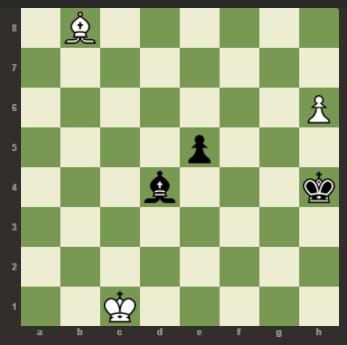
Puzzle: White to move. This is difficult. At least it was for me. NB: that sniper bishop on the a1-h8 diagonal is sighted in on the promotion square, but his own pawn is blocking the shot. The enemy king is able to move toward the pawn to take it or around it to block it.
You have to “seize the day”, keep the tempo and prevent that black pawn from advancing and opening up that diagonal. But how?
Interested in learning? Try THIS.
Your use of my Amazon affiliate link is a major part of my income. It helps to pay for insurance, groceries, everything. Please remember me when shopping online. Thanks in advance. US HERE – UK HERE

 PLEASE use the sharing buttons! Thanks!
In your charity would you please take a moment look at the requests and to pray for the people about whom you read?
Continued from THESE.
Let’s remember all who are ill, who will die soon, who have lost their jobs, and who are afraid.
I get many requests by email asking for prayers. Some are heart-achingly grave and urgent.
As long as my blog reaches so many readers in so many places, let’s give each other a hand. We should support each other in works of mercy.
If you have some prayer requests, feel free to post them below.
You have to be registered here to be able to post.
I ask a prayer for myself. I’m dealing with a particular challenge right now.
Also, I received this note today:
The person who runs the great online Douay-Rheims Bible website www.drbo.org has prostate cancer and no insurance. He is trying to raise money for surgery. I used his website many times each week and refer others to it. It is very helpful to find where something was said in the Bible.
Mail a donation to him at Paul Mann, PO Box 156, St. Mary’s, Ks 66536.
He also listed this need on his website.
https://www.drbo.org/donate.htm
[UPDATE:] Also, I received this note from “Betty”:
Father can you please pray for I am moving in a senior place I am 65 years I have to have $700 dollars for a deposit so can you please pray that I get some help with the deposit. Thank you and have a Bless Day
Too many people today are without good, strong preaching, to the detriment of all. Share the good stuff.
Was there a GOOD point made in the sermon you heard at your Mass of obligation for the 16th Sunday after Pentecost (26th Ordinary in the Novus)?
Tell about attendance especially for the Traditional Latin Mass. I hear that it is growing. Of COURSE.
Any local changes or (hopefully good) news?
A few thoughts of my own for the 16th Sunday after Pentecost.
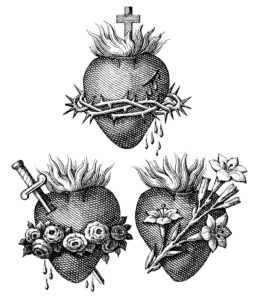 Is there a vice which God must hate more than pride?
It was pride that brought down Satan and the other apostate angels.
It was pride that brought down the entire human race in our First Parents.
Pride turned angels into devils, turned Paradise into this vale of tears. What does pride do to your interior landscape? Your soul?
Pride is worse than the sins of the flesh, for sins of the soul are of a higher order than fleshly, material failings. It is the beginning of other capital or spiritually lethal sins, for it begets, as the venerable Baltimore Catechism says, “sinful ambition, vainglory, presumption and hypocrisy”. St. Bernard (+1153) taught that pride is the ruin of all virtues and the origin of all vices.
In our Gospel reading for Sunday we hear the account in Luke 14 of the healing of the dropsical man.
Dropsy, a greatly underused medical term along with biliousness, grip and collywobbles, is short for hydropsy, which is edema, that is, the abnormal accumulation of fluids in the soft tissues. Dropsy makes your limbs and face puff up, even severely. A person can develop edema, become dropsical, due to, among other things, congestive heart failure, the inability of the heart to circulate the amount of blood needed to prevent fluid from leaking from capillaries into tissues. Spiritual writers have interpreted the dropsy of the man in Luke as a symbol of pride. The Lord heals him and then sends him away.
Pride is a spiritual illness more serious than any physical malady.
If you have a problem with your heart, such as congestive heart failure, you need a heart doctor.
If you have a heart swollen from pride, you require a Sacred Heart Doctor.
If you swiftly seek help for a physically failing heart, how much more urgent is action needed if you have the more serious spiritually failing heart?
It is when our hearts fail that we sin, for we have chosen not to love God in the way we were made to love Him: we choose to love something less.
When we examine our consciences before confession – GO TO CONFESSION! – how far do we go? And I don’t mean driving!
To make a really good examination, we have to be willing to get into the dark spaces, to find what is behind that other thing, that distraction from the real problem.
The image is clear in my mind right now, since I just moved some things in the garage that hadn’t been moved for a while. It’s amazing what scurrying activity the light of day can incite. To move that stuff took some resolve. If you don’t have a garage, think of the back your refrigerator. When something is wrong in there, you are eventually compelled to do something about it. How much more the putrescence that results from rotting pride and its attendants?
The problem is that, with pride, though it reeks before God, saints and angels – and our neighbors too, who usually see right through us – the Enemy of the soul is there with all sorts of distractions, shadows and even over-powering air fresheners precisely to prevent you from dealing with the foundational malady.
When Our Lord healed the dropsical man, He was in the house of a ruler of the Pharisees for a meal on the sabbath, a time when all works were forbidden by law. The dropsical man was present at the meal, purposely on display, as it were: “And behold, there was a man before him who had dropsy” (v. 2). He must have been obviously dropsical, very bad off indeed, noticeable. Would the famous healer, heal him on the sabbath? To heal was to perform a forbidden work, which could get Him into hot water with the authorities. Five times the Lord healed on the sabbath, by the way, that’s how much He loved those in need.
The Lord knew that this sabbath meal invitation was a trap, but it was also His opportunity to perform both a corporal work of mercy by healing, as well as a spiritual work of mercy by admonishing: He deflated the dropsical man, so to speak, and then sent him away. Then He deflated the prideful spectators.
At this sabbath meal Our Lord told a mashal, Hebrew for a parable, about a marriage feast. Invited guests have hurried to the places of honor (Greek protoklisía, chief seats or rooms or first reclining place), but their host comes and sends them down to lower places. He then waves someone far down in the pecking order up to a place of honor saying, “Ascende superius… Come a little higher!”, the secret motto of many a cleric.
With this parable as His starting point, Christ advises his fellow guests not to invite the fancy and the famous to their tables, but rather “the poor, the maimed, the lame, the blind” precisely because they have nothing with which they can repay the favor. The nimshal of the mashal, the twist in the parable that conveys the sometimes counter-intuitive point, is this: it is by being genuinely lowly that we are raised up to real glory. To receive the honor that really matters – and it’s not passing worldly notice or human recompense – give, serve, and do not expect anything. Be low, for our recompense is on high (cf. Matthew 20:16).
St. Gregory I – “the Great” (+604) helpfully lists in his Moralia in Iob (23,5) several degrees of pride, namely:
1) to believe that we have through our own efforts what we have received from God;
2) to believe that we have merited what we have gratuitously received;
3) to attribute to ourselves a good we lack, for example, great learning, when we do not possess it;
4) to wish to be preferred to others and to depreciate them.
Do any of those sound familiar? If we spot any of these blotches in our hearts, we had better seek a remedy, and fast, for we know “neither the day nor the hour” (Matthew 25:13) when our hearts will cease to beat.
The spiritual writer Reginald Garrigou-Lagrange (+1964) in his Three Ages of the Spiritual Life wrote:
“The remedy for pride is to tell ourselves that of ourselves we are not, that we have been created out of nothing by the gratuitous love of God, who continues freely to preserve us in existence; otherwise we would return to nothingness. And if grace is in us, it is because Jesus Christ redeemed us by His blood.
The remedy for pride is also to tell ourselves that there is in us something inferior to nothingness itself: the disorder of sin and its effects. As sinners, we deserve scorn and all humiliations; the saints have thought so, and they certainly judged better than we.”
Thomas à Kempis (+1471) wrote in the Imitation of Christ,
“Do not think yourself better than others lest, perhaps, you be accounted worse before God Who knows what is in man. Do not take pride in your good deeds, for God’s judgments differ from those of men and what pleases them often displeases Him. If there is good in you, see more good in others, so that you may remain humble. It does no harm to esteem yourself less than anyone else, but it is very harmful to think yourself better than even one. The humble live in continuous peace, while in the hearts of the proud are envy and frequent anger.” (I, 7)
In our Epistle reading, Paul told us, “have Christ dwelling though faith in your hearts” (Eph 3:17). Our best remedy for the congestive swelling failure of the heart that is pride is, therefore, ultimately what Christ asks us to do. “Learn from me,” he says, “for I am meek and humble of heart” (Matthew 11:29).
When you sense the swelling dropsy of pride, the catalyst of so many sins, ask especially the help of your holy Guardian Angel and of St Michael, whose mighty shout is “Quis ut Deus? Who is like God?” We sure aren’t, to turn inside out the pride-riddled lie of the serpent.
Call upon the Handmaid of the Lord, who was, as Dante calls her, the humble daughter of her Son (Par 33.1). Say aloud Mary’s mighty anti-pride manifesto, the Magnificat. Listen to her and find a cure for the drum-thumping of your own little failing heart. Learn from the beating of the holy Hearts, Immaculate and Sacred, and beat the sin of pride.
Finally, consider yourselves admonished by 1 Peter 5:
“Humble yourselves therefore under the mighty hand of God, that in due time He may exalt you.”
Many of you could care less about the Novus Ordo prayers. But remember, when the English translation of the Novus Ordo improved, it was like the old adage that a rising tide raises all boats. All boats. Many of our brothers and sisters do not have easy access to the Traditional Latin Mass or they haven’t yet experienced. They ought to and, with cordial and patient invitations from people like you they may yet. Meanwhile, the Novus Ordo is here, if not to stay, then… to hang out for a while longer.
With that in mind, and keeping in mind that, even if you are pretty much TLM exclusive, you can still gain a lot by drilling into these orations.
COLLECT – (2002MR):
Deus, qui omnipotentiam tuam
parcendo maxime et miserando manifestas,
gratiam tuam super nos indesinenter infunde,
ut, ad tua promissa currentes,
caelestium bonorum facias esse consortes.
This was, in a slightly different form, in the ancient Gelasian Sacramentary. In the 1962 Missale Romanum this Collect was prayed for the 10th Sunday after Pentecost.
Let’s now look at some vocabulary, the nuts and bolts of the prayer. Parco means, “to spare, have mercy, forbear to injure” and by extension, “forgive.” This verb is used quite frequently in liturgical prayer as, for example, in the responses during the beautiful litanies we sing as Catholics, especially in time of need: “Parce nobis, Domine… Spare us, O Lord!” During Lent the hauntingly poignant Latin chant informs our penitential spirit: “Parce, Domine… O Lord, spare your people: do not be wrathful with us forever.” The noun consors comes from the fusion of the preposition cum (“with”) and sors (“lot”, in the sense of a chance or ticket when “casting lots”, destiny, fate). A consors is someone with whom you share a common destiny. The densely arranged Lewis & Short Dictionary reveals that consors is “sharing property with one (as brother, sister, relative), living in community of goods, partaking of in common.” The English word “lot” can be both “fate” and a “parcel of land.”
Having been made in God’s image and likeness, we are to act as God acts: to know, will and love. Since God spares us and is merciful, then we must be similarly merciful and sparing if we want to be sharers and coheirs in the lot He has prepared for us.
Shall we get the obsolete ICEL version out of the way and then get on to what the prayer really says?
OBSOLETE ICEL (1973 translation of the 1970MR):
Father, you show your almighty power,
in your mercy and forgiveness.
Continue to fill us with your gifts of love.
Help us to hurry toward the eternal life you promise
and come to share in the joys of your kingdom.
SLAVISHLY LITERAL TRANSLATION:
O God, who manifest Your omnipotence
especially by sparing and being merciful,
pour Your grace upon us unceasingly,
so that You may make us,
rushing to the things You have promised,
to be partakers of heavenly benefits.
One of the ways God manifests His almighty nature is by being forgiving and sparing.
God is the creator and ruler, guide and governor of all that is seen and unseen, who keeps everything in existence by an act of His will, and reveals His omnipotence especially (maxime in our Collect) by means of mercy. By violating God’s will our first parents, i.e. the entire human race, opened up an infinite gulf between us and God. Since the gulf was immeasurable, only an omnipotent God could bridge that gap and repair it. God did not repair the breach because of justice. Rather, because in His goodness He is also merciful.
People often slip into the trap of associating manifestations of power with acts of justice. In this Collect, however, we affirm the other side of power’s coin.
The miracles worked by Jesus in the Gospels, loving gestures to suffering individuals, were acts of mercy often connected to forgiveness of sins. The affirmation of divine mercy, however, does not diminish God’s justice.
Mercy does not mean turning a blind eye to justice, for that would be tantamount to betraying truth and charity. Nevertheless, if justice must be upheld because God is Truth, so too must mercy be exercised because God is Love.
For God, balancing justice and mercy is simplicity itself, since He is perfectly simple. Knowing all things which ever were, are or will be as well as the complexities of each act’s impact and every other throughout history God has no conflicts in the application of merciful justice or just mercy.
For man, especially in times of trial, the simultaneous exercise of mercy and justice is very difficult indeed. Because of the wounds to our will and intellect, our struggle with passions, it is hard for us at times to see what is good and right and true or rein in our emotions even when we do discern things properly. We often oscillate between being first just and then merciful. Bringing the two streams of mercy and justice together is a tremendous challenge.
When we encounter a person whom we find able to balance justice and mercy together, we are deeply impressed by him and hold him up as an example of wisdom because he is acting more perfectly as an image of God than many others. We are moved by his example because deep inside we know how we ought to be conforming to God’s image in us.
One way in which we act the most according to God’s image in us, behaving as the “coheirs” Christ made us to be, authentic Christian consortes, is precisely when we act with compassion.
Is compassion the key to balancing mercy and justice? In biblical language, such as the Hebrew racham, compassion is often interchangeable with mercy. The Latin word compassio comes from Latin cum-patior, “to suffer/endure with” someone. Our whole being is moved and stirred when we witness compassion and suffering because they reveal in a mysterious way who we are as human beings and how we ought to act.
In a now famous passage from the Council’s Gaudium et spes, we are taught that Christ came into the world to reveal man more fully to himself (GS 22). Christ did this in His every word and deed during His earthly life, but His supreme moment of revelation to us about who we are was His Passion and death on the Cross and subsequent rising from the tomb. When we imitate His Passion, in sacrificial love and in the genuine “with suffering” which is compassion, we act as we were made by God to act. In sincere and concrete acts of compassion we, in our own turn, reveal man more fully to himself! We in our own way show God’s image to our neighbor and our neighbor is moved. We cannot not be moved unless we are already stony and cold and dead. Pope John Paul II wrote, “man cannot live without love”, both the love he gives and the love he receives.
When disasters strike communities, when disasters strike families and individuals, we witness acts of genuine compassion from many people in the aftermath. Something in them has been moved to action. Each gesture of compassion on the part of rescue workers, medical personnel, members of the military, law enforcement, first responders, relief agency representatives, people near or distant move the heart because in their actions we see that image after which every man, woman and child must resonate and long.
Unmerited acts of charity, mercy, justice, and compassion all make visible to our neighbor the God after whose likeness we ourselves are fashioned. We are moved by these acts because we are seeing in other people something really real. We are also moved by the suffering of others because suffering is a foundational element of human nature now transformed and given meaning by Christ’s Passion.
In sincere and concrete acts of compassion, in our biblical “bowels of mercy”, we in our turn reveal man more fully to himself. Individuals can by their example effect great changes in a society. If one person can do much, how much more could be done by armies of men and women thirsting for holiness and righteousness (i.e., a Church), striving to act in compassion, justice and mercy?
By His justice, God will give us what we deserve.
By His mercy, He will not give us certain elements of what we deserve.
By His pouring forth graces upon us, God gives us what we do not deserve.
His justice must be received with joyful trepidation, whether we want it or not.
His mercy we must beg with humble confidence.
His grace, unmerited by us, we embrace with exultant gratitude.


Coat of Arms by D Burkart
 Suburbanbanshee on ROME 26/10-11 – Day 35: Penultimate: “The illumination is a fun one. It literally shows Christ the Pharmacist, which is not a title you read every…”
 on ASK FATHER: “Why isn’t the Male Only Holy Orders a Dogma?”: “TonyO: Don’t you realize that the “spirit of Vatican II” only speaks in one direction can can only be discerned…”
 on ROME 26/10-11 – Day 33: All Souls: “Whoever thought it was a smart idea to link the refrigerators and freezers to the Internet should have to thoroughly…”
 on ASK FATHER: “Why isn’t the Male Only Holy Orders a Dogma?”: “@TonyO Well, you don’t listen to the voice of the spirit^tm by listening to the vox populi. The hoi polloi…”
 on WDTPRS: A charming translation for the Feast of St. Charles Borromeo – 4 November: “Dear Fr. Z. Thank you for your wonderful mention of John, Marquess of Bute (+1900), whose translation of the Roman…”
 on CQ CQ CQ – EWTN shut down its shortwave radio service on 31 October. Understandable, but I have some reservations.: “I am also nostalgic for the days of shortwave radio, back when I was in high school in the 1960s…”
 on ROME 26/10-11 – Day 33: All Souls: “If I remember correctly, the plaque on the USS Wisconsin dryly reports the aftermath of that hit with the phrase…”
 on ASK FATHER: “Why isn’t the Male Only Holy Orders a Dogma?”: “1. Vatican II serves as a foundational instruction to “listen to the voice of the spirit^tm”. Ok. So, “the people”…”

A Daily Prayer for Priests








They find you a pro-life agent in your area who commits to giving a portion of the fee to a pro-life group!

PLEASE subscribe via PayPal if it is useful. Zelle and Wise are better, but PayPal is convenient.
A monthly subscription donation means I have steady income I can plan on. I put you my list of benefactors for whom I pray and for whom I often say Holy Mass.
In view of the rapidly changing challenges I now face, I would like to add more $10/month subscribers. Will you please help?
For a one time donation...



Help Monks in Wyoming (coffee – UPDATED LINK) and Norcia (beer) and the wonderful "Soap Sisters" of Summit, NJ!

Please follow me on Twitter!










Visits tracked by Statcounter
since Sat., 25 Nov. 2006:
