ROME 22/6 – DAY 14: Stirring it up a little

ROME 22/6 – DAY 14: Stirring it up a little

I was not up to see it, but I am confident that the Roman sunrise was at 5:32 and that the sunset will be at 20:50.  In the Vatican City State the Ave Maria bell won’t ring at 21:15 as it ought.

There are 200 days left in this calendar year.

This corner view is really Roman.

ROME 22/6 – DAY 14: Stirring it up a little

My view while working on some chess openings.  My opening game pretty much sucks. Gotta improve.   Working on chess problems, with a nice view, a little pepper grinder converted into a bud vase with cheerful diminutive carnations… not bad.  I am so grateful to the people who donated for my stay here.

ROME 22/6 – DAY 14: Stirring it up a little

The new Decree about new religious communities gives St. Rita a headache.

ROME 22/6 – DAY 14: Stirring it up a little

The ceiling of Sant’Ignazio.  Let’s have another look.  If you could walk diagonally across the nave, navigating around all the chairs and little herds of tourists gathered near their vapid guides, it would look by genius mathematical design as if the figures in Andrea Pozzo’s Late Baroque vault images were moving.   Truly amazing.    Standing in the center (there is a disk in the pavement marking the spot) you have an illusion of infinite space.

ROME 22/6 – DAY 14: Stirring it up a littleROME 22/6 – DAY 14: Stirring it up a little ROME 22/6 – DAY 14: Stirring it up a little

Jesuits were into scientific things, such as new-fangled gadgets like telescopes.  They had a little observatory at the Roman College, part of the whole complex with Sant’Ignazio, the church.  For years, as I would walk over the Gregorian University in the afternoon for Latin with Fr. Reginald Foster, I would stop to look at the meteorological data that they posted each day in the case to the left of the door.    Let’s see what’s posted today?  Sunset?  Sunrise? Ave Maria?

ROME 22/6 – DAY 14: Stirring it up a little

Hmmm… that seems a little out of date.

ROME 22/6 – DAY 14: Stirring it up a little

Did someone lose the key to the case?

Meanwhile…

ROME 22/6 – DAY 14: Stirring it up a little

Supper with The Great Roman™ involved the killing of a kilo of clams:

Even better than last time.   I’m getting the hang of this.  Next time also with razor clams if they have any.

Please think about supporting the traditional French Benedictines of Le Barroux who are making good wine in the old papal vineyards from the Avignon Papacy.

ROME 22/6 – DAY 14: Stirring it up a little

OPPORTUNITY
10% off with code:
FATHERZ10

Posted in On the road, What Fr. Z is up to | Tagged
4 Comments

New Decree from Rome cuts the legs from under bishops and strangles new religious groups in the crib.

Correct me if I am wrong, but wasn’t it once a project of Francis to decentralize some of the power from the Roman Curia out to the local Churches?   I have this nagging memory that local bishops were to have more power.

On the other hand, in the last few years it seems to be going the other way.

Today, another thing struck local bishops, removing even more of their influence in their own dioceses under the guise of “accompaniment” as we all “walk together”.

The aim of this new Decree from Rome is to strangle nascent religious groups in the crib.  Strangle new traditional groups in the crib.  This makes sure that any bishop even slightly friendly to tradition will have his hands tied.

This is from Italian Vatican News:

Public associations of faithful in itinere [Latin, literally “on the way, road”]:

The green light from the Holy See is necessary

From now on, the diocesan bishop must have the authorization of the Dicastery for Institutes of Consecrated Life before establishing associations of the faithful who are waiting to become an Institute of Consecrated Life or Society of Apostolic Life

“Before the diocesan bishop erects – by decree – a public association of the faithful with a view to becoming an institute of consecrated life or a society of apostolic life of diocesan right, he must obtain the written permission of the Dicastery for Institutes of Consecrated Life and Societies of apostolic life “.

This is what Pope Francis ordered in a Rescript regarding public associations of faithful in itinere, following the audience granted on 7 February last to Cardinal João Braz de Aviz and Archbishop José Rodríguez Carballo, respectively prefect and secretary of the Dicastery for Institutes of consecrated life and Societies of apostolic life.

The Rescript, which enters into force today 15 June with the publication in L’Osservatore Romano, is part of the synodality promoted by Francis, intending to develop closer collaboration between the offices of the Holy See and the diocesan bishops in a “mutual listening ”, as the Pope underlined in his speech to the Plenary of the Congregation for Institutes of Consecrated Life and Societies of Apostolic Life, on 11 December last year. Listening and collaboration that are expressed in a process of discernment and accompaniment with particular attention to recent foundations and new forms of consecrated life, as stated in the Code of Canon Law (can. 605).

It’s part of “synodality” (walking together)!

“Recent foundations” will have “particular attention”.

Because – recently – there are lots of new groups forming that aspire to throwing off the last shackles of “restorationism”, right?  These rapidly multiplying new groups have only blue skies in their wide-open eyes as they lift their faces like fresh daisies toward the sunshine of Vatican II and take root in the rich soil of post-Conciliar liturgy.  Yeah, that’s the sort of groups that are trying to form in dioceses.

No, no.  The new groups forming aren’t interested at all in things like recognizable religious habits, clear charisms, spirituality anchored in the writings of saintly founders, traditional liturgy and devotions.  Nope.


Posted in The Coming Storm, The Drill, The future and our choices | Tagged
14 Comments

“Restorers”! “Against the Council”! “MAKE IT take root”! What are they really saying?

It strikes me that relative newcomer around the Holy See Press sector, listed as CNA‘s “senior Rome correspondent” – which as I get older strikes me as amusing – Hannah Brockhaus should rethink her priorities.

Francis had an audience with a bunch of editors of European Jesuit journals – imagine what that was like. In the Vatican News piece relating what was exchanged in their Q&A there are some 2400 words. The section Hannah chose to report on is 188 words of the whole. La Civilità Cattolica HERE.  What was her game?  Click-bait?

The topic: Francis criticized, belittled, “restauratori”, “restorers who do not accept Vatican II”.

According the Francis, …

Q: What signs of spiritual renewal do you see in the Church? Do you see any? Are there signs of new, fresh life?

FRANCIS: It is very difficult to see a spiritual renewal using very old-fashioned schemes. [Is that what he was asked?] We need to renew our way of seeing reality, of evaluating it. In the European Church I see more renewal in the spontaneous things that are being born: movements, groups, new bishops who remember that there is a Council behind them. [Like in Germany?] Because the Council that some pastors remember best is that of Trent. [And why would that be?] And what I’m saying is not nonsense. [Oh… my….]

Restorationism has come to gag the Council. [1!] The number of groups of “restorers” – for example, in the United States there are so many – is impressive. An Argentine bishop told me that he had been asked to administer a diocese that had fallen into the hands of these “restorers”. [Given Francis’ disdain for Americans and the United States, you would think that he knows that Argentina and the United States are sort of far from each other.] They had never accepted the Council. [2!] There are ideas, behaviors that arise from a restorationism that basically did not accept the Council. [3! Say it again, until people believe it.] The problem is precisely this: that in some contexts the Council has not yet been accepted. [4!] It is also true that it takes a century for a council to take root. We still have forty years to make it take root, then!

To MAKE IT take root.

That’s one way to do things.  If it doesn’t work, force it.

One thing I do know is that Francis doesn’t have 4o years.  I suspect he knows that and so he is… what?… dominated by the idea of these “restorationists”?  Whoever they are!  Are “restorationists” the boogey-men hiding under the bed?

QUAERITUR: Do those who want traditional liturgical worship and solid preaching really want things as they were before the Council?

No, I don’t think so.  For the most part, they want clear teaching from the Church and reverent worship.  They find that the old ways appeal more, work better, and are, therefore, their preference.  They have seen that the new ways are hardly recognizable as Catholic sometimes and they don’t prefer them.

QUAERITUR: Why would some pastors remember Trent better than Vatican II?

Just a couple thoughts on that.

Why accept the premise?  Maybe pastors know Vatican II quite well!  They have not forgotten Vatican II, which they had to study in seminary and which they have heard of ad nauseam ever since.  It could be that Vatican II just wasn’t as important in the long run, in the history of Councils, and, though they remember it, they have other things to worry about.

Another idea.

QUAERITUR: Could be it that when you read what the Council of Trent produced, it is clear?  The human mind, especially well-trained, is better proportioned to clarity than it is to foggy.  The documents of Vatican II, while they have moments of clarity, as when they cite previous Councils, get a little dreamy and ambiguous.

No.  This is a straw man.

There are some people who really hate the Second Vatican Council.  I am not sure that they know why they do.  There are others who resist what the Second Vatican Council’s documents say and suggest because they sense – on the basis of pretty good arguments – that they are imbued with modernism, in particulars and in an overarching way.   Some parrot this, others can articulate exactly what they mean with citations and arguments.  They resist certain things in the Council, while admitting that it was a real Council.

Others… okay, we can play this game forever.  There are always more wrinkles.

This is a straw man.   There is no homogeneous group as Francis describes.  It’s fantasy.

What is clear, however, is that if you want “those people”, those “restorationists” to come on side, it might be better to stop treating them like trash, even if you think they are trash.  It’s neither smart nor pastoral.   As a matter of fact, in places like the United States, where there are (apparently) many restorationists and where there is a demographic sink hole opening up under the church gobbling up those imbued with the last 60 years of Vatican II… it’s kind of stupid to treat them like trash, because they are going to be the only ones left.

Back to the Q&A with Francis and the Jesuits.

After he said what I fisked, above, Francis added comments about how wonderful the late Jesuit leader Fr. Arupe was.  Then he said:

A Jesuit from the province of Loyola was particularly aggressive toward Fr. Arrupe. He was sent to various places and even to Argentina, and always made trouble. He once said to me: “You are someone who understands nothing. But the real culprits are Fr. Arrupe and Fr. Calvez. The happiest day of my life will be when I see them hanging from the gallows in St. Peter’s Square.” [NB:] Why am I telling you this story? To make you understand what the post-conciliar period was like. This is happening again, especially with the traditionalists. That is why it is important to save these figures who defended the Council and fidelity to the pope. We must return to Arrupe: he is a light from that moment that illuminates us all. It was he who rediscovered the Spiritual Exercises as a source, freeing himself from the rigid formulations of the Epitome Instituti, the expression of a closed, rigid thinking, more instructive-ascetical than mystical.

I can’t help but think of a caudillo talking about opposition.

BTW… Arupe was the first General of the Jesuits to RESIGN instead of remaining in office until he died. He resigned and St. John Paul II – whose magisterium someone seems determined to obscure – appointed Paolo Dezza as General over Arupe’s vice general.

Arupe could be a personification of the 60s-70s for Francis, a halcyon age.

The Civiltà version has a footnote about the Epitome Instituti (consider the source, of course – Spadaro): “a kind of practical summary in use in the Society and formulated in the 20th century, which was seen as a substitute for the Constitutions. Jesuit formation in the Society for a time was shaped by this text to such an extent that some never read the Constitutions, which are the foundational text. For the pope during this period in the Society the rules risked overwhelming the spirit.”

Some insight is gained from this about whom Francis thinks “restorationists” to be.

Here’s a problem.

Vatican II was one among many Councils. Some of them were far more important in the history of the Church that Vatican II.  However, today some people (Francis?) have reduced Vatican II to a new Epitome Instituti.  It is the be all and end all for them.  However, there remains the whole gamut of the Church’s Councils and history.

Vatican II must be read with all other Council and not against all other Councils.  Certainly not instead of other Council.

What the team, the New Red Guard, around Francis want to do is turn Vatican II into the sole-hermeneutical principle through which the entirety of the Church, her doctrine, practices, laws, liturgy, are to be – must be – must be made to be – reinterpreted.

Never forget this when you hear certain figures in Francis’ orbit talk about the Second Vatican Council.

Meanwhile, I just read elsewhere that when Francis was faced with an accusation of being pro-Putin he responded:

“Someone may say to me at this point: so you are pro-Putin! No, I am not. It would be simplistic and wrong to say such a thing. I am simply against reducing complexity to the distinction between good guys and bad guys.”


Posted in Francis, Just Too Cool, Liberals, New catholic Red Guards, The Drill, The future and our choices, Vatican II | Tagged , ,
24 Comments

St Philip Neri’s revived Confraternity fed the poor and got attacked for it. Wherein Fr. Z rants

I seek to accomplish a few things in this post. First, it is good to set the record straight, lately distorted by a minor trad site, gloria.tv. Also, repeat something I’ve bashed away at for years, but haven’t bashed lately. Thirdly, pose a reminder about the times we live in.

This is the Oratory of the Caravita, in the clutches of the Jesuits, near to their great church Sant’Ignazio. Churches on this site have through history been in various hands and have been demolished and rebuilt. That’s how Rome is.

St Philip Neri's revived Confraternity fed the poor and got attacked for it. Wherein Fr. Z rants

For some years now it has been used by the far-lib English speakers in Rome who like hyper-touchy-feely liturgy on their own terms.  I used to stick my head in there once in a while on a Sunday just to see what was going on and who was there.  It was a who’s who of that crowd, including journalists, and what was done in there … I wouldn’t do with a gun to my head.

I do not for a second doubt their sincerity.  I think they’ve been over a long time bamboozled.

St Philip Neri's revived Confraternity fed the poor and got attacked for it. Wherein Fr. Z rants

In the entrance, narthex to the place one spots a painting of St. Giovanni Battista de Rossi, a magnificent saint who had epilepsy and who performed great works of corporal and spiritual mercy in Rome and was beloved, called by some another St. Philip Neri.

St Philip Neri's revived Confraternity fed the poor and got attacked for it. Wherein Fr. Z rants

As his health declined and he became a well-known confessor, he relocated to Ss. Trinità dei Pellegrini, which today is Rome’s official Traditional parish, and my adoptive parish, for I’ve known that church well since the late 80s.

St Philip Neri's revived Confraternity fed the poor and got attacked for it. Wherein Fr. Z rants

San G.B. died in 1763 and was buried in a side altar of Ss. Ss. Trinità.  He was beatified by Pius IX and canonized by Pope Leo XIII.  Eventually his body was moved to a church given his name on the periphery of the City.

Here is the inside the Caravita Oratory.  “Caravita” could be a distortion of the family name of a Jesuit who was known for his work with the poor.

The first thing you ought to notice is that the whole of the church is encircled with stalls.  That’s because this was a setting for activity of a Confraternity and it was a place for sacred concerts and oratories.   The Oratory is dedicated to the Trinity and St. Francis Xavier.

St Philip Neri's revived Confraternity fed the poor and got attacked for it. Wherein Fr. Z rants

St Philip Neri's revived Confraternity fed the poor and got attacked for it. Wherein Fr. Z rants

You can tell a lot about the thinking of the people who have charge of this little oratory by this photo.

St Philip Neri's revived Confraternity fed the poor and got attacked for it. Wherein Fr. Z rants

There is a body of a Blessed in the plant stand… er… altar.

Tools for Sunday.  The bongo drum is not to be ignored.

St Philip Neri's revived Confraternity fed the poor and got attacked for it. Wherein Fr. Z rants

Now we get to another point.   As I walked in, this was still on the door of the oratory.

St Philip Neri's revived Confraternity fed the poor and got attacked for it. Wherein Fr. Z rants

What’s going on?  For the 40oth centenary of the Canonization of Sts. Philip Neri and Francis Xavier (and other famous saints) the Confraternity found by “Pippo Bbono” Neri of Ss. Trinità dei Pellegrini sponsored a lunch, in two seatings, for poor people.  The place they chose for this was within the Caravita Oratory.

And… to their everlasting credit… the Jesuits let them use the Oratory!  Kudos for that, and charity covers a multitude of sins.

I remember years back when I was involved with the Chinese community in Rome that they, having no place meet outside of the church they could use, set up tables in the church so they could eat together and stay close.

At first, that rubbed me the wrong way.  I quickly understood it to be the most Roman of approaches.  Romanità is flexible, permeable.  There are limits, but by Romanità we don’t let the perfect be the enemy of the good.  Would the Chinese have desired to meet elsewhere for lunch? Of course.

Would the organizers of the lunch for the poor at Caravita have preferred to hold it somewhere else?  Such as in the very refectory of the complex of Ss. Trinità founded by St. Philip attached to their church? The one in the hands of another group that won’t let it go even though it is really needed by the parish?   Of course.

The Confraternity that is being revived at Ss. Trinità is serious about being what they were founded to do: perform works of mercy.  Lots of confraternities survive in a handful of members who, a couple times in year, put their gear on and carry a banner.  That’s not what confraternities were for.  They were for action, not show.

I’ve railed away over the years that those who love Tradition have to be the first ones to get involved with works of mercy in their parishes.  They must be the first to volunteer and be available.  Always.  This is authentic Catholic identity of the finest Tridentine stamp.  The confraternities, each having different apostolates, exploded in the post-Tridentine, Counter-Reformation.  Members of nobility and simple laborers alike belonged side by side.  They fed the poor, educated orphans, took care of widows, picked up bodies out of the Tiber River and gave them burial.   This apostolic action was a direct result of the identity of the Church expressed in the Council of Trent.  This is when new orders sprang up, missionaries sailed off into the blue, veneration of the Eucharist and defense of the priesthood was magnified into an entire world movement expressed in the Baroque.

And they fed the poor.

The folks at gloria.tv posted a snarky attack on the people of Ss. Trinità and their day of feeding the poor at the Caravita Oratory.   They said that they desecrated the church by feeding the poor, by “turning it into a restaurant”.  They said, I am not making this up, that the people of Ss. Trinità and the Confraternity did this for an ignoble purpose: “La chiesa ristorante allevierà senza dubbio l’odio di Francesco e della sua fazione contro il Rito Romano…. The church restaurant will without question alleviate the hatred that Francis and his ilk have toward the Roman Rite.”

Let’s be clear about something.  Libs control everything.  When they want to feed the poor, they’ve got all sorts of places to do it in Rome.  When traditionalists, who have virtually nothing at their disposal, want to feed the poor, they make due and get the job done.

gloria.tv owes the good people of Ss. Trinità, and its pastor whom they attacked by name, an apology.

I actually have some sympathy with their frustration and some things they post, though I don’t see it very often.  There are some aspects that I find a bit off-putting, including their video production values.  I want things like gloria.tv to succeed in the right way and for the right reason and not just because they might appeal to anger and frustration – which we admittedly succumb to.

Here’s something to think about.

By posting that nasty post about Ss. Trinità, what did gloria.tv a) hope to accomplish? b) actually accomplish?

Did they help or hurt the overarching cause that we who want our Catholic Tradition are now struggling to maintain under the cruelty of Traditionis custodes?

It seems to me that gloria.tv would do well to bring a camera or two and see what goes on at Ss. Trinità: the church packed on Sundays and feasts with young people from all over the world, young families, regular collection of groceries for a “food bank”, ongoing catechesis.  When dozens of people show up for Vespers on a blazing hot Sunday afternoon,… maybe something is happening.

Go to some other churches in Rome’s center and see what’s going on.

It is inevitable, in the face of the demographic sink-hole opening up under the Church that there are going to be declines and massive losses of numbers and properties.  Eventually, only the committed will remain, charismatics, converts, traditionalists.  They will have to find each other, work with each other.   I find this a hopeful vision.  It is realistic, too.  There will be frictions, of course.  But imagine Catholics committed and catechized like converts, who bring in their knowledge of Scripture from other churches and zeal of apostolic action, enthusiastic application to prayer from charismatics who now also have stronger and clearer Marian and Eucharistic devotion, and the grounding, anchoring, energizing force of Traditional Sacred Worship to provide the impetus out of which Catholic life flows and the goal back to which all things are drawn.

St Philip Neri's revived Confraternity fed the poor and got attacked for it. Wherein Fr. Z rants St Philip Neri's revived Confraternity fed the poor and got attacked for it. Wherein Fr. Z rants St Philip Neri's revived Confraternity fed the poor and got attacked for it. Wherein Fr. Z rants

One of the people said, “No one has ever poured anything to drink for me.”

Posted in ¡Hagan lío!, Hard-Identity Catholicism, Wherein Fr. Z Rants | Tagged , ,
6 Comments

ROME 22/6 – DAY 13: What is it with Jesuits and cubes?

ROME 22/6 – DAY 13: What is it with Jesuits and cubes?

5:32 was sunrise in Rome and 20:49 will be sunset, by which time I hope to be eating Spaghetti alle vongole with The Great Roman™.  The Ave Maria bell is in its 22:15 cycle.

I put some time and energy into a longer post today, with quite a few Roman things and some substantive comments.  So, here is a quick walk through of sights.

BTW… wavy flag… gotta start thinking about October.

Every city needs a street with a large marble foot.

ROME 22/6 – DAY 13: What is it with Jesuits and cubes?

The once great Collegio Romano, the Jesuit school.  Now a state school… high school, I think.

ROME 22/6 – DAY 13: What is it with Jesuits and cubes?

St. Ignazio.

ROME 22/6 – DAY 13: What is it with Jesuits and cubes?

“My Father’s house is a house of prayer….”

ROME 22/6 – DAY 13: What is it with Jesuits and cubes?

St. Robert Bellarmine, Doctor of the Church and Fascinating Man.

ROME 22/6 – DAY 13: What is it with Jesuits and cubes?

A prayed here for a long time for … about and for a certain group and certain person.

ROME 22/6 – DAY 13: What is it with Jesuits and cubes?

Nice job taking care of the grave and altar of one of your greatest saints, guys.

ROME 22/6 – DAY 13: What is it with Jesuits and cubes?

St. Aloysius Gonzaga.

ROME 22/6 – DAY 13: What is it with Jesuits and cubes?ROME 22/6 – DAY 13: What is it with Jesuits and cubes?

Again, I prayed here for a good long time.

ROME 22/6 – DAY 13: What is it with Jesuits and cubes?ROME 22/6 – DAY 13: What is it with Jesuits and cubes?

A young American Jesuit came out for Mass in English and used the REAL altar!  There were lib shenanigans for the three people present.

Why, I wondered, di the female reader have to raise her hand during the responsorial psalm?  For, what, three people?

“‘Cause… ’cause… YOU HATE VATICAN II!”

Meanwhile, not triumphalist at all.

ROME 22/6 – DAY 13: What is it with Jesuits and cubes?

The confessional… “It’s bigger on the inside!”

ROME 22/6 – DAY 13: What is it with Jesuits and cubes?

And.. you know… it really is!  It opens onto eternity.

It’s sort of like another cube, however.   Hmmm.

ROME 22/6 – DAY 13: What is it with Jesuits and cubes?

The confessional of Fr. Cappello (+1962).

ROME 22/6 – DAY 13: What is it with Jesuits and cubes?

A view from below.

ROME 22/6 – DAY 13: What is it with Jesuits and cubes?

A presepio.  Not bad.  No bridge with a pig, but not bad.

ROME 22/6 – DAY 13: What is it with Jesuits and cubes?

Meanwhile, I had some shopping to take care of.  No, not one of these.  I already have all this stuff.

ROME 22/6 – DAY 13: What is it with Jesuits and cubes?

Boxes of birettas give me almost as much joy as the banks of flowers at Campo de’ Fiori.

ROME 22/6 – DAY 13: What is it with Jesuits and cubes?ROME 22/6 – DAY 13: What is it with Jesuits and cubes?

Lunch: Rip figs with prosciutto.  A material proof that God loves us.

ROME 22/6 – DAY 13: What is it with Jesuits and cubes?

Please remember to give some business to friends of this blog, such as the traditional Benedictines in Norcia. They make mighty good beer, my friends, and they are, thereby, building their new monastery.

ROME 22/6 – DAY 13: What is it with Jesuits and cubes?

Posted in On the road, What Fr. Z is up to |
7 Comments

Francis: Patron Saint of…. ?

From Catholic Culture:

Francis: Patron Saint of.... ?

Posted in Lighter fare | Tagged
1 Comment

ROME 22/6 – DAY 12: Full iron circle

ROME 22/6 – DAY 12: Full iron circle

The time of sunrise in Rome today was 5:32.  Sunset will fall at 20:49.  The Ave Maria won’t ring at 21:15 in the Vatican, but it should ring at one Roman parish at 21:19.

It is the feast of St. Anthony of Lisbon… er um… of Padua (+1231).  He was canonized a year after his death – at only 35 – and named Doctor of the Church by Pius XII.

My favorite story about Anthony is that when he was in heretical Rimini the people wouldn’t listen to him.  He therefore went to the shore and began to preach and the fish gathered and stuck their heads out of water to show that they were listening.

Also, for fun, there is a recording of a hymn called “O Gloriosa Domina” by Venantius Fortunatus which Antony’s mother used to sing to him.  It is said that he died singing this beautiful hymn to Our Lady.

Play video

And… how about this! Stunning… Matthew Curtis does all the voices. I have used his pieces in my LENTCAzTs.

Play video

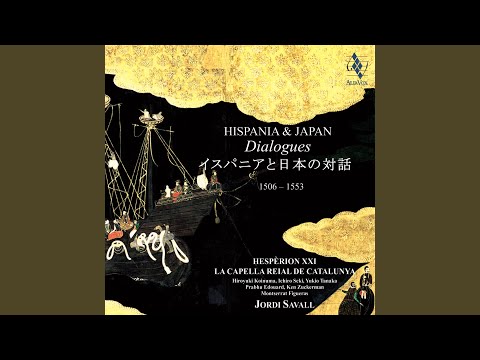
It is done quite differently on this disc, which brings together the music of the East with what early missionaries carried from the West.
Play video

US HERE – UK HERE – It seemed appropriate

ROME 22/6 – DAY 12: Full iron circle

The Gesù.  The Roman flagship of the Jesuits.  A monumental rebuke to the Protestant Revolt and confident expression of joyous Catholicism, focused on the Most Holy Name.

ROME 22/6 – DAY 12: Full iron circle

This is how the Church perceived herself the gifts given by God from on high.

ROME 22/6 – DAY 12: Full iron circle

The whole building was directed to the altar, where the priest renewed the Sacrifice of Calvary, the focus of the whole place.

So, obviously, set up something in front of the focal point of the building.

ROME 22/6 – DAY 12: Full iron circle

I waver between thinking about The Borg or, perhaps, the ring of power that Sauron gave to the Witch King of Angmar.

ROME 22/6 – DAY 12: Full iron circle

It reminds me of any number of movies where someone goes up to the cube with the glowing streak in it and, when he touches it, the ancient thing with glowing eyes and tentacles comes out and eats everyone in the room except the one who gets away to sputter the tale.

ROME 22/6 – DAY 12: Full iron circle

ROME 22/6 – DAY 12: Full iron circle ROME 22/6 – DAY 12: Full iron circle

If you are going to set up something that looks like it belongs in a mini-golf course, you might as well have a strange Paschal Candle stand too.

ROME 22/6 – DAY 12: Full iron circle


UPDATE: One of my correspondents sent this image with the comment.

“The Gesu candle stand looks like a gyro.”

ROME 22/6 – DAY 12: Full iron circle


Meanwhile, on your left, the Catholic Faith Triumphs over Heresy on the right side of the tomb of St. Ignatius Loyola.   Truth is smashing Heresy and the snakes are making a slithering run for it.  Happy, intense putti lend a helpful hand by tearing up the ghastly books of the heretics.

ROME 22/6 – DAY 12: Full iron circle

Which heretics, you ask?

ROME 22/6 – DAY 12: Full iron circle

ROME 22/6 – DAY 12: Full iron circle

Looking across the nave you see the altar of St. Francis Xavier, with the relic of his arm that baptized so many.

ROME 22/6 – DAY 12: Full iron circle ROME 22/6 – DAY 12: Full iron circle

In the nearby chapel, the famous Sacred Heart, so much copied.

ROME 22/6 – DAY 12: Full iron circle ROME 22/6 – DAY 12: Full iron circle

On the other side there is a chapel dedicated to Mary’s Immaculate Conception.  It is a privileged altar.

ROME 22/6 – DAY 12: Full iron circle ROME 22/6 – DAY 12: Full iron circle

ROME 22/6 – DAY 12: Full iron circle

These things in juxtaposition.  Sigh.

Lunch.


Posted in Jesuits, On the road, What Fr. Z is up to |
20 Comments

GREGORIAN MASS REMINDER

A reminder about Gregorian Masses.   I have a post HERE in which I try to match up priests who are available to take a Gregorian series of Masses with people who desire them.

There are a couple of issues.

First, some people desire TLM only.  This request is a little harder to match up.

Also, some people – some priests – seem not to take seriously my own request to write to me with the proper subject line and information in the body of the email.  This is a little exasperating for me.  Please, take care to write as I indicate.  It really helps.

In our Catholic tradition we celebrate Requiem Masses for the dead on the day we receive the news, or on the day itself or the day of burial, the third day, the seventh day and the thirtieth day (“month’s mind”).  We remember anniversaries.

Gregorian Masses are an ancient tradition going back to St. Gregory the Great (+604) of a continuous series of thirty consecutive Masses said in thirty days for the soul of a deceased person to release them from the Purgatory. Once upon a time, the Masses could only be at the main altar at the Monastery of St. Andrew in Rome, where Gregory had received a message from a “purgatorian” monk who had been released because of thirty Masses said for his soul. Eventually, the “privileged” altars were designated in other Roman churches. I wrote about one such the other day. Often when you visit Roman churches you will see that an altar has an inscription “ALTARE PRIVILEGIATUM”. Originally, these were designated by the Holy See. However, I think that the Holy See granted to bishops to establish them in their dioceses.

With the retooling of all the indulgences, these privileges were all canceled.  So, like priests who have been canceled, these altars stand silent and forgotten in the side aisles of churches, like so many sentinels of better days.

However, the Gregorian Masses remain in the Church and we have confidence in their efficacy, just as our forebears did going back to the 6th century and a Pope whom we call, “the Great”.

Posted in "How To..." - Practical Notes | Tagged ,
Leave a comment

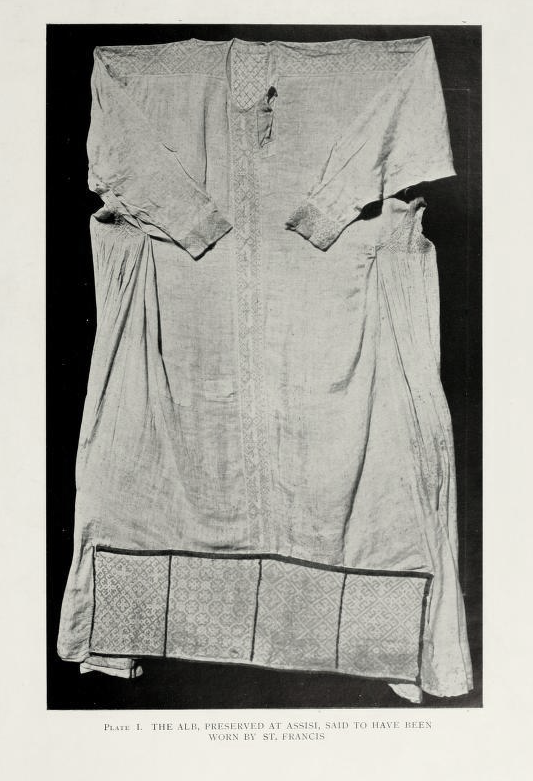
Francis used lace… loved lace… we have proof

The other day Francis said that lace was against the Church.  HERE  Lace is against the Church!  Against the Council.  It’s even against your mothers.

Francis, however, used lace.

At LAJ,

The alb of St. Francis (who lived from A.D. 1181-1226) is preserved in the convent of St. Clare in Assisi. Here is a look at it:

Francis used lace... loved lace... we have proof

If you are perhaps thinking that is just some sort of brocaded textile apparel, here is a closer look where you will see the actual lace work.

Francis used lace... loved lace... we have proof

Clearly, St. Francis didn’t know the that lace was bad for the Church and for mothers.

Posted in Lighter fare | Tagged
6 Comments

Your Sunday Sermon Notes: Trinity Sunday

Your Sunday Sermon Notes: Trinity SundayToo many people today are without good, strong preaching, to the detriment of all. Share the good stuff.

Was there a GOOD point made in the sermon you heard at your Mass of obligation for Trinity Sunday?

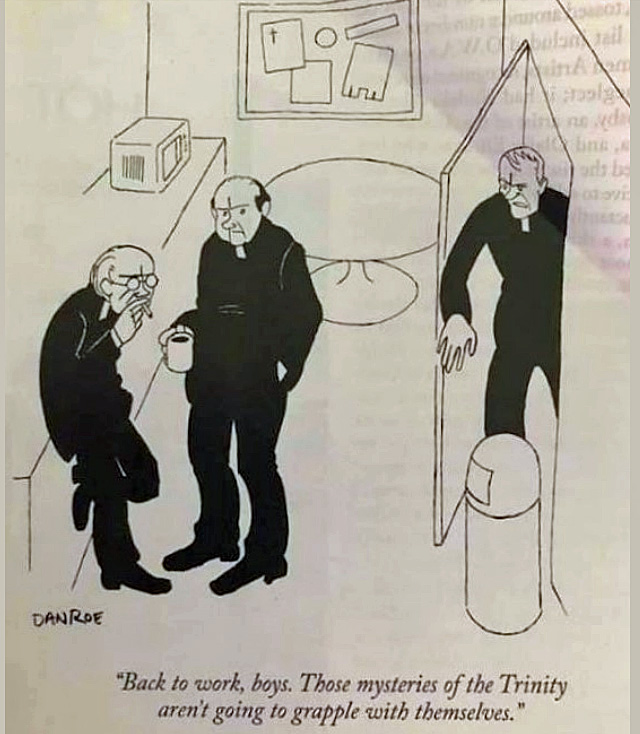
Also, since this is a day when some priests or deacons absolutely go to the zoo in trying to talk about the Trinity, did you hear any really good heresy today, or something just plain stupid?   We can have an exception to just good stuff this week.

Tell about attendance especially for the Traditional Latin Mass.  I hear that it is growing.  Of COURSE.   The church was jammed in Rome.  As “diverse” a crowd as you will see anywhere other than a major international airport.

Any local changes or (hopefully good) news?


Posted in SESSIUNCULA | Tagged
8 Comments