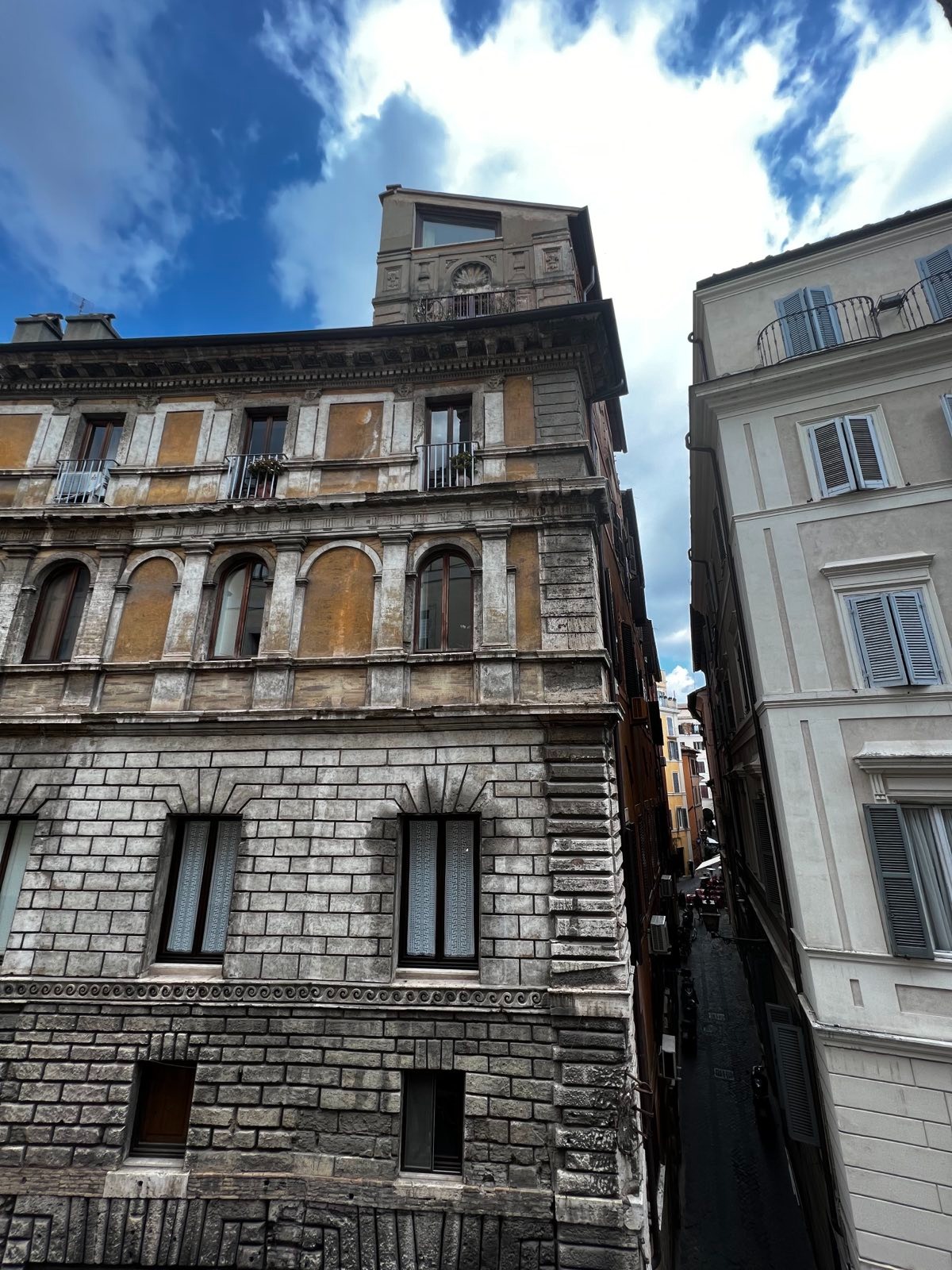
Photo by Jacob Stein
Daily Mass Fervorino HERE
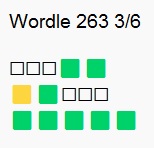
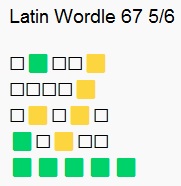
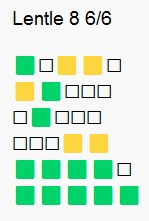
WORDLE



OPPORTUNITY
10% off with code:
FATHERZ10

I read first at Rorate that a 57 year old bishop of the Diocese of Arecibo, Puerto Rico, was summarily removed from the diocese by Francis the Merciful, first of his name.
He was asked to resign. He refused. He was s-canned.
There was no reason given. He hasn’t been charged with anything. If he had been an abuser, like Francis’ friend Zanchetta, perhaps he would have been promoted… like Francis’ friend Zanchetta.
I did see this on Crux, which places two issues side by side and which I’m convinced are related.
Fernandez Torres was also accused of refusing to transfer seminarians from his diocese to the new Interdiocesan Seminary of Puerto Rico, and he was the only prelate not signing several statements made by the bishops’ conference, including a national ban on the Tridentine Mass following Pope Francis’ motu proprio Traditionis custodes, that limits the use of the traditional Latin liturgy. The bishop also voiced his opposition to a bill that would have banned “conversion therapy” for homosexuals.
So, he wasn’t cooperating with the other bishops, who are trying to crush people who want the Traditional Latin Mass and who are soft on sodomy.
Remember about the Bishop of Mayagüez, forbade Roman chasubles, linen tablecloths, chalice veils, maniples, birettas…. That’s what is going on in PR.
Again I had my thought of gathering the cancelled priests, bishops and even cardinals at some monastic complex of a now extinct lib order and starting a seminary.
From a reader…
QUAERITUR:
For eight years (this will be the ninth) my family has hosted a party on Midsummer’s Eve, complete with sung Vespers (last four years with a priest), bonfire, homemade water slide, and much food. Once or twice the feast has rubbed elbows with the Sacred Heart, but this is the first year Sacred Heart has fallen on 6/24.
My Novus Ordo ordo says St. John has been transferred to the 23rd, with I Vespers on the 22nd. My FSSP ordo says it’s been transferred to the 25th, with no I Vespers on the 24th. My TAN wall calendar says “Trad: vigil of St. John” on the 23rd and “Trad: Nativity of St. John” on the 25th!
Question: Should we even have the party? And, if so, when? If, properly speaking, there is no vigil of St. John’s Day this year, perhaps we should just accept that, take a party sabbatical, and resume next year, rather than do some liturgical eating our cake and having it too. Or maybe we should just have a Sacred Heart party…
In a similar situation, what would, say, Bavarian peasants in the 12th century have done, blissfully underinformed and yet (or rather, therefore) full of culture. Would they have rolled their flaming wheels through the streets of the town and leapt over fires as usual, and perhaps not even known that the Masses their priest was saying that evening and the next day were actually those of the Sacred Heart? Ok, I know there was no feast of the Sacred Heart in the 12th century… Corpus Christi maybe, even a late Pentecost. Or we could say the late 19th century. In any case, would country peasants have pressed on with their feast, heedless of this collision of the movable and immovable, or would they have forbore in the years that called for it? And what is the new peasantry to do?
At last an important question!
This year, liturgically, John the Baptist (24 June) gives way to the Christological feast (Friday after the 2nd Sunday after Pentecost). It’s only logical, for Christ to be greater on that day and John to be less. No?
That’s sort of the whole point, also of the fact that it is the time of year when the days start to get shorter again.
So, have the party on this year’s liturgical date, which happily is a Saturday, 25 June.
On the other hand, what’s a day here or there? Since we are not Bavarian peasants without calendars, blissfully unaware even of the name of the present Pope and getting along without him just fine, have the St. John/Midsummer party when it pleases you to have it.
And thanks for the chance to remind people to plan for their snails in honor of St. John.
Reminder… when shopping online with Amazon, please use my affiliate links. You get the same prices and I get a small percent of the sale. It adds up and it really helps.
From a reader…
QUAERITUR:
Thanks for everything you do, your blog has been tremendously helpful over the years. My girlfriend and I are getting engaged soon and when we went ring shopping, our favorite one was previously owned. I want to make sure this kind of ring is safe to buy if I don’t know its history… is it likely that there are any harmful spiritual/demonic attachments, and if so, are there blessings and/or exorcisms that a parish priest could say in order to get rid of any harmful spiritual baggage? Or would it be better to choose a different ring? (This ring was far and away the most beautiful one we found, so we really don’t want to choose a different one). Thanks so much, God bless!
I am glad that you are aware of the possibility of bad influences from objects whose provenance is uncertain.
It seems to me that, once purchased, all you have to do is take the ring to a priest and ask him to bless it, preferably with the older, traditional Rituale Romanum and with Holy Water blessed with the traditional rite.
As a matter of fact… now that my memory storage disc is finally spinning up… there are both a traditional blessing for a wedding ring and a traditional Rite of Betrothal. It should be in the Rituale Romanum. I know it is in “Weller”. Also, Angelus Press has an handy printing/booklet for the betrothal rite.
In any event, get the ring blessed. No problem.
However, if it starts to spin around and you hear howling, drop your Harry Potter book and send me another email.
QUAEROR:
Are you preparing?
The economic situation looks pretty dire. As fuel prices go up, the cost of everything, not just fuel for your car or heat for your house, will be passed on to us. There are supply chain issues. And who knows what China is going to do.
Conditions can change for the worse REALLY FAST.
Are you taking steps?
What are they?
Daily Mass Fervorino.
Listen & subscribe: Apple Podcasts Overcast Pocket Casts RSS feed
WORDLE

In fasting times, monks drank beer. Just sayin’


Click
Solomon’s Temple was much larger than the Tabernacle of Moses, in part because it was also intended to be a house of prayer for all nations, the Gentiles. As a matter of fact, Gentiles helped build the Temple.
When Solomon dedicates the Temple in 2 Chronicles 6, orientation of prayer is explicit.
First,
6 Then Solomon said,
“The Lord has said that he would dwell in thick darkness.
2 I have built thee an exalted house,
a place for thee to dwell in for ever.”3 Then the king faced about, and blessed all the assembly of Israel, while all the assembly of Israel stood.
See that? To begin, he turns to address the people.
Then…
12 Then Solomon stood before the altar of the Lord in the presence of all the assembly of Israel, and spread forth his hands. 13 Solomon had made a bronze platform five cubits long, five cubits wide, and three cubits high, and had set it in the court; and he stood upon it. Then he knelt upon his knees in the presence of all the assembly of Israel, and spread forth his hands toward heaven;
In Solomon’s prayer of dedication of the Temple in 2 Chronicles 6, he said:
32 “Likewise when a foreigner, who is not of thy people Israel, comes from a far country for the sake of thy great name, and thy mighty hand, and thy outstretched arm, when he comes and prays toward this house, 33 hear thou from heaven thy dwelling place, and do according to all for which the foreigner calls to thee; in order that all the peoples of the earth may know thy name and fear thee, as do thy people Israel, and that they may know that this house which I have built is called by thy name.
“TOWARD THIS HOUSE”… that’s because the Presence of God was in the Temple upon the Ark in the Holy of Holies.
34 “If thy people go out to battle against their enemies, by whatever way thou shalt send them, and they pray to thee toward this city which thou hast chosen and the house which I have built for thy name, 35 then hear thou from heaven their prayer and their supplication, and maintain their cause.
Toward Jerusalem, because that’s where the Temple is. And if people were taken into captivity,…
36 “If they sin against thee—for there is no man who does not sin—and thou art angry with them, and dost give them to an enemy, so that they are carried away captive to a land far or near; 37 yet if they lay it to heart in the land to which they have been carried captive, and repent, and make supplication to thee in the land of their captivity, saying, ‘We have sinned, and have acted perversely and wickedly’; 38 if they repent with all their mind and with all their heart in the land of their captivity, to which they were carried captive, and pray toward their land, which thou gavest to their fathers, the city which thou hast chosen, and the house which I have built for thy name,
Then, the Presence of God is called by Solomon to descend on the Temple.
41 “And now arise, O Lord God, and go to thy resting place,
thou and the ark of thy might.
Let thy priests, O Lord God, be clothed with salvation,
and let thy saints rejoice in thy goodness.
42 O Lord God, do not turn away the face of thy anointed one!
Remember thy steadfast love for David thy servant.”
Those who try to forbid ad orientem worship are GETTING IT WRONG.
Prayers addressed by the priest to God should be pronounced so that all, priest and people, are FACING THE SAME WAY. When the priest addresses the people, he turns around to face them.
Much of Holy Mass aligns with the structure of the Temple and the worship that took place there. They did what they did for reasons that looked both backward to God’s own rubrics for worship and forward to the fulfillment of what they could only hope about… and which we have.
From a reader…
QUAERITUR:
Is it okay, if I marry my godfather’s daughter? We are not related by blood.
An excellent question.
St. Thomas Aquinas – whose feast it is today in the Vetus Ordo – wrote of spiritual affinity and the impediment it created in Question 56 of the supplement to the Summa Theologica.
The relationship between godparents and their godchildren is referred to as a relationship of “spiritual affinity.”
Spiritual affinity also occurs between the minister of baptism (who could be a lay person) and the one baptized. It is not the same as consanguinity (the relationship arising from sharing a bloodline) or simple affinity (the relationship that arises by way of marriage), but it is a relationship nonetheless.
In the Latin Church, until the 1983 Code took effect on 27 November 1983, spiritual affinity did create an impediment to marriage. Godparents could not marry their godchildren. A baptizer could not marry a baptizee. However, the relationship of a confirmation sponsor to the confirmand is not the same as that of a godparent to godchild, so the impediment of spiritual affinity did not arise.
The Church understands the impediment of spiritual affinity to be ecclesiastical law, not divine law. Therefore, a dispensation from this impediment could be given, and the law could be changed.
In fact, the Church did change the law for the Western Church with the 1983 Code. Spiritual affinity is no longer an impediment for Latin Catholics.
The Eastern Church, however, have retained it. Can 811 of the 1990 Code of Canons of the Eastern Churches states in paragraph 1, “From baptism there arises a spiritual relationship between a sponsor and the baptized person and the parents of the same that invalidated marriage.” Paragraph 2 explains that the relationship of spiritual affinity does not arise with the sponsor used in a conditional baptism. Thus, for Eastern Catholics the impediment exists not just between the baptized and his godparents, but also between the godparents and the parents of the one baptized.
The fact that spiritual affinity is no longer an impediment to marriage in the Latin Church does not mean that it should not be taken into consideration.
Not infrequently, when an unbaptized spouse wants to become Catholic, the Catholic spouse wants to serve as a sponsor. This is no longer prohibited, but that doesn’t mean it is a good idea.
The relationship between a godparent and a godchild is of a different category than between spouses.
Similarly, a confirmation sponsor has a different role than a spouse. There may be cases where this would be appropriate.
Since the Church no longer calls it an impediment in the Latin Church, people should be free to make these choices, but some caution should be taken.
So, in a nutshell, in the Latin Church godparents and godchildren can marry each other if they are Latins. Eastern Catholics cannot marry a godparent/godchild.
With the relative of a godparent, there is no issue canonically (Eastern or Latin).


Coat of Arms by D Burkart
 Francisco12 on ROME 26/10– Day 14: Great scissors: “What a beautiful church! One doesn’t usually hear about the Barnabites much. I only found out about them a few…”
 on This is what I get when I procrastinate… UPDATED: “Apropos of nothing, when I hear “Gaylord” I always think of Gaylord Perry, Hall of Fame pitcher who pretty much…”
 on ROME 26/10– Day 12: “A church that cannot worship must be entertained, and …”: “This is the solution for the Oct 13 problem as comments seem to be turned off for that post. Black…”
 on From “The Private Diary of Bishop F. Atticus McButterpants” – 26-10-06 – Chester And Bp. Dozer: “Thanks, Father. I needed that.”
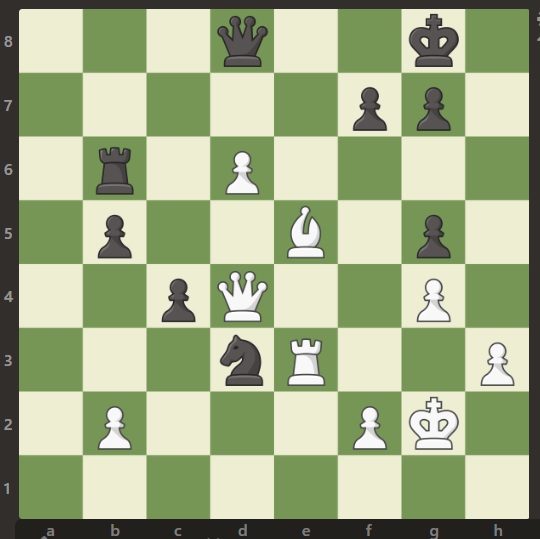
 on ROME 26/10– Day 12: “A church that cannot worship must be entertained, and …”: “Back in the day, corrupt Roman senators kept their power through “bread and circuses”; it seems that some in Church…” on ROME 26/10– Day 12: “A church that cannot worship must be entertained, and …”: “1. Re8+ Kh7 2. Ng3+ If 2. …. Kg7 3. Nh5# So 2. …. f6-f5 3. Bxf5+ Kg7 4. Nh5#”
 on ROME 26/10– Day 12: “A church that cannot worship must be entertained, and …”: “The chandelier and the wall of the Newburgh NY church look like they were stolen from Evil’s lair at the…” on ROME 26/10– Day 12: “A church that cannot worship must be entertained, and …”: “waalaw: Unless I’m missing something, after 4 R-g8+ black has Kf6.”
A Daily Prayer for Priests





They find you a pro-life agent in your area who commits to giving a portion of the fee to a pro-life group!

PLEASE subscribe via PayPal if it is useful. Zelle and Wise are better, but PayPal is convenient.
A monthly subscription donation means I have steady income I can plan on. I put you my list of benefactors for whom I pray and for whom I often say Holy Mass.
In view of the rapidly changing challenges I now face, I would like to add more $10/month subscribers. Will you please help?
For a one time donation...

Help Monks in Wyoming (coffee – UPDATED LINK) and Norcia (beer) and the wonderful "Soap Sisters" of Summit, NJ!

Please follow me on Twitter!






Visits tracked by Statcounter
since Sat., 25 Nov. 2006: