ASK FATHER: What’s your preferred English translation of the Bible?

From a reader…

QUAERITUR:

What’s your preferred English translation of the Bible? Or do you like different versions for different purposes?

No one translation does it all.  Every time you translate something you lose something.   You have to make a choice between multiple possible meanings.  For example, in Hebrew there is an image for being patient as having a long nose.   What are you going to do with that?  Render it literally?

I generally use the Revised Standard Version, RSV, for my study and reading.   It is pretty much the standard for scholarship.  However, I also supplement the RSV with Greek and Hebrew.  Of course I will also look at the Vulgate… but not the New Vulgate.

I will take a look at the Douay-Reims and, for kicks, the Knox.

The important is to read Scripture.  And you can gain an indulgence for doing so.

Posted in "How To..." - Practical Notes, ASK FATHER Question Box | Tagged
5 Comments

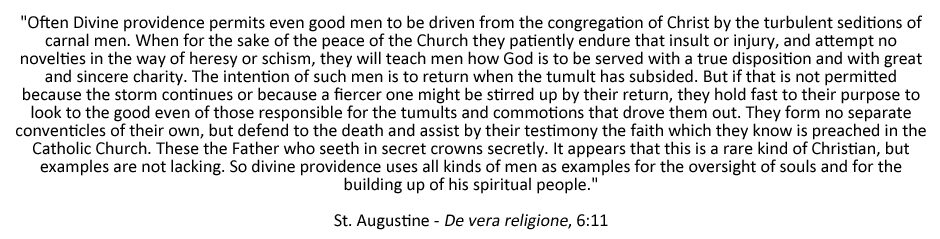
Keep in mind the phrase: quod gratis asseritur, gratis negatur.

If they think this is going to go away, they are delusional.

Keep in mind the phrase: quod gratis asseritur, gratis negatur.

Also, yesterday in some commentary on the strange opinions of a bishop, I mentioned the issue of “unity”, which has become a prevailing theme (aka buzz word).

From Infovaticana.  How it starts:

The prefect of the Dicastery for Divine Worship and the Discipline of the Sacraments, Cardinal Arthur Roche, has assured that Pope Leo XIV will not modify the restrictions on the celebration of the traditional Mass established by Traditionis custodes nor restore the regime provided for by Benedict XVI in Summorum Pontificum.

The statements were made in an interview granted to the British weekly The Tablet, [aka The Bitter Pill] in which the English prelate categorically affirmed: «Pope Leo is not going to change Traditionis custodes and is not going to return to Summorum Pontificum.»

This is the first public statement by Roche regarding the Pontiff’s position on one of the liturgical issues that has generated the most debate within the Church in recent years.

Unity as an argument
During the interview, the prefect defended that the question of the traditional liturgy must be understood from the perspective of ecclesial unity. He recalled that the Eucharist is «the sacrament of unity» and maintained that, if the celebration of the Mass becomes a cause of division, «something is seriously wrong». [Something is seriously wrong with his ecclesiology.  Are Romans not in unity with Ukrainians and Maronites?  Apparently we are not in unity with those who use the NeoCat thing or Anglican use.]

Roche also rejected the claims of persecution made by some faithful linked to the traditional liturgy. According to him, when the Pope grants authorizations in accordance with current regulations and those groups continue to claim they are being persecuted, «they cannot answer what the real problem is». [What?!?]

Likewise, he lamented the tone of some criticisms directed against Church authorities and even wondered: «Can one honestly say that one is Catholic when one writes things so full of hatred about people and about the Church?».

Defense of the liturgical reform
The prefect clarified that he does not consider the liturgy prior to the Second Vatican Council to be erroneous, but maintained that the reform promoted after the Council responded to the need to prepare the Church for a renewed missionary task[Does we need again to trot out the statistics of what has gone on since the Council?  Do we need again to point out that the great missionary age of the Church was not carried out with the Novus Ordo?]

[…]

How long, Lord?

Posted in Liturgy Science Theatre 3000, Pò sì jiù, Save The Liturgy - Save The World, SUMMORUM PONTIFICUM, The Drill, The future and our choices, What are they REALLY saying?, You must be joking! | Tagged
19 Comments

Does it feel to you as if something is building to an explosive point?   

One wonder’s how much the progressivists (aka libs) despise the people who desire traditional sacred worship.

Prediction: “synod” will be turned into a verb.

At LifeSite we find this.   This is truly crazy stuff, from the Bishop of Pilsen in the Czech Republic, a Francis bishop.  My emphases and comments.

The bishop of the Diocese of Pilsen in the Czech Republic stated in a recent article that the Synodal Church needs an adequate liturgy that can “only” be the Novus Ordo Missae.

Tomáš Holub, a heterodox bishop who has endorsed Amoris Laetitia and announced that he would give Holy Communion to the divorced and remarried, shared his vision of synodality on the blog of the liturgist and professor Andrea Grillo. [Mr. Cricket! The worst of the worst.]

According to the Polish outlet Polonia Christiana, Holub argued that modern evangelization needs “current theology.” [Not that old theology, which concerns itself with outmoded topics like eschatology.] Synodality, which is “rooted” in Vatican II changes, must be a tool of evangelization. And this modern Church needs “an adequate liturgy” that “can only be (the) Novus Ordo Missae.[This is truly wacky stuff.]

Holub claimed that “old tools” of evangelization “do not meet the needs of today’s people,” and in order to fill this gap, he convened a synod.

He suggested that the synod fundamentally changed the role of laypeople in the Church[Just how scrambled is this guy’s notions?  It’s as if he didn’t know of the existence of Lumen gentium.  No.  I take that back.  He and others want to rewrite Lumen gentium.  But if you can do that, you can rewrite other conciliar documents.]

The people of God “became the protagonist, not just the recipient of the services; a people composed of clergy and laymen, men and women, united without distinction in common baptism,” [Without distinction?!?] Holub said. According to the prelate, synodality “is not just a communication technique but a way of living by faith.”

It is not about convening a synod but about becoming a synod to imitate Jesus and become His disciples,” he added.  [So the Apostles are on par with the Lord and as they were “walking together” they were synodalizing.  But there’s more.  This is leaning hard into the “priesthood of all believers”.  Right?]

He went on to articulate a heterodox conception of the liturgy, claiming that the “synodal mentality” shows that liturgical activities do not concern the individual and are not an end in themselves but are the source and the peak of unity, as if “unity” was the purpose of the Mass. [One would not be blamed for wondering if there isn’t a touch of sycophantic toadying to a certain person who keeps talking about “unity”.] The Mass is ordered primarily toward God as the unbloody sacrifice and offering of Christ to God the Father.

“The Eucharistic celebration must be the culmination of local church life, a celebration expressing all the dynamism and unity of the assembled people,” [Right!  With everyone except the priest doing the priestly things.  There should be lots of hug red beach balls being bounced around and maybe some body surfing for the offertory procession.] Holub said. According to the bishop,[NB]  it is the Novus Ordo that allows the integration of synodality in the liturgy, whereas the synodal experience of Catholicism would be “very difficult” during the Traditional Latin Mass.   [What the heck is a “synodal experience”?  I think it means “becoming Protestant”.]

He went on to stress the importance of Vatican II to the “synodal” liturgy and seemed to endorse an inversion of the hierarchical structure of the Church by claiming Vatican II’s vision was of a Church founded on the laity, not priests. [I remind the readership that the TLM was the Mass of the Council.  There was no Novus Ordo.  And there, again, is that priesthood of all believers claptrap.]

The strand connecting synodality and liturgical action is precisely the vision of the Church promoted by the Second Vatican Council, the Church based on the congregation, not on the clergy, the Church of ministries, the community Church, which testifies to its unity and celebrates it,” Holub wrote. [The Council, in a certain respect, grew out of the TLM, not out of the Novus Ordo. One would think that if the Council and synodalizing are so closely bound together than the liturgy of synodalizing would be the … TLM.  No?]

Catholics who attend the Traditional Latin Mass, on the other hand, “convince themselves of the correctness of the ecclesiological vision proposed by these rites,” continued Holub, as if the Church must repudiate the ecclesiology it has held for centuries.

The old Mass, according to Holub, “causes cracks,” leads to suspicions of the “reform” and results in “distrust of the Church.” A “benevolent and at the same time firm attitude” should be expressed toward such Catholics through the “implementation of the process of accompaniment, formation and synodal support.”  [ROFL!  You who want the TLM, etc., are going to be “accompanied”, “formed”, “synodaly supported”.  This sounds like communist reeducation, doesn’t it?  Perhaps you have “sluggish schizophrenia” as the Soviets called it.  Maybe they will form a special camp for people who want the TLM.]

It should begin with “the undisputed common theological platform, the Second Vatican Council, as an expression of the true Magisterium,” Holub asserted. [This elevation of the Vatican II is getting unhinged, getting more and more extreme.] His description of Vatican II as an “undisputed common theological platform” is at odds with the council’s marked controversy, elicited by passages that orthodox Catholics criticize for giving the impression of error.

Holub was appointed bishop of Pilsen in February 2016 by Pope Francis and ordained two months later. He previously served as the Secretary General of the Czech Bishop Conference.

Does it feel to you as if something is building to an explosive point?

Motus in finem velocior.

Posted in Picture Me In My Grief, The Coming Storm, The Drill, What are they REALLY saying?, You must be joking! |
23 Comments

“We will evaluate the implementation, then implement the evaluation, then evaluate the implementation of the evaluation.”

At the increasingly valuable Infovaticana there is a severely insightful offering about:

The endless synod of synodal synodality assembly

A couple excerpts. It begins (my emphases and comments):

A synod is (was) by definition an event: it was convened, celebrated, and closed. That is how it was for twenty centuries. The Synod on Synodality concluded in October 2024. Its Final Document was delivered. The matter, one might think, is settled.

But it is not. The closed Synod was followed by an “implementation phase” (2025-2028). Implementation is now followed by an “evaluation of the implementation”: diocesan assemblies in the first half of 2027, assemblies of the Episcopal Conferences in the second half, continental assemblies in 2028, and an “ecclesial assembly” at the Vatican in October 2028. And in case anyone still hoped that would be the end of it, the Notes warn: “the path does not conclude, but opens to a new phase.” Among the criteria for selecting assembly members is, in black and white, that they “be available to sustain the process beyond 2028.”

In other words: today we are recruiting the personnel for a process whose object, mandate, and end no one knows, because it does not exist. The Synod has discovered perpetual motion. We will evaluate the implementation, then implement the evaluation, then evaluate the implementation of the evaluation. This is not a caricature: it is, literally, the official calendar.

[…]

The “walking together about walkingtogetherity” is amorphous.  It is mainly a self-licking icecream cone at this point.  The point of it is “process”.  But because it doesn’t have any real point, it can have any or every point, depending on where the organizers point it.  It is a process of manipulation akin to how Marxism seeks to seize control. You’ve seen the photos of a sea of round tables with small groups, with relators, which yak about whatever until the pre-determined report is unveiled. Small group meetings in a Marxist context emphasize collective organization and action. These meetings are designed to facilitate coordination among communist working groups, ensuring that their efforts align with a unified plan. This approach is crucial for maximizing the effectiveness of discussions and actions taken by the group. a small number of organizers work together to prepare for meetings, ensuring that all members are informed and aligned on objectives. They then emphasis a kind of democratic processes where all voices are heard, fostering a sense of ownership among participants. That is, unless you have a different idea. Then you are marginalized within your group and your influence is reduced to zero. Meetings are highly facilitated addressing future initiatives. This facilitation is a key to guiding discussions, silencing dissent, and ensuring desired outcomes.

More from the article:

[…]

We are faced with a complete institutional architecture—diocesan, national, and continental teams, registered in a Roman database via an email address, synodus@synod.va—built entirely outside the Church’s law.

And this is no oversight. It is the method. What has no juridical nature has no defined competencies, no enforceable responsibility, and no channel for appeal. A canonical diocesan synod obliges the bishop to precise procedures; a “synodal team” obliges nothing and answers to no one, and precisely for that reason it can do everything: convene, filter, draft, synthesize, and send to Rome “the voice of the People of God.” Informality is not a flaw in the system: it is its competitive advantage. What cannot be governed by decree is governed by process, because a decree would have to be grounded in law and signed.

Canon law exists, it is worth recalling, to protect. It protects the faithful against arbitrariness, the parish priest against the diocesan apparatus, the bishop against pressures, and the entire Church against the whim of passing majorities. Replacing law with “facilitation” is not a pastoral liberation: it leaves everyone exposed to whoever controls the process.

[…]

More there.

Posted in The Coming Storm, The Drill, The future and our choices | Tagged
25 Comments

An important topic revisited: Moral Injury

I had the occasion to repair some links in older posts about the topic of “moral injury”.  It is an important topic.  I’m glad the reader let me know.

There will be some repetition, but I wanted to get them into one place.

I ran into a few others which are important.

If there are links that don’t work in important posts, let me know.  Otherwise, a quick fix could be to make a substitution in the url address by changing the domain to

wdtprs.com

Posted in Linking Back, The Drill | Tagged
1 Comment

Daily Rome Shot 1670 – a note to a Mass stream viewer in Canada and a limerick in Latin

A couple notes.

  • First, one of you who follows the daily Mass stream from SaskatchewanNB: your mailbox is full. You are missed.
  • I have some additional photos of things my mother made.  I had the pleasure of sending one back to her home state of Wyoming to a reader who bought a piece.  HERE
  • Please remember me when shopping online and use my affiliate links.  US HEREWHY?  This helps to pay for health insurance, utilities, groceries, and now also my late mother’s place.  At no extra cost, you provide help for which I am grateful. 

Bonus: From my back patio in Rome where my jasmine (not the Jesuit) is growing faster than my novel. Thanks for the update from The Great Roman™.

The other “Jasmine” would not be welcome at my patio.

I’ve been working on a novel… murder mystery set in Rome in 1769.   I haven’t made progress recently.  Maybe I need to change my modus operandi?

Speaking of books…. didn’t any mention “Memory Hole”. Even if 10% true… alarming.

How should black proceed?

NB: I’ll hold comments with solutions ’till the next day so there won’t be “spoilers” for others.

Try this!

Sacerdos ad scaccos ludebat,
Dum ad Laudes orabat;
Cum regem cepisset,
Ac “Mattum!” dixisset,
Diabolus tristis fugiebat.

Posted in SESSIUNCULA |
9 Comments

A JESUIT SAYS: “If you are able to go to confession once a month and choose not to, I would not want to be responsible for your soul.”

From my friend Fr. McTeigue, one of the good ones.

Excerpt:

What 99.9999 percent of Catholics need to do is go to confession regularly. Unless you are living in China, being hunted down in Nigeria, or facing some comparable obstacle, you probably have the opportunity to go to confession more than once a year.

Some people think that once a year is satisfactory, or perhaps once during Lent and once during Advent. No. If you are able to go to confession once a month and choose not to, I would not want to be responsible for your soul. I do not see how a Catholic who has the opportunity to confess monthly, yet deliberately chooses not to do so, can claim to be serious about the Faith.

The absolute bare minimum of spiritual hygiene is sacramental confession once a month, preceded, of course, by an honest examination of conscience. I would like to see everyone step it up and go twice a month. Before going more frequently than that, consult a spiritual director or your pastor.

The barest possible minimum, then, is once a month. A genuinely regular practice would be twice a month.


YouTube thumbnailYouTube icon

Posted in GO TO CONFESSION, Mail from priests |
9 Comments

Daily Rome Shot 1669 – important notes!

A few notes.

  • First, one of you who follow the daily Mass stream from Canada… your mailbox is full. You are missed.
  • I have some additional photos of things my mother made.  I had the pleasure of sending one back to her home state of Wyoming to a reader who bought a piece.  Thanks.
  • I was wondering about the lack of Mass intention requests.  Then I found all your emails in my spam folder.  I responded to all of you, I think.  If you make a request please use the form.  And PLEASE don’t send stipends without using the form.
  • Holy Mass today is for my benefactors.  Thank you.  I generally say Mass at 1700 EDT.  Unite in prayer.

Welcome Registrant:

Ruddyfarmer

Please remember me when shopping online and use my affiliate links.  US HEREWHY?  This helps to pay for health insurance, utilities, groceries, and now also my late mother’s place.  At no extra cost, you provide help for which I am grateful.  

And this…

According to Infovaticana

Four months after Leo XIV’s letter to the French bishops, the faithful of the Vetus Ordo still see no changes

“Asked about the letter sent on March 18 by Cardinal Pietro Parolin on behalf of Leo XIV, Darantière laments that, four months later, he perceives no change of attitude on the part of the French episcopate. He recalls that, after the last plenary assembly held in Lourdes, several bishops took for granted that the application of Traditionis Custodes would remain unchanged.”

Taurina cacata… the gift that keeps on giving.

White mates in 4.

NB: I’ll hold comments with solutions ’till the next day so there won’t be “spoilers” for others.

Posted in SESSIUNCULA |
8 Comments

Your Sunday Sermon Notes – 9th Sunday after Pentecost (N.O.: 17th Ordinary)

Click for larger… look at His eyes.

Too many people today are without good, strong preaching, to the detriment of all. Share the good stuff.

Was there a GOOD point made in the sermon you heard at your Mass of obligation for this 9th Sunday after Pentecost in the Vetus Ordo (17th Ordinary Sunday in the Novus Ordo)?

Tell us about attendance especially for the Traditional Latin Mass.

Any local changes or (hopefully good) news?

A taste of what I offered at 1 Peter 5 this week.  I wrote about the 2nd Sunday after Pentecost but related it to the great feasts nearby.

[…]

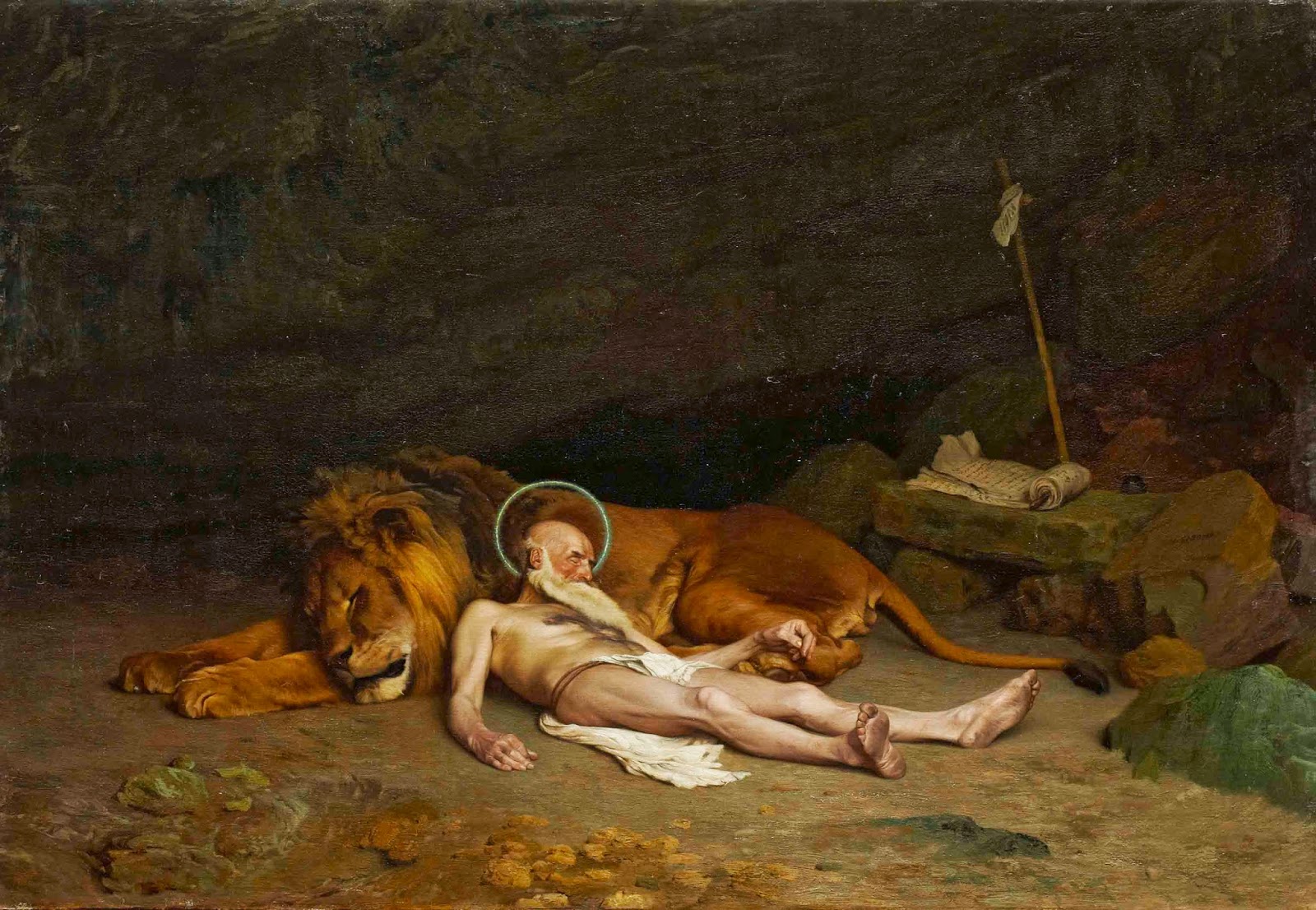
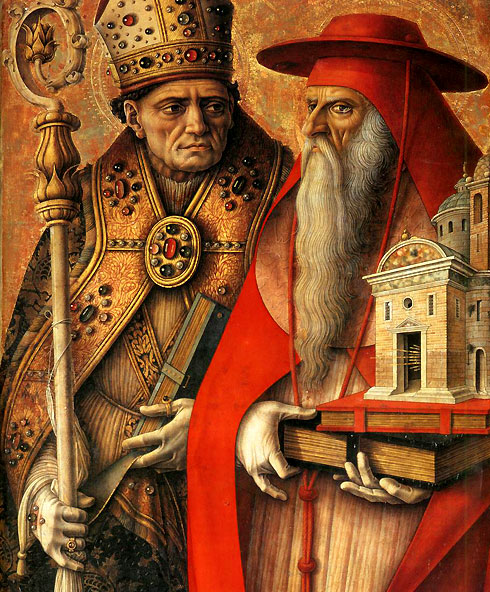
Commenting on this dramatic “cleansing of the Temple” moment, St. Jerome (+420) remarked that this was perhaps the Lord’s greatest miracle, considering their numbers and the way enemies were arrayed against Him.   Jerome opined that something of His divine authority must have shined forth in that moment which could not be withstood:

To me, among all the other [miracles], it seems more wonderful that, as one Man, and He at the time contemptible and so vile as to be subsequently crucified, with the Scribes and Pharisees raging against Him, and seeing their gains destroyed, He could by the stripes of His single scourge cast out so great a multitude, overthrow the tables, break the seats, and do other things, which a whole army could not have done. For something of fire and of the sidereal flashed from His eyes, and the majesty of His Divinity shone in His face (Commentarii in Matthaeum III, on Matt. 21:12).

[…]


Posted in Sermons | Tagged
4 Comments

WDTPRS – 17th Sunday Ordinary Time (Novus Ordo): Sin Teflon, Demon Kevlar

Shall we look at the Collect for this upcoming Sunday’s Holy Mass in the Ordinary Form?   It will the 17th Sunday of Greater Meatloaf…. Ordinary Time.

COLLECT (2002MR):

Protector in te sperantium, Deus, sine quo nihil est validum, nihil sanctum, multiplica super nos misericordiam tuam, ut, te rectore, te duce, sic bonis transeuntibus nunc utamur, ut iam possimus inhaerere mansuris.

The traditional Roman Missal, 1962MR, places today’s Collect at the 3rd Sunday after Pentecost though it is a little different from the newer version, to wit: sic transeamus per bona temporalia, ut non amittamus aeterna.

Historically the prayer has roots in the ancient “Leonine” or better the Veronese Sacramentary used during the month of July in which we find: sic bonis praetereuntibus nunc utimur, ut iam possimus inherere perpetuis. This historical digging shows us that the Novus Ordo version returned to a more ancient form of the prayer.

That inherere for the more regular inhaerere shows how the ae was pronounced when the manuscript was made.  The eminent paleographer E.A. Lowe dated the earliest manuscript of the Veronese to the first quarter of the 7th century.

There is a pleasant humming “m” alliteration in lines 2-3.  A nice pair of pairs present themselves: nihil validum, nihil sanctum and some exemplary ablative absolutes te rectore, te duce.

Protector is from protego fundamentally meaning “to cover before, or in front, cover over” and obviously also “to shield from danger” as well as things like “put a protecting roof over”.  A protector is also “one of the lifeguard or body – guard”.

Last week in the Collect we heard “vigili custodia … vigilant restraint/guarding.”  Both words refer to protection.

In last week’s Collect the priest prayed to God: clementer gratiae tuae super eos dona multiplica, (indulgently multiply upon/over them the gifts of Your grace) while this week we ask multiplica super nos misericordiam tuam.

In this and last week’s prayer we have the image of a people asking to cover them over abundantly, last week with the theological virtues, this week with mercy.

God is our shield.  In His mercy He guards us from the attacks we face as soldiers in the Church Militant.

Validus, a, um (from the verb valeo) is “strong, stout, able, powerful, robust, vigorous” and also “well in body, in good health, sound, healthy”.  “Vale!” is one Latin way to say “Farewell!”

The verb inhaereo means “to stick in, to stick, hang, or cleave to, to adhere to, inhere in”.  Inhaereo is construed with either dative or ablative and it is very hard to know which case is mansuris, the future participle from maneo, “to remain, last, endure, continue”.   Without going into details, St. Augustine (+430) used a similar combination of words, but to different effect, in a sermon about the love of God and love of the world (s. 344.2 in PL 39:1512).

LITERAL ATTEMPT:

O God, protector of those hoping in you, without whom nothing is efficacious, nothing holy, multiply your mercy upon us, so that, you being our helmsman, our commander, we may so make use of things that pass away as to be able to cleave to those that will endure.

We can also render rector and dux respectively as “guide” and “leader” but I think in our times we need a bolder tone.  A rector is also a “helmsman” and “commander of the army”.  In honor of World Youth Day, rector can be the “master of youth, teacher”.  On the other hand, dux is also a military term for a “general” or “chief”.

OBSOLETE ICEL (1973):

God our Father and protector,
without you nothing is holy,
nothing has value.
Guide us to everlasting life
by helping us to use wisely
the blessings you have given to the world
.

CURRENT ICEL (2011):

O God, protector of those who hope in you,
without whom nothing has firm foundation, nothing is holy,
bestow in abundance your mercy upon us
and grant that, with you as our ruler and guide,
we may use the good things that pass
in such a way as to hold fast even now
to those that ever endure.

We are members of the Church Militant and we must never forget it.

We must not permit ourselves complacency.  We must not be softened into spiritual acedia by the coos and lullabies of those who deny the existence of evil and the devil and personal sin.

Some people today think that any “evil”, if it is really evil after all and not merely a difference of perspective, can be reduced to mere social ills stemming from a societal lack of tolerance and diversity.

This is a deception of the enemy of the soul, the devil.

In reality, our personal sins are the foundation of every societal ill.

When people do not believe in the devil and in sin, then the enemy has already won.   Our enemy Satan and his fallen angels desire our everlasting damnation and agony with them in hell.  This world has a fell prince, a spiritual being, a mighty fallen angel (cf. John 14:30).

Jesus Christ is our King, our great Captain in our battle against all that is wicked in this world.  Christ Jesus has broken hell’s power over us, but for a time we are still in this world and the devil dominates it – but only to the extent that omnipotent God permits in His providence.  We are living in a state of “already, but not yet.”

As soldiers traveling through enemy territory we need strong shields, a sure leader to set our feet on the right path out of the danger zone, a sturdy roof over us when we rest, some way to identify what is holy and what is deception.

Alas, these days it seems that our “officers” are lacking, in more than once sense of “lack”.  They are, many of them, lackluster as well.  Pray to the Lord of the harvest to call more workers to the harvest, more officers to the battle lines.  Pray to the Holy Ghost to bring abundant prevenient graces to our clerical slackers, our episcopal disappointments.

Without God nothing is worthwhile or holy.   He must pour out and multiply upon us all that we need simply in order to live.

Today we are asking for a protection, sin-Teflon, so that the passing things of this world can’t stick to us, distract us, and hold us back from heaven.

May God give us demon-Kevlar, so that the enemy cannot penetrate our minds and hearts with the darts of temptation and the provocations of doubts.

We beg God to make us “sticky” only for the things that endure forever and not the things that are under control of this world’s prince, who from the beginning is a liar, a murderer (cf. John 8:44).

Posted in WDTPRS |
2 Comments