WDTPRS – 4th Sunday of Advent (O.F.): Seeing really is believing

The 4th Sunday’s Collect in the Novus Ordo is also the Post Communion for the Feast of the Annunciation (25 March) in the Extraordinary Form of the Roman Rite (1962MR).

The Annunciation was the moment of the Incarnation of our Lord.

Therefore, on that feast and on Christmas, during the Creed of Holy Mass according to the Ordinary Form, we bend our knees instead of merely bowing at the words “Et incarnatus est…”.

Alas! Only on those two days do we kneel during the Creed with the Ordinary Form!   In the Extraordinary Form we always kneel during the Creed at that profound moment.  Such gestures serve to build and reinforce our Catholic Christian identity.  But I digress.

If you recite the Angelus (which has an indulgence), you know today’s Collect.  It was already in the 8th century Gelasian Sacramentary.

Gratiam tuam, quaesumus Domine, mentibus nostris infunde, ut qui, Angelo nuntiante, Christi Filii tui incarnationem cognovimus, per passionem eius et crucem ad resurrectionis gloriam perducamur.

The last lines have wonderful alliteration and a snappy final cadence (glóriam perducámur).  Collects are often little treasure boxes.

Cognosco is, generally, “to become thoroughly acquainted with (by the senses or mentally), to learn by inquiring…”, but in the perfect tenses (cognovimus) it is “to know” in all periods of Latin.  Infundo basically is “to pour in, upon, or into” but in the construction (which we see today) infundere alicui aliquid) it is “to pour out for, to administer to, present to, lay before”.  It can mean, “communicate, impart”.  Perduco, “to lead or bring through”, is “guide a person or thing to a certain goal”.  It can also mean “to drink off, quaff”, a nice counterpoint to infundo.

A LITERAL RENDERING:

We beg You, O Lord, pour Your grace into our minds and hearts, so that we who came to know the incarnation of Christ Your Son in the moment the Angel was heralding the news, may be guided through His Passion and Cross to the glory of the resurrection.

That angelo nuntiante is an ablative absolute. By its “present” tense it is contemporary with the time of the past tense in cognovimus.  Thus, in the very moment the Angel was heralding the good news, we (collectively in the shepherds) knew about how God the Son, who had taken our whole human nature into an indestructible bond with His divinity, was being born into this world.  The shepherds then rushed to the Coming of the Lord to see the Word made flesh lying in His wooden manger, which foreshadowed His wooden Cross.

OBSOLETE ICEL (1973):

Lord, fill our hearts with your love, and as you revealed to us by an angel the coming of your Son as man, so lead us through his suffering and death to the glory of his resurrection.

NEW CORRECTED ICEL (2011):

Pour forth, we beseech you, O Lord, your grace into our hearts, that we, to whom the Incarnation of Christ your Son was made known by the message of an Angel, may by his Passion and Cross be brought to the glory of his Resurrection.

“Seeing is believing”, they say, but believing makes us want to see.  “Crede ut intellegas!  Believe that you may understand!” is a common theme for St. Augustine of Hippo (+430 – e.g., s. 43,4.7; 118,1; Io. eu. tr. 29,6).

Today many people pit faith against reason, authority against intellect, as if they were mutually exclusive.

Faith and authority are indispensible for a fuller rational, intellectual apprehension of anything.  In all the deeper questions of human existence, we need the illumination that comes from grace and revelation. We must receive and believe.  Faith is the foundation of our hope, which leads to love and communion with God, as Augustine would say (trin. 8,6).

When we hear about something or learn a new thing we often rush to know more, to have personal experience, to see.  This is a paradigm for our life of faith.

There is an interlocking cycle of hearing a proclamation (such as the Gospel at Mass, a homily, or a teaching of the Church) or observing the living testimony of a holy person’s life (such as soon-to-be St. Theresa of Calcutta). Because of an experience of reception, and subsequent pondering, we come to love the content of that which we received.

The content of the prayers Holy Church gives us is the Man God Jesus Christ.

By hearing and pondering and using well these prayers, we come all the better to know Christ and to love Him. In loving Him we desire all the more to know Him.

Acceptance of the authority of the content of our orations at Mass opens previously unknown treasuries which would otherwise be locked.  This is why our translations are so important.

Remember! Our prayers at Mass were composed in Latin.  Some of them are ancient indeed.  They are, indeed, like treasure boxes which, with the right keys, we can open to find irreplaceable riches.

Annunciation Weninger 03Our Blessed Mother, so closely associated with today’s Collect, first received the message of the Angel.

She accepted and believed the message, and made it her own.

She pondered it in her heart.

She pronounced her Magnificat.

She brought our Savior into the light of the world.

The angel heralded with authority once again.

The shepherds accepted and believed.

They rushed to Bethlehem and pondered.

the-angels-song-and-the-shepherds-visitThey saw the Infant.

They understood the message of the Word made flesh.

They knelt.

They worshiped.

This is the cycle of our experience of the reception of the content of our Faith in worship.

Posted in ADVENT, Liturgy Science Theatre 3000, WDTPRS | Tagged , , , , , ,
1 Comment

St. Daniel and the Fiery Furnace Boys

Some don’t know, and understandably so, that the Church recognizes many great figures of the Old Testament as saints, and she gives them feast days.  They may not appear on the general calendar for liturgical observation, but they are listed in the Roman Martyrology.

As the first part of Advent closes and we move into the heavier Advent days of final preparation we have three ancient Prophets.  On 16 Dec St. Haggai. On 18 Dec. St. Malachi.

Today, however, we have St. Daniel.  And along with Daniel Sts. Ananias, Azarias, and Misael, the three boys in the fiery furnace.  I think some sources placed them on 16 December.

Here is a shot of my Roman Curia wall calendar.


Posted in Liturgy Science Theatre 3000, Saints: Stories & Symbols | Tagged
14 Comments

Helpful liturgical note for servers (and priests) for Ember Days Masses

ember daysAt the site of Romanitas Press there is a useful post with tips about how to serve Ember Days Masses.   On Ember Saturday there are a lot more things to do and a server can get scrambled around.

The tips could be helpful for priests too.  For example: “Note well, that the priest never goes to the center of the altar before saying “Oremus,” etc. before each Lesson.”

By the way, the Latin name for the four sets of Ember Days is Quatuor Tempora, Four Times.  There is a connection with Japanese food.

In the 16th c. Spanish and Portuguese missionaries settled in Nagasaki, Japan.  From their interest in inculturation and out of sensitivity for the ways of the people, they tried to make meatless meals for Embertide, which is a fast time.  They started deep-frying shrimp.  The Japanese ran with and developed it to perfection.  This is “tempura,” again from the Latin term for the Ember Days “Quatuor Tempora“.

Speaking of Japan and missionaries…

US HERE – UK HERE

It’s a hard read.  Give it to a priest.  Scare him.

Posted in "How To..." - Practical Notes, Liturgy Science Theatre 3000 | Tagged , , ,
6 Comments

Did Canadian Bishops “sacramentalize” direct killing, euthanasia, assisted suicide?

Did you hear that the Bishops of the Atlantic region of Canada, the Atlantic Episcopal Assembly (Archdioceses and Dioceses of Antigonish, Bathurst, Charlottetown, Corner Brook and Labrador, Edmundston, Grand Falls, Halifax, Moncton, Saint John (NB), St. John’s and Yarmouth) veered towards sacramentalizing euthanasia?

They insinuate in a pastoral letter that people who intend to commit the mortal sin of killing themselves with the help of a medical doctor can be given the “last rites”, Sacrament of Anointing. They adopt the vague but prevalent language of “accompanying”.

My emphases and comments:

[…]

In the pastoral care of those who are contemplating medical assistance in dying, [assisted suicide… euthanasia… objectively a grave sin… one of those moral absolutes that are so under fire for the last few years…] we must remember that the purpose of pastoral care is to communicate the compassion of Christ, His healing love and His mercy. [mercy… at the expense of truth?] Furthermore, we must take into account the suffering person’s emotional, family and faith context when responding to their specific requests for the reception of the Sacrament of Penance and the Sacrament of the Anointing of the Sick, the reception of Holy Communion and the celebration of a Christian Funeral.

The Sacrament of Penance is for the forgiveness of past sins, not the ones that have yet to be committed, and yet [Did you hear the slight whoosh as the door opened?] the Catechism reminds us that by ways known to God alone, God can provide the opportunity for salutary repentance (CCC, no. 2283). The Sacrament of the Anointing of the Sick is for strengthening and accompanying [?] someone in a vulnerable and suffering state. It presupposes one’s desire to follow Christ even in his passion, suffering and death; it is an expression of trust and dependence on God in difficult circumstances (CCC, no. 1520-3). The reception of Holy Communion as one approaches the end of this life [The title of this letter is: “A Pastoral Reflection on Medical Assistance in Dying”.  It is not about just anyone who is dying.] can assist a person in growing in their union with Christ. This last Communion, called Viaticum, has a particular significance and importance as the seed of eternal life and the power of resurrection (CCC, no. 1524).  [Viaticum for those contemplating death by doctor. Riiiiight.  How about the Apostolic Benediction?]

As for the Church’s funeral rites, there are a number of possibilities available. However, in discerning the type of celebration [‘Cause that’s what funerals are for, eh?] most pastorally appropriate to the particular situation, there should always be dialogue with the persons concerned which is caring, sensitive and open. The decree of promulgation of the Order of Funerals states that: “By means of the funeral rites it has been the practice of the Church, as a tender mother, not simply to commend the dead to God but also to raise high the hope of its children and give witness to its own faith in the future resurrection of the baptized with Christ” (Prot. No. 720/69). As people of faith, and ministers of God’s grace, we are called to entrust everyone, whatever their decisions may be, to the mercy of God. To one and all we wish to say that the pastoral care of souls cannot be reduced to norms for the reception of the sacraments or the celebration of funeral rites. Persons, and their families, who may be considering euthanasia or assisted suicide and who request the ministry of the Church need to be accompanied with dialogue and compassionate prayerful support. The fruit of such a pastoral encounter will shed light on complex pastoral situations and will indicate the most appropriate action to be taken including whether or not the celebration of sacraments is proper.

[…]

It is inconceivable to me that such a letter would have gotten past the rest of the Canadian Conference, or the Nuncio, or the CDF, or for that matter the guy who runs the gas station at the corner of Faith St. and Charity and who goes to Mass on Sundays.  What were they thinking?

The Sacrament of Anointing, a “sacrament of the living”, is to be, if the person is compos sui, received in the state of grace.  

Remember that conditions for mortal sin include 1) grave matter, 2) full knowledge, and 3) deliberate consent.

With the full understanding that there are different grades and gravities of mental illness which can be tricky to account for, if a person who is sui compos plans suicide in a concrete way, that person is probably not in the state of grace.  If you are entirely mistaken about the nature of an act you probably aren’t guilty for the sin committed.  If you are truly nuts or so emotionally distraught or fearful or under compulsion from outside that you can’t make proper choices like a human being, you are not culpable for objectively sinful acts.  Moreover, if someone who is sui compos doesn’t have a firm purpose of amendment when making a confession (“Father, I thought about suicide, but I changed my mind. I won’t think about that sin again.”) she cannot be absolved and she cannot receive the Sacrament of Anointing either.  It is entirely irresponsible of a priest about to administer Last Rites to a person who is conscious and sui compos not to provide also the opportunity for sacramental confession even in the briefest way permissible.  The only way a priest should absolve a person is if he is convinced that the person is truly sorry for sins, even if it is impossible for the person to express sorrow clearly in words.  If the person contemplating suicide isn’t sorry for contemplating suicide and isn’t able to say that she won’t do it any more, the person can’t be absolved.

BTW… see Sam Gregg’s piece on moral absolutes over at CWR.

At First Things there is piece about this horrid situation.

It’s an appalling document. In a pastoral letter, ten Catholic Bishops of the Canadian Atlantic Episcopal Assembly shirk their responsibilities as teachers of the faith. The issue is doctor-assisted suicide, which is now legal in Canada.

Readers can’t know to what degree the document’s apparent rubber-stamping of the culture of death was intended by its authors, or to what degree it simply follows from sloppy thinking and careless rhetoric. [True. It could be more that than a “rubber stamp” of the culture of death.] But the bishops’ failure to condemn suicide in plain terms is unmistakable. What’s more, the bishops adopt the circumlocutions of the Canadian government, which instituted the new suicide regime, along with the antinomian clichés of the current pontificate. One is left with the strong impression that the bishops do not merely wish to avoid condemning the practice of doctor-assisted suicide. They want the Church to accommodate herself, smoothing over any conflicts between Catholic teaching and the culture of death.

The bishops adopt the euphemism “medical assistance in dying,” pronouncing it “a highly complex and intensely emotional issue which profoundly affects us all.” It’s so complex, indeed, that we’re to practice “the art of accompaniment” that Pope Francis recommends, which means “prudence, understanding, patience and docility to the Spirit,” and not “judgments about people’s responsibility and culpability.” Suicide? Who am I to judge?

The worst aspect of this document, however, comes in the way the bishops tacitly sanction a grotesque misuse of the sacraments. They observe that a priest administers the Sacrament of the Anointing of the Sick “for strengthening and accompanying someone in a vulnerable and suffering state.” Earlier in the document, the bishops have been keen to stipulate that a person asking for a doctor to end his life is not to be judged culpable, but instead “accompanied” as someone who is “suffering.” The implication is straightforward, even if not explicitly stated: It is permissible, perhaps even desirable, for a priest to anoint a Catholic who is about to receive a deliberate, self-willed, death-dealing dose of medication.

[…]

There are 9 ways to participate in the sin of another person. You can be guilty of the sin committed by another

  1. By counsel (to give advice, one’s opinion or instructions.)
  2. By command (to demand, to order, such as in the military.)
  3. By consent (to give permission, to approve, to agree to.)
  4. By provocation (to dare.)
  5. By praise or flattery (to cheer, to applaud, to commend.)
  6. By concealment (to hide the action, to cover-up.)
  7. By partaking (to take part, to participate.)
  8. By silence (by playing dumb, by remaining quiet.)
  9. By defense of the ill done (to justify, to argue in favor.)

One can argue about how directly you must be involved to be guilty of the sin and also to incur the censure.

Can. 1397 One who commits murder, or who by force or by fraud abducts, imprisons, mutilates or gravely wounds a person, is to be punished, according to the gravity of the offence, with the deprivations and prohibitions mentioned in can. 1336. In the case of the murder of one of those persons mentioned in can. 1370, the offender is punished with the penalties there prescribed.

It’s the age of ambiguity.  Let’s make the whole question of moral absolutes so muddied, so confusing, so shaky that no one really has to struggle against sins and win.  No.  Now the whole concept of a moral absolute has become so obfuscated that people have even less reason NOT to excuse their immoral actions that result from that deadly, but O so human, justification: “I really struggled with this… before I did it.”

These days we are being told through winks and innuendo that a person doesn’t have to have a firm purpose of amendment in regard to sin.  No, no!  You can continue to sin and the Church will accompany you, mercifully.  A word now going out of style in Italian, “accompagnatrice”, means, well…. “escort”, in the bad sense.  So, a priest who did that – who set aside the necessity of a firm purpose of amendment in regard to mortal sin – would be a … what?

I, for one, still believe in Hell.  I won’t go down that sidewalk because I don’t want to go to Hell for leading people astray.  That’s exactly what priests risk if they lead people astray from the truth and Catholic teaching.

The moderation queue is ON.

Posted in Liberals, Our Catholic Identity, Pò sì jiù, You must be joking! | Tagged , , , , , , ,
32 Comments

Video interview with Card. Burke about the Five Dubia stemming from ‘Amoris laetitia’

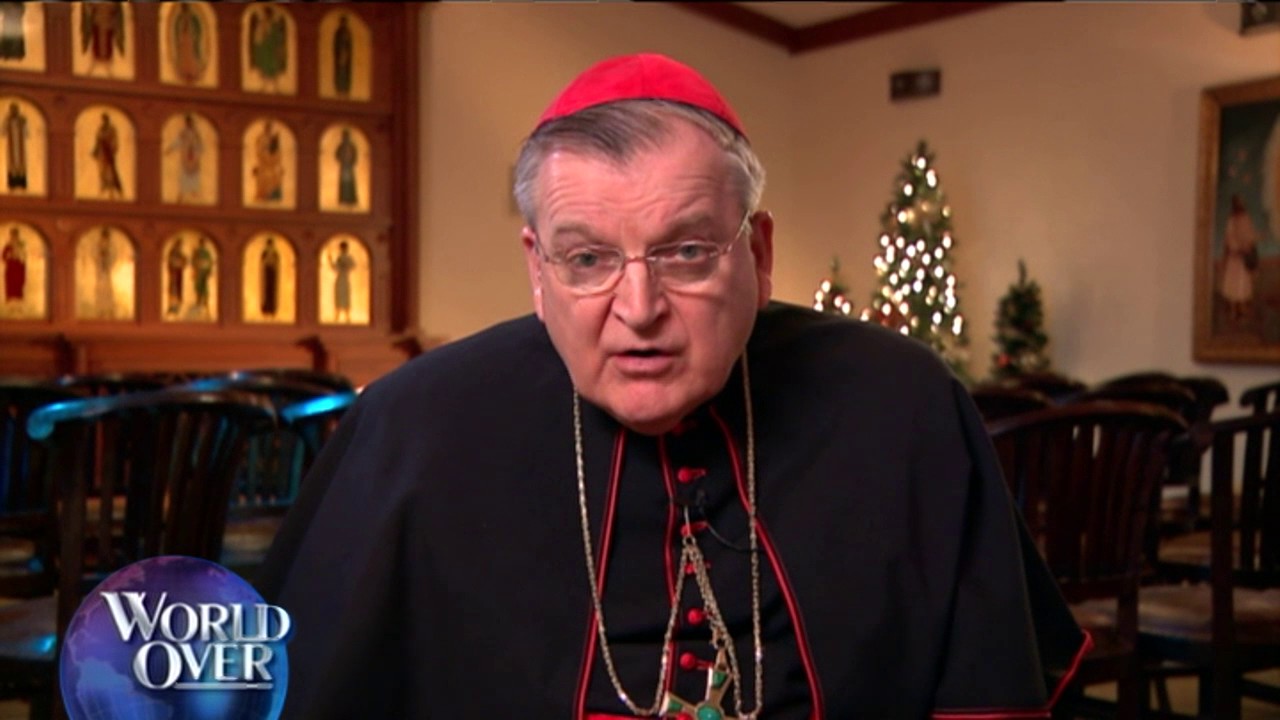
Raymond Arroyo interviewed His Eminence Raymond Card. Burke about the “state of the question” concerning The Questions.  Card. Burke is one of the Four Cardinals who submitted Five Dubia about Ch. 8 of Amoris laetitia to His Holiness Pope Francis.

The letter of The Four is humble and respectful, but clear. They clearly did not want to be adversarial in tone. The Four merely want some clarity about “grave disorientation and great confusion” which has been provoked by now infamous elements of Amoris laetitia.

YouTube thumbnailYouTube icon

The Five Dubia:

1. It is asked whether, following the affirmations of “Amoris Laetitia” (nn. 300-305), it has now become possible to grant absolution in the Sacrament of Penance and thus to admit to Holy Communion a person who, while bound by a valid marital bond, lives together with a different person “more uxorio” (in a marital way) without fulfilling the conditions provided for by “Familiaris Consortio” n. 84 and subsequently reaffirmed by “Reconciliatio et Paenitentia” n. 34 and “Sacramentum Caritatis” n. 29. Can the expression “in certain cases” found in note 351 (n. 305) of the exhortation “Amoris Laetitia” be applied to divorced persons who are in a new union and who continue to live “more uxorio”?

2. After the publication of the Post-synodal Apostolic Exhortation “Amoris Laetitia” (cf. n. 304), does one still need to regard as valid the teaching of St. John Paul II’s Encyclical “Veritatis Splendor” n. 79, based on Sacred Scripture and on the Tradition of the Church, on the existence of absolute moral norms that prohibit intrinsically evil acts and that are binding without exceptions?

3. After “Amoris Laetitia” (n. 301) is it still possible to affirm that a person who habitually lives in contradiction to a commandment of God’s law, as for instance the one that prohibits adultery (cf. Mt 19:3-9), finds him or herself in an objective situation of grave habitual sin (cf. Pontifical Council for Legislative Texts, Declaration, June 24, 2000)?

4. After the affirmations of “Amoris Laetitia” (n. 302) on “circumstances which mitigate moral responsibility,” does one still need to regard as valid the teaching of St. John Paul II’s Encyclical “Veritatis Splendor” n. 81, based on Sacred Scripture and on the Tradition of the Church, according to which “circumstances or intentions can never transform an act intrinsically evil by virtue of its object into an act ‘subjectively’ good or defensible as a choice”?

5. After “Amoris Laetitia” (n. 303) does one still need to regard as valid the teaching of St. John Paul II’s encyclical “Veritatis Splendor” n. 56, based on Sacred Scripture and on the Tradition of the Church, that excludes a creative interpretation of the role of conscience and that emphasizes that conscience can never be authorized to legitimate exceptions to absolute moral norms that prohibit intrinsically evil acts by virtue of their object?


Posted in The Drill | Tagged , , ,
13 Comments

A bishop’s suggestions to families for a holy Advent and Christmastide

bp morlinoThe other days His Excellency Most Reverend Robert C. Morlino, the Extraordinary Ordinary, Bishop of Madison held one of his regular, usually monthly, “staff catechesis” meetings.  He is also generous in forthrightly answering questions about the topic he chooses to address and about any hot topics on our minds.
One of the staff asked for his suggestion about how families with young children might prepare well for Christmas.

He proposed that perhaps the home could be filled, as it were, with more silence, which is so lacking in our times.

He also suggested that parents might go over the lyrics of religious Christmas carols with their children.  There is a lot of good and sound theology in religious carols.  Think about it.

I thought that was a  pretty good suggestion which you, the readership with young children at home, might receive with benefit.

Everyone likes good Christmas music, right?
Try…

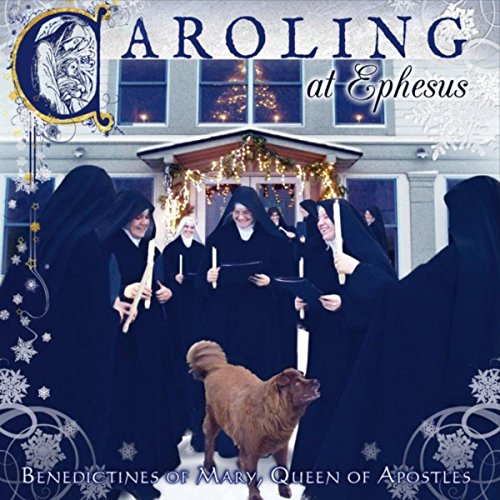
Caroling at Ephesus!

US HERE – UK HERE

St. Paul’s Boys Choir, Christ at Harvard Square

US HERE – UK HERE

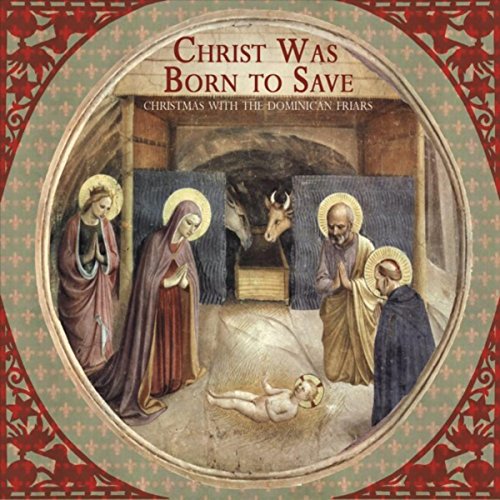
Christ Was Born To Save by the Dominican Friars at the Dominican House of Studies

US HERE – UK HERE

Posted in "How To..." - Practical Notes, One Man & One Woman, Our Catholic Identity | Tagged , , ,
1 Comment

Peters on Popes and Heresy, Personal and Public

Famed canonist Ed Peters today at his exceptional blog In The Light Of The Law has a piece that you will want to peruse.

He doesn’t have an open combox, but I do. Read, re-read, pause to think, think again, discuss.

My emphases and comments.

A canonical primer on popes and heresy

No one in a position of ecclesial responsibility—not the Four Cardinals posing dubia, not Grisez & Finnis cautioning about misuses, and not the 45 Catholics appealing to the College, among others—has, despite the bizarre accusations made about some of them, accused Pope Francis of being a heretic or of teaching heresy. While many are concerned for the clarity of various Church teachings in the wake of some of Francis’ writings and comments, and while some of these concerns do involve matters of faith and morals, [NB] no responsible voice in the Church has, I repeat, accused Pope Francis of holding or teaching heresy.

That’s good, because the stakes in regard to papal heresy are quite high. Those flirting with such suspicions or engaging in such ruminations should be very clear about what is at issue.

First. Heresy is, and only is, “the obstinate denial or obstinate doubt after the reception of baptism of some truth that must be believed by divine and catholic faith.” 1983 CIC 751. Heresy is not, [NB – canonically] therefore, say, the failure to defend effectively specific truths of Revelation (though that might be negligence per Canon 1389); moreover, privately-held heretical views, even if they are leading to certain observable actions, are not in themselves actionable under law (Canon 1330).

US HERE – UK HERE

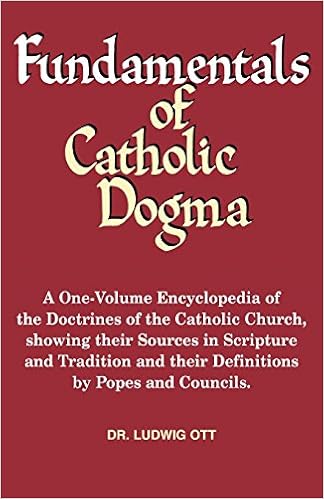
Second. We can dismiss as impossible—indeed, as unthinkable thanks to the protection of the Holy Spirit—any scenario whereby a pope commits the Church to a heresy. See Ott, Fundamentals (1957) 287 or Catholic Answers tract “Papal Infallibility” (2004). However grave might be the consequences for a pope falling into heresy, the Church herself cannot fall into heresy at his hands or anyone else’s. Deo gratias.

Those two points being understood, the canonical tradition yet recognizes (and history suggests) that a given pope could fall into personal heresy and that he might even promote such heresy publicly, which brings us to some thoughts on those possibilities.

[…]

There is quite a bit more after this, so don’t think that you have it all without going over there.

Fr. Z kudos for posting this.

Posted in Canon Law, Fr. Z KUDOS, Francis, The Drill | Tagged , , , , ,
18 Comments

Tradition = More Fun

The only thing that would make this better is if they also were wearing saturnos.  HERE

I received this from a reader…

The annual firing of the “potato cannon” with the men of Our Lady of Guadalupe Seminary in Denton, Nebraska! [FSSP] With Bishop James D Conley, The Ninth Bishop of the Catholic Diocese of Lincoln.

16_12_16_potato_cannon_01 16_12_16_potato_cannon_02


Posted in Just Too Cool, Lighter fare | Tagged , ,
14 Comments

“Down with Rigid Narcissistic Pelagian Prelaticism!”

Fr. John Hunwicke of the Ordinariate of Our Lady of Walsingham has of late been applying his customary perspicience to matters current over at his fine blog Mutual Enrichment.  

Today he tackles the wifty notions of the libs who yock “Clericalism!” at traditional Catholics at every turn.

Have a look… I’ll cut part out to force you to read over there:

Clericalism? Are the Traddies guilty?

The medieval historian John Bossy used to point out how dominant the laity were in the Church life of the High Middle Ages. Parishes were corporately structured, and dominated by powerful lay Guilds led by pairs of Wardens; for their religious needs they hired and paid clergy, just as, doubtless, for their footwear they employed and remunerated cobblers. Sometimes you can still see the guildswomen or guildsmen pictorially immortalised at the bottoms of the windows they put into their Parish Churches, as at S Neots in Cornwall. There were sacramental things that only the clergy, of course, could do; but it was not the clergy who called the tune. (‘Clericalism’, Dix loved to suggest, is a post-Reformation Presbyterian and Calvinist phenomenon.)

I hope no-one will be offended if I point out that things are rather like the High Middle Ages in Traddiland. [NB] In my experience, the Traditionalist enterprise is forcefully energised and led by well-qualified and determined lay men and women, often if not usually young. For their liturgical needs, they call upon clergy whom they know to be idonei. They are very polite and courteous and grateful and generous; but it always seems clear to me who is in charge. To avoid all misunderstanding, I must make clear that I think this de facto system works extremely well and I am very happy indeed when I am allowed to be part of it. I am not being snide … quite the opposite … and if anybody suggests I am ‘complaining’ I shall strangle them with a printed copy of the Novus Ordo.  [An excellent use for the Novus Ordo that I hadn’t thought of.  For my part, in our Mass Society here in Madison (please make a tax deductible donation TODAY – HERE), of which I am the “prez”, I point in helpful directions but the fantastic lay people get things done.  They have built good relationship with the clergy here and it is a delight to work with them.  They get it.]

It is an amusing paradox that the disorders in the post-Conciliar Church should have led to such a (please forgive my use of this word) empowerment of the traddy Laity. By empowerment I do not refer to anything like the activities of the infantilised laity of the ‘Mainstream Church’. You all know the sort of “lay involvement” that happens there … just before Holy Communion, the celebrant breaks into the sugary mood-music to call out “We’re short of a Eucharistic Minister … can somebody else please come up?” And there is some gruesome little committee which meets weekly with the pp to “arrange the liturgy”. No; I am talking about laity empowered in the sense of possessing adult competence and grown-up self-confidence.  [This is the worst sort of clericalism there is: Father “Just Call Me Bob” smugly allows lays people to do what he can do, in the guise of “empowering” them.  As if they aren’t good enough on their own as baptized Catholics.  No, Father has to give them a veneer of his clerical pulchritude.  Disgusting.]

[… the part I cut to tease you …]

Catholic Traditionalist laity, above all, do not seem to be nearly as scared of bishops as so many Catholic clergy are, the poor trembly things.

Failure to tremble at the knees at the very thought of “The Bishop” or “The Archbishop” or “The Cardinal” is, of course, a healthy feature also of the Anglican Patrimony and so it flourishes also in the Ordinariates. It needs to spread. Down with Clericalism! As the Holy Father would (and probably does) say, Down with Rigid Narcissistic Pelagian Prelaticism!

Do I hear an “Amen!”?

Posted in Mail from priests | Tagged
24 Comments

ASK FATHER: The 100th anniversary of Fatima

16_05_13_OLFatima_200From a priest…

QUAERITUR:

The 100th anniversary of Fatima: I don’t really know anything about the apparition or the message.  I am careful with what I read.  Especially on this topic things can derail into the realm of the kooky fairly quickly.  Can you suggest something for me to read on Fatima so to understand the significance of the 100th anniversary?

This is the ASK FATHER Question Box, not the Ask Everyone Box.  However, this time, I will open up the box for your suggestions.  I know that the readership here is widely read.

I have the moderation queue ON.  I am not going to let everything through.  Pithy, concise, succinct comments which are both short and sweet are to be welcomed.

Provide some titles of books about Fatima if you wish and I’ll have a look.  This could be good for many people.

If someone wants to take a shot at looking at the significance of 100 years and what is going on in the world… have at.  But remember…Pithy, concise, succinct as well as both short and sweet.

Posted in "How To..." - Practical Notes, ASK FATHER Question Box, Mail from priests, Our Solitary Boast | Tagged , ,
40 Comments