A saint for the young, rigid and compassionate

St Aloysius Gonzaga 01Run click, don’t walk click, to Crisis today to read Thomas J. Craughwell’s outstanding piece about St. Aloysius Gonzaga, a Jesuit saint (yes, there are some and they were amazing – shall we ever see their like again?) of high nobility who died at 23 years of age of plague in 1591.

The writer recounts his surprise at learning how this patron of students and young people, so often depicted with saccharine pastel mushiness, was a jaw-set, hard-nosed rigorist who learned to soften – but not to lose his good rigidity – with the help of his spiritual director St. Robert Bellarmine (whom many people today would say was as rigid as they come).

A sample or two:

[…]

The Gonzagas were one of the great families of Renaissance Italy—rich, proud, influential, and often caught up in bloody feuds with one or another of the other famous Renaissance clans. During Aloysius’ lifetime his uncle and two of his brothers would be murdered in these vendettas, and his own mother, Marta, was wounded almost to death by a knife-wielding assassin. True to the Gonzaga type, Aloysius grew up headstrong, inflexible, and combative. But unlike his father, Ferrante, who looked to foreign wars as an outlet for his aggression, Aloysius resolved to conquer himself. He promised Our Lady to do all he could to keep himself free from vice, and as tends to happen among intense adolescents, he took his resolution to an extreme.

Culling bits and pieces from stories he had heard about ascetic saints, Aloysius cobbled together for himself a harsh program of religious exercises. He beat himself with a leather dog leash. He rose at midnight to pray on the bare, cold stone floor of his room. Poor St. Robert would contend with this relentless streak years later when Aloysius entered the Jesuit novitiate.

By 1583 Aloysius was convinced he had a religious vocation; he asked his mother to break the news to Ferrante. When Marta told her husband that his heir wanted to become a Jesuit, the old soldier exploded in rage.

St Aloysius Gonzaga 03[…]

In January 1591 an epidemic struck Rome and the surrounding countryside. Overnight the city’s hospitals were flooded with the sick and the dying. In the crisis Aloysius found that where once the sick had disgusted him, now he felt only compassion. He went into the streets of Rome and carried the ill and the dying to the hospital on his back. He undressed them, washed them, put fresh clothes on them, found them a bed or at least a pallet, and fed them. One Jesuit novice, a young man named Tiberio Bondi, testified later that after working with Aloysius he felt ashamed for holding back from the sick when his friend was giving his all. The years of low-key direction from St. Robert Bellarmine, the desire at last to cooperate with God’s grace, had wrought a great change in Aloysius: he no longer acted out of stubborn pride, now his actions were motivated by love.

[…]

Hard-Identity Catholicism.

May I just add that the Mass which formed him was the so-called Tridentine Mass, what we now often call the Extraordinary Form, the Usus Antiquior?

St. Aloysius Gonzaga, pray for us.

Tiepolo-San-Luigi Gonzaga

Posted in "How To..." - Practical Notes, Hard-Identity Catholicism, Saints: Stories & Symbols, Si vis pacem para bellum!, The Coming Storm, The future and our choices | Tagged
10 Comments

Fr. Z’s Annual Rant On Blue Vestments

15_11_29_blue_lampasThe use of blue vestments during Advent has been dying out for several years as the aging hippies drop.  However, inspired by Pope Francis, perhaps we shouldn’t be so rigid and just – what the heck – use them anyway?

Let’s review.

I am pretty sure that that famous indult for blue in Spanish territories doesn’t any longer apply.  It was privilege was granted to Spain and its colonies, and Latin America, by a decree of the Sacred Congregation of Rites in 1864. In a nutshell, the concessions given for the use of cerulean were few in number and were quite restrictive by the clear intent of the Holy See.  Also, a couple years ago we learned from a commentator that the Spanish bishops approved, the use of blue (“azul”) for the Marian Feast of the Immaculate Conception.  It’s in their Ordo.  Perhaps some reader in Spain can check on this for this year.   There is a treasure trove of information about past concessions to use cerulean/blue vestments HERE.  Ultimate Fr. Z kudos for that.  

At this point, some people always blurt, “But Father! But Father! Once upon a time in Spanish territories there was an indult and… therefore… we can… you know!  You are… are… so… so… RIGID!  YOU MUST HATE VATICAN II!”

Yeah yeah… sure.  It’s still against the law.

But… lots of things are against the law and, these days, it doesn’t seem to make a difference! Let’s just do whatever the hell we want!  Surely that proves that I really do love Vatican II after all!  After all, I don’t want to be rigid, do I?  Isn’t that about the worst thing anyone can ever be?  We have to be flexible, unless we are … you know…

Also, this coming year is the 100th anniversary of Our Lady of Fatima’s apparitions.  Right?

Year in and year out I say that, as soon as blue is approved for use (and I sincerely hope it will be!) I will be among the first to have a beautiful set made in the Roman style!  I will take up a collection and get a magnificent Pontifical set, replete with cope and humeral veil.  With dalmatics and tunics and gremials and frontals!  I’ll get a stupendous Low Mass set with gold and embroidery.  I will ask for yhuge donations!  I’ll even have my coat of arms embroidered on them!

Okay…. I  give up.  Why should I wait?  Churchmen at the highest levels can pretend that Christ didn’t mean what he said about matrimony.  Why can’t I pretend blue is approved for the entire Latin Church right now?  If different dioceses and conferences can come up with opposing “policies” about Communion for the divorced and remarried, will anyone really care if we use an unapproved color for our vestments?

I found a pretty good fabric that could be used in three different versions of blue.  Whaddya think?

Navy

navy blue and gold jacquard

Baby Blue

light blue and gold jacquard

A sort of turquoise, I suppose.

turquise blue and gold jacquard

And it’s only $11/yard, which is a great deal.  I should order some samples.

I didn’t see examples in teal or powderpuff.

Speaking of different colors of blue, here once again is legendary song from our official Parodohymnodist.

Posted in "But Father! But Father!", Lighter fare, Liturgy Science Theatre 3000, Wherein Fr. Z Rants | Tagged ,
24 Comments

Once upon a time, there was this Pope who was “corrected”….

John XXII (1316-34)

In the wake of the confused and confusing elements in Chapter 8 of Amoris laetitia and in light of the Five Dubia submitted by the Four Cardinals, and in view of the remarks made by Card. Burke about what would possibly need to be done were no responses given or further confused and confusing points be issued, some people have wondered what it takes to “correct” a Pope, or if “correction” is even possible.

How would such a thing happen, given the fact that the Pope has as his superior only Christ, whose vicar he is, and … the People of God, whose servant he is.

I saw a really interesting piece at EWTN (UK) about correction of an erring Pope.  It gets into an historical incident.  I hadn’t read about this for quite some time, so it was interesting to refresh my memory. Let’s see some of it with my emphases and comments:

[…]

The Church corrected the serious error of Pope John XXII [An “Avignon Pope” who died in 1334.]

Pope John XXII’s serious error was in the area of eschatology, not moral theology, [Amoris laetitia concerns, mainly, moral theology] and in particular he proposed his own idea that after death the righteous soul did not immediately enjoy the reward of the Beatific Vision. Instead, he favoured the novel idea that the soul waited until the resurrection of the body, and the final, universal judgement to enjoy the beatific vision of God.  [Novel ideas are, generally, bad ideas.] Pope John XXII’s speculative proposition is against the established and continuous teaching of the Church, as now expressed in the Catechism of the Church as follows:

Each man receives his eternal retribution in his immortal soul at the very moment of his death, in a particular judgment that refers his life to Christ: either entrance into the blessedness of heaven — through a purification or immediately, or immediate and everlasting damnation. (CCC 1022).

Eight years into his pontificate, disturbing rumours began to circulate in Europe’s universities and throughout the Church that Pope John XXII was ‘favouring’ a serious error contrary to the teaching of the Church. By November 1331 these rumours transformed into alarm following John XXII’s delivery of three homilies proposing that his new teaching was supported by a ‘reading’ of Scripture and the Church Fathers.  [It’s one thing to have ideas.  It’s another thing to diffuse them.] The Catholic world outside of the papal court of Avignon was profoundly and deeply disturbed by the news that the Head of the Church was proposing a teaching contrary to magisterial teaching. However, the pope’s novel ideas found favour among some within his court who sought the Holy Father’s patronage and preferment.  [Say it ain’t so!  Surely no one in a Pope’s close circle would ever seek to curry favor by nodding and bobbing over everything.  Such ambition would be wicked.]

Faced with growing protests from clergy throughout Christendom Pope John XXII sought to defend his innovation in two ways: he claimed it was not his own teaching but the teaching of scripture and the Church Fathers and he asserted that it was only his private opinion as a theologian, and not taught in his role as Head of the Church. The pope further claimed that the question was open to discussion and every clergyman was free to accept or reject whichever side of the controversy he judged as true.

However, the Holy Father’s actions belied his words. Pope John XXII’s treatment of supporters and opponents showed his preference for those who upheld his “new” teaching. Supporters received honours and preferment, while those who opposed Pope John XXII, either informally or formally, experienced papal disfavour, and even punishment. He also sought to disseminate his erroneous teaching by commanding that copies of his sermons were distributed to his supporters.  [So, those who resisted, were punished and John continued to diffuse his idea.]

But the more Pope John XXII and his supporters sought to promulgate his error, the greater the uproar and resistance from the Church beyond the papal court. [NB: This was loooong before the age of social communication, whihc makes information now rocket around the globe to a far larger percentage of the population that would have been involved in the 14 c.  That said, in the ancient Church, there were riots when people heard a version of Scripture that was unfamiliar.  People argued about homoousios and homoiousios in the market places and streets.  Maybe a larger percentage were involved because they took their faith seriously.] King Phillip VI of  France and the Dominican faculty of the university of Paris were Pope John XXII’s most implacable opponents, despite the Holy Father’s personal rebukes and imposition of ‘yes’ men. As Fr. Victor Francis O’Daniel, O.P. put it, “Neither fear of feeling the weight of papal displeasure, nor hope of reward, had any influence… when there was question of an error against Catholic faith.”

Determined to meet the challenge of Pope John XXII’s error head on, King Philip VI called a meeting of the theological faculty of the University of Paris. [The “state” was involved, because these matters had civic repercussions.] On December 19, 1333 a commission of 23 masters of theology assembled under the presidency of the Dominican patriarch of Jerusalem, Peter de la Palud, and in the presence of the kings of France and Navarre, and many bishops, priests, and lay faithful. They unanimously declared their firm belief in established and continual Catholic teaching on the righteous soul’s immediate reward of the Beatific Vision on death and individual judgement. [They also diplomatically stated their submission to the Roman Pontiff and they declared that John had not formally taught the error which he had been diffusing.]

The commission drew up a profession of faith which they signed, and submitted to Pope John XXII. The profession of faith was accompanied with a letter to the Holy Father which was polite and respectful, but also expressed clearly and firmly the result of their deliberations. They reminded Pope John XXII that he had declared that he had spoken as an individual theologian, not as Head of the Church infallibly defining a doctrine. They also expressed the hope that the Holy Father would give his apostolic sanction to their decision.

Following his receipt of the signed profession of faith and letter Pope John XXII immediately convoked a consistory in January 1334 during which he displayed openness and tolerance towards those who opposed him, and repeated his assertion that he had never intended to dogmatically settle the question, but rather that he had sought an open discussion. [Thus saving everyone’s face.] He also sent letters admonishing those supporters that the King of France judged had overstepped the mark in their zeal to promote his “new” teaching, and he released from prison those opponents investigated by the Inquisition. [Today, there are all sorts of “prisons”.  Some even have bars on the doors.] Later in the year, sensing his death was imminent, John XXII retracted the serious error he had preached or had caused others to preach or teach that was not “in perfect conformity with Catholic belief.”

Blessed Cardinal Schuster OSB (Cardinal and Archbishop of Milan, d. 1954) wrote the following assessment of this formal correction of the serious error of Pope John XXII:

John XXII has the gravest responsibilities before the tribunal of history… since he offered the entire Church, the humiliating spectacle of the princes, clergy and universities steering the Pontiff onto the right path of Catholic theological tradition, and placing him in the very difficult situation of having to contradict himself.

It took a good deal of humility for John XXII to check and adjust his course.

What is especially of note is how human nature doesn’t change.

An interesting episode from our fascinating, messy family history!

The moderation queue is ON.

Posted in "How To..." - Practical Notes, Just Too Cool, Our Catholic Identity, The Drill | Tagged
16 Comments

ASK FATHER: Can a bishop permit permanent deacon to administer the Sacrament of the Sick?

From a reader…

QUAERITUR:

Can a Bishop give a permanent Deacon (Military Ordinariate) the authority to administer the Sacrament of the Sick?

NO!  One hundred times… NO!

Deacons are not able to administer Anointing of the Sick.

Only the sacerdos (which term includes both priest and bishop) can anoint.  Deacons cannot anoint.  Period.

If a deacon attempts to anoint he simulates a sacrament, which is a grave abuse and, if he knows this, a grave sin.  However, he should know this, since it pertains to what he must know for his ministry in the Church.  Furthermore, every bishop should know this too.

If this is going on, the bishop, the local diocesan bishop or the Congregation for the Doctrine of the Faith must be informed.

For questions about how the rite is to be conducted, one can have recourse always to the Congregation for Divine Worship and Discipline of the Sacraments.  In the case of the question about validity of a sacrament in a concrete case you must have recourse to the Congregation for the Doctrine of the Faith.

Posted in "How To..." - Practical Notes, ASK FATHER Question Box, Liturgy Science Theatre 3000 | Tagged ,
25 Comments

ASK FATHER: Are deacons required to wear the dalmatic at Mass?

saint-lawrence-lyon-france enamel smFrom a reader…

QUAERITUR:

Father, last year we began attending a more traditional parish in our diocese. It struck me just today that I’ve never seen our deacon at Mass without a dalmatic, whereas we saw the deacon frequently without a dalmatic at our previous parishes. Is the deacon required to wear the dalmatic at Mass in the same way that the priest is required to wear the chasuble?

In 2009, the USCCB promulgated the Directory for the Formation, Life and Ministry of Permanent Deacons, which is largely drawn from the 1998 Directory issued by the Congregation for the Clergy. (It has several unfortunate statements that defy logic and tradition…. but I digress…)

The Directory states,

“For the Sacred Liturgy they should vest worthily and with dignity, in accordance with the prescribed liturgical norms. The dalmatic, in its appropriate liturgical colors, together with the alb, cincture and stole, ‘constitutes the liturgical dress proper to deacons.” (83)

The proper liturgical vestment of the deacon is the dalmatic.  Parishes which have the service of deacons should also have the proper vestments for deacons.  And deacons should put them on.

This isn’t hard.


Posted in "How To..." - Practical Notes, ASK FATHER Question Box, Liturgy Science Theatre 3000 | Tagged ,
17 Comments

AD ORIENTEM WATCH! – ACTION ITEM!

16_07_20_TSHIRT_LAT_02 copyI hope you readers out there will post about the changes effected in parishes concerning ad orientem worship for Holy Mass.

Did you see priests “turning towards the Lord”?

I’ve been hearing about some places in email.

¡Hagan lío!

Report!

For my part, the pastor of the parish where I help on weekends has as of this weekend shifted the other two churches of the three in his care to ad orientem worship.  The third church has been ad orientem for some time now and it has been a huge and fruitful success.

ACTION ITEM!

I think that the priests who have done this, should write a note to Card. Sarah, perhaps including the pastor’s page or handouts that taught about the changes.  I think that lay people who want this and who see it now in their churches, should write a thank you note to Card. Sarah.  Be brief: one side of one sheet of paper.  Be sure to include a promise of prayers.

His Eminence
Robert Card. Sarah
Prefect of the Congregation for Divine Worship
Palazzo delle Congregazioni
00120 VATICAN CITY

UPDATE 28 Nov:

I was sent a link to a post by a Spanish priest who celebrated Holy Mass ad orientem versus for the first time. It’s great.  It’s also in Spanish.

HERE

His people appreciated it.  He wrote of his own experience:

¿Y el celebrante cómo lo ha vivido?  Con mucha emoción, tanta que hasta he de confesar que dormí mal la noche anterior. Para mí ha sido una misa como nueva. Especialmente ofertorio y consagración.

Mi sensación ha sido sobre todo la de sentirme cara a cara ante el misterio de Dios. Como cuando Moisés se encontró con Dios cara a cara y el pueblo estaba expectante.Todos ante Dios y yo, el sacerdote, el primero, con el corazón encogido mientras me atrevía a pronunciar las palabras de la consagración. Como en una nube envolvente de misterio. Solo ante Dios, pero con una soledad asentada en la presencia y participación de los fieles que se han sentido contagiados por esa aura de misterio y profundidad y con su oración y su estar apuntalaban y sostenían mis súplicas.

UPDATE 28 Nov:

Meanwhile, one wag sent me this…

16_11_28 people look east except the priest

Posted in ¡Hagan lío!, ACTION ITEM!, Hard-Identity Catholicism, Liturgy Science Theatre 3000, Turn Towards The Lord | Tagged
37 Comments

BISHOPS – PRIESTS: When shall we see his like again?

von Galen 300At The Catholic Thing there is a piece by David Warren which merits attention.  Warren had been to the presentation of a new book about Bl. Clemens August Card. von Galen, the “Lion of Munster” who famously stood up in the public square directly in the path of Hitler and Nazism.  When shall we see his like again?

Where are the von Galens we need today?

Where are the Ambroses?

Where are the John Fishers?

That’s what Warren wonders about too.

Here is a sample… but read the whole thing there.  My emphases and comments.

Silence of the Lions

What is the use of bishops? This has been a question in the minds of many Catholic faithful, through my adult life, as I have learnt from conversation. Often the question itself, or something like it, is asked sarcastically, about one bishop or another who has failed, signally, to uphold Catholic teaching when he was called upon “by events.” The cock crows thrice and then – the possibility fades.

The faithful are told, by this silence or (more often) incoherent mumbling, that when it comes to the witnessing of Christ and Christ’s teaching, they are on their own. They may have the Catechism of the Catholic Church before them, to remind them what’s what in our faith, but if they make a stand they cannot expect their leaders to support them.  [This is often the experience of priests in parishes who try to teach Catholic Faith in its fullness, including messages about human sexual morality.  They come under attack and the bishop won’t back him.  Instead the priests are left to the wolves, the wolves including, sometimes, sadly, the bishop himself.  Mind you, what was said about “silence or … incorherent mumbling” is also endemic among priests.  Many things written here can apply to priests and not just bishops.]

Rather, more likely, they are quietly disowned, as “fanatics,” and left to stew in that reputation. For they are now taken to be speaking only for themselves, in a time when anything said with clarity and precision can be dismissed as the outpouring of mere “feelings,” then slandered as “hate speech.” [Witness the treatment of Robert Card. Sarah after his invitation to priests to say Mass ad orientem.  Witness the way that Card. Burke is treated by the catholic Left, even from the heights of the Twitter account of Fr. Spadaro (SJ), who called him – via a posted image – a “witless worm” as if the Cardinal were Wormtongue from the Lord of the Rings.  HERE]

In a dark time, when speech codesare advancing on every academic, legal, social and political front, the lawless Dictatorship of Relativism is being consolidated. Anything you say may be, potentially, prosecuted on the argument that it might, potentially, hurt the feelings of unknown members of some vaguely defined, politically favored group. The dissident loses his livelihood, or if he hopes to keep it, must submit to public humiliation and some course of “counseling,” or “sensitivity training,” or “re-education.” [Witness the recent treatment of Prof. Anthony Esolen ]

Maoism is thus alive and well on the college campuses; and spreading beyond them. [I suspect that in referring to Maoism, he may mean the Cultural Revolution, with its spectacular terror, shifting deadly political sands, and show trials.] Or Stalinism, or Hitlerism, if gentle reader prefers. Or “McCarthyism,” insofar as it was conceived to involve show trials.

McCarthyism was defeated, fairly quickly – inside three months – when several prominent establishment figures stood up to the late Wisconsin senator, and said they had had enough. Joe McCarthy was himself labeled a pariah, and his case made a warning to any who might wish to emulate him.  [McCarthy, by the way, wasn’t wrong.]

Indeed, a more formidable McCarthyism of the Left was planted in the corpse of that politician, and his name made into a propaganda slogan. But to begin with, I think, there was genuine outrage at the recklessness of McCarthy’s senate hearings, and for the first who stood up, some nerve was required.

As courage will always be required – in all times, in all nations – for those who will oppose an injustice.

We have by now, in the Catholic Church, a legacy of bishops who were brave and worthy, written into the annals of our Saints and Martyrs. Conducted chiefly through the liturgy, they amount in practice to a Third Testament – an exemplary chronicle through twenty centuries in which, by the lives of great men and women, the Life of Christ persisted in this world.

By no means can we say that bishops always fail us; nor even when they fall silent are we necessarily left to fend for ourselves. God finds others who step forward to give the example. Too, it should be said that we ourselves are entitled, by the grace of our baptism, to step forward – to vindicate the good and the true; to condemn their opposites. But such acts are uncommon. [More on this point, below.]

That they are uncommon is part of the teaching, about sinful man. We are so attached to our worldly comforts, by our worldly imaginations, that in the clearest opposition between right and wrong we will seek the quiet life. And as we could know if only from the Gospels, the man well fed and well housed, well friended and conspicuously decorated (such as a bishop), has more to lose than most. Why risk it all in exchange for public persecution, and the risk of abandonment by his own supporters? For rewards not of this world, invisible except to the eyes of Faith?  [Because we are under constant pressure from the World, the Flesh and the Devil.  Because of Original Sin.]

[…]

For a while now I’ve been saying, in the context of trying to expand the use of the older, traditional form of the Roman Rite, that lay people can’t just sit on their hands and wait for priests and bishops to do something for them.  Lay people have to take matters into their own hands, organize, and make it happen.  Yes, of course, Mass requires the priest.  But everything needed for Mass can be handled by lay people.  Be ready to do all the work.  Remove every obstacle.  Make straight the path to that ad orientem altar.

Are you tepid?  Are you spiritless or halfhearted?  Do you not feel zeal?  Are you downhearted?

Let us all make a thorough inventory of our situations in life and review our own vocations.  We must examine our consciences and GO TO CONFESSION!  Then we have to apply ourselves with greater zeal to the work in front of our faces.

Posted in Liberals, Si vis pacem para bellum!, The Coming Storm, The Drill, The future and our choices, The Olympian Middle | Tagged , , , , ,
21 Comments

PODCAzT 152: Bishop Athanasius Schneider on the Five Dubia of the Four Cardinals

bishop-athanasius-schneiderYou know about the Five Dubia of the Four Cardinals submitted, first privately, now publicly to His Holiness Pope Francis about Chapter 8 of Amoris laetitia.

I have another PODCAzT about Bp. Schneider on Amoris laetitia.  HERE

The Four Cardinal and their questions have come under strong attack.

Bishop Athanasius Schneider, Auxiliary of Astana in Kazakhstan, issued an open letter in defense of the Four Cardinal, or rather, in defense of what the Four are trying to accomplish: seek and maintain the Truth.

Schneider’s letter is called: A Prophetic Voice of Four Cardinals of the Holy Roman Catholic Church

There are many online sources for the Bishop’s Letter, who asked that it be made widely available. I received many copies by email. You can find it online at the National Catholic RegisterHERE.

Because some people find it easier to listen to texts, while driving or doing chores, etc., I’ll read it for you, instead of just posting the text.  Hopefully, in this way I can fulfill the Bishop’s wish to make sure that lots of people get the text.

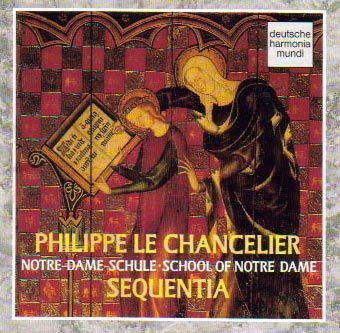
You might hear a little music along the way.  If you are interested, the tune is called Dic, Christi veritas.  It is, I think, a 3 part conductus of a text by the Parisien writer Philip the Chancellor (+1236).  This version is from Sequentia.  US HERE – UK HERE

Here is the text, of which you might hear snatches.

Dic Christi Veritas,
dic cara raritas,
dic rara Caritas,
ubi nunc habitas?
aut in valle Visionis,
aut in throno Pharaonis,
aut in alto cum Nerone,
aut in antro cum Timone,
vel in viscella scirpea
cum Moyse plorante,
vel in domo Romulea
cum bulla fulminate?
Bulla fulminante
sub iudice tonante,
reo appellante,
sententia gravante,
veritas opprimitur,
distrahitur et venditur,
iustitia prostante.
itur et recurritur
ad Curiam, nec ante
quis quid consequitur,
donec exuitur
ultimo quadrante.

And you might hear the sound of a TARDIS.

RELATED:

145 16-04-27 Athanasius Schneider on ‘Amoria laetitia


Posted in Hard-Identity Catholicism, Our Catholic Identity, Patristiblogging, PODCAzT, The Drill | Tagged , , , , , ,
13 Comments

BRICK BY BRICK! Parishes are “Turning Towards The Lord”, going “ad orientem”

Click!

During a conference in London last summer, Robert Card. Sarah famously made a prayerful and earnest personal suggestion that priests begin to say Holy Mass ad orientem beginning with Advent.  Advent begins on Sunday.

Of course the Cardinal was speaking as an individual churchman, rather than in his capacity as Prefect of the CDW.  He also included the usual clear statements about prudence and catechesis and circumstances, etc.

The Left quite simply had a calf!

That said, priests are paying attention to men like Card. Sarah, whose mind and heart are revealed in books such as his amazing God Or Nothing, which every priest and bishop should read.  Give your priests this book for Christmas! UK HERE USA HERE

Contrast the attitude of Card. Sarah, as communicated in his book, with the attitude of those who attack him.

I am getting notes that priests, indeed, “turning towards the Lord”.

For example, I had a note from a reader:

Our local parish (St. Mary) here in Anacortes, WA is continuing to bring the sense of the sacred back into the Holy Sacrifice of the Mass.

This past weekend our Priest included the following bulletin insert announcing ad orientem for weekday Masses this Advent! As you can see, he’s built on a solid groundwork of catechesis (including some of his predecessors here at the parish).

Exciting, courageous, and beautiful – I’m looking forward to it!

Attached was this image (sorry, not a text):

16_11_25_orientem_WA

Only weekday Masses.. but…

Brick by brick!

Also, I note that a priest friend of mine with three parishes, who took one of the parishes ad orientem a few years ago with great success, is now going ad orientem with his other two parishes.

Brick by brick!


Posted in "How To..." - Practical Notes, ACTION ITEM!, Brick by Brick, Hard-Identity Catholicism, Liturgy Science Theatre 3000, Our Catholic Identity | Tagged , ,
15 Comments

First meeting of Study Commission on the Diaconate of Women

In my email a Communiqué of the Holy See Press Office

Today, November 25, 2016, the first meeting of the Study Commission on the Diaconate of Women took place. This commission was established by the Holy Father on August 2 with the purpose of doing an objective study on the situation in the early Church. Chaired by Archbishop Luis Ladaria Ferrer, S.J., Secretary of the Congregation for the Doctrine of the Faith, Commission members will meet in morning and evening sessions over two days in the offices of the Congregation for the Doctrine of the Faith.

So, their slow march to the vanishing point has begun.

Reading that Communiqué’s carefully crafted text suggests a few things.

First, the commission has a purpose: “the purpose of doing an objective study on the situation in the early Church” with respect to the “Diaconate of Women”.  That’s the commission’s purpose.  Not another.

The purpose of the commission, as stated at least, is not to make recommendations about what to do (i.e., Holy Father you can ordain women / you can’t ordain women!).  Also, they are confined to the early Church.  That takes us up through, probably, what many scholars call “late antiquity”.  There is still a lot of material there, but most of it has been picked over already.

Second, they are tasked to produce a “study”.  What sort of “study” can 12 members produce collectively?  And on what time line?  Don’t hold your breath or keep your calendar open.

Third, they have four meetings over two days for this round.

Consider how meetings go.

The first meeting has to be nuts and bolts and introductions.  Then at 1 PM they will break for a long lunch, because when in Rome that’s what you do. The first day’s second session will probably allow individual members to make short presentations.  Since there are twelve of them, they would have to be really short, maybe 10 minutes a piece.   In Rome things rev up after lunch at about 4 PM and they go to 7 PM: 3 hours. That’s two hours plus and the bulk of the afternoon session.  They might be asked to turn in texts so that everyone else can get them tomorrow morning, if they weren’t collected and distributed ahead of time.  They won’t be that organized.

And there was – or will be – evening, and morning, the first day.

On the second day, tomorrow, they’ll probably hear anyone who didn’t get squeezed in today because some members will run long and take 15-20 minutes.  Then, after a coffee break with dry biscuits around 10:30 (‘case that’s when we did it when I worked there), they might open up the table for a kind of round-table discussion, with some backing and forthing.  Then they’ll break at 1 PM for another long lunch, because that’s what you do in Rome.  In the lunch-groggy evening session, punctuated by a coffee break with more biscuits, they will have a soul annihilating philological rag chew about what the meaning of the “is” is in 4th century Coptic manuscripts (there will be claims and counter claims) until Archbp. Ladaria, poor man, calls a halt around 7 PM.  They’ll be congratulated for a couple of fruitful and enlightening days and then adjourn sine die.

So….  Nuts and bolts.  Introductions.  Initial comments.   A little discussion.  They go their separate ways without knowing the date of the next meeting.

I’ll guess 6 months, at the least.  Maybe 9.  Why rush?

This will go nowhere, verrrrrry slooooooowly.

Meanwhile, Deacon Greg Kandra has on his blog a piece with an update about how some Orthodox have begun their own study of deaconesses.  I can’t see that going anywhere, either. HERE

Bottom line: As I wrote before and stick to now:

The question will eventually be resolved (frankly, it probably is already resolved) wholly on the basis what it means to be ordained TODAY, not centuries ago.  What do Holy Orders mean NOW.  That’s the key.  Inevitably our present understanding of Holy Orders will trump history, philology, etc.  I suspect that this move [establishing a commission to “study” the early Church] will forever bury the question, and properly so.


Posted in Deaconettes | Tagged , ,
19 Comments