All I can say is, “Whew!” Topic announced for 2018 Synod of Bishops

All I can say is, “Whew!”

From the highly-valued Ed Pentin of the National Catholic Reporter:

Next Synod Will Be on ‘Young People, the Faith and Discernment of Vocation’
Meeting of bishops from around the world to be held at the Vatican in October 2018.

The next Synod of Bishops will take place in October 2018 on the theme of “Young People, the Faith and the Discernment of Vocation,” the Vatican announced today.

In a statement, the Vatican said Pope Francis had decided on the theme after “customary consultation” with “bishops’ conferences, the sui iuris Eastern Catholic Churches, and the Union of Superiors General, and having listened to the suggestions of the Fathers of the last synodal assembly and the opinion of the XIV Ordinary Council.”

The statement added that the theme chosen for the 15th General Assembly of the Synod of Bishops is an “expression of pastoral concern of the Church for the young” and is “in continuity with the findings from the recent synodal assemblies on the family and with the contents of the post-synodal apostolic exhortation, Amoris Laetitia”

It added that the synod “wishes to accompany [there’s that word again] young people along their existential journey towards maturity so that, through a process of discernment, they can discover their life plan and achieve it joyfully, opening themselves up to an encounter with God and humanity and actively taking part in the building of the Church and society.”

News of the decision comes after speculation that the next synod would be about priestly celibacy and a possible push to allow married priests, something Pope Francis is known to be keen to examine. That proposal was understood to have been voted down by the majority of members on the XIV Ordinary Council of the Synod of Bishops, the body charged with drawing up the theme of the next synod.

The members of the XIV Ordinary Council, appointed in October 2015, are:

Cardinal Christoph Schönborn of Vienna, Austria;
Cardinal Wilfrid Napier of Durban, South Africa;
Cardinal Óscar Rodríguez Maradiaga of Tegucigalpa, Honduras;
Cardinal Peter Turkson, prefect, Promoting Integral Human Development;
Cardinal George Pell, prefect, Secretariat for the Economy;
Cardinal Marc Ouellet, prefect, Congregation for Bishops;
Cardinal Oswald Gracias of Mumbai, India;
Cardinal Luis Antonio Tagle of Manila, Philippines;
Cardinal Vincent Nichols of Westminster, England;
Cardinal Robert Sarah, prefect, Congregation for Divine Worship;
Archbishop Charles Chaput of Philadelphia, USA;
Archbishop Bruno Forte of Chieti-Vasto, Italy.

Okay… some great names and no so great names on that list.

Posted in Synod | Tagged ,
30 Comments

Diocese of Rome’s guidelines for ‘Amoris laetitia’. Wherein Fr. Z rants, offers solution.

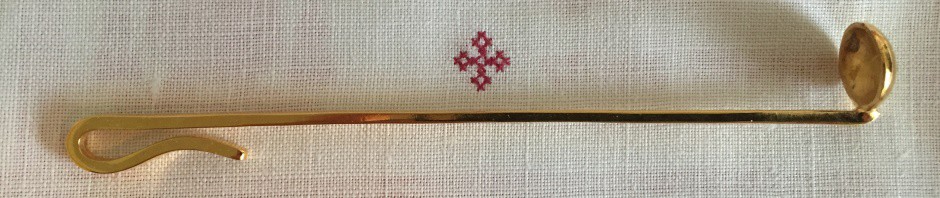
0-holy-communionAt the end I offer a solution.  But be patient and read.

Sandro Magister provided an English translation of key parts of the Italian document issued by the Vicar of Rome, Card. Vallini (who runs the Diocese of Rome while the Pope popes), outlining how to implement the Post-Synodal Apostolic Exhortation Amoris laetitia.  Italian original HERE

Here are the paragraphs that concern the most controversial aspect of Amoris laetitia, that is, whether Communion can be given to those who are civilly divorced and remarried without any declaration of nullity of previous marriages, that is to say are, objectively, living in an adulterous relationship and who have not yet chosen the “brother and sister” path.   My emphases and comments.

“The text of the apostolic exhortation does not go further, but footnote 351 states: ‘In certain cases, this can include the help of the sacraments.’ The pope uses the conditional, so he is not saying that they must be admitted to the sacraments, although he does not exclude this in some cases and under some conditions [the underlining is in the text of the presentation – editor’s note]. Pope Francis develops the previous magisterium in the line of the hermeneutic of continuity and of exploration, and not in discontinuity and rupture. [!] He affirms that we must travel the ‘via caritatis’ of welcoming penitents, listening to them attentively, showing them the maternal face of the Church, inviting them to follow the path of Jesus, helping them to mature the right intention of opening themselves to the Gospel, and we must do this while paying attention to the circumstances of individual persons, to their consciences, without compromising the truth and prudence that will help to find the right way.

“It is most important to establish with all these persons and couples a ‘good pastoral relationship.’ That is to say, we must welcome them warmly, invite them to open themselves to participate in some way in ecclesial life, in family groups, in carrying out some service, e.g. charitable or liturgical (choir, prayer of the faithful, offertory procession). [So, people who are in objectively irregular situations, apparent to other people, can have liturgical roles?  And note that “e.g.”.  The one’s mentioned are not the only ones, it seems.  How about distributing Communion?] In order to develop these processes it is more valuable than ever that there be the active presence of pastoral worker couples, and this will also be of great benefit to the climate of the community. These persons – the pope says – “need to feel not as excommunicated members of the Church, but instead as living members, able to live and grow in the Church” (AL, 299).  [Sincere question: Will making them feel so confortable also remove their incentive to rectify their situation?  But if they can’t/won’t rectify their situation… we admit them to Communion?]

“This is not necessarily a matter of arriving at the sacraments, but of orienting them to live forms of integration in ecclesial life. [NB: Even though they are in an irregular situation, they are still obliged to attend Holy Mass on Sundays, etc.  They are also obliged to confess their sins once a year. However, if they will not say with sincerity that they intend to amend their lives, they can’t be absolved.  And though Father can be fooled, God cannot be fooled.] But when the concrete circumstances of a couple make it feasible, meaning when their journey of faith has been long, sincere, and progressive, it is proposed that they live in continence; [NB: HERE IT IS…] if this decision is difficult to practice for the stability of the couple, [that is, living as brother and sister in continence] ‘Amoris Laetitia’ does not rule out the possibility of accessing penance and the Eucharist. This means a certain openness, as in the case in which there is the moral certainty that the first marriage was null but there are not the proofs to demonstrate this in a judicial setting; [I’ve never worked in a tribunal… but how do you arrive at a moral certainty without proofs of some kind?] but not however in the case in which, for example, their condition is shown off as if it were part of the Christian ideal, etc. [That last part… “ma non invece nel caso in cui, ad esempio, viene ostentata la propria condizione come se facesse parte dell’ideale cristiano, ecc.”  Ummm… I think that word salad means something like they have to avoid the appearance that this set up (objective adulterers) is somehow in keeping with Christian morals.  This is, I think, the Kasperite “tolerated but not accepted”.  Their situation (adultery) is not “part of the Christian ideal”.  Adulterers receiving Communion is “not part of the Christian ideal”.   But we are going to give them Communion anyway.]

VI) “How are we to understand this openness? Certainly not in the sense of an indiscriminate access to the sacraments, as sometimes happens, [Indeed it does!  And it is going to continue to happen, probably more than ever now because they will claim the cover of Amoris laetitia.  Am I wrong?] but of a discernment that would distinguish adequately case by case. Who can decide? From the tenor of the text and from the ‘mens’ of its Author it does not seem to me that there could be any solution other than that of the internal forum. In fact, the internal forum is the favorable way for opening the heart to the most intimate confidences, and if a relationship of trust has been established over time with a confessor or with a spiritual guide, it is possible to begin and develop with him an itinerary of long, patient conversion, made of small steps and of progressive verifications.  [Sincere question: If Fr. Spike works with Bill and Sue and they together decide that they can receive Communion, and if they do this in the internal forum, then how is Fr. Spike supposed to explain to people who know Bill and Sue why they can receive Communion?  How to avoid scandal?  I have an idea about this.  See below.]

“So it can be none other than the confessor, at a certain point, in his conscience, after much reflection and prayer, who must assume the responsibility before God and the penitent and ask that the access take place in a discreet manner. In these cases there is no interruption of the journey of discernment (AL, 303; ‘dynamic discernment’) for the sake of reaching new stages toward the full Christian ideal.”  [So the ultimate goal is either separation of the couple or living in continence and… AND… avoiding scandal.  Don’t forget the issue of scandal in this.]

The document bobs and weaves, but, from what I can tell, it says, yes, Communion can be given to them.  That is, Communion can be given to people who are, at the time of Communion, more than likely not in the state of grace.  Right? Isn’t that what is being said?

Let’s review:

it is proposed that they live in continence; if this decision is difficult to practice for the stability of the couple, ‘Amoris Laetitia’ does not rule out the possibility of accessing penance and the Eucharist.

That “this decision is difficult to practice” means that the couple who are not married are still having adulterous sexual relations.  That “for the stability of the couple” must mean that without sexual relations they are not a “couple”, and that it is, for one reason or another, important that they (who aren’t married) stay together and have sex together. No?

However…. If they have entered into a process with a priest who as helped them to see what their situation is according to the teaching of Christ and His Church, then they know that what they are doing is wrong.  They know that they have committed a mortal sin.  They know that are not properly disposed to receive.  Wouldn’t that be part of what the priest must help them to understand?

But… they can receive anyway?  Am I missing something?

Let’s say that Amoris laetitia is being properly interpreted here.  Let’s say that the Pope really did intend this.  This is, after all, the Pope’s diocese, right?  This must be what this Pope really wants.  This must really show the mens of Pope Francis.

How do we work with this?

We get the whole bit about “graduality”.  We get the whole thing about “for the sake of reaching the full Christian ideal”.   We also can imagine that the situation being described is going to be relatively rare.

I cannot see anyway around this. It must be either one way or the other.  It is either 1) that they say that they will not live in continence as brother and sister, or 2) they say that they will try to live in continence as brother and sister.  If they say they won’t, and they don’t, they cannot be admitted to Communion. They must not approach to receive Communion.  That would be a mortal sin and a sacrilege.  If, on the other hand, they say that they will try, really try, if they confess their sins and really intend to live in continence, they probably can be admitted to Communion – remoto scandaloprovided that scandal is avoided.

Fr. Z’s Solution:

If, in those rare circumstances when such a couple might be able to receive Communion, why not give them Holy Communion outside of Mass in the rectory?  That would avoid scandal.  Right?

Think about it.  If reception of Communion is so important to them because they a) really understand what the Eucharist is… WHO the Eucharist is and b) the reflect on the Four Last Things and c) they are on this “journey” and living in continence, etc., then they should be willing to attend Mass according to their obligation (like everyone else) but not receive during Mass so that they will avoid even a small risk of giving scandal.  If they have charity toward their neighbors, they would want to avoid scandal and putting the priest in a tough spot.  Right?

They should be thrilled to receive Communion but out of sight, in the rectory, away from public view.   Right?

But it must be asked: What is it that they really want?  Is it the Eucharist?

What does reception of Communion mean to them?  Is the moment of Communion fully about reception of the Body, Blood, Soul and Divinity of the Son of God, the Second Person of the Trinity, Savior and King of Fearful Majesty?  Or is Communion about being with other people, sharing a moment together, being part of the group, being affirmed as they are?

What does Communion mean?

Is reception of Holy Communion now about something other than getting to heaven?

I keep turning this over and over in my head, asking:  If they really get the Eucharist, the full implications of receiving as Paul describes in 1 Cor 11:27 (“Therefore whosoever shall eat this bread, or drink the chalice of the Lord unworthily, shall be guilty of the body and of the blood of the Lord.”), if they really get the Four Last Things, then … would they really want to put at risk their eternal salvation?

If they have been working with a sound priest who helps them to understand what mortal sin is, what matrimony is according to the Church’s teachings, would they really want to receive Communion in their irregular state?

Let’s say that they get all these things.  Let’s say they decided to live in continence because its the right thing to do, because of their love of the Lord and out of their desire for graces of Communion in the Body, Blood, Soul and Divinity of their Savior.  Let’s grant this scenario is possible.  Fine.  There may be times when they fail in their determination to live in continence and they have sexual relations.  They go to confession and start over.  Fine.  That’s what we all do when we sin in any way.  We go to confession with a firm purpose of amendment and start over with God’s help.  They might be living in a very near occasion of sin, but perhaps there are legitimate reasons for that, such as the care of children, etc.  Okay.

But…

The issue of scandal is still going to loom over this.

My solution might be the way to go: Communion in private, outside of public Mass, away from observing eyes.

QUAERITUR: We must ask of ourselves as a Church a hard question. Has reception of Holy Communion come to be about something other than getting to heaven?

The moderation queue is ON.

PS: As I have written before, faithful priests will continue to do what they do, and faithless priests will continue to do what they do.  The divide between them will grow greater and unity between parishes and dioceses will diminish.
Posted in "How To..." - Practical Notes, One Man & One Woman, Our Catholic Identity, The Drill, Wherein Fr. Z Rants | Tagged , , ,
48 Comments

1962: Of Manners in Church, of the Vernacular, and of Vocations

One of you readers sent me a link to a video from 1962, made in Ireland, about the changes in the Ritual for administration of sacraments, especially of Marriage and Baptism.   They talk about the New Ritual, the introduction of the use of the vernacular into the rituals.  There is mention of the Liturgical Movement and of active participation.  Then they bring up English in the Mass, in the fore-Mass.  “I don’t think that many people would wish for English in the Canon of the Mass, the center of the Mass.”

16_10_05_screenshot_02

I can’t find a way to embed.  Go HERE

There is also video on Manners in Church  HERE  Again, it’s 1962.  This should be shown to every one.  It’s rather amusing.  You see a nice shot of the traditional form of Mass.  Be sure to hang in until sermon time!

16_10_05_screenshot_03

And take in the filmette about the Village With The Most Vocations HERE  This one might make you quite nearly weep with frustration.

16_10_05_screenshot_01

There’s a moment at the very end which show you who really ran the Church.

Poor Ireland.  Poor poor Ireland.  What has become of the Church in Ireland?

“But Fahther! But Fahther”, some of you are caviling, “You … you… everything is BETTER now!   Everyone who doesn’t hate the poor and the environment knows that Vatican II was a huge success!   Convents had too many vocations.  And we are all priests, just like the brave revolutionary Luther said.  Vocations are…. umm… we need women’s ordination like the spirit of Vatican II wants and… and… gay, lesbian, transgender and questioning.  So people aren’t getting married “in church” anymore. What does that really mean when we all go to Communion anyway?!?   There are still lots of Catholic hospitals and schools… well.. there are LOTS of them! We are church!  And YOU HATE VATICAN II!”

Posted in "But Father! But Father!", Lighter fare, Liturgy Science Theatre 3000, Women Religious | Tagged , ,
13 Comments

Chatter v. Silence

What is it like in your parish church before and after Mass?  Is it still, recollected, decorous?  It is agitated, busy, undignified?  Is it silent?  Is it noisy?

Can we separate our identity as Catholics from our decorum in our churches?

Yesterday I wrote about the interview by a French newspaper His Eminence Robert Card. Sarah was at the time of the release of his latest book on the power of silence. HERE

My friend Fr. Ray Blake, mighty PP in Brighton, has a great comment about silence on his blog HERE:

Why do attacks on the Church always begin attacks on contemplatives? It was the Carthusians the French masonic government first attacked in 1903, just as bloody Henry had begun his English Reformation with martyrdom of St John Houghton and his Carthusian companions.

The silent Church is always a greater threat than the chattering Church. The chattering Church is easily manipulated, it depends on its own resources, its own wisdom and insights, it is receptive to novelties and eager for change. The silent Church is close to Christ, it contemplates the essential mysteries of the faith, it is in the World but not of it, it depends not on its own resources but the Power of God. It is united to an unbroken Tradition.

[…]

Read the rest there.

Consider Screwtape’s observations about silence in The Screwtape Letters (UK –HERE):

Music and silence–how I detest them both! How thankful we should be that ever since our Father entered Hell–though longer ago than humans, reckoning in light years, could express–no square inch of infernal space and no moment of infernal time has been surrendered to either of those abominable forces, but all has been occupied by Noise–Noise, the grand dynamism, the audible expression of all that is exultant, ruthless, and virile–Noise which alone defends us from silly qualms, despairing scruples, and impossible desires. We will make the whole universe a noise in the end. We have already made great strides in this direction as regards the Earth. The melodies and silences of Heaven will be shouted down in the end. But I admit we are not yet loud enough, or anything like it. Research is in progress.

BTW… if you have never heard John Cleese read the Screwtape Letters you are in for a great time.  Here is Letter 22 which has the bit about noise.  Screwtape goes on a spectacular rant!  This is the letter in which Screwtape goes so crazy that he transforms into a giant centipede.

YouTube thumbnailYouTube icon

Posted in Decorum, Liturgy Science Theatre 3000, Mail from priests, Our Catholic Identity | Tagged , , ,
34 Comments

CATHOLIC CHESS CHAOS! Oh, the humanity.

chess gameFrom the often amusing Eye Of The Tiber:

Society of St. Pius X chess grandmaster Larcel Mafebvre has turned four of his pieces into bishops without approval from the World Chess Federation, officials have confirmed.

“Mr. Mafebvre has, without approval from the Federation, created bishops out of pawn pieces,” said World Chess Federation head Antonio Salamanca. “After speaking with Mr. Mafebvre regarding abiding by the new chess rules, wherein players are given the freedom to concelebrate the match, and to say the words of ‘checkmate’ in the vernacular, he has sadly decided to ignore our requests.”

Salamanca went on to tell reporters that Mafebvre had automatically incurred excheckommunication because of his disobedience.

“I must do what is in my conscience to preserve the dignity of the game,”  Mafebvre told EOTT in an exclusive interview. “Therefore, I have decided to consecrate four of my pieces into bishops to help my depleted side, for, from some Fischer, the smoke of Satan has entered the chessboard of God.”

At press time, one time follower of Larcel Mafebvre’s, Bavid Dawden, told EOTT that he has decided to become head of the World Chess Federation, though he only has three pawns to play with.


Posted in Lighter fare, SSPX | Tagged ,
13 Comments

ASK FATHER: The priest said: “I give you the absolution …”

penance_confession_stepsFrom a reader…

QUAERITUR:

Reverend Father, If a priest in the confessional says “I give you the absolution in the name of the Father and the Song and the Holy Spirit”

Is the absolution valid since he did not say “I absolve you”? This happened to me, and the priest did not seem to be a native english speaker, I did not say anything at the time but afterward thought more about it ?

This is another example of why priests should SAY THE BLACK and DO THE RED.

People should never have to doubt that they were validly absolved, even for a moment.

WHAT IS SO HARD ABOUT THIS?!?

First, you went to confession and, I assume, made a complete, sincere, confession of your mortal sins in kind and number.  You, I am sure, expressed a sorrow and a firm purpose of amendment.   You did your part.   God surely will smile on you.  That is a great deal.

Second, what that priest said was doubtfully a valid form of absolution.  I don’t have a clear idea of what he, apparently not a native speaker of English, was working with, or what language he might have been working from.  I think that some Eastern Catholics might have a slightly different form…. Still… as I jockey the words around, I don’t get clarity.  I am left doubting and that should never happen.

If I were you, the next time you go to confession, tell the confessor what happened, mention those mortal sins again, and be absolved properly.

If this priest was a visitor, let this go.  If this priest is stationed there and he regularly says this doubtful formula, it must be addressed, first with the priest himself and then, if that doesn’t register, with the pastor of the parish and then the bishop.  This is serious business.

Some years ago, I used to carry a card with the proper form of absolution on it to give to confused or idiot priests and I would insist that they use the proper form.  That occasionally caused a few tense moments, especially if I had to add a few other observations, but I got absolved and the priest had something to think about.  But priests can do as penitents what lay people can’t.  Be careful.

Fathers, if you are pastors of parishes, parish priests, and you have a missionary priest visiting, and you put him to work hearing confessions, I suggest that you mention that in your parish, all priests use exactly the form of absolution which the Church has approved. You should have a printed card in the confessional with the approved formula in Latin and in English (and perhaps in Spanish, etc.).

Perhaps diocesan bishops might think about directing that parish priests remind visiting priests from outside the diocese that, ’round these parts we say the black words and do the red stuff.

“But Father! But Father!”, you libs who haven’t darkened the door of a confessional are mewling, “This is paternalistic and insulting!  Who needs these strictures of matter and form!  The whole Aristotle thing is so yesterday.  We’ve grown beyond that, with the help of the Spirit of Vatican II.   But you are a throwback fundamentalist repressing the Spirit and she isn’t happy with you because YOU HATE VATICAN II!”

I, for one, want to be absolved validly.  You… do what you want and good luck with that.

Lay people, if this happens to you, ask the priest – politely – to say the words of absolution.  Keep in mind that older priests might say the form of absolution while you are reciting your Act of Contrition.  In most cases, they will wait with the actual form, “I absolve you…” when you have finished.  But, sometimes, they don’t.  In that case, if you don’t hear the priest say “I absolve you…” you can – politely – ask if the priest gave you absolution.  You might add that you didn’t hear it.  If you get the sense that the priest simply did not at any time use the correct form, do not lose your cool.  Sometimes a priest will send signals that he is a bit dodgy or unsure.  For example, if he tells you something that is clearly a mortal sin is not a sin, or if he subtly (or not) runs you down for a reciting “laundry list”, or even if he doesn’t give a penance or the penance is something like “think nice thoughts about someone”, you may be in the presence of a guy who has either made the choice that he knows better than the Church or he has not been well-trained.  Again, don’t lose your cool.  Inform the pastor – politely.  If the priest is the pastor, you may have to inform the diocesan bishop.  Did I mention don’t lose your cool? Be polite?  It is nearly unimaginable that the priest is straying from what ought to be done out of malice or ill intent.

If you are pretty sure that you were not absolved, freak not thou thyself out.  If there is another priest available, tell him what happened, make your confession, get absolved, and go on your way whistling a happy tune (after leaving the church, of course).  Otherwise, at your next opportunity, make your confession.

Moderation queue is ON.

Posted in "But Father! But Father!", "How To..." - Practical Notes, ASK FATHER Question Box, GO TO CONFESSION, Liturgy Science Theatre 3000 | Tagged , , ,
31 Comments

St. Francis of Assisi on treatment of the Eucharist, Communion, ornaments of the altar

francis kittyIf any of you have some notion that St. Francis of Assisi was in life like the kitty-hugging, pastel-toned image you see on a holy card or garden statuette, with little birdies sitting on his arms… think again. Some think that had Francis seen gold vessels and elaborate vestments and rich ornamentation for liturgy, he’d have a cow, right?
“NO!”, the saint would gasp. “Sell all this and give to the poor.  Let us use clay as Christ did, wear burlap as He did, and protect the environment from ACTON INSTITUTE!  Wealth is bad!”

Francis had, of course, his tender side, but mostly he was as hard as nails, and not pastel at all.   This is, after all, the guy who faced down a Sultan (Islamic ruler for those of you in Falcon Heights) when things between Christianity and Islam weren’t exactly cordial.

Francis was also into rich liturgy with the most beautiful accouterments possible.

At the Catholic Online Forum, which I ran for years with the help of super staff such as The Great Roman Fabrizio™there was a fascinating entry about what St. Francis was really is about.  Fabrizio pulled quotes directly from the texts of Francis, most not translated into English elsewhere, and presented them for our edification.  I’ll share one here.  These are St. Francis words as found in the original Franciscan Sources and quoted in Latin (or Italian) original when available online.  Otherwise, Fabrizio transcribed them from the print edition. Online source for St. Francis’ own writings: OPUSCULA OMNIA SANCTI FRANCISCI ASSISIENSIS

What Fabrizio does is explode myths about Francis.  Here is an example of a myth of poverty in liturgy which produced all that nonsense about clay pots and gunny sack vestments.  With my emphases and comments.

MYTH: Francis hated the “triumphalism” of the Roman Liturgy. He wanted Mass celebrated in barns, the Sacred Species held in shoe boxes or recycled bottles. And he couldn’t stand the “ritualism” of liturgical norms and devotional practices (and shall we mention his murky understanding of the doctrine on the Eucharist?):

Epistola ad custodes 

To all the custodians of the Friars Minor to whom this letter shall come, Brother Francis, your servant and little one in the Lord God, greetings with new signs of heaven and earth which are great and most excellent before God and are considered least of all by many religious and by other men.

I beg you more than if it were a question of myself that, when it is becoming and you will deem it convenient, you humbly beseech the clerics to venerate above all the most holy Body and Blood of our Lord Jesus Christ and His Holy Name and written words which sanctify the body. They ought to hold the chalices, corporals, ornaments of the altar, and all that pertain to the Sacrifice as precious. And if the most holy Body of the Lord is left very poorly in any place, let It be moved by them to a precious place, according to the command of the Church and let It be carried with great veneration and administered to others with discretion. The Names also and written words of the Lord, In whatever unclean place they may be found, let them be collected, and then they must be put in a proper place. And in every time you preach, admonish the people about penance [okay!] and that no one can be saved except he that receives the most holy Body and Blood of the Lord. And whenever It is being sacrificed by the priest on the altar and It is being carried to any place, let all the people give praise, honor, and glory to the Lord God Living and True on their bended knees. And let His praise be announced and preached to all peoples so that at every hour and when the bells are rung praise and thanks shall always be given to the Almighty God by all the people through the whole earth. [It doesn’t sound to me like he would be against “triumphalism”.]

And whoever of my brothers custodians shall receive this writing, let them copy it and keep it with them and cause it to be copied for the brothers who have the office of preaching and the care of brothers, and let them preach all those things that are contained in this writing to the end: let them know they have the blessing of the Lord God and mine. And let these be for them true and holy obedience.

Universis custodibus fratrum minorum, ad quos litterae istae pervenerint, frater Franciscus in Domino Deo vester servus et parvulus, salutem cum novis signis caeli et terrae, quae magna et excellentissima sunt apud Deum et a multis religiosis et aliis hominibus minima reputantur. Rogo vos plus quam de me ipso, quatenus, cum decet et videritis expedire, clericis humiliter supplicetis, quod sanctissimum corpus et sanguinem Domini nostri Jesu Christi et sancta nomina et verba eius scripta, quae sanctificant corpus, super omnia debeant venerari. Calices, corporalia, ornamenta altaris et omnia, quae pertinent ad sacrificium, pretiosa habere debeant. Et si in aliquo loco sanctissimum corpus Domini fuerit pauperrime collocatum, iuxta mandatum Ecclesiae in loco pretioso ab eis ponatur et consignetur et cum magna veneratione portetur et cum discretione aliis ministretur. Nomina etiam et verba Domini scripta, ubicumque inveniantur in locis immundis, colligantur et in loco honesto debeant collocari. Et in omni praedicatione, quam facitis, de poenitentia populum moneatis, et quod nemo potest salvari, nisi qui recipit sanctissimum corpus et sanguinem Domini (cfr. Joa 6,54). Et, quando a sacerdote sacrificatur super altare et in aliqua parte portatur, omnes gentes flexis genibus reddant laudes, gloriam et honorem Domino Deo vivo et vero. Et de laude eius ita omnibus gentibus annuntietis et praedicetis, ut omni hora et quando pulsantur campanae semper ab universo populo omnipotenti Deo laudes et gratiae referantur per totam terram. Et, ad quoscumque fratres meos custodes pervenerit hoc scriptum et exemplaverint et apud se habuerint et pro fratribus, qui habent officium praedicationis et custodiam fratrum, fecerint exemplari et omnia, quae continentur in hoc scripto, praedicaverint usque in finem, sciant se habere benedictionem Domini Dei et meam. Et ista sint eis per veram et sanctam obedientiam. Amen.

And then there’s this.  Some people think that Francis had a rather sketchy grasp of the Eucharist, that perhaps (like we heard in seminary – I’m not making this up) the “sacrament” happens when the Communion minister looks into the eyes of the communicant.  Let’s hear from St. Francis says:

Epistola ad clericos

Let us all consider, O clerics, the great sin and ignorance of which some are guilty regarding the most holy Body and Blood of our Lord Jesus Christ and His most holy Name and the written words of consecration. [He’s talking about the ignorace of clerics not just general ignorance.] For we know that the Body cannot exist until after these words of consecration. For we have nothing and we see nothing of the Most High Himself in this world except [His] Body and Blood, names and words by which we have been created and redeemed from death to life.

But let all those who administer such most holy mysteries, especially those who do so indifferently, consider among themselves how poor the chalices, corporals, and linens may be where the Body and Blood of our Lord Jesus Christ is sacrificed. And by many It is left in wretched places and carried by the way disrespectfully, received unworthily and administered to others indiscriminately. [Does any of this sound familiar?] Again His Names and written words are sometimes trampled under foot, for the sensual man perceiveth not these things that are of God.  Shall we not by all these things be moved with a sense of duty when the good Lord Himself places Himself in our hands and we handle Him and receive Him daily? Are we unmindful that we must needs fall into His hands?  [Remember… he wrote this to clerics, who handled the Eucharist.  Lay people would not have touched it.  He would have been horrified at the suggestion of Communion in the hand. And judgement awaits us, Fathers!]

Let us then at once and resolutely correct these faults and others; and wheresoever the most holy Body of our Lord Jesus Christ may be improperly reserved and abandoned, let It be removed thence and let It be put and enclosed in a precious place. In like manner wheresoever the Names and written words of the Lord may be found in unclean places they ought to be collected and put away in a decent place. And we know that we are bound above all to observe all these things by the commandments of the Lord and the constitutions of holy Mother Church. And let him who does not act thus know that he shall have to render an account therefore before our Lord Jesus Christ on the day of judgment. And let him who may cause copies of this writing to be made, to the end that it may be the better observed, know that he is blessed by the Lord.

Attendamus, omnes clerici, magnum peccatum et ignorantiam, quam quidam habent super sanctissimum corpus et sanguinem Domini nostri Jesu Christi et sacratissima nomina et verba eius scripta, quae sanctificant corpus. Scimus, quia non potest esse corpus, nisi prius sanctificetur a verbo. Nihil enim habemus et videmus corporaliter in hoc saeculo de ipso Altissimo, nisi corpus et sanguinem, nomina et verba, per quae facti sumus et redempti de morte ad vitam (1 Joa 3,14). Omnes autem illi qui ministrant tam sanctissima ministeria, considerent intra se, maxime hi qui indiscrete ministrant, quam viles sint calices, corporalia et linteamina, ubi sacrificatur corpus et sanguis Domini nostri. Et a multis in locis vilibus relinquitur, miserabiliter portatur et indigne sumitur et indiscrete aliis ministratur. Nomina etiam et verba eius scripta aliquando pedibus conculcantur; quia animalis homo non percipit ea quae Dei sunt (1 Cor 2,14). Non movemur de his omnibus pietate, cum ipse pius Dominus in manibus nostris se praebeat et eum tractemus et sumamus quotidie per os nostrum? An ignoramus, quia debemus venire in manus eius? Igitur de his omnibus et aliis cito et firmiter emendemus; et ubicumque fuerit sanctissimum corpus Domini nostri Jesu Christi illicite collocatum et relictum, removeatur de loco illo et in loco pretioso ponatur et consignetur. Similiter nomina et verba Domini scripta, ubicumque inveniantur in locis immundis, colligantur et in loco honesto debeant collocari. Et scimus, quia haec omnia tenemur super omnia observare secundum praecepta Domimi et constitutiones sanctae matris Ecclesiae. Et qui hoc non fecerit, sciat, se coram Domino nostro Jesu Christo in die iudicii reddere rationem (cfr. Mt 12,36). Hoc scriptum, ut melius debeat observari, sciant se benedictos a Domino Deo, qui ipsum fecerint exemplari.

So much for your gunny sacks and clay.  Don’t ever think that Francis would be pleased if you could obtain better.

And he would also tell you to …

GO TO CONFESSION!

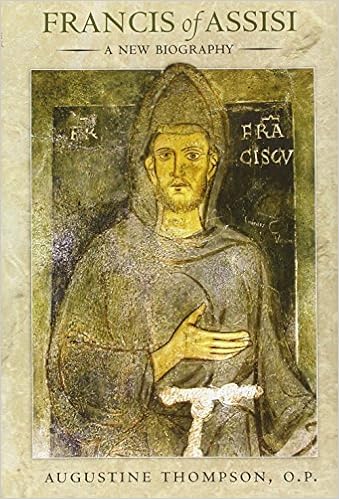
If you want to know more about St. Francis check out the book by a frequent commentator here, Fr. Augustine Thompson.   Francis of Assisi: A New Biography  UK- HERE


Posted in Classic Posts, Hard-Identity Catholicism, Liturgy Science Theatre 3000, Saints: Stories & Symbols | Tagged
12 Comments

ASK FATHER: Do I have to confess everything if people might overhear?

confessional print adjustedFrom a reader…

Hi Fr. X: [I’m sorry.  Fr. X is not available right now.  May I be of help?]

I have a question for an Unreconstructed Ossified Manualist. [You’ve come to the right place.]

I think I read someone where once that it was permitted for a penitent to omit confessing mortal sins during confession if his/her confession could be heard by other people. Is that true? I ask because the church where I confess my sins has one of those open style Italian confessionals and the church being old and small, and formally Anglican, thus not being built with one, anything, even a whisper can be heard from the confessional by anyone else in the church.

First, that situation in that church where confessions, even very quiet confessions, can be heard really ought to be addressed right away.   I don’t believe that “anyone else in the church” can hear even a whisper from across the church, unless the place is a “whisper gallery” which would be silly.

Also, this reminds me of times when I have told penitents to lower their voice and whisper so that no one outside can hear what they say.  Some times kids, others too, come in and it’s,

BLESS ME FATHER I HAVE SINNED IT’S BEEN….”

Do me a favor,” quoth I, whispering.  “Speak very quietly so no one outside can hear you.  I’m right next to you and I can hear you just fine if you whisper.  Can you do that?  Okay?

Okay!

Alright, go ahead with your confession.”

“BLESS ME FATHER I HAVE SINNED IT’S BEEN….

If there is a situation in which everyone can hear everything, such as in a hospital ward, etc., and there isn’t a way to have even a moment of privacy, a priest can give absolution to a penitent whom he is convinced is truly sorry for her sins and intends to amend her life.  This is a kind of “General Absolution”.  This is particularly done in the case of danger of death.  However, at the earliest opportunity that person should make a regular auricular confession of all mortal sins.

However, in this case where there is no danger of death, but rather just danger of being overheard, I would either go to another place for confession or make arrangements for confession at another time, when there is nobody in church.

You might bring your concerns to the pastor.  Perhaps he can designate a place for the waiting line to halt that is far enough away to preserve privacy.  No one will object to that.

And, to all you sinners out there, if you overhear something in another person’s confession you are BOUND not to reveal it.  DO YOU UNDERSTAND? (Note well that I did not whisper that.)  Also, if you realize that you can hear the content of the confession, then move away or block your ears or something.  OKAY? CAN YOU DO THAT?

Meanwhile…

GO TO CONFESSION, even if it has to be in some other place for a while.

Posted in "How To..." - Practical Notes, ASK FATHER Question Box, GO TO CONFESSION | Tagged , , ,
14 Comments

Pope Francis speeds cause for Fr. Hamel, murdered by terrorists

A couple weeks ago I wrote that I suspected that Fr. Jacques Hamel was martyred, murdered in Northern France by Islamic terrorists, and that it wouldn’t surprise me were the Pope to speed up the process.

During the presser on the airplane returning to Rome from Azerbaijan Pope Francis said he waived the usual waiting period before opening the cause for martyrdom for Fr. Hamel.   HERE

“It is very important not to lose the testimonies,” the Pope said. “With time, someone may die, another forgets something.”

That’s an important point!   Ne pereant!

Posted in Modern Martyrs, Saints: Stories & Symbols, Semper Paratus, The Coming Storm, The future and our choices, The Religion of Peace | Tagged , , ,
21 Comments

NEW! Card. Sarah on silence, liturgy, and “turning toward the Lord” again. Amazing.

card sarah silence book frenchHis Eminence Robert Card. Sarah was interviewed by a French newspaper at the time of the release of his latest book on the power of silence.  The book is, as I write, available in French.   The National Catholic Register has made a translation of the interview available in English.

Shall we have a look at excerpts which deal with liturgical worship? My emphases and comments:

Cardinal Robert Sarah on “The Strength of Silence” and the Dictatorship of Noise

[…]

Q: What role to you assign to silence in our Latin liturgy? Where do you see it, and how do you reconcile silence and participation? [The usual sobriety of worship in Latin usually includes much more silence than the Novus Ordo generally affords.  Silence is more natural in the older, traditional form.]

Cdl. Sarah: Before God’s majesty, we lose our words. Who would dare to speak up before the Almighty? Saint John Paul II saw in silence the essence of any attitude of prayer, because this silence, laden with the adored presence, manifests “the humble acceptance of the creature’s limits vis-à-vis the infinite transcendence of a God who unceasingly reveals Himself as a God of love.” To refuse this silence filled with confident awe and adoration is to refuse God the freedom to capture us by His love and His presence. [There is an apophatic dimension to our worship that is fostered with silence.] Sacred silence is therefore the place where we can encounter God, because we come to Him with the proper attitude of a human being who trembles and stands at a distance while hoping confidently. [This is almost exactly what I have been talking about for years. Our worship must create for us an encounter with MYSTERY which is tremendum et fascinans, frightening and alluring.] We priests must relearn the filial fear of God and the sacral character of our relations with Him. We must relearn to tremble with astonishment before the Holiness of God and the unprecedented grace of our priesthood. [Do I hear an “Amen!”?]

Silence teaches us a major rule of the spiritual life: familiarity does not foster intimacy; on the contrary, a proper distance is a condition for communion. It is by way of adoration that humanity walks toward love. Sacred silence opens the way to mystical silence, full of loving intimacy. Under the yoke of secular reason, we have forgotten that the sacred and worship are the only entrances to the spiritual life. Therefore I do not hesitate to declare that sacred silence is a cardinal law of all liturgical celebration.

[I must step out of this for a moment.  How many times have I written in these electronic pages that revitalization of our sacred liturgical worship of God is the sine qua non for any initiative we undertake in the Church?  Everything comes from worship and flows back to worship.  Anything that isn’t rooted in worship and directed back to it, no matter how clever, fancy or well-planned and financed, is going to fail if it is not rooted in worship.  Also, take careful note of that bit about “familiarity does not foster intimacy”.  Now turn your mind to consider Holy Mass “facing the people” and Mass ad orientem.]

Indeed, it allows us to enter into participation in the mystery being celebrated. Vatican Council II stresses that silence is a privileged means of promoting the participation of the people of God in the liturgy. The Council Fathers intended to show what true liturgical participation is: entrance into the divine mystery. Under the pretext of making access to God easy, some wanted everything in the liturgy to be immediately intelligible, rational, horizontal and human. But in acting that way, we run the risk of reducing the sacred mystery to good feelings. Under the pretext of pedagogy, some priests indulge in endless commentaries that are flat-footed and mundane. [The way I put that is: Mass is not a didactic moment.] Are these pastors afraid that silence in the presence of the Most High might disconcert the faithful? [YES.  They themselves cannot handle silence!  And they are, furthermore, now conditioned to see themselves as the ones who entertain.] Do they think that the Holy Spirit is incapable of opening hearts to the divine Mysteries by pouring out on them the light of spiritual grace?

Saint John Paul II warns us: a human being enters into participation in the divine presence “above all by letting himself be educated in an adoring silence, because at the summit of the knowledge and experience of God there is His absolute transcendence.”

Sacred silence is the good of the faithful, and the clerics must not deprive them of it!

Silence is the cloth from which our liturgies ought to be cut out. Nothing in them should interrupt the silent atmosphere that is their natural climate.

Q: Isn’t there a kind of paradox in stating the need for silence in the liturgy while acknowledging that the Eastern liturgies have no moments of silence (no. 259), while they are particularly beautiful, sacred and prayerful? 

Cdl. Sarah: Your comment is wise and shows that it is not enough to prescribe “moments of silence” in order for the liturgy to be permeated with sacred silence.

Silence is an attitude of the soul. It is not a pause between two rituals; it is itself fully a ritual.

Certainly, the Eastern rites do not foresee times of silence during the Divine Liturgy. Nevertheless, they are intensely acquainted with the apophatic[WINNER!] dimension of prayer before a God who is “ineffable, incomprehensible, imperceptible”. The Divine Liturgy is plunged, as it were, into the Mystery. It is celebrated behind the iconostas, which for Eastern Christians is the veil that protects the mystery. [NB] Among us Latins, silence is a sonic iconostas. Silence is a form of mystagogy; it enables us to enter into the mystery without deflowering it. In the liturgy, the language of the mysteries is silent. Silence does not conceal; it reveals in depth.

Saint John Paul II teaches us that “mystery continually veils itself, covers itself with silence, in order to avoid constructing an idol in place of God.” I want to declare today that the risk of Christians becoming idolaters is great. Prisoners of the noise of endless human talk, we are not far from constructing a cult according to our own dimensions, a god in our own image. As Cardinal Godfried Danneels remarked, “the chief fault of the Western liturgy, as it is celebrated in practice, is being too talkative.” Father Faustin Nyombayré, a Rwandan priest, says that in Africa “superficiality does not spare the liturgy or supposedly religious sessions, from which people return out of breath and perspiring, rather than rested and full of what has been celebrated in order to live and to witness better.” Celebrations sometimes become noisy and exhausting. The liturgy is sick. The most striking symbol of this sickness is the omnipresence of the microphone. It has become so indispensable that people wonder how anyone could have celebrated before it was invented!  [Joseph Ratzinger used the image of Catholics like the Jews who worshipped the golden calf.  The problem is that the Jews KNEW their golden calf wasn’t a “god”. They KNEW it was less than the Most High. They made it because they didn’t want the challenge of what the TRUE God asked. That is what happens when we stray from our true liturgical worship or distort it into something easy, comfortable, familiar. Liturgy should also involve the extremely difficult, the – yes -apophatic, something frightening which remains nevertheless alluring.]

The noise from outside and our own interior noises make us strangers to ourselves. In the midst of noise, a human being cannot help falling into banality: we are superficial in what we say, we utter empty talk, in which we talk and talk again… until we find something to say, a sort of irresponsible “muddle” made up of jokes and words that kill. We are superficial also in what we do: we live in a banal state that is supposedly logical and moral, without finding anything abnormal about it.

Often we leave our noisy, superficial liturgies without having encountered in them God and the interior peace that He wants to offer us.

Q: After your conference in London last July, you are returning to the topic of the orientation of the liturgy and wish to see it applied in our churches. Why is this so important to you, and how would you see this change implemented? 

CLICK!

Cdl. Sarah: Silence poses the problem of the essence of the liturgy. Now the liturgy is mystical. As long as we approach the liturgy with a noisy heart, it will have a superficial, human appearance. Liturgical silence is a radical and essential disposition; it is a conversion of heart. Now, to be converted, etymologically, is to turn back, to turn toward God. There is no true silence in the liturgy if we are not—with all our heart—turned toward the Lord. We must be converted, turn back to the Lord, in order to look at Him, contemplate His face, and fall at His feet to adore Him. We have an example: Mary Magdalene was able to recognize Jesus on Easter morning because she turned back toward Him: “They have taken away my Lord, and I do not know where they have laid him.” “Haec cum dixisset, conversa est retrorsum et videt Jesus stantem. – Saying this, she turned around and saw Jesus standing there” (Jn 20:13-14).

[NB!] How can we enter into this interior disposition except by turning physically, all together, priest and faithful, toward the Lord who comes, toward the East symbolized by the apse where the cross is enthroned?

The outward orientation leads us to the interior orientation that it symbolizes. Since apostolic times, Christians have been familiar with this way of praying. It is not a matter of celebrating with one’s back to the people or facing them, but toward the East, ad Dominum, toward the Lord.

This way of doing things promotes silence. Indeed, there is less of a temptation for the celebrant to monopolize the conversation. Facing the Lord, he is less tempted to become a professor who gives a lecture during the whole Mass, reducing the altar to a podium centered no longer on the cross but on the microphone! The priest must remember that he is only an instrument in Christ’s hands, that he must be quiet in order to make room for the Word, and that our human words are ridiculous compared to the one Eternal Word.

I am convinced that priests do not use the same tone of voice when they celebrate facing East. We are so much less tempted to take ourselves for actors, as Pope Francis says!   [Wow.  Yes.  The same goes for saying or singing Holy Mass in English or in Latin, whether in the Novus Ordo or the TLM!  I know that I adjust.  I catch myself.]

Of course, this way of doing things, while legitimate and desirable, must not be imposed as a revolution. I know that in many places preparatory catechesis has enabled the faithful to accept and appreciate the orientation. I wish that this question would not become the occasion for an ideological clash of factions! We are talking about our relationship with God.   [Alas, Your Eminence, it is a clash of factions.  Would that it were not.  But there are people in power out there who truly fear Mass ad orientem.  They will stop at nothing to prevent it from returning.]

As I had the opportunity to say recently, during a private interview with the Holy Father, here I am just making the heartfelt suggestions of a pastor who is concerned about the good of the faithful. I do not intend to set one practice against another. If it is physically not possible to celebrate ad orientem, it is absolutely necessary to put a cross on the altar in plain view, as a point of reference for everyone. Christ on the cross is the Christian East.

[…]

Friends, there is a lot more from this amazing man.  Please read the rest there.

Card. Sarah is a deeply prayerful man, which you can tell both from reading his works and if you have a chance to meet him.

I’ll take his arguments for ad orientem worship compared to the flailing around and bullying of the opponents of “turning toward the Lord”.

God or Nothing: A Conversation on Faith  by Robert Card. Sarah – UK HERE

Sarah God Or Nothing 200

Buy it.  Get one for your parish priests.

Posted in "How To..." - Practical Notes, Fr. Z KUDOS, Liturgy Science Theatre 3000, The future and our choices, Turn Towards The Lord | Tagged , ,
26 Comments