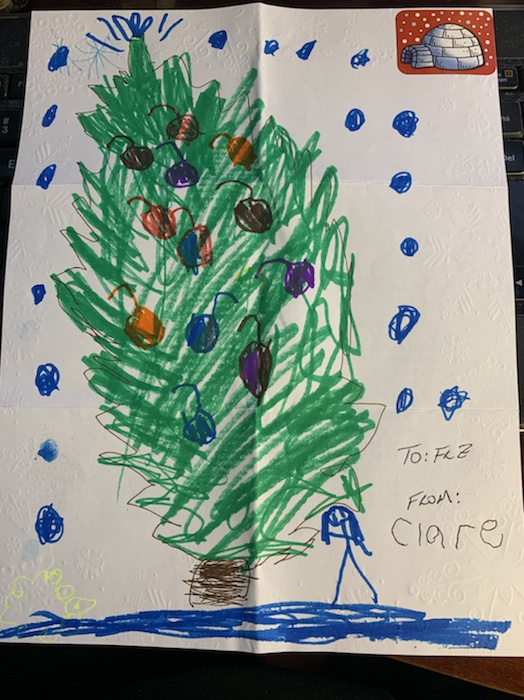
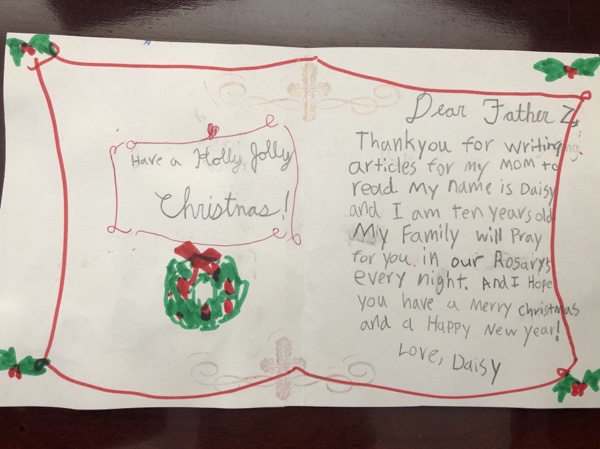
Your Sunday Sermon Notes

Was there a good point made in the sermon you heard during your Mass of Sunday Obligation?

Let us know.

For my part, I wrote the 7th and final offering in the Our Lady of Sorrows Project and then I penned a piece for the Catholic Herald. Lot’s of words today, and all of them mainly silent, just tap tapping and the bells relentlessly chiming the hours one by one.

Posted in SESSIUNCULA |
11 Comments

Our Lady of Sorrows Project: 7th Sorrow – The Burial of Jesus

Today is the Feast of Our Lady of Sorrows.  So, on this day, after the Feast of the Exaltation of the Cross, we conclude our brief work.

So far…

1st Sorrow – The Prophecy of Simeon
2nd Sorrow – The Flight into Egypt
3rd Sorrow – The loss of the Child Jesus in Jerusalem
4th Sorrow – Mary meets Jesus on the way to Calvary
5th Sorrow – The Crucifixion of Jesus
6th Sorrow – The Piercing of the Side of Jesus, and His Deposition

Now we turn to and to conclude with…

The Burial of Jesus (Matthew 27:57–61, Mark 15:43–47, Luke 23:50–53, John 19:40–42)

It was necessary to work swiftly. It was time for Mary to feel the particular pain of Christ’s piercing sword through His burial.

The Romans and the people had committed what she knew was homicidal deicide: they had, all had, collectively killed the God made Man.  Darkness fell and the earth shook at the Creator’s demise.  Rocks cracked and the earth gave up the dead.  It is time for the New Eve – theotokos – to take the New Adam from the Death Tree and plant in the earth as the new Life Tree, soon to bear first fruit – prototokos – for a New Eden.

Romans usually left corpses on crosses to be picked over by the crows and vultures and insects.  But this was a special day and they had orders from Pilate.  There would be hell to pay if these guys were still visible after sunset.   One can image the gentle words of the soldiers of the occupying Roman force: “Please, if you don’t mind, just try to speed things up a little?”   In fact, they probably urged them along with the help of their pila, at least when the Centurion wasn’t looking.  Thus, all of the well-wishers and followers of the Lord who had made it to this point, the Gospel talks of the women who came from Galilee, leapt into action.

They had to take care of the Body of the Lord at least by wrapping it in linen cloths and getting it into a tomb.

Here is an image to take with you to Holy Mass.  Bede was careful to point out that we consecrate the Lord’s Body not on silk or gold cloth, but on a clean linen cloth. (Harmony of the Gospels 3.23).  In the traditional Roman Rite, the priest lays the Host to be consecrated directly upon the linen “corporal” and he hides away the golden paten under the cloth until the “resurrection moment” of the recombination of the Body and Blood.

Be clean at Holy Mass, and contemplate the richness of the symbols in your still hearts, like Mary who saw, heard and pondered.  Origen says that if anyone wants to be buried with Jesus in baptism cannot be an old, used tomb or a dirty cloth. He must be a clean cloth. (Comm. Rom. 5.8).

In no way would Mary have excluded herself from wrapping her boy in cloths, she who had wrapped Him countless times in his infancy.  He was still her baby.

Joseph of Arimethea -“secret disciple” who was “looking for the Kingdom of God” – had come out of hiding and provided a new, a virginal, tomb, in which no body had yet been placed. Both Jerome and Augustine underscore the importance of a tomb that had never been occupied, its connection with virginity.

Because of the controversy of the situation, Pilate sent guards, probably nervous because of the task and because there had been an earthquake and, I suspect based on some calculations, there was a total lunar eclipse producing a portentous “blood Moon”.  Twilight was fast approaching which would mark the point at which work must cease for the sabbath.  The future evangelist and author of apocalyptic visions, newly ordained Fr John, is there, young and healthy, helping with the heavy work.  He wrote that Nicodemus (Greek “victory of the people”) provided 100 pounds of myrrh and aloes, a spectacular quantity. Fit for a King. Gifts from the Greek and Jewish Joseph.

I envision the “beloved” Apostle, John, carrying in the spices for the Galilean women to use, marveling at their quantity.  What might he have been thinking?  The casting of lots on Christ’s garment revealed Him as High Priest.  The quantity of burial spices reveal Him as High King.

Cyril of Jerusalem in his Catechetical Lectures points to the planting of Christ in the garden. “I am the vine”, said Christ. Christ will transform the earth, choked with thorns after the Fall, with new life.  Thus, Cyril:

“And what will he that is buried in the garden say? ‘I have gathered my myrrh with my spices’ and again, “myrrh and aloes, with all chief spices” (Song of Songs 5:1; 4:14). Now these are the symbols of burial.”

It was necessary to work swiftly in the virginal tomb. They could return after the sabbath and complete their ministrations with the necessary anointing.

What was going on around them as they worked in the tomb, for surely nearby there were other tombs?   Matthew 27:51-52 says that when Jesus died, “the tombs also were opened, and many bodies of the saints who had fallen asleep were raised”.  It was immediately after this that the Centurion acknowledge Christ as God.  The dead would, after the resurrection, walk among the living in Jerusalem.

In ancient writings time accounts are sometimes tidal, ebbing backward and forward.  But it seems that at the death of the Lord, the dead started to rise and tombs started to open.  If they didn’t leave their tombs until the after the resurrection – Christ must be the prototokos, the first of Creation and the first to rise – maybe at this point ‘dem dry bones’ were stirring, knitting up.  Maybe at this point there were sounds.  That could have been be somewhat disconcerting to those gathered about Christ’s virginal tomb.  If these people had faith and were bolstered by their time with Christ, the soldiers would have been rather freaked out under the “blood Moon”.

Meanwhile, while they scramble to beat the appearance of the sabbath stars, the soul of Christ has gone to harrow Hell.   Things are stirring up there, for sure.

At the same time Mary, theotokos, with the new Fr John and the disciples work hurriedly in the earthy tomb, carved out from the rock, the Lord is comforting holy souls who died before the “fullness of time”.  Perennial masters of paint show in their devotion a triumphant New Adam, also before a tomb-like opening, door and demons both gaping in the shadows, as with His recently spiked hand He draws out the dead from darkness to light, the old Adam first along with the old Eve still at his side.  New Adam with a New Eden.  New Noah with a New World.  New Moses with a New Jerusalem.  New… New… New…

“Behold, I make all things NEW.”

Benedict XVI, in his  Jesus of Nazareth Part Two, Holy Week: From the Entrance Into Jerusalem To The Resurrection writes [US HERE – UK HERE] writes about Mary as the “the Woman” of the New Adam of the Book of Revelation.  John – again, John, eyewitness to the burial – describes the Woman appearing in heaven, a sign of the entire Church throughout time until the end of things.  Mother/Bride she is continually, in the vision granted to John, giving birth to Christ, to the Church.  Mary, at the tomb of her Son, with the “beloved” Apostle John, are living icons of discipleship and the ministry of the Church.   They are historical figures doing, now, historical things, but through Christ they are the Church already in action, still wet from the Blood and water of the Lord’s side, birthing the sacramental life.

But right now all Mary can see in the close and murky, shadow-flickering tomb of the old Earth is the work to be done.

Were the tears flowing down all of their cheeks from sorrow or from the stinging smoke of the torches or oil lamps?  The presence of all those spices?

On the matter of the tears of the Mother, in The World’s First Love Fulton Sheen writes, about the Lord’s burial:

At such moments, there is not loneliness but desolation—not the outward desolation such as came through the three days’ loss but an inner desolation that is probably so deep as to be beyond the expression of tears. Some joys are so intense that they provoke not even a smile; so there are some griefs that never create a tear. Mary’s dolor at the burial of Our Lord was probably of that kind. If she could have wept, it would have been a release from the tension; but here the only tears were red, in the hidden garden of her heart! One cannot think of any dolor after this; it was the last of the sacraments of grief. The Divine Sword could will no other thrusts beyond this, either for Himself or for her. It had run into two hearts up to the very hilt; and when that happens, one is beyond all human consolations. In the former dolor, at least there was the consolation of the body; now even that is gone. Calvary was like the bleak silence of a church on Good Friday when the Blessed Sacrament has been removed. One can merely stand guard at a tomb.

On Good Friday, the Blessed Sacrament is removed.   There is no Mass, though Communion is possible.

Through Holy Saturday there is neither Mass nor Communion.  The Church is silent, still as a dark tomb.

Mary stands outside the closed tomb.  Still and silent.

Mothers will say that they feel that their children are still part of them, even into their old age.

In fact, during pregnancy, the cells of babies cross into their mother’s bodies and become part of them. For the rest of their lives, mothers carry with them, as part of themselves, the genetic material of their children. It is possible to find fetal DNA in a mother’s blood. In fact, mothers therefore have encoded within them, the DNA of both children and her husband.

Mary, who was with Child by the Holy Spirit, carries within her flesh and blood the DNA of Christ.  She is at this moment the sole living Tabernacle of Christ on Earth. Dead in the tomb, He lives in her.  She is the Ark of the Covenant. By the tomb, she is the “singular vessel of devotion”, the living “house of gold”, “tower of ivory” and “of David”.

As she stood by Christ’s tomb as it was being officially sealed, did Mary have inklings of the seals of the tomb of sheol shattering at the comforting coming of Christ?  Might not the Comforter Himself have provided a comforting vision for the one who would be sung to with litanies through the centuries as “comforter of the afflicted”?

Her piercings have made her Holy Church’s greatest minister of comfort.

The very first time I was in Rome, before I was even Catholic, I stayed at a place next to the tiny church that houses the body of St. Vincent Pallotti. It is across the street from the flanks of the church where I now always say Mass, Ss. Trinita dei Pellegrini, where I said my 3rd Mass, which has a lovely altar of our Sorrowful Mother.  I feel, therefore, a kind of spiritual thrum between these churches, and a friendship with St. Vincent, as if he has been watching out for me all these years. St. Vincent was deeply attached to the devotion of Our Lady of Sorrows. He often said that he heard a demon through a possessed person admit that no one who had prayed the devotions of Our Lady of Sorrows had ever been taken by the fallen angels and that God restrained demons from attacking dying souls with temptations who prayed these devotions.

St. Vincent preached that the Mother of God will assist at the hour of their death anyone who shared with compassion a devotion to her Sorrows.  St. Alphonsus Liguori wrote that anyone who loves God and says of name of Mary while dying cannot be lost.  St. Bridget said that Mary became the Mother of all the dying through her own Sorrows.  Devotion to Our Lady of Sorrows changed the life of the young St. Gabriel Possenti who entered the Passionists with her very title.

St. Bridget of Sweden (+1373) wrote that Our Lady of Sorrows grants seven graces to the souls who honor her daily by saying seven Hail Marys as they meditate on her tears and sorrows:

  1. “I will grant peace to their families.”
  2. “They will be enlightened about the divine Mysteries.”
  3. “I will console them in their pains and I will accompany them in their work.”
  4. “I will give them as much as they ask for as long as it does not oppose the adorable will of my divine Son or the sanctification of their souls.”
  5. “I will defend them in their spiritual battles with the infernal enemy and I will protect them at every instant of their lives.”
  6. “I will visibly help them at the moment of their death—they will see the face of their mother.”
  7. “I have obtained this grace from my divine Son, that those who propagate this devotion to my tears and dolors will be taken directly from this earthly life to eternal happiness, since all their sins will be forgiven and my Son will be their eternal consolation and joy.”

St. Alphonsus in his Via Crucis penned the dolorous phrase, “And they closed the tomb, and all withdrew”.

To where did they withdraw?  My heart yearns after the image of John taking Mary and the others to a safe place, perhaps back to the upper room.  They would talk, as people do, after burials, exhausted, remembering the good and the bad.  I hear John relate to the Apostles who were not there what happened on Golgotha.  I hear him then relate to Mary what happened at the Last Supper.  He wants to make sure that everyone knows the whole story.  The events are connected and the blanks filled in.  Matthew listens carefully.

John was the Apostle Jesus loved most, but Peter loved Jesus more than the others.  If my heart wants that image of John telling the story to be true, no less do I picture Peter, after the intertwined stories of the Last Supper and of Calvary were related and connected in their minds, saying decisively, “He told us to do something in His memory.”

Peter, the one who had betrayed the Lord three times, looks at Mary for comfort and affirmation.  After pondering all these things, pondering Peter for a moment, she who is the living Tabernacle of Christ, says,

“Do whatever He tells you.”

Newly ordained, young Fr. John, future evangelist and the youngest of that first ordination class, rises to pray.

וְאָבֹואָה אֶל־מִזְבַּח אֱלֹהִים אֶל־אֵל שִׂמְחַת גִּילִי וְאֹודְךָ בְכִנֹּור אֱלֹהִים אֱלֹהָֽי׃

And everyone responding…

מַה־תִּשְׁתֹּוחֲחִי נַפְשִׁי וּֽמַה־תֶּהֱמִי עָלָי הֹוחִילִי לֵֽאלֹהִים כִּי־עֹוד אֹודֶנּוּ יְשׁוּעֹת פָּנַי וֵֽאלֹהָֽי׃

Mary ponders these things in her heart as they pray Psalm 42/43 together and the new priests set a table.

I will go in to the altar of God: to God who giveth joy to my youth. To thee, O God my God, I will give praise upon the harp: why art thou sad, O my soul? and why dost thou disquiet me? Hope in God, for I will still give praise to him: the salvation of my countenance, and my God.

FINIS


Let us pray:

O Mother of Sorrows, thou, who beneath the Cross of Jesus were given to us as our Mother, look down with pity on us, thy children, who weep and mourn in this valley of tears. By that sword of sorrow which pierced thy Heart when thou looked upon the Face of thy dead Son, obtain for us that comfort we so sorely need in our sufferings.

Thou were given to us our Mother in the hour of thy greatest grief that thou might be mindful of our frailty and the evils that press upon us. Without thy aid, O Sorrowful Mother, we cannot gain the victory in this struggle against flesh and blood. Therefore, we seek thy help, O Queen of Sorrows, lest we fall prey to the wiles of the enemy. We are orphans in need of the guiding hand of our Mother amid the dangers that threaten our destruction. Thou whose grief was boundless as the sea, grant us by the memory of those sorrows the strength to be victorious.

Intercede further, O Mother of Sorrows, for us and all who are near and dear to us, that we may ever do the Will of thy Son, and may direct all our actions to His honor, and to the furtherance of devotion to thy sorrows.

Amen.

Virgin Most Sorrowful, pray for us.

Our Father, …
Hail Mary, …
Glory Be …

PRAYER FOR A HAPPY DEATH

O Mother of Sorrows, by the anguish and love with which thou didst stand beside the Cross of Jesus, stand by me in my last agony. To thy maternal heart I commend the three last hours of my life. Offer these hours to the Eternal Father in union with the agony of our dearest Lord. Offer frequently to the Eternal Father, in atonement for my sins, the Precious Blood of Jesus, mingled with thy tears on Calvary, to obtain for me the grace to receive Holy Communion with most perfect love and contrition before my death, and to breathe forth my soul in the actual presence of Jesus.

Dearest Mother, when the moment of my death has come, present me as thy child to Jesus; say to Him in my behalf: “Son, forgive him, for he knew not what he did. Receive him this day into Thy kingdom.”

Amen.

YouTube thumbnailYouTube icon

YouTube thumbnailYouTube icon

YouTube thumbnailYouTube icon

YouTube thumbnailYouTube icon

And from the great Benedictines of Mary, Queen of Apostles, whose apostolate is to pray for bishops and priests:

YouTube thumbnailYouTube icon

Posted in Four Last Things, Liturgy Science Theatre 3000, Our Solitary Boast | Tagged , ,
10 Comments

Our Lady of Sorrows Project: 6th Sorrow – The Piercing of the Side of Jesus, and His Deposition.

So far…

1st Sorrow – The Prophecy of Simeon
2nd Sorrow – The Flight into Egypt
3rd Sorrow – The loss of the Child Jesus in Jerusalem
4th Sorrow – Mary meets Jesus on the way to Calvary
5th Sorrow – The Crucifixion of Jesus

Now we turn to…

The Piercing of the Side of Jesus, and His Deposition. (John 19:31-42)

The Jews had to get Christ off that Cross fast.  It’s the day of preparation for the sabbath within the festive time after Passover.  They have to get those bodies taken care of with haste so that the ritual purity of the Jews who come into contact with them, see them, is not compromised. Pilate has had enough problems, so the Roman’s are ready to take care of business.  They smash the knees of the two who are still alive so they’ll die quickly.  To make sure that Christ is dead, a solider drives a logche (in Greek, pronounced longche, the gamma giving the rough Scottish “loch” sounding chi a nasal quality).   This is an iron-tipped javelin, the pilum, 6 feet long, standard gear of the Roman troops.

Eve came from Adam’s side.  The New Eve was at the side of the New Adam who came from the New Eve’s.

There she stands.  But the glorious horror show isn’t over.  Now she must endure the savage aftermath.

Sometimes we think of these moments as they are enshrined in great paintings from masters of every epoch.  They are, of course, devotional.  Hence, they are to a degree spiritualized.  They don’t capture the smell, the meat, the racket.

Let’s try to provide context, so that we can search after the sense of this 6th Sorrow.  It had it’s own particular sting.

Mary stands near to the Cross with John.  We can suppose that most of the crowds there, if there were crowds, were there to see the famous guy die, rather than the two petty criminals.  Seeing that final heave of chest and droop of head, I imagined they would have mostly quieted down.  I’ll bet some of them cheered.

John and Mary are standing.  The others, who knows.  They probably have to contemplate Him, dead, for some time before the Romans get into action to make sure they are all dead and get their bodies down.

How Mary’s mind and memory must have been rushing, reviewing everything she could remember that Christ ever said or hinted at or taught or suggested as He grew up or in His public utterances that she knew.  She knew something was going to happen next.  She is now probably thinking about what they will do with His lifeless body.  But what?  She more than likely had along the way, if she was in the group that ministered to the Lord and Apostles, met some of the well-to-do who had been generous to them.

Again, she takes it all in and ponders in tremendous maternal grief layered through with perfect, confident discipleship.

Both the Shroud of Turin and the Shroud of Oviedo have signs that the side of the man – let’s just say Christ and get it over with? – had been pierced.  One researcher concluded that the man was upright when stabbed in the side. Furthermore, the Shroud of Oviedo, probably also used to wrap Christ, when examined under infra-red revealed that its stains are from blood and fluid from after death had occurred. Some of this fluid was under the nose and mouth. The researcher said that the force of the blow from underneath, and up through the intraparenchymal airways created intrathoracic pressure that drove the fluids, water and blood, that had gathered lungs during Christ’s agony and then pooled by gravity, up and out through His mouth and nose, thus staining the Shroud of Oviedo.

So, even with a measure of crowd noise, or sounds of agony from Gesmas and Dismas the thieves, the sound of the pilum smashing through the meat and lungs would have been followed by a gruesome expulsion of blood and fluid from the Lord’s nose and mouth. A final humiliation.

This is what His Mother sees and hears.

“Haven’t you done enough?  Heavenly Father, what part could this cruelty possibly play in Your plan?”

The sword with which Christ as executioner pierced Mary’s heart had already passed through His own Heart and back again, linking them so closely that, as St. Alphonsus wrote in Glories of Mary, “The lance that opened Christ’s side passed through the soul of the Blessed Virgin, which could never leave her Son’s heart.”

“Cleave”.  This is an interesting word and it fits perfectly with this moment.  “Cleave” is an autonym, a word that can mean exactly opposite things.  On the one hand, “cleave” means to sunder, to split, to cut in two. On the other hand, it means “to join, unite”, as in a husband cleaving to his wife.

That blow of the lance did cleave their Hearts in twain.

She see’s that wound, flowing with blood and water from His tormented lungs.  “What part could THIS cruelty play in Your plan?!?”

At that moment, there is an earthquake.

I like to think that this moment, rather than the Lord’s last breath, is when the ground tremors began, just as the lance tore Jesus’ Heart in half, as St. Bridget described. Matthew says the quake split stones and tore the curtain of the Holy of Holy’s in half in the Temple.  So with His Heart, so too all material creation shudders at the Creator’s piercing.  I also believe, as I wrote elsewhere, certain calculations which plot that this Passover and Good Friday coincided with the rising of a full Moon in the full stage of total eclipse: blood Moon.  That means that the eclipse would have started around 3 PM when Christ was breathing His last.  It rose in the constellation of The Virgin.

The earthquake shakes Mary from the cruelty shown to her Son’s Body back to the unfathomable plan of God.  She knows that this isn’t over. What will happen next, she didn’t know. But she knew that it wasn’t over.

Then came the tender ministrations of the soldiers or their slaves to take down the Body of the Lord. They may or may not have bothered fully to remove the spikes as they wrestled with the dead weight. They were under pressure and they were scared.  It would have been heavy and handling a full-grown man is not easy. So, as practiced as they were, they wouldn’t have been terribly sentimental, in spite of the Centurion who said, “Surely this was the Son of God” (Matthew 27:54), which will always be for me in John Wayne’s voice.

The lance tore Jesus Heart in half, as St. Bridget described.  The earthquake stuck.  The Body was lowered to the ground, unceremoniously dumped on the ground, left to be claimed.  “Alacriter!  Movete! C’mon.. HURRY IT UP. Tollite eum et festinate!”  They have orders and they are terrified, especially after the earthquake.

She comes to Him with John and the others.  Moving a dead body isn’t easy, so John and the others help her.

She could at last touch Him, touch His wounded hands and feet, his side. Perhaps with tears she tried to clean His swollen face.

Did you know that the hearts of mothers and their unborn babies tend to beat with synchronization?  Imagine the heartbeats of Mother and Son, synchronized literally and physically.  Imagine now the heaving of her broken Heart as she watched and heard the spear gouge in and rip back out, with gouts of water and blood bursting from His bruise face and battered side.  See in your heart’s eye, Mary with the freshly killed Body of the one she knows is Messiah King Priest, her God made flesh of her flesh, forever her baby.

Mother’s heart and baby’s heart.

How many times did Mary listen to His tiny baby’s Heart, ear to soft breast.  Mothers and their babies’ hearts will often synchronize when they smile at each other.  Imagine, for a moment, the smiles of Mary and Jesus.  Try to picture that. Now the daughter of her Son, as Dante names her so perfectly, places her ear to His ripped up breast and receives heart-stopping silence.

She tries gently to close the wound in His side with her hand.

“Dear Father in Heaven, what part could THIS cruelty play in Your plan?”

Was there ever a moment when, as He was growing up and studying and talking about the prophecies with Joseph in the home or at the workbench, have commented on the Prophet Zechariah?  They had plenty of time!  Might Mary remember such a prophecy?  Her mind would not have been as clouded with emotions as ours would be, preserved as she was from the stain of Original Sin.

The prophet Zechariah 13:1 foretold:

“On that day there shall be a fountain opened for the house of David and the inhabitants of Jerusalem to cleanse them from sin and uncleanness.”

Of this verse, Benedict XVI wrote in his Jesus of Nazareth Part Two, Holy Week: From the Entrance Into Jerusalem To The Resurrection:

Blood and water flowed from the pierced heart of Jesus. True to Zechariah’s prophecy, the Church in every century has looked upon this pierced heart and recognized therein the source of the blessings that are symbolized in blood and water. The prophecy prompts a search for a deeper understanding of what really happened there. An initial step toward this understanding can be found in the First Letter of Saint John, which emphatically takes up the theme of the blood and water flowing from Jesus’ side….

In this double outpouring of blood and water, the Fathers saw an image of the two fundamental sacraments—Eucharist and Baptism—which spring forth from the Lord’s pierced side, from his heart. This is the new outpouring that creates the Church and renews mankind. Moreover, the opened side of the Lord asleep on the Cross prompted the Fathers to point to the creation of Eve from the side of the sleeping Adam, and so in this outpouring of the sacraments they also recognized the birth of the Church: the creation of the new woman from the side of the new Adam.

The New Eve touches the side of the New Adam, contemplates the wounds and batterings.  “Why so cruel? Why this last humiliation?”, as her fingers light upon his flowing side.

Perhaps the newly ordained Father John, her new charge and baby boy, then told her, “This is part of the plan. ‘Destroy THIS Temple’, he said – at the Temple, I heard Him say it – ‘and I will raise it in the three days.’  Think of the Temple!  The water course of the Temple, Mother, and all those lambs!”

A water course ran beneath the great altar of the Temple and out the side of the Temple Mount. A quarter of a million lambs – yes, a quarter of million according to Josephus – were slaughtered at Passover and their blood was thrown on the altar, to run down into the water course and then out from the side of the Mount. When the lambs were sacrificed in commemoration of the salvation of the People, from the side of the Temple there flowed a stream of blood and water.

And, as with her other Sorrows, joy flowed from His halved Heart to heal her own.

“Something else is going to happen.  Three days, He said.  Three days.”

The Secret from the Traditional Roman Mass for Our Lady of Sorrows:

O Lord Jesus Christ, we offer You prayers and sacrificial gifts, humbly beseeching You that, as we prayerfully recall the piercing of the most sweet soul of Your blessed Mother Mary, so through the merits of Your death and the manifold intercession of her and her holy friends at the foot of the Cross, we may have our reward with the blessed. Who livest and reignest with God the Father, in the unity of the Holy Spirit, one God, world without end.

7th Sorrow – The Burial of Jesus

Posted in Liturgy Science Theatre 3000, Our Solitary Boast | Tagged , ,
6 Comments

Jesuit-run Amerika aims at Francis’ “detractors”. Incoherence ensues.

Jesuit-run Amerika Magazine trotted out a piece by a Barcelona-based Jesuit professor of theology which claims to explain why certain, primarily northern, theologians reject Pope Francis’ theology.

The article intentionally misconstrues what it is about Francis’ teaching that seriously alarms more and more Catholics.

Writes Fr. Víctor Codina, SJ,

“Although he had studied and taught pastoral theology at San Miguel de Buenos Aires as Jorge Mario Bergoglio, S.J., now his pronouncements belong to the pastoral seat of the bishop of Rome. He does not aspire to fulfill this role as a theologian but as a pastor.  … What really bothers his detractors is that his theology stems from reality: from the reality of injustice, poverty and the destruction of nature, and from the reality of ecclesial clericalism. … Obviously, the problem is not that he is not a theologian but rather that his theology is pastoral.”

First of all, among the past six popes (from Benedict XVI back to Pius XII), only one, Benedict, was a theologian in the formal sense of the term. So it’s highly unlikely that “Francis’ detractors” (to use Codina’s designation) hold it against him that he is not a theologian, but a pastor.

Then Codina goes on immediately to contradict this statement by asserting that Francis’ “theology stems from reality … of injustice, poverty and destruction of nature, and from the reality of ecclesial clericalism.” So, after asserting that Francis is no theologian, Codina credits him with being a theologian, albeit one that “his detractors” don’t accept as worthy.

So which is, Father? Is Francis a theologian or not?

Serious, orthodox Catholic thinkers are careful not to distinguish theologians from pastors. The two roles go together. A pastor should be a theologian (though not necessarily an academic), and a theologian should be pastoral (though not necessarily a parish priest or bishop). One of the great mishaps in the Church is the separation of these two roles, an error encouraged today by liberals who denigrate traditional (e.g., John Paul II) theology as not trendy enough. So they claim that faithful theologians aren’t “pastoral,” meaning that they don’t respond to people’s real needs.

This is how many of Pope Francis’ theological adventures are defended even when they stray from the Church’s long-standing tradition.

Pope Francis’ “detractors” don’t expect him to be a theologian. In fact, they’d rather that he dropped theology altogether and confined the rest of his pontificate to stopping the cover-up of the child sexual abuse crisis. However, if he is going to be the Pope, they do expect him to exercise his magisterial office by defending the Church’s teaching against those innovations which, while claiming to be pastoral, actually weaken the Church’s teaching and thereby its sacramental and pastoral practice.

The best example of Francis’ off-the-rails “pastoral” theology is his 2016 Post-Synodal Apostolic Exhortation, Amoris Laetitia, which received a lot of attention on this blog. This document weakens the doctrine of the indissolubility of matrimony, weakens the doctrine of moral absolutes, and thus weakens the Sacraments of Penance, Matrimony and the Holy Eucharist.

As evidence of this fact is the gross divisions in the Church over the meaning of the Pope’s teaching, something which the office of the papacy is intended to prevent.

I quoted my friend Fr. Gerald Murray, HERE:

“We have had: papal silence on the dubia; papal approval of a draft statement by a group of Argentine bishops of the Rio de la Plata region that opens the door to the reception of Holy Communion by divorced and civilly remarried Catholics; affirmations by Cardinal Müller that Holy Communion cannot be given to those living in a state of adultery; the publication by the pope’s own newspaper, L’Osservatore Romano, of the statement by the Bishops of Malta that couples in invalid second marriages can receive Holy Communion if they at are at peace in their conscience with that decision; the reaffirmation by the Bishops of Poland that the teaching and discipline enunciated by St. John Paul II in Familiaris Consortio have not changed, and that only those civilly remarried couples who live as brother and sister may be admitted to Holy Communion; the Archbishop of Philadelphia saying the same thing; while the bishops of Belgium and Germany agree with the bishops of Malta and Rio del La Plata, Argentina.

“This is the current unholy mess. As the four Cardinals lament: “And so it is happening – how painful it is to see this! – that what is sin in Poland is good in Germany, that what is prohibited in the Archdiocese of Philadelphia is permitted in Malta.”

There cannot be a divided truth about the indissoluble nature of marriage, or the nature of mortal sin or the nature of human freedom and responsibility for one’s freely chosen acts. The truth is one and must be defended from errors and misinterpretations.

Francis doesn’t have to be a theologian, but it is his responsibility to guarantee the unity of the Church’s teaching and its solid adherence to Catholic tradition. No appeal to “pastoring” can relieve any Pope – indeed any priest! – of this responsibility.

For Fr. Codina,

“The opposition to Francis is opposition to the Second Vatican Council and to the evangelical reform of the church that Pope John XXIII wanted to promote.”

This charge of opposition to the Second Vatican Council is an old saw among LIBERALS  who use it to discredit today’s orthodox Catholics all the time. If they really want it to stick hard they’re going to have to apply it as well to St John Paul II, whose theology the “detractors of Pope Francis” are championing at every available opportunity.  Fr. Codina’s alignment of “Pope Francis’ detractors” with opposition to the intentions of St. Pope John XIII in summoning the Council also misreads the sainted pontiff’s deliberate instructions to the Council in his inaugural address to it (Gaudet Mater Ecclesia), instructions which have also been repeatedly recalled by this blog HERE:

“The manner in which sacred doctrine is spread, this having been established, it becomes clear how much is expected from the Council in regard to doctrine. That is, the Twenty-first Ecumenical Council, which will draw upon the effective and important wealth of juridical, liturgical, apostolic, and administrative experiences, wishes to transmit the doctrine, pure and integral, without any attenuation or distortion, which throughout twenty centuries, notwithstanding difficulties and contrasts, has become the common patrimony of men. It is a patrimony not well received by all, but always a rich treasure available to men of good will.

Our duty is not only to guard this precious treasure, as if we were concerned only with antiquity, but to dedicate ourselves with an earnest will and without fear to that work which our era demands of us, pursuing thus the path which the Church has followed for twenty centuries. […]

… But from the renewed, serene, and tranquil adherence to all the teaching of the Church in its entirety and preciseness, as it still shines forth in the Acts of the Council of Trent and First Vatican Council, the Christian, Catholic, and apostolic spirit of the whole world expects a step forward toward a doctrinal penetration and a formation of consciousness in faithful and perfect conformity to the authentic doctrine ….”

Writing in the 2015 Five Cardinals’ Book™,  Remaining in the Truth of Christ: Marriage and Communion in the Catholic Church [US HERE – UK HERE], Gerhard Cardinal Müller, former Prefect of the Congregation for the Doctrine of the Faith, underscored the Second Vatican Council’s role in reiterating the long-standing Catholic teaching on the indissolubility of marriage.

“The Second Vatican Council, in the Pastoral Constitution Gaudium et Spes on “The Church in the Modern World”, presents a theologically and spiritually profound doctrine of marriage. It upholds the indissolubility of marriage clearly and distinctly. Marriage is understood as an all-embracing communion of life and love, body and spirit, between a man and a woman who mutually give themselves and receive one another as persons. Through the personally free act of their reciprocal consent, an enduring, divinely ordered institution is brought into being, which is directed to the good of the spouses and of their offspring and is no longer dependent on human caprice: ‘As a mutual gift of two persons, this intimate union and the good of the children impose total fidelity on the spouses and argue for an unbreakable oneness between them’” (no. 48).

Similar evidence against the charge that “Pope Francis’ detractors” by opposing him are in reality opposing the Second Vatican Council is provided by the positive reference to Council documents made by those who criticize Francis for his statement in the Abu Dhabi Agreement that:

“The pluralism and the diversity of religions, colour, sex, race and language are willed by God in His wisdom, through which He created human beings.”

Against the assertion that God wills non-Christian religions into existence, “Pope Francis’ detractors” cite Vatican II documents Dei Verbum 2-4), Lumen gentium 2-4, 16, Nostra aetate 2 and Ad gentes 3. They also cite the Catechism of the Catholic Church 53, 60, 62, 63, 65, 2084-2086, as well as the encyclical letter of St. John Paul II, Redemptoris missio 5, each of which is based upon the above-mentioned teachings of the Second Vatican Council.

So far from opposing the Second Vatican Council, “Pope Francis detractors” know the Council documents well – better perhaps than do Pope Francis supporters at Amerika.

Posted in Francis, Jesuits, Liberals, The Drill | Tagged ,
12 Comments

@JamesMartinSJ and internet bullying

It seems that a Twitter user accused Jesuit homosexualist activist Fr James Martin of writing fake supportive letters to himself.  The person who wrote that accusation (who later apologized) used a sardonic generic label “RadTrad Twitter™”: “So, it appears we at RadTrad Twitter™ do owe @JamesMartinSJ an apology.”  This is like saying, “we here in SanityLand™ (not a real thing) think you are wrong” rather than “we here at America Magazine (a real thing) are crazy”.

Martin posted a video via Twitter in which he shows some letters people have written to him. He resorts to calling the Twitter user not by his actual Twitter handle, but by a variation of the generic, throw away label, “Rad Trad Catholic Twitter”.

Martin, who isn’t stupid and who knows the difference between the handle of a single user of Twitter who wrote about him and, on the other hand that “RadTrad Twitter™” throw away, made a modification of the throw away as a shaming term.

This is tantamount to: “Anyone Catholic who objects to my homosexualist agenda” is a ‘Rad Trad’!”  It’s a subtle form of bullying.

Martin used “Rad Trad Catholic” as a hate-term to smear the huge number of people who object to his homosexualist agenda.  In an ironic twist, Martin did what I’m confident he objects to when people use “faggot” for people with same-sex inclinations.

When the Twitter guy used “RadTrad Twitter™” it was a throw away.  When Martin used “Rad Trad Catholic”, it was name calling.

But he can do that because he’s “building bridges”.

Martin uses Twitter to push his homosexualist agenda.

I was going to write about the following when it came up, because it dealt with the Diocese of Madison, but I let it pass at the time.  Now, however, we should have a look at the way Martin works on Twitter.

Martin used Twitter to wade into something on my home turf and to push his homosexualist agenda.

I am not going to get into the details of the case, but in nutshell, a woman lost her job at a Catholic grade school in the Diocese of Madison for her open, public support of homosexualism on Facebook.  She also had a bumper sticker on her car that read, “America needs nasty women”.  Not the greatest example for Catholic school children.

Martin jumps in on Twitter.  His message is clear, though implicit: Never mind policy and principles, she should keep the job at the Catholic school.

By spotlighting the situation in Madison, homosexualist activist Jesuit Martin engaged in intimidation.  Now that Bp. Morlino has passed away, Martin is testing the new guy, Bp. Hying.

In other words, this is internet bullying.

This is what we expect from homosexualist activists, because homosexualism – the need relentlessly to jam it in everywhere – is a totalitarian ideology.

But he does it with a smile, so it’s okay.

Let’s frame what Martin wrote in his tweet another way.

Martin acknowledged that the former employee exposed herself on Facebook and then, later, said she wouldn’t do that again.  Hence, she should keep the job.

Let’s say that you are a public “flasher”.  You know what a flasher is, right?  You live next to a Catholic grade school.  You occasionally expose yourself to school children. You also have something awful written on your trench coat.  You get caught.  After all… it was public.  You promise you won’t do it again.  “I take it back!  I won’t use that coat anymore and I won’t flash here.  I don’t renounced my desire to flash, but I’m sorry that I got caught.  I’ll make sure I don’t get caught again.”  Therefore, you argue, you should continue to live unchallenged next to the Catholic grade school.

Let’s refine this.  You don’t live next to the school.  You, the flasher, work at the school.

The former-school employee in question exposed her views on Facebook and on her car’s bumper.  But hey! Everyone now is supposed to unsee all of that and pretend it doesn’t matter.

That’s what Martin was saying in his Tweet. “Hey! She deleted the post in which she exposed herself! She should keep her job with the children despite your clearly stated policy!”

This is why so many are increasingly irritated with the agenda of homosexualists.  They want to jam open homosexualism into every possible venue.  They weaponize sentimentality to contravene common sense and they resort to bullying, subtle and not so subtle.

UPDATE:

This note came into my email today.  It’s from a smart, scholarly, thoughtful guy.

Good afternoon, Father:

Two things come to mind regarding Fr Martin.

First, and speaking from a Charismatic Catholic background, it appears to me, in the strongest way possible, that Fr Martin has an infestation of the ‘spirit of mockery’–that is to say, jeering at piety, not unlike the”professionally religious” visitors to Jerusalem who thought the Apostles were drunk (Acts 2:13; cf Mt 27:42).  Someone afflicted with this malice is in need of deliverance/minor exorcism.

Second, let’s assume his project comes to fruition, namely the fullest acceptance of “LGBTQ” in the Church.  Then what?  I’m seeing exactly nothing about–even within the framework of homosexual liaisons–chastity as gay/lesbian persons, reform of the gay culture in repudiating pornography, sex clubs, kink, and the like.  In other words, is the acceptance a one-way street?  What does he think Christ is demanding by way of discipleship?  Or is the whole Church supposed to look like Most Holy Redeemer Parish in San Francisco or St Ambrose’s Parish in West Hollywood?

I’d be curious to hear your thoughts on this.

I think you may be on to something.  Demons can attach to people who are into certain things.  And point about “discipleship” is well-taken.  I pair this with the sardonic line from Bob Hope quoted in a comment, below.

Posted in Jesuits, Sin That Cries To Heaven | Tagged , , , ,
17 Comments

Our Lady of Sorrows Project: 5th Sorrow – The Crucifixion of Jesus

So far…

1st Sorrow – The Prophecy of Simeon
2nd Sorrow – The Flight into Egypt
3rd Sorrow – The loss of the Child Jesus in Jerusalem
4th Sorrow – Mary meets Jesus on the way to Calvary

Now we turn to…

The Crucifixion of Jesus. (Matthew 27:34–50, Mark 15:23–37, Luke 23:33–46, John 19:18–30)

If we see Crucifixion as a process, this is also possibly the 10th, 11th, and 12th Stations of the Way of the Cross, namely, Jesus is stripped of His clothes Jesus is nailed to the Cross, and Jesus dies on the Cross. It is also the 5th Sorrowful Mystery of the Most Holy Rosary. Associated with this mystery is the practice during the Triduum of the Seven Words, that is, the phrases in Scripture which Jesus spoke during His physical Crucifixion until His death.

Along the way in these reflections, I have tried to weave together the possibility of Mary’s Sorrows together with Mary’s joy at each of the challenging and painful events in her life with and apart from the Lord, in her life of ministry to and ministry with the Lord.  Let’s continue in that vein.

Mary was the most profound minister to Jesus.  In His earthly ministry, there were those who accompanied the Lord and provided material help for Him and the Apostles.  Mary literally gave her blood and flesh and breath to Him as He was being knit together under her Immaculate Heart.  She continued to minister to Him as a child and as a young man.  There is a moment when she was outside a house where Jesus was, and she was trying to see Him.  Was Mary one of those who, at some remove, accompanied the Apostles and the Lord?

Mary ultimately ministered, ultimately, to the Lord by her presence at their Cross.

Sometimes all you can do is be there.

“They also serve who only stand and wait”, wrote the Calvinist John Milton in Sonnet 19 a defense of sola fides.  But at this moment, pivotal in salvation history, Mary is helpless to do any other thing but serve by standing and waiting.

There is nothing for her outwardly to do now, but to wait for the inevitable.

Outwardly.

Sometimes I talk on the binomial, “Don’t just be there, do something!” and “Don’t just do something, be there!”  In these two we can find a key to our participation at Holy Mass, in which is Calvary renewed.

At the Cross, helpless Mary is still active.  She was actively receptive, actively taking in everything that was a going on.  She was inwardly actively offering everything in and with her Son up to the Father.  Mary’s pattern is reception and pondering, then outward expression.

Receptivity need not be passive and inactive.  This is particularly true in the participation of lay people and sacred ministers during the unbloody renewal and re-presentation of Calvary which is Holy Mass. God wants to lavish graces on us through every word and gesture of Mass.  We must make acts of will to unite our minds and hearts to everything that is going on, being offered by the priest at the altar.  Liturgical receptivity is active, not passive.  Mary was active, not passive, in her stillness and receptivity.  Mary receives and ponders.  Then she offers.

Imagine yourself reaching out with the hands of your eyes, the arms of your ears to take in every thing being offered to you.  Now imagine Mary at the foot of the Cross.   She does not suffer from the distractions and disordered passions and appetites that we have.  She was preserved from them by grace.  Mary has the ability to focus even in this horrible moment.

For her entire life with the Lord, from His conception onward, Mary has been preparing and disciplining herself for this very moment.

Say that you were visited by an angel who told you that in five minutes you were going to be given a brief vision of historic Calvary.  Would you, during that five minutes, try to calm yourself and get yourself ready?  And what about the time of the vision itself?  Do you suppose you might strain to take it all in so that it is burned into the memory?  What an amazing moment!

Here is Mary at the Cross after 33 years of preparation.   How might she be taking it all in?

Let’s return for a moment to the Holy Family’s home in Nazareth.  The Lord had dazzled the scholars in the Temple.   Would the Lord have then never opened his mouth again, in the family home, to talk with Joseph about the Scripture which they, as pious Jews, would have read and prayed over and studied?  What might Mary have heard?  As diligent parents, their home would have been filled with the Scriptures.

Deuteronomy 6 provides a foundation of instruction of children, surely conducted perfectly in the Holy Family.

“Hear, O Israel: The Lord our God is one Lord; and you shall love the Lord your God with all your heart, and with all your soul, and with all your might. And these words which I command you this day shall be upon your heart; and you shall teach them diligently to your children, and shall talk of them when you sit in your house, and when you walk by the way, and when you lie down, and when you rise. And you shall bind them as a sign upon your hand, and they shall be as frontlets between your eyes. And you shall write them on the doorposts of your house and on your gates.

Do you suppose that Joseph would never have asked his Son, “What say you about the portion of Torah we heard?”  We know that Christ “grew in wisdom”.  What else could that mean but knowledge of the ways of God and how God prepared, through foreshadowing and prophecy, for Him and His saving mission.

Mary, perfectly preserved from sin, mind and emotions unclouded by the appetites and passions we deal with, heard in a way that we don’t.  Scripture from Genesis through the Prophets points to the coming of the Messiah, a Davidic King High Priest, a New Moses, a New Adam.  They knew who He was.  Mary might not have fully grasped what would finally transpire, but she surely knew of the Suffering Servant in Isaiah…

As many were astonished at him –
his appearance was so marred, beyond human semblance,
and his form beyond that of the sons of men—

“Bruised, derided, cursed, defiled, she beheld her tender Child all with bloody scourges rent.”

So shall he startle many nations;
kings shall shut their mouths because of him;
for that which has not been told them they shall see,
and that which they have not heard they shall understand.

“Behold, this child is set for the fall and rising of many in Israel, and for a sign that is spoken against (and a sword will pierce through your own soul also), that thoughts out of many hearts may be revealed.”

Examples of fulfillment of Scripture can be multiplied, but I suspect that – in a kind of “grok” – Mary, with all her heart, all her mind, and all her strength, grasped something of supreme meaning of this consummation of salvation history so deeply that she gave herself entirely over to it as an actively receiving participant, offering herself in a perfect oblation, and offered Him, as and through her High Priest Victim, in the very Sacrifice she was witnessing.

With that encompassing “grok” in mind, how might joy and sorrow be at work in Mary in this moment of terrible splendor?  Sorrow and joy, dread and ecstasy, pain and exaltation.

Rooted in knowledge of foreshadowing and prophecies, explained even by her Son in the family home, could these hours under the Cross have been for like a countdown?

How angst-laden and exhilarating are countdowns of great earthly events.   But this was beyond “Houston the Eagle has landed” or the “Miracle on Ice” or “D-Day” by cosmic orders of magnitude for one who was on the inside track of salvation history: Mary, Mother of the foreshadowed and prophesied Messiah, at the foot of their Cross.

Counting breaths backwards… heartbeats backwards.  Tension building…

FIVE – (No… no… my poor baby…) FOUR – (Yes! Go God!) THREE – (NO… please stop the pain….) – TWO – (Father, take Him! It’s time!) ONE – (Any… moment … now… fiatfiatfiat…) …

It is finished.

The sound of the RUACH leaving His Body reaches her yearning ears.  Her eyes take in the last heave and droop of the head.

Victory!

The gulf is bridged.  The sin of the First Adam and First Eve are resolved.   Humanity is freed from the Enemy whose head will be crushed.

As Fulton Sheen said, “Mary’s Fiat was one of the great Fiats of the universe: one made light, another accepted the Father’s will in the Garden, and hers accepted a life of selfless fellowship with the Cross.”

She had lost her earthly Son but knew that everything had been gained.

She stands below her lifeless Lord, daughter of her dead Son, gazing upward and inward.

She stands below her victorious Lord, she turns and looks at John, the newly ordained priest.

Here is her new care, to minister to and to be ministered by.

Like a pup with his hands still perfumed with Chrism and wrapped in the manutergium which will be buried with his mother, Father John’s feet are still damp by Christ’s washing, by the dew of the Garden of agony, and now with mud of the dirt we come from and the Lord’s own still red Blood.

“Woman, behold your son.  Son, behold your Mother.”

Let us pray.

O Mary, Queen of the Clergy, you who are the Mother of the Church, the Queen of the missions, the perfect and alluring ideal of all the ecclesiastical virtues, deign to sow, with a magnificent profusion, the graces of the priestly and missionary vocations in the pure hearts of First Communicants; prepare yourself the souls of the young Levites for the formidable duties of the sacred ministry; fill Priests, your favorite sons, with the burning fervor of tireless zeal and adorn them with the holiness and knowledge necessary for their glorious mission.

O Priestly Virgin, you who are the appointed protector of the Catholic hierarchy, enlighten and strengthen our Bishops so that they are the vigilant pastors and active leaders of your people. Extend your powerful protection to our Holy Father, the Pope, so that he guides with a firm and sure hand the Barque of Your Church to the harbor of eternity through the storms and convulsions of the modern world.

O Noble Queen of Heaven and Earth, O blessed warden of my heart, draw all souls to you and bind them to your virginal Heart by the unbreakable bond of a love so pure and so passionate that they live only to love and to please you now, in the shadows of exile, and, soon, in the splendors of the eternal homeland. Amen!

P. Ignace Marie O.F.M. Imprimatur: Fr. Paulus, C.P. Metis, 16.6.1925. E. Emel, vic. gen. (Translation from the French)

6th Sorrow – The Piercing with the Lance and the Deposition

Posted in Liturgy Science Theatre 3000, Our Solitary Boast | Tagged , , ,
4 Comments

Fakebook

For some reason, the Fakebook sharing button seems to be working.

Share while we can!

Posted in SESSIUNCULA |
Comments Off on Fakebook

Mind-blowing profundity at the reconstituted John Paul II Institute 2.0

Sometimes I like to post lighter fare on a Friday.  But today, I am so moved, so overwhelmed and thunderstruck with awe, that I must share this quote.  Honestly, folks, I’m gobsmacked.  I’m all at sixes and sevens.

We once thought that the John Paul II Institute for Marriage and the Family was pretty nifty.  HAH!  We had no idea what potential it had.

Then came Francis and Co.

At last they’ve purged of all traces of rigidity and the psychological problems behind traditional things and rules.  They’ve banished John Paul II’s legacy, except part of the name of the place. Gotta be patient.  They are sooo wise.

Now a new staff is in place, including the new President of the JPII 2.o Perangelo Sequeri.

Sequeri has offered some thoughts for the opening of the new academic year.  HERE

Ready?  Put down your drink and get ready to be awestruck.

 “The recomposition of the thought and practice of faith with the global covenant of man and woman is now, with all evidence, a planetary theological space for the epochal remodelling of the Christian form; and for the reconciliation of the human creature with the beauty of faith.  Put in simpler terms, through the overcoming of every intellectualistic division between theology and the pastoral, spirituality and life, consciousness and love, one treats of rendering this evidence persuasive for everyone: knowing the faith bodes well for the men and women of our time.”

Really, amazing.  No?  The profundity of it all.  The sheer depth.  I’m speechless.

It’s even better in Italian.

I’m reminded of the scene in That Hideous Strength when during the banquet the agents of N.I.C.E. wind up speaking in jibber-jabber.

Can someone at JPII 2.0 please release the bear?

Posted in Lighter fare, What are they REALLY saying?, You must be joking! | Tagged ,
40 Comments

RECENT POSTS and THANKS!

Things scroll off the front page pretty fast.  Here are some posts going back a couple weeks.

First, can we pray for each other?

Your Urgent Prayer Requests

And now:

Finally, I want to thank those of you who have been so kind to me, through notes with prayers, donations, items from my wishlist.  I have to admit that these are rocky times and sometimes it is hard to fight despondency.  When something comes in, it’s a boost of encouragement.

I ask for your continued, even increased support, and your prayers.  I remember benefactors at Holy Mass and in my prayers.

Posted in SESSIUNCULA |
Comments Off on RECENT POSTS and THANKS!

YOUR URGENT PRAYER REQUESTS

Please use the sharing buttons! Thanks!

Registered here or not, will you in your charity please take a moment look at the requests and to pray for the people about whom you read?

Continued from THESE.

I get many requests by email asking for prayers. Some are heart-achingly grave and urgent.

As long as my blog reaches so many readers in so many places, let’s give each other a hand. We should support each other in works of mercy.

If you have some prayer requests, feel free to post them below.

You have to be registered here to be able to post.

I still have a pressing personal petition.

I also ask your prayers for a friend, J, in job trouble.

Posted in Urgent Prayer Requests | Tagged
11 Comments