PHOTOS: Pontifical Requiem at the Throne 1 August – Month’s Mind

Last night the Extraordinary Ordinary, His Excellency Most Reverend Robert C. Morlino, Bishop of Madison, sang a Pontifical Requiem at the Throne as a “Month’s Mind” for Msgr. Delbert Schmelzer, a beloved priest of the diocese.

Here are some images.  As you look, you might imagine also Gregorian chant and De Victoria’s Requiem.

I didn’t sort these for exact chronological order.

16_08_01_Requiem_Schmelzer_01

16_08_01_Requiem_Schmelzer_02 16_08_01_Requiem_Schmelzer_03 16_08_01_Requiem_Schmelzer_04 16_08_01_Requiem_Schmelzer_05 16_08_01_Requiem_Schmelzer_06 16_08_01_Requiem_Schmelzer_07 16_08_01_Requiem_Schmelzer_08 16_08_01_Requiem_Schmelzer_09  16_08_01_Requiem_Schmelzer_11      IMG_0609    IMG_0627

16_08_01_Requiem_Schmelzer_12

IMG_0639

We’ll be back at it again in a couple months for All Souls.

Pray for the dead and…

GO TO CONFESSION!

Posted in Four Last Things, GO TO CONFESSION, Liturgy Science Theatre 3000, What Fr. Z is up to | Tagged , , , ,
10 Comments

“Some choose to lose their souls to gain the whole world. But for women deacons?”

Apropos of today’s news that Pope Francis has appointed members to a commission to study the question of the possibility of deaconesses (aka deaconettes – so much easier to say), I bring your attention to a recent offering at Crisis O my prophetic soul) by the scholar Fr Regis Scanlon, OFM CAP.

Some of the piece, which you should definitely read over there in its entirety, given how timely this is.

Remember: While most people don’t care about deaconettes, and, of the few who do, most of them dismiss the notion as zany, someone might engage you in conversation about this topic.  Reading good material like this will help you.

Women Deacons? A Matter of Authority

Pope Francis recently called for a commission to study the possibility of ordaining women to the diaconate in the Catholic Church. This might seem to be disturbing news because it suggests that the pope has opened up the possibility of ordaining women to the hierarchical and sacramental diaconate—a role which, throughout the history of the Church, has been expressly forbidden.

However, since we know this pope likes to open up topics for discussion without any intention of changing Church teaching, we have to believe that is what he is doing here. [The ITC study of some years ago had a leaning, but it left the question open.  I’m confident that this is a terminal commission.] Furthermore, we know that, historically, a diaconate role has already been open to women. Since the early Church, women have been admitted to a non hierarchical and non sacramental diaconate. These women—”deaconesses”—played an essential role in ministering to women when it was clearly not appropriate for men to do so, for example, when preparing women for full immersion baptism. Much has been written on this subject by many authors, including myself when the subject of women deacons last reached a full boil in 1996.

Today, there is no need to rehash those arguments. The definitive answer to the question of admitting women to a hierarchal and sacramental diaconate need not be lengthy. If the pope’s call for discussion does get underway, we must hope and pray that he will effectively teach what is grounded in Scripture and in the Church.

One has only to understand the nature of the diaconate and St. Paul’s teaching in his letter to Timothy. First, deacons occupy “the lower level of the hierarchy” and as administers of the word, the sacraments, and parishes, [NB] they have official Church authority over men, women, and children as they serve in this capacity. [NB] But, St. Paul says to Timothy: “For I do not allow a woman to teach, or to exercise authority over men; but she is to keep quiet. For Adam was formed first, then Eve. And Adam was not deceived, but the woman was deceived and was in sin” (1 Tim. 2:12-14).

Obviously, since St. Paul recognized that women can prophesy during public worship with head covered (1 Cor. 11:5) and since women were able to teach doctrine unofficially in the early Church (Acts 18:26), St. Paul’s statement, that “I do not allow a woman to teach, or to exercise authority over men,” referred to official teaching in the Church and to official Church leadership. While women could be charismatic leaders and teachers in the Church, as was St. Catherine of Siena, they could not be official leaders of men.

There have been attempts to probe this statement of St. Paul looking for a way to discredit it or to reinterpret it so as to open up a way to ordain women as hierarchical and sacramental deacons, but to no avail. Some have tried to say that this statement was conditioned by the culture or situation of the time but these were easily refuted. [blah blah blah] For example, it has been suggested that the rules or ordinances of St. Paul about women speaking in churches should be treated as a custom, just like St. Paul’s statements saying that women should have their heads covered when praying in churches (1 Cor. 11:2-6). [The Latin Church eliminated the law that required women to cover their heads when in Church.  And yet Paul’s words remain.  I’m just sayin’.]

But the Sacred Congregation for the Doctrine of the Faithdistinguished between these two Pauline ordinances for women when it explained St. Paul’s rule for women to cover their heads and St. Paul’s rule for not speaking in churches. After pointing out that the requirement to wear a veil on the head (cf. 1 Cor. 11: 2-6) was based on a custom of minor importance, the Sacred Congregation for the Doctrine of the Faith stated: “However, the Apostle’s forbidding of women ‘to speak’ in the assemblies (cf. 1 Cor. 14:34-35; 1 Tim 2:12) is of a different nature…” And the reason is that “For Saint Paul this prescription is bound up with the divine plan of creation (cf. 1 Cor. 11:7; Gen. 2:18-24); it would be difficult to see in it the expression of a cultural fact.”

[…]

What all of this boils down to is this: women can have ministries in the Church—even administering the sacraments in some cases and conducting administrative rules as deaconesses. But they cannot have authority over men.” It is a question of authority. This is the basis of why women cannot be ordained as sacramental and hierarchical deacons in the Catholic Church.

So, the possibility of women being included in the hierarchical diaconate of the Roman Catholic Church hinges on the question: Is St. Paul’s rule in 1 Tim. 2:11-14 (“For I do not allow a woman to teach, or to exercise authority over men”) a divine law? For, if it is a divine law, the Church’s rule, which excludes women from the diaconate, cannot change because the divine law is “eternal” and “unchanging.” And, as mentioned earlier, it is quite clear that St. Paul based his rule in 1 Tim. 2:11-14 on the divine law, because he explicitly appealed to the divinely revealed teaching of Gen. 2:18-24 as the basis for his rule. Thus, those who want to change the present ruling of the Church to permit women deacons must attack 1 Tim. 2:11-14 itself by challenging its authenticity as inspired Scripture.

[…]

Therefore, to call into doubt the veracity of 1 Tim. 2:11-14 is a very grave matter for which one risks his eternal salvation. Surely the pope’s intention is to draw out the argument for the ultimate purpose of silencing Church activists once and for all, and to declare the Church’s teachings once again. For we know that Jesus said: “For what does it profit a man, if he gain the whole world, but suffer the loss of his own soul” (Matt. 16:26).

Yes, some choose to lose their souls to gain the whole world. But for women deacons?

YouTube thumbnailYouTube icon

“The red dragon…”.

Of course we are now living in a world in which increasing strident voices harp on the loony notion that men can be women and women can be men depending on their choice and, I suppose, mood.

Posted in The Drill | Tagged , , ,
36 Comments

New Commission on Deaconesses formed

Here is something pretty bizzare…

This has come out of the blue like a… that thing that comes out of the blue.  A bolt?  A raise in your health insurance premium?  A sprained ankle?  My point is that, as I write, none of the usual suspects are crowing about this yet, and the sun is rising here.  That means that this wasn’t known by enough of the right (read = wrong) people so that it would be leaked to approved sources to help them write about it, spin it before anyone else could.  I’ve only seen it mentioned at Jesuit-run (surprise) America and Zenit, but in a neutral way.

From today’s Bolletino:

Istituzione della Commissione di Studio sul Diaconato delle donne, 02.08.2016

Il 12 maggio 2016 il Santo Padre, nel corso dell’incontro – svolto in forma di dialogo nell’Aula Paolo VI – con le partecipanti all’Assemblea Plenaria delle Superiore Generali, ha espresso l’intenzione di “costituire una commissione ufficiale che possa studiare la questione” del Diaconato delle donne, “soprattutto riguardo ai primi tempi della Chiesa”.

Dopo intensa preghiera e matura riflessione, Sua Santità ha deciso di istituire la Commissione di Studio sul Diaconato delle donne, chiamando a farne parte i seguenti:

Presidente:

Ecc.mo Mons. Luis Francisco Ladaria Ferrer, S.I., Arcivescovo tit. di Tibica, Segretario della Congregazione per la Dottrina della Fede. [This is good news.  He was involved with this question before.]

Membri:

Rev.da Suor Nuria Calduch-Benages, M.H.S.F.N., Membro della Pontificia Commissione Biblica; [I hear she is faithful to the Magisterium.]

Prof.ssa Francesca Cocchini, Docente presso l’Università «La Sapienza» e presso l’Istituto Patristico «Augustinianum», Roma; [We’ll see.]

Rev.do Mons. Piero Coda, Preside dell’Istituto Universitario «Sophia», Loppiano, e Membro della Commissione Teologica Internazionale; [Okay.]

Rev.do P. Robert Dodaro, O.S.A., Preside dell’Istituto Patristico «Augustinianum», Roma, e Docente di patrologia; [Excellent.]

Rev.do P. Santiago Madrigal Terrazas, S.I., Docente di Ecclesiologia presso l’Università Pontificia «Comillas», Madrid;

Rev.da Suor Mary Melone, S.F.A., Rettore Magnifico della Pontificia Università «Antonianum», Roma; [This is probably good news.]

Rev.do Karl-Heinz Menke, Docente emerito di Teologia dogmatica presso l’Università di Bonn e Membro della Commissione Teologica Internazionale;  [Probably okay.]

Rev.do Aimable Musoni, S.D.B., Docente di Ecclesiologia presso la Pontificia Università Salesiana, Roma; [Good news.]

Rev.do P. Bernard Pottier, S.I., Docente presso l’«Institut d’Etudes Théologiques», Bruxelles, e Membro della Commissione Teologica Internazionale;

Prof.ssa Marianne Schlosser, Docente di Teologia spirituale presso l’Università di Vienna e Membro della Commissione Teologica Internazionale;

Prof.ssa Michelina Tenace, Docente di Teologia fondamentale presso la Pontificia Università Gregoriana, Roma; [Not good.]

Prof.ssa Phyllis Zagano, Docente presso la «Hofstra University», Hempstead, New York. [Not good news but predictable.]

[01268-IT.01]

I know a least a little bit about a few of the people on the list.  Some I’ve never heard off.  There are at least a few good scholars and necessary fields are represented, with a range of language skills.  Others, … meh.  There are several people from the ITC, which suggests that Archbp. Ladaria (presently Secretary of the CDF) had something to do with this.  The ITC already wrote about the question, but didn’t take a hard position.  They left it an open question, but, according to my reading, leaned away from saying that it was possible to ordain.

You might recall that Pope Francis, during an off-the-cuff Q&A with the International Union of Superiors General (heads of women’s religious orders), said that he’d think about a commission to study the question of deaconettes.  It seems that he thought about it!

The question will eventually be resolved (frankly, it probably is already) wholly on the basis what it means to be ordained TODAY, not centuries ago.  What do Holy Orders mean NOW.  That’s the key.  Inevitably our present understanding of Holy Orders will trump history, philology, etc.  I suspect that this move will forever bury the question, and properly so.

The moderation queue is ON.

UPDATE:

I was reminded of this by a commentator, below.

Pope Francis: We had a president of Argentina who used to say, and he would give this advice to presidents of other countries, “When you want something to remain unresolved, set up a commission!”

During presser on papal airplane returning from Armenia 26 July 2016  HERE


Posted in The Coming Storm, You must be joking! | Tagged , , , ,
26 Comments

“What’s the difference between a dissenting Catholic and a Protestant?”

On the heels of my post earlier today about bad Catholics, on the one hand, and the oblivious who drift (or dash) into some amorphous new “religion”, on the other, I note that Fr. Robert Sirico of Acton Institute has some comments at the WSJ about the VP candidates. HERE

Excerpt:

[…]

Has the U.S. accepted Catholics, or has it merely accepted Catholics who, when their progressive politics conflict with church doctrine, simply subordinate their religious beliefs? This is the key question for modern Catholic engagement in civic life. Unfortunately, it seems that many Catholics have abandoned the distinctive contributions they bring, in favor of blending in with modern progressivism.

[…]

Key doctrinal and moral rules apply to all Catholics in all contexts—in business, at home, or in elective office. One cannot “personally” oppose something while making a living advocating it.

[…]

There was an old joke that made the rounds in seminaries some years ago: What’s the difference between a dissenting Catholic and a Protestant? The Protestant has integrity.

Did I mention ACTON INSTITUTE?

Posted in Mail from priests, Our Catholic Identity, The Drill | Tagged , ,
16 Comments

Ultrapapalism is the other side of the coin of Sedevacantism

I extend my compliments to Fr. Hunwicke today for an excellent observation at his excellent blog Mutual Enrichment.

Here is an excerpt from the post I have in mind. You can read the whole thing there:

Two very brief pointers.

(1) Sedevacantism is the other side of the coin of Ultrapapalism (Hyperbergoglioism?) expressed by a number of the undesirables who surround the Holy Father. In each case, there is the same erroneous major premise.

The Pope is a demigod;
Bergoglio is clearly not a demigod;
Therefore Bergoglio is not pope.

The Pope is a demigod;
Bergoglio is pope;
Therefore Bergoglio is a demigod.

BOTH ARE HERESIES contrary to the teaching of Vatican I about the papal office.

(2) Whichever of the many forms of sedevacantism you are tempted by, subject it to the Pope Honorius Test. He was condemned by an Ecumenical Council and anathematised by a successor. But can anyone produce any evidence that the Council, or any subsequent popes who condemned him, or any reputable ecclesistical writer, has ever argued that Honorius had ceased to be Pope at the moment when he acted heretically?

Whether or not you like Bergoglio, he is, beyond any shadow of doubt, the Pope.

Well done.

I will add, Ultrapapalism is the other side of the coin of Sedevacantism .

Furthermore, former-Father Greg Reynolds is still excommunicated.

Posted in Francis | Tagged , , , ,
18 Comments

Belgian priest injured in knife attack

From the Catholic Herald:

Fr Jos Vanderlee, 65, was rushed to hospital following the attack, but his condition is not thought to be critical

A priest in Belgium was stabbed, after letting an asylum seeker into his home to use his shower, according to reports.

Fr Jos Vanderlee, 65, who has been named locally as the victim of the attack, was rushed to hospital following the attack, which happened at around 2.40pm local time. His condition is not thought to be critical.

Prosecutors have said the attack, which occurred in Lanaken, is not related to terrorism and police are looking for witnesses.

Fr Vanderlee celebrated his 40th anniversary as a priest in July and is responsible for eight local parishes.

The assailant went to the priest’s house and asked if he could use his shower, stating that he planned to apply for asylum in the country, according to a report in Belgian newspaper Nieuwsblad.

After being allowed on the premises, the suspect demanded money from Fr Vanderlee, lunging at him and injuring the priest’s hands. He then fled the scene.

The Mayor of Lanaken, Marino Keulen, said: “Despite the fact that we are shocked, we must stress that this incident can not be linked to terrorist acts at this stage of the investigation.”

It doesn’t always have to be about terrorism.  Sometimes it’s just about asylum seeker committing crimes.

I haven’t found any account of this attack that names the attacker.  He is uniformly called an “asylum seeker”.  Maybe they don’t know it.

Posted in The Coming Storm, The future and our choices |
9 Comments

“People can do just about whatever they want.”

The events of the last few days prompt me to go back to something I read at LifeSite waaaaay back on 8 July (which in blog years is about a decade).

Bp. Thomas Tobin of Providence nailed it when he said, concerning the ambiguity in Amoris laetitia:

The good news is, that because of this ambiguity, people can do just about whatever they want. The bad news is, that because of this ambiguity, people can do just about whatever they want.

We don’t have to single out Amoris laetitia.  There are any number of indicators that contribute to the fact that, these days, many Catholics are doing pretty much whatever the hell they want…. and they think that’s okay.

In the past, when people sinned or disagreed with the Church on some point (usually moral), they knew that they were sinning and they knew that disagreeing with the Church wasn’t acceptable.  They knew they were off base, but they didn’t claim that they were actually on.  This doesn’t seem to be the case anymore.  Sinners deny that sins are sins and dissenters think they are perfectly fine as they are.  And the many of Holy Mother Church’s official teachers do either little or nothing to correct them.  Heck, some even prompt them with a toothy smile and a now obligatory hug.

Look, friends, sinful behavior is one thing but faith is another.  We are all sinners, but we repent and confess our sins.  Sometimes we are bad Catholics, but we’re Catholics.  But if we don’t believe what the Church teaches….  are we still Catholic?

We now have a bunch of different religions going on side by side in what we call the Church.

May I suggest, dear readers, that, if you don’t know it already, you memorize this and recite it frequently.

Act of Faith

O my God, I firmly believe that Thou art one God in Three Divine Persons, Father, Son and Holy Ghost. I believe that Thy Divine Son became Man, and died for our sins, and that He will come to judge the living and the dead. I believe these and all the truths which the Holy Catholic Church teaches, because Thou hast revealed them, Who canst neither deceive nor be deceived.

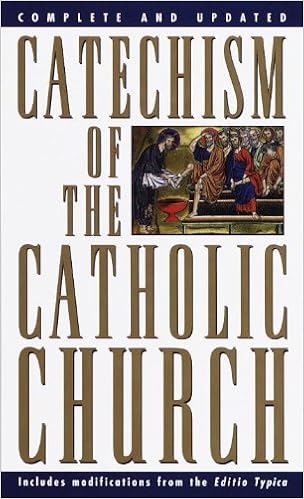
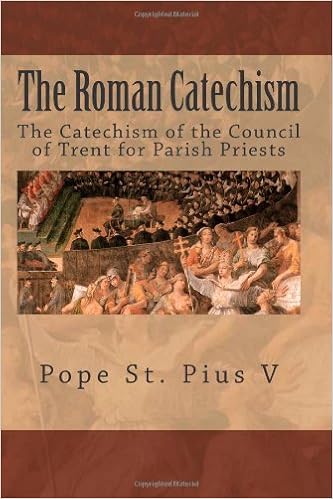
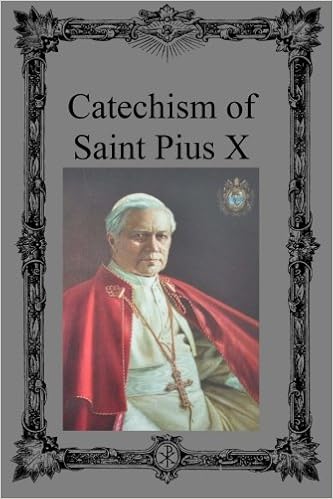
We have sure references for our Catholic Faith.  We have her Catechisms and we have her Cult, that is, the texts of her sacred liturgical worship.

If you don’t have one… get one before it gets revised.

USA HERE – UK HERE

And there’s this…

US HERE – UK HERE

And also…

US HERE – UK HERE

I like Kindle versions of certain books, but there are some that we need also in concrete, pageable, form.  When the lights go off, we’ll still be able to read them by candlelight.

Moderation queue is ON.

Posted in Cri de Coeur, Hard-Identity Catholicism, The Coming Storm, The future and our choices | Tagged ,
13 Comments

At WYD a bishop rewrites the biblical story of Sodom

Pope Francis has shown particular favor toward Bp. Nunzio Galantino, of Cassano all’Jonio making him even General Secretary to the Italian Bishops Conference. I’ve mentioned him before HERE and HERE.

At World Youth Day in Poland, Bp. Galantino made some odd remarks to Italian young people in attendance.  HERE  He spoke about the “bargaining” dialogue that Abraham had with God over the destruction of Sodom and Gomorrah in Genesis 18.

You remember the scene:  God knows that Abraham is going to Sodom. Because God knows that He is going to destroy Sodom, and because He has future plans for Abraham, God tells Abraham of Sodom’s sin, which means destruction. So, Abraham starts this “bargaining” with God over the fate of Sodom and Gomorrah for the sake of a few innocent people who might be destroyed with the wicked. God agrees and it seems that the cities are “safe”. Of course God knew better than Abraham what was about to happen. Thus endeth Genesis 18.

Then there followeth Genesis 19.

Lot has guests in his house and he is responsible for their protection. The people of Sodom want Lot to turn them over so they can rape them.  Abraham had implored God not to destroy Sodom if there are even a few innocent people in the city.  As it turns out, there weren’t. God destroys both Sodom and Gomorrah.  It is salutary to read the description to see what happens when God means business and we defy Him:

And the Lord rained upon Sodom and Gomorrha brimstone and fire from the Lord out of heaven.  And he destroyed these cities, and all the country about, all the inhabitants of the cities, and all things that spring from the earth. … And Abraham got up early in the morning and in the place where he had stood before with the Lord,  He looked towards Sodom and Gomorrha, and the whole land of that country: and he saw the ashes rise up from the earth as the smoke of a furnace.

So much for God’s opinion about unnatural sex.

You will recall that a certain despicable mortal sin, as well as a whole range of unnatural sex, is named after Sodom.

Here entereth, stage left, Bp. Galantino.  He tells the young people, because of Abraham, Sodom was “safe… saved”.  That’s fine if you end the story at the end of Genesis 18.  But there follows Genesis 19 and the rest of the story which everyone now knows!  What God knew, and what Abraham didn’t, is that there weren’t even 10 good men there.  God, being faithful to what He told Abraham, wiped out the cities.  But that’s not the impression that Bp. Galantino gives.

Read it and decide for yourselves. (Not my translation – HERE – but with my emphases and comments.)

“The intense dialogue between God and Abraham in the first reading tell us about prayer. And it’s about prayer that Jesus is asked in the Gospel. A prayer which is not an escape from troubles and responsibility, but a live experience made of listening and answering, through which God creates an authentic relationship and pushes us to be daring. As daring as Abraham’s intercession prayer in favor of Sodom. A city upon which nobody would have bet a dime. His intercession prayer and his will to dare save Sodom. The city is saved because some righteous ones are there, even though a few of them. [La città è salva perché ci sono i giusti, anche se pochi…] But the city is saved [ma la città è salva] above all because Abraham, a man of prayer, is not a relentless accuser, he doesn’t speak against but in favor. Abraham, man of prayer, doesn’t point to the misdeeds, but he announces the possibility for something new. Abraham, man of prayer, announces and invites to look at the positive possibilities. Abraham, man of prayer, is a tireless searcher for sign of hopes to present to the Lord for Him to give them value.”

Ummm… “la città è salva”?!?  And yet, turning to the very next page in the Old Testament’s account, Sodom and Gomorrah wind up heaps of smoking ashes, utterly destroyed.  No?

God would have left Sodom be, if there had been even a few righteous men.  The city was potentially saved, or safe, in the sense that IF there had been a few good people in it, THEN Abraham’s plea would have worked. But there weren’t and the sins they committed were so bad that God burnt them and their folk and their fields to a flaming crackly crisp.  God knew what Abraham did not.

So, what’s with that sermon by Galantino?

Forget about catechism and knowledge of the Bible for a second.  EVERYONE who has a minimal cultural literacy at all knows that Sodom and Gomorrah were obliterated and – wait for it – that the term sodomy comes from Sodom.

So, what’s his game here?  Is it to put into the empty heads of these young people that God did NOT destroy Sodom and Gomorrah (i.e., rewrite the Bible) because He does not abominate the “sin of Sodom”?

Sure, Bp. Galantino underscores Abraham’s intervention.  Fine.  It’s great to underscore what Abraham tried to do, but NOT at the expense of the truth about what happened to Sodom and Gomorrah!  As good and as positive as Abraham was, it didn’t work, except for poor Lot.  Moreover, when Abraham asked God to spare the cities because there might be good people in them, he is in no way condoning what the evil people did!  Abraham seems to be fine with destruction of the wicked.  He doesn’t want the innocent to be destroyed because of and together with the wicked.

The fact that such a thing might take place at a World Youth Day is dreadful.  Also, I think it is a stinging condemnation of the catechetical and biblical preparation of young people today, that anyone would think that he could get away with this.

Finally, I’ll add the old adage that if God doesn’t strike our society soon, then He’ll owe Sodom and Gomorrah and apology.  If I – Abraham-like – could bargain with God, I’d take a different tack and offer up for divine retribution, first, the present White House administration, and if God didn’t go for that, then the DCCC.  If that wasn’t enough, perhaps the whole Democrat Party with its appalling platform.  After that I have a little list… written on Fishwrap  But I digress.

Seriously, friends, we had better wake up.  God cannot be deceived.

Pray for our nations.  Pray that God will avert His wrath.  Pray and do penance for sins of sacrilege and blasphemy and those committed against nature.

The moderation queue is ON.

Posted in Liberals, Sin That Cries To Heaven, The Drill | Tagged , , , ,
53 Comments

A new priest opines on “Extraordinary Ministers” and people with only minor sins after several years.

From a priest, on two points:

For our vigil Mass, we had our extraordinary ministers failed to show up.  I also did not have a deacon.  I preached about a 12 minute homily, used the Roman Canon, and distributed Holy Communion on my own to a congregation of about 200.

It still took only about an hour.  I don’t see how communion would be unduly delayed.  Therefore, I see no need for extraordinary ministers.

I’m still a new priest, but I really wonder about what they’ve been teaching the people here.  If someone hasn’t been to confession in several years and their only sins are minor, either they’ve not examined their consciences or they don’t know how to examine their consciences.  My bet is on the latter.

I really wonder about what they’ve been teaching the people here…”.

You are not alone, Father.

I’m glad you have your head screwed on in the right direction.

Now, learn to say the Extraordinary Form.  Also, get into that box and…

HEAR SOME CONFESSIONS.

Posted in Liturgy Science Theatre 3000, Mail from priests, Our Catholic Identity | Tagged ,
63 Comments

A joyous young woman enters Carmel

This is pretty cool. A friend alerted me to this video of a young woman entering a Carmel.


More HERE.

You young women out there, think about it.

I don’t think that God is calling fewer women per capita to religious life than He did before. Fewer can hear it for the din of modern life and the horrid expectations and images placed in women’s minds and hearts in this twisted world.

In each age since Christ’s Ascension, people have felt they were in the End Times. They were right. In any moment, when the conditions are right, the Lord could return.

Considering what is happening in the world now, I am pushed to think about the way Mass is being celebrated, even the number of Masses being celebrated. Many more people went to confession.

Once there were many communities of contemplatives, spending time before the Blessed Sacrament or in contemplation, in collective and in private prayer.

Who can know how they lifted burdens from the world and turned large and small tides by their prayers to God for mercy and in reparation for sin?

Play
Posted in Just Too Cool, Women Religious | Tagged , ,
37 Comments