More on the notion of Deaconettes: the last stitch?

When I am being optimistic, I like to think that His Holiness initiated this deaconess thing so that he can definitively sew the hammock shut navy style with a pair of cannon balls, put the last stitch through its nose (just to be sure), and sent it down to Davy Jones.

From Catholic World Report comes a hard-hitting editorial.  Again, this is an opinion piece.

Here are some excerpts.  Mind you, the original is salted through with quotes, so read the whole thing there, after getting the gist here:

Editorial: Pope Francis and the Matter of Female Deacons

by Carl E. Olson

Does Pope Francis have any idea of the needless can of worms he opened up with his statement earlier today, made to a gathering of superiors general of women religious communities, that the issue of female deacons should be revisited and possibly studied by a “commission”?

[…]

At length. In 2002, the International Theological Commission concluded a five-year study of the question of women deacons, initiated at the request of the Congregation for the Doctrine of the Faith.

[…]

[T]he 42,679 word document concludes that 1) deaconesses in the early Church were not participating in some form of holy orders, 2) nor were they even equivalent to deacons. But, of course, many of those pushing for deaconesses today are doing so for the sole purpose of having leverage for the ordination of women to the priesthood.

[…]

The “Francis effect”, apparently, means that anything and everything prior to 2013 is up for grabs. Why worry about an exhaustive five-year study from 14 years ago when we can another commission! After all, as Francis likes to remind us, the Holy Spirit is full of surprises, which apparently means the Holy Spirit is also not too concerned about what has gone before, or the reasons for it.

[…]

Which brings me back to the Holy Father. Why did he say what he did? If he truly is oblivious to the 2002 ITL study and all that has already gone into this topic, then one has to wonder about how prepared and studied he actually is.

[…]

Francis’ comment about having discussed this matters years ago with a professor is perhaps more revealing than it initially appears. I also had conversations with professors about these and related matters; I also, despite not being a professional theologian or a priest/bishop, am well aware of what the ITC has studied over the years, not to mention what the CDF has stated about a whole host of questions in recent decades. Why must we continually revisit matters that have been addressed in detail and are, in many ways, already set to rest in terms of magisterial teaching? Why not recognize that even if the Church revived a female diaconate today, it would cause far more confusion and dissent than it would anything else? Rather than invest more time and effort into such matters, why not zero in on the real and substantial challenges faced by the Church in 2016?

Yes, the Holy Spirit is full of surprises, but being surprised is not the same thing as being confused.

Okay… that’s a “No” vote from Mr. Olsen.

Burial at sea… that’s what we need.

Preparations Prior to the Burial

The Ship: The sails should be adjusted so she is cocked up to the weather, some sails full of drive and some laid all a’back, so the ship is motionless.

Topgallant Yards a-cock-bill to signify a death and a burial. Lift lines out of trim to speak grief. The entry port on the starboard gangway to windward, and open.

The Body: canvas shrouded, with two cannon balls at the feet for weight, to insure sinking. The canvas should be sewn in place, starting at the feet, with the last stitch through the nose of the corpse, to check the person is indeed deceased. The body is then placed on an 8 man mess table, and covered with a Red Ensign.

Crew Formation: Crew gathered to witness the service, under immediate command of the Bosun. Position of the crew not specified due to various different ships’ deck configurations.

Forms of Prayer to be Used at Sea
From the Anglican Book of Common Prayer, 1662

The Order for the Burial of the Dead

Here is to be noted, that the Office ensuing is not to be used for any that die unbaptized, or excommunicated, or have laid violent hands upon themselves.

The Priest and Clerks meeting the Corpse […] and going before it […] shall say, or sing,

I AM the resurrection and the life, saith the Lord: he that believeth in me, though he were dead, yet shall he live: and whosoever liveth and believeth in me shall never die. St. John xi. 25, 26.

KNOW that my Redeemer liveth, and that he shalt stand at the latter day upon the earth. And though after my skin worms destroy this body, yet in my flesh shall I see God: whom I shall see for myself, and mine eyes shall behold, and not another. Job xix. 25, 26, 27.

HE brought nothing into this world, and it is certain we can carry nothing out. The Lord gave, and the Lord hath taken away; blessed be the Name of the Lord. 1 Tim. vi. 7. Job I. 21.

As the deceased and the burial party approach the entryway the Bosun orders: “Ship’s Company… Off hats.”

After they are come to the entry port, shall be read one or both of these Psalms following. Dixi, custodiam. Psalm 39.

[…]

Priest departs with burial party. Bosun orders: “Ship’s Company… Dismissed hats.”

Which it’s a burial at sea.

Posted in Liturgy Science Theatre 3000, O'Brian Tags, Preserved Killick | Tagged , , , ,
23 Comments

“When Catholics cut themselves adrift from their own past, they do not thereby become profound thinkers”

Today at Crisis, the esteemed Anthony Esolen offers us some gold.  After Our election, We shall appoint him as Plenipotentiary Extraordinary Minister for the Implementation of Ex corde Ecclesiae.

A sample from his latest with my patented emphases and comments:

Buying the Right Toys from Faiths R Us

A couple of weeks ago I was staying at the Dominican House of Studies in Washington, D.C., as a guest speaker for a symposium on the role of Dominicans in the life of the intellect. The eastern province is flush with vocations, as we at Providence College know well, having in recent years sent to the Dominican brothers and sisters some of our most devout and brilliant students, one of whom I caught up with there, along with several Dominican priests who had been my colleagues in Rhode Island. The province has had to build a new wing to accommodate the numbers of young men, who are all of them notable for their orthodoxy, their bold and happy faith, and their being immersed in the intellectual life. [And yet this week I heard of that in the archdiocese of a major metropolitan region – not famous for conservative bishops – not a single man will enter their seminary.]

It was not supposed to be this way, of course. The Church of the Future was going to be utterly different from the ignorant old Church of the Dark Ages, those medieval times of contrition, chastity, intact families, straightforward catechism, the building of hundreds of thousands of schools and hospitals and orphanages and old folks’ homes all over the world, Lenten fasts, and May crownings, which ended at around 1959, followed by the Renaissance, which ended in 1978 with the election of Karol Wojtyla to the papacy. Then came the Great Backsliding into orthodoxy again, so that if any priest now said that prayer was out of date or that Jesus was an inferior version of Buddha, he would be subject to public ridicule.

I like my version better.

“Oh,” says the religion consumer, looking at a table covered with religious paraphernalia—icons, rosaries, Ganesha the elephant, a “Coexist” sign, a menorah, a prayer carpet, miniatures of the Easter Island megaliths, and cards reading Angels Are Everywhere—“oh, if only there was one church that would do the work of all these religions!”

At which a very fat bishop barges through the door, stage left, [Fatty McButterpants? Bp. of Libville?] holding up a copy of National Catholic Reporter. “Oh my,” exclaims the religion consumer, “pray tell, who are you?”

“Hamahamaha Church of the Future!” he stutters, staring at the television camera.

“Are you the Church of the Future? And can you do the work of all these religions?”

“Hamahamaha Church of the Future!”

I am thinking about these things because, while I was at the House of Studies, I picked up and took home with me a free book that, in its cultural analysis, could have been written yesterday, but was published all the way back in 1979, when the rage for the Church of the Future was still storming. It is Catholicism and Modernity: Confrontation or Capitulation?, by my estimable colleague at Touchstone, James Hitchcock. Every page is stocked with diamonds. One of the most perspicacious assertions that Hitchcock makes throughout the book, and especially in a chapter with the provocative title, “The Illusion of Pluralism,” is that when Catholics cut themselves adrift from their own past, they do not thereby become profound thinkers, ready to confront with a new and distinctively Catholic voice the modern world in all its possibilities and its dangers. They become prey to advertising, in the broadest sense of the word. Or they themselves join the media, and become hucksters par excellence. Join us by midnight tonight!

“The media’s alleged commitment to pluralism,” says Hitchcock, “is at base a kind of hoax. The banner of pluralism is raised in order to win toleration for new ideas as yet unacceptable to the majority. Once toleration has been achieved, public opinion is systematically manipulated first to enforce a status of equality between the old and the new, then to assert the superiority of the new over the old. A final stage is often the total discrediting, even sometimes the banning, of what had previously been orthodox.” Hitchcock quotes T.S. Eliot, who put the matter most bluntly: “Paganism holds all the most valuable advertising space.”

[…]

Do read the rest there!

Fr. Z kudos.

Also, check out his translation of the Divine Comedy, one of the most important things every penned by man.  If you have read Dante then… well…. pffffft.

Click!

You could start with Esolen (Part 1, Inferno HERE – UK HERE) or perhaps with Dorothy Sayer’s fine version (Part 1, Inferno, HERE).  There are many renderings to choose from.  I would very much like to teach on Dante someday.  Maybe it’ll happen.

When you make the excellent choice to read the Divine Comedy, here are a couple tips.  First and foremost, make the decision that you will read the whole thing.  Don’t read just the Inferno.  The really great stuff comes in Purgatorio and Paradiso.  Also, read through a canto to get the line of thought and story and then go back over it looking at the notes in your edition.  Sayers has good notes.  Dante was, I think, the last guy who knew everything.  Each Canto is dense with references.  You will need notes to help with the history, philosophy, cosmology, poetic theory, politics, theology, etc.

Posted in Fr. Z KUDOS, Our Catholic Identity, The Coming Storm, The Drill, The future and our choices | Tagged
17 Comments

Some feminine observations about deaconesses (aka deaconettes)

Did you all know that, a few years ago, the question of deaconettes was put to the International Theological Commission (under the aegis of the CDF)?  Yes, indeed!  HERE The Commission has no teaching authority. However, they did come down against the notion.

At the time it was reported:

The general secretary of the International Theological Commission, Father Georges Cottier, O.P., has responded to certain questions about the Commission’s study of the diaconate raised by the October 8th issue of La Croix. Fr. Cottier stated that the Commission’s study has not concluded that the possibility that women could be ordained to the diaconate remains open, as asserted by La Croix, but rather tends to support the exclusion of this possibility. [The short translation of this is, “No”.  The longer translation is, “Nooooooooo!”]

The Commission of theologians, even if it has not the role of pronouncing with the authority, which is characteristic of the Magisterium, presented two important indications which emerge from study of the matter. In the first place, the Commission observed that the deaconesses mentioned in the tradition of the early Church cannot simply be assimilated to ordained deacons. In support of this conclusion, Fr. Cottier noted that both the rite of institution and the functions exercised by deaconesses distinguished them from ordained deacons. [Diaconate doesn’t apply in the same way to women as it does to men.  Men were ordained with a sacrament.]

Furthermore, Fr. Cottier noted that the Commission’s study reaffirmed the unity of the sacrament of Holy Orders. The distinction between the ministry of bishops and priests, on the one hand, and that of deacons, on the other hand, is nonetheless embraced within the unity of the sacrament of Holy Orders.

[…]

So, for what it is worth, the ITC came down against this.

I wonder what was lacking in the “commission” that is the ITC?  After all, these were experts in the field, right?  It was a “commission”, right?  It studied this question, right?

Recently we saw two well-organized Synods take bites at the same apple.  Is that what we are going to see now?

“But Father! But Father!”, you fishy-smelling, print-besmeared Fishwrap types are slavering, “‘Ha! Ha!’ on you!  Pope Francis understands.  He is, after all, the first Pope who smiled!  Heeee.  We should create committees after committees after committees, with lots of authority!  Eventually, one of them will get it right and that one will be the only one that counts!  That’s how Vatican II did it… with committees.  That’s how we’ll do it now… with committees!  The Spirit of Vatican II wanted women to be ordained, right?  But you don’t get that because YOU HATE VATICAN II!”

To which I respond, “I really like this paragraph from the ITC’s explanation:

The deaconesses were named before the sub-deacon who, in his turn, received a cheirotonia like the deacon (CA 8, 21), while the virgins and widows could not be “ordained” (8, 24-25). The Constitutiones insist that the deaconesses should have no liturgical function (3, 9, 1-2), but should devote themselves to their function in the community which was “service to the women” (CA 3, 16, 1) and as intermediaries between women and the bishop. It is still stated that they represent the Holy Spirit, but they “do nothing without the deacon” (CA 2, 26, 6). They should stand at the women’s entrances in the assemblies (2, 57, 10). Their functions are summed up as follows: “The deaconess does not bless, and she does not fulfil any of the things that priests and deacons do, but she looks after the doors and attends the priests during the baptism of women, for the sake of decency” (CA 8, 28, 6).

“She looks after the doors”… sort of like ecclesial bouncers.  But wait, there was an order of doorkeepers, men, who did that: porters.  So, I suppose the deaconettes helped with the women who were pests or making trouble.

I received the following on deaconettes from a very smart, Churchy-trained, American woman friend. She gives a pretty good summary but with my patented emphases and comments :

Deaconesses could not possibly have been considered ‘ordained’ as the part of the seven grades of order, since they did not follow the cursus honorum: there were no ostiariae, lectrices, exorcist-esses [exorcistines?  exorcistettes?], acolyte-esses, [acolytettes] subdeaconesses (though there is a mention of these among the Copts). If anything, ‘diakonissa’ was a honorary title, [just as ‘episkopa’ was for the mother of the Pope in the famous mosaic in Rome] since one was jettisoned into the office without any known previous office or ‘order’ (all the more so if one were married to a man who became a deacon and his wife came by the title that way). There were instances of presbyters and bishops being suddenly chosen from among men (‘per saltum’) but it was certainly not the norm.  [Jerome scorned Ambrose on that account: “Heri catechumenus, hodie pontifex; heri in amphitheatro, hodie in ecclesia; uespere in circo, mane in altari; dudum fautor strionum, nunc uirginum consecrator: num ignorabat apostolus tergiuersationes nostras et argumentorum ineptias nesciebat?”]

AND — we forget that there were many ‘orders’: not just minor orders, but the order of virgins, widows, energumens, catechumens, ‘fossores’, [grave-diggers!] penitents — into which people were enrolled (‘ordained’ into an ‘order’ or an ‘office’ — like cantors) usually by a prayer and a blessing and/or imposition of hands. Even our modern form of the Sacrament of Penance retains the vestige of the imposition of hands, as in the rubrics the priest is of course to raise his hand toward the penitent as he recites the formula of absolution. [I don’t do that hand-imposition thing, but it is in the book.  I call that the law-suit bit of the modern rite.] We also forget we had two kinds of deaconesses — wives of deacons who were called ‘deaconess’ as an honorific, though no doubt she helped her husband in his ministry, and deaconesses in their own right, as it were, usually older women (and usually widows) who assisted with total immersion baptism for (unclothed) female catechumens, and full-body anointing/chrismation (or at least a woman’s forehead, eyes, nostrils, mouth, ears, breast, hands and feet), as well as keeping the women’s side of the assembly in line and visiting sick women and girls. Being ‘ordained’ into one of the ‘orders’ — even with the prayer and the imposition of hands — did not mean Ordination to Holy Orders.

But I think that’s not what this current idea is about, eh?

No, that is not what this is about.

Although… that brings up an interest thought.  WERE the ordination of women to be approved, even though they didn’t have any sacramental ministry or liturgical role in the ancient Church, I bet we would suddenly see a huge increase in Pontifical Masses in the older, traditional rite!  I foresee massive expeditures – not for the poor, but for glorious vestments in gold and silk, the sort that haven’t been produced for over a century.  It would suddenly be discovered that splendid lace albs are actually not evil after all.  I can see now the consultants pouring in from the AME and the Anglicans to offer their help.  And pause to consider the fantastic new head gear possibilities!

Birettas? Pffft.

It would be a new age!

Now… I have a more important task.  I get to work on the new red dalmatics – vestments for deacons which just arrived from Gammarelli.  HERE There are four dalmatics for the priests and or deacons and one super light silk dalmatic for the bishop.  These vestments will never be worn by a woman.

Posted in The Drill | Tagged , , ,
24 Comments

THEY’RE HERE! Action Item Update – Red Pontifical Vestments Project – PHOTOS

UPDATE:  

I got them hung up in the sacristy.

Then I switched plans and laid out the dalmatics and chasubles of both the red and purple in drawers which I rearranged.  The copes and other pieces such as the antependium are hanging in bags on proper hangers.


I learned that His Excellency Most Rev. Robert C. Morlino, the Extraordinary Ordinary, may also be available to Confirm using the older, traditional rite, at the end of July on the Feast of St. Peter and Paul.  We are also planning on him for the 1 July, Feast of the Most Precious Blood.  So, they are going to be used well!

Please chip in… we need to gather a lot of cash.  It’s tax deductible, too.

Click HERE!

Yesterday I exchanged email with Gammarelli about the GREEN set.  It should be available in 2-3 weeks.  Very exciting.  They will match these.

Still on the slate… sets in white and rose.   I both long for and dread the universal approval of blue!

___ Original Published on: May 12, 2016

I have posted about our Society’s project to have a full Pontifical set of vestments made in glorious red silk damask with bright gold serpentine column trim. I posted photos of the fabric being cut at Gammarelli in Rome and have other shots of the purple set to give you an idea of what we are making.  HERE  I posted photos of the sewing.  HERE.

I now have photos of their ARRIVAL.

img_4001

In the boxes underneath the Gammarelli box are hangers, sent by the great John of Church Goods in St. Paul at Leaflet Missal – who is handing the Seminarian Biretta Project.

The gloves, pontifical dalmatic and buskins.

I have initially hung them upon my little laundry cart, but they will be placed better.  I also have to go to the store and buy a new tub for all the “parts”, stoles, etc.

We will use these at least for 1 July, the Feast of the Most Precious Blood.  I think I’ll use the the chasuble and cope for Pentecost Sunday.

So… folks… we still have a GREEN set coming, so we need your help!

Click HERE!

In these days of uncertainty, one this is for sure.  Holy Mass needs the very best.  We have here a bishop who is ready to do his part for the revitalization of our Church’s sacred liturgical worship of God according to Pope Benedict’s vision.  Please help!

Also… now that I think of it… we are going to have a traditional Confirmation here pretty soon, perhaps even with some folks from outside the diocese.  Red vestments… good idea… right?

Right now the dollar is still strong against the euro, so we would like to get this going fast.  So, please donate!

Your donations will go to the Tridentine Mass Society of Madison, a 501(c)(3) charitable organization, and they are tax deductible.

Posted in ACTION ITEM!, Hard-Identity Catholicism, Just Too Cool, Liturgy Science Theatre 3000, The Campus Telephone Pole | Tagged
2 Comments

Francis and the Deaconesses… aka Deaconettes

First, today I saw a piece at Breitbart that Pope Francis popularity has dropped.  HERE

That said, I have received links to various articles saying that the Pope has considered establishing a commission to study the issue of the ordination of woman as deaconesses…. (aka deaconettes -it’s easier to pronounce).

Studying is one thing and doing is another.

That said, I saw something telling in the Fishwrap account (aka National Schismatic Reporter).

The pope responded that he had spoken about the matter once some years ago with a “good, wise professor” who had studied the use of female deacons in the early centuries of the church. Francis said it remained unclear to him what role such deacons had.

“What were these female deacons?” the pontiff recalled asking the professor. “Did they have ordination or no?”

“It was a bit obscure,” said Francis. “What was the role of the deaconess in that time?”

“Constituting an official commission that might study the question?” the pontiff asked aloud. “I believe yes. It would do good for the church to clarify this point. I am in agreement. I will speak to do something like this.”

“I accept,” the pope said later. “It seems useful to me to have a commission that would clarify this well.”

First, I haven’t seen news that a commission exists. Maybe I missed something.

click

Next, this also means that the Pope has not been talking to the people who are in favor of the ordination of women! He hasn’t been paying attention to the advocates of deaconettes. Instead, he has been talking to those who find the question obscure and muddy.

Of course that is what this issue is: obscure and muddy. It is not at all likely that greater clarity will be gained from such a commission. Were there more out there to know… in serious, scholarly sources, that is… someone would have written it. Also, those with whom Francis speaks would have been able to point to it. Such a commission won’t consider half-baked propaganda, after all.
Meanwhile, the serious scholarship that exists says: they were not ordained in a sacramental sense, as deacons were and are.  Also, not every idea that the Church tried was a good one: many were dropped – like deaconettes.  Moreover, nothing about this will happen for quite a while, I suspect.

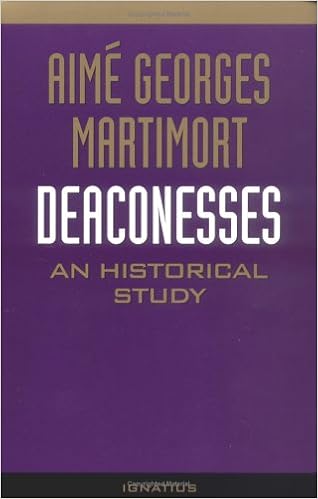
Read Deaconesses: An Historical Study by Aime G Martimort. UK HERE

I might write more on this later, but for now that’s enough. Right now this is much ado about nothing.

Posted in The Drill | Tagged
47 Comments

Fr. Z’s Kitchen: Concerning the making of tea, biscuits and Zagnut bars

I have recently received from a reader in Blighty a rather nice porcelain tea pot and a little crate of tea.

Remember: You can buy TEA from the Wyoming Coffee Monks.

That said, I am determined to make tea properly.

As I researched the matter, I found that George Orwell, who predicted the Obama Administration, wrote an essay on how to make tea properly.  HERE  There is audio of him reading some of it!

There are, according to Orwell, 11 Points… which I include hereunder in abbreviated form:

  1. Use Indian or Ceylonese tea. CHECK!  The sender sent Ceylonese!
  2. Make small quantities — that is, in a teapot.
  3. The pot should be warmed beforehand. I recall a phrase “hot the pot”.
  4. Make it strong. For a pot holding a quart, if you are going to fill it nearly to the brim, six heaped teaspoons would be about right.
  5. The tea should be put straight into the pot.
  6. Take the teapot to the kettle and not the other way about. The water should be actually boiling at the moment of impact.
  7. After making the tea, one should stir it, or better, give the pot a good shake, afterwards allowing the leaves to settle.
  8. Drink out of a good breakfast cup — that is, the cylindrical type of cup, not the flat, shallow type.
  9. Pour the cream off the milk before using it for tea. Milk that is too creamy always gives tea a sickly taste.
  10. Pour tea into the cup first. This is one of the most controversial points of all.
  11. Tea — unless one is drinking it in the Russian style — should be drunk without sugar.

Right!

I shall begin my preparations and have a go.  Perhaps I shall even shine up the ol’ silver biscuit box which I bought at a flea market in Manhattan.

This should help me to get ready for a trip in…. July?

I think I am supposed to have some biscuits.  Or maybe scones.  I used to make scones.  Perhaps I’ll try again.

More later.

UPDATE:

I have made tea… I believe Orwell would approve.

First, the new tea pot and the little crate of tea!

There are two kinds.  I’m not sure what they are.  When in doubt start on the right… and it has black.

I brought the teapot close to the electric kettle, as Orwell would have.


Before I added the several teaspoons, I “hotted the pot” as instructed.


Playing the “Jeopardy” theme…


Orwell wanted me to use a straight sided cup.  Hence, one of my Leo XIII quote mugs.


The milk went in after.


They went with…

As for the mug…

The “Libertas praestantissimum 31” Coffee or Tea Mug

Click HERE

FOLLOW UP:

I wonder how these would be with the tea… ?

Recently, to console a worker in the chancery here for performing an unpleasnt task above and beyond the call of duty, I obtained for him and for other staff a case of Zagnut bars.

Perhaps they have some left.

Want some?  Click HERE

Posted in Fr. Z's Kitchen, What Fr. Z is up to | Tagged ,
29 Comments

VIDEO about Summorum Pontificum Pilgrimage in Rome, October 2015

The Summorum Pontificum pilgrimage in Rome is a great event. I hope to go as long as they are held.

There is now a video documentary of last year’s experience with English subtitles. HERE

There are high quality views of some of the liturgical events and interviews with participants.

Ad Petri Sedem VOSTEN from Les Films du Lutrin on Vimeo.

A note to the organizers: you might include clerics from the other side of the Atlantic in your plans.

Posted in Events, Hard-Identity Catholicism, Just Too Cool, SUMMORUM PONTIFICUM | Tagged ,
1 Comment

ASK FATHER: Was it right to leave a “Mass” with a string of serious abuses?

From a reader…

QUAERITUR:

Thank you for your Priesthood!

I have a question about the validity of a Mass. My mother was in town for Mother’s Day and we went to Mass on Sunday (Novus Ordo). I am far from a “radical traditionalist”.

I prefer the old rite and am a member of an FSSP parish, however, I often attend daily Mass and receive the Sacraments in the Novus Ordo.

That said, I have a question regarding the validity of a Mass, or when it is illicit and/or invalid.

We attended a Mass on Sunday where the Priest began the Mass speaking to the congregation and saying that he wanted do to something different.. and not to tell Father (the Pastor of the Parish).

He skipped all of the introductory Rites. No reverencing of the alter, no Sign of the Cross, no Penitential Act. No Gloria. No Collect.

Instead, Father invited some family of his up and introduced them. A grand niece and her husband, a Navy Seal, and their two children, one an infant who he had just baptized several days prior. He then invited them into the sanctuary. He then proceeded to take the newborn into his arms and sit to read the Gospel. He told all to remain seated during his reading of the Gospel. This was the start of the Mass.

Afterwards, he had the first reading read by a lector. No responsorial psalm, no Gospel Acclamation.

We stood up and left at this point, to find another Mass. I have great respect for young families and anyone who serves/has served in the military. However, in Church, I worship God and God alone.

Question is: was the Mass valid? or illicit? Did we do the right thing in leaving?

Wow.  That was weird.  In my opinion, you didn’t do anything wrong by leaving early from … whatever that was.  It was at least a travesty.

Whatever that … mess was, it was illicit.

First, I would let the pastor of that parish know what happened and that you left.  The coward even told people not to say anything?  Say something.

Next, you didn’t mention anything about the two-fold consecration.   I suspect you left before that.  So, I can’t say anything about validity.

That priest needs a serious talking to.

Posted in "How To..." - Practical Notes, ASK FATHER Question Box, Liberals | Tagged ,
23 Comments

How about a Masters in RATZINGER STUDIES? – UPDATE

Last November I posted HERE about getting a Masters in Ratzinger Studies at the Augustinianum in Rome.  They do the program in both Italian and English and it has been a huge success.  HERE

Now saw on Crux 2.0 an interview with a friend of mine in Rome, Msgr. Florian Kolfhaus about this program.

UPDATE:  Apparently, the original story was at CNA in German.  Then Crux picked it up and beat CNA to it in English.

Now CNA has an English translation.  I therefore am making substitutions.

A sample…

Love Pope Benedict’s theology? Try a master’s degree

[…]

For whom is this program intended? Who would enjoy it, or benefit from it?

The program is pertinent to anyone interested in studying theology – regardless of which author someone especially admires. It’s not a “Ratzinger Fan Club,” but rather about joy in the “sacred discipline” that makes an offer to the mind to better understand the faith. Just as there are many spiritualities, so too are there many theologies. Insofar as they don’t contradict doctrine, they are legitimate. The theological “menu” should be abundant, and Joseph Ratzinger can’t be missing from it. The master’s program has proven to be popular among European and American students, but unfortunately there are no German students.

[…]

ow is the response thus far? Is the offer catching on?

The offer has been so well received that the lecture hall is filled to the last seat. There are actually two programs – one in English and another in Italian. Both are, so to say, “booked up.” The students want good theology, and “hunger” for texts that offer more than an information-rich, historical-critical analysis. So there is a true “Ratzinger renaissance,” still in the lifetime of Pope Emeritus Benedict XVI. Only a few years after his resignation, not only are important topics being discussed but also theological methods – like the allegorical or typological interpretation of Sacred Scripture – are being enthusiastically rediscovered. I am sure that this master’s program has a future and I would hope that other universities would adopt this program’s curriculum.

For someone who does not want to start a master’s now, but is interested in studying the most important works of Joseph Ratzinger, what works would you recommend?

As a Mariologist, I would of course recommend Daughter Zion. This short work is about the mother of Jesus, but at the same time it is also about the Church. In Mary, the Church can view herself – like looking in a mirror – in order to understand more deeply who she is. The Church is the important theme of Ratzinger, and he always shows that this mystery leads in turn to Christ, whose body is His people on earth. Ratzinger shows in all of his works that no mystery of the faith is isolated from another. Everything forms a harmonious unity, a nexus mysteriorum. Whoever pulls a book with his works off the shelf finds his way from page to page deeper and deeper into the manifold mysterium of the one faith. I also want to recommend the many lectures of Ratzinger, which are relatively short yet all the more dense, as an introduction to the reading.

What meaning does Joseph Ratzinger have for the interpretation of the Second Vatican Council?

Pope Benedict XVI coined the term “hermeneutic of continuity,” which has since been essential for the interpretation of Vatican II. He himself took part in the Council as a theological advisor and knows not only the texts but also their history of development. In his speech to the Chilean bishops in 1988, which is not yet published in the Opera Omnia, he already said that the last council is no “superdogma” that placed everything preceding it in the shadows. How different is the widespread characterization of the council documents as milestones of a “Copernican Revolution.” For decades, an interpretation of the Council as a fraction in the Church has reigned in many places, which has allowed a new chronology beginning with the Council to come into existence. It is one of Ratzinger’s great merits for this to not be followed in the mainstream. That also earned him – as we know – not only friends, but also enemies.

[…]

Read the rest there.

Posted in Just Too Cool, The Campus Telephone Pole | Tagged ,
3 Comments

ASK FATHER: Blessing of olive oil and incense

olive-oilFrom a reader…

QUAERITUR:

Hello Father, I would like to start occasionally using incense at home for my private devotions as well as lighting a couple oil vigil lamps by icons hanging on my walls. Do you have any blessings for these two items (incense and olive oil) that I can print off and bring to my Priest to use to bless these items for me?

We Catholics bless all sorts of things for our daily use.

Or we used to.

You can check out the traditional Rituale Romanum for many blessings of even quite ordinary things.  The nice folks at St. John Cantius put the Rituale on line so you can (and you could have) look things up on your own.

That said, I do like the prayers for the blessing of oil.   As in the case of water and salt… such basic elements… the priest first addressed the oil personally, with the “you” form in the second person.  He exorcises it, thus tearing it away from the foul clutches of the prince of this world and his evil cohorts, if they’ve gotten their clutches on it – the agents of the Devil are known even to curse foods in the production, transport and sales stages … yes… it’s true – say your prayers before eating.  Then he blesses it, transferring it to the King of all things.

Let’s have a look.  This, friends, is a super Catholic prayer!

8. BLESSING OF OIL

P: Our help is in the name of the Lord.

All: Who made heaven and earth.

God’s creature, oil, I cast out the demon from you by God the Father + almighty, who made heaven and earth and sea, and all that they contain. Let the adversary’s power, the devil’s legions, and all Satan’s attacks and machinations be dispelled and driven afar from this creature, oil. Let it bring health in body and mind to all who use it, in the name of God + the Father almighty, and of our Lord Jesus + Christ, His Son, and of the Holy Spirit, the Advocate, as well as in the love of the same Jesus Christ our Lord, who is coming to judge both the living and the dead and the world by fire.

All: Amen.

P: Lord, heed my prayer.

All: And let my cry be heard by you.

P: The Lord be with you.

All: May He also be with you.

Let us pray.

Lord God almighty, before whom the hosts of angels stand in awe, and whose heavenly service we acknowledge; may it please you to regard favorably and to bless + and hallow + this creature, oil, which by your power has been pressed from the juice of olives. You have ordained it for anointing the sick, so that, when they are made well, they may give thanks to you, the living and true God. Grant, we pray, that those who will use this oil, which we are blessing + in your name, may be delivered from all suffering, all infirmity, and all wiles of the enemy. Let it be a means of averting any kind of adversity from man, made in your image and redeemed by the precious blood of your Son, so that he may never again suffer the sting of the ancient serpent; through Christ our Lord.

All: Amen.

It is sprinkled with holy water.

I almost always use Latin when I bless things, because the Devil hates it.  Also, I always use only the older Rituale Romanum.

For incense, there is the one on Epiphany for Gold, Frankincense and Myrrh, but the priest can always use the

29. BLESSING OF ANYTHING

This form may be used by any priest for the blessing of anything that does not have its own special blessing in the Roman Ritual.

P: Our help is in the name of the Lord.

All: Who made heaven and earth.

P: The Lord be with you.

All: May He also be with you.

Let us pray.

God, whose word suffices to make all things holy, pour out your blessing + on this object (these objects); and grant that anyone who uses it (them) with grateful heart and in keeping with your law and will, may receive from you, its (their) Maker, health in body and protection of soul by calling on your holy name; through Christ our Lord.

All: Amen.

It (they) is (are) sprinkled with holy water.

Click

Pastors of parishes (and lay people too) would do well to get a calendar for a year or more and write down dates which have special blessings for things.  For example, wine on the Feast of St. John the Apostle, candles on St. Blaise along with bread, wine, water and fruit,  bonfires on the Vigil of the Nativity of John the Baptist, herbs on Assumption, seeds and seedlings on Nativity of Mary.  We have blessings for places and machines and people, especially in important moments such as when women are pregnant or after they have had a baby (alive or stillborn).   There are special blessings for infants and small children, when alone or in groups, when healthy or ill. Pilgrims can receive a special blessing before they set out.   There are even deprecatory prayers against things such as pests (rats and bugs, not liberals) and storms and diseases and floods.

On the flood point, I once mentioned here that a bishop go to bless a river about to break dikes in a flood stage and to use older Rituale.  I was later told that he did and the river subsided.  I myself once was watching TV coverage of a terrible storm with tornadoes tracking directly at my house.  I got out the Ritual and went through the Litany with the prayers against a storm and then watched on the TV at the storm split and went around north and south of where I lived as the weather man said how strange it was.

Holy Church gives us these things so that they will be used when we need them.

We should have a greater awareness of sacramentals and blessings and priests should talk about them more.  You all can help be asking for things to be blessed.  It may be that Father doesn’t know how to do things like this, so make it easy for him.  Get him books, for example.

NB: ORDINATION SEASON is upon us.

Are you looking for a gift for a new priest (or an older priest)?

Get him a set of Weller’s translation (with the Latin) of the traditional Roman Ritual.

US HERE  UK HERE

If you want your priests to do things, make sure they have the tools, such as books or fine vestments, etc.

Posted in "How To..." - Practical Notes, ASK FATHER Question Box | Tagged ,
14 Comments