27 Nov – Feast of Our Lady of the Miraculous Medal

Toward the back of our venerable 1962 Missale Romanum there are Mass formularies for special feasts. Today, for example, we find Our Lady of the Miraculous Medal.

Our Lady appeared to a Sister of Charity of the Rue du Bac in Paris, St. Catherine Labouré, and showed her the pattern of a medal.  Through this medal many miracles have been granted through God by Mary’s intercession.

The Collect:

Domine Iesu Christe, qui beatissimam Virginem Mariam matrem tuam ab origine immaculatam innumeris miraculis clarescere voluisti, concede: ut eiusdem patrocinium semper implorantes, gaudia consequamur aeterna: Qui vivis et regnas cum Deo Patre.

O Lord Jesus Christ, who desired that Your Mother, the most Blessed Virgin Mary, immaculate from her conception, should shine with countless miracles, grant that we, ever imploring her patronage, may attain eternal joys.

Remember, dear readers, if we don’t believe in miracles, we won’t ask for miracles.  And if we don’t ask for miracles, we won’t obtain miracles.

UPDATE:

I see that Fr. Hunwicke has written something of interest at his place, about John Henry Newman, Alphonse Ratisbonne (converts, both) and the Miraculous Medal.

Posted in Just Too Cool, Liturgy Science Theatre 3000, Our Solitary Boast | Tagged , , ,
Comments Off on 27 Nov – Feast of Our Lady of the Miraculous Medal

Another parish goes ‘ad orientem’ at Advent

A while back I posted about the first TLM celebrated in decades at a famous North Side Chicago Church, St. Stanislaw Kostka.  HERE

Now I’ve received additional good news about that same church.

They will have ad orientem worship beginning in Advent.

This is a wonderful development.

Here is the text that was posted:

My compliments to Fr. Bus, a Resurrectionist, and to the whole parish.  I’m sure this will be a great blessing.

CLICK


Posted in Liturgy Science Theatre 3000, Turn Towards The Lord | Tagged , ,
1 Comment

ASK FATHER: Holy Communion after biting inside of mouth

From a reader…

QUAERITUR:

I write today to ask whether there are any problems with partaking of Communion after having bitten/chewed the inside of one’s own mouth.

First, I am glad that you are so interested in proper reception of Holy Communion.

We have to be properly disposed to receive. Because we are both body and soul, we have to be disposed in body and in soul, both. To be properly disposed in respect to our bodies we fast for the length of time designated by the Church. Right now that length of time is ridiculously short, but that’s what we have to obey. We can chose to do more, but that’s up to the individual… without grandstanding like the Pharisee in the parable.

Now… since we are Unreconstructed Ossified Manualists to the MANUAL!

In one of my manuals I read that consumption of food or liquid such that it breaks the fast must done by eating or drinking in a way by which one intends to eat or drink.  St. Alphonsus and St. Thomas are the basis.  Hence, if one breathes or swallows something like wood shavings, snow, etc., or – and this is to the point in question – blood flowing in the mouth from cheek, tongue, gums, etc., and swallowed with saliva, does not break the fast.   Moreover, we can brush our teeth and gargle.  Cooks who must prepare meals can even taste tiny amounts of food during its preparation.

I found one interesting note:

“Sale a catechumenis in collocatione Baptismi praegustato etsi ieiunium frangi videatur, adhuc tamen nullum dubium est quin ad sacram communionem susceptio Baptismate admitti possint, imo vero debeant…”.

Fascinating, no?

In any event, yes, you can receive Communion if you have bitten the inside of your cheek, etc.

Posted in "How To..." - Practical Notes, ASK FATHER Question Box, Liturgy Science Theatre 3000 | Tagged ,
1 Comment

Your Sunday Sermon Notes

It’s the last Sunday of the liturgical year.

Were there any good points made in the sermon you heard today at the Holy Mass which fulfilled your Sunday Mass obligation?

Tell us what they were.

For my part, I preached about the Four Last Things.

Seasonal Classic

A couple things I hope everyone took away were…

  • In our particular judgement, nothing can be hidden from the Just Judge.  Every though, word deed and omission will be laid bare.
  • In the general judgment, everything will be entirely lad bare to all, and we will see how everything fits.
  • When examining your conscience, occasionally try to imagine what goes through the mind of the person who, upon death and judgment, suddenly realizes she’s in Hell.  What would the first 10 seconds be like.
  • God will say “COME!” to some and “GO!” to others.  Christ explained this and added, “For I was hungry and you gave me to eat…”, or else, “you did NOT give me to eat…”.  Works of mercy are important for our final judgment.
  • God’s justice we are going to get whether we want it or not, but in this life His mercy is ours for the asking.
  • Be devout, diligent in mercy, thorough in confession, pious in Communion, apostolic in action, cheerful in hope and you do not need to be terrified of death and your judgment.
Posted in Four Last Things | Tagged
8 Comments

ASK FATHER: Color of altar boys’ cassocks

From a reader…

QUAERITUR:

I grew up in the 1950’s. All the illustrated “Children’s Missals” had photos showing altar servers wearing red cassocks and white surplices.

I never saw red cassocks in person, however. Now, they seem to be making a comeback. At our parish, the two altar servers wear black cassocks and white surplices. There is also a “master server” (usually an adult) who wears a red cassock and white surplice.

When there are is a seminarian in the role of master server, he wears a black cassock with collar and a white surplice. I can’t find any instruction on the color of cassocks for mass (other than the obvious distinctions between priest, monsignor, bishop, cardinal, and pope. Do you know of any instructions or official recommendations concerning the color of cassock to be worn by other than the celebrant at mass?

First, let it be said that all service at the altar in our Catholic Churches should exclusively MALE.

There is no specified color of cassocks for servers.  However, let’s not forget that this was originally a clerical service in large degree.  Hence, the use of the black cassock is always a good thing.  That said, it may be of interest that the boys who serve in the Basilica of St. Peter in Roman, from the minor seminary school, wear the same color cassocks as monsignors, paonazza, that violet color.  They do so from a long held privilege.  Also, Masters of Ceremonies for the Masses of bishops and cardinals in the Usus Antiquior customarily wear the paonazza cassock, but without red trim, etc.

Local custom will play a role, as it only fitting.  The Institute of Christ the King has their servers wear a shade of blue.   In some places, red is used.  No problem.  In other places, seniority of service might indicated by different colors.  It’s all for the good.  However, it should be consistent and understood where these things are put into place.

Posted in "How To..." - Practical Notes, ASK FATHER Question Box, Liturgy Science Theatre 3000 | Tagged , ,
30 Comments

ASK FATHER: Self-intinction. Wherein Fr. Z rants.

What a dreadful photo.
It’s exemplary of so many problems in the Church today.

From a reader…

This morning at Mass, I observed two or three people receive the Host in the hand, and then walk over to the extraordinary minister of the chalice, dip the Host in, and then put it in their mouth. I was cantoring at the time, and at our church the cantors have to stand up front, so this is why I noticed this so clearly. I have always understood that, even in parishes which practice intinction, it’s not allowable for communicants to do it themselves. I was obviously unable to say or do anything in the moment it happened, but do you have any thoughts on this? Should I let my pastor know? Should the EMHC’s [Extraordinary Ministers of Holy Communion] be trained in how to avoid this situation in the future?

Self-intinction is wrong because the Church does not permit it. That should be sufficient argument, but we can go a bit deeper.

Self-intinction contradicts the Church’s understanding of what is being done at Holy Communion. We are being fed by Our Lord with His Sacred Body and Precious Blood. We receive Holy Communion. Reception is a passive thing, not an active thing. In a position of humility (best exemplified by kneeling, in my opinion), we allow the Lord to feed us. Holy Communion is given to us, we do not take it. We do not take the host from the ciborium. We do not take the Precious Blood from the chalice.

If there is to be intinction (and it is one of the acceptable forms of distributing Holy Communion according to the General Instruction), the minister takes the host, dips it in the chalice, and places the dipped host directly on the tongue of the recipient.  That’s it.

It is worth noting that the General Instruction limits the distribution of the sacred species by intinction to the priest. Another minister holds the chalice, but it is the priest who intincts the host in the chalice and places it in the mouth of the communicant.

“287. If Communion from the chalice is carried out by intinction, each communicant, holding a Communion-plate under the mouth, approaches the Priest who holds a vessel with the sacred particles, with a minister standing at his side and holding the chalice. The Priest takes a host, intincts it partly in the chalice and, showing it, says, The Body and Blood of Christ. The communicant replies, Amen, receives the Sacrament in the mouth from the Priest, and then withdraws.”

Yes, I think you should let your pastor know about what you saw.  Put it into his hands.

Yes, I think that EMHCs should be TRAINED.

That said, I think we should move away from

  • the dreadful practice of Holy Communion in the hand,
  • the risky practice of Holy Communion under both kinds,
  • and also the exaggerated emplyment of EMHCs.

Soooo many problems could be avoided.  Moreover, I believe that returning to traditional practices will also foster greater reverence for… heck, at this point… BELIEF in the Eucharist.

Posted in "How To..." - Practical Notes, ASK FATHER Question Box, Liturgy Science Theatre 3000, Wherein Fr. Z Rants | Tagged , , ,
17 Comments

Ideas for your ADVENT season of preparation

Advent starts in a few days, on 3 December.

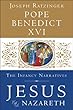
You might consider reading (or reading again) Benedict XVI’s third volume of Jesus of Nazareth: The Infancy Narratives.  It is shorter than the other two volumes, and there are riches within.

The Holy Father’s book presents, among other things, a real defense of the historicity of the infancy narratives.

US hardcover HERE.  Kindle HERE. Unabridged audio HERE. Large print HERE.
UK hardcover HERE. Kindle HERE.  Large print HERE.

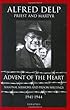
Also, for Advent, you might try the reflections by an amazing priest who died under the Nazi regime, Fr. Alfred Delp, in the book Advent of the Heart: Seasonal Sermons And Prison Writings 1941-1944.

Kindle HERE. UKHERE.   Smart.  Moving.

You have time before Advent begins to order these.

And, in the spirit of the Church Militant, you might think about toughing up your rosary!  These rosaries are modeled after the US government issued rosaries… yes, you read that right… government issued rosaries given to combat troops.

The Swiss Guard carries these rosaries!  HERE

There is someone out there who pretty much ripped off the idea, by the way.  The link here is the right one.

Posted in "How To..." - Practical Notes | Tagged , ,
5 Comments

Ite Rodentes! Hockey, commercials, and an admonition.

Tonight I’ve tuned into watch the noble, scholar/athlete University of Minnesota Golden Gophers mens hockey team battle the arrogant, effete Irish of the school that honored the most pro-abortion President in history, who worked to destroy our religious liberties and undermined our national security.

Hence, ITE RODENTES!

I have a cousin on the team.  It is pretty strange to hear my rather rare name coming out of the TV.  Tonight they are on NBCSN, in case you want to tune in and either cheer for Minnesota or against Notre Shame.  HERE

MN has a really tough schedule coming up.

However, what I’ve noticed is the commercials… it seems that companies and products are teaming up.  In one man’s electric shaver spot, they teamed up with the upcoming Star Wars movie.  In another, there was a car insurance company paired with a jewelry outlet.

Interesting.

That said, ITE RODENTES!

And to anyone backing the Irish…

GO TO CONFESSION.

(Ditto backers of the Gophers, but for other reasons.)

Posted in GO TO CONFESSION | Tagged
3 Comments

Channeling stupid in Sweden

How foolish.

I am reminded of scenes from Lord Of The WorldVoyage To Alpha Centauri, The Children of Men (the book, not the dopey movie), Eclipse of the Sun (US HERE – UK HERE).

The Church of Sweden (Lutheran) has made a suicide pact with the world, the flesh and the Devil.  HERE (Not my translation):

A steering group within the Church of Sweden has for some time been working on developing a new church manual. This is considered to be should encourage “a more inclusive worship language”. [Google Translate version makes more sense than their brains.] God may now find himself deprived of his male gender – in the sermon referring to God as “he” or “the Lord” joins the new church handbook as a correction of misdemeanor.

[…]

But the proposals also have many advocates within the Swedish Church. The outcome of Thursday’s polls is therefore an open question. How it went, Archbishop Antje Jackelén will tell a press conference on Thursday. Jackelén has himself profiled himself as a renewer of the Swedish Church, among other things. by taking Islam’s creed “Allahu Akbar” as its language and emphasizing that Jesus of Christians should not be set higher than Islam’s prophet Muhammad.

Social excitement has not been able to figure out [Google can be amusing!] if there are corresponding proposals to make Jesus gender neutral and remove names like “he” and “human son” from the worship vocabulary. It is also unclear if there is a goal at the Swedish Church to implement the same gender changes in the Bible.

Fr James Martin, SJ, has not yet commented.

ICEL has not released its statement of support in accord with the new translation laws… yet.

The head of the Church in Sweden, Archbishop Antje Jackelén.

She looks rather like the grandmother of half the people I grew up with in Minnesota with a really bad hat.


Posted in Pò sì jiù, The future and our choices, You must be joking! | Tagged ,
14 Comments

If our “interior cell phone” is always busy because we are “having a conversation” with other creatures, how can God “call us”?

I find that more and more of my day, when I am at home, is spent in silence.  I have stopped checking the news.  I don’t often listen to music.  Sometimes I listen to audiobooks through Audible or my older generation Kindle.  But, most of the time, it is silent.

Good advice from Robert Card. Sarah in his book, The Power of Silence: Against the Dictatorship of Noise:

We arrive at the knowledge of God by way of causality, analogy, eminence, but also negation: once we affirm the divine attributes, which are known by natural reason (this is the kataphatic way), we must deny the mode of limited realization thereof that we know here below (this is the apophatic way). Silence is an essential part of the apophatic way of gaining access to God, which was so highly prized by the Fathers of the Church, especially the Greeks; this makes them demand silence of arguments when faced with the mystery of God. I am thinking here of Clement of Alexandria, Gregory Nazianzen, and Gregory of Nyssa.

It is nonetheless true that silence is above all the positive attitude of someone who prepares to welcome God by listening. Yes, God acts in the silence. Hence this very important remark by the great Saint John of the Cross in his Maxims on Love: “The Father spoke one Word, which was His Son, and this Word He always speaks in eternal silence, and in silence must It be heard by the soul.” The Book of Wisdom had already noted in this regard the manner in which God intervened to deliver the chosen people from captivity in Egypt: that unforgettable act took place during the night: “For while gentle silence enveloped all things, and night in its swift course was now half gone, your all-powerful word leaped from heaven, from the royal throne” (Wis 18:14). Later, this verse would be understood by Christian liturgical tradition as a prefiguration of the silent Incarnation of the Eternal Word in the crib in Bethlehem.

And so we have to be silent: this is of course an activity and not a form of idleness. If our “interior cell phone” is always busy because we are “having a conversation” with other creatures, how can the Creator reach us, how can he “call us”? We must therefore purify our mind of its curiosities, the will of its plans, in order to be totally open to the graces of light and strength that God wants to give us profusely: “Father, not my will, but yours be done.” Ignatian “indifference” is therefore a form of silence, too.

US HERE – UK HERE

This is the translation of  Le Force du Silence.

In this, the Cardinal gets at something I’ve been talking about for years bow.  The apophatic dimension of participation in, especially, the older, traditional form of Holy Mass.

I think that people today are getting so used to noise and distraction, that they become very uncomfortable indeed in silences.  Couple that with the myriad distractions we have now… is it any wonder that our liturgical worship is – far and wide – the way that it is?  Is it any wonder why some people fight so hard against quite, still traditions and traditional worship?

Advent is coming.  Consider the role of silence in your advent preparations before Advent begins.

By the way, what did Card. Sarah mean by “ignatian indfference”?

The concept of indifference comes from the Spiritual Exercises by St. Ignatius of Loyola.

He wrote in #23

Man is created to praise, reverence, and serve God our Lord, and by this means to save his soul.

And the other things on the face of the earth are created for man and that they may help him in prosecuting the end for which he is created.

From this it follows that man is to use them as much as they help him on to his end, and ought to rid himself of them so far as they hinder him as to it.

For this it is necessary to make ourselves indifferent to all created things in all that is allowed to the choice of our free will and is not prohibited to it; so that, on our part, we want not health rather than sickness, riches rather than poverty, honor rather than dishonor, long rather than short life, and so in all the rest; desiring and choosing only what is most conducive for us to the end for which we are created.

That means that we should be dispassionate about what happens to us as long as it is for the glory of God.

We have strong attachments of people, place and things and those attachments can mislead us away from salvation, especially because of our passions and appetites which are difficult to master in our fallen state. Salvation and God’s will must be the highest good in our lives. Rather than be indifferent to God and very partial about created things, Ignatius said we must school ourselves to be indifferent to created things and partial about God. If created things hinder us, they must go, even to the point of not being overly concerned about whether or not we are healthy or ill, having a possession or not having it, and so forth. This doesn’t mean that we are to be cold, aloof and without joy, as if we were Vulcans. It means preferring nothing to God and being interested in things only insofar as they help us to heaven and not hinder.

Posted in "How To..." - Practical Notes | Tagged , , , , ,
3 Comments