From The Catholic Thing comes a piece by Robert Royal in which he looks with a critical eye at the closing propositions of the Synod of Bishops.
My preface: The problem with criticizing the Synods of Bishops is that, by negative comments, you give ammo to liberals. Liberals will squawk that greater power ought to have been given to this collegial body. Liberals want to limit the power of the Roman Pontiff and the Roman Curia and extend greater governance of the Church to the college of bishops and the laity who should elect the bishops. “If a Synod doesn’t do anything important,” they’ll say, “then it must be given more power so that it can do something!” So, to criticize a Synod as ineffectual plays into the liberals’ hands.
That said, let’s have a peak at Royal’s piece. He buries the lead, unfortunately, so let’s skip down a bit.
Sin and the Synod
By Robert Royal
[…]
Despite wide-ranging aims, there’s an awful lot that seems missing. [Yes. Indeed there is.] Most significantly, the documents and proceedings rarely seem animated by what the Rev. Martin Luther King, Jr., once called “the fierce urgency of now.” And he was only talking about the Vietnam War; the bishops are dealing with the eternal destiny of souls. [To be fair, closing propositions of Synods aren’t usually informed by fire in the belly. Come to think of it… neither are Synods. Quaeritur… which actual Synod of Bishops made much of a difference?]
That’s evident in the forty-five “Propositions,” the final document passed by the Synod and passed on to the pope as he prepares the post-Synodal Apostolic Exhortation.
Cardinal Dolan remarked that the Synod participants wanted to make its other closing message (“to the People of God”) “positive, uplifting, evangelical” – generally a good approach in the modern world. But the Church needs something more if it hopes to cut through our cultural pandemonium. [Royal might have, however, underscored Dolan’s intervention at the Synod about restoring the Sacrament of Penance.]
It may not be easy for the bishops to say openly, but our situation in a secularized world is not, as the Synod “Propositions” claim, “similar to that of the first Christians.” The early Christians lived in a pagan society untouched by the Good News.
Our culture is deeply shaped by rejection of that News and by a sustained effort to live life on explicitly non- or even anti-Christian grounds.
If we are not absolutely clear about that, much effort will be simply wasted.
The Synod also affirms that, “The message of truth and of beauty can help people escape from the loneliness and lack of meaning to which the conditions of post-modern society often relegate them.” Quite true. But these are only social and psychological problems that even non-Christians deplore.
[This is good…] When the text tries to say why the Faith is important per se, it speaks of “the splendor of a humanity grounded in the mystery of Christ” and other idealistic, but vague, aspirations. Can we no longer say that there is “no other name” in which we are saved, no other Person who can satisfy the human heart?
If we can’t say it, we can’t expect the world to believe it.
Speaking of being saved: a non-Catholic reading the “Propositions” would have a hard time knowing what there is to be saved from, religiously speaking. [I think it is called “damnation”.] Violence, war, individualism are condemned and there is call for reconciliation; human rights, religious liberty, and freedom of conscience are affirmed. But even the gentiles largely agree with us about all that.
What’s not mentioned in the final documents? Pornography, sex (“sexuality” gets one mention, not the same thing, of course), drugs (though there are warnings about violence due to drug trafficking and drug addicts as among the new “poor”), materialism, and much else that you would think come high on any general list.
And sin. Sin does appear a few times, but it seems to be mostly an obstacle to justice and progress, and a factor in poverty and social exclusion. (Proposition 19)
Brief sections on conversion and holiness follow, and they are related to efforts needed in the new urban societies, parishes and “other ecclesial realities,” education, the option for the poor, and care of the sick.
There’s nothing wrong with this list, but is this an exciting “New” Evangelization? [No.]
We’re well down to Proposition 33 before the sacrament of penance puts in an appearance and “a full reconciliation through the forgiveness of sins.” [Who knows if the Propositions are in order of urgency?]
Bless me Synod Fathers, but it’s not a good idea at this point to add, “Here the penitent encounters Jesus, and at the same time he or she experiences a deeper appreciation of himself or herself.” [?!?] We know what you mean – I think – but you are flirting with some of the very forces you’re trying to overcome.
Why did God have to become man and die on a Cross for that?
Ten concluding sections of intra-Church activities follow: Sundays, liturgy, [Oh by the way.. liturgy…] the spiritual dimension, confirmation, baptism, popular piety etc., as related to the New Evangelization. Much of this appears in any Church document and Benedict will not spend much time contemplating these propositions when he prepares his Post-Synodal Exhortation. [Do I hear an “Amen!”?]
I’ve remarked in this column before that what large-scale events like this mean in the life of the Church depends on what gets done when the talking stops. The mere fact that the Synod occurred may give participants and millions of others a new energy and fervor. [This is my fear for the Year of Faith and New Evangelization.]
The bishops were right to say that the “primacy” in evangelization lies in “God’s grace.” It always flows – abundantly. Let’s hope the Church uses it – wisely.
Robert Royal is editor-in-chief of The Catholic Thing, and president of the Faith & Reason Institute in Washington, D.C. His most recent book is The God That Did Not Fail: How Religion Built and Sustains the West, now available in paperback from Encounter Books.
Once cheer for the Synod!
Now let’s see what actually gets done.
First, we will have to see how long it takes for the Post-Synodal Exhortation to come out. Then we will have to see just how much the Post-Synodal Exhortation refers to the synodal propositions. Then we will have count the days before the Exhortation is forgotten.
Remember Sacramentum caritatis? I do. I don’t think many other people do. There were some good things in that document, including the discussion of ars celebrandi which I see pop up all too rarely.
We have to admit that Catechism of the Catholic Church was prompted in a Synod. However, baseball insiders think that the idea was actually planted by curial officials through interventions at the Synod. And there are more than one story about who actually proposed the CCC. But I digress.
The problem with synodal propositions, and the documents that subsequently come out over the Holy Father’s name, are temporizing, non-committal, tentative.
The discussion Bp. Athanasius Schneider caused by his intervention at the 2005 Synod was a good thing.
Perhaps Card. Dolan’s plea about confession will get some play and not just be buried under the avalanche of banality that followed while the Synod slouched to its close.
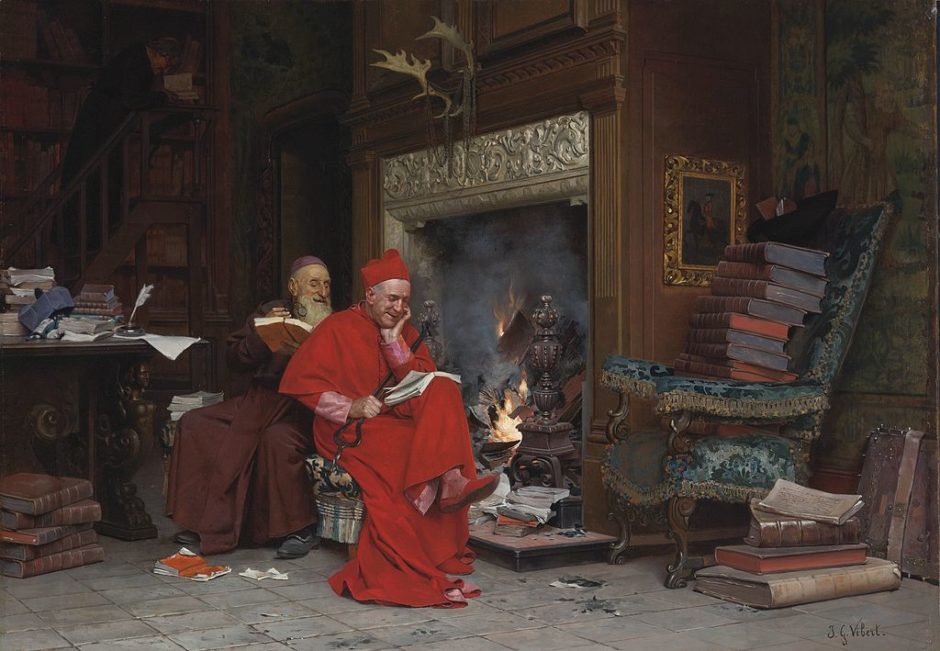
 While preparing my post about Faith Magazine, I saw an article about Ronald Knox.