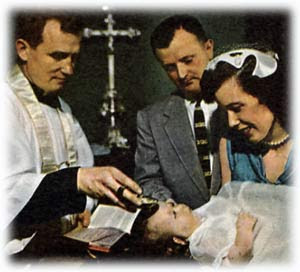
QUAERITUR: Baptism outside one’s parish

From a priest:

After 17 years as a priest I’m surprised I can’t track down an answer to this, but even our diocesan faculties booklet is unclear.

A priest of our diocese baptized an infant whose parents are registered in my parish. The baptism was in the parish where he serves in residence. I did not give permission for the baptism, and now I’m wondering if permission is even required. I looked up all the canons cited in our faculties booklet (esp. c. 530, p. 1), but none of them specifically say that permission is required in this case. Is the permission just a courtesy to a pastor, or is there a canon hidden somewhere that specifically requires a pastor’s permission?

Canon 530.1 establishes that baptisms are “especially entrusted” to the pastor (parish priest) of the person.  This is a relaxation of the former law which reserved baptism to the pastor (and others lawfully delegated).

These days there’s no need for any dispensation or real permission for a bishop, priest or deacon (who, in accord with can. 861, are ordinary ministers of the sacrament) to baptize someone who is not his subject, as long as the baptism takes place in the territory with which he has been entrusted.

Thus, if he wanted to baptize outside of his territory (emergency situations excepted, of course), even if the one being baptized were one of his subjects, then he would need permission from the local pastor.

That said, it is polite protocol for the parents to inform their pastor that they are taking their child to be baptized by another priest. They don’t need their pastor’s permission to do so, but, since baptism is a task “especially entrusted” to him as their parish priest, and since he is the one charged with caring for their and their whole family’s spiritual welfare, it is the polite thing to do.

One point, however, set off an alarm…. albeit a minor alarm.

You write of the parents who are “registered in” your parish.

Unless there is particular law, registration in a parish has no canonical weight.

One’s parish is determined by one’s domicile (unless there is a personal parish, such as an ethnic parish – which is another matter).

Even if the parents in question are “registered” at St. Ethelburga’s, if they reside within the territory of Our Lady Tower of Ivory parish, then their canonical parish is Our Lady, Tower of Ivory.  The pastor of Our Lady Tower of Ivory is the one to whom the baptism of their children has been “especially entrusted”, not the pastor of St. Ethelburga’s.

Posted in "How To..." - Practical Notes, Liturgy Science Theatre 3000 | Tagged , , , ,
33 Comments

QUAERITUR: Celiac, Communion and the Extraordinary Form

From a reader:

I have just been diagnosed with Celiac Disease-gluten/wheat intolerance. What does a person do at Holy Communion in the EF? I normally attend the reverent NO Masses in my area, but when I attend my Third Order Chapter meetings, the Mass is a gorgeous hybrid of both forms of the Mass. The parishioners and Chapter members receive at an altar rail. The Precious Blood is not offered. If the EF were to make a strong come back in the future, what would happen to Catholics with gluten problems? This is very hard for me, as I have a deep devotion to Our Lord in the Holy Eucharist, and I’ve been a scheduled adorer at our parish for 10 years. I’m 53 now, and while I’m trusting in God, I’ve been receiving in tears. May I ask for prayers for my return to health? Thank you Father, and fellow readers for your patience.

This is not a problem in the EF. Talk to the priest, explain the situation and ask to receive by the Precious Blood. In the Ordinary Form or the Extraordinary Form it should be possible to help you.

That “hybrid” of the Ordinary and Extraordinary Form is not permitted. The two Forms are not to be mixed.

Posted in "How To..." - Practical Notes, ASK FATHER Question Box, Liturgy Science Theatre 3000, SUMMORUM PONTIFICUM | Tagged , ,
61 Comments

SP3RN

Sometime ago I expressed interest in obtaining a Ham (amateur) Radio license.

Did you know that St. Maximilian Kolbe is the only saint to have held an amateur radio license?

His call: SP3RN

Okay… he is a martyr saint.  But think of what he might have done as a ham had he had WDTPRS mugs of …


Posted in Ham Radio, Just Too Cool, What Fr. Z is up to | Tagged , ,
16 Comments

Catholic Herald: The Church should make life harder for Catholics

Here is something for us all to think about as we approach the Year of Faith.

From the UK’s best Catholic weekly, The Catholic Herald, comes this good reflection.  It is on their regular site, but can be found in the print and online digital edition.

The Church should make life harder for Catholics

by Michael Jennings

The Church in England is losing the fight against secularism. With the opponents of the Church gaining the upper hand we have to ask if Catholics are well- trained and strong enough to fight back. We are outnumbered and, at best, considered superstitious and irrelevant – at worst, a danger to society. In such circumstances there needs to be a stiffening of commitment if more and more of us are not to fall victim to the beguiling temptations of the secular world, where comfort and having a good time are necessarily important since there is no other life to look forward to. Perhaps we should employ St Paul as our personal trainer and model ourselves on him. He says he is intent on winning: “That is how I fight, not beating the air. I treat my body hard and make it obey me.” His message: toughen up, take up your cross daily and rejoice in sharing Christ’s sufferings.

Now, while Catholics in other parts of the world are suffering and dying for their faith, we in this country are permitted to abandon things that were easy for things easier still. The Eucharistic fast, for example, once began at midnight, then it was reduced to three hours. Now, in a Mass which goes much beyond the usual time, it would be possible to be munching sandwiches during the penitential act and still not break the fast. Fasting itself seems to be regarded as a gruesome medieval practice best replaced by good works, whereas it is a preparation for doing good works better.

More mollycoddling is in evidence with the recent transferring of various feast days to Sunday. This has saved Catholics a trip to church or otherwise having another thing to own up to in Confession – that’s if they happen to be part of the majority who don’t do Holy Days of Obligation. In my experience, within the confessional penances are mild. Without sending off penitents barefoot to Rome perhaps they should be beefed up just to emphasise that sinning is serious. Surely they should, on occasions, elicit a yelp or two.

And does not the Church go easy on our consciences? We live in society where most of us have a standard of living that is using up most of the world’s resources. It would not be possible for all the world’s inhabitants to enjoy the same facilities and luxuries as we do. Most of us own a car. Their production in such vast numbers is one of the most efficient means yet devised to use up irreplaceable resources and, as another built-in feature, create considerable pollution. You would think sin was lurking somewhere in this state of affairs.

We need to be tough enough to be told that we are sinful without being devastated by the news. No doubt there would be those who would storm off in a huff muttering: “This language is intolerable,” as they did when Christ said that eating his flesh and drinking his blood was the only way to obtain eternal life. He did not seek to assuage the hurt feelings of those heading for the exit by going soft on the message.

Yet another ease-making occurrence is the wholesale use of the vernacular in the Mass, [Do I hear an “Amen!”?] even though this was not envisaged by Vatican II. At one level it made understanding easier [But… did it?  We weren’t all those years, getting from the texts what the prayers really said. Were we really understanding?] but did it at the expense of a unifying language, a language that didn’t need updating every 10 years and which was special to the faith. And this matter of understanding can have insidious adverse consequences. The battle against secularism is not going to be won by hurling facts back at Richard Dawkins. Life is a mystery and perhaps we should dwell more on what we don’t know, rather than being proud of the little we do. After all, we can never know how much we don’t know.

Furthermore, English is our weekday language. It’s the one we use for swearing, arguing and lying. It might be a good idea to have Latin as our Sunday best. Then, when we came home after Mass, we might find those work-a-day words washed and ironed, all ready for the next week.

Another change which occurred after Vatican II was the practice of standing to receive Communion. This made things easier at the expense of profound symbolism – kneeling being a sign denoting weakness, submission and obedience. [Not to mention awe at transcendence.] To quote St Paul again: “It is when I am weak then I am strong.” True, we stand as a sign of respect but standing on your own two feet and standing up for oneself are phrases to do with self-sufficiency. Surely when coming face to face with God, as one does at Communion, kneeling is the better response.

The point being made in all of this is that by removing difficulties the will is weakened and therefore the associated virtues, such as perseverance, bravery, restraint, patience and chastity. These virtues are vital armaments in the battle against secularism. Nowhere is strength of will more needed than in the field of sexual morality. It is not more knowledge so as to be in a position to make “informed choices” that will help. To hold fast to the teachings of the Church in this area it is strength of will which is needed. Restraint, patience and, often, bravery are the weapons to use.

If Catholics can’t go without food for a few hours, or go to church during the week once in a while, or get on their knees to receive Communion, then we are edging towards becoming indistinguishable from those who only have this world and each other to rely on. Christian life is not supposed to be a stroll in the park but the carrying of a cross, the climbing of a mountain. To the outsider, a Catholic’s iron commitment to the Mass, the strength to defer pleasure, the ability to suffer cheerfully and the courage to defend Church teaching are things which impress and are important factors in bringing about conversions.

The kind of dedication exhibited by the Olympic athletes certainly draws many others into that orbit and, as St Paul says: “Athletes exercise self-control in all things; they do it to receive a perishable wreath, but we an imperishable one.” In any case, the things being suggested here hardly amount to having to train day after day while the limbs scream for mercy. I_am not even suggesting the total prohibition of all cakes and ale. Still, as St Paul didn’t say (although he obviously knew it all too well), great journeys start with a single step.

Michael Jennings is a former cartographer and teacher, now retired. He is married with two grown-up children. He became a Catholic in 1980 after dithering for 20 years.

And what could those steps be?  Any one of his suggestions would be a good start.

  • Stop Communion in the hand
  • Kneel for Communion
  • Reintroduce ad orientem worship
  • Reintroduce Latin and Gregorian chant and polyphony
  • Reintroduce male only service at the altar
  • Reintroduce the 3 hour Eucharistic fast
  • Fix down the timing of Holy Days of Obligation
  • Stress the need for the Sacrament of Penance
  • Stress the culture of the “Sunday Best” for Sunday Mass attendance
  • Increase Exposition of the Blessed Sacrament and other traditional devotions

It may be that this has to start with lay people CLAMORING for them, priests to teach them, and bishops to respond.  The ground up approach could be effective.

Posted in "How To..." - Practical Notes, Brick by Brick, GO TO CONFESSION, New Evangelization, Our Catholic Identity, The Drill, The future and our choices, Year of Faith | Tagged , , , , , , , ,
63 Comments

Catholic and Faithful – American and Free

Let us not forget about our necessary battle for our religious liberty.  Let us not forget the HHS mandate.

Catholics must declare themselves in the public square, especially in the context our struggle with the anti-Catholic Obama Administration for our freedom to act like Catholics (cf 1st Amendment).

Thus, I remind you of this car magnet and/or sticker:

It has turned out well.

For this design click HERE.

20120627-163646.jpg

Posted in Brick by Brick, Our Catholic Identity | Tagged , , ,
Comments Off on Catholic and Faithful – American and Free

Rep. Paul Ryan and Ayn Rand

Lefty-catholics and Fishwrap readers are having a spittle-flecked nutty over Rep. Paul Ryan.  Fishwrap today compared Ryan to Dr. Kevorkian.

You will no doubt be hearing from some of them that Ryan is a “Randian” and “Objectivist”, that is, an adherent to some of the ideas of Ayn Rand.  That would be a lie, of course, though that won’t bother catholic supporters of The First Gay President as they trample each other to slash at Ryan as a candidate and as a person.

Last April Leroy Huizenga had a good piece which clarified Ryan on Rand.

Read this, file it away, and use it when necessary.

Thursday, April 26, 2012, 9:08 AM

It’s a common misconception on the left and on the right that Congressman Paul Ryan, architect of the GOP’s de facto budget and entry on every pundit’s vice-presidential short list, is a devotee of Ayn Rand and her philosophy of “objectivism.”

Were this true, it would be deeply unsettling, given that Rand’s philosophy (such as it is) is desperately wicked. As Whittaker Chambers wrote in National Review in 1957, “From almost any page of [Rand’s novel] Atlas Shrugged, a voice can be heard, from painful necessity, commanding: ‘To a gas chamber — go!’” Rand’s ultimate hatred of the human race should have no place in the governance of the nation.

But it’s not true that Ryan follows Rand. National Review Online reports on a conversation with Rep. Paul Ryan, in which he disowns her (having never really owned her) and speaks of his devotion to Thomas Aquinas:

“I, like millions of young people in America, read Rand’s novels when I was young. I enjoyed them,” Ryan says. “They spurred an interest in economics, in the Chicago School and Milton Friedman,” a subject he eventually studied as an undergraduate at Miami University in Ohio. “But it’s a big stretch to suggest that a person is therefore an Objectivist.”

“I reject her philosophy,” Ryan says firmly. “It’s an atheist philosophy. It reduces human interactions down to mere contracts and it is antithetical to my worldview. If somebody is going to try to paste a person’s view on epistemology to me, then give me Thomas Aquinas,” who believed that man needs divine help in the pursuit of knowledge. “Don’t give me Ayn Rand,” he says.

The whole piece is worth reading. It’s good to know that regardless of whether one approves of Rep. Ryan’s budget or politics, there are yet a few in Washington trying to wrestle with the issues of the day appropriating substantive philosophies.

Also, check out Fr. Dwight Longenecker’s piece about Ryan HERE.

Posted in "How To..." - Practical Notes, The Drill, The future and our choices | Tagged , , , , ,
37 Comments

REMINDER of Seasonal Blessing: Assumption – Blessing of Herbs (and HOLY DAY OF OBLIGATION)

Just a quick note to remind you that in the Rituale Romanum there is for the feast of the Assumption a special blessing of herbs and flowers.

Click HERE for more.

And the Assumption is, this year at least, a Holy Day of Obligation.

Blessing of Herbs and Flowers for Assumption

View Results

Posted in "How To..." - Practical Notes, Linking Back, Liturgy Science Theatre 3000, Our Catholic Identity | Tagged , , , ,
4 Comments

A bishop explicitly charges all his seminarians to learn the Extraordinary Form. Wherein Fr. Z rants.

For your Brick by Brick file.

In another entry I answered a question from a lay person who desired to pray for a priest as he learns the Extraordinary Form of Holy Mass at the request of his bishop. It occurs to me that this is a good intention, since the Devil hates priests and the older form of Mass and the sacraments and will work with the assiduous malevolence of fallen angels to undermine, to block, to harm priests who are thus tasked or attached.

However, learning the older forms is necessary. Expanded the use of the Extraordinary Form is clearly something that our Holy Father desires for priests to do as part of a larger project, call it a “Marshall Plan“, to rebuild our devastated Church’s identity in continuity with our magnificent heritage through the worship which is God’s due. No other good projects we can undertake as Catholics will get true traction if our worship of God is not sound.

To this end, I hereby share a photo of His Excellency Most Reverend Robert C. Morlino, Bishop of Madision, who during his recent week-long pow-wow with all the seminarians of the diocese, celebrated Holy Mass for them in the Extraordinary Form.

First of all, before some grumbler out there (whom I may eject from the blog) grips censoriously that the altar cloth does not reach to the ground (there are some trads who constantly make the perfect the enemy of the good) I want to relate what Bp. Morlino told his seminarians.

Bp. Morlino told the men – 32 in number! – that it was his expectation that all of them learn how to say Mass in the Extraordinary Form before they are ordained.

Morlino did not say that they would be required to use it all the time, but that they must know how to use it.  If seminaries are not offering the opportunity to learn the older form (which they ought to be, by the way), they could go to workshops or find priests who could help them to learn it.  Bottom line: they are to learn the Extraordinary Form.

I think this was a remarkable.

How many bishops, after all, are saying this openly to their seminarians?

It was also, frankly, a paternally charitable thing to tell the seminarians.

First, if there were any doubts about their bishop’s attitude toward his seminarians and traditional forms, these doubts were thereby removed.  They need never fear the bishop or worry about what would happen to them when he heard that they were going to TLM’s here or there, learning the rubrics, serving Masses.  They need not on this account fear the rector of the seminary they attend, since they are following the expressed desire of the bishop.  Moreover, Universae Ecclesiae (the Holy See’s commentary on Summorum Pontificum) gently asserts that seminarians are to know the Extraordinary Form.

Second, knowledge of and use of the older form of Mass teaches men  -seminarians and priests alike – something about the priest and the priesthood which the Novus Ordo doesn’t really do on its own. The older form stresses the sacrificial and priestly nature of the priest’s actions and words during Mass as well as the priest’s own deep unworthiness and complete dependence on God’s mercy and grace.

Third, no priest of the Roman Rite ought to rest easy until he knows also the older form.  Ignorance of the older form means ignorance of his own rite.  Furthermore, when it comes to their ordination, someone must stand up and attest to the ordaining bishop that the men have been properly formed.  How can he honestly say they are properly formed if they have been left ignorant by their seminaries of their rite?  The seminarians of Madison, by learning the Extraordinary Form, can always be at ease on this point.

At last, the bishop brought them into a larger vision for the “new evangelization”, as it were.  I prefer the image of the “Marshall Plan”, by which the USA rebuilt devastated post-war Europe so as to foster good trade and to build a bulwark against encroaching Communism.  In our day and in the Church, Benedict XVI is helping to rebuild our Catholic identity in continuity across borders and centuries as well as bolster a bulwark against the dictatorship of relativism.  By giving these men their task to learn the older form, Bp. Morlino also brought them as actors into our Holy Father’s project.  It seems to me that, as the men ready themselves to go back to their respective seminaries, this is a good start for their participation in the Year of Faith.

WDTPRS kudos to Bp. Morlino and the seminarians of the Diocese of Madison.

UPDATE:

You can support Bishop Morlino’s effort to help the Extraordinary Form grown and help with the formation of seminarians.  Send an online donation to support the diocese’s seminarians. The diocese has 35 seminarians right now, if I am not mistaken.  They have foundation that budget for only 2 per year, which means that they are way over their budget to pay for the formation of the seminarians.

I have met some of these men.  They are great.  Also, Bishop Morlino has told them -and I heard this with my own ears – that he expects all of them to know the Extraordinary Form before he ordains them!  I wrote about that HERE.

The diocesan website has a donation page with a drop down menu.  Choose the St. Raphael Fund.

Posted in "How To..." - Practical Notes, Benedict XVI, Brick by Brick, Fr. Z KUDOS, Just Too Cool, Liturgy Science Theatre 3000, New Evangelization, Our Catholic Identity, Priests and Priesthood, SUMMORUM PONTIFICUM, The Drill, The future and our choices, Universae Ecclesiae, Wherein Fr. Z Rants, Year of Faith | Tagged , , , , , , ,
37 Comments

QUAERITUR: Prayer for a priest as he is tasked to learn the TLM

Please use the sharing buttons!  Thanks!

From a reader:

Fr. Z-

During his homily this weekend, my pastor stated that our bishop asked him to learn to say the TLM so that he can say mass for a group of Carmelite nuns who recently moved to the area.

I would like to pray for my pastor as he learns to say the TLM . Do you know of a prayer the purpose of which is to ask for assistance for a priest learning to say the TLM?

P.S. – I asked my pastor (paraphrasing) if he has seen any “gravitational pull” effects from learning to say the TLM. My pastor (60+ years old, socially liberal but liturgically conservative) said he had.

Of course he has. Time and time again I hear that learning the older form of Holy Mass changes the priest and the way he says all Masses. That will have a knock-on effect with congregations. Brick by brick.

A prayer for a priest as he learns the Extraordinary Form.

First, try this:
 

Veni, Sancte Spiritus, reple tuorum corda fidelium, et tui amoris in eis ignem accende. Come, Holy Spirit, fill the hearts of Thy faithful and kindle in them the fire of Thy love.
℣. Emitte Spiritum tuum et creabuntur;
℟. Et renovabis faciem terrae.
℣. Send forth Thy Spirit and they shall be created
℟. And Thou shalt renew the face of the earth.
Oremus:
Deus, qui corda fidelium Sancti Spiritus illustratione docuisti: da nobis in eodem Spiritu recta sapere, et de eius semper consolatione gaudere. Per Christum Dominum nostrum. Amen.
Let us pray:
O God, Who taught the hearts of the faithful by the light of the Holy Spirit, grant that, by the gift of the same Spirit, we may be always truly wise, and ever rejoice in His consolation. Through Christ our Lord. Amen.

Here is a prayer that I say after every Mass I celebrate for the intention of a short list of bishops. It is one of the most direct and effective prayers I know. Ask the Queen of the Clergy to help the priest in his efforts.

Memorare, O piissima Virgo Maria, non esse auditum a saeculo, quemquam ad tua currentem praesidia, tua implorantem auxilia, tua petentem suffragia, esse derelictum. Ego tali animatus confidentia, ad te, Virgo Virginum, Mater, curro, ad te venio, coram te gemens peccator assisto. Noli, Mater Verbi, verba mea despicere; sed audi propitia et exaudi. Amen. Remember, O most gracious Virgin Mary, that never was it known that anyone who fled to thy protection, implored thy help, or sought thy intercession was left unaided. Inspired with this confidence, I fly to thee, O Virgin of virgins, my Mother; to thee do I come; before thee I stand, sinful and sorrowful. O Mother of the Word Incarnate, despise not my petitions, but in thy mercy hear and answer me. Amen.

And because the Devil and the powers of Hell and their willing agents and dupes on this earth hate priests, and hate the older form of Mass with demonic malice, I would also add this one, for the priest, once a day at least, or as often as he pops into your mind.

Sancte, Michael Archangele, defende nos in proelio, contra nequitiam et insidias diaboli esto praesidium. Imperet illi Deus, supplices deprecamur: tuque, Princeps militiae caelestis, Satanam aliosque spiritus malignos, qui ad perditionem animarum pervagantur in mundo, divina virtute, in infernum detrude. Amen. Saint Michael the Archangel, defend us in battle; be our defense against the wickedness and snares of the devil. May God rebuke him, we humbly pray. And do thou, O prince of the heavenly host, by the power of God thrust into hell Satan and all the evil spirits who prowl about the world for the ruin of souls. Amen.

Another thing you can do to help Father is to get a whole bunch of people praying for him. Do that to.

Of course, bishops should be asking ALL THE PRIESTS of the diocese to learn the older form of Holy Mass. ALL OF THEM. This is, after all, our Rite.

Posted in Benedict XVI, Fr. Z KUDOS, Just Too Cool, Liturgy Science Theatre 3000, New Evangelization, Our Catholic Identity, Priests and Priesthood, SUMMORUM PONTIFICUM, The future and our choices | Tagged , , , ,
13 Comments

O’Reilly interview with Sr. Simone “Nuns On The Bus” Campbell

After Sr. Simone Campbell degrading appearance with the anti-Catholic Jon Stewart show – such gravitas! – she has gone on with Bill O’Reilly of FNC.

He doesn’t let her get away with everything.

I believe Campbell wants to help the poor, but she is wrong about how to help them.  Also, when I hear her speak, I never come away with the sense of charity which Benedict XVI described in Deus caritas est.

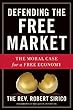
A good refutation of her washed up notions about the economy on O’Reilly would be Fr. Robert Sirico’s recent book.  My review HERE.

Fr. Robert Sirico of Acton Institute has produced a new book entitled Defending the Free Market: The Moral Case for a Free Economy.

Hardback HERE, Kindle HERE. (UK HERE). And if you don’t have a Kindle yet, consider getting one.  I love mine.

One of Fr. Sirico’s great strengths is his ability to write with clarity and concision which enables me, decidedly not an economist, to follow easily what he is talking about.

Speaking of the free market, refresh your coffee supply now with Mystic Monk Coffee!

Posted in Benedict XVI, Magisterium of Nuns, Women Religious | Tagged , , , , , , ,
9 Comments