WaPo on Planned Parenthood and ALCU suing in Wisconsin

Pay attention to the language in “news” reports from the MSM.  There is often a rhetorical battle being waged at the level of word choices.  Background on the Wisconsin story HERE.

From WaPo:

Planned Parenthood, ACLU sue Wisconsin over abortion law

Planned Parenthood Federation of America and the American Civil Liberties Union are suing Wisconsin to try to block a new law that would require abortion providers to have admitting privileges at local hospitals. [Aside… big business abortion wants to keep their profits high.]

The law, set to take effect Monday, was “rushed” through the legislative process last month, [That’s not a journalist’s bias. Noooo….] the groups said in a complaint filed Friday in federal court in Madison, Wis. The measure would force two of the state’s four abortion providers to shut down, according to the complaint. A fifth clinic is set to close for unrelated reasons, according to the groups.

[…]

The Wisconsin law would force clinics in Milwaukee and Appleton to close and cause Planned Parenthood to cut staff and services at another clinic in Milwaukee, the state’s most populous city. The changes would make the procedure unavailable after 19 weeks of pregnancy and leave much of the state without any abortion providers, according to the complaint.

[…]

See what they are doing?

So, aside from the news item… the ACLU and Planned Parenthood, just one pair of interchangeable horns available to The Hornéd One on a daily basis… we see how language is used to sway opinion about the new.

UPDATE:

If you want to know what is going on between the sheets in the Planned Parenthood/ACLU menage with Ol’Scratch, just listen to what the hired protesters are chanting at the Texas capitol last week when the abortion legislation was debated.  You can clearly hear at about 5:15 in the video onward, the chant “Hail, Satan!”

http://www.youtube.com/watch?v=1OgfAAIpHns&feature=player_embedded


Posted in "How To..." - Practical Notes, Emanations from Penumbras, The Drill | Tagged , , , , ,
14 Comments

TV station to broadcast Muslim call to prayer

From WND:

An announcement by a television station in the United Kingdom that it will broadcast the Muslim call to prayer daily during the month-long religious observation called Ramadan has sparked concerns by those who point out that the nation’s constitution recognizes God the Father of the Lord Jesus Christ and “in any other age” the action “would have been regarded as treason.”

The announcement comes from Channel 4, which, according to spokesman Ralph Lee, is responding to factors that are pressing in society.

[…]

I wonder if the broadcasting of the adh?n will come before or after their broadcasting of the Angelus. What do you think would be better? Before? After?

Here’s the deal.

Ramadan is turning into a big deal because a) it is chic to prefer Muslims to Christians these days because we all know that Christians are hypocritical homophobic losers and Muslims are… well… not Christians (leave aside the head-sawing episodes and chants of “DEATH” to just about everyone) and b) Christians and especially Catholics have abandoned their Catholic/Christian identity in the public square.  Nature abhors a vacuum.

Just looking at the “fasting” dimension of this: In the UK the bishops of England and Wales recently made abstinence on all Fridays binding for Catholics.

We could benefit from some commentary by our friends in Ol’ Blighty about how that is going.

In the meantime, Sts. Nunilo and Alodia, pray for us.

UPDATE:

Remember this poll?

Should the US Bishops have us return to obligatory "meatless Fridays" during the whole year and not just during Lent?

View Results

Posted in I'm just askin'..., Linking Back, New Evangelization, Our Catholic Identity, The Drill, The future and our choices, The Last Acceptable Prejudice | Tagged , , , , , , , ,
23 Comments

Your Sunday Sermon Notes

Was there a good point from the Sunday sermon you heard?

Let us know.

Posted in SESSIUNCULA |
12 Comments

Reading Benedict Through Francis: Exploring ‘Lumen fidei 13’

Pope Benedict/Francis’ new encyclical, Lumen fidei (download PDF HERE), has some rich paragraphs.

One in particular rang a deep bell for me.

I think Benedict wove in an argument in favor of a particular style of liturgical worship.  See what you think.  We need the previous paragraph to help with context.

(My emphases and comments):

12. The history of the people of Israel in the Book of Exodus follows in the wake of Abraham’s faith. Faith once again is born of a primordial gift: Israel trusts in God, who promises to set his people free from their misery. Faith becomes a summons to a lengthy journey leading to worship of the Lord on Sinai and the inheritance of a promised land. [NB: one of the goals of the journey is worship of the Lord. Openness to light, faith, as openness to a journey is a theme that runs through the whole encyclical.] God’s love is seen to be like that of a father who carries his child along the way (cf. Dt 1:31). Israel’s confession of faith takes shape as an account of God’s deeds in setting his people free and acting as their guide (cf. Dt 26:5-11), an account passed down from one generation to the next. God’s light shines for Israel through the remembrance of the Lord’s mighty deeds, recalled and celebrated in worship, and passed down from parents to children. [remembrance… worship… tradition… ] Here we see how the light of faith is linked to concrete life-stories, to the grateful remembrance of God’s mighty deeds and the progressive fulfilment of his promises. Gothic architecture gave clear expression to this: in the great cathedrals light comes down from heaven by passing through windows depicting the history of salvation. God’s light comes to us through the account of his self-revelation, and thus becomes capable of illuminating our passage through time by recalling his gifts and demonstrating how he fulfils his promises.

13. The history of Israel also shows us the temptation of unbelief to which the people yielded more than once. [Like our own times.] Here the opposite of faith is shown to be idolatry. While Moses is speaking to God on Sinai, [NB] the people cannot bear the mystery of God’s hiddenness, they cannot endure the time of waiting to see his face. [God does not make it too easy.  Moreover, we must learn to seek an encounter with God in that which is hidden from us as well.] Faith by its very nature demands renouncing the immediate possession which sight would appear to offer; [Not all “seeing is believing”! Sometimes “seeing is distraction” and “seeing is not believing”.] it is an invitation to turn to the source of the light, [“turn”] while respecting the mystery of a countenance [a “face”] which will unveil itself personally in its own good time. Martin Buber once cited a definition of idolatry proposed by the rabbi of Kock: idolatry is “when a face addresses a face which is not a face“. [Think of Joseph Ratzinger’s explanation of congregations and priests who form self-enclosed circles when they peer at each other across altars.  They look at faces which aren’t The Face.] In place of faith in God, it seems better to worship an idol, into whose face we can look directly and whose origin we know, because it is the work of our own hands. [“work of human hands”, in fact…] Before an idol, there is no risk that we will be called to abandon our security, for idols “have mouths, but they cannot speak” (Ps 115:5). Idols exist, we begin to see, as a pretext for setting ourselves at the centre of reality and worshiping the work of our own hands. [Self-enclosed circles, rather than the outward gaze which seeks mystery.] Once man has lost the fundamental orientation which unifies his existence, he breaks down into the multiplicity of his desires; in refusing to await the time of promise, his life-story disintegrates into a myriad of unconnected instants. [In a sense, once our fundamental orientation was lost in liturgical worship, our worship also broke into myriad difficult to connect ceremonies of inward looking communities.] Idolatry, then, is always polytheism, an aimless passing from one lord to another. Idolatry does not offer a journey but rather a plethora of paths leading nowhere and forming a vast labyrinth. Those who choose not to put their trust in God must hear the din of countless idols crying out: “Put your trust in me!” Faith, tied as it is to conversion, is the opposite of idolatry; it breaks with idols to turn to the living God in a personal encounter. Believing means entrusting oneself to a merciful love which always accepts and pardons, which sustains and directs our lives, and which shows its power by its ability to make straight the crooked lines of our history. Faith consists in the willingness to let ourselves be constantly transformed and renewed by God’s call. Herein lies the paradox: by constantly turning towards the Lord, [This phrase is super-charged in the last few years, a fact well know to Benedict, who wrote undoubtedly this section.] we discover a sure path which liberates us from the dissolution imposed upon us by idols.

[By itself, this is enough.  Let’s see if Benedict gives us more in this line of thought… which I think is a carefully crafted reference to a certain kind of liturgical worship…]

14. In the faith of Israel we also encounter the figure of Moses, the mediator. The people may not see the face of God; it is Moses who speaks to YHWH on the mountain and then tells the others of the Lord’s will. With this presence of a mediator in its midst, Israel learns to journey together in unity. The individual’s act of faith finds its place within a community, within the common “we” of the people who, in faith, are like a single person — “my first-born son”, as God would describe all of Israel (cf. Ex 4:22). Here mediation is not an obstacle, but an opening: [Instead of a closing.]

[…]

Read the rest on your own.

This is clearly a passage written by Benedict. It touches on themes Ratzinger explored in, for example, The Spirit of the Liturgy. He has drilled into the golden calf before.

In any event, that is what I think is going on in this section.  Benedict and oddly, through Benedict, Francis, has given us a beautiful argument for a certain orientation for Holy Mass.

This time we are:

Reading Benedict Through Francis!

Posted in Benedict XVI, Francis, Liturgy Science Theatre 3000, Reading Francis Through Benedict, SUMMORUM PONTIFICUM, The Drill, What are they REALLY saying? | Tagged , , , , , , ,
13 Comments

PODCAzT 135: Encyclical Letter “Lumen fidei” – AUDIO files of entire encyclical

In my desire to get my ears and mind around the new encyclical, Lumen fidei, of Benedict XVI and Pope Francis, to sort the “voices” and get to know the trajectory of its arguments, I decided to read it aloud.

Wanna hear?  Some prefer to listen rather than to read and I know that quite a few of you use my PODCAzTs when driving, etc.

In reading, I did not read the footnotes, but I did include the intra-textual references, such as Scripture verses.  I read the abbreviation “cf.” as “confer”.  I did not include the brief sub-headings within each chapter.  However, I include the paragraph numbers so that you can quickly find your place in the text.

Please forgive errors. I read pretty much straight through and I had a few interruptions.  Furthermore, at a certain point my head was turning to mush!

I also found a couple typos in the text!

Also, since moving, I don’t have a good physical recording location, with decent acoustics and my table/desk situation is a complete disaster, so it is hard to get the microphone well-situated.  All those things aside, however, I hope these files will be useful.

I have a file each for the introductory section and the four chapters.

There are times when the “voice” is entirely that of Benedict.  At other times I think I can hear a new voice speaking, that of Francis, especially when touching on certain themes.  Can you?

UPDATE:

I had a note from Libreria Editrice Vaticana asking me to remind you that Liberira Editrice Vaticana has the copyright to the text of Lumen fidei and that you may not reproduce or sell Lumen fidei.  Their exact text to me:

La invitiamo per questa volta, ad inserire come referenza il copyright Libreria Editrice Vaticana e che la riproduzione e la vendita sono vietate.

So, don’t sell the text to anyone.

Posted in Benedict XVI, Francis, Our Catholic Identity, PODCAzT, The Drill, Vatican II | Tagged , , ,
21 Comments

WISCONSIN: Bill for Ultrasound Before Abortion PASSED and SIGNED

Baby by baby.

Talk about a new way of thinking about “emanations from penumbras”!

From LifeSite:

Wisconsin Gov. Scott Walker Signs Bill for Ultrasound Before Abortion
by Steven Ertelt

Today, Governor Scott Walker signed Senate Bill 206 (Sonya’s Law) into law. This important new law requires that women seeking abortions in Wisconsin be given the opportunity to see their unborn children through ultrasound.

Just hours before Walker signed the law, the Planned Parenthood abortion business announced it would file a lawsuit seeking to stop women from seeing these ultrasounds.

[…]

Know the truth and the truth will cut into your profits.

Notice that this is about giving an “opportunity”.  It still terrifies big-business abortion.

I wonder where Sr. Carol Keehan and the Catholic Health Ass. stands on this Wisconsin bill.

What does Sr. Simone Campbell have to say about it?  Surely someone has a mobile phone on that bus.

Do The Zittelle of the LCWR have an official reaction?

Posted in Brick by Brick, Emanations from Penumbras, Liberals, Our Catholic Identity | Tagged , , , , , , , , , ,
9 Comments

Lumen fidei – New Encyclical from Pope Francis

I am reading Lumen fidei, the new, first encyclical from Pope Francis.

From what I can tell, it is nearly entirely Benedict.

If, as Pope, you have to have a ghost writer, why not another Pope?  Talk about “Reading Francis through Benedict”!

Nay rather,

“Reading Benedict Through Francis”!

I will write more about this later, but from the onset I was happy to see that it is “of the Supreme Pontiff Francis” and not from “Francis, Bishop of Rome”.

Posted in Benedict XVI, Francis, Reading Francis Through Benedict |
24 Comments

Wherein Fr. Z explains what is really going on with the canonizations of John XXIII and John Paul II

Today, in addition to Francis’ dedication of the Vatican City State to St. Michael (and does that place need defense of the attacks of Hell!) and in addition to the release of Benedict’s final encyclical, which is Francis’ first encyclical (thus perhaps shifting “Reading Francis through Benedict” to “Reading Benedict through Francis”), His Holiness confirmed the decree of the Congregation for Causes of Saints concerning a miracle worked through the intercession of Bl. John Paul II, thus clearing the way for his canonization.

At the same time, His Holiness of our Lord decided that he would go ahead with the canonization of Bl. John XXIII even though there is no additional authenticated miracle.

Let’s be clear: Pope’s can do that.

John Paul II strayed from the usual time line in the case of St. Juan Diego Cuauhtlatoatzin, in 2002. There was eventually a miracle attributed to St. Juan Diego, one of the more amazing miraculous healings I have read about. I digress.

Here is what I think is really going on with these canonizations.

The decision to canonize Blesseds John XXIII and John Paul II at the same time, at the time when we are observing the 50th anniversary of the Second Vatican Council, is a kind of “canonization” of the Second Vatican Council.

So, why does John Paul II have to be involved with that? Why is not Bl. John XXIII enough to do that?

Some will suggest that John XXIII appeals more to liberals while John Paul II appeals more to conservatives. Putting them together is an attempt to bridge the divide. I don’t think so.  This isn’t quite like the double beatification of  Bl. John XXIII with Bl. Pius IX, a move which probably sought to soften the Pian aspect.

This canonization has more to do with putting yet another stamp of approval on the Second Vatican Council.  It is here to stay, if you were in doubt.

But wait, there’s more.

The canonizations have even more to do identifying the proper lens or hermeneutic by which we are to interpret the Council: the pontificate and the magisterium of St. Pope John Paul II.

This move is intended to identify John Paul II as our helper in interpreting difficult and controversial aspects of the Council.

There are controversial texts in the documents of the Second Vatican Council. The whole of the Council itself is controversial. Enter John Paul II. He was a bishop at the Council who helped write important passages in Gaudium et spes. During his heroically long pontificate John Paul, in his magisterium, commented at some point on virtually every controversial or disputed point in the Council documents and on the event of the Council itself.  He may not have solved, settled, definitively pronounced, on every controversial issue, but he offers commentary and insight on them.

Try to think of some controversial aspect of the Council or it’s documents that John Paul II did not write about or preach about.

I think what Francis is saying by this is that, if you have a problem with any aspect of the Council, turn to the papal teaching of St. John Paul II for clarifications and help in interpretation.

Some who don’t like the magisterium of Pope John Paul II will say, “No, Francis is pointing their personal virtues.”  That’s because by the canonization, John Paul’s magisterium is getting a boost.  Ask yourself which documents of future St. John Paul II the LCWR (aka The Zittelle) rush to cite.  Do they want to see canonized the one who issued Ordinatio sacerdotalis?  No.  In effect, the bodies of magisterial teaching of these two Popes are, by the canonizations, getting a serious boost.

I don’t know what this means for reading Vatican II in continuity with Vatican I, with Trent, with Lateran V, with … with… with….  I know that I won’t stop reading Vatican II without those other Councils, back to Nicea and Jerusalem.

Nevertheless, I think Francis steering us to John Paul II as an additional interpretive lens, for a proper hermeneutic of reform.

Agree with Francis’ move or not, I think this is what the Pope is doing.  Francis is firmly in the Benedictine, Ioanno-Pauline line. Furthermore, I think Benedict would have done the same thing!  If anyone doubts this, she should reread Benedict’s 2009 letter to bishops about the SSPX!  For example:

One cannot freeze the magisterial authority of the Church in 1962 and – this must be quite clear to the Fraternity. But to some of those who show off as great defenders of the Council it must also be recalled to memory that Vatican II contains within itself the whole doctrinal history of the Church. Who wants to be obedient to it [sc. the Council] must accept the faith of the centuries and must not cut the roots of which the tree lives.

In effect, the Second Vatican Council is here to stay.  What we make of the Second Vatican Council is, as Francis is signalling, is also here to stay.

Posted in Francis, The Drill, Vatican II, Year of Faith | Tagged , , , , , ,
84 Comments

Protesters at Mass must be denied Holy Communion. Have a plan of action?

When people come into church looking to turn the moment of Holy Communion into a protest moment or a demonstration in favor of some cause, especially one that opposes any teachings of the Church, those people must be denied Holy Communion.

The Church cannot give in to bullies, and that is what Communion rail protesters are: bullies.

Two recent examples came to my attention.

First, (HERE) in Chicago a guy with a “rainbow sash” (a pro-homosexuality symbol) approached Card. George for Communion during Mass.  Card. George denied him Communion.  Rightly.

Also, (HERE) in Philadelphia some people with various props, such as tied hands, blindfolds, etc., making some kind of protest about immigration policy, approached Archbp. Chaput for Communion.  Chaput, rightly, denied them Communion.

Some of you will be able to come up with more examples.  Some of you will also be able to find examples where the protesters/demonstrators were indeed given Holy Communion (wrongly).

I think Card. George and Archbp. Chaput did the right thing.

I also think that we will be seeing a lot more of this B as in B, S as in S in the near future and we who stand in the sanctuary had better figure out what we are going to do about it.

It may even happen that some protesters get violent.  Then what?

Remember the deeply unattractive topless idiot women in Belgium who went after Archbp. Leonard a while back? They behaved like complete morons and then threw water on him.  How could anyone at the moment have known that it wasn’t acid or something else? (If you want to see the demonic ugly photos, check out the story from HuffPo, proud daily purveyors of the ugly and demonic. Slide 5 really captures the moment.)

Jokes about the “liturgical Beretta” aside, what to do when some anti-Catholic or heretic protesters must be denied Communion and then really starts to act out?

What do you do when hired protesters who were shouting “Hail, Satan!” show up at your church because Father is preaching against abortion or the HHS mandate or the same-sex marriage? Something like that happened at the Texas capitol the other day. (HERE)

I raise questions like this from time to time because I think we all have to get our heads around the changes going on around us.  Some changes are happening really fast!   Some preparation and planning now might be of great help in the future.

If fathers of families have to prepare and plan for bad and dangerous circumstances, such as making sure everyone knows what to do if there is a fire or a break in, so too should Fathers (bishops and priests) prepare and plan for bad and dangerous circumstances, such as making sure that at least a few people know what to do if A, B or C take place.

I foresee that certain groups will be more and more emboldened to “take on the Church” at the local level, that is, by acting up in and around parishes and chanceries.  Some of these nut jobs will be violent, and you never know when a crowd can become a mob.

Think it can’t happen at your parish? Read this and think again…

(CNSNews.com) – A grassroots political consulting group, whose major clients include the Democratic National Committee (DNC), was recruiting individuals on Craigslist and offering to pay them $1,300 to $2,200 a month to “protect women’s rights” in Austin, Texas for their client, Planned Parenthood.

This is how radicals work.

If you haven't seen it, here's a link to the DVD.

UPDATE:

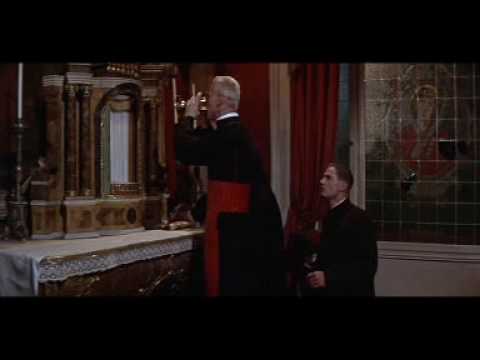
A commentator mentioned the scene in The Cardinal in which Nazis break into the Archbishop’s palace in Vienna after the Anschluß and wreak havoc. This was in living memory, friends, in a city deemed to be a center of culture, sophistication, and Catholic faith. Do you think this could not be our situation in the course of a couple short years?

YouTube thumbnailYouTube icon

Posted in "How To..." - Practical Notes, 1983 CIC can. 915, Liberals, Our Catholic Identity, Semper Paratus, The Drill, The future and our choices, The Last Acceptable Prejudice | Tagged ,
37 Comments

Archbp. Müller (Prefect of the CDF): No need for deaconesses

In The Bitter Pill (aka The Tablet) I spotted something sure to irritate feminists:

No need for deaconesses: Müller

4 July 2013

The Prefect of the Congregation for the Doctrine of the Faith (CDF) has questioned the notion that a special office could be created for women deacons.

Archbishop Gerhard Müller said that in order to create a specific, non-sacramental office for women deacons, it would be necessary to prove that such an office was necessary. He was responding to a proposal by Cardinal Walter Kasper to create a specific deacon’s office for women an expression of the common priesthood of all the faithful.

He pointed out that women were already doing charitable and catechetical work besides being pastoral assistants and recalled that, according to Church teaching, only men could validly be ordained as deacons.

“One would have to prove that a specific, non-sacramental ministry for women analogous to that of women deacons in the Early Church was necessary today,” Müller concluded.

Posted in Brick by Brick, Our Catholic Identity, Priests and Priesthood | Tagged ,
24 Comments