Pope Francis interview in La Repubblica, or, “Is This Now My Fate?”

Pope Francis interview in La Repubblica, or, "Is This Now My Fate?"My email is filled with notes from people who need to be talked off the ledge.

The reason – this time – is Pope Francis’ interview with Eugenio Scalfari, the atheist editor of the vile Italian daily La Repubblica.

BTW… in Rome some wags are now referring to La Repubblica as L’Osservatore Romano.

I have not read the new interview in Italian yet (La Repubblica‘s site loads at tectonic plate speed), but I have read it over twice in English.

A sense of the tone of many of the Holy Father’s comments in this interview – I repeat – interview, can be gleaned from one of his observations about Augustine:

“Someone who is not touched by grace may be a person without blemish and without fear, as they say, but he will never be like a person who has touched grace. This is Augustine’s insight.”

Let that sink in for a while, keeping in mind that everything the Pope said to Scalfari is off the cuff and… well… off the cuff.

In the meantime, some of you may be having a little melt-down regarding his comments on proselytism, the Curia, conscience, etc.

The Curia…

“You know what I think about this? Heads of the Church have often been narcissists, flattered and thrilled by their courtiers. The court is the leprosy of the papacy.”

The leprosy of the papacy, those were his exact words. But what is the court? Perhaps he is alluding to the curia?

“No, there are sometimes courtiers in the curia, but the curia as a whole is another thing. It is what in an army is called the quartermaster’s office, it manages the services that serve the Holy See. But it has one defect: it is Vatican-centric. It sees and looks after the interests of the Vatican, which are still, for the most part, temporal interests. This Vatican-centric view neglects the world around us. I do not share this view and I’ll do everything I can to change it.

Of COURSE the “Vatican” is the problem! This is news?

I am reminded of candidates who make Washington the enemy.  They become President in Washington and they make Washington the enemy.  John Paul II had problems with the “Vatican”, but he became the “Vatican” eventually.  Benedict was betrayed again and again within the “Vatican”. Francis is going to have his own Sisyphus moments with the “Vatican”.  Good luck.

That said, I think the Francis has a pretty good BS detector.  He’ll need it.

Conscience…

Your Holiness you wrote that in your letter to me. The conscience is autonomous, you said, and everyone must obey his conscience. I think that’s one of the most courageous steps taken by a Pope.

“And I repeat it here. Everyone has his own idea of good and evil and must choose to follow the good and fight evil as he conceives them. That would be enough to make the world a better place.”

Is there more to say about “conscience”? You bet. Can it be said in an interview… this interview in this moment?  Nope.

But let’s see if what Francis said has foundation in what the Church teaches:

Catechism of the Catholic Church 1800: A human being must always obey the certain judgment of his conscience.

Or:

1790: A human being must always obey the certain judgment of his conscience. If he were deliberately to act against it, he would condemn himself. Yet it can happen that moral conscience remains in ignorance and makes erroneous judgments about acts to be performed or already committed.

Or:

1782: Man has the right to act in conscience and in freedom so as personally to make moral decisions. “He must not be forced to act contrary to his conscience. Nor must he be prevented from acting according to his conscience, especially in religious matters.” (Dignitatis humanae 3 § 2.)

How about:

2106 “Nobody may be forced to act against his convictions, nor is anyone to be restrained from acting in accordance with his conscience in religious matters in private or in public, alone or in association with others, within due limits.” (DH 2 § 1) This right is based on the very nature of the human person, whose dignity enables him freely to assent to the divine truth which transcends the temporal order. For this reason it “continues to exist even in those who do not live up to their obligation of seeking the truth and adhering to it.” (DH 2 § 2)

I will add believers and Catholics are obliged to follow their FORMED consciences, and those consciences are enlightened by Divine Revelation, by apostolic tradition and by the Magisterium.  Once again, His Holiness is right, but within the context that he had in mind, which context is only implicitly evident in the interview because of the nature of that genre.

Could Francis be faulted for not talking about defective conscience or lack of formation of conscience? I suppose.  But the Church teaches that people cannot be coerced in matters of conscience.  This is a natural right as well.   But the context here is non-believers.   When the LCWR nuns try to cite Dignitatis humanae as an excuse to not obey, they err and err gravely.  But the Pope was talking with a non-believing journalist, not LCWR nuns.

Context, friends, context.

Sigh… are we going to have to do this everyday?  Is this now my fate?

Pope Francis interview in La Repubblica, or, "Is This Now My Fate?"

It’s an interview, friends.

Popes don’t govern or shape doctrine in interviews.

Proselytizing…

The Pope smiles and says: “Some of my colleagues who know you told me that you will try to convert me.”

It’s a joke I tell him. My friends think it is you want to convert me.

He smiles again and replies: “Proselytism is solemn nonsense, it makes no sense. We need to get to know each other, listen to each other and improve our knowledge of the world around us. Sometimes after a meeting I want to arrange another one because new ideas are born and I discover new needs. This is important: to get to know people, listen, expand the circle of ideas. The world is crisscrossed by roads that come closer together and move apart, but the important thing is that they lead towards the Good.”

When you read this, you have the sense that the Pope is really in the moment.  This is how you talk when you are involved with the emotion of the moment, with the adrenaline of the occasion.  Alas, your Earth’s yellow sun doesn’t give me the power of reading minds, but this is how it feels to me, having read that bit – aloud, though in English – and thought about it.

In any event, some quick thoughts after having read the interview:

  • abortion is still murder,
  • gay marriage is still no marriage,
  • we’re going to jaw-jaw with nonbelievers,
  • we’re still going to be a minority,
  • Former-Fr. – Mister Reynolds is still excommunicated!

Play video

Posted in "How To..." - Practical Notes, Francis, The Drill | Tagged , , , , , , , , ,
115 Comments

ROME: Repentant abortionist lays his surgical instruments at the feet of the Pope

From ProLife.org.uk:

Repentant abortionist lays his surgical instruments at the feet of the Pope

On September 20th, during a Papal Audience, a man drew close to Pope Francis, carrying with him a somewhat suspicious looking bag. Inside were half a dozen surgical instruments of various types and sizes which he, Dr Antonio Oriente from Messina, ex-abortion gynaecologist, wanted to deliver at all costs to the Holy Father.

This luggage had already created problems as he boarded the plane from Palermo. He then became the central protagonist in an event, that despite being unscheduled on the programme of the Mater Care International Conference in Rome had an enormous symbolic impact on the participants.

These were the surgical instruments which, until 1986, Dr Oriente had used to break apart tiny developing human lives before they had a chance to be born; scalpels and forceps used by him, before his conversion, before he had embraced with courage and conviction the pro-life pathway.

Dr Oriente is now vice-President of the Italian Association of Catholic Gynaecologists and Obstetricians.

For those who read Italian the story is reported in the Catholic daily newspaper ‘Avvenire’ , Thursday 26 September.

Posted in Emanations from Penumbras, Francis, Just Too Cool | Tagged ,
15 Comments

An intriguing parish project

I like hearing about people who see a problem and don’t wait for someone else to do something about it.

A parish in Georgia is trying to get a film project going. HERE

Posted in Just Too Cool, New Evangelization, The Campus Telephone Pole | Tagged , ,
1 Comment

Fr. Z kudos to Archbp. Vigneron

When I hear about the “New Evangelization”, I often wonder when the “Old Evangelization” concluded.

For your Just Too Cool File.

Archbp. Vigneron of Detroit did some sidewalk evangelization!

Fr. Z kudos to Archbp. Vigneron

The group that organizes this is St. Paul Street Evangelization.

“This ministry proudly announces the blessing and honor of welcoming Detroit’s Archbishop, Allen Vigneron, to lead the Detroit team in evangelizing this past weekend. The team was also blessed to have four priests joining in the fun. Imagine the thoughts of people walking by this ordinary street corner and seeing an archbishop and four priests sharing the Gospel! This week this ministry will feature some of the amazing conversations the team had to share.”

Bishops can’t lead from behind.

Posted in "How To..." - Practical Notes, Fr. Z KUDOS, Just Too Cool, New Evangelization, Priests and Priesthood | Tagged , , , ,
22 Comments

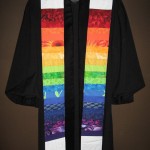
More Francis Effect™ Analysis: “try crossing a rainbow-stole wearing priest in crappy sandals talking about love”

More Francis Effect™ Analysis: "try crossing a rainbow-stole wearing priest in crappy sandals talking about love"The other day I posted about an entry at The Sensible Bond.  He is watching Francis and listening to rhetoric and considering their effects, especially in light of TBI™.  We are all seeing what I call The Francis Effect™.

He is at it again.  Here is the end of his latest entry.

Meanwhile, the Franciscan tsunami is washing over us. Whatever else might survive, I have a sense that what Paul Virilio calls the synchronization of collective emotion is going to consign people like me – and other lingering doubters, however modestly they express themselves – to the outer darkness. And if you don’t believe me, perhaps you have never tried crossing a rainbow-stole wearing priest in crappy sandals talking about love. The chances are that such creatures are coming back … and they’ll be able to cite a liberal code-talking pope to support them (except when he is teaching full-fat doctrine).

Oh yes, after a conservative ultramontane, hell hath no fury like a selectively ultramontane liberal.

Yep.

I respond saying: BE THE MAQUIS!

Posted in Francis, Liberals, Our Catholic Identity, The Drill | Tagged , , , ,
25 Comments

QUAERITUR: Is filing for divorce always a mortal sin? Fr. Z reveals a little known option for struggling spouses.

QUAERITUR: Is filing for divorce always a mortal sin? Fr. Z reveals a little known option for struggling spouses.From a reader:

I had a wonderful marriage for the first 21 years. Now, my wife filed for divorce and I am being forced, by threat of law, to cooperate with it.

The Catechism calls divorce a “grave sin”. Does that mean every person who files for a divorce is living in mortal sin? I realize that is a general question and there are many “what if” scenarios–but what about the majority?

If that is true, I need to pray even harder for my wife’s soul!

Divorce is a terrible thing. Jesus spoke about divorce on a couple of occasions, notably Matthew 19: 1-12, wherein he says that divorce was permitted under the Mosaic Law because of the hardness of the human heart, but He indicated that to divorce and marry another was to commit adultery. He then praises the life of celibacy, but says that not everyone is called to celibacy.

The next incident in the Gospel is Jesus with the children – “let the children come to me.” I think there’s a logic to the progression of stories here, since few are more deeply affected by divorce than the children of a marriage.

The Church accepts and proclaims Jesus’ teaching about the permanence of marriage, the evil of divorce, and the need to care for children.

Nevertheless, as horrible as divorce is, there are worse things.

Someone who is living in an abusive marriage, for example, has every right to protect himself or herself (and the children!) and seek a separation. Someone whose spouse has been unfaithful has the right to seek a separation (can. 1152).

Canon law has a procedure called “separation while the bond remains“. Canons
1151-1155 outline the reasons and the logic behind the process. Canons
1692-1696 outline the process.

The basic principle is that when Catholic spouses marry, their promises are not only made to each other, but to the whole Church. Part of the promise made is the promise to live together. If a Catholic wants to break that promise – even if he has a good reason for doing so – he should seek permission from the bishop. The bishop (through his tribunal or some duly appointed canonical judge) hears the story, attempts to broker some sort of reconciliation if that is possible, and if not, permits the separation and may permit the parties to seek a civil divorce (can. 1692, 2).

This process is not well-known, and is little used for a number of reasons.

Some attribute the lack of use of this procedure to ill-will on the part of bishops. There are even organizations that rail against their bishops for their failure to promote and provide for this process.

The reality is more complex.

In the 1970’s, when states began promoting laws permitting no-fault divorce, the Church was blindsided. The Church should have stood up strongly in opposition to this. Our failure to resist this major civil redefinition of marriage weakened the Church’s voice when it’s come to current attempts to redefine marriage.

The flood of divorces, including Catholic divorces, that happened in the 70’s overwhelmed the Catholic diocesan tribunal system, which was also grappling with a new Code of Canon Law, issued in 1983. From handling a few dozen cases a year in the 60’s, some tribunals were faced with hundreds of petitions a year. Some say that this led to a “rubber stamp” approach as tribunals tried to clear the cases quickly, without attending to the demands of the law and justice.

The reality is, again, more complex.

In any event, the procedure for canonical separation has been infrequently used in recent years. Many Catholics – many parish priests! – don’t even know about it.

Within the law itself, there is a provision (can. 1153) permitting a spouse who feels he or the children are in “grave danger of soul or body” to separate on his own authority, “if there is danger in delay.” There are no parameters established for deciding what would be considered “grave danger of soul or body,” or “danger in delay” – it entirely rests on the conscience of the spouse seeking to separate.

Since few Catholics are even aware of their ability to seek the assistance of the Church in determining whether they should separate or not.  I am informed that there are instances of Catholics attempting to follow the process who have been, sadly, rebuffed by their pastor or even by their diocesan tribunal.  You can hardly fault a Catholic who separates on his own authority if he doesn’t know that he really should seek permission from the bishop first.

Circling back, is divorce “grave matter”?  Without question. Are all those who seek a divorce committing mortal sin? No. There could be a good reason for doing so, even doing so without first seeking ecclesiastical permission.

Remember another point: one of your chief obligations as a married person is to help your spouse get to heaven.  Even where there is a divorce, one should maintain one’s obligation to pray for one’s spouse even when the spouse abandoned the common life.  Moreover, it can be spiritually dangerous to speculate about whether one’s former spouse has committed sin or not. Ultimately, that’s in his or her conscience. Obsessing about it can be a sin of the dangerous sin of pride. Such speculation can inhibit one’s ability to do the painful, but necessary work of one’s own examination of conscience.

Pray for your spouse, certainly, but make the prayer brief, simply entrusting her to the Lord. Don’t try and figure out if she’s committed sin or not.  That’s not your job.

If you have children, even if those children are adults, put your focus on them. They are surely the most wounded by the whole situation. DON’T put them in a position where they have to choose between mom or dad. Tell them you love them, encourage them to seek pastoral help (or even psychological help if that’s needed, and it often is), don’t say negative things about your spouse to them.

I will keep the combox open, but I switched on the moderation queue.

Posted in SESSIUNCULA | Tagged , , , , , , , ,
21 Comments

QUAERITUR: My daughter wants to be an altar boy… girl… server.

From a reader:

On the way home from Mass this evening, my daughter, who is a leader in our parish’s CYM and very active in the Church, mentioned that she was going to an Altar server meeting this week. So, I find myself in the position of not wanting her to be an altar girl but also not wanting to wound her enthusiasm for service. I am just trying to find the best way to talk to her. Any help is greatly appreciated. Thank you for your ministry.

I think I’ll just open this to your suggestions.


Posted in "How To..." - Practical Notes, ASK FATHER Question Box, Liturgy Science Theatre 3000 | Tagged
48 Comments

Dreher: “Pope Francis only confirms my decision to leave” the Catholic Church. A HARD look at where we are.

Dreher: "Pope Francis only confirms my decision to leave" the Catholic Church. A HARD look at where we are.There is an intense piece by Rod Dreher over at TIME.  The whole thing is worth a close look, but here are some longish samples.

NB: While I disagree with Dreher’s decision to leave the Catholic Church, I sure understand how he got to that point and I have to agree with a great deal of what he says about the squishy, formless pabulum Catholics have been fed for decades. Dreher, offering a salutary warning, also makes a connection between the destructive “spirit of Vatican II” and its potential replacement, a “spirit of Francis”.

There has been both lavish (nearly irrational) praise of Pope Francis and there has been harsh (nearly irrational) criticism of Pope Francis. I don’t agree with everything that Dreher wrote here (of course… I usually only agree entirely with myself), but I haven’t seen the points he makes put so eloquently.

While Dreher’s look at The Francis Effect™ may make you squirm a little, will any of you be willing to disagree with his vivisection of the American Church?  When he talks about the effects of the “spirit of Vatican II”, doesn’t he hit the nail square on?

We need this kind of hard-nosed, cool introspection.

I’m Still Not Going Back to the Catholic Church

Pope Francis only confirms my decision to leave

By Rod Dreher

It’s not hard to understand why people are so excited about Pope Francis. Since his sensational interview last week, many have said that with his personal warmth and determination to put doctrine in the background, Francis is just the man to bring a lot of fallen-away Catholics back into the church.

Maybe. But I’m an ex-Catholic whose decision to leave the Catholic Church is not challenged by Francis’s words, but rather confirmed.

Just over two decades ago, when I began the process to enter the Roman Catholic Church as an adult convert, I chose to receive instruction at a university parish, figuring that the quality of teaching would be more rigorous. After three months of guided meditations and endless God is love lectures, I dropped out.  [I thank God that I discovered the Church where and how I did.]

[…]

What I was told, in effect, in that university Catholic parish was that God loved me just as I was — true — but that I didn’t need to do anything else. It dawned on me one day that at the end of this process, all of us in the class would end up as Catholics, but have no idea what the Catholic Church taught. I bolted, and a year later, I was received into the Church in another parish. [Sounds about right.]

If you only know about the Catholic Church from reading the papers, you are in for a shock once you come inside. The image of American Catholicism shown by the media is of a church preoccupied with sex and abortion. It’s not remotely true. [Exactly! Where are all these priests and bishops who are “obsessed” with sex and abortion?  Do you know any?] I was a faithful mass-going Catholic for 13 years, attending a number of parishes in five cities in different parts of the country. I could count on one hand the number of homilies I heard that addressed abortion or sexuality in any way. Rather, the homilies were wholly therapeutic, almost always some saccharine variation of God is love.  [All you need is luv.]

Well, yes, He is, but Sunday School simplicities only get you so far. Classical Catholic theology dwells on the paradox of God’s love and God’s justice. As Dante shows in the Divine Comedy, God’s love is God’s justice poured out on those who reject Him. In the Gospels, Jesus offers compassion to sinners rejected by religious rigorists, but he also tells them to reform their lives, to “go forth and sin no more.”

Was I frustrated because the priests wouldn’t preach God’s judgment instead of God’s mercy? By no means. I was frustrated because they wouldn’t preach God’s judgment at all, which is to say, they preached Christ without the Cross. [Ain’t it the truth.] I knew the depths of the sins from which I was being delivered, and it felt wrong to treat His amazing grace like it was a common courtesy. Like the reggae song says, “Everybody wants to get to heaven, but nobody wants to die.”

Dreher: "Pope Francis only confirms my decision to leave" the Catholic Church. A HARD look at where we are.

CLICK TO BUY

[…]

[Here we go!] The contemporary era of global Catholicism began in 1959, when the newly elected Pope John XXIII sought to “open the windows” of the fusty old Church to the modern world by calling the Second Vatican Council. Three years later, in his opening address to the council, the charismatic and avuncular pope called for “a new enthusiasm, a new joy and serenity of mind in the unreserved acceptance by all of the entire Christian faith,” without compromising on doctrine. A fierce spirit of the age blasted through those newly-opened windows, scouring nearly everything in its path. The coming decades would see a collapse in Catholic catechesis and Catholic discipline. The so-called “spirit of Vatican II” — a perversion of the Council’s actual teaching — justified many subsequent outrages.  [I am tempted to memorize that paragraph.]

[… skipping stuff about the abuse crisis and how it was handled…]

All this put the moral unseriousness of the American church in a certain light. As the scandal raged, one Ash Wednesday, I attended mass at my comfortable suburban parish and heard the priest deliver a sermon describing Lent as a time when we should all come to love ourselves more.  [ARGH!]

[…]

It wasn’t safe to raise my children in this church, I thought — not because they would be at risk of predators, but because the entire ethos of the American church, like the ethos of the decadent post-Christian society in which it lives, is not that we should die to ourselves so that we can live in Christ, as the new testament demands, but that we should learn to love ourselves more.

Flannery O’Connor, one of my Catholic heroes, famously said, “Push back against the age as hard as it pushes against you. What people don’t realize is how much religion costs. They think faith is a big electric blanket, when of course it is the cross.” American Catholicism was not pushing back against the hostile age at all. Rather, it had become a pushover. [Pathe-tic.] God is love was not a proclamation that liberated us captives from our sin and despair, but rather a bromide and a platitude that allowed us to believe that, and to behave as if, our lust, greed, malice and so forth – sins that I struggled with every day — weren’t to be despised and cast out, but rather shellacked by a river of treacle.

I finally broke. Losing my Catholic faith was the most painful thing that ever happened to me. Today, as much as I admire Pope Francis and understand the enthusiasm among Catholics for him, his interview makes me realize that the good, if incomplete, work that John Paul II and Benedict XVI did to restore the Church after the violence of the revolution stands to be undone. [Exactly! And you can feel the erosion happening under our feet even now, like a massive sinkhole at work.] Though I agree with nearly everything the pope said last week in his interview, and cheer inwardly when he chastises rigorist knotheads who would deny the healing medicine of the Church to anyone, [On the other hand, how many of those idiots are there?] I fear his merciful words will be received not as love, but license. [HERE is a money quote…] The “spirit of Pope Francis” will replace the “spirit of Vatican II” as the rationalization people will use to ignore the difficult teachings of the faith. If so, this pope will turn out to be like his predecessor John XXIII: a dear man, but a tragic figure.

In his interview, the pope used a metaphor for the Church that is often employed by Eastern Orthodox Christianity: he called it a “field hospital” where the walking wounded can receive treatment. He’s right, but it’s important to discern the nature of the cure on offer. Anesthesia is a kind of medicine that masks the pain, but it’s not the kind of medicine that heals the underlying sickness.

There is, of course, no such thing as the perfect church, but in Orthodoxy, which radically resists the moralistic therapeutic deism that characterizes so much American Christianity, I found a soul-healing balance. In my Russian Orthodox country mission parish this past Sunday, the priest preached about love, joy, repentance, and forgiveness – in all its dimensions. Addressing parents in the congregation, he exhorted us to be merciful, kind, and forgiving toward our children. But he also warned against thinking of love as giving our children what they want, as opposed to what they need.

“Giving them what they want may make it easier for us,” he said, “but we must love our children enough to teach them the hard lessons, and compel them toward the good.” [The Book of Proverbs comments in this way, too.]

True, that. And I cherish this pastor because he loves his people enough to teach us the hard lessons, and to compel us past mediocrity, and toward the good. Catholic priests of the same mind and orientation as my Orthodox pastor – and I know many of them – are telling me that the Holy Father, by signaling to his American flock that God is love, and the rest doesn’t really matter, just made their mission a lot more difficult. [Damn right it is!] But that is no longer my problem. [No, Rod, it is still your problem. Dogmatic Constitution Lumen gentium, 14: “They could not be saved who, knowing that the Catholic Church was founded as necessary by God through Christ, would refuse either to enter it, or to remain in it.”]

While it might be tempting to discuss Dreher’s own “faith journey”, the real meat here is in his view of the state of the Church and the direction he guesses it is going.

Posted in Fr. Z KUDOS, Francis, Our Catholic Identity, The Coming Storm, The Drill, The future and our choices, Vatican II | Tagged , , , , ,
98 Comments

VIDEO: Pope Francis announces date of canonizations of John XXIII and John Paul II

Pope Francis announced during a consistory the dates for the canonization of John XXIII and John Paul II. 27 April 2014 – Sunday of Divine Mercy.

Latin, of course, because of the nature of this official papal act.

Play video

Posted in "How To..." - Practical Notes, Francis, Saints: Stories & Symbols | Tagged , , ,
21 Comments

Wherein Fr Z is charmed.

Wherein Fr Z is charmed.Tonight it happened to me to view a charming movie, involving one of the great art galleries of the world, some children, and a flea market.

Framed.

I am charmed.

That’s all!

UK LINK

Posted in Just Too Cool, My View, What Fr. Z is up to | Tagged , ,
6 Comments