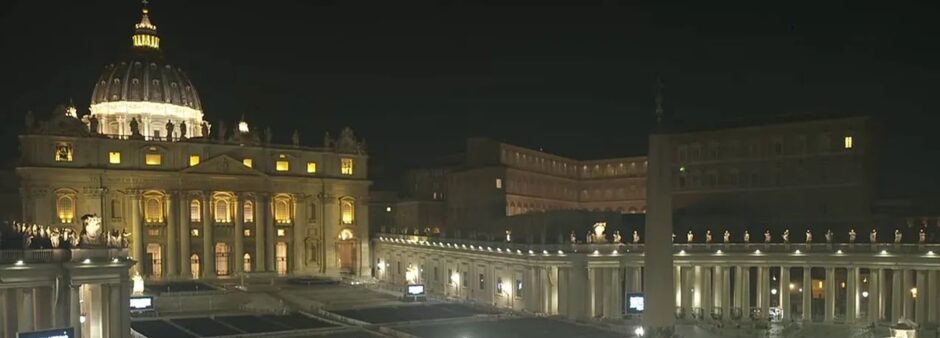
John Paul II – priesthood

I owe this to His Hermeneuticalness and John Paul II.

Full disclosure.

I was ordained by John Paul II:

One of the themes of Pope John Paul II’s pontificate was his insistence on the necessity of the priesthood and his personal and heartfelt encouragement to priests, both in positive spiritual terms and, occasionally, in correction and admonition.

At the time Pope John Paul II was elected to the Papacy, it was quite common to hear, even in official circles, that the shortage of vocations to the priesthood was a work of the Holy Spirit, encouraging the laity to take their full part in the ministry of the Church. The fact that this is heard much less today (although there are still some dinosaurs who persist in the error) is largely due to the consistent teaching of Pope John Paul II on its falsity.

I well remember during the first year of his pontificate, the Pope’s Maundy Thursday letter to priests. This was the first of a series that continued almost every year during his reign.In that letter, there was a moving exhortation to priests who were weary or doubtful:

Dear Brothers: you who have borne “the burden of the day and the heat” (Mt 20:12), who have put your hand to the plough and do not turn back (cf. Lk 9:62), and perhaps even more those of you who are doubtful of the meaning of your vocation or of the value of your service: think of the places where people anxiously await a Priest, and where for many years; feeling the lack of such a Priest, they do not cease to hope for his presence. And sometimes it happens that they meet in an abandoned shrine, and place on the altar a stole which they still keep, and recite all the prayers of the Eucharistic liturgy; and then, at the moment that corresponds to the transubstantiation a deep silence comes down upon them, a silence sometimes broken by a sob… so ardently do they desire to hear the words that only the lips of a Priest can efficaciously utter. So much do they desire Eucharistic Communion, in which they can share only through the ministry of a priest, just as they also so eagerly wait to hear the divine words of pardon: Ego te absolvo a peccatis tuis! So deeply do they feel the absence of a Priest among them!… Such places are not lacking in the world. So if one of you doubts the meaning of his priesthood, if he thinks it is “socially” fruitless or useless, reflect on this!In his letter to priests for Maundy Thursday 1986 Pope John Paul II reflected at length on the ministry and life of the Curé of Ars. He addressed in particular the question of the priest’s identity:

Saint John Mary Vianney gives an eloquent answer to certain questionings of the priest’s identity, which have manifested themselves in the course of the last twenty years; in fact it seems that today a more balanced position is being reached. The priest always, and in an unchangeable way, finds the source of his identity in Christ the Priest. It is not the world which determines his status, as though it depended on changing needs or ideas about social roles. The priest is marked with the seal of the Priesthood of Christ, in order to share in his function as the one Mediator and Redeemer.The movement to a “more balanced position” concerning the priesthood was undoubtedly due in large part to the inspiration, example, and encouragement given by the Pope himself from the very start of his pontificate.

Posted in Our Catholic Identity, SESSIUNCULA | Tagged , , ,
17 Comments

Fr. Z in WaPo on John Paul II’s beatification

John Paul III have a piece in the Washington Post today at their invitation.  The typo, rather omission, in the second paragraph (as it appears in the online version as I write) is good for my humility.

Many argue that John Paul II should not be beatified so quickly … or at all.  I set those arguments aside for this piece and focus on things we can underscore as bright points of his pontificate.

The whole thing is my emphases and comments.

Fearless in Hope and Love

By Fr. John Zuhlsdorf

In some cities in the USA when a local team wins a basketball game, crowds burn cars.   But when John Paul II’s body was lying on view in St. Peter’s Basilica, one first responder, police officer and volunteer worker after the next told me that there had not been a single act of civil disobedience or problem reported.  That means something.  During the days which preceded his funeral, armed with media credentials I was able to move freely through the checkpoints and channels for the millions, literally, of people who stood in slow moving lines for scores of hours to see the dead Pope’s body for the last time.  Peacefulness, prayer and patience reigned.

At the end of the funeral, the wind blew closed the cover of Book of the Gospels. Men lifted John Paul’s coffin onto their shoulders.  They stopped before the open doors of the Basilica and slowly pin-wheeled, as if to give him one last public wave.  A shout went up, simultaneous because of the huge video screens along the nearby streets.  That shout, which echoed across a silent and motionless Rome, may have been the single loudest purely human sound ever raised on high in that City of over 3000 years.

There began the rising chant of the people, “Santo Subito… Sainthood Soon”.   It may have been a manifestation of the old adage Vox Populi Vox Dei… The Voice of the People is the Voice of God.  I don’t know that, but it was unlike any chant I had ever heard before.   Of course when in Rome you hear the word “subito”, especially from a waiter, you almost never expect what you’ve requested to happen quickly.  And yet here we are at his beatification.

Leaving aside the issue of the record breaking speed of the late Pope John Paul II’s beatification (2220 days, 15 days faster the Bl. Mother Teresa of Calcutta), we should all be able to remember and agree on some of the achievements of his life as a good man, a faithful member of his Catholic Church, and life-long disciple of the Lord and Savior he so obviously loved.

A pebble can prompt a tumultuous landslide.  John Paul dropped a great many stones.  Many of them are still gathering speed.  On the geopolitical plane, the visit of John Paul II to his native Poland after his election as Pope helped to diminish worldwide the soul annihilating forces of atheistic Communism.  Within the Church, after a decade and more of internal rebellion and chaos, John Paul’s manifest confidence, love of neighbor and focus on the Redeemer of man initiated the gradual rebuilding of order and morale, especially among young people, which continues still under the pontificate of Pope Benedict.

From the early loss of his parents and the hardship of a youth under Nazi occupation, including forced labor and serious injury, to the sorrow of seeing his beloved Poland and her people suffer under Communism, from witnessing open defiance on the part of clergy and theologians within the Church to being shot by an assassin in St. Peter’s Square, from the horror of emerging of stories about abuse of children, to the ever increasing agony of Parkinson’s Disease which sapped his vitality and imprisoned him in physical weakness, John Paul radiated hope.

Even as he became smaller, he seemed to become all the greater, for it was Christ who increased in him.  Young people were inspired by his joy.  The frail elderly man gradually brightened as a beacon of hope to us all.  Let us not forget that we too are daily drawing closer to our own decline and death with their attendant pains and challenges.  We will be no less precious and valuable when we grow weaker.  In his choice to suffer publicly, John Paul taught us that love of God and beauty of soul are the truly human values which matter, not wealth or youthful beauty or passing worldly goods.  John Paul stood as a sign of contradiction in an increasingly shallow and materialist age.

John Paul strode onto the Church’s stage announcing a virile, muscular Catholicism even as he relentlessly taught in his writing and preaching about the dignity of the human person, that we must not treat others – especially women, the unborn and the elderly – as objects to be used or discarded for our own selfish convenience.  Each person, from the defenseless unborn to the defenseless senior, is precious in God’s sight and made in God’s image and likeness.  John Paul’s “theology of the body”, as it has been dubbed, presented a view of man with which countless young people were able to resonate.

As Blessed John Paul, or just plain Pope, or simply Karol, he was a giant of a man who persevered in his simple message to his very last heartbeat: Do not be afraid to love your Lord with all your heart and strength and love your neighbor as you love yourself.

Fr John Zuhlsdorf, a convert from Lutheranism, is a writer for various Catholic publications. He wrangles a popular blog with frank commentary on Catholic issues (fatherzonline.com).  He was ordained a priest in 1991 by Pope John Paul II.

Posted in My View | Tagged , , , ,
38 Comments

The CDF on a burning issue of our day … wait for it….

… the biblical obligation of head coverings for women in church, … because we haven’t had enough of that yet.

The Canonical Defender, Dr. Peters, has added a note to his esteemed commentary on head coverings. Hat tip – (HA!  Get it?) also the Jimmy Akins.

From Peter’s great blog In the Light of the Law.

From Jimmy Akin’s combox, a nice rephrasing of the obvious . . . Concerning St. Paul’s statement to the Corinthians, the Congregation for the Doctrine of the Faith has stated that this was a discipline based on customs of the time, not a permanent moral obligation: “But it must be noted that these ordinances, probably inspired by the customs of the period, concern scarcely more than disciplinary practices of minor importance, such as the obligation imposed upon women to wear a veil on their head (1 Cor 11: 2-16); such requirements no longer have a normative value.” CDF, decl. Inter Insigniores (15 oct. 1976) n. 4.

Let the games BEGIN!


Posted in SESSIUNCULA | Tagged , , , ,
47 Comments

Fortune Cookies: Wherein Fr Z rants

I ask you. Is it too much to expect that something labelled “fortune cookie” should have a fortune within?

Instead, to the very last cookie, they are in reality purveyors of platitudes.

Platitude Cookies.

For example:

20110429-012414.jpg
I find misspellings charming and amusing in these nearly inedible doohickies. Though I was puzzled why a Scottish overseer should be lost and in need of finding.

But that’s not the point.

I am tempted to start my own line of true fortune cookies… with some less than consoling prognostications. Several favorites come to mind.

I think they would be both refreshing and a hit.

And to the author of the aforementioned platitude, virtue should be its own reward and, if I were you, I should start paying attention to your LAD. Not good.

Please discuss over a nice WDTPRS mug of Mystic Monk Coffee!

[CUE MUSIC]

Mystic Monk CoffeeCoffee running low?  Why not refresh your supply now with not just any old coffee, but Mystic Monk Coffee?  That’s right… Monks roast every bean themselves and send it to your door.  When you buy it you annoy liberals, help the men build their new monastery in Wyoming, and help Fr. Z as well.

Need a grinder?  They have one.

Want to have coffee seen automatically each month?  They do that.

Want TEA instead?  They’ve got that too.

Try a coffee sample pack and let those platitudes just roll off your back like the tears we have shed over the lame-duck translation’s back all these many years.

okay… that image wasn’t too successful…

Mystic Monk Coffee!

It’s swell!

Posted in Lighter fare, Wherein Fr. Z Rants |
27 Comments

John Paul’s coffin exhumed before the beatification

From CNA:

John Paul II remains moved in front of St. Peter’s tomb

Vatican City, Apr 29, 2011 / 08:00 am (CNA/EWTN News).- The casket containing the mortal remains of Pope John Paul II has been exhumed ahead of his beatification this Sunday.

The brief ceremony of exhumation took place in the early hours of this morning in the grotto situated beneath the high altar of St. Peter’s Basilica.

The tomb of Pope John Paul was opened and his casket placed on a cart. The casket, however, remained unopened throughout and was covered with a large pall embroidered with gold.

Papal caskets are comprised of three components. The outside box is a wooden one, inside of that is a lead container, and the final casket–which contains the remains of the Pope–is also made of wood. Those present at the exhumation say the wooden outer layer of the casket had slightly deteriorated with age.

At 9a.m., prayers and the singing of the litany of saints were led by the cleric in charge of the basilica, Cardinal Angelo Comastri. Those joining him included Pope John Paul’s former private secretary, Cardinal Stanislaw Dziwisz, and the Vatican’s Secretary of State, Cardinal Tarcisio Bertone.

Accompanied by the Swiss Guard and Vatican Gendarmerie, the coffin was then translated the short distance to the tomb of St. Peter. It will remain there until the early hours of Sunday morning when it will be transferred to the foot of the high altar in the basilica above. It is here that pilgrims will be able to pay homage to the late pontiff on Sunday and Monday.

After every pilgrim has had a chance to pray in front of the casket, the coffin will be taken to its final resting place in the chapel of St. Sebastian, which is situated next to Michelangelo’s Pieta near the basilica’s entrance.

Meanwhile, the large tombstone which has covered the late Pope’s grave for the past six years will be taken to the Polish city of Krakow where it will be placed in a new church dedicated to Blessed John Paul.

Posted in Just Too Cool | Tagged ,
8 Comments

US CATHOLIC: Dumb article on the new translation

I haven’t yet been impressed with much that the publication US Catholic produces when it comes to anything remotely liturgical.  An article by Bryan Cones has lowered it in my estimation even more.

What kind of God do the new Mass texts imagine?
Thursday, April 21, 2011
By Bryan Cones

I had a chance to peek at the new liturgical texts, coming this Advent. Here’s one for you, a prayer over the people for one of the weekdays of Lent:

Prayer over the people, Tuesday of the 5th week of Lent:

O God, who chose to show mercy not anger to those who hope in you, grant that your faithful may weep, as they should, for the evil they have done, and so merit the grace of your consolation. Through Christ our Lord.

There’s a lot going on in that prayer, and I’m not sure much of it is good. [Then perhaps you should have waited until you were sure before writing this?] Like most of the prayers, it focuses more on sin than anything else, [First, I don’t think most prayers in the Novus Ordo are about sin.  Second, if they were, that is a pretty good reason to pray.] and there’s little recognition that we are already baptized, already redeemed. [“already redeemed”… okay… but we can still blow it, Brian, and wind up in Hell.  Right?  And we should still be sorry for past sins even if they have been forgiven, right?  And there may be the problem of temporal punishment due to sin and the penance which in justice we must do, right?]

Or this one, a prayer over the gifts (or, rather, “offerings” in the new translation [corrected, translation]):

Be pleased, O Lord, we pray, with these oblations you receive from our hands, and, even when our wills are defiant, constrain them mercifully to turn to you.

[ANNOUNCER IN GOLF COURSE VOICE: “What Bryan doesn’t know yet is that is what the prayers of the Catholic Church  really say.  If he has a problem with our prayers, then he has a problem with our Church.]

I’d have to think about that one for a bit to figure out what it means, in fact I had to consult a dictionary more than once to figure out some of them. [Gosh.  He had to look something up and think about it.] They are also disturbingly heretical: [?!?] lots of “meriting” and “earning” in them (Pelagianism), lots of spirit/body dualism. [For heaven’s sake.  They are not heretical.  Let’s look at that text, above.  We ask God to make us weep.  The weeping isn’t something that we choose apart from grace.  By giving us that compunction for sin, Brick it backGod then consoles us. This is not Pelagian.  Also, this has been the language of prayer for a long time.  Also, is the sorrow part the “spirit” and “hands” the body part?  Cones is confused.  And think about what the Lord said to Peter about those who would bind his hands and take him where he would not want to go otherwise, or the parable about the wedding feast when people on the streets were compelled to enter.] What these naked translations really reveal is how imperial and pagan these prayers really are—you could substitute “Zeus” for “Lord” in any of them. [It’s “imperial” and “pagan” to call Jesus “Lord”?  I thought that was a biblical term.  Yes, I am sure I read that somewhere in the New Testament.  What about Philippians 2: “Therefore God has highly exalted him and bestowed on him the name which is above every name, that at the name of Jesus every knee should bow, in heaven and on earth and under the earth, and every tongue confess that Jesus Christ is Lord, to the glory of God the Father. Therefore, my beloved, as you have always obeyed, so now, not only as in my presence but much more in my absence, work out your own salvation with fear and trembling; for God is at work in you, both to will and to work for his good pleasure.] In fact, they use “Lord” so often that it is hard to tell if we are praying to Jesus or the Father. [That’s a problem?  To pray to the “Lord”? For more on the “Lord” question, see Romans 9: “If you confess with your lips that Jesus is Lord and believe in your heart that God raised him from the dead, you will be saved. For man believes with his heart and so is justified, and he confesses with his lips and so is saved.”  I have lots more of these verses, by the way.] (All Roman liturgical prayers, with rare exception, are addressed to the Father.) [Except when they’re not. Which is fairly often, come to think of it.] To me it seems not only that we shouldn’t be using these translations, we shouldn’t be using most of these prayers at all anymore. [Gosh.  Bryan Cones of US Catholic thinks we shouldn’t pray these prayers.] They simply reflect an approach to God–a distant, imperial God to whom we must beg for mercy– [God is distant.  God is still somewhat transcendent.] and an understanding of the church–sinful, unworthy, unredeemed–that I think we have left behind. Unless we want to recover that approach…  [Imagine how fun it must be to belong to a church in which there are no reminders of sin and which affirms you as definitely worthy of heaven.  God is so lucky to have us. How could She do without us?]

We commissioned our May cover story on prep for the new Roman Missal to see how parishes were preparing the faithful for this new way of praying, but I don’t see how you can prepare people for these prayers. [cf. common sense and the Catechism of the Catholic Church.  Not, apparently, by reading US Catholic.] They are exceedingly hard to understand, and often don’t make much sense when you say them aloud, as priests have to do.  [I suspect that what he really means by “hard to understand” is “hard to accept“.]

But I am also worried about people’s tolerance for this sort of thing. [Ohhh… I don’t know.  They have put up with a great deal since about 1970.  I suggest that the writer sit down and read through the text of the Order Mass, looking for references to sin and our unworthiness.] Many already tune out during the longer prayers, but what will happen when they become even more unintelligible? [Who wouldn’t have slept through the lame-duck ICEL prayers all these years.  The smart ones probably do tune out.  And… come to think of it, I suspect I could wake them up.]

Guess we will find out this Advent.

Good grief.

Several minutes of my life I will never have back.

Posted in Liturgy Science Theatre 3000, Throwing a Nutty | Tagged , , ,
43 Comments

QUAERITUR: Good Friday – vestments for other priests present

From a priest:

There is a big debate happening among some of us concerning the vesture for the Liturgy of the Passion on Good Friday. On one side the camp, there is the argument that ALL priests in attendance should vest in chasuble, as if for Mass. I am in the camp that argues that there is no need for that, since there is precisely NO Mass. Hence, the “celebrant” only needs to vest while the others can be as in choro. I see that the Liturgy at the Vatican uses this model; while the liturgy at Westminster Cathedral preferred the former….  What say you?

It isn’t Mass.  There can’t be concelebrants in the same sense.  There seems to be no reason for anyone other than the sacred ministers immediately concerned with the ceremonies to be in sacred vestments.

Let all others be in choir dress.

Posted in "How To..." - Practical Notes, ASK FATHER Question Box | Tagged , ,
15 Comments

Veselka Variety

On Each trip to NYC I check out a new cuisine.

Tonight we are doing Ukrainian. Situated in the East Village, this is the sort of place I like. Unassuming.

20110428-084537.jpg
Starting with borscht.

20110428-084735.jpg
Next, Varenyky.

20110428-085300.jpg
Bigos.

20110428-090150.jpg
Beet and Horseradish salad.

20110428-090232.jpg
Kielbasa.

20110428-090446.jpg
Kutya.

20110428-092910.jpg
Small blueberry thingy.

20110428-093046.jpg
At the end…

20110428-093407.jpg

Posted in Just Too Cool, SESSIUNCULA, What Fr. Z is up to |
28 Comments

Why pro-abortion advocates are terrified of ultra-sound machines.

Intentionally or unintentionally, this commercial is a good pro-baby advocate.

You can see why pro-abortion advocates are terrified of ultra-sound machines.

[wp_youtube]OxbRdxbBROI[/wp_youtube]

Posted in Just Too Cool | Tagged
23 Comments

Gotta love Manhattan

Straight forward.

20110428-035405.jpg

Posted in SESSIUNCULA |
12 Comments
























