Pope Benedict’s Message for the 44th World Day of Peace

Five years later, I still consider Benedict’s XVI’s first Message for the 39th World Day of Peace to be one of his important documents.  It give you a concise view of his thought about what true peace is.

The Holy Father take up the same theme in this year’s Message for the 44th World Day of Peace.

Benedict takes up some themes we have seen him working on all along, including the necessity of maintaining a religious voice in the public square.  And not just an Islamist voice, btw.  Benedict points at the fact that Christianity is the most under fire now.

The Holy Father throughout, as he did in his (better) Message for the 39th World Day of Peace, contrasts the secularist violation of freedom (therefore peace) and religious fanaticism which violates freedom.

This year’s Message is longish, 4600+ words.  Here are some highlights.

[…]

3. Religious freedom is at the origin of moral freedom. Openness to truth and perfect goodness, openness to God, is rooted in human nature; it confers full dignity on each individual and is the guarantee of full mutual respect between persons. Religious freedom should be understood, then, not merely as immunity from coercion, but even more fundamentally as an ability to order one’s own choices in accordance with truth.

Freedom and respect are inseparable; indeed, “in exercising their rights, individuals and social groups are bound by the moral law to have regard for the rights of others, their own duties to others and the common good of all”.

A freedom which is hostile or indifferent to God becomes self-negating and does not guarantee full respect for others. A will which believes itself radically incapable of seeking truth and goodness has no objective reasons or motives for acting save those imposed by its fleeting and contingent interests; it does not have an “identity” to safeguard and build up through truly free and conscious decisions. As a result, it cannot demand respect from other “wills”, which are themselves detached from their own deepest being and thus capable of imposing other “reasons” or, for that matter, no “reason” at all. The illusion that moral relativism provides the key for peaceful coexistence is actually the origin of divisions and the denial of the dignity of human beings. Hence we can see the need for recognition of a twofold dimension within the unity of the human person: a religious dimension and a social dimension. In this regard, “it is inconceivable that believers should have to suppress a part of themselves – their faith – in order to be active citizens. It should never be necessary to deny God in order to enjoy one’s rights”.

He looks at the situation of marriage:

[…]

The family founded on marriage, as the expression of the close union and complementarity between a man and a woman, finds its place here as the first school for the social, cultural, moral and spiritual formation and growth of children, who should always be able to see in their father and mother the first witnesses of a life directed to the pursuit of truth and the love of God. Parents must be always free to transmit to their children, responsibly and without constraints, their heritage of faith, values and culture. The family, the first cell of human society, remains the primary training ground for harmonious relations at every level of coexistence, human, national and international. Wisdom suggests that this is the road to building a strong and fraternal social fabric, in which young people can be prepared to assume their proper responsibilities in life, in a free society, and in a spirit of understanding and peace.

Therefore, no same-sex union can accomplish what marriage accomplishes in society.

Religious freedom is denied in some places and there is religious fanaticism in others.

[…]

7. The exploitation of religious freedom to disguise hidden interests, such as the subversion of the established order, the hoarding of resources or the grip on power of a single group, can cause enormous harm to societies. Fanaticism, fundamentalism and practices contrary to human dignity can never be justified, even less so in the name of religion. The profession of a religion cannot be exploited or imposed by force. States and the various human communities must never forget that religious freedom is the condition for the pursuit of truth, and truth does not impose itself by violence but “by the force of its own truth”. In this sense, religion is a positive driving force for the building of civil and political society. […]

Great religions….

[…]

The leaders of the great religions, thanks to their position, their influence and their authority in their respective communities, are the first ones called to mutual respect and dialogue.

Christians, for their part, are spurred by their faith in God, the Father of the Lord Jesus Christ, to live as brothers and sisters who encounter one another in the Church and work together in building a world where individuals and peoples “shall not hurt or destroy … for the earth shall be full of the knowledge of the Lord as the waters cover the sea” (Is 11:9).

Not all religions, however, are the same.

[…]

11. For the Church, dialogue between the followers of the different religions represents an important means of cooperating with all religious communities for the common good. The Church herself rejects nothing of what is true and holy in the various religions. “She has a high regard for those ways of life and conduct, precepts and doctrines which, although differing in many ways from her own teaching, nevertheless often reflect a ray of that truth which enlightens all men and women”.

The path to take is not the way of relativism or religious syncretism. The Church, in fact, “proclaims, and is in duty bound to proclaim without fail, Christ who is the way, the truth and the life (Jn 14:6); in Christ, in whom God reconciled all things to himself, people find the fullness of the religious life”. Yet this in no way excludes dialogue and the common pursuit of truth in different areas of life, since, as Saint Thomas Aquinas would say, “every truth, whoever utters it, comes from the Holy Spirit”. […]

Now we get down to persecution.

13. Despite the lessons of history and the efforts of states, international and regional organizations, non-governmental organizations and the many men and women of good will who daily work to protect fundamental rights and freedoms, today’s world also witnesses cases of persecution, discrimination, acts of violence and intolerance based on religion. In a particular way, in Asia and in Africa, the chief victims are the members of religious minorities, who are prevented from freely professing or changing their religion by forms of intimidation and the violation of their rights, basic freedoms and essential goods, including the loss of personal freedom and life itself.

There also exist – as I have said – more sophisticated forms of hostility to religion which, in Western countries, occasionally find expression in a denial of history [Europe especially, and also the USA] and the rejection of religious symbols which reflect the identity and the culture of the majority of citizens. Often these forms of hostility also foster hatred and prejudice; they are inconsistent with a serene and balanced vision of pluralism and the secularity of institutions, to say nothing of the fact that coming generations risk losing contact with the priceless spiritual heritage of their countries. […]

When you have a moment or three, give the document a glance.  But be sure to read his first Message.
Posted in New Evangelization, Pope of Christian Unity, The Drill, The future and our choices | Tagged , , ,
Comments Off on Pope Benedict’s Message for the 44th World Day of Peace

Holy Land: Joshua’s Tomb vandalized with Arabic graffiti

Remember the mutilation of the Holy Thorn Tree in Glastonbury, England?

From Jihad Watch:

“If Jews were to desecrate a Muslim holy tomb in the same manner, the whole world would rage and erupt.” Yep.

Islamic Tolerance Alert from Samaria: “Joshua’s Tomb vandalized with Arabic graffiti,” from the Jerusalem Post, December 17:

Palestinians vandalized Joshua’s Tomb in Samaria’s Timnat Heres with Arabic graffiti overnight Thursday.Hundreds of Jewish worshippers, escorted by the IDF, arrived at the site and discovered graffiti on surrounding walls which supported martyrdom.

“Only barbarians are capable of committing such harmful, menacing acts,” head of the Samaria regional council Gershon Mesika said. “If Jews were to desecrate a Muslim holy tomb in the same manner, the whole world would rage and erupt.”

Sts. Nunilio and Alodia, pray for us.

Posted in The future and our choices | Tagged , , ,
7 Comments

What vocations crisis?

For your Brick by Brick file…

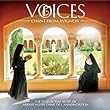
Gregorian chantI wrote in the past about the wonder CD of Gregorian chant by the Benedictine nuns of Abbaye de Notre-Dame de l’Annonciation.

I wrote about the DVD, Watchmen of the Night, the monks at La Barroux produced.

I received a note from Père Edmond that EWTN will broadcast the monks’ DVD.

They are building a new monastery, Sainte-Marie de la Garde, in south-west France.

These two Benedictine communities have lots of vocations.

There are a lot of religious orders and institutes, indeed even Benedictine monasteries, without any significant vocations.

What could the difference be?

And is it serendipity or synchronicity that my friend Fr. John Boyle just posted this:   Convent experiencing “vocations crisis”!!!

Posted in Brick by Brick, REVIEWS | Tagged ,
10 Comments

The Phoenix Hospital conflict and the Magisterium of Nuns

The Motley Monk has best summary I have seen so far (here and here – I am integrating his work here, but you should go there and read) of what is going on with the dust-up in Phoenix, Arizona between H.E. Most Rev. Thomas Olmsted and the “Catholic Healthcare West (CHW)” St. Joseph’s Hospital, where a direct abortion was committed with the consent of the woman religious who is the – get this – “VP of Mission Integration”.

This whole debacle demonstrates why a real visitation of communities of women religious was needed in the USA.

The Arizona Central says that the Diocese of Phoenix (read: Bp. Olmsted) “extended a deadline for St. Joseph’s Hospital and Medical Center to comply with Bishop Thomas Olmsted’s demands that the hospital comply with Catholic moral teaching or lose its status as a Catholic hospital.”

Bishop Olmsted’s requires that CHW state that abortions will never be performed at their hospitals in the Diocese of Phoenix.  Otherwise Bp. Olmsted, will revoke the hospital’s standing as a Catholic healthcare facility.

What is interesting is that this is also a Magisterium of Nuns issue.

CHW operates more than forty hospitals and clinics and is the largest non-profit healthcare provider in California and the eighth largest in the nation. CHW runs St. Joseph’s Hospital.  In late 2009, an abortion was performed St. Joseph’s upon a mother who was eleven weeks pregnant and seriously ill with pulmonary hypertension.The MM continues with this:”They were in quite a dilemma,” says a theologian teaching at Boston College, Lisa Sowle Cahill.  “There was no good way out of it.  The official church position would mandate that the correct solution would be to let both the mother and the child die.  I think in the practical situation that would be a very hard choice to make.” 

Sr. McBride and members of the hospital’s ethics committee believed the abortion could proceed because of an exception—called “Directive 47” in the U.S. Catholic Conference of Bishops’ ethical guidelines for health care providers—that allows, in some circumstances, procedures that could kill the fetus to save the mother.News of the abortion resulted in the self-inflicted excommunication of Sr. Margaret McBride, the hospital’s VP of Mission Integration and member of the ethics panel which approved the abortion.  Sr. McBride allegedly told Bishop Olmsted that performing the abortion under the circumstances “was a morally good and allowable act according to Church teaching.”

Okay.  That’s the Magisterium of Nuns.

By contrast we have the magisterium of the Successor of the Apostles, Bp. Olmsted.

Citing Church teaching, Bishop Olmsted disagreed.  He noted that the abortion was deliberate and directly intended to take the life of the unborn child, not a foreseen but undesired consequence of another medical procedure.  “Since she gave her consent and encouraged an abortion she automatically excommunicated herself from the Church,” Bhe Bishop’s office said at the time.

In a November 22, 2010, letter to CHW President Lloyd Dean, Bishop Olmsted gave the CHW until Friday, December 17, 2010, to agree to terms he specified or face canonical sanctions in the Diocese of Phoenix, according to the Arizona Central. CHW went out and found another expert to support the decision to perform an abortion:Dean has argued the contrary, citing a Marquette University professor, M. Therese Lysaught, who said the abortion was morally justifiable under the circumstances.  Dr. Lysaught’s institutional mission reads in part: “Marquette University defines itself as Christian, Catholic, Jesuit, urban, and independent” (italics added).

Episcopal Backbone Award

Episcopal Backbone Award

[Get this…] …[This] resolution disregards my authority and responsibility to interpret the moral law and to teach the Catholic faith as a Successor of the Apostles….

Until this point in time, you have not acknowledged my authority to settle this question but have only provided opinions of ethicists that agree with your own opinion and disagree with mine.  As the diocesan bishop, it is my duty and obligation to authoritatively teach and interpret the moral law for Catholics in the Diocese of Phoenix.  The conclusion I take away from this analysis is that you do not intend to change anything.  While my objections and our correspondence have garnered your undivided attention, you have discounted my legitimate authority.  Because of this I must now act. I do so not only to assure that no further such violations of the ERDs [Ethical and Religious Directives] occur, but also to repair the grave scandal to the Christian faithful that has resulted from the procedure that took place at St. Joseph’s and the subsequent public response of CHW.

Magisterium of a bishop v. Magisterium of Nuns and those aid and abet their undermining of the Church’s teachings.

Bishop Olmsted then wrote that CHW must acknowledge in writing that the abortion performed at St. Joseph’s violated Catholic healthcare ethical directives “and so will never occur again at St. Joseph’s Hospital.”  In addition, CHW “must agree to a review and certification process conducted by the Medical Ethics Board of the Diocese of Phoenix to enforce full compliance with the Ethical and Religious Directives of the USCCB.”  Lastly, CHW “must agree to provide the medical staff at St. Joseph’s Hospital ongoing formation on the ERD’s, as overseen by the National Catholic Bioethics Center or the Medical Ethics Board of the Diocese of Phoenix.”

Failure to fulfill these three requirements will lead me to decree the suspension of my endorsement of St. Joseph’s Hospital, forcing me to notify the Catholic faithful that St. Joseph’s Hospital no longer qualifies as a ‘Catholic’ hospital…,” Bishop Olmsted wrote.

A suspension would include removing all Blessed Sacrament chapels and tabernacles, a prohibition Mass being offered at any of St. Joseph’s chapels, and a public advisory from the bishop’s office and in the diocesan newspaper that St. Joseph’s no longer qualifies as a “Catholic” hospital.

Lisa Fullam, professor of moral theology at the Jesuit School of Theology at Santa Clara University, [I wonder if there is a pattern…. Boston College… Marquette… hmmmm another woman who takes a paycheck from Jesuits] blogged at Commonweal Magazine’s website that hospital administrators ought to stand up to Bishop Olmsted:

The hospital was founded by the Sisters of Mercy, and Catholic Healthcare West, the organization to which the hospital now belongs, is under the authority of Archbp. Niederauer of San Francisco.

My question is this: why doesn’t the hospital first appeal to Niederauer, then, if he refuses to get involved, why don’t they simply point out to Bp. Olmsted that, while under Church Law he can restrict who uses the appellation “Catholic,” he does NOT have a copyright to the term under US Law? [I suppose this is what the National catholic Reporter would argue…] If the administrators at St. Joseph’s believe it to be a Catholic hospital, they should continue to use the name, and let the canonical chips fall where they may. The bishop does not own Catholicism, in his diocese or elsewhere. This would require serious nerve on the part of the Sisters of Mercy. [Get this…] However, the RSM’s I know are people of faith, intelligence, and backbone. Come on, sisters–be the change!

I don’t think Bp. Olmsted is going to back down.Some links:

  • To read the Arizona Central article, click HERE.
  • To read Bishop Olmsted’s letter, click HERE.
  • To learn about M. Therese Lysaught, click HERE.
  • To read about Sr. McBride’s self-inflicted excommunication, click HERE.
  • To read the National Public Radio report, click HERE.
  • To read Lisa Fullam’s blog, click HERE.

Finally, note that Bp. Olmsted extended the deadline.

Posted in Emanations from Penumbras, Magisterium of Nuns, Our Catholic Identity, The Drill, The future and our choices | Tagged , , ,
22 Comments

WDTPRS: Last Days of Advent: 18 December

In these final days of Advent preparation, the Church prays with great intensity.  It is one of the “greater feria” of Advent, the home stretch, as it were.

Here is today’s

COLLECT (2002MR):
Concede, quaesumus, omnipotens Deus,
ut, qui sub peccati iugo ex vetusta servitute deprimimur,
expectata Unigeniti tui nova nativitate liberemur.

This was in the 1962MR on Ember Saturday of Advent.  It was before that in the Veronese, Gelasian and Gregorian Sacramentaries. These advent prayers often refer to the “state of oldness”, which pertains to the “old man” afflicted by the sin of our First Parents.

WDTPRS LITERAL VERSION:
Grant, we beseech You, Almighty God,
that we who are oppressed under the yoke of sin from the servitude of the old man,
may be freed bu the long awaited new Nativity of Your Only-Begotten.

REVISION A:
Grant, we pray, almighty God,
that we who are weighed down from of old
by slavery beneath the yoke of sin
may be set free by the newness
of the long-awaited Nativity
of your Only-begotten Son.

REVISION B:
Grant, we pray, almighty God,
that we who are weighed down by ancient slavery
beneath the yoke of sin
may be set free by the long awaited new birth
of your Only Begotten Son
.

By the way…

There is an interesting thing to note in the 2002 Missale Romanum which, if you are not thinking, might give you pause.

Notice that the Mass formularies skip from Feria Sexta … Friday of the 3rd Week of Advent to the 4th Sunday of Advent.  Apparently there is no Sabbato … Saturday in the 3rd Week.  What gives? Did they just forget Saturday?

In the older, traditional Missal they sure didn’t forget Saturday.  Today is Ember Saturday.

Think about it

It is not possible to have a Saturday of the 3rd Week of Advent which is not within the stronger Advent days (17-23 December), which have their own Mass formularies.  So, they don’t even include a page for the Saturday in the book.

Posted in ADVENT, WDTPRS | Tagged
5 Comments

Movie time!

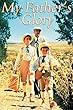
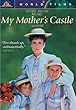
I have on a beautiful movie, Le Château de Ma Mère, “My Mother’s Castle”, sequel to La Gloire de Mon Père, “My Father’s Glory” (which I watched last night).  These are made from the book of Marcel Pagnol about his childhood memories.  It has been years since I have seen them.   Good movies for adults and perhaps late teens.

These are very stylized, as they ought to be for (happy) childhood memories.  They are excellent period pieces.  My French is just good enough to follow them.  Happily the French is simple while poetic.  I will have to watch it again later without the subtitles.

There are some good exchanges between the atheistic world view and the Catholic. Also, in the scene at Christmas, Marcel’s father had a good exchange with Jules, the uncle by marriage who told them all that they had been with him at Midnight Mass.   They also had a table set with the “13 desserts”, which, apparently, are traditional for Christmas.  There is a good scene about l‘absinthe, an icon of the time, and illegal for decades in Europe.  I believe it still is in the USA.   And there is a rather detestable girl, sadly a victim of lousy parenting.

And there are lots of birds, and (in the first movie) the local priest who takes interest in them, including the mighty bartavelle!

The two movies develop how children move by stages from childish understanding and from fantasy to a sometimes sadder, and sometimes even happier, reality of human frailty and our foibles, with the result that they are at the same time sweet and bittersweet.  They are about how childhood experiences leave impressions that endure for a lifetime.  I find these movies quite charming, perhaps in part because they remind me of my own summers in Montana and Wyoming, terrain not unlike the garrigue of Provence.

Posted in Lighter fare, REVIEWS, SESSIUNCULA |
10 Comments

Mele Kalikimaka for the TLM goers in Honolulu

For your Brick by Brick file… H.E. Most Rev. Larry Silva, Bishop of Honolulu has “increased recognition” for the use of the pre-Conciliar books for Mass and sacraments.

Of course the use of the traditional forms already have a great deal of recognition… from the Roman Pontiff.   But in this vale of tears we are happy with brick by brick progress.

From the Hawaii Catholic Herald:

Diocese adjusts status of Latin Mass community

Bishop Silva names a chaplain on Maui, a pastor on Oahu

By Patrick Downes | Hawaii Catholic Herald

The Latin Mass of 1962 is receiving increased recognition from the Diocese of Honolulu. Bishop Larry Silva has named a chaplain on Maui for a community of adherents to the “extraordinary form” of the Mass, commonly called the Tridentine Mass, and a pastor on Oahu. Both are first time positions. [This is not a parish.]

On Nov. 26, the bishop appointed Father Elias Escanilla, administrator of Holy Rosary Church in Paia, Maui, as chaplain of the Maui Latin Mass Community.

On Feb. 1, Father Steve Nguyen, who has been chaplain of the existing Oahu Latin Mass community since May 28, will become pastor of Blessed Sacrament Church in Pauoa Valley in Honolulu. The Latin Mass community will be incorporated into that parish on the same date. [It seems that there is a chaplain for the group, but there will be a sympathetic pastor.]

[…]

Father Nguyen said the Tridentine community has 75-100 members from all over Oahu —“Waianae, Waipahu, Makakilo, town, Kailua,” he said, giving a partial list of the places where they live.The group will not have its own separate parish council, he said, but will be represented on the Blessed Sacrament parish council.

Bishop Silva said that “Latin Mass Community members should register as members of Blessed Sacrament Parish, if they are stable members of the community and not occasional visitors.”

[…]

You can read the rest there.

Remember, Summorum Pontificum says that pastors can establish celebrations of the older form of Holy Mass.  The pastor doesn’t have to obtain permission.   Just because there is a community or even a parish given some kind of recognition, that doesn’t mean that other pastors cannot use this great tool of the spiritual life and continuity.

Posted in Brick by Brick, SUMMORUM PONTIFICUM | Tagged ,
5 Comments

QUAERITUR: Are Mass intentions for the living forbidden?

From a reader:

Recently, I went to my parish office to make an offering for a Mass to be said for the young daughter of a friend of mine that is recovering from …. The receptionist informed me that the pastor couldn’t allow Masses to be said for the living because it’s not allowed in Canon Law. [Noooo….] I left the office scratching my head for several reasons.

One, the pastor is someone I consider to be very solid and orthodox.  [I wouldn’t be so quick to blame this on the pastor.] Second, I know I’ve been to Masses where the priest will say, “This Mass is being offered for the parishioners of so and so parish.” Well they’re living.  Does Canon law prohibit Mass being said for someone living? If not, could you provide me a reference that I could take back to the parish. Like I said, this pastor is a very good man who I know wants to do the right thing.

There must be some miscommunication or misunderstanding.  That is just ridiculous.

You yourself point to the obligation that the pastor has to say Mass pro populo on Sundays and great feasts.

Furthermore, priests for centuries, and some still now, before saying Mass would recite this (my emphasis):

I intend to celebrate Mass and to confect the Body and Blood of our Lord Jesus Christ, according to the rite of Holy Roman Church, to the praise of Almighty God and all triumphant (heavenly) church/assembly, for my advantage and the good of all militant (earthly) church/assembly, and for all who have commended themselves to my prayers, in general and in particular, and for the felicitous state of the Holy Roman Church.

MAY Almighty and merciful Lord grant us joy with peace, amendment of life, a period for true penitence, the grace and consolation of the Holy Spirit and perseverance in good works. Amen.

Yes, Mass intentions with stipends can and ought to be accepted for the living as well as for the dead.   If the parish secretary is mistaken in this, she should be instructed by the pastor.  If the pastor is mistaken about this, I would bring this to the attention of your local bishop.  If that does not bear fruit, then you can write to the Congregation for Divine Worship and Discipline of the Sacraments.   They may want to know if the pastor has made this determination because of some error in doctrine.  If that is the case, then the Congregation for the Doctrine of the Faith would get involved.

But… it won’t have to go that far.

Yes, Mass intentions with stipends may be accepted also for the living.

Very many of the intentions I receive are for the living, as a matter of fact.

Posted in ASK FATHER Question Box | Tagged ,
23 Comments

O

O AntiphonsToday we begin the final days of Advent, which bring with them the beautiful O Antiphons.

Years ago I made a page about these antiphons.  I must update the last couple days, which I will soon.

The O Antiphons developed during the Church’s very first centuries. The writer Boethius (+525) mentions them. By the 8th century they were in use in Rome. There are seven of these special antiphons, and their texts spring from the Old Testament Hebrew Scriptures, the Prophetic and Wisdom Books. They are found in the Liturgy of the Hours or older Roman Breviary, which clerics, religious, consecrated virgins, and others use for daily prayer.

The O Antiphons are short prayers sung before and after the Magnificat, the great prayer of Mary in Luke 1:46-55 when coming visit to Elizabeth her cousin the Virgin praised God for His favor wondrous deeds. The Magnificat is sung during Vespers, evening prayer. The O Antiphons begin on 17 December, seven days before the Vigil of Christmas (24 December). The seventh and last antiphon is sung at Vespers on 23 December. They are called the “O Antiphons” because they all begin with the letter-word “O”: they address Jesus by one of His Old Testament titles.  They are fervent prayers asking Our Lord to come to us.

Advent is about the many ways in which the Lord comes.  He came historically at Bethlehem in the fullness of time. In the liturgical year he comes to us sacramentally.  He will come again at the end of the world as Judge of the living and the dead.  Christ comes to us also in the two-fold consecration of the Body and Blood of Christ by the priest at Holy Mass and, in a special way in a good Holy Communion.  He comes in the person of the priest, who is alter Christus, another Christ.  He comes in the words of Holy Scripture. He also comes in the person of our neighbor, especially those who are in need of the spiritual and corporal works of mercy.

During Advent, John the Baptist has been reminding us in the liturgy to “make straight His paths”. When we come to the Lord in death, or He comes to us in His Second Coming, He will make straight the path whether we have during our earthly lives done our best to straighten it ahead of time or not. Let us now, while we may, make straight the paths by which Christ Jesus comes.

Here are two additional notes about these O Antiphons.

The first is not apparent in English, but it can be seen clearly in the official language of the Roman Catholic Church: Latin. The Latin versions of each of the titles of the Messiah are: Sapientia (Wisdom), Adonai (Lord), Radix (Root), Clavis (Key), Oriens (Dawn), Rex (King), and Emmanuel (Emmanuel).  Take the first letters of each of the titles, starting with the last and working back to the first. You spell: EROCRAS or “ero cras… I will be (there) tomorrow”.

The song “O Come, O Come, Emmanuel” is simply a reworking of the seven O Antiphons. When you sing it, you are joining yourself to a vast throng of Christians stretching back across centuries and spanning the whole of the earth who prayed as all Christians do, “Come, Lord Jesus!” (Rev 22:20)

Posted in SESSIUNCULA |
8 Comments

QUAERITUR: When Mass is in an unconsecrate place do you still kneel?

From a reader:

Every year we attend a youth conference held in a local hotel.
Ever since I can remember, they have everyone stand during Mass. They have even had announcements before the Masses saying that “we will follow the stance of the community and all stand”. When asked about the issue of standing during the Eucharistic prayer, they told me that there is a rule in the Church (universal) that if you are holding Mass in an unconsecrated space, then everyone should stand for that portion. I have never heard that, but it is what they go by. Are they right? If so, where does it say this?

Piffle.

If people are genuinely impeded from kneeling, they don’t have to kneel.  The lack of kneelers, by the way, isn’t necessarily a genuine impediment.

In the Ordinary Form of the Roman Rite, people everywhere are to kneel at least for the consecration.  In the USA, people are to kneel from after the Sanctus to the end of the Great Doxology after the Eucharistic Prayer.

This doesn’t have anything to do with the place being consecrated or not consecrated.

That said, be of good cheer!  Given the way things are going, if that is a youth conference, they will soon have to have the Extraordinary Form to get young people to come.

Posted in ASK FATHER Question Box | Tagged
23 Comments