Obama Administration rewards another pro-abortion nun

There are women religious in the US who are trying to usurp the bishops’ right to teach and govern the Church in the USA.  I nicknamed this the Magisterium of Nuns.

We have seen Marlene Weisenbeck before, here and here.

Remember the Star Trek cameo she did?
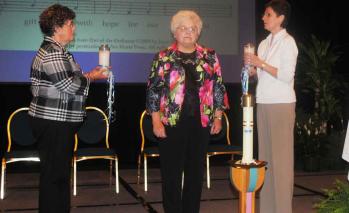
Marlene Weisenbeck

They were “farewelling” her.  No. Really.

Badger Catholic alerted me to this his post.  I present it to make it visible to a larger number of people.  His emphases and comments:

From WhiteHouse.gov

President Obama Announces More Key Administration Posts, 2/4/11 WASHINGTON – Today, President Barack Obama announced his intent to appoint the following individuals to the President’s Advisory Council on Faith-Based and Neighborhood Partnerships:

  • Sister Marlene Weisenbeck, Member, President’s Advisory Council on Faith-Based and Neighborhood Partnerships

Sister Marlene Weisenbeck, Appointee for Member, President’s Advisory Council on Faith-Based and Neighborhood Partnerships
Sister Marlene Weisenbeck is a member of the Franciscan Sisters of Perpetual Adoration[La Crosse, WI].  Sister Weisenbeck is an officer and past president of the Leadership Conference of Women Religious, a canonically approved membership organization[Can you believe they added that tidbit???  Do they have a bit of a credibility problem over at the LCWR that they have to explain they are canonically approved.  And is it not sad that they use that as a weapon against the Church?] which exists as a support system and corporate voice for leaders of religious institutes of Catholic Sisters in the United States[who dissent from the bishops of the United States].  She also serves as Chairperson of the Catholic Health Association’s Sponsorship/Canon Law Committee and is a consultant in religious law.  Sister Weisenbeck was president of the Franciscan Sisters of Perpetual Adoration from 2002-2010.  She is also past president of the National Conference of Vicars for Religious and Chancellor for the Diocese of La Crosse[I’ll give you one guess who brought a quick end to that, someone with a bit more understanding of Canon Law].  Sister Weisenbeck holds a B.M. Ed. degree from Viterbo University, an M.M. from George Peabody College of Vanderbilt University, a J.C.L. in Canon Law from Saint Paul University-Ottawa, and a Ph.D. from theUniversity of Wisconsin-Madison.

You might remember that precisely at the time where Catholics needed to show their firm opposition to any forced participation in abortion, Sr Weisenbeck led a charge of dissident women who hoped to provide enough cover for the Obama administration to pass a bill that in the future can “codify Roe v Wade.”  Since FOCA became widely unpopular, the president chose to make his health care legislation the foundation forunlimited abortion funding.  Frantic for power and prestige these sisters lead by Weisenbeck publicly opposed the Catholic Church’s long held teaching that every life is sacred.  I was told that Weisenbeck wascalled to Rome after that debacle which it seems has not affected her interest in pursuing her political career.  Obviously this appointment tells the real story behind her opposition of pro-life efforts and the USCCB.  She scratches Obama’s back and he scratches hers.  Do you think she’ll get a pen now too?
Posted in Emanations from Penumbras | Tagged ,
22 Comments

It’s the small things, sometimes

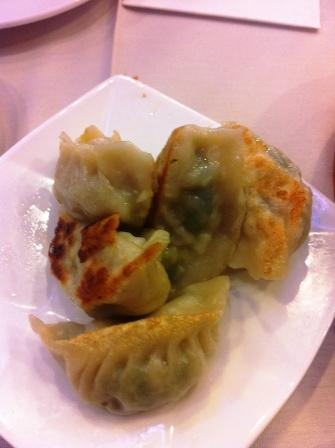
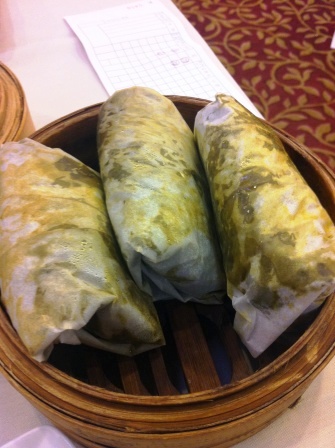
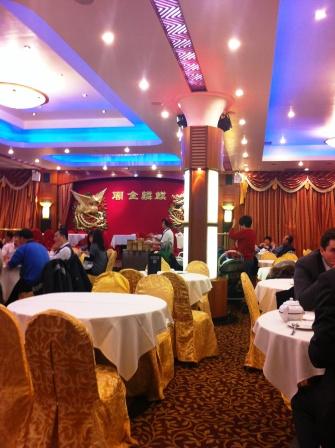
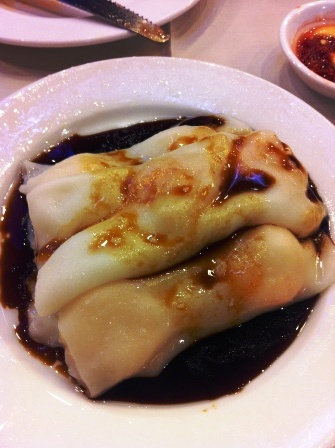
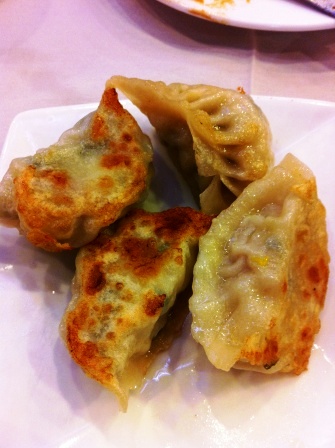
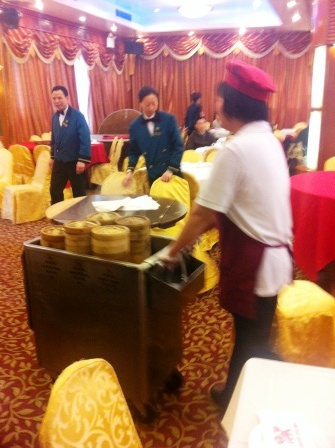
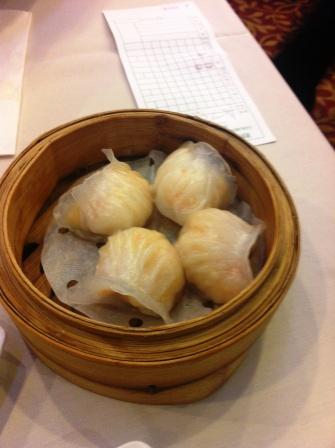
A friend and I went to have dim sum at the Golden Unicorn in Manhattan’s China Town.

Some shots.

It's the small things, sometimes

It's the small things, sometimes

It's the small things, sometimes

It's the small things, sometimes

It's the small things, sometimes

It's the small things, sometimes

It's the small things, sometimes

It's the small things, sometimes

It's the small things, sometimes

It's the small things, sometimes

Posted in On the road | Tagged
9 Comments

Why does the old fashioned style of Catholic-Anglican dialogue continue?

Remembering that Pope Benedict, who had the CDF issue Anglicanorum coetibus, is the Pope of Christian Unity, I share here an piece by William Oddie of the UK’s best Catholic weekly, the Catholic Herald.

He asks a necessary question.  Now that the Catholic-Anglican landscape has been made much clearer, why does the old fashioned style of Catholic-Anglican dialogue continue?

Thus, Oddie with my emphases and comments:

I begin with a simple news announcement, as reported by Zenit, the Catholic online news outlet:

The Anglican-Roman Catholic International Commission (ARCIC) is opening a new phase of dialogue with a meeting scheduled for May 17-27.

A communiqué from the Pontifical Council for Promoting Christian Unity noted that this new phase of work was mandated by Benedict XVI [The same Pope who had the CDF issue Anglicanorum coetibus, btw.  I wonder, however, if he knew much about this meeting.] and the Anglican archbishop of Canterbury, Rowan Williams, at their meeting in November 2009.

The first meeting of the new phase of the commission will take place at the Monastery of Bose in Northern Italy.

The communiqué noted that ‘the task of this third phase of ARCIC will be to consider fundamental questions regarding the “Church as Communion – Local and Universal,” and “How in Communion the Local and Universal Church Comes to Discern Right Ethical Teaching”. [Sounds like a topic which might interest Pope Benedict.]

Thus, and much more, Zenit. Zenit doesn’t comment on such matters: but it doesn’t give much background, either. You wouldn’t guess from this straightfaced announcement (and perhaps the boys and girls at Zenit don’t even realise) that the said meeting will not only be an expensive freebie for those involved but also utterly futile, an absolute and total waste of time. But you can probably gather that from the Catholic Herald report: I’m pretty sure the Herald newsdesk does know it, though their report doesn’t actually say so (and probably better not; it’s hardly necessary, since unlike Zenit’s, the Herald report does give the necessary background for us to come to that conclusion ourselves):

Pope Benedict XVI and Archbishop Rowan Williams of Canterbury, spiritual leader of the Anglican Communion, met in late 2009. They pledged to continue the formal dialogue even as the ordination of women as priests and bishops, the blessing of gay unions and the ordination of openly gay clergy threatened the unity of the Anglican Communion and made it more difficult for Catholics and Anglicans to see a way for their communities to draw closer together. [Sigh.  Talk for the sake of talk?  Talk because there is nothing else?]

Shortly after the Pope and archbishop met, the Vatican announced that a new round of dialogue, referred to as ARCIC III, would deal with “fundamental questions regarding the Church as communion local and universal, and how in communion the local and universal Church comes to discern right ethical teaching”.

In the wake of the recent collapse of Muslim-Catholic dialogue, you have to ask what that word “dialogue” has come to mean these days: two groups of irreconcilables, each churning out yet again their own point of view in case their interlocutors weren’t already perfectly well aware of what they think about absolutely everything? [Indeed.] I remember as a Catholic-minded Anglican desperately hoping, back in the 70s, in the early days of ARCIC, that a series of statements would somehow emerge which would uncover a common faith, on the basis of which corporate reunion might be a distant prospect. The statements did emerge, on Ministry, Sacraments and so forth: but they were never officially accepted by Rome as being a sound or adequate representation of Catholic belief, and nor were they.

The trouble with ARCIC always was (as a former Catholic member of it once explained to me) that on the Catholic side of the table you have a body of men (mostly bishops) who represent a more or less coherent view, being members of a Church which has established means of knowing and declaring what it believes. On the Anglican side of the table you have a body of men (and it was only men, on both sides, in those days) the divisions between whom are just fundamental as, and sometimes a lot more fundamental than, those between any one of them and the Catholic representatives they faced: they all represented only themselves.

And they all, Catholics and Anglicans, quite simply belonged to very different kinds of institution. It isn’t just that Catholics and Anglicans believe different doctrines: it’s that there is between them a fundamental difference over their attitude to the entire doctrinal enterprise. [This is rather interesting.] I remember very vividly, in my days as an (Anglican) clergy member of the Chelmsford Diocesan Synod, a debate on one of the ARCIC documents followed by a vote on whether to recommend to the General Synod in London that it should be accepted. The document was accepted overwhelmingly. At lunchtime, standing at the bar with a number of clergy, I asked how they had voted; they had all voted affirmatively. I then asked them if they had read the document. None of them had; and most of them, it became clear, had little idea of what it contained. “Well”, I asked, puzzled, “why did you vote for it, then?”  “The point is,” one of them replied, “the important thing is unity. The RCs are frightfully keen on doctrine. You have to encourage them: so I voted for their document”. There you have it: what the late Mgr Graham Leonard, when he was still an Anglican bishop, once called “the doctrinal levity of the Church of England”.  [Ultimately, the teachings and practices of the C of E must follow societal trends.]

And in the end, that fundamental disqualification of ARCIC remains: it is an endless time-consuming discussion between representatives of the Catholic Church on one side, and a varying group of individuals who represent only themselves on the other.  And so it will be at the next ARCIC meeting. Some of the Anglicans will be quite close to the views of their (hum, hum) “spiritual leader”, Rowan Williams; others will be very far from them. A document so general that they can all subscribe to it will somehow be cobbled together. Nobody will read it: and the whole operation will at great expense achieve nothing.

Can anybody explain to me why we carry on with ARCIC? Is there any real intention, as 30 years ago there undoubtedly was, of actually achieving something? Is it a continuing self-delusion on the part of those participating? Or is ARCIC III just a PR exercise, designed to avert attention from the fact that we have now, inevitably but finally, come to the bitter end of the ecumenical road?

Whatever it is, we will all, finally, have to face reality: and, surely, the sooner the better.

Posted in Pope of Christian Unity | Tagged ,
33 Comments

QUAERITUR: Should I teach my child to confess sins in kind and also number?

From a reader:

I’m preparing my oldest child for his First Holy Communion. This great little Communion book from TAN publishers instructs the child to confess his sins and the number of times he committed them. Now for myself, in confession I always understood that I only tell the amount of times I’ve sinned mortally. As most children do not commit mortal sin, I’m unsure what to do. I want to instill good habits into my son but I don’t want him stressing over the amount he committed each venial sin. Should I teach him to tell the number of
times no matter?

Yes, I believe you should.  Start forming good habits early.  Don’t stress it to a point where little stupor mundi becomes worried, however.

Also, I am not sure about “children can’t commit mortal sin” thing.  I have looked into the eyes of a three year old.   I’m just sayin’….  o{]:¬)

Posted in "How To..." - Practical Notes, ASK FATHER Question Box | Tagged , ,
16 Comments

A really fun Super Bowl Commercial

Speaking of commercials, this one was GREAT. Most of them were not.

And the music is what I believe I will chose for my first entrance to my cathedral if I am ever made diocesan bishop of anywhere.  Just to set the tone for the upcoming years…. ya know?

Play video

Posted in Lighter fare |
32 Comments

POLL ALERT! LOWEST Super Bowl Commercial

Our friends at SERVIAM have a poll going about which Super Bowl commercial lowered the standard for good, acceptable commercials, and made everyone collectively stupider and more vicious.

GO VOTE NOW.

Let’s see if we can boost his voting turn out to thousands.

Posted in POLLS | Tagged , ,
17 Comments

Sounds from Sunday’s Mass at Holy Innocents (Manhattan) – Anniv. of Dedication

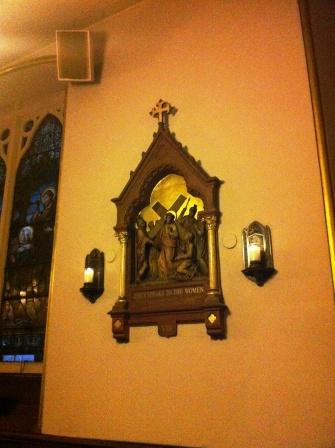
Sunday at Holy Innocents in Manhattan, Mass was celebrated for the Anniversary of the Dedication of the Church.

Sounds from the Mass are below.

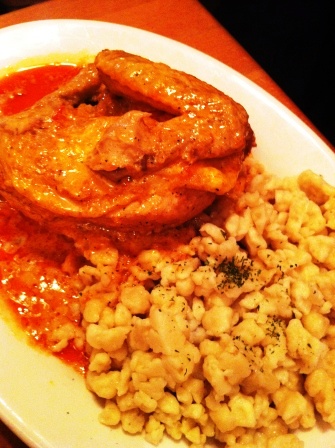
After Mass and meeting people for coffee afterward, we dashed up to the 80’s on east side for some Hungarian food for lunch.

Sounds from Sunday's Mass at Holy Innocents (Manhattan) - Anniv. of Dedication

Sights along the way…

Sounds from Sunday's Mass at Holy Innocents (Manhattan) - Anniv. of Dedication

Sounds from Sunday's Mass at Holy Innocents (Manhattan) - Anniv. of Dedication

Ah… New York.

I had a little time so I walked over to Bryant Park, one of my favorite places in the city.

On a glorious day.

Sounds from Sunday's Mass at Holy Innocents (Manhattan) - Anniv. of Dedication

Back at church for vespers, the dedication candles were aflame.

Sounds from Sunday's Mass at Holy Innocents (Manhattan) - Anniv. of Dedication

Later, after meeting a priest friend for supper and heading back to find friends for a libation, I tuned into the game on my iPhone via Slingbox (bless its inventors).

Sounds from Sunday's Mass at Holy Innocents (Manhattan) - Anniv. of Dedication

A lovely day.

Enjoy some sounds from my lovely day.

Posted in Brick by Brick, What Fr. Z is up to | Tagged
6 Comments

You know who Bp. Athanasius Schneider is… right?

This is pretty interesting:

Schneider named Maria Santissima in Astana Auxiliary

Bishop Athanasius Schneider, O.R.C. was named Auxiliary Bishop of Maria Santissima in Astana, Kazakhstan.

Bishop Schneider had been serving as Auxiliary Bishop of Karaganda.

It is not often that an auxiliary bishop is moved to be auxiliary bishop of a different diocese.  Even to the metropolitan see.

Bp. Schneider gets around.  It might be easier to get around from Astana, rather than from Karaganda.

And as an auxiliary, without the obligation of the administration of a diocese, he can speak about many things in many places.

Posted in SESSIUNCULA |
14 Comments

QUAERITUR: How to tell priests you don’t want concelebration.

QUAERITUR: How to tell priests you don't want concelebration.From a reader:

Is there any way for the celebrant of a Mass to inform other clergy that he prefer that they NOT con-celebrate with him without offending them or seeming to be ultra-conservative or rejecting the accepted practice? Con-celebration seems to be obligatory whenever clergy are invited for a celebration. Attendance in choir dress seems to be non-existent.

You have come, perhaps, to the wrong corner for advice about anything having to do with concelebration.

WDTPRS thinks that concelebration should be safe, legal and rare.

Or maybe that is why you are asking me…. hmmm…

In any event, I think it is very hard for you to say anything, especially if you …

a) are not the locum tenens,
b) have not put it about ahead of time that there will be no concelebration,
c) are in a circle where the priests rush every altar, lemming-like, in their shapeless off-white moo-moos and finger-painted stoles no matter how many Masses they have already (con)celebrated that same day, so that they can stare about in fraternity with as little attention to this Mass as any other that they have …. okay… I am ranting.

If you aren’t the pastor of the place, or the guy who calls the shots, I think you have to keep your mouth shut and permit it. Even if you are the guy in charge, you probably have to permit it.  In some circumstances you have to invite it as well (funerals, for instance – it is simply expected by priests these days).

Similarly, you could, when notes are sent around about a Mass, indicate that there will be no concelebration.  Instead, come in cassock and surplice with biretta (stoles to be provided for communicating priests).  That ought to make some of them scratch their heads.  And it won’t win friends.

QUAERITUR: How to tell priests you don't want concelebration.I suppose you could make a little speech, if you dare, about how concelebration is not foreseen at this Mass.  If any priest has not said Mass or has no other occasion, you would be happy to set up afterward and serve the Masses for the priests who otherwise would not have the opportunity.  I think such a speech would be met with confused and unhappy stares.

If you are worried about keeping the rubrics tidy, without the usual interlopers milling about, you could sequester concelebrants near, but not at, the altar.

This is all quite awkward.  There are good reasons to concelebrate.  There are good reasons not to have it.  I will not discount the reason of convenience.  Plainly, if you have a whole bunch of priests in one place, it is concelebration is convenient.  If you are a guest and the locum tenens isn’t inclined to help you out, well… concelebrate with a good attitude and smile.

You are going to be up against a certain mentality.

Even quite sensible priests, priests who ought to know better, have strange ideas about concelebration.  They would even constrain or look down on, or even gossip about, priests who for one reason or another chose not to.  I remember an occasion when I accompanied an old priest to a large Mass and he had the intention of being in choir without concelebrating.  One person after another harangued him and badgered him him, trying to get him to go along with everyone else, until he finally leaned in and said into one importunate fellow’s vacant face “I’m in the state of moral sin.”   That shut him up.

QUAERITUR: How to tell priests you don't want concelebration.Anyway, this is an uphill battle

It is going to take a while to move away from the lemming-like approach to concelebration.  Young priests will be taking over soon.  They are more flexible and far less ideological.

To be clear, if I am with a group of priests, for example, in a fraternal setting such as an annual meeting of a priests’ group I belong to, I am okay with concelebration.  Holy Thursday, most ordinations, some occasions with the local bishop or one’s own bishop, funerals of priests …

Safe, legal and rare.

Very hard to do this, friend.  Very hard to say to a priest he can’t concelebrate in the Ordinary Form.

Perhaps priest readers…. priests mind you… have some suggestions.  I frankly have zero interest in the opinions of lay people insofar as this question is concerned.  This is priest stuff.  Lay people: don’t bother commenting.  Really.  You can eavesdrop.  That includes seminarians and deacons.  Bishops and priests only.  Some priests will want to defend concelebration.  Okaaaaaay… if you must.  Yes, we know that Eastern Catholic priests concelebrate.

Posted in "How To..." - Practical Notes, ASK FATHER Question Box | Tagged
19 Comments

QUAERITUR: After what point of lateness can I no longer receive Communion, fulfill obligation?

From a reader:

I remember my father telling me when I was young that if one arrived after the Gospel at Sunday Mass, one could not receive Communion and the Sunday obligation was not fulfilled. My question has to do with daily Mass. I travel 40 miles each way to work and try to attend a 6:30 Mass before work. I am definitely not a morning person and occasionally arrive right after the priest has read the Gospel. Am I allowed to receive Communion? When that does happen I stay a few minutes after Mass and read the Gospel passage in my Magnificat publication.

Reading texts from Mass on your own is praiseworthy, but it is not the same as participating in their reading during Mass.  One is a private act of devotion.  The other is a liturgical action.

There were different views about limits on lateness, or presence at Mass.  In one view, moral theologians thought that you had to be there at least for the reading of the Gospel onward.  A good view.  The Gospel is important.  In another view, you had to be there from offertory onward at least under the purification of the chalice after Communion.  (Let’s not focus too much on leaving Mass early and getting into a problem about fulfill one’s obligation.)  This is one reason why bells were rung at the unveiling of the chalice at the offertory: that was your demarcation point between being in or out, as it were.

Others will say that you have to be there from the first words of Mass to the very end.  A laudable approach, though a little inflexible.  Yes, there is the Liturgy of the Word and the Liturgy of Sacrifice/Communion/etc.  There is the Mass of the Catechumens and the Mass of the Faithful.  But, however you divide up Mass, Mass is one.  It forms a unity.  So, we should be therefore the whole Mass, right?   To get around the inflexibility part, some of the same people who will say you have to be therefore every breath, will tell you with the next breath that you should go to Communion anyway, even if you were late.  I have me doubts about that.  I’ll get to that below, after I rant for a while longer.

I am inclined to use the old chalice veil to chalice veil idea, at least insofar as “obligation” is concerned.  We need to be as favorable towards people as we can when it comes to any obligations that are imposed on them.  The veil to veil approach seems reasonable and clear cut.

At the same time, when it comes to our involvement in liturgical worship I am not comfortable with the minimalist approach.

In one sense, it is enough the have the priest say the minimum amount of the form of the consecration over bread and wine and then consume it.  Sure, that is “valid”. It is “enough”.  But enough isn’t enough.   Sure, you can look at Mass from the point of view of being there for enough of it, and that is useful for being able to be clear or at ease about your obligations.  The law helps us relax.

The obligation thing and the Church’s law are important.  People should be able to rest easy about their obligations.  Take, for example, a penitent and his penance assigned in confession.  Some dreamy and pastorally sensitive priests who want to make confession spontaneous and chummy and nice will give as a penance – such a harsh word – something like “Think a nice thought someone today!” or “Do a good deed.”.  Sorry, but when I get out of the confessional I wanted a penance I can perform and then know that I have done it and not have to wonder even for a spit second whether I did it or not.

The same goes for Mass attendance and obligation.  Did you fulfill it?  Yes or no?  The demarcation lines and “minimum time there” approach have the benefit of answering that question, though they may leave some deeper questions about our role at Mass unresolved.

So, if you are late for Mass through no fault of your own, and there is no other way to fulfill your Sunday or Holy Day obligation, you have nevertheless done your best.  If you late through your own fault, that is another matter.

I am going to go with an old traditional way of seeing this: chalice veil to chalice veil.  Despite the indisputable importance of the Gospel and the rest of Mass, that’s where I will draw the line because when we have a restriction, we have to restrict our restrictions to the minimum.

Communion?

Reception of Communion is not the mark of having fulfilled your Mass obligation.  You are still obliged to go to Sunday Mass even if you know you cannot receive Communion.  Communion is not the same as getting your parking ticket validated at the restaurant.  Communion is more complicated and more simple.

No one has a gun to your head saying that you must receive Communion at every Mass you go to, even when you are in the state of grace.  You can go… or not go.

Here is my simple answer to whether you can go to Communion.

If you are not sure you have been there at Mass “enough”, and you will have a sense of when that is, then don’t go to Communion.  Don’t make excuses for yourself and introduce doubts about whether you should have gone or not.  Don’t go and you won’t wonder about whether you have to go to confession about unworthy reception.  Keep it simple.  The next time, get to Mass on time and go without having to weigh the odds.

Posted in "How To..." - Practical Notes, ASK FATHER Question Box | Tagged ,
40 Comments