How about some photos of your Advent wreaths?
If you don’t have one, perhaps your parish does.
UPDATES! The Pudding Adventure is underway!
____
I am resolved: A Christmas Pudding
Yes, I am still resolved.
I will be using the Christmas Pudding recipe from a cookbook for food mentioned in O’Brien’s books.
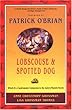 Which it’s called Lobscouse and Spotted Dog: Which It’s a Gastronomic Companion to the Aubrey/Maturin Novels. I want to use this book because it was given to me by a reader of this blog through my amazon wishlist! The use of the book, with the advice of those of you who have commented, will honor you.
This recipe doesn’t include the use of suet. And I am determined to use suet. Therefore, on studying the other recipes, I will adjust the aforementioned recipe for the addition of suet.
And I have determined the occasion for the consumption of said pudding: a meeting of my literary group at the end of January, which is within the Christmas limit of Candlemas.
I may make two. One to test. One to consume later.
I will head out this evening to gather ingredients which I lack.
For my Sunday Supper, btw, I am going to try to reproduce a Steak, Bacon and Mushroom Pie I had in London at Rowley’s.
BTW… did you know that Agatha Christie wrote a book called The Adventure of the Christmas Pudding? I didn’t! I wonder if my adventure will be as exciting… and lethal.

UPDATE 5 Dec 22:01 GMT:
It has begun.

I gathered the ingredients and set to this afternoon.
I decided to use a large food processor a lost friend gave me. Just for some quick mixing of the first ingredients.

Mixing some of the fruits. I did this in stages so as to get them well covered.

More stuff.

And now the suet. I got a huge chunk of the stuff. I hacked off enough for this recipe and then lopped the rest of it into small pieces for ziplock freezer bags.

I used the food processor to grate it, frozen. It worked well and saved time.
Blending it it.

Now the eggs.

Once the brandy was joined to the gooey mass, it went into the greased 2 liter pudding basin.

I covered it with a floured cloth and tied it down.

Into the large kettle, which has a cover.

The pudding is, as I write, steaming in its kettle. This will take about 5 hours in all.
MORE LATER.
 Herein we compare the lame-duck ICEL version of the 4th Eucharistic Prayer now still in use with the new, approved and corrected translation which we will soon be able to hear in our Churches. I use the Latin original, and the lame–duck ICEL version and the new, correction version as found in the website of the USCCB.
The new translation of the Roman Missal will help the whole Catholic Church, whether people want to attend the newer form of Holy Mass or not. When the tide rises all the boats rise with it. Therefore, the implementation of the new translation is of paramount importance for the whole Church.
 In the reading of the two versions of the Eucharistic Prayer, I try to keep my personality out of the way and not impose too much on the text. I just want you to hear the text. Besides, far too many priests try to read with meaning… it’s like water-boarding the faithful, but with syrup instead of water.
CLICK TO BUY
And since we learned in Light of the World, the new b00k-length interview of Pope Benedict, that the Holy Father watches movies made from the vignettes in the famous don Camillo books, we can hear another story from The Little World of don Camillo, the fictional not-quite-saint don Camillo Tarocci, (+ A.D. … ?), tough guy and parish priest.
 Some time ago, I began a to read stories from The Little World of Don Camillo by Giovanni Guareschi. There is a Don Camillo tag you can use to find the others easily.
Today we hear the story:
Podcast: Play in new window | Download
Subscribe: RSS
UPDATE: Here is a video of this vignette from the first (I think) don Camillo movie. You can see that the substance is there, but there are variations.
You can pretend you are sitting with the Holy Father in the Apostolic Palace watching it … perhaps with popcorn.
https://zuhlsdorf.computer/podcazt/10_12_23.mp3
The 2nd Sunday of Advent harks to the City of David: Jerusalem. Indeed the Roman Station is at Santa Croce in Gerusalemme.
Jerusalem is not just the physical place we might visit, where the historical events we commemorate took place. Jerusalem is the symbol of the Church on earth. It is also the heavenly kingdom for which we are preparing.
In the Gospel reading from Matthew, the Lord responds to the question of the Baptist: “Are you he who is to come?” Jesus replies, “Go and tell John what you hear and see: the blind receive their sight and the lame walk…”. Christ is describing not only what is physically happening in His presence, but also the spiritual coming of the Kingdom of God, the new Jerusalem. The Jerusalem we desire is, furthermore, not just the place or Holy Church, or the Kingdom of heaven. It is also the state of our own soul.
Listen to today’s
 COLLECT (1962MR):
Excita, Domine, corda nostra
ad praeparandas Unigeniti tui vias;
ut, per eius adventum,
purificatis tibi mentibus servire mereamur.
This ancient prayer was in the Gelasian and Gregorian Sacramentaries. Our Lewis & Short Dictionary, from which we are not to be parted, informs us that excito, is in the first place “to call out or forth, to wake or rouse up”. It is also, “to raise up, comfort; to awaken, enliven”. Praeparo, “to make ready beforehand”, is compound of prae and paro “to make ready”. At the end of the Gospel, Jesus speaks of John with the words of Malachi: “Behold, I send my messenger before thy face, who shall prepare (praeparabit) the way before thee”.
A LITERAL VERSION:
Rouse up our hearts, O Lord,
to make ready the paths for Your Only-Begotten,
so that through His Coming
we may be worthy to serve You with minds made pure.
In the Collect last week, we ask God to rouse up His might (Excita … potentiam tuam). Today we ask him to stir our hearts; to comfort yes, but mainly to enliven and arouse.
Last week in the Lesson we were told by Paul that it was time to awaken from sleep (cf. Rom 13). This week we ask the Father to makes our hearts worthy paths (viae) for the feet of Our Lord by rousing, and comforting them. Our hearts, our interior life (mens) must reflect His beauty. In the Gradual the Church sings: “Out of Sion the loveliness of his beauty: God shall come manifestly.” This “manifest” Coming is not only at the end of the world, in glory and might, as we hear Jesus describe on the 1st Sunday of Advent: it is also in the life of grace, which is manifest in our words and deeds.
I hear this all come together in the prayer lay people cannot hear, the
SECRET (1962MR):
Placare, Domine, quaesumus,
humilitatis nostrae precibus et hostiis,
et, ubi nulla suppetunt suffragia meritorum
tuae nobis indulgentiae succurre praesidiis.
Succurro is “to be useful for, good against”, but it has the root verb curro, “to run”, which is why it has an element of haste. However, in it I hear ringing also the Coming of the Lord on the paths we have prepared ahead of time.
LITERAL VERSION:
Be Thou appeased, O Lord, we beseech Thee,
by the prayers of our humility and by our sacrificial offerings,
and, where no favorable points of merits suffice for us,
succor us by the helps of Thy indulgence.
Can we hear the spirit of John? We must decrease so that God can increase, and increase us by coming to us. This is what many priests discover in a new way when they learn to celebrate the TLM.
Our Advent preparation, our diminishing, aims both at the Kingdom of God coming to us, and our coming to the Kingdom. The greatest realization of and anticipation of the Coming of the Lord we can have here on earth is when the Real Presence, present and yet truly still to come, finds the paths of our hearts prepared for Holy Communion.
POSTCOMMUNION (1962MR):
Repleti cibo spiritualis alimoniae,
supplices te, Domine, deprecamur:
ut, huius participatione mysterii,
doceas nos terrena despicere,
et amare caelestia.
This was adapted from a prayer in the ancient Gelasian Sacramentary. In turn it was adapted for the Post Communion in the Novus Ordo. Despicio is “to look down upon; despise; to look away, not to regard.”
LITERAL TRANSLATION:
Having been filled, with the food of spiritual nourishment,
we suppliants beg you, O Lord,
that, by participation in this sacramental mystery,
you may teach us to disregard earthly things,
and to love heavenly things.
I am guessing nearly all your hand missals say “despise earthly things” or the like. Given the exhortations by Paul in the Lesson, could we choose “look away from, disregard earthly things”? Paul urges the flock to be patient with each other and to be unified in giving glory to God. None of that can take place unless we look away from earthly faults.
The good things God created are not despicable. They become so when their allure makes us close or defile the paths of the Lord’s coming. We must disregard them when they become stumbling blocks. Paradox: in our material life we stumble when we disregard stumbling blocks, while in the spiritual life we stumble by lending them undue attention.
Since the Lord comes to us also in the person of our neighbor, let not their faults and worldly attachments be either tricky allurements or reasons to treat them without charity. In the Coming of the Lord, all shall be made straight and smooth. We must see our neighbor also, in anticipation, in the way our Lord has destined them to be.
The 2nd Sunday of Advent harks to the City of David: Jerusalem. This is not just the physical place we might visit, where the historical events we commemorate took place. Jerusalem is also the symbol of the Church on earth. It is also the heavenly kingdom for which we are preparing. In the Gospel reading from Matthew, the Lord responds to the question of the Baptist: “Are you he who is to come?” Jesus replies, “Go and tell John what you hear and see: the blind receive their sight and the lame walk…”. Christ is describing not only what is physically happening in His presence, but also the spiritual coming of the Kingdom of God, the new Jerusalem. The Jerusalem we desire is, furthermore, not just the place or Holy Church, or the Kingdom of heaven. It is also the state of our own soul. Listen to today’s
COLLECT (1962MR):
Excita, Domine, corda nostra
ad praeparandas Unigeniti tui vias;
ut, per eius adventum,
purificatis tibi mentibus servire mereamur.
This ancient prayer was in the Gelasian and Gregorian Sacramentaries. Our Lewis & Short Dictionary, from which we are not to be parted, informs us that excito, is in the first place “to call out or forth, to wake or rouse up”. It is also, “to raise up, comfort; to awaken, enliven”. Praeparo, “to make ready beforehand”, is compound of prae and paro “to make ready”. At the end of the Gospel, Jesus speaks of John with the words of Malachi: “Behold, I send my messenger before thy face, who shall prepare (praeparabit) the way before thee”.
LITERAL VERSION:
Rouse up our hearts, O Lord,
to make ready the paths for Your Only-Begotten,
so that through His Coming
we may be worthy to serve You with minds made pure.
In the Collect last week, we ask God to rouse up His might (Excita … potentiam tuam). Today we ask him to stir our hearts; to comfort yes, but mainly to enliven and arouse. Last week in the Lesson we were told by Paul that it was time to awaken from sleep (cf. Rom 13). This week we ask the Father to makes our hearts worthy paths (viae) for the feet of Our Lord by rousing, and comforting them. Our hearts, our interior life (mens) must reflect His beauty. In the Gradual the Church sings: “Out of Sion the loveliness of his beauty: God shall come manifestly.” This “manifest” Coming is not only at the end of the world, in glory and might, as we hear Jesus describe on the 1st Sunday of Advent: it is also in the life of grace, which is manifest in our words and deeds.
I hear this all come together in the prayer lay people cannot hear, the
SECRET (1962MR):
Placare, Domine, quaesumus,
humilitatis nostrae precibus et hostiis,
et, ubi nulla suppetunt suffragia meritorum
tuae nobis indulgentiae succurre praesidiis.
Succurro is “to be useful for, good against”, but it has the root verb curro, “to run”, which is why it has an element of haste. However, in it I hear ringing also the Coming of the Lord on the paths we have prepared ahead of time.
LITERAL VERSION:
Be Thou appeased, O Lord, we beseech Thee,
by the prayers of our humility and by our sacrificial offerings,
and, where no favorable points of merits suffice for us,
succor us by the helps of Thy indulgence.
Can we hear the spirit of John? We must decrease so that God can increase, and increase us by coming to us. This is also perhaps what the priest in the America article learned, as he discovered himself as a “speck” when saying the TLM.
Our Advent preparation, our diminishing, aims both at the Kingdom of God coming to us, and our coming to the Kingdom. The greatest realization of and anticipation of the Coming of the Lord we can have here on earth is when the Real Presence, present and yet truly still to come, finds the paths of our hearts prepared for Holy Communion.
POSTCOMMUNION (1962MR):
Repleti cibo spiritualis alimoniae,
supplices te, Domine, deprecamur:
ut, huius participatione mysterii,
doceas nos terrena despicere,
et amare caelestia.
This was adapted from a prayer in the ancient Gelasian Sacramentary. In turn it was adapted for the Post Communion in the Novus Ordo. Despicio is “to look down upon; despise; to look away, not to regard.”
LITERAL TRANSLATION:
Having been filled, with the food of spiritual nourishment,
we suppliants beg you, O Lord,
that, by participation in this sacramental mystery,
you may teach us to disregard earthly things,
and to love heavenly things.
I am guessing nearly all your hand missals say “despise earthly things” or the like. Given the exhortations by Paul in the Lesson, could we choose “look away from, disregard earthly things”? Paul urges the flock to be patient with each other and to be unified in giving glory to God. None of that can take place unless we look away from earthly faults. The good things God created are not despicable. They become so when their allure makes us close or defile the paths of the Lord’s coming. We must disregard them when they become stumbling blocks. Paradox: in our material life we stumble when we disregard stumbling blocks, while in the spiritual life we stumble by lending them undue attention.
Since the Lord comes to us also in the person of our neighbor, let not their faults and worldly attachments be either tricky allurements or reasons to treat them without charity. In the Coming of the Lord, all shall be made straight and smooth. We must see our neighbor also, in anticipation, in the way our Lord has destined them to be.
Podcast: Play in new window | Download
Subscribe: RSS
I picked this up from Sancte Pater to whom a biretta tip o{]:¬) is owed. The original is at EWTN.
Are you ready for this sort of thing where you are?
Activists forced the Archdiocese of Madrid, Spain to cancel a speech Cardinal Antonio Maria Rouco Varela planned to give at the Autonomous University of Madrid on Dec. 1.
The Spanish radio network, COPE, criticized the “aggressive secularism” of such activists in an editorial on its website.
Cardinal Rouco was scheduled to give a lecture titled, “The God who is unknown to 21st century Spaniards.” However, several days ago activist groups began calling for the event to be disrupted. The Spanish government said it could not guarantee the cardinal’s security, and Church officials therefore decided to cancel the speech.
“What happened here is another example of the cultural paradigm that seeks to impose aggressive secularism,” the editorial stated, while denouncing the activists’ “efforts to silence anyone who would speak of God and the meaning of man’s existence.”
“And there is the added irony that freedom and truth have become a nuisance at the place which is supposed to be the pillar of knowledge – the university,” the editorial continued. [Like the experience of the Holy Father when he could not go to La Sapienza.]
Because of these threats, COPE said, students will not hear the cardinal speak “about ‘the God who is unknown’ to the Spaniards of our day, like St. Paul did at the Areopagus of Athens.”
“The difference is that while 2,000 years ago, St. Paul could freely speak of the ‘unknown God,’ now an entire democratic system has caved in to the threats of violence, refusing to guarantee freedom and order on the university campus,” COPE stated.
The editorial also criticized the Spanish government for its unwillingness to “defend the liberties guaranteed by the Constitution,” and university officials “who also have done nothing to defend their own students.”
Hypocrites.
 Lest any “traditional” Catholics think today’s Collect is less valuable because it isn’t old enough, or wasn’t in the 1570 Missale Romanum, it is from 8th century the Gelasian Sacramentary.
COLLECT (2002MR):
Omnipotens et misericors Deus,
in tui occursum Filii festinantes
nulla opera terreni actus impediant,
sed sapientiae caelestis eruditio
nos faciat eius esse consortes.
LAME-DUCK ICEL (1973 translation of the 1970MR):
God of power and mercy,
open our hearts in welcome.
Remove the things that hinder us
from receiving Christ with joy,
so that we may share his wisdom
and become one with him
when he comes in glory.
Actus means, “an act or action” but also, “the moving or driving of an object, impulse.” Impedio (built from the word pes, pedis, “foot”) is “to snare or tangle the feet”. Sapientia means “wisdom”. In Christian contexts, especially of the Early Church, Wisdom is simply loaded with different overtones from theology and philosophy (philosophia, “love of wisdom”). The Bible has a group of writings called “Wisdom literature” which were, according to the Fathers of the Church, filled with foreshadows of Christ who is identified with Wisdom. The phrase faciat eius esse consortes calls to mind both the Collect prayer in Mass for Christmas Day and also the priest’s prayer when preparing the chalice at the offertory. A consors is someone with (cvm) whom you share your lot (sors). This is at the heart of today’s Collect prayer. Remember: Deus, “God”, is declined irregularly and in solemn discourse the nominative is used as the vocative form (e.g. cf. Livy 1, 24, 7). Do not, as ICEL did, fall into the trap of thinking that Deus is the subject of the verbs. The subjects are plural opera and singular eruditio.
LITERAL TRANSLATION:
Almighty and merciful God,
let no works of worldly impulse impede
those hurrying to the meeting of Your Son,
but rather let the learning of heavenly wisdom
make us to be His partakers.
CORRECTED ICEL TRANSLATION:
Almighty and merciful God,
may no earthly undertaking hinder those
who set out in haste to meet your Son,
but may our learning of heavenly wisdom
gain us admittance to his company.
If the new version of this collect isn’t exactly like this when the new Roman Missal goes into effect in Advent of 2011, it will probably be much like.
Last week in the Collect we were rushing to meet the Lord who is coming. We merited our reward due to good works because they are made meritorious by Christ. During Advent, as the Baptist warns us, we are to make smooth the path for the coming of the Lord, especially the Second Coming. This week we are again rushing.
But, perhaps we are wiser this week.
After the first rush of excitement we are now also wary of obstacles on that path which could impede us, snare our feet. These would be our merely human, simply worldly, works.
Works not performed in Christ are “works of worldly impulse”. They are not meritorious for heaven. There is a sharp contrast between heavenly Wisdom which liberates and worldly “wisdom” which entangles. The Apostle St. Paul contrasts the wisdom of this world with the Wisdom of God (cf. 1 Cor 1:20; 3:19; 2 Cor 3:19). In Romans 12:2 Paul says, “Do not be conformed to this world but be transformed by the renewal of your mind, that you may prove what is the will of God, what is good and acceptable and perfect.” This is not just a Pauline concept. Compare our Collect today also with 2 Peter 1:3-4 (RSV): “His divine power has granted to us all things that pertain to life and godliness, through the knowledge (cognitio: cf. eruditio) of him who called us to his own glory and excellence, by which he has granted to us his precious and very great promises, that through these you may escape from the corruption that is in the world because of passion, and become partakers of the divine nature (efficiamini divinae consortes).”
St. Augustine of Hippo (+430) dismantled a Donatist heresy that priests ordained by a sinful bishop would be automatically stained in the same guilt. He used imagery like that of our prayer today (Ad Donatistas post collationem in CSEL 53:19.25, p. 123 my translation):
“The sludge (lutum) their feet are stuck in is so thick and dense that, trying in vain to tear themselves out of it, they get their hands and head stuck in it too, and lingering in that sticky mess they get more tightly enveloped.”
The Donatist argument was based in worldly, not heavenly, wisdom.
Sticky lutum is a metaphor of worldly life.
Neglecting God, who speaks in the Church and our conscience, we weak sinners can convince ourselves of anything, over time: down becomes up, back is made front, black turns into white, and wrong is really right. We justify what we know, or knew, to be sinful. Once this becomes a habit, it is a vice in more than one sense of that word. Occasionally our consciences will struggle against the grip of self-deception, but quite often the proverbial “Struggle”, Novocain for the conscience, supplies permission: “I really ‘struggled’ with this, … before I did it!”
If we go off the true path into the murky twisted woods, thoroughly mired in sticky error we will not escape the Enemy, the roaring lion seeking whom he might devour (1 Peter 5:8). Nor will we elude Christ the Judge, who will come through dark woods by straight paths. Advent reminds us to prepare for the coming of both the Enemy lion and the Lion of Judah who will open the seals and read forth the Book of Life (Rev 5:5).
From a reader:
My wife recently completed a course on how to make yellow beeswax candles. My pastor has indicated he would love to receive them as a donation for requiem Masses, funerals, Tenebrae, All Souls, Good Friday, etc. (we have a weekly TLM during the week, but otherwise 100% ordinary form). These things are ridiculously-cheap to make, so we might just start mass-producing them for the area, and even get the kids involved.
I consulted the GIRM, but there’s no candle rubrics there beyond the fact that there must be at least two at a Mass.
The Catholic Encyclopedia said that yellow beeswax candles are appropriate for the above Masses, and bleached ones for other Masses. Admixtures of other ingredients are permitted.
I assume the candles should be blessed, ideally at a Candlemas.
Anything else we should know before we start cranking them out?
Keep in mind that the Catholic Encyclopedia online concerns the older way of doing things. The GIRM has to do with the Novus Ordo.
That said, yellow, as you put it, or “unbleached” beeswax candles are a fine thing for Masses of the Dead, Requiems, etc. They change the aspect of the Mass, as does the color of vestments (please, Lord, let it be black). They smell marvelous.
I am all for getting the kids involved. Some time ago when I visited Norfolk, VA to give a talk and celebrate a High Mass, I was given a pair of unbleached candles which the children of a friend had made. They were very welcome and I used them for daily Masses of for the Dead.
Don’t forget the candles used for the blessing of throats on St. Blaise day. Sometimes they are found twisted together in a special shape. There are also the small candles used for processions. And you might think about some special candles for baptisms. When I baptize, I suggest that people keep the candle and put a label on it with the occasion, place and name of the priest as well. They can use that candle, perhaps, for Communion calls in years to come, or even as a candle on the altar at a future wedding or profession.
I don’t know what to add. I hope you can create a market for the candles, perhaps at Church goods stores.
Keep in mind that there are different sizes of candlesticks. Some of them are quite large, and go in the large holders along the sides of coffins. Also, there are different sizes of candle followers. The size of the follower does make a difference. Candles burn better with the correct size of follower. You might want to test your candles with followers. Also, if they are pure beeswax, you might want to avoid making them very tall and thin. Many are the large altar candles I have seen which list and are bent from the burden of a summer’s heat.
Perhaps some of the readers here have some experience of making candles for the altar.
The paucity of priests serving in active duty in the US Military’s Chaplain Corps is nearing disaster.
I think there are three active duty priests in the Army in Iraq. The number of Navy chaplains, who serve the Marine as well, is dropping. It has been suggested that someone, somewhere, in the heights of the executive branch and military leadership, are trying to reduce the number of priests. There will also be problems from a repeal of “Don’t ask don’t tell”.
That said, the Archbishop of Baltimore, H.E. Most Rev.Edwin O’Brien, former Archbp. for the Military Services wrote a column in his diocesan paper, The Catholic Review, about problems with the number of chaplains.
Here is an excerpt.
[…]
It is my understanding that my fine but frustrated successor as Archbishop for the Military Services, Archbishop Timothy Broglio, has pleaded with military leaders at very high levels to show some concern for those of our Faith, but the new mantra of the Chaplain Corps is said to be: A chaplain is a chaplain, is a chaplain, is a chaplain. In other words, it makes no difference what religious needs you have as long as there is a chaplain of any denomination nearby. For Catholics, this is unacceptable!
The result? Catholics are down to some 70 priests to serve our three sea services when the need is more than twice as many. And those “slots” no longer filled by priests are going over to chaplains of other denominations, some of whom are overeager to welcome our young, Catholic, spiritually hungry service men and women into their fold.
Biretta tip o{]:¬) to my friend the great Fr. Blake, parish priest of St. Mary Magdalen in Brighton. He picked up something from the site of John Smeaton, director of Society for the Protection of Unborn Children (SPUC), which Fr. Finigan told me during my last visit is the oldest pro-life organization around.
These excerpts speak for themselves.
The Pope received the Hungarian ambassador during the week, he had some very important things to say on marriage.
“Marriage and the family constitute the decisive foundation for a healthy development of the civil society of countries and peoples,” the Pontiff affirmed.
He noted that “marriage as a basic form of ordering the relationship between man and woman and, at the same time, as basic cell of the state community, has also been molded by biblical faith.””Thus marriage has given Europe its particular aspect and its humanism, also and precisely because it has had to learn to acquire continually the characteristic of fidelity and of renunciation traced by it,” the Holy Father said.
On the other hand, the Pope added, it is “because of the different types of union which have no foundation in the history of the culture and of law in Europe.”
“The Church cannot approve legislative initiatives that imply a valuation of alternative models of the life of the couple and the family,” he stated.
“These contribute to the weakening of the principles of the natural law and, hence, to the relativization of the whole of legislation, in addition to the awareness of values in society,” the Pontiff said.Thus he affirmed that “the Holy See notes with interest of the efforts of the political authorities to elaborate a change in the constitution,” which would “make reference in the preamble to the legacy of Christianity.”
The Holy Father added, “Also desirable is that the new constitution be inspired by Christian values, particularly in what concerns the position of marriage and the family in society and the protection of life.”He asserted, “Europe will no longer be Europe if this basic cell of the social construction disappears or is substantially transformed.””We all know how much risk marriage and the family run today,” Benedict XVI acknowledged.
He explained that on one hand, these are at risk “because of the erosion of its most profound values of stability and indissolubility, because of a growing liberalization of the right of divorce and of the custom, increasingly widespread, of man and woman living together without the juridical form and protection of marriage.”John Smeaton contrasts his words with the EngCath presentation:•Archbishop Nichols, the archbishop of Westminster, who said on BBC TV that he did not know “whether the Catholic church should one day accept the reality of gay partnerships”
•Archbishop Nichols who said on BBC TV, the day after Pope Benedict left Britain for Rome, that the Catholic Bishops of Conference of England and Wales “did NOT oppose gay civil partnerships, we recognised that in English law there might be a case for those. We persistently said that these are not the same as marriage”
•Bishop McMahon, the bishop of Nottingham, who is open to headteachers of Catholic schools being in same sex unions and who says the Church is not opposed to civil partnerships (Bishop McMahon is chairman of the Catholic Education Service of England and Wales)
•Archbishop Nichols who, questioned about his support for the provision of Masses for homosexuals who openly dissent from Catholic teaching, told those who oppose what’s going on to “hold their tongue”.Ummm….
Curious difference in approach, no?
That last part needs greater explication. From the site of SPUC.
Vincent Nichols, archbishop of Westminster – and Bishops McMahon’s predecessor as CES chairman – was also interviewed by Mr Dowd. Archbishop Nichols was asked about the regular provision of Masses for a homosexual group in a central London parish, and the equally regular protests by faithful pro-life/pro-family Catholics against that provision.
Archbishop Nichols said:
“anybody from the outside who is trying to cast a judgement on the people who come forward for Communion [there], really ought to learn to hold their tongue.”Yet this totally ignores the evidence that the Soho Masses are organised by and for Catholics who dissent from the Church’s teaching on homosexuality,….
John Smeaton added on the SPUC blog:
Cardinal Raymond Burke, the prefect of the Apostolic Signatura, gave strong support to Catholics who refuse to hold their tongues about such matters. He said:
“Lying or failing to tell the truth, however, is never a sign of charity. A unity … not founded on the truth of the moral law is not the unity of the Church. The Church’s unity is founded on speaking the truth with love … “
You decide.
In Cincinnati H.E. Most Rev. Dennis Schnurr has undertaken to establish a parish for the Extraordinary Form.
Keep in mind that parish priests don’t need permission to establish celebrations of the TLM in their parishes, but only a bishop can establish a parish!
That said, it is important to remember that the establishment of a parish does not restrict the use of the older form of Mass to that parish.

Coat of Arms by D Burkart
 Fr. Reader on WDTPRS – Pentecost Sunday – Vetus Ordo: Savvy?: “Thanks. Interesting because I have been reading it for many years, missing something.”
 on ASK FATHER: “Ghost” or “Spirit”, which is it? Wherein Fr. Z Rants.: “one of the most lovely churches in my hometown is Holy Ghost. shortly after i came into the Church i…”
 on ASK FATHER: Is it a sin to take a 15 minute leave during a terrible homily?: “earbuds + podcast of the day’s homily from a repitable priest (or text-to-speech for Fr.Z’s) = problem solved. Card. Sarah…”
 on ROME 26/5– Day 57 & 58: doubled up: “Reminds me of going to Novus Ordo Christmas Mass. Priest came down from Altar with microphone with long cable and…”
 on ROME 26/5– Day 57 & 58: doubled up: “Agggh . . . The Keys, The Keys . . . “The Keys To The Kingdom”.”
 on ASK FATHER: “Ghost” or “Spirit”, which is it? Wherein Fr. Z Rants.: “@Les Buissonets, while I don’t disagree with your statement in a modern context, it’s amusing to consider that Tallis himself…”
 on ASK FATHER: “Ghost” or “Spirit”, which is it? Wherein Fr. Z Rants.: “In my mind, especially in my youth, I always thought of the “Holy Spirit” as more of a thing than…”
 on ROME 26/5– Day 57 & 58: doubled up: “Black to move and mate in 4 1) … Qxa2+ 2) Kxa2 (or Kc1 *1) Ra8+ 3) Qa6 (or Kb1…”
A Daily Prayer for Priests










They find you a pro-life agent in your area who commits to giving a portion of the fee to a pro-life group!

PLEASE subscribe via PayPal if it is useful. Zelle and Wise are better, but PayPal is convenient.
A monthly subscription donation means I have steady income I can plan on. I put you my list of benefactors for whom I pray and for whom I often say Holy Mass.
In view of the rapidly changing challenges I now face, I would like to add more $10/month subscribers. Will you please help?
For a one time donation...



Help Monks in Wyoming (coffee – UPDATED LINK) and Norcia (beer) and the wonderful "Soap Sisters" of Summit, NJ!


Please follow me on Twitter!










Visits tracked by Statcounter
since Sat., 25 Nov. 2006: