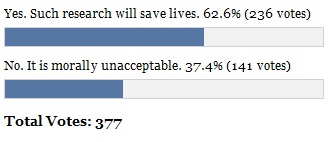
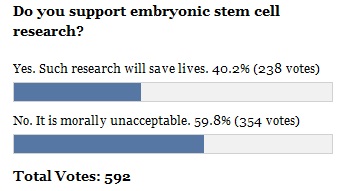
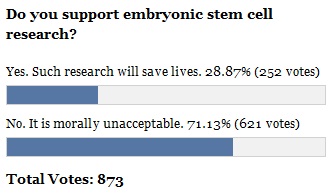
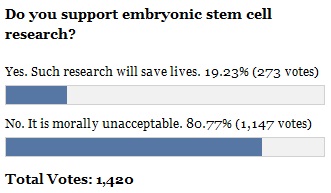
This comes from Freep… Detriot Free Press. NB: POLL ALERT! There’s a poll in the right-hand column of that article, asking whether you favor or oppose embryonic stem cell research.
My emphases:
Even in petri dish, life merits protection
I started out as an embryo. So did you and everyone else who shares this planet with us. And there is great significance to this irrefutable fact beyond the shared experience.
Time magazine’s cover story this week about the influence of life in the womb states the case: “We are the way we are because it’s in our genes: the DNA we inherited at conception.” Yes, upbringing and environment have a huge impact on our lives, but one thing never changes until our last natural breath: our DNA. Each human embryo is unique — it does not have the same DNA of the mother or father. That cell not only becomes us, it is us.
This reality is critical context as the World Stem Cell Summit meets in Detroit. Progress in research on umbilical cord blood cells and adult stem cells is to be saluted and supported. Patients and advocates alike can look to the growing number of cures and treatments discovered through research that does not destroy the living human embryo. Conversely, experiments on human embryonic stem cells deserve our scrutiny and scorn. If not us, who will speak for our fellow citizens-to-be?
We are blessed to live in a country with some of the most extraordinary founding documents in history. If, indeed, we believe we were “created equal,” doesn’t that belief extend to the indefensible living embryo in a petri dish? “Unalienable rights” means they can’t be taken away by the state.
Doesn’t that apply to science as well? And what of “life” in “life, liberty and the pursuit of happiness”? First, it must begin.
Embryonic stem cell researchers will attest that it is imperative to preserve an embryo because it is a living cell. It is after the living embryo is preserved with its human DNA signature that it is dissected, cloned, destroyed or discarded. True democracy is built on life, not death.
Ours is not the first country or culture to selectively pursue a moral calculus that justifies taking a life to enable scientific experiments. We know from sad experience that dangers follow when we put human hands on the switch of life and death.
Embryos are the genesis of human life, and it is morally unacceptable to intentionally destroy them, even if the scientist is trying to cure a debilitating disease or parents are responding to a difficult challenge in their family life. The country we live in defends human rights at home and abroad. That defense must extend to the laboratory.
In Michigan’s Compiled Laws, the fetal protection act is precise on punishing individuals who harm or kill a fetus — or embryo! — during an intentional assault.
How can there be such a disconnect with what happens in an assault case and what occurs in a laboratory when a human life is destroyed? The person who harmed an embryo in an assault is charged with a felony. The person who destroys an embryo in a petri dish is held harmless and likely considered some sort of medical pioneer. Yet the results were the same: two fewer people in the world who had no power to stop what was happening to them and had no voice in their demise.
The question is called.
Allen Vigneron is the archbishop of the Roman Catholic Archdiocese of Detroit.
There is a poll:
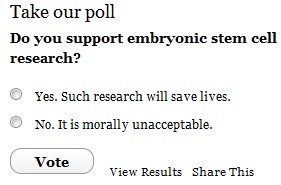
I voted “NO. It is morally unacceptable.”
Right now…

UPDATE 2107 GMT:
UPDATE 2243 GMT:
UPDATE 5 Oct 1212 GMT:

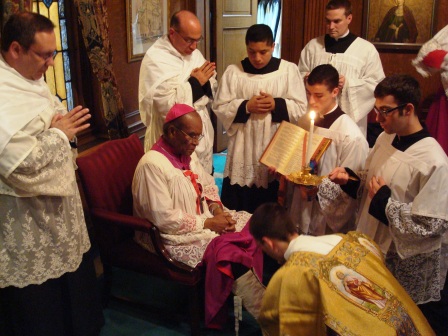
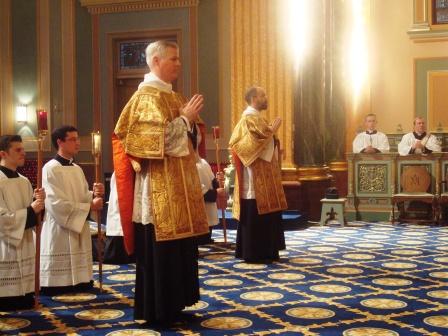
 On Thursday 7 October at 6 pm, at the Church of the Holy Innocents in Manhattan (37th ST btwn Broadway and 7th) H.E. Most Rev. Joseph Perry (Aux. Chicago) will be celebrant for a Solemn Pontifical Mass according to the Missale Romanum for the Feast of Our Lady of the Holy Rosary.


 Kathleen10 on Daily Rome Shot 1117 – A *POLL* about 2026-27: “Fr Z thanks so much for 2 reminders. 1. Using your Amazon link! For heaven’s sake it costs us nothing…”




























