 In the print version of WDTPRS, the weekly column, I have been comparing the lame-duck ICEL translation of the Ordinary of Holy Mass still hear in our churches with the new, approved version we will one day be able to use.
I have reached the Sanctus/Benedictus.
This is something of what I offered in the most recent column I sent in.
The sacred action of Holy Mass transcends the bounds of earth. Every Mass is wreathed about by the heavenly hosts of innumerable angels.
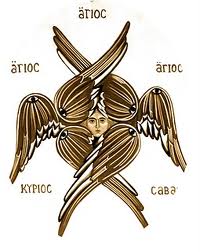
The first section of the Sanctus is inspired by Isaiah 6:3, which describes the Prophet’s vision of the throne of God. It is worth seeing an extended passage of chapter 6 to get a sense of what our own attitude should be at this moment of Holy Mass:
In the year that King Uzziah died [+759 BC] I saw the Lord sitting upon a throne, high and lifted up; and his train filled the temple. Above him stood the seraphim; each had six wings: with two he covered his face, and with two he covered his feet, and with two he flew. And one called to another and said: “Holy, holy, holy is the Lord of hosts; the whole earth is full of his glory.” And the foundations of the thresholds shook at the voice of him who called, and the house was filled with smoke. And I said: “Woe is me! For I am lost; for I am a man of unclean lips, and I dwell in the midst of a people of unclean lips; for my eyes have seen the King, the Lord of hosts!” Then flew one of the seraphim to me, having in his hand a burning coal which he had taken with tongs from the altar. And he touched my mouth, and said: “Behold, this has touched your lips; your guilt is taken away, and your sin forgiven.” (Isaiah 6:1-7 RSV)
“But Father! But Father!”, some might be saying as they read this. “You are certainly a romantic at heart. Your are being overly dramatic to associate this passage with our attitude at Mass!”.
Hardly! Consider that the last part of this passage from Isaiah, the description of the mighty seraphim angel coming to the prophet with the burning coal, was used at every Mass for a thousand years. Before the reading of the Gospel the priest would say the prayer called the Munda cor meum:
“Cleanse my heart and my lips, O Almighty God, Who cleansed the lips of the Prophet Isaiah with a burning coal. In Your gracious mercy deign so to purify me that I may worthily proclaim Your holy Gospel. Through Christ our Lord. Amen. Lord, grant me your blessing. The Lord be in my heart and on my lips that I may worthily and fittingly proclaim His holy Gospel.”
This hymn/prayer both invokes the presence of the greatest of created beings, the holy angels and acknowledges their presence. They bow before God. They bow before and with the priest, alter Christus, as they minister at our altars in our churches. Later during the Roman Canon the priest requests that the angels take our sacrifice to the altar in heaven.
The word Sabaoth looks a bit like the word “Sabbath”, but it is something quite different. Sabaoth is from Hebrew tsaba’, “that which goes forth, an army, war, a host.” Sabaoth or Tzevaot (in some transliterations) is used by the Jews – and by us during Holy Mass – as a title for YHWH, God. We invoke the God of the heavenly hosts.
The Hebrew word hosanna is essentially “help” or “save, I pray”. Depending on the context it is an appeal which the Jews raised to God begging for intervention and mercy or it is a shout of praise. For Christians, hosanna is a recognition that Jesus is the Messiah and Lord as well as a cry for our own salvation. It is simultaneously a shout of praise and a cry for help.
Let us now compare the version of the Sanctus/Benedictus still in use at the time of this writing with the new translation. I add emphases to highlight the changes.
LAME-DUCK ICEL VERSION:
Holy, holy, holy Lord,
God of power and might.
Heaven and earth are full of your glory.
Hosanna in the highest.
Blessed is he who comes
in the name of the Lord.
Hosanna in the highest.
Notice how the punctuation after “Lord” creates a separation from the rest of the actual title. Also, the lame-duck ICEL version gives a different stress to “Sabaoth”.
NEW APPROVED TRANSLATION:
Holy, Holy, Holy Lord God of hosts.
Heaven and earth are full of your glory.
Hosanna in the highest.
Blessed is he who comes
in the name of the Lord.
Hosanna in the highest.
When during Holy Mass you say or sing the Sanctus, you place yourself in a line of worshiping disciples wending back into the very earliest years of our Church. St. Clement of Rome (fl. A.D. 96) in his letter to the Corinthians mentions the liturgical singing of an early version the Sanctus:
“Let our glorying and our confidence be in Him; let us submit ourselves to His will; let us consider the whole multitude of His angels, how they stand by and serve His will. For the scripture saith, Ten thousand times ten thousand stood beside Him, and thousands of thousands served Him; and they cried, Holy, holy, holy Lord of Sabaoth! all creation is full of His glory. And let us, being gathered together in harmony and a good conscience, cry earnestly, as it were with one mouth, unto Him, that we may become partakers of His great and glorious promises.” (34:5-7)
The great liturgical scholar Joseph Jungmann wrote in his monumental Mass of the Roman Rite:
[T]his hymn, derived from the prophet’s vision, so sparing in words, yet so powerful and weighty, fits best of all in the structure of the eucharistic prayer, especially in the setting mentioned. All of God’s benefits and the manifestations of His favor, for which we must give thanks, are after all only revelations of His inmost being, which is all light and brilliance, inviolable and without stain, before which creation can only bow in deepest reverence – his holiness. Wherefore the first phrase taught us by our Lord in his own prayer is: Santificetur nomen tuum. That the cry resounds three times must have but increased the joy the Christians had in this song, for even when a Trinitarian meaning was not expressly attached to the triple “holy,” still there was inherent in it an echo of this most profound of Christian mysteries.

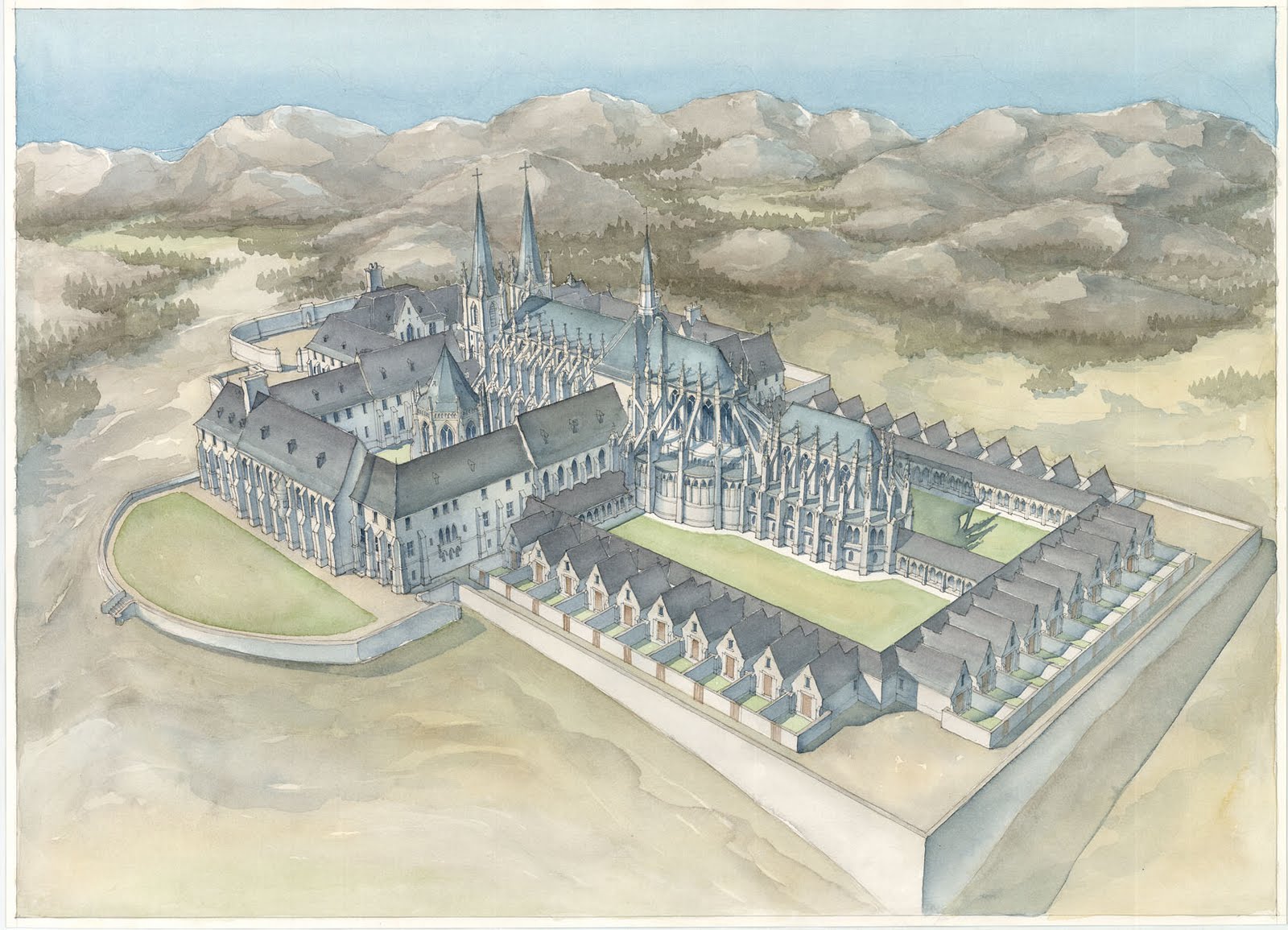
 I deeply admire religious communities who make and sell things to support their life and apostolates.
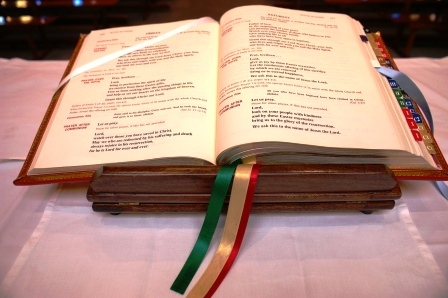 CARDINAL GEORGE ANNOUNCES VATICAN APPROVAL OF NEW ROMAN MISSAL ENGLISH-LANGUAGE TRANSLATION, IMPLEMENTATION SET FOR FIRST SUNDAY OF ADVENT 2011 [Do I hear an "Amen!"?]

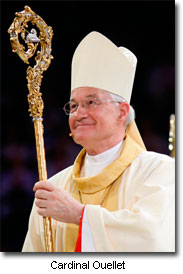 QUEBEC, August 19, 2010 (LifeSiteNews.com) – Bishops “need spiritual discernment and not just political calculation of the risk of the possibility of the message being received,” said Cardinal Marc Ouellet, the newly-appointed prefect of the Vatican’s Congregation for Bishops, in an interview this week.
 [Watch this.] “If you state it only formally and in the end you do not really want to see it applied because you don’t believe that it is possible that people accept it, you are in trouble for the transmission of the message,” he added.

 In the print version of WDTPRS, the weekly column, I have been comparing the lame-duck ICEL translation of the Ordinary of Holy Mass still hear in our churches with the new, approved version we will one day be able to use.
 ey are unhappy.


 Kathleen10 on Daily Rome Shot 1117 – A *POLL* about 2026-27: “Fr Z thanks so much for 2 reminders. 1. Using your Amazon link! For heaven’s sake it costs us nothing…”




























