On my way to supper in Philadelphia.


 Happy New Year!
The observance of the New Year (Xin Nian) typically several days, but the New Year season lasts from the middle of the previous years’ final month to the middle of the first month in the new year.
In the system of reckoning time, years are named in cycles of sixty years. The name of the year repeats every sixty years, therefore.
2010 is the 11th year in the 60 year cycle and is called gengyin. It is the year 4707… year of the Tiger.
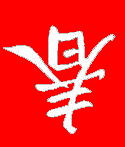
To prepare for the New Year, people give their houses thorough cleaning so as to symbolically sweeping misfortune or bad luck and make room for incoming good fortune that they want to arrive.
Doors and windows are often painted and decorated with paper cutouts depicting happiness, wealth and longevity. Characters on red paper are placed upside down on doors, because the Chinese word for "upside down" – "dao" – is like the word for "arrive", so, if the character for "spring" is put up upside down, that means that ‘spring is arriving". The same for "good fortune" etc.

New Year is a time for family gatherings.
Among the foods that are eaten are jiaozi – a boiled dumpling, literally meaning "sleep together and have sons", the meaning of which is apparent.
Fish is also eaten because the Chinese word for "fish" sounds the same as that for "abundance".
One also eats a seaweed called fat choi, a word sounding "prosperity". Noodles symbolize a long life.
On New Year’s Eve you are to leave all the lights on in your house tonight, by the way. I hear that is very good luck – particularly for the electric company.

In the morning children get hong bao which are red envelopes with some money. They will customarily say "Where’s the red envelope?!?" until you cough it up. Therefore, I will put my donation button on this post!
People visit their neighbors to greet each other. You might think about doing that, since that can also be a work of mercy.
People give mandarin oranges as a token of good will and good fortune.
So, I greet all of you with a hearty Gongxi facai!
SECRET:
Haec hostia, Domine, quaesumus, emundet nostra delicta:
et ad sacrificium celebrandum,
subditorum tibi corpora mentesque sanctificet.
This prayer was in the ancient L.S. Engolismensis. It didn’t survive the Consilium for the newer missal.
Subdo is “to put, place, set, or lay under; to bring under, subject, subdue”. After Mary and Joseph found the young Jesus in the Temple, Our Lord went with them and was “subject” them (Luke 2:51). Subdo is used to describe also the state of a wives to their husbands. This verb, in the participial form acting like an adjective, describes the state of the servants of God. Very often our prayers describe us as servi or famuli or members of the familia of God. That fam- root goes back to the household servants on an estate, totally under the law and care of their master. We call those under someone’s mastery, “subjects”.
LITERAL TRANSLATION:
O Lord, may this sacrificial offering cleanse away our sins,
and may it sanctify the bodies and minds of those subject to You
unto the Sacrifice now to be celebrated.
Human beings are both body and soul. The wounds to our human nature from the Fall of our First Parents affected us both spiritually and physically. The whole human person needs healing. Therefore, the Word took up all of our human nature, perfect human body and soul, so that the whole of man could be redeemed. At Mass there is also an inward component and an outward physical expression. Both must be active, each in their own proper manner and moment. The key in both cases is that we who are active participants nevertheless remain the subjects of the Lord, in the sense that we are entirely dependent on Him.
Paradoxically, we who are subjects in the sense of being beneath and dependent, by willing subjection become our own subjects, in the sense of being aware and willing actors. In grammar a subject is the thing in an active sentence which acts on an object. Because humans are God’s images, we are made to be subjects of our own determinations. We mustn’t be turned into unwilling objects. When we yield to God, however, in our state of being His “subjects” we are even more our own “subjects”. As Pope Benedict reminded us in his inaugural sermon in April 2005,
… If we let Christ enter fully into our lives, if we open ourselves totally to him, … do we not then risk ending up diminished and deprived of our freedom? … No! If we let Christ into our lives, we lose nothing, nothing, absolutely nothing of what makes life free, beautiful and great. No! Only in this friendship are the doors of life opened wide. Only in this friendship is the great potential of human existence truly revealed. Only in this friendship do we experience beauty and liberation.
Dante perfectly, precisely captured the inner disorientation of the exile when he wrote of a place where "the bread is salty and the steps are hard to climb".
Tasting salty bread was a reminder that he wasn’t in Florence. Climbing stairs built by a different measure than that which your legs learned in childhood told him he wasn’t in his native place.
I am in grocery store New Jersey.
I had constant reminders that this area has a very different make up of ethnic backgrounds than my native Minnesota.
For example, in Minnesota you will find perhaps a few feet of shelf space for canned tomatoes and maybe four, five kinds. Here, a couple dozen varieties in over twenty feet of shelves.

The entire left side is pasta. That would not happen where I am from.
In a cold case here I found this:

Here, you will not find Lefsa.
 The new translation contains an alarming new threat.
"Consubstantial"
By clinging to the inaccurate rendering of "consubstantialem Patri" in the Creed as "one in being with the Father", liberals obfuscate the dogma of the Church that Jesus is God, that He is "consubstantial" with the Father.
Ashtrays are "one in being" with the Father, or they wouldn’t exist.
Jesus isn’t just human. Jesus is God.
The Son was ever God. There was never a time when He was not. Jesus, the Incarnate Son, was God from the instant of His conception.
"Consubstantial" will impress on people the fact that Jesus is God.
Let’s consider the claim of the liturgical left that people started finally to understand Mass when it was in the vernacular, and then their crystal-ball-gazing claim that "Joe and Mary Catholic" won’t be able to understand "consubstantial".
We must ask, with a little shudder, "What do they understand now?" If you ask them what they understand about who Jesus is, what answer will they give?
Can liberals offer a prediction?
It is worth thinking about this.
Do people really believe that Jesus is God?
The shift from the vague "one in being" language to the more accurate "consubstantial" will serve as an opportunity to verify the faith of those in the pews (not to mention at the altar).
In our traditional Roman calendar this Sunday is Quinquagesima, Latin for the symbolic “Fiftieth” day before Easter. Today is one of the pre-Lenten Sundays which prepare us for the discipline of Lent. The priest’s vestments are purple. No Alleluia. The prayers and readings for the pre-Lenten Sundays were compiled by St. Gregory the Great (+604). After the Second Vatican Council the Consilium’s liturgical reformers under Annibale Bugnini and others eliminated these pre-Lent Sundays, much to our detriment.
COLLECT:
Preces nostras, quaesumus, Domine, clementer exaudi:
atque, a peccatorum vinculis absolutos,
ab omni nos adversitate custodi.
This prayer is found in the ancient Liber Sacramentorum Augustodunensis and the L.S. Engolismensis. I cannot find this prayer in any form in the post-Conciliar editions of the Missale Romanum.
Of course you won’t find Quinquagesima either.
The ponderous Lewis & Short Dictionary reminds us that absolvo means “to loosen from, to make loose, set free, detach, untie” or in juridical language “to absolve from a charge, to acquit, declare innocent”. The priest uses this word when he absolves you of the bonds of your sins. Vinculum is “that with which any thing is bound, a band, bond, rope, cord, fetter, tie”. This bond can be literal, as in physical fetters, or it can be moral or some sort of state. You can be bound in charity or peace, or bound in damnation or sin. In the case if sin, in liturgical prayer we find a form of vinculum or its plural with “loosing” verbs such as absolvo or resolvo or dissolvo. In ancient prayer the state of sin conceived as a place in which we are bound. The bonds must be loosed so that we can escape and be free. In the whole of the post-Conciliar Missal I don’t believe the combination peccata absolvere is found, but it is in ancient collections. One finds the phrase with some additional term such as “bonds” or “ties” of sins.
LITERAL TRANSLATION:
We beseech You, O Lord, graciously attend to our prayers:
and, having been loosed from the fetters of sins,
guard us from every adversity.
What is the first thing an enemy does to you, once you are captured? He renders you powerless to do your own will.
The Sacrament of Penance is the great gift. In all good will we must strive to live without mortal sin. But we fall. We pray to God to protect us from the dire consequences of sin, including the attacks of the Enemy, which on our own without God’s help we cannot resist. Among the benefits of the Sacrament of Penance, along with being freed from the chains of sins, is a strengthening to resist sin in the future.
These prayers of the pre-Lenten Sundays are meant among other things to help us ready with stores our interior fortresses before the spiritual battle of lent. We must empty out what doesn’t serve and be filled with that which does. Prepare yourselves for Lent’s discipline.
Liberals are fomenting revolt.
They are revolting against Pope Benedict XVI, and the bludgeon they are using right now is the new translation.
More and more we are catching whiffs of a rather rank dissent in the ranks of liberals who are seeking to persuade the less acute that they should resist the implementation of the new English translation of the Roman Missal.
Frankly, I say if you really hate the new translation the best way to protest is not to continue to use the lame-duck ICEL version but rather just switch to Latin. That’s real protest! But I digress.
This is from the UK’s best Catholic weekly The Catholic Herald, with my emphases and comments:
A new English translation? Amen to that
The objections to the new English translation of the Missal fall apart upon close inspection, says liturgical publisher John Newton [editor-in-chief of the excellent traditional liturgical publisher Baronius Press]
Some people are predicting riots in the pews when the new translation of the Mass is introduced. [Correction: some people want riots.]
For several years now experts have been preparing a revised English translation of the Roman Missal, which follows the Latin more closely. Following Vatican approval in 2008 the introduction of the new texts into parishes is on the horizon.Yet the project is not without its critics.
Vociferous objections were raised in some quarters of South Africa when it was accidently [yah, right… it was an "accident"] introduced last year and in America Fr Michael Ryan’s internet petition to halt the implementation of the new translations has attracted more than 10,000 signatures from around the world. [Very many of them "anonymous", unverifiable, and even bogus. Someone put my name on their list, for example. Think about that.] But there’s no reason that changing the words of the Mass should cause any problems.
Perhaps time has dimmed our memories, but we seem to have forgotten that many of the people’s parts were changed in 1975, less than six years after the new form of the Mass was introduced. And, as many of the objections to the forthcoming changes focus on the use of more formal language, it is worth remembering that this is exactly the sort of language that was originally used in the new Mass.
A quick look at the Sanctus illustrates the point. The first line of the 1969 translation – "Holy, Holy, Holy, Lord God of hosts" – is identical to the new version. And those who fear the coming changes should be heartened by the fact that the rest of the new Sanctus is exactly the same as it is at the moment. [The Lefevbrists-Of-The-Left will protest: "But…. but… sputter… but… we have been using this translation for nearly forty whole years now! It’s a tradition that can’t be changed! People are used to this!" This from the same people who didn’t give a tinker’s damn about the people they hurt and the chaos created by the rupture they inflicted in the Church’s long liturgical tradition.]
For better or worse, we will not be going back to the 1969 text, which continued: "Thy glory fills all heaven and earth" – although I imagine there will be some who wish we were.
Indeed, one distinctive feature of the 1969 translations was the use of hierarchic language when addressing God. So the Gloria ran:
Glory be to God on high,
And on earth peace to men who are God’s friends
We praise thee. We bless thee.
We adore thee. We glorify thee.
We give thee thanks for thy great glory.The reason the 1969 translations were replaced in 1975 was not a revolt against the thees and thous, nor because formal language had failed to serve the needs of the liturgy.
Rather it was because [get this] an ecumenical body, the International Consultation on English Texts (ICET), produced a version of the people’s parts of the liturgy that were adopted by the Catholic Church. Some opponents of the new English version have lamented the fact that, by abandoning the current texts, we will no longer be using common translations with other Christians. [Too bad. Furthermore, the only Protestants who will object to abandoning the poorly translated texts are also those who will object to the clearer theology of the better translation.]
This would be a fair point if it were true, but it is actually a base canard. Most Protestant communions stopped using these texts more than a decade ago. If they have found the ICET translations no longer meet the requirements of worship, there seems to me to be no good reason for us to keep them.
Indeed, given the Catholic Church seems to be leaning more and more towards the Orthodox, it is worth noting that when an English version of the Divine Liturgy of St John Chrysostom was published in 1995 it did not use the relevant ICET texts, but opted for a new translation employing more formal language.
Surprisingly, when the new English translations are introduced in the Mass the version of the Sanctus will be identical to that found in the Orthodox Liturgy. Many other parts have marked similarities – even the Creed, despite the inclusion of the filioque clause, is terribly close. It is hard to imagine that there was no consultation of the Orthodox texts when the new version of the Mass was being put together.
Yet, bizarrely, there are murmurings that in order to "save Vatican II" we need to resist the new translations. In high rhetorical fashion [the hysterical] Fr Ryan has said they are contributing to "what seems like the systematic dismantling of the great vision of the council’s decree". [I like that: "dismantling the vision". He can’t really point to anything in the documents themselves that is being "dismantled", so he points to a more nebulous "vision".]
He considers them "highly controversial" and asserts that "many highly respected liturgists and linguists" are unhappy with the "ungainly, awkward sentences".
While it is fair to say that not all of new texts are perfect, a little judicious polishing will smooth out the odd problems where these occur. What is needed is occasional fine tuning, not root and branch change.
Perhaps the problem is that we forget that liturgy is designed to lift our hearts and minds to God (see Sacrosanctum Concilium 33). [It also said that Latin was to be retained.] The natural language of liturgy leans towards the poetic, and when the new texts are approached as poetry then people will more readily be able to understand the riches they express.
Dignified and formal translations served the English-speaking Church well when the new Mass was first introduced in 1969, and they will do so again when the new texts arrive.
One hopes that, as the United States Conference of Catholic Bishops said, "the implementation of the revised Roman Missal [will] be a time of deepening, nurturing, and celebrating our faith through our worship and the celebration of the Sacred Liturgy".
Amen to that.
"Not every valid council in the history of the Church has been a fruitful one; in the last analysis, may of them have been a waste of time. Despite all the good to be found in the texts it produced, the last word about the historical value of Vatican Council II has yet to be spoken."
Ratzinger, Joseph. Principles of Catholic Theology: building Stones for a Fundamental Theology. San Francisco: Ignatius Press, 1987, p. 378.
Lateran V is an example of a Council which, though valid, was not very fruitful.
Ever since the papal Master of Ceremonies Msgr. Guido Marini gave a talk in Rome to English-speaking priests about liturgy and liturgical reform, liberals have been coming out of the wood work.
They are now emboldened to attack Benedict XVI and his vision through the easier target of Msgr. Marini.
There are many reasons for their attack on the Holy Father, but the more immediate casus belli in the new translation.
You might recall that, inter alia, Msgr. Marini said that when the Council mandated the reform of the liturgy, the people put in charge of that reform didn’t really understand well what they were doing.
While I agree with that to the extent that the "experts" probably didn’t really get the point of what the Council Father’s mandated, taken up in their own agenda as they were, they certainly knew what they wanted to do, regardless of what the documents said.
Now comes this about what Bp. Mark Coleridge of Canberra said about the new translation of the Roman Missal.
My emphases and comments.
By Anthony Barich
PERTH, Australia (CNS) — The newly translated Roman Missal to be issued in Australian parishes in 2011 will help address the serious theological problems of the 1973 missal currently in use, said one of Australia’s most senior liturgists. [Get that? "Serious" theological problems. Rememer: the way we pray as a reciprocal relationship with what we believe.]
In the process, it will more faithfully implement the liturgical vision of the Second Vatican Council [Because the liturgical vision of Vatican II was never really tried.] and also fulfill the reforms of the much-maligned 1570 Council of Trent, Archbishop Mark Coleridge of Canberra-Goulburn told approximately 200 liturgists gathered in Perth in early February.
Archbishop Coleridge is chairman of the Roman Missal Editorial Committee of the International Commission on English in the Liturgy; he is also chair of the Australian bishops’ Liturgy Commission.
While Archbishop Coleridge acknowledged that the missal used since 1973 has made gains in accessibility, participation, Scripture, adaptation and inculturation, he said it also has “serious problems theologically” and “consistently bleaches out metaphor, which does scant justice to the highly metaphoric discourse” of Scripture and early Christian writers. [It is important to remember the role that biblical positivists played in the liturgical wars. Blinkered by their approach to Scripture they effectively evacuated a great deal of the significance of the liturgical texts.]
This is the result of a misunderstanding of Vatican II’s reforms, he said. [Yes.]
Occasional claims of the Roman Missal revisions being a “merely political right-wing plot of the church” to turn the clock back miss the point of reform and of the purpose of the Mass, which is “a gift from God, not something to be manipulated,” he said.
“Nothing will happen unless we move beyond ideology and reducing the church to politics and the slogans that go with them, which are unhelpful,” he said. “Drinking from the wells of tradition passed on supremely in the liturgy is what this new moment of renewal is all about.” [Very well said.]
[Note this well:] Archbishop Coleridge’s speech to the liturgists came just two weeks after Benedictine Father Anscar Chupungco, a former consulter to the Congregation for Divine Worship and the Sacraments, said Jan. 22 that the reforms were part of an attempt to turn the clock back 50 years. [Precisely. Remember: Liberals want to control the narrative of the Council and the post-Conciliar reform. They must be set straight.]
Archbishop Coleridge said that one of the ironies of criticism of the new missal is that “we can fail to attend to history even though perhaps the most fundamental achievement of Vatican II was the restoration of historical consciousness to the life of the Catholic Church.”
“A claim that troubles me is that this initiative is somehow a retreat from all that Vatican II tried to promote and enact and a betrayal, therefore, of the (Second Vatican) Council and, by implication, the Holy Spirit,” Archbishop Coleridge said.
He said if that were true, he and thousands of others involved in the missal process “would not have shed the blood, sweat and tears of the last seven years.”
“We would’ve saved ourselves a lot of time and money if we’d just stuck with the Latin, but that’s not what the Spirit is saying to the church,” he said. [With due respect, I am not sure how that can be demonstrated. But let’s move on.]
However, Vatican II’s reforms were not properly implemented and were taken too far, he said, after the Latin texts were translated in 1973 with “breathtaking speed.” [And breathtaking incompetence.]
Since then, the liturgy has largely lost the sense of the liturgy as primarily Christ’s action, [YES!] as something received “not just what we do; a mystery into which we are drawn.” [Wow… does this sound like WDTPRS?]
“We can’t just tamper with it,” he said. “Celebrants sometimes act as if it’s their own personal property to do with what they like. You can’t.”
An overly cerebral approach to liturgy, loss of ritual, oversimplification of rites, loss of a sense of silence, beauty and an unwitting clericalism [No one is more "clerical" in the negative sense than a liberal.] have all led to the Mass lacking its full potential to catechize the faithful and renew the church, he said.
The Second Vatican Council’s “catechetical thrust” that encouraged priests to catechize in the process of celebration has led to the Mass “drowning under the weight of supposed catechetical verbosity,” he said.
The new translations will attempt to control “clerical verbosity and, dare I say, clerical idiosyncrasy,” he said.
“Let the texts stand as is and let catechesis draw out from the texts in a way that communicates to the community, rather than trying to build into the texts a catechesis that runs the risk of corrupting the texts or diluting their power,” he said. [Just Say The Black and Do The Red.]
The proposed English translation of the second Latin edition of the Roman Missal was never approved by Vatican, and a translation of the third Latin edition promulgated by Pope John Paul II in 2002 is near completion, the Vatican said in late January.
I am at Mater Ecclesiae in Berlin, NJ.
This stay is going to be interesting!
First, I am here to do some of the heavy lifting (things that involve talking) for the great Fr. Pasley. He is recovering from surgery on his throat and cannot talk for more than a few minutes a day.
Second, the snowfalls in the area have caused one of the roofs in the rectory literally to cave in. There are going to be some serious things going on. I hear there are also cracks in the church hall. They have got to get some snow off the roofs! Maybe we should have the blognic here and every one can bring a shovel.
Third, I am recuping from a bit of a broken toe. So, I am moving a little slowly.
Fourth, this is my broadband right now:

It is supposed run to somewhere near 54mbps
My quixotic iPhone is faster right now!
Therefore, to whom shall we pray for increased speed… fast? St. Expeditus?
UPDATE:
On the way to supper… pot hole… trench… flat.

UPDATE:
The heat is out in church, and we can’t figure out why.



Coat of Arms by D Burkart
 Fr. John Zuhlsdorf on Daily Rome Shot 1117 – A *POLL* about 2026-27: “Sorry… my bad. It is indeed SIX. 1. Rh8+! Kxh8 2. Qh2+ Kg8 3. Qh7+ Kf8 4. Qh8+ Ke7 5.…”
 on Encrypted Yeast? The Fathers on “What does the “leaven” really say?” (6th Sunday after Epiphany Resumed): “I especially like St. John Chrysostom’s insight, that when we are “hidden” in the normal places we live and work,…”
 on Daily Rome Shot 1117 – A *POLL* about 2026-27: “pestolover: For what it’s worth, your solution was the best I could do also.”
 on Daily Rome Shot 1117 – A *POLL* about 2026-27: “Fr Z thanks so much for 2 reminders. 1. Using your Amazon link! For heaven’s sake it costs us nothing…”
 on 10 November – St Andrew Avellino (Vetus Ordo). Wherein Fr. Z rants.: “So interesting that you bring this up, a couple weeks ago a priest at a neighboring parish died unexpectedly. They…”
 on Daily Rome Shot 1117 – A *POLL* about 2026-27: “All moves are forced for black. R-h8+, KxR Q-h2+, K-g8 Q-h7+, K-f8, Q-h8+, K-e7 QxP+, K-e6 Q-f7++ Ok, so 6…”
 on Daily Rome Shot 1117 – A *POLL* about 2026-27: “I couldn’t post on the ad orientem article. Here’s what I wanted to post: “Let the bishops restore ad orientem…”

A Daily Prayer for Priests








They find you a pro-life agent in your area who commits to giving a portion of the fee to a pro-life group!

PLEASE subscribe via PayPal if it is useful. Zelle and Wise are better, but PayPal is convenient.
A monthly subscription donation means I have steady income I can plan on. I put you my list of benefactors for whom I pray and for whom I often say Holy Mass.
In view of the rapidly changing challenges I now face, I would like to add more $10/month subscribers. Will you please help?
For a one time donation...



Help Monks in Wyoming (coffee – UPDATED LINK) and Norcia (beer) and the wonderful "Soap Sisters" of Summit, NJ!


Please follow me on Twitter!










Visits tracked by Statcounter
since Sat., 25 Nov. 2006:
 "Not every valid council in the history of the Church has been a fruitful one; in the last analysis, may of them have been a waste of time. Despite all the good to be found in the texts it produced, the last word about the historical value of Vatican Council II has yet to be spoken."

