Pres. Obama’s adviser Harry Knox

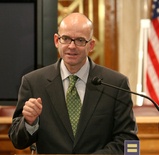
Harry KnoxYou might have heard something about Pres. Obama’s close adviser Harry Knox.

Let’s have a look at a CNS story about this presidential adviser… personally selected by Pres. Obama from who knows how many possible candidates… to help him form his policy on Faith-Based and Neighborhood Partnerships.  Knox is also a homosexual activist.

Remember that President Obama asserted at Notre Dame his interest in "common ground" with Catholics.


Obama Adviser Stands by Assertion That Pope Benedict XVI Is ‘Hurting People in the Name of Jesus’
Wednesday, February 03, 2010
By Karen Schuberg

(CNSNews.com) – Harry Knox, who serves on President Barack Obama’s Advisory Council on Faith-Based and Neighborhood Partnerships, is standing by a statement he made last March that Pope Benedict XVI is “hurting people in the name of Jesus.”  [This is the sort of person Pres. Obama wants as his advisor.]
 
When asked on Tuesday whether he still holds that view that the pope "is hurting people in the name of Jesus," Knox said, “I do.” (See video below.)

In addition to advising President Obama on the government’s Faith-Based and Neighborhood Partnership programs, Knox is the director of the religion and faith program at the Human Rights Campaign (HRC), a homosexual activist group.
 
At the National Press Club on Tuesday, CNSNews.com asked Knox, “You put out a statement saying Pope Benedict XVI was—quote—‘hurting people in the name of Jesus’ because he did not support promoting the use of condoms as a means to control the spread of HIV.  And I was wondering, do you still believe the pope’s position on condoms is ‘hurting people in the name of Jesus’?”
 
Knox answered, “I—I do.”
 
In a follow-up question, CNSNews.com asked Knox:  “So, even in light of—Edward Green, a Harvard researcher in AIDS prevention said the pope was correct in that condom use aggravates HIV, the spread of it, in Africa.  So, in light of that statement, do you still hold to that position?
 
Knox answered, “He is simply incorrect in his assertion.  All the other evidence of science shows otherwise.”  ["Shut up!", he explained.  "Don’t distract me with facts."]
 
On March 17, 2009, Pope Benedict flew to Africa to visit Cameroon and Angola. During the flight, he answered several questions from reporters, including one concerning AIDS in Africa: Given that the Catholic Church’s position in fighting AIDS “is often considered unrealistic and ineffective,” would the pope “address this theme during the journey?”
 
Pope Benedict gave a lengthy response, detailing many of the Church’s humanitarian efforts to help people with AIDS in Africa. “I would say that this problem of AIDS cannot be overcome merely with money, necessary though it is,” he said. “If there is no human dimension, if Africans do not help [by responsible behavior], the problem cannot be overcome by the distribution of prophylactics: on the contrary, they increase it.”
 
In response to the pope’s remarks, the Human Rights Campaign (HRC) issued a statement. It quoted Harry Knox as follows: “The Pope’s statement that condoms don’t help control the spread of HIV, but rather condoms increase infection rates, is hurting people in the name of Jesus.”
 
“On a continent where millions of people are infected with HIV, it is morally reprehensible to spread such blatant falsehoods,” said Knox in the statement. “The Pope’s rejection of scientifically proven prevention methods [Scientifically proven methods?  Is this like the scientific discussion in e-mail of climate change?] is forcing Catholics in Africa to choose between their faith and the health of their entire community.  Jesus was about helping the marginalized and downtrodden, not harming them further.”  [Sooo… thus Harry Knox is telling the world what Jesus is all about.  Never mind the Bishop of Rome, Knox knows!]
 
Senior Harvard AIDS Prevention Researcher Edward Green, who describes himself as a liberal, says that science backs the pope’s message.
 
“We just cannot find an association between more condom use and lower HIV-reduction rates” in Africa, Green told the Catholic News Agency in March 2009. The news agency further reported: “According to Green, the Catholic Church should continue to ‘do what it is already doing,’ avoid ‘arguing about the diameter of viruses’ and cite scientific evidence in connection with scripture and moral theology.” 
 
Harry Knox spoke with CNSNews.com at a press conference about the “American Prayer Hour,” a new, multi-city event designed to "affirm inclusive values and call on all nations, including Uganda, to decriminalize the lives of gay, lesbian, bisexual and transgender people." [Yah… that will really help slow the spread of AIDS/HIV won’t it.]
 
Other speakers at the press conference included the Rt. Rev. V. Gene Robinson, the first openly gay bishop in the Episcopal Church and Ninth Bishop in New Hampshire; Bishop Carleton Pearson, senior minister at Christ Universal Temple in Chicago; Frank Schaeffer, author and journalist; Rev. Elder Darlene Garner, pastor at Metropolitan Community Church; Rev. Barry W. Lynn, director of Americans United for Separation of Church and State; and Moses, a Ugandan citizen seeking asylum in the United States to escape abuse in his own country based on his sexual orientation.  [So, this is little more than hostility to the Catholic Church from activist homosexuals.   No… but wait… Harry Knox is a hand-picked advisor to Pres. Obama.]

Go to that CNS story for video and audio and a transcript.

There is an online petition requesting that the White House require the resignation of Harry Knox.

I don’t care if he resigns or he is fired so long as he has nothing to do with public policy.
Posted in SESSIUNCULA | Tagged , , , ,
26 Comments

7 Feb: Bl. Pius IX

Today is the feast of B. Pius IX.   Outside of Rome we do not celebrate Bl. Pius at the altar, but we can certainly on our own consider his contributions during his long pontificate.

Posted in Saints: Stories & Symbols | Tagged
9 Comments

Archbp. Nichols slaps down The Tablet’s coverage of the new translation

From the "Hoist On His Own Petard" file:

Here is something from the blog of Damian Thompson which I missed the other day… as I was traveling and my iPhone was on vacation.

It seems that the Rome correspondent of The Bitter Pill (aka The Tablet), Robert Mickens … I assume it was Mickens since he is the Rome correspondent for The Tablet and he is also participating in the circulation of a petition against the new translation … incited the Archbishop of Westminster during a press conference to go after The Pill about the issue of the new translation of the Missale Romanum.
Archbp. Nichols slaps down The Tablet's coverage of the new translation
Archbp. Nichols was asked an "ambush question" about the translation.  The Archbishop smacked down The Tablet as not being fair and balanced.  He called them out, which was an unintended consequence of the question.

Tablet: Translation of the Roman Missal – a number of priests in the English-speaking world are not happy with the translation. Is this an area of dissent?

Archbishop Nichols: I’m obviously aware that the article [by the leading US campaigner against the new English translation of the Missal] that was repeated or summarised in the Tablet came from America magazine. I’m also aware that the following week [in America magazine] a complementary view explaining the work of ICEL and their intentions was published. I haven’t seen that published in the Tablet yet, which may be wise, to balance up the debate.


Posted in The Drill, WDTPRS | Tagged , , , ,
16 Comments

WDTPRS: 5th Sunday of Ordinary Time – COLLECT (2002MR)

Let’s drill into a prayer for today’s Holy Mass.

COLLECT – LATIN TEXT (2002MR):
Familiam tuam, quaesumus, Domine,
continua pietate custodi,
ut, quae in sola spe gratiae caelestis innititur,
tua semper protectione muniatur.

This Collect was in the pre-Conciliar 1962MR, the so-called “Tridentine” Missal, for the 5th Sunday after Epiphany.  Let us see the Google… er um… ICEL version we will hear on Sunday in our parish churches and then immediately our slavishly literal WDTPRS version.

ICEL (1973 translation of the 1970MR):
Father,
watch over your family
and keep us safe in your care,
for all our hope is in you.

LITERAL TRANSLATION:
Guard your family, we beseech you, O Lord,
with continual mercy,
so that that (family) which is propping itself up upon the sole hope of heavenly grace
may always be defended by your protection.

Custodio means “to watch, protect, keep, defend, guard.”  It is common in military language.  Innitor, a deponent verb, means “to lean or rest upon, to support one’s self by any thing.”   Innitor also has military overtones. The thorough and replete Lewis & Short Dictionary provides examples from Caesar and Livy describing soldiers leaning on their spears and shields (e.g., scutis innixi … “leaning upon their shields” cf. Caesar, De bello Gallico 2.27).   Munio is a similarly military term for walling up something up, putting in a state of defense, fortifying so as to guard.  Are you sensing a theme?  We need a closer look.

We must make a distinction about pietas when applied to us and when applied to God.  When pietas is attributed to God, it means "mercy".   But let’s drill at pietas a little more.  Pietas gives us the English word “piety”, we have seen before in the last few years but it bears review.  L&S says pietas is “dutiful conduct toward the gods, one’s parents, relatives, benefactors, country, etc., sense of duty.”  It furthermore describes pietas in Jerome’s Vulgate in both Old and New Testament as “conscientiousness, scrupulousness regarding love and duty toward God.”  The heart of pietas is “duty.”  Pietas is also one of the seven gifts of the Holy Spirit (cf. CCC 733-36; Isaiah 11:2), by which we are duly affectionate and grateful toward our parents, relatives and country, as well as to all men living insofar as they belong to God or are godly, and especially to the saints.  In loose or common parlance, “piety” indicates fulfilling the duties of religion.  Sometimes “pious” is used in a negative way, as when people take aim at external displays of religious dutifulness as opposed to what they is “genuine” practice (cf. Luke 18:9-14).  

When we truly grasp the words in today’s prayer we find rich imagery of contrasting images.  On the one hand we see a family and on the other a group of dutiful soldiers leaning on their shields or spears, these being for us “the sole hope of heavenly grace”!  In fact, we Catholics are both a family, children of a common Father, and a Church Militant, the Body of Christ which is a corps (French for “body” from Latin corpus) marching in this vale of tears towards our heavenly fatherland.  Many of us were confirmed by bishops as “soldiers of Christ” and given a blow on the cheek as a reminder of what suffering we might face as Christians: not the first time we have suffered at the hands of bishops, perhaps, and maybe not the last.  

By our baptism we are integrated in Christ’s Mystical Body, indeed His Person, the Church. We are given the gifts and fruits of the Holy Spirit.  Through the sacramental graces that flow from baptism and confirmation, nourished by the Eucharist and healed and strengthened with the other sacraments, we are capable of facing the challenges of daily life and face down the attacks of hell.  We ought rather desire to die like soldiers rather than sin in the manner of those who have no gratitude toward God or sense of duty toward Him.  In today’s prayer we beg the protection and provisions Christ our King and commander can give us soldiers while on the march.  We need a proper attitude of obedience toward God, our ultimate superior, dutifulness our earthly parents, our heavenly home and our earthly country, our heavenly brothers and sisters the saints and our earthly siblings and relatives, our heavenly patrons and worldly benefactors, and so forth.  WDTPRS: 5th Sunday of Ordinary Time - COLLECT (2002MR)

This is also what it means to belong to a family: there is both a profound interconnection between the members but also an inequality – children are no less members of the family than parents, but they are dependent they are not the equals of their parents. Our prayer gives us an image that runs very much contrary to the prevailing values of the last few decades, a period in which the military has been denigrated and the family as a coherent recognizable unit has been systematically broken down.  The Latin prayers often reflect the Church’s profound awareness of our lack of equality with God.  The prayers are radically hierarchical, just as God’s design reveals hierarchy and order.  Compare this with prevailing societal norms.  Nowadays individual soldiers might be praised but the military is still being looked at by the intelligentsia with suspicion.  Rights of individual people are validated, but the family as a unit is under severe attack.  

In both the military and in a family (and the Church) there must be order.  Yet, children today can take their parents to court for disciplining them.  In some places parents are forbidden their rights to protect children who can obtain contraception or even abortions through schools without parental notification.  Discipline is dissolving.  And yet that very discipline is precisely the protection needed by troops on the march, children in growing up, the flocks of the Church from their pastors, from their commanders so they can attain their goal.   Parents, officers and shepherds must fulfill their own roles with pietas also, religious and sacred duty.  Holy Mother Church has maintained this Collect for centuries now in this exact period of the year (5th Sunday after Pentecost and 5th Sunday of Ordinary Time).  She holds these petitions up to God because the concern constituent elements of who we are.  The Church is not afraid to combine images of family and soldiering, the symbiotic exchange of duty, obedience and protection.

Please keep something in mind: the prayer suggests to me a meaning which is founded on the possible military nuances of the vocabulary.  It is also possible to emphasize the familial dimension and say, “Watch over your family, …with continual mercy/religious dutifulness,…” invoking more something like the image of a father or mother checking into the bedrooms of their children while they sleep, listening in the night for sounds of distress or need.  Perhaps putting the military element in relief helps us to claim both sets of images.  These choices are not easy friends.  Every time you make a choice in translating, you are going to lose something.  Therefore, pray daily for our bishops and those in charge of translating the Latin texts.  It is not an easy job.   They must make truly difficult decisions, knowing full well that with every choice something important will be lost for someone.  However, lest we be smug about the “olden days”, this applied equally to translations in pre-Conciliar hand missals used now by those attending Holy Mass celebrated according to the older books.  Something is always lost in translation. 

Posted in SESSIUNCULA, WDTPRS |
3 Comments

Benedict XVI to Scottish Bishops: “complete fidelity”

Every five years bishops are required to make an ad limina apostolorum pilgrimage to Rome to visit the "thresholds" and the tombs of the Apostles Peter and Paul and to meet with the Holy Father and Curia for status quaestionis review.   Bishops usually travel in groups according to regions.  The Holy Father addresses them.

When the Pope gives an ad limina apostolorum address he is speaking firstly to that group of bishops.  Therefore his address will have a focus on issues important for that region.  However, the Pope’s address is also aimed at all the bishops of the world.  The whole world, all the faithful and all non-Catholics everywhere are allowed to listen in.  The ad limina addresses have a global impact as well as a regional impact, particularly when the Holy Father is elucidating the larger principles which underpin his more regionally focused remarks. 
The Holy Father recently addressed the bishops of Scotland who made their ad limina visit.

Benedict XVI to Scottish Bishops: "complete fidelity"Let’s have a look at the meat of the Pope’s address, with my emphases and comments.
Dear Brother Bishops,

[…]

It is a happy coincidence that the Year for Priests, which the whole Church is currently celebrating, marks the four hundredth anniversary of the priestly ordination of the great Scottish martyr Saint John Ogilvie. [After the obligatory introductory paragraph, the Pope leads with an image of a martyr.  St. John Ogilvie did not acquiesce to the pressure of the political regime but remained faithful even through horrible torture and agonizing death.] Rightly venerated as a faithful servant of the Gospel, he was truly outstanding in his dedication to a difficult and dangerous pastoral ministry, to the point of laying down his life. Hold him up as an example for your priests today. [Therefore for themselves as well.] I am glad to know of the emphasis you place on continuing formation for your clergy, especially through the initiative "Priests for Scotland". The witness of priests who are genuinely committed to prayer and joyful in their ministry bears fruit not only in the spiritual lives of the faithful, but also in new vocations. Remember, though, that your commendable initiatives to promote vocations must be accompanied by sustained catechesis among the faithful about the true meaning of priesthood. [Who is the priest?  If we are going to true Catholics, we must have a clear vision of who the priest is in the Church, and what distinguishes the priest from the layperson.] Emphasize the indispensable role of the priest in the Church’s life, above all in providing the Eucharist by which the Church herself receives life. And encourage those entrusted with the formation of seminarians to do all they can to prepare a new generation of committed and zealous priests, well equipped humanly, academically and spiritually for the task of ministry in the twenty-first century.  [The comment about the seminary is interesting.  Didn’t Scotland close a seminary recently?]

Hand in hand with a proper appreciation of the priest’s role is a correct understanding of the specific vocation of the laity. Sometimes a tendency to confuse lay apostolate with lay ministry has led to an inward-looking concept of their ecclesial role. [One of the most important things we have to sort out is precisely what we mean by "ministry".  This is a question that Papa Ratzinger has been interested in for a very long time.  The undersigned even had a conversation with him on this point many years ago.] Yet the Second Vatican Council’s vision is that wherever the lay faithful live out their baptismal vocation – in the family, at home, at work – they are actively participating in the Church’s mission to sanctify the world. A renewed focus on lay apostolate will help to clarify the roles of clergy and laity and so give a strong impetus to the task of evangelizing society.  [Here the Pope has given a distinction:  use "apostolate" rather than "ministry".]

That task requires a readiness to grapple firmly with the challenges presented by the increasing tide of secularism in your country. [And not just in Scotland.  Therefore, everyone should be paying attention.] Support for euthanasia strikes at the very heart of the Christian understanding of the dignity of human life. [Euthanasia laws are expanding also in the USA.] Recent developments in medical ethics and some of the practices advocated in the field of embryology give cause for great concern. If the Church’s teaching is compromised, even slightly, in one such area, then it becomes hard to defend the fullness of Catholic doctrine in an integral manner. [YES!] Pastors of the Church, therefore, must continually call the faithful to complete fidelity to the Church’s Magisterium, while at the same time upholding and defending the Church’s right to live freely in society according to her beliefs. [Again, we are back to the overarching concern of this pontificate.  We must have a strong Catholic identity in order to carry out our mission in the world.  If we don’t know who we are, we will be weak in the public square, even driven from it.  We must revitalize our Catholic identity.  That includes rejection of "Cafeteria Catholicism.  That is exactly what he is saying, above, about complete fidelity to the Magisterium.  We can’t pick and chose what parts we like and reject others.  And we must present what the Church teaches in an integral manner, showing how all the different spheres of faith and life address in the Church’s teaching reflect a single source for Truth.]

The Church offers the world a positive and inspiring vision of human life, the beauty of marriage and the joy of parenthood. It is rooted in God’s infinite, transforming and ennobling love for all of us, which opens our eyes to recognize and love his image in our neighbour (cf. Deus Caritas Est, 10-11 et passim). Be sure to present this teaching in such a way that it is recognized for the message of hope that it is. All too often the Church’s doctrine is perceived as a series of prohibitions and retrograde positions, whereas the reality, as we know, is that it is creative and life-giving, and it is directed towards the fullest possible realization of the great potential for good and for happiness that God has implanted within every one of us.

The Church in your country, like many in Northern Europe, [The Pope is not talking to the Scottish bishops alone.] has suffered the tragedy of division. It is sobering to recall the great rupture with Scotland’s Catholic past that occurred four hundred and fifty years ago. I give thanks to God for the progress that has been made in healing the wounds that were the legacy of that period, especially the sectarianism that has continued to rear its head even in recent times. Through your participation in Action of Churches Together in Scotland, see that the work of rebuilding unity among the followers of Christ is carried forward with constancy and commitment. While resisting any pressure to dilute the Christian message, set your sights on the goal of full, visible unity, for nothing less can respond to the will of Christ.

You can be proud of the contribution made by Scotland’s Catholic schools in overcoming sectarianism and building good relations between communities. Faith schools are a powerful force for social cohesion, and when the occasion arises, you do well to underline this point. As you encourage Catholic teachers in their work, place special emphasis on the quality and depth of religious education, so as to prepare an articulate and well-informed Catholic laity, able and willing to carry out its mission "by engaging in temporal affairs and by ordering them according to the plan of God" (Christifideles Laici, 15). A strong Catholic presence in the media, local and national politics, the judiciary, the professions and the universities can only serve to enrich Scotland’s national life, as people of faith bear witness to the truth, especially when that truth is called into question.

[…]


Posted in SESSIUNCULA, The Drill | Tagged , , , ,
9 Comments

Italy Appeals Crucifix Ban

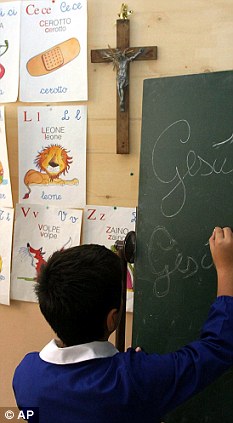
CrucifixBefore his election as Bishop of Rome, Pope Benedict wrote a good deal about the soul of Europe.  He was and is concerned that Europe will lose its identity because Europe will reject the Christianity which is at the very core and foundation of its history.

From ZENIT:

Italy Appeals Crucifix Ban

ROME, FEB. 5, 2010 (Zenit.org).- The Italian government is appealing a November ruling by the European Court of Human Rights that crucifixes in public school classrooms are a violation of freedom.

The Italian appeal defends the crucifix as "one of the symbols of our history and our identity."

"Christianity represents the roots of our culture, what we are today," the text of the appeal states. "The display of the crucifix in schools should not be seen so much for its religious meaning but as reference to the history and tradition of Italy.  [Well… it is more than that, isn’t it.  It takes more than beautiful monuments and buildings and things hanging on a wall to make a culture.]

"The presence of the crucifix in class remits also to a moral message that transcends secular values and does not infringe the right to adhere or not adhere to a religion."

The European Convention on Human Rights foresees that the Grand Chamber can consider an appeal if a case raises "a serious question" on the interpretation of the convention.


Posted in Our Catholic Identity | Tagged , ,
11 Comments

DANGEROUS kids thrown out of school… we are safe again.

I learned from St. Louis Catholic, that a little kid was thrown out of school.

DANGEROUS kids thrown out of school... we are safe again.
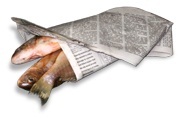
DANGEROUS kids thrown out of school... we are safe again.Yes, ladies and gentlemen, the photos above depict both the criminal and his weapon of choice. Another Columbine averted thanks to the quick wit of the tax-eating, brain-dead Principal of the appropriately, mundanely-named Public School 52.

The full story is here.

Moreover:

Also in New York, the creatively-named Junior High School 190 had a student arrested and led out in handcuffs (!) for doodling on her desk with an erasable marker:

Queens girl Alexa Gonzalez hauled out of school in handcuffs after getting caught doodling on desk

BY Rachel Monahan

A 12-year-old Queens girl was hauled out of school in handcuffs for an artless offense – doodling her name on her desk in erasable marker, the Daily News has learned.

Alexa Gonzalez was scribbling a few words on her desk Monday while waiting for her Spanish teacher to pass out homework at Junior High School 190 in Forest Hills, she said.

"I love my friends Abby and Faith," the girl wrote, adding the phrases "Lex was here. 2/1/10" and a smiley face.

But instead of simply cleaning off the doodles after class, Alexa landed in some adult-sized trouble for using her lime-green magic marker.

She was led out of school in cuffs and walked to the precinct across the street, where she was detained for several hours, she and her mother said.

Posted in SESSIUNCULA |
39 Comments

Dumb liberal idea #3464: Removing Holy Water during Lent

I noticed at Bonfire of the Vanities an entry profoundly dopey idea of removing Holy Water from fonts at the entrances of churches during Lent.

I have written about this really dumb idea several times.

Empty holy water fonts during Lent… GRRRRRR!

Since Lent is in view, let us get you good folks armed against such dopiness if it is planned for your parishes.

Here is what I wrote in another entry: QUAERITUR: removing holy water during Lent

Q:  Our Sunday bulletin states that Holy Water will be removed from Ash Wednesday on during Lent to remind us that we are in a desert. What is the latest rule for removing Holy Water? It used to be done on Good Friday.

Good question! Thanks for asking this. No doubt thousands.. maybe millions of people will be subjected to all kinds of rubbish during Lent. One day I should relate the stupid things we had to endure in seminary about this very thing of sand in the holy water stoup.

Any way… This is a response from the Congregation for Divine Worship and Discipline of the Sacraments about this question. Enjoy.

The emphases are mine:

    Prot. N. 569/00/L

    March 14, 2000

    Dear Father:

    This Congregation for Divine Worship has received your letter sent by fax in which you ask whether it is in accord with liturgical law to remove the Holy Water from the fonts for the duration of the season of Lent.

    This Dicastery is able to respond that the removing of Holy Water from the fonts during the season of Lent is not permitted, in particular, for two reasons:

    1. The liturgical legislation in force does not foresee this innovation, which in addition to being praeter legem is contrary to a balanced understanding of the season of Lent, which though truly being a season of penance, is also a season rich in the symbolism of water and baptism, constantly evoked in liturgical texts.

    2. The encouragement of the Church that the faithful avail themselves frequently of the [sic] of her sacraments and sacramentals is to be understood to apply also to the season of Lent. The "fast" and "abstinence" which the faithful embrace in this season does not extend to abstaining from the sacraments or sacramentals of the Church. The practice of the Church has been to empty the Holy Water fonts on the days of the Sacred Triduum in preparation of the blessing of the water at the Easter Vigil, and it corresponds to those days on which the Eucharist is not celebrated (i.e., Good Friday and Holy Saturday).

    Hoping that this resolves the question and with every good wish and kind regard, I am,

    Sincerely yours in Christ,
    [signed]
    Mons. Mario Marini [Later the Secretary of the Pontifical Commission Ecclesia Dei, now sadly deceased.]
    Undersecretary

One of these days I will tell you about the hijinx over holy water in Lent we had in seminary, the infamous Saint Paul Seminary, in Minnesota, where I did a couple years of hard time. But that’s another story.

About the holy water thing. 

Holy water is a sacramental. 

We get the powerful theology of its use in the older ritual in the prayers for exorcism of the water and salt used and then the blessing itselfDumb liberal idea #3464: Removing Holy Water during Lent.  I wrote about this in an article for the WDTPRS series and it is on this blog. 

The rite of blessing holy water, in the older ritual, is powerful stuff.  It sounds odd, nearly foreign to our modern ears, especially after over 30 years of being force fed ICEL pabulum.

Holy Water is a power weapon of the spiritual life against the attacks of the devil. 

You do believe in the existence of the Enemy, … right? 

You know you are a soldier and pilgrim in a dangerous world, … right? 

So why… why… why would these liturgists and priests REMOVE a tool of spiritual warfare precisely during the season of LENT when we need it the most?? 

Holy water is a sacramental. 

It is for our benefit. 

It is not a toy, or something to be abstained from, like chocolate or television.

Posted in "How To..." - Practical Notes, Linking Back | Tagged ,
57 Comments

Phone security tips

iPhone securityMy recent horrible but happily resolved adventure with my lost phone has gotten me thinking about additional phone security.
You can keep a lot of very important information on your phone these days.  Losing it could cause serious problems and a lot of worry.

What security tales and tips can you share?

I have an iPhone… which is soon going to be beefed up with more security tools.

Here is a first tip, if you have an iPhone, you can look up its geographical location through MobileMe. 

I didn’t have that, but I think I am going to get it.  I sure wish I had that option when my iPhone went missing.

I wonder if there is an app which allows you to erase or "brick" your phone if it goes missing.

Also, is there a way to tell if your phone has been "cloned"?

Posted in SESSIUNCULA | Tagged ,
22 Comments

Update on what I asked you to help me pray for

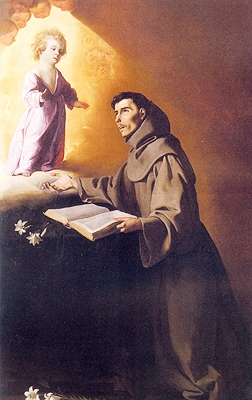
St. Anthony of PaduaThe other day I ask for your help by means of prayers for something very important that I had lost or was stolen in the Denver Airport.  When the thing didn’t turn up, I then asked if you would also pray that the person who had it would have a change of mind and heart.


It seems your prayers have worked.

Here is the fuller explanation and update.

It was my iPhone that went missing at the airport.  The moment I realized I didn’t have it, I reported it lost.  I retraced where I had been.   I then headed off to Wyoming Catholic College for my speaking engagement and visit there. 

I called the Denver Airport again that night and again the next day.  I was told they didn’t have my phone.  On my way back through Denver yesterday I checked again.

I spent quite a bit of very nervous time changing passwords on everything I could think of that I could access from my phone.  Believe me… that is a lot of things.  Then I went into my ATT account page and suspended the phone service. 

I when I got home I therefore went straight from the airport to the store and negotiated a new phone with a bit of a discount though an early upgrade.  Still very spendy. 

When I got to my house I found a message on my answering machine from my mother, that evening, saying that Denver Airport’s Lost and Found HAD MY PHONE.  They saw her number in my recent calls and called her late in the afternoon!  By the time I learned this, the Lost and Found was closed.

When I had checked the Denver airport yesterday the morning the person I spoke with apparently didn’t actually check to see if they had it.  Very expensive for me, as that turned out! 

Thus, I called the Denver Airport Lost and Found again today and spoke with a different person who confirmed that they had my phone.  She said they could FedEx it to me on Monday if I had a FedEx number.  I do and they have given me my tracking number.  I lost the phone on the 3rd.  It was turned in on the 4th.

Therefore on Wednesday I will probably have back my not-very-old formerly-lost very-expensive paper weight after its little vacation.

Then I called the ATT store where I had spent time and money last night.  They can take my new phone back a 10% fee.

Here is what I draw from this.

First, prayers are effective.  Something moved the person to turn my phone in after some delay.  Or perhaps St. Anthony helped Lost and Found find my phone they in turn had lost.  I don’t know which it is, but I am getting my old phone back, which in purely worldly terms was very much not likely to happen.

Second, regarding the phone itself, I have now started researching some apps and options to add additional security.  I will post on this in another entry.  Ever worry about identity theft?  I have. 

Third, it pays to pray and to be persistent in prayer… and persistent in your own efforts as well.  Many problems which seem to be lost causes can be resolved by grace and elbow grease.

Fourth, asking for help helps.

Therefore I am very grateful to everyone who, in their kindness, helped me pray for the return of this thing, which could have lead to some real problems and far greater expense.

Thank you, dear readers.

Posted in "How To..." - Practical Notes | Tagged ,
33 Comments






















