I have often written about how priests are never the same after having learned how to say the older, traditional form of Holy Mass in the Roman Rite. Many priests have related to me about how, once they learned, or relearned it, their sense of themselves as priests, as priests at the altar, as priest victim, as priest redeemed sinner has ever after exercised its influence over how they work and act, especially in their ars celebrandi. In turn, this creates a slow but inexorable knock-on effect in their congregations.
Take note of the following from Liturgy Guy (my emphases and comments):
What Priests Learn by Learning the Latin Mass
A reader of Liturgy Guy shared the following story with me recently. One anecdote wouldn’t necessarily be worth dedicating an entire blog post to; however, as I have personally heard similar experiences from others, I believe there to be merit in sharing this with you now.
I used to regularly communicate with a priest who was trying to learn the Traditional Latin Mass. Another priest promised to teach him but warned that “it will very likely ruin your life.”
What he meant, he explained, was that it would cause this particular priest to clearly see the deficiencies in his own formation and in his understanding of the Sacrifice of the Mass, ultimately causing him great frustration. Of even greater significance, he was told, learning the traditional Mass would make it difficult to celebrate the new Mass any longer. [Yes, these effects are also possible.]
“You won’t want to go back to it.”
Several months later I checked back in with the first priest. He told me that he had indeed gone on to learn the Traditional Latin Mass and had even celebrated it for some time before finally deciding to give it up.
Give it up, I asked? Why?
In the end, he said, “it was too foreign” to him. I asked him (very carefully and respectfully) how was it that the Mass which had been celebrated for the vast majority of Church history seemed too foreign. What did this say about his formation?
He agreed completely that his priestly formation was obviously lacking in a significant way. He simply did not have the background and formation in the theology and spirituality of the Holy Mass to deal with the ancient rite. [This is where the priest loses me.]
It was shocking to him.
Sadly we are finding that the Church has often failed priests in teaching them the Faith, and in so doing they have failed the laity who are supposed to be sanctified by these very same priests.
We often think of the classic expression lex orandi lex credendi (as we pray, so we believe) as being applicable to the laity. In reality, it is just as applicable to our priests. Possibly even more so. [Yes, even more so, for sure!]
Remember too, many of the priests formed by the new Mass over the last fifty years have now gone on to become bishops; and here we are left dealing with the fall out of this liturgical formation and its ramifications for the Church.
The current challenge to orthodoxy cannot be separated from the ongoing assault against orthopraxy. [And this is why libs so very hate the older, traditional form.]
Pray that more of the laity, more of our priests, and more of our bishops recognize this for themselves. Of course, this first requires a familiarity with the traditional liturgy. [The USE of the traditional Roman Rite!]
My concern is that many do recognize this connection, and that is why they are so hostile toward the traditional Mass.
Concerning the priest who gave up because the older Rite was tooo haaard.
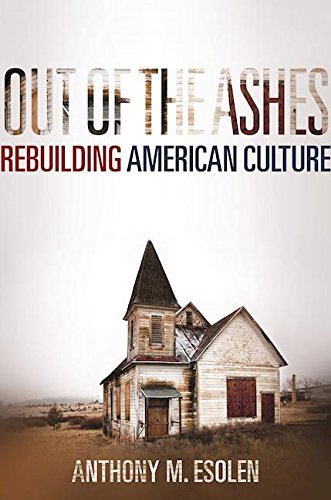
In Inferno, Dante describes the fate of those who could not decide to commit and who remained tepid. Dante moves through the gate that says “Abandon all hope ye who enter here”, passing into the “fore-Hell”, he sees a great, bare plain upon which a vast multitude of souls run in a circle chasing a meaningless whirling banner. A great moaning wail rises up. As Dante gazes at them, he says, “I had not thought death had unmade so many.” As they run, wasps and flies sting them. These are the souls who were tepid, whom God spewed out. They are “hateful to God and His enemies”. As commentator Anthony Esolen describes them in his good translation, they are the “unnamed spirits whose cowardice relegates them to the vestibule”.
I am reminded of Lumen gentium 14 which speaks to those who know what the truth is but who refuse it. This particular situation is not exactly parallel, but its serious nature harks to the warning.
I am reminded of a passage from Juan Donoso Cortes (+1853). The passage is from Essays on Catholicism, Liberalism, and Socialism:
“There is no man, let him be aware of it or not, who is not a combatant in this hot contest; no one who does not take an active part in the responsibility of the defeat or victory. The prisoner in his chains and the king on his throne, the poor and the rich, the healthy and the infirm, the wise and the ignorant, the captive and the free, the old man and the child, the civilized and the savage, share equally in the combat. Every word that is pronounced, is either inspired by God or by the world, and necessarily proclaims, implicitly or explicitly, but always clearly, the glory of the one or the triumph of the other. In this singular warfare we all fight through forced enlistment; here the system of substitutes or volunteers finds no place. In it is unknown the exception of sex or age; here no attention is paid to him who says, I am the son of a poor widow; nor to the mother of the paralytic, nor to the wife of the cripple. In this warfare all men born of woman are soldiers.
And don’t tell me you don’t wish to fight; for the moment you tell me that, you are already fighting; nor that you don’t know which side to join, for while you are saying that, you have already joined a side; nor that you wish to remain neutral; for while you are thinking to be so, you are so no longer; nor that you want to be indifferent; for I will laugh at you, because on pronouncing that word you have chosen your party. Don’t tire yourself in seeking a place of security against the chances of war, for you tire yourself in vain; that war is extended as far as space, and prolonged through all time. In eternity alone, the country of the just, can you find rest, because there alone there is no combat. But do not imagine, however, that the gates of eternity shall be opened for you, unless you first show the wounds you bear; those gates are only opened for those who gloriously fought here the battles of the Lord, and were, like the Lord, crucified.”?
If I were to talk with this priest, I would remind him of his identity. I would remind him of the stakes once he has learn what is “out there”, the patrimony that has been denied him. How can one turn back?
Prayers for the priest, whoever he may be.
The moderation queue is ON.


 I had a note from a reader about excellent news from Star Of The Sea parish in San Francisco.
 I have often written about how priests are never the same after having learned how to say the older, traditional form of Holy Mass in the Roman Rite. Many priests have related to me about how, once they learned, or relearned it, their sense of themselves as priests, as priests at the altar, as priest victim, as priest redeemed sinner has ever after exercised its influence over how they work and act, especially in their ars celebrandi. In turn, this creates a slow but inexorable knock-on effect in their congregations.
 this new fire, and grant that after the darkness of this life we may come unsullied to you who are light eternal; through Christ our Lord.