ASK FATHER: Minimum to fulfill Mass obligation

From a reader…

So a friend of mine who’s familiar with the old Mass but doesn’t offer it mentioned that you could fulfill your Sunday obligation (in the EF) so long as you arrived by the lifting of the veil and stayed until the Priest’s Communion. I had heard the first part and still go by that for the NO when asked (if no veil used, I just say the collection or offertory). I hadn’t heard the part before about the Priest’s Communion as the upper limit though. Is that the case? Thoughts on application to the NO? If it were true, it would certainly explain that it’s actually the OLD-TIMERS who are the worst about leaving Mass early after Communion. When I’ve asked, I only get excuses about traffic and walkers and how hard it is to get out with the rush – to which I normally reply saying – well how about you pray for a few minutes after Mass has ended rather than risk committing a mortal sin…or something to that effect.

That seems to be founded on the fact that the Sacrifice is not renewed until the destruction of the Eucharistic elements in the priest’s two-fold Communion.  If the Eucharist were confected, but not consumed by the priest, there would be no Mass.  So, that is the point at which Mass has been celebrated.  If you leave before that, you haven’t participated in Mass.  So, the bookends of offertory and priest’s Communion make sense… as a MINIMUM.  I don’t think we should focus on minimums (e.g., what are the fewest words needed in a sacramental form, etc.).  Remember also the distinction of the Mass of the Catechumens (up to the Offertory).  Catechumens had to leave the church before the Offertory, indeed before the Creed.

So, if someone wanted a base-line, bare minimum for fulfilling one’s obligation, offertory to priest’s Communion is reasonable.

It’s minimalist, but logical.

But there is more to be said.

It is useful to review something that Tracey Rowland wrote in Ratzinger’s Faith: The Theology of Pope Benedict XVI (US HERE – UK HERE).

The Lercaro—Bugnini inspired liturgical experiments of the last three decades have been based on an overemphasis on baroque sacramental theology and eighteenth-century philosophy, and an obsession with pedagogy. This in turn can be boiled down to a cocktail of scholasticism (the reduction of sacramental theology to considerations of matter and form), the Kantian obsession with pedagogical rationalism (the predominance of ethical values over strictly religious ones), moralism (a notion of Mass attendance as duty parade), and a Jansenist attitude to beauty (it is irrelevant: the only thing that matters is that the words are doctrinally sound and in the vernacular). In other words, one has a cocktail of theological and philosophical ingredients which Ratzinger has spent his entire ecclesial life trying to throw out of the pantry. Anyone wanting to escape the culture of modernity with its lowest-common-denominator mass culture will find it difficult to do so at many contemporary Catholic liturgies based on the Lercaro—Bugnini principles. As Catherine Pickstock has argued, ‘a genuine liturgical reform would either have to overthrow our anti-ritual modernity, or, that being impossible, devise [or perhaps, develop] a liturgy that refused to be enculturated in our modern habits of thought and speech’.  [I think that we already have that.]

The “spirit” of the modern, Novus Ordo, Lercaro-Bugnini “lowest-common denominator” Mass and over-emphasis on the minimum necessary to fulfill one’s Mass obligation have factors in common.

However, I understand wanting to get out of some Masses as quickly as possible, given the ars celebrandi or, rather, nugae celebrandi, perpetrated by in some churches.

If we take seriously Benedict’s teaching that “everything related to the Eucharist should be marked by beauty” (in opposition to the “Kantian attitude that aesthetics is a mere matter of taste which Paul VI – Lercaro – Bugnini promoted), then, over time, the desire for the “minimum necessary” and the “lowest common denominator” in our liturgical worship, and people’s actual participation, would shift.  “Beauty” is an essential element, not an add on.  It’s absence prompts thoughts that are antithetical to what I think is a sine qua non for Catholic identity.

Posted in "How To..." - Practical Notes, ASK FATHER Question Box, Liturgy Science Theatre 3000 | Tagged , , , , , , ,
35 Comments

ASK FATHER: Praying for the Holy Father’s intentions when those intentions are… odd

Combat Rosary right to bear arms

UPDATE:

A reader sent:

Father:   When the Pope is saying “human person at center”, I think this article might explain the thinking.  [The serendipitous article in question is from today’s page at Crisis.]

Person as opposed to power and goods (at center) and other Marxist ideals.

HERE

__________

It doesn’t hurt to remind people that when we pray “for the intentions of the Holy Father” (as we do when we pray the Rosary), we are not praying for the Holy Father.  Rather, we are to pray for the intentions the Holy Father designates for our prayers that month.

We don’t have to know what they are explicitly.  It is enough to desire to pray for, to have the moral intention to pray for, what he wishes.  That said, it is pretty easy in the age of these interwebs to find out what they are.

The Pope usually assigns two petitions or intentions, one general and one of a more missionary spirit.  Coming up in September we are to pray for these intentions which the Holy Father has designated:

Universal: Centrality of the Human Person

That each may contribute to the common good and to the building of a society that places the human person at the center.

Evangelization: Mission to Evangelize

That by participating in the Sacraments and meditating on Scripture, Christians may become more aware of their mission to evangelize.

In regard to the first, I had to scratch my head a little…. “the building of a society that places the human person at the center”?  The human person and not God?  I am reminded of the way the prayers for the Feast of Christ the King were altered.  In the older Missale Romanum the orations see Christ as being, now, King of all earthly things.  In the newer Missale, Christ is seen more as an eschatological King.

I had a note from a priest about the September 2016 intentions:

I practice the First Saturday devotion and try to pray for the pope’s intentions often for indulgences, but have found this increasingly difficult.

This month, for example, it seemed a little strange that the pope is asking for us to pray that “sports may be an opportunity for friendly encounter,” but I just shrugged my shoulders and went along with it.  [In August, the Summer Olympics were going on in Rio.]

But now I am troubled to see the September intention, namely, that we build a society that “places the human person at the center.” This seems so contrary to what we should hope for – and exactly what the enemy wants. How can I pray for the Holy Father’s intentions when I believe them to be contrary to the Faith? Or, more specifically, how can I fulfill the obligations to gain plenary indulgences without directly supporting intentions contrary to the Faith?

Thank you, and I understand of course if you are unable to get to my question. I will offer up my Mass for you today. [Thanks!]

The indulgence is conceded according to the way it is conceded.  If the indulgence says that the work to be performed includes praying for the Holy Father’s intentions, then that is what we do.  He, being Pope, gets to designate his intentions, silly or solemn, frivolous or fervid,  humdrum or heavenly.

Perhaps this will help.  If there are monthly intentions which cause you to scratch your head, you might add when you pray for the Pope’s intentions the words…

“in the manner in which the Holy Father’s intention fulfills Thy Will O, Lord.”


Posted in "How To..." - Practical Notes, ASK FATHER Question Box, Mail from priests | Tagged , ,
27 Comments

ASK FATHER: Confessions during Mass – followup

12_03_31_confessionNot long ago I answered a question about why priests might not offer opportunities for confession on feast days.  HERE  As part of that entry we moved into the issue of priests hearing confessions during Mass (not the celebrant, obviously).  In support of this I linked to the Holy See’s document Redemptionis Sacramentum 76, which clearly states that confessions can be heard during Mass.

One comment left for my consideration (it went into the queue), said:

From the policy books of the Archdiocese of Chicago:
BOOK FOUR- THE SANCTIFYING OFFICE OF THE CHURCH (SACRAMENTAL AND LITURGICAL LIFE)
202.12.1. Policy The Sacrament of Penance or any other service shall not be celebrated while Mass is being celebrated in the same space. Regularly scheduled confessions between Sunday Masses are not permitted.
301.1.2. Policy The Sacrament of Penance shall not be celebrated while a Mass is being celebrated in the same place. (See also Policy 202.12.1., herein.)

This is apparently directed to “regularly scheduled confessions” and I note the most priests I know will gladly hear the confession of those who approach them whenever they can.

This stuck in my craw.

In 2001 a dubium was submitted to the Congregation for Divine Worship and Discipline of the Sacraments.  That dicastery has pretty much ultimate authority when it comes to the matter at hand.  A response was give in the official publication of the aforementioned Congregation, Notitiae 37 (2001), 259–260.

[QUAERITUR:] Quaenam sunt dispositiones quae ad momentum celebrationis sacramenti Paenitentiae spectant: utrum, exempli gratia, christifideles perdurante Missae celebratione ad sacramentum Paenitentiae accedere possunt?

De tempore celebrationis sacramenti Paenitentiae praecipuae normae inveniuntur in Instructione Eucharisticum mysterium, 25 maii 1967, ubi commendatur, ut « Fideles ad eum adducantur extra Missae celebrationem, praesertim horis statutis, ad sacramentum Paenitentiae accedant, ita ut eius administratio cum tranquillitate et ipsorum vera utilitate fiat, neve ipsi ab actuosa Missae partecipatione impediantur » (n. 35). Quae etiam in Praenotandis Ordinis Paenitentiae denuo proponuntur (n. 13), ubi tamen declaratur, ut « reconciliatio paenitentium omni tempore ac die celebrari potest » (ibidem).

Quod tamen quamquam consilium a pastoribus intellegi debet ad pastoralem curam christifidelium, quos hortari et adiuvare ne omittant, ut in sacramento Paenientiae bonum animae quaerant et ad eum pro posse accedant extra tempus et locum celebrationis Missae. Altera ex parte haec norma nullo modo prohibet sacerdotibus, praeter illum Sanctam Missam celebrantem, confessiones fidelium audire, qui id desiderent etiam tempore celebrationis Missae.

[NB] Hac praesertim aetate, qua ab multis ecclesialis significatio peccati et sacramenti Paenitentiae obscuratur et desiderium accedendi ad sacramentum Paenitentiae valde minuitur, pastores omnibus viribus suis favere debent frequens usus huius Sacramenti inter fideles. Ideo in can. 986 § 1 Codicis Iuris Canonici leguntur: Omnis cui animarum cura vi muneris est demandata, obligatione tenetur providendi ut audiantur confessiones fidelium sibi commissorum, qui rationabiliter audiri petant, utque iisdem opportunitas praebeatur ad confessionem individualem, diebus ac horis in eorum commodum statutis, accedendi.

Celebratio re vera sacramenti Paenitentiae unum e ministeriis propriis sacerdotis est. Christifideles autem non solum obligatione tenentur peccata confitendi (cf. can. 989), verum etiam ius est eis ut ex spiritualibus Ecclesiae bonis, praesertim ex verbo Dei et sacramentis, adiumenta a sacris Pastoribus accipiant (can. 213).

Licere quidem patet etiam perdurantibus Missarum sollemnibus confessionem suscipere quotiescumque praevidetur fideles illud petere ministerium. Si concelebratio fit, enixe rogatur ut aliqui sacerdotes abstineat a concelebratione ita ut praesto esse possint fidelibus qui ad sacramentum Paenitentiae accedere velint.

In mentem autem revocandum est, non licere sacramentum Paenitentiae cum sancta Missa unire, ita ut fiat unica celebratione liturgica.

By now you are probably wishing you had strong coffee to keep you awake during this post. So…. CLICK already!

Translation from Adoremus:

Reply to a question about hearing confessions during Mass
Congregation for Divine Worship and the Discipline of the Sacraments (October 2001)

What are the dispositions governing the time for the celebration of the sacrament of Penance? For example, can the faithful have recourse to the sacrament of Penance during Mass?

The principal norms governing the time for the celebration of the sacrament of Penance are to be found in the Instruction Eucharisticum mysterium (25 May 1967), which states: The faithful are to be constantly encouraged to accustom themselves to going to confession outside the celebration of Mass, and especially at the prescribed times. In this way, the sacrament of Penance will be administered calmly and with genuine profit, and will not interfere with active participation in the Mass (no. 35). The same is reiterated in the Praenotanda of the Ordo Paenitentiae (no. 13), which states that: the reconciliation of penitents can be celebrated at any time and day.

Nevertheless this ought to be understood as a counsel directed to the pastoral care of the faithful, who ought to be encouraged and helped to seek health of soul in the sacrament of Penance, and have recourse to it, as far as possible outside the place and time of the celebration of Mass. On the other hand, this does not in any way prohibit priests, except the one who is celebrating Mass, from hearing confessions of the faithful who so desire, including during the celebration of Mass.

[NB] Above all nowadays, when the ecclesial significance of sin and the sacrament of Penance is obscured in many people, and the desire to receive the sacrament of Penance has diminished markedly, pastors ought to do all in their power to foster frequent participation by the faithful in this sacrament. Hence canon 986 §.1 of the Code of Canon law states: All to whom by virtue of office the care of souls is committed,are bound to provide for the hearing of the confessions of the faithful entrusted to them, who reasonably request confession, and they are to provide these faithful with an opportunity to make individual confession on days and at times arranged to suit them.

The celebration of the sacrament of Penance is indeed one of the ministries proper to priests. The Christian faithful, on the one hand, are not only obliged to confess their sins (cf. can. 989), but on the other hand are fully entitled to be assisted by their Pastors from the spiritual riches of the Church, especially by the word of God and the sacraments (can. 213).

Consequently, it is clearly lawful, even during the celebration of Mass, to hear confessions when one foresees that the faithful are going to ask for this ministry. In the case of concelebrations, it is earnestly to be desired that some priests would abstain from concelebrating so as to be available to attend to the faithful who wish to receive the sacrament of Penance.

It should be borne in mind, nevertheless, that it is not permitted to unite the sacrament of Penance with the Mass, making of them both a single liturgical celebration.

So, it is not only licet to hear confessions during Mass, it is recommended.  The Congregation states that the times for confessions should suit the faithful and be convenient for them.  When else are so many of the faithful at church than for Masses?  If there are more than one priests the Congregation urges some of them not to concelebrate, but rather hear confessions during Mass.  The Congregation recommends confessions during Mass, it doesn’t just say that it’s permitted.

Given the CDW document Redemptionis Sacramentum and given this response from the CDW and their strongly favorable official response, I am inclined to say that a bishop who would try to forbid confessions during Mass would act ultra vires.

Why be so stingy?

It may be that those guidelines were published a long time ago.  It might be opportune to update them in light what what Rome says about the matter.

On a personal note, at the church where I usually am on Sundays, we often have confessions during Mass.  Lots of people go, they are happy to have the chance, and the priests are happy to hear the confessions.


Posted in "How To..." - Practical Notes, ASK FATHER Question Box, GO TO CONFESSION, Hard-Identity Catholicism, Linking Back, Liturgy Science Theatre 3000 | Tagged , , , ,
44 Comments

Of speaking truth to power, close hair cuts, and you

salome-with-the-head-of-saint-john-the-baptist-onorio-marinariSpeaking of St. John the Baptist, here is what the print (and digital) readers of the UK’s best Catholic weekly the Catholic Herald were able to read in the present issue:

We celebrate liturgically the births of Our Lord (25 December), His Blessed Mother (8 September) and the prophet who was more than a prophet, the greatest man ever born of a woman (Matthew 11:9-11; Luke 7:28), St John the Baptist (24 June – d 28-29).  On 29 August we celebrate the Beheading of St John, murdered by a feckless politician, the pusillanimous Tetrarch Herod. John was imprisoned because he denounced Herod’s illicit, sinful “marriage”.  Herod then had John killed because, blinded by lust for his niece, he was too craven to back down from a rash offer he blurted in his lechery.

St Augustine of Hippo (d 430) in s. 380 reflects on how John was martyred for Christ because he was murdered for the Truth.  England’s own Venerable Bede (d 735) preached, “St John gave his life for [Christ]. He was not ordered to deny Jesus Christ, but was ordered to keep silent about the Truth”.

Speaking the truth to power, and to wider society, about sexual mores, about illicit and immoral unions, can earn you a close haircut.  And yet, the “greatest man ever born of a woman” bore witness to the Truth.  It is the right thing to do.  The lives of martyrs are no less examples for imitation today than they were when they were fresh models to our ancient forebears in the Faith.

In 2012, Benedict XVI taught about the martyrdom of the Baptist in a General Audience.  He said, “Celebrating the martyrdom of St John the Baptist reminds us too, Christians of this time, that with love for Christ, for his words and for the Truth, we cannot stoop to compromises. The Truth is Truth; there are no compromises. Christian life demands, so to speak, the ‘martyrdom’ of daily fidelity to the Gospel, the courage, that is, to let Christ grow within us and let him be the One who guides our thought and our actions. However, this can happen in our life only if we have a solid relationship with God.”

Speaking of speaking truth to power, to paraphrase Edmund Burke (d 1797), in Thoughts on the Cause of the Present Discontents (1770), the only thing necessary for the triumph of evil is for good men to do nothing.  United in prayer and our Faith, we must together bear witness to the Truth in our troubling times, as martyrs and confessors did in theirs.

Posted in Benedict XVI | Tagged ,
7 Comments

ASK FATHER: How are we supposed to remain Catholic these days?

tight ropeFrom a reader…

QUAERITUR:

How are we supposed to remain Catholic in these days?

A commission to study women deacons, after 2-3 previous studies said no? Beg forgiveness from gays? As if the Church was ever wrong to oppose the vice I’ve struggled with my whole Catholic life? Move away from “medieval, authoritarian, clericalist monologue” to “sisterly dialogue” (Cardinal König)?!

Was 1900 years of opposing error not good enough? Whence the change to the Church of Nice? At least you could tell Arians from Catholics in the 4th century. Now it’s the Church herself who speaks ambiguously — and she seems to be unsure that she’s even the true Church anymore, ecumenically coddling everyone (except faithful Catholics). What does tradition matter if we smash it?

I’m sorry for my non-question, but I’m a man who desires to serve the Church as a priest, and I can’t tell if I’d even be working with the Truth anymore, under any given bishop, cardinal or even (God forbid) Pope. I struggled for years to accept Catholicism (especially the Magisterium), only to convert and realize that the whole Church has become an Episcopalians-lite club with seemingly no functioning teaching office. My heart is being broken by this “spirit of Vatican II” that just won’t go away.

What the heck are we supposed to do? Who do we trust? How do we live?

Not long after my conversion I wrote in an article for Sacred Music that no sooner had I entered my new home and settled into a comfortable chair, I realized that the other tenants were tearing the place apart and even calling in the wrecking ball.

Haven’t we always had trouble in the Church?  Satan hates the Church, and all of us. The Enemy is really good at stirring up trouble.  For example…

In 359 three hundred bishops, including the majority from Italy and France, met at Rimini. They denied the teaching of the Council of Nicaea. Pope Liberius may have rejected this Council, but he made no move to replace or to discipline these heretical bishops, leaving thousands of the faithful in the care of bishops who preached an incorrect version of the Gospel. The Emperor appointed another man, Felix, as pope, leading to chaos and confusion as to who should be obeyed.

When Pope Liberius died the clergy and the faithful of Rome gathered in two places to elect a successor. The upper class supporters of the antipope Felix supported the election of Damasus.  Many of the deacons and the lower classes supported Ursinus, a deacon under Pope Liberius. Riots broke out and the Emperor had to send troops into Rome to stop the killing.  (People took these things seriously.  In N. Africa people rioted when they heard an unknown Latin version of Scripture.)  They propped up Damasus and banished Ursinus, who continued for years to contest the election.  Damasus was even accused of murder and, when he died, Ursinus made a final move to assert that he had been duly elected pope.

We could go through crisis after crisis for a very long time.  We’ve always had trouble in the Church.  From our perspective, we can look back through history and make a call about who was right and who was wrong, though in some cases there are legitimate scholarly disputes.  In the midst of it, in the hugger-mugger, things were much less clear then than they are to us now.

And you can bet that many people were troubled, just as you can bet that many were blithely unfocused.  Just. Like. Today.

It has never been easy to be a faithful Catholic. There have always been heretical bishops.  After all, on the very night of their “ordination” 1/12 of the bishops sold the Lord and, later in the evening, in their first act as a body, all but one abandoned Him.  There have always been those entrusted with the teaching authority, the Magisterium, of the Church who do and say really stupid things.  Being ordained a priest or a bishop guarantees neither holiness nor intelligence.

Getting down to it, how do we remain Catholic when things are confusing, when those who should teach with clarity and conviction are, instead, feckless, vague and craven (when they aren’t downright dumb)?

We put on our big boy pants and we stick to the Catholic Faith as it has always been taught.

We adhere to the solid teachings of the Church as found in the Fathers, the Doctors, the Councils.

We cling with hope-filled tenacity to Jesus Christ, Our Lord and Savior, present to us in the Blessed Sacrament, for there is no other source of salvation than Him.

We clutch lovingly the hem of the garment of Our Blessed Mother, praying our rosary, turning to her for consolation and guidance.

We GO TO CONFESSION!

This is not the time for weak Catholics.  There was never a time for weak Catholics, of course.  But now, more than ever, we are in serious straights.  We’ve got trouble, my friends.

“But Father! But Father!”, some of you who are actually causing the trouble will bellyache, “You are exaggerating as usual!  People always think that the troubles of their times are the worst.  Things are GREAT!  We are finally heading the right direction.  We are spirit-filled and in tune with nature again.  You are fear-mongering!  Why?  You know why.  You HATE VATICAN II!”

I respond:  Satan.  Get behind.  Out of my sight.

The times we are in now are… different.  There is a qualitative difference to the trials we collective face.  That’s the stuff of another post.

Back to the perspective of history, our times, and how we move forward.

GK Chesterton wrote,

“This is the thrilling romance of Orthodoxy. People have fallen into a foolish habit of speaking of orthodoxy as something heavy, humdrum, and safe. There never was anything so perilous or so exciting as orthodoxy. It was sanity: and to be sane is more dramatic than to be mad. It was the equilibrium of a man behind madly rushing horses, seeming to stoop this way and to sway that, yet in every attitude having the grace of statuary and the accuracy of arithmetic. The Church in its early days went fierce and fast with any warhorse; yet it is utterly unhistoric to say that she merely went mad along one idea, like a vulgar fanaticism. She swerved to left and right, so exactly as to avoid enormous obstacles. She left on one hand the huge bulk of Arianism, buttressed by all the worldly powers to make Christianity too worldly. The next instant she was swerving to avoid an orientalism, which would have made it too unworldly. The orthodox Church never took the tame course or accepted the conventions; the orthodox Church was never respectable. It would have been easier to have accepted the earthly power of the Arians. It would have been easy, in the Calvinistic seventeenth century, to fall into the bottomless pit of predestination. It is easy to be a madman: it is easy to be a heretic. It is always easy to let the age have its head; the difficult thing is to keep one’s own. It is always easy to be a modernist; as it is easy to be a snob. To have fallen into any of those open traps of error and exaggeration which fashion after fashion and sect after sect set along the historic path of Christendom–that would indeed have been simple. It is always simple to fall; there are an infinity of angles at which one falls, only one at which one stands. To have fallen into any one of the fads from Gnosticism to Christian Science would indeed have been obvious and tame. But to have avoided them all has been one whirling adventure; and in my vision the heavenly chariot flies thundering through the ages, the dull heresies sprawling and prostrate, the wild truth reeling but erect.”

Hence, in answer to the question: How do you remain Catholic, how do you keep to the straight and narrow, when storms rage and the very earth shifts?

You step out onto the highwire of orthodox Catholic Faith with the rest of us, friend, and, with your eyes fixed on Christ Jesus, you put one foot in front of the other.

Posted in "How To..." - Practical Notes, ASK FATHER Question Box, Our Catholic Identity, Semper Paratus, The Coming Storm, The future and our choices | Tagged , ,
33 Comments

INDONESIA: Wannabe ISIS terrorist stabs priest, fails with bomb

In case you haven’t seen it yet at the Daily Mail:

Terror in Indonesia: Axe-wielding ISIS jihadi, 18, stabs Catholic priest, 60, before trying to blow up hundreds of worshippers during Sunday Mass

  • JIhadi, 18, tried to set off homemade backpack bomb in the church on Indonesian island of Sumatra today

  • Priest Albert Pandiangan was slashed on arm and taken to hospital when fanatic, 18, attacked him with axe

  • Congregation then detained suspect, who was covered in blood when police later took him into custody

  • Officers found his ID card and a hand-drawn ISIS flag in his belongings and are trying to establish motive

There are lots of photos of the idiot.

It’s coming to a neighborhood near you.


Posted in The Coming Storm, The future and our choices, The Religion of Peace | Tagged , ,
14 Comments

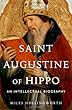
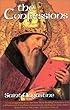
QUAERITUR: Best translation of St. Augustine’s “Confessions”?

Since today is the also the feast of St. Augustine of Hippo, here is an oldie post which some of you found helpful.

From a reader:

What I call: The biography of Augustine Pope Benedict would have wanted to write.

Thank you for the recommendation on the biography [of St. Augustine by Hollingworth]; I have purchased it at Amazon [UK HERE] through your site. Can you recommend a good translation of the “Confessions” and/or “The City of God”? Kindle is best, hard copy if necessary for a readable modern translation that is faithful to the original.

That is a good question.  The Confessions is usually the only work most people are exposed to when it comes to the Doctor of Grace.

The best translation –  for most people –  is probably by Dame Maria Boulding, OSB, who was at Stanbrook Abbey.  She captures the aspect of prayer in The Confessions without, for the most part, sacrificing accuracy of translation in the process. The Confessions is, of course, an extended prayer.

You can quibble about some of her choices, of course.  All translations limp.  For example, Augustine says in Book X that he was “loved and feared” (amari et timeri – 10.36.59) by his people.  (Get it Your Excellencies? Fathers?) She choose to say “loved and esteemed” (or something woolly like that), which does not get at what Augustine really said.

By the way, I wrote about that “amari et timeriHERE. I even have a mini PODCAzT with the Latin.

Boulding’s is better – for most people – than Pine-Coffin‘s.  (I am not making up his name.) His translation is good but it is in a style of English many people are no longer used to.  Pinecoffin, however, hits it out of the park sometimes.  For example, when Augustine is talking about his profligate youth in Carthage, P. renders “amans vias meas et non tuas, amans fugitivam libertatem” (3.3.5) as “I loved my own way, not yours, but it was a truant’s freedom that I loved”.  Not precise but dead on.  “A truant’s freedom”.  Wonderful.

Chadwick‘s… no thanks.

Boulding’s translation is also quite affordable.  The paperback is only $9 and the Kindle version is only $8.  UK Link HERE.


Posted in Linking Back, REVIEWS, Saints: Stories & Symbols |
23 Comments

ASK FATHER: What to do if your parish is extremely liberal?

From a reader…

I am starting the academic year at ___ and attended Mass at the local parish for the first time this Sunday and was disheartened. The tabernacle is absent from the sanctuary, the church itself is round, and many practices during the liturgy felt/were irreverent: Singing a hymn in replace of the psalm, joining hands at the Pater and singing it to a tune vs chant, standing through communion, etc. I attend the Extraordinary Form back home whenever I can, but here there seems to be little to no opportunity to participate in the liturgy of our fathers. What can I do while here in ___ that can help me “get through” and feel as if I am receiving spiritual enrichment and nourishment that I do from the TLM?
Courage, Faith, and Honour,

In many places, there are options,even if those options mean driving a considerable distance or putting up with other unpleasantness. Sadly, there are also places where there are no other reasonable options or, if there are options, they all have considerable negative points. What’s a voter … errr, I mean, what’s a Mass-goer to do?

Prayer is always the obvious answer, but perhaps also the most overlooked.

Pray for hearts that have been deceived by the empty promises of liturgical experimentation, that they might be turned to a more orthodox, and effective approach to the worship of Our Lord.

Pray for others who have had to suffer, often for many, many years, putting up with banal attempts to make the Mass “more relevant.” Truly, in our midst, there are some who have attained the status of white martyrs for the pain and suffering they have undergone.

Pray for courage in the hearts of young priests as they face the daunting task of reversing unwise and unwarranted changes, often against hostile parishes, chanceries, fellow priests.

Pray for more vocations.

Alcoholics Anonymous has a simple, but not entirely unhelpful, prayer, originally composed by the American Protestant Divine, Reinhold Niebuhr.

“God grant me the serenity to accept the things I cannot change, the courage to change the things I can, and the wisdom to know the difference.”

As you settle into this new parish, realize that, as a college student, you might be perceived as an outsider and a part-timer. That will likely minimize your ability to enact any real change in the lamentable liturgical life of the parish. Still, the parish is probably (like so many other parishes) eager to have young faces become active. Talk with the pastor to see if there are any volunteer opportunities that don’t hinder your first job… you are a student Learn!  You don’t necessarily have to single out liturgical roles or work.  Perhaps there is a food pantry that needs stacking, a CCD class that needs teaching, some gardening that needs to be done. Suggestions of liturgical change will come more pleasantly from someone who has an actual, vested interest in the life of the parish.

In the meantime, you can use a hand missal for the Extraordinary Form in your private time. Pray and reflect on the prayers of the Holy Mass. Spend time before the Blessed Sacrament, before and after Mass. Unite your prayers with those of your brothers and sisters throughout the world who are even less liturgically blessed than you!  There are people in in mission lands who have to wait even months between Masses. Unite your prayers with those of your ancestors in the faith, with all the Saints who have gone before us.

As you settle in, you will likely come in contact with other Catholics who are similarly unhappy with the current situation in the parish. While it will be important to build good friendships with like-minded folks, it will be spiritually important not to settle into some unofficial Confraternity of Complainers. There may be much to complain about, but there is even more to DO. Take positive steps, with others, to make changes.  More importantly, take positive steps to become holier in your personal lives.

Holiness is the answer to all of the problems that the Church faces today. The holier we are, the better we will be able to weather the storms that are coming, and the better we will be able to rebuild the Church now and in the future.

Posted in "How To..." - Practical Notes, ASK FATHER Question Box, Our Catholic Identity | Tagged ,
30 Comments

Photos from a Mass of Reparation for sacrileges and blasphemies

In the midst of ongoing bad news, seemingly on all fronts, I had some good news.

My friend Fr. Dave Ireland in S. Euclid OH had at his beautiful Church of St. Gregory, a Solemn Mass in the Traditional Roman Rite in reparation for the sacrileges and blasphemies perpetrated a little while ago by amateur Satanists in Oklahoma City.

Some photos.

16_08_27_Cleveland_02

16_08_27_Cleveland_05 16_08_27_Cleveland_04 16_08_27_Cleveland_03

16_08_27_Cleveland_06

Posted in "How To..." - Practical Notes, Be The Maquis, Liturgy Science Theatre 3000, Mail from priests | Tagged ,
9 Comments

PROXIMA b!

In a story via the ESO and APOD I have read about

PROXIMA b

That cool sounding name is the newly spotted planet orbiting the very closest star to your planet other than your yellow sun.  Proxima Centauri can’t be seen with your unaided human eyes, unlike the brighter cousins Alpha Centauri AB.  Proxima Centauri is a red dwarf.  Proxima b orbits at some 5% Earth/Sun distance, so it is closer to its sun than Mercury is to your yellow ball.  However, since it is relatively cool, it is in a distance zone that could permit water.  Being only some 4 lightyears out, it is within range of relatively real-time communication, with a turn around time of only 8 years and change.

This has me thinking about the book by Michael O’Brien Voyage To Alpha Centauri, in which the author makes his remarkably able first foray into sic fi.  US HERE – UK HERE  Or read it on a Kindle.

There are some pretty harrowing points in O’Brien’s book… harrowing to anyone paying attention to what is going on here and now, that is.   As with most of his books, he could stand to listen to an editor a bit more.  But it is a great read.

Proxima b!

I have a short story in my head already.

Posted in Just Too Cool, Look! Up in the sky! | Tagged , , ,
4 Comments