Just because it’s nice:
[wp_youtube]S2NexHZrXP4[/wp_youtube]
And…
[wp_youtube]Dgr7vlwl2Is[/wp_youtube]
By the way, Rome Reports really needs a new voice-over person. Perhaps someone who knows how to pronounce names.

Just because it’s nice:
[wp_youtube]S2NexHZrXP4[/wp_youtube]
And…
[wp_youtube]Dgr7vlwl2Is[/wp_youtube]
By the way, Rome Reports really needs a new voice-over person. Perhaps someone who knows how to pronounce names.
This, from UCANEWS make me angry:
Pell does not speak for the whole Church says retired bishop
The retired bishop, Geoffrey Robinson, says he would be prepared to break the seal of confession in order to report sexual abuse. [?!?]
Bishop Robinson has told The World Today that Archbishop [Yes, he is Archbishop of Sydney, and also a Cardinal] George Pell is an embarrassment who is out of step with the majority of Australia’s bishops and should no longer speak for the Catholic Church in Australia on the issue of sexual abuse by the clergy. [Is Robinson saying that the majority of bishops should break the Seal of Confession?]
Bishop Robinson won international attention for his published work on the need for the Church to confront the abuse problem, but he told Tim Palmer that he’s not sure that making it mandatory to report sex abuse crimes that are revealed in the confession box would make a difference.
GEOFFREY ROBINSON: I’m not sure how useful it would be. Offenders in this field, in paedophilia, do not go to confession and confess. They’ve convinced themselves that what they’re doing is right, there’s an extraordinary amount of distorted thinking that goes on.
And also I think they’re afraid of what the priest would say to them. That he would not simply, you know, give them absolution. He would make, you know, all sorts of demands on them.
So I really don’t think that it would achieve everything that a lot of people seem to hope for from it.
TIM PALMER: What if it were a matter of a victim, a person of identifiably tender years coming in and describing something that constituted assault. What would your view be of that then?
GEOFFREY ROBINSON: I would listen to them, find out what I could there, and then I would ask them to give me permission to refer the matter.
You know, that would be my first way, to get them to give me permission because in any case, if I can’t give the name of the victim to the police then there’s not a great deal the police can do. Even if I gave them the name of the alleged offender, there’s not much they can do without having the victim.
So that would be my, always be my first step, to try to get the victim to give me permission to speak to the police.
TIM PALMER: Let’s say these are serious allegations. What would be your next step if you can’t get that cooperation?
GEOFFREY ROBINSON: If the person won’t go that far then I would have to make a decision, and if I really thought that young people were at serious risk here then I would speak to the police.
TIM PALMER: You would break the seal of confession?
GEOFFREY ROBINSON: Well, you know, I’d have to weigh a lot of things up – did I know the name of the alleged offender? Did I know the name of the alleged victim? If I didn’t, if it’s simply someone who comes into confessional who’s not known to me, then obviously I can’t tell the police that.
I would be prepared to break the seal of confessional because you have to weigh up the greatest good, and here the greatest good is surely the protection of innocent people.
TIM PALMER: Do you think that that could become part of the church’s protocol, should become part of the church’s protocol, that weighing up things, priest be at least given the discretion to break the seal of – or be encouraged to break the seal of confession if, for example, a victim comes in and describes a sexual assault?
GEOFFREY ROBINSON: The major problem the Australian bishops have in dealing with this entire issue is that their hands are tied. Most of the changes that are needed must come from the Pope, and if he won’t move, then the Australian bishops have their hands tied.
The chances of getting the Pope to say that priests could break the seal of confessional are, well, nil. [And that, ladies and gents, is why we have Popes.]
TIM PALMER: I’m aware you didn’t see George Pell’s full response yesterday, but what do you make of Archbishop George Pell’s position on these issues?
GEOFFREY ROBINSON: Um… this is a difficult one. He’s not a team player, he never has been. Now on this subject too he’s not consulting with anyone else, he’s simply doing his own thing. I personally believe he’s doing it very badly indeed and I think the other Australian bishops, as one of the very first questions they need to face, they’ve got to confront him and determine who it is that speaks in their name and who doesn’t.
TIM PALMER: You seem to be suggesting he’s an embarrassment almost to the other bishops.
GEOFFREY ROBINSON: Well the other bishops would have to speak for themselves but I have to say that on this subject he’s a great embarrassment to me and to a lot of good Catholic people.
Full Story: Pell an ’embarrassment’, says retired bishop
Source: ABC News
I’ll keep the combox closed on this one.

Connected to confession of sins, which I am constantly pounding away at here (now Card. Dolan has also stressed at the Synod of Bishops and the need reviving the Sacrament of Penance) is reparation for sins.
Together with recognition of our sins, and confession of our sins, is also reparation for our sins. They are inseparable.
We confess our own sins (not someone else’s) but we can – in charity – do reparation for the sins of others along with our own.
As a matter of fact, we must do reparation for the sins of others.
And so I present a mighty encyclical of Pope Pius XI (+1939) called Miserentissimus Redemptor. It focuses on devotion to the Sacred Heart of Jesus, but drills deeply into the pressing need for all Catholics to perform acts of reparation and expiation for the sins the whole human race offers constantly to God.
 I think you will find, as I did, Pius’s description of the decadent times in which he issued this great plea for devotion and reparation, to be strikingly like our own, especially in the matters of attacks on the Catholic Church and the erosion of morals and religious liberty.
Let us not think that the words of Popes are not valuable just because they were uttered decades ago. Time and time again, Popes are found to be prophetic and right. Their voices don’t fade like echoes, they get stronger once we have tuned our ears to hear them again.
Podcast: Play in new window | Download
Subscribe: RSS
UPDATE:
I reactivated my skype phone numbers whereby you can leave me voicemail which I could, perhaps, use in future PODCAzTs.
UK +44 20 8133 4535
US +1 651 447 6265
From a reader:
Dear Father, one of our in-residence priests assisted with the
distribution of Holy Communion at the TLM this week. He was very rushed and used the Ordinary Form words and manner — “Body of Christ”, in English, and didn’t cross us as the celebrant priest always does. Is this a “liturgical abuse” or does he have the right to change the words & rubrics? [P.S. he does know the Communion Form.]
First, I suppose, yes, this would be a liturgical abuse. This is not among the huge abuses, but it is still wrong not to use the proper formula.
The Instruction Universae Ecclesiae, which clarifies some points of Summorum Pontificum, says that we stick to the practices in force in 1962.
24. The liturgical books of the forma extraordinaria are to be used as they are. All those who wish to celebrate according to the forma extraordinaria of the Roman Rite must know the pertinent rubrics and are obliged to follow them correctly.
28 Furthermore, by virtue of its character of special law, within its own area, the Motu ProprioSummorum Pontificum derogates from those provisions of law, connected with the sacred Rites, promulgated from 1962 onwards and incompatible with the rubrics of the liturgical books in effect in 1962.
So, in the TLM we don’t have altar girls, we don’t have Communion in the hand, and we priests must stick to the older, full formula for distribution of Communion rather than use the simple Novus Ordo form.
From a reader:
I belong to a parish with a good Shepard. I also have two wonderful daughters, one of which has been an alter server (she is 12 by the way). Our priest tried to walk back the use of girl alter servers, but was met with stiff resistance. I applauded the attempt to go to all male alter servers, and understand why it SHOULD be male alter servers, but I am now wondering: Since our parish still allows female alter servers, should I continue to encourage my daughter to serve (the Knights of Columbus adore my daughter’s faith and service) or is there some other way that you would suggest she serve at the church?
In a word, no, do not encourage your daughter to be an altar server.
Perhaps you and some like-minded ladies can help the pastor found a group and activities for girls in the parish.
I suspect readers here may have some good and concrete suggestions.
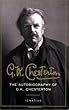 As the USCCB meets, I offer this from G. K. Chesterton’s Autobiography (UK link HERE):
When people ask me, or indeed anybody else, “Why did you join the Church of Rome?” the first essential answer, if it is partly an elliptical answer, is, “To get rid of my sins.” For there is no other religious system that does really profess to get rid of people’s sins. It is confirmed by the logic, which to many seems startling, by which the Church deduces that sin confessed and adequately repented is actually abolished; and that the sinner does really begin again as if he had never sinned.
And this brought me sharply back to those visions or fancies with which I have dealt in the chapter about childhood. I spoke there of the indescribable and indestructible certitude in the soul, that those first years of innocence were the beginning of something worthy, perhaps more worthy than any of the things that actually followed them: I spoke of the strange daylight, which was something more than the light of common day, that still seems in my memory to shine on those steep roads down from Campden Hill, from which one could see the Crystal Palace from afar.
Well, when a Catholic comes from Confession, he does truly, by definition, step out again into that dawn of his own beginning and look with new eyes across the world to a Crystal Palace that is really of crystal. He believes that in that dim corner, and in that brief ritual, God has really remade him in His own image. He is now a new experiment of the Creator. He is as much a new experiment as he was when he was really only five years old. He stands, as I said, in the white light at the worthy beginning of the life of a man. The accumulations of time can no longer terrify. He may be grey and gouty; but he is only five minutes old.
Listen to Card. Dolan’s address to the USCCB HERE.
 Today is the birthday of St. Augustine of Hippo (354). We actually know his birthday because he tells us in one of his Cassiciacum dialogues (De beata vita 6).
It is therefore also the feast of all the saints of the Augustinian order.
I have a 1st class relic of St. Augustine, but today here is my relic of his mother, which seems appropriate.

 From CNA about the address the Apostolic Nuncio, Archbishop Carlo Maria Viganò, gave at “Notre Shame”, aka “The Scene of the Crime”, with my emphases and comments:
Papal nuncio: Catholic division undermines religious freedom
South Bend, Ind., Nov 12, 2012 / 07:08 pm (CNA/EWTN News).- Archbishop Carlo Maria Viganò has told the University of Notre Dame that there is a concrete “menace” to religious liberty in the U.S. that is advancing in part because some influential Catholic public figures and university professors are allied with those opposed to Church teaching.
“Evidence is emerging which demonstrates that the threat to religious freedom is not solely a concern for non-democratic and totalitarian regimes,” he said. “Unfortunately it is surfacing with greater regularity in what many consider the great democracies of the world.”
The apostolic nuncio, who serves as the Pope’s diplomatic representative to the U.S., said this is a “tragedy” for both the believer and for democratic society.
Archbishop Viganò’s Nov. 4 speech keynoted the University of Notre Dame’s Institute for Church Life conference. He discussed martyrdom, persecution, and religious freedom, with a particular focus on the United States.
He cited Catholics’ duties to be disciples of Christ, not elements of a political or secular ideology. He lamented the fact that many Catholics are publicly supporting “a major political party” that has “intrinsic evils among its basic principles.” [That would be Catholics supporting the Democrat party.]
“There is a divisive strategy at work here, an intentional dividing of the Church; through this strategy, the body of the Church is weakened, and thus the Church can be more easily persecuted,” the nuncio said.
Archbishop Viganò observed that some influential Catholic public officials and university professors are allied with forces opposed to the Church’s fundamental moral teachings on “critical issues” like abortion, population control, the redefinition of marriage, embryonic stem cell research and “problematic adoptions.”
He said it is a “grave and major problem” when self-professed Catholic faculty at Catholic institutions are the sources of teachings that conflict with Church teaching on important policy issues rather than defend it.
While Archbishop Viganò noted that most Americans believe they are “essentially a religious people” and still give some importance to religion, he also saw reasons this could change.
He said that the problem of persecution begins with “reluctance to accept the public role of religion,” especially where protecting religious freedom “involves beliefs that the powerful of the political society do not share.”
The nuncio said it is “essential” to pray for a just resolution to religious freedom controversies, including the controversy over the new federal mandate[the Obama administration’s HHS mandate] requiring many Catholic employers to provide morally objectionable insurance coverage for sterilization and contraception, including some abortion-causing drugs.
The issues that the Catholic bishops have identified in this mandate are “very real” and “pose grave threats to the vitality of Catholicism in the United States,” Archbishop Viganò said.
The nuncio also discussed other religious liberty threats.
He cited a Massachusetts public school curriculum that required young students to take courses that presented same-sex relations as “natural and wholesome.” Civil authorities rejected parents’ requests for a procedure to exempt their children from the “morally unacceptable” classes.
“If these children were to remain in public schools, they had to participate in the indoctrination of what the public schools thought was proper for young children,” the archbishop said. “Put simply, religious freedom was forcefully pushed aside once again.”
Catholic Charities agencies have also been kicked out of social service programs because they would not institute policies or practices that violate “fundamental moral principles of the Catholic faith.”
Archbishop Viganò cited several countries that have witnessed severe persecution like China, Pakistan, India and the Middle East. He praised the martyrs past and present who would not compromise on “the principles of faith.” [The US is becoming like those countries, which means there will be martyrs.]
While some forms of persecution are violent and cruel, others aim to incapacitate the faith by encouraging people to renounce their beliefs or the public aspects of their faith, in the face of “great hardships.”
Fidelity to God and the Church has “hastened martyrdom and persecution for many believers of the past, and of today,” he said.
“In all of these instances, we see that the faithful persist in their fidelity to Jesus Christ and his Holy Church! For throughout her history, the Church has gained strength when persecuted,” the archbishop said.
Religious liberty is a human, civil and natural right that is not conferred by the state, he said, adding “religious freedom is the exercise of fidelity to God and his Holy Church without compromise.”
“What God has given, the servant state does not have the competence to remove,” Archbishop Viganò affirmed.
An Apostolic Nuncio does not speak this way publicly unless he has endorsement from above.

Since the USCCB fall plenary meeting is going on, I wanted to remind you of these “Pray For Our Bishops” car magnets:

CLICK TO BUY
It was easy to predict that Benedict XVI would, during the Year of Faith, issue an encyclical on Faith. It was the next in line after Charity (Deus caritas est and Caritas in veritate) and Hope (Spe salvi).
I wonder if my other prediction will come to pass.
I also predicted that the Holy Father would make some larger gesture at the end of the Year.
When Paul VI held his Year of Faith in 1967-68, all hell broke loose, and he issued an encyclical (Humanae vitae) in a critical time. At the end of the year Paul issued the Credo of the People of God.
Back then they were celebrating the centennial of the martyrdom of Sts. Peter and Paul. This year we are observing the 50th anniversary of the opening of the Second Vatican Council, the 20th anniversary of the Catechism of the Catholic Church and the 1700th anniversary of the Battle of Milvian Bridge.
So, I am wondering what Benedict might do.
I have a few suggestions.
I can imagine that he could issue, perhaps, something like a new Litany. We need to revive popular devotions. The use of Litanies should be revived.
I would like to see the Holy Father celebrate the Usus Antiquior or have it celebrated in his presence.
I suspect that His Holiness might have something in mind.
I hope His Holiness has something in mind.

Coat of Arms by D Burkart









A Daily Prayer for Priests


They find you a pro-life agent in your area who commits to giving a portion of the fee to a pro-life group!

PLEASE subscribe via PayPal if it is useful. Zelle and Wise are better, but PayPal is convenient.
A monthly subscription donation means I have steady income I can plan on. I put you my list of benefactors for whom I pray and for whom I often say Holy Mass.
In view of the rapidly changing challenges I now face, I would like to add more $10/month subscribers. Will you please help?
For a one time donation...



Help Monks in Wyoming (coffee – UPDATED LINK) and Norcia (beer) and the wonderful "Soap Sisters" of Summit, NJ!


Please follow me on Twitter!










Visits tracked by Statcounter
since Sat., 25 Nov. 2006:


