Excellent piece by Fr. Blake on hope and what Holy Mass is all about.

My English blogging priest friends have had a good innings today.  (I hope I used that phrase correctly).

I posted about a great entry on Fr. Finigan’s blog (HERE).  Now I am compelled to post as well about Fr. Ray Blake’s fine piece HERE.

Fr. Blake reflects on what Holy Mass is, and what it is not.  He touches on themes I have often hammered away at in writing and when I give talks to groups.  As a matter of fact, I gave one last night to a group of 100+ men and touched on some of the very same points.  Eerie similarity.  GMTA, I suppose.

I’ll share some of Fr. Blake’s good work, with my emphases. He starts with a reference to 1 Peter 3:15, which you should all know by heart.

[…]

[Fr. Blake had] a conversation … with an old Irish man some years ago came back to me. He said he stopped getting up on Sunday mornings, “when I realised Mass was about our community, I didn’t think it worth getting up for that“, he was talking about the time of the liturgical changes and they had recently knocked down and rebuilt his parish church.

The Mass is not about us, it always has been about Jesus and giving us glimpse of heaven, “and so with Angels and Saints we sing…”, it is a vision of the triumph of the Lamb, it is about our ultimate re-orientation, the end of our earthly pilgrimage.

[…]
I wouldn’t enter into a discussion about which form of the Roman Rite speaks more clearly about the heavenly mysteries, the things we are called to hope in and for but the ars celebrandi should point to these mysteries, in either form. When the Mass merely celebrates us, “the community gathered”, when music is about community singing, or is trite and sentimental, when participation is more about action than interiority, when as Joseph Ratzinger says we “form a closed circle” or a “significant absence of silence”, then there are problems with the Eternal. The loss of hope in the Church does seem be related to how the liturgy is celebrated when it is done badly it destroys hope.

FR Z KUDOS to the distinguished parish priest of Brighton.

Among other things, Father offered a good argument for ad orientem worship, connected to hope.

Do take the time to read his whole piece (HERE).

 

Posted in Fr. Z KUDOS, Liturgy Science Theatre 3000, Mail from priests, Our Catholic Identity, The Drill | Tagged , , , , , ,
6 Comments

The Tablet is staging a nutty over the UK’s Confraternity of Catholic Clergy.

My friend the mighty p.p. of Blacken and Dean of Bexley, His Hermeueticalness, Fr. Finigan, whom I look forward to seeing soon, has a great post at his blog, The Hermeneutic of Continuity, about the upcoming meeting of the British Province of the Confraternity of Catholic Clergy.  I wrote about the meeting HERE.  I urge all priests in dear ol’ Blighty to sign up right away. Here is a link to the Booking form.


Ad rem…

It seems that the editors of The Tablet have their knickers in a knot over the very existence of the newly formed and faithful Confraternity of Catholic Clergy.  Fr. Finigan explains the whole thing better than I can, and he does so with his customary sense of humor. Go THERE to read about it.

Some of you US readers might not know much about The Tablet  (aka The Bitter Pill).  The Tablet was once a respectable Catholic publication.  It still occasionally has good articles, but it is for the most part rather like the US’s National Catholic Fishwrap.  I believe The Tablet’s circulation is dropping.  They probably wouldn’t exist if they weren’t being propped up by the aging powers-that-be.  The best Catholic weekly in England now is unquestionably The Catholic Herald, to which you can subscribe for an online, digital edition of the full paper.  Fr. Finigan, by the way, has a weekly Q&A feature in The Catholic Herald, which is reason enough to subscribe.


Posted in Biased Media Coverage, Just Too Cool, Liberals, Mail from priests, New Evangelization, Priests and Priesthood, The Campus Telephone Pole, Throwing a Nutty | Tagged , , ,
2 Comments

Just Too Cool: TRANSLATION in Louisville! (Not the translation you perhaps think.)

Our word “translation” means, in essence, to “transfer”.  It comes from Latin transfero, which has as one of its forms the participle translatum (trans-fero, tuli, latum).  When you transfer something you move it from one place to another.

In churchy language we use the word “translation” in a technical sense.   For example,  “translation” refers to the moving of a saint’s relics from one place to another, usually to a permanent and more worthy place.  This is actually a big deal, which requires a precise procedure and permission from the Congregation for Causes of Saints.  Many of the feasts of saints we celebrate in the Roman calendar fall on the day their relics were transferred rather than on the day the saint died.  A great saint for England, for example, St. Edward the Confessor’s feast is on the day of the translation of his relics because his death date was impeded by another feast.

Translation is also used for the moving of a bishop from one diocese to another and also the changing of a feast to a different day.

“But Father! But Father!”, I can hear some of you say, “What is this all about? Why are you talking about this sort of translation out of the blue?  Are you tired of translating prayers””

There will be an interesting translation in Louisville, KY.

A reader sent me this notice, which I want to share with you, for it is Just Too Cool:

Subject: A big event at St. Martin’s in Louisville, KY

Fr. Z,

You may already have this on your radar, but if not I think this would be a really cool story for your blog. I am a parishioner at St. Martin of Tours and tomorrow, Sunday, September 9, the church will be celebrating a Solemn High Mass in EO at noon that will feature the re-internment of Sts. Bonosa and Magnus.

Louisville is actually unique in the US to have not only one but two full skeletal saints. Over the past several months, these saints have been undergoing a refurbishment (? – now sure the right term here). The work on the reliquaries and side altars is complete, and the time to return the relics of our saints is quickly approaching. A special Mass is being planned for Sunday, September 9th at 12:00 noon.

In 1901, Pope Leo XIII gave the full skeletal remains of two third-century Roman martyrs to the parish at the request of the pastor, Msgr. Zabler. [Nothing ventured, nothing gained!] St. Bonosa, a virgin persecuted for her beliefs, and St. Magnus, the Roman centurion who tried to save her life, both died in the Colosseum at the hands of Emperor Septimius Severus in A.D. 307. Originally buried in the catacombs of Rome, the remains were later moved to a monastery in Agnani, [I am pretty sure he means Anagni.] Italy. Then, when the Italian government confiscated the monastery and forced the nuns to leave, Msgr. Zabler petitioned the Holy Father for the relics. Harking back to the years of religious persecution shortly before the birth of St. Martin, these relics are a reminder of the ultimate sacrifice made by so many early Christians for the faith.

If you are anywhere near Louisville, I suggest you go.

Posted in "How To..." - Practical Notes, Just Too Cool, Liturgy Science Theatre 3000, Saints: Stories & Symbols | Tagged , , , , , ,
12 Comments

Empty Chair Day images

My favorite chair photos so far.

Sep 7, 2012

Sep 4, 2012

Posted in Lighter fare | Tagged
8 Comments

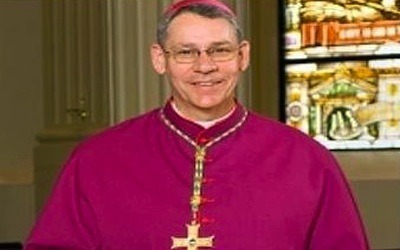
Catholic League: Assessing Bp. Finn’s guilt

From The Catholic League:

ASSESSING BISHOP FINN’S GUILT

SEPTEMBER 7, 2012

Catholic League president Bill Donohue comments on a judge’s decision yesterday finding Kansas City-St. Joseph Bishop Robert Finn guilty in a case involving Father Shawn Ratigan:

Let’s get rid of some myths. Bishop Finn was not found guilty of a felony: he was found guilty of one misdemeanor, and innocent of another. The case did not involve child sexual abuse—no child was ever abused, or touched, in any way by Father Shawn Ratigan. Nor did this case involve child pornography. Here’s what happened.

On December 16, 2010, a computer technician found crotch-shot pictures of children, fully clothed, on Ratigan’s computer; there was one that showed a girl’s genitals exposed. The next day Ratigan attempted suicide. The Vicar General, Msgr. Robert Murphy, without seeing the photos, contacted a police officer about this matter. The officer, after consulting with another cop, said a single photo of a non-sexual nature would not constitute pornography. After a few more of the same types of photos were found, an attorney rendered the same judgment: they were not pornographic.

Finn then asked a psychiatrist to evaluate Ratigan. The bishop was given the judgment of a professional: the priest was not a risk to children (he was diagnosed as suffering from depression). Finn then placed restrictions on Ratigan, which he broke. When it was found that Ratigan was again using a computer, upon examination more disturbing photos were found. Murphy then called the cops (Finn was out of town) and a week later Ratigan was arrested. Yesterday, Finn was found guilty of one misdemeanor of failing to report suspected child sexual abuse.

The Catholic League supports harsh penalties for child sexual abusers, and for those who cover it up. But it also supports equal justice for all, and given what we know of what is going on in many other communities, religious as well as secular, we find the chorus of condemnations targeting Bishop Finn to be as unfair as they are contrived. [Do I hear an “Amen!”?]

We would be remiss if we did not mention that only two newspapers in the nation put this story on the front page: the Kansas City Star, understandably, and the New York Times. [There’s a shocker.]

The combox moderation is switched on.

Posted in Biased Media Coverage, Clerical Sexual Abuse, The Drill | Tagged , , , ,
Comments Off on Catholic League: Assessing Bp. Finn’s guilt

Caroline Kennedy… can. 915

This is what Caroline Kennedy said during her address to the Democrats Convention:

KENNEDY: His commitment to women is about even more than economic rights. It’s about health care, reproductive rights and our ability to make our own decisions about ourselves, our families, and our future. When it comes to what’s best for women, there is only one candidate in this race who is on our side, Barack Obama.

As a Catholic woman, I take reproductive health seriously. And today it is under attack. This year alone, more than a dozen states have passed more than 40 restrictions on women’s access to reproductive health care. That’s not the kind of future I want for my daughters or your daughters. Now isn’t the time to roll back the rights we were winning when my father was president. Now is the time to move this country forward.

More tax-payer paid abortions!  Hurray for Barack Obama!

Posted in 1983 CIC can. 915, Dogs and Fleas, Emanations from Penumbras | Tagged , ,
59 Comments

Card. Dolan’s closing prayer at the Democrats convention.

Card. Dolan’s closing prayer at the Democrats convention.

With a “firm reliance on the protection of Divine Providence,” let us close this convention by praying for this land that we so cherish and love:

Let us Pray.

Almighty God, father of Abraham, Isaac, and Jacob, revealed to us so powerfully in your Son, Jesus Christ, we thank you for showering your blessings upon this our beloved nation. Bless all here present, and all across this great land, who work hard for the day when a greater portion of your justice, and a more ample measure of your care for the poor and suffering, may prevail in these United States. Help us to see that a society’s greatness is found above all in the respect it shows for the weakest and neediest among us.

We beseech you, almighty God to shed your grace on this noble experiment in ordered liberty, which began with the confident assertion of inalienable rights bestowed upon us by you: life, liberty, and the pursuit of happiness.

Thus do we praise you for the gift of life. Grant us the courage to defend it, life, without which no other rights are secure. We ask your benediction on those waiting to be born, that they may be welcomed and protected. Strengthen our sick and our elders waiting to see your holy face at life’s end, that they may be accompanied by true compassion and cherished with the dignity due those who are infirm and fragile.

We praise and thank you for the gift of liberty. May this land of the free never lack those brave enough to defend our basic freedoms. Renew in all our people a profound respect for religious liberty: the first, most cherished freedom bequeathed upon us at our Founding. May our liberty be in harmony with truth; freedom ordered in goodness and justice. Help us live our freedom in faith, hope, and love. Make us ever-grateful for those who, for over two centuries, have given their lives in freedom’s defense; we commend their noble souls to your eternal care, as even now we beg the protection of your mighty arm upon our men and women in uniform.

We praise and thank you for granting us the life and the liberty by which we can pursue happiness. Show us anew that happiness is found only in respecting the laws of nature and of nature’s God. Empower us with your grace so that we might resist the temptation to replace the moral law with idols of our own making, or to remake those institutions you have given us for the nurturing of life and community. May we welcome those who yearn to breathe free and to pursue happiness in this land of freedom, adding their gifts to those whose families have lived here for centuries.

We praise and thank you for the American genius of government of the people, by the people and for the people. Oh God of wisdom, justice, and might, we ask your guidance for those who govern us: President Barack Obama, Vice President Joseph Biden, Congress, the Supreme Court, and all those, including Governor Mitt Romney and Congressman Paul Ryan, who seek to serve the common good by seeking public office. Make them all worthy to serve you by serving our country. Help them remember that the only just government is the government that serves its citizens rather than itself. With your grace, may all Americans choose wisely as we consider the future course of public policy.

And finally Lord, we beseech your benediction on all of us who depart from here this evening, and on all those, in every land, who yearn to conduct their lives in freedom and justice. We beg you to remember, as we pledge to remember, those who are not free; those who suffer for freedom’s cause; those who are poor, out of work, needy, sick, or alone; those who are persecuted for their religious convictions, those still ravaged by war.

And most of all, God Almighty, we thank you for the great gift of our beloved country.

For we are indeed “one nation under God,” and “in God we trust.”

So dear God, bless America. You who live and reign forever and ever.

Amen!

Posted in Dogs and Fleas, Linking Back, Our Catholic Identity, Religious Liberty | Tagged , , ,
60 Comments

Of global downturns, material and spiritual

As the opening of the Year of Faith approaches, as we turn more and more attention to the Holy Father’s desire for a New Evangelization, we also have to keep in mind what Benedict said about us Catholics becoming a “creative minority“. We must steel ourselves to hard times, and not just because of a global economic downturn. There is another downturn going on.

“The church will become small and will have to start afresh more or less from the beginning. She will no longer be able to inhabit many of the edifices she built in prosperity. As the number of her adherents diminishes . . . she will lose many of her social privileges.”

Cardinal J. Ratzinger (1969),
— republished in Faith and the Future(2009)

Biretta tip to Pertinacious Papist

Posted in Benedict XVI, Brick by Brick, New Evangelization, Our Catholic Identity, The future and our choices, Year of Faith | Tagged ,
21 Comments

“The community organizer’s job was to mobilize the discontent into political power.”

From Corsi’s Kindle book: Saul Alinsky:The Evil Genius Behind Obama

Alinsky fashioned himself a modern day Machiavelli, well-versed and comfortable with Machiavelli’s teaching that, “It is necessary for a prince, who wishes to maintain himself, to learn how not to be good, and to use this knowledge and not use it, according to the necessity of the case.” Paralleling Machiavelli’s thought, Alinsky wrote, “To me ethics is doing what is best for the most.” He could as easily have written, “To me ethics is doing what works.” Alinsky repeatedly stressed that the advantage of the “have-nots” centered in numbers. “The resources of the Have-Nots are (1) no money and (2) lots of people.” This, he advised, required the Have-Nots to use street tactics to succeed. “For example, I have emphasized and re-emphasized that tactics means you do what you can with what you’ve got, and that power in the main has always gravitated towards those who have money and those whom people follow.”

As Machiavelli sought to advance himself by advising the prince how to use the amoral tactics to gain and hold political power, Alinsky fashioned himself championing the economically downtrodden. “The Prince was written by Machiavelli for the Haves on how to hold power,” he wrote on the first page of Rules for Radicals, in a chapter entitled “The Purpose.” His goal was exactly the opposite. “Rules for Radicals is written for the Have-Nots on how to take it away.” Alinsky taught that politics, camouflaged as “community organizing,” was the only effective way that the socialist elites could mobilize the Have-nots to take power from the Haves.

Long before Barack Obama used the rallying cry of “Hope and Change,” Alinsky used the themes of “Hope and Change” as code words for creating a socialist revolution in the United States. His goal was to set in motion a peaceful revolution, using the ballot box, not bombs or bullets, to wrench power from the hands of capitalist elites and business leaders currently in charge. He taught a pragmatism in power politics, noting that, “Even if all the low-income parts of our population were organized – all the blacks, Mexican-Americans, Puerto Ricans, Appalachian poor whites – if through some genius of organization they were all united in a coalition, it would not be powerfulenough to get significant, basic needed changes.” Instead, he advocated seeking political allies in “the organized sectors of the middle class.” Specifically, Alinsky argued that the “have-nots” should seek their middle class allies among the young. “Activists and radicals, on and off our college campuses – people who are committed to change – must make a complete turnabout,” he wrote, “With rare exceptions our activists and radicals are products of and rebels against our middle class society.” But, to be successful, Alinsky encouraged activists and radicals to cut their hair, put on business suits, and run for political office. Appropriately, Rules for Radicals was subtitled “A Pragmatic Primer for Realistic Radicals.”

Alinsky’s methodology began by teaching “community organizers” to raise the consciousness of the economically disadvantaged, who were typically also minorities. The goal was to stir the pain of economic suffering in order to creating awareness in an economic underclass of their disadvantages. “The organizer dedicated to changing the life of a particular community must first rub raw the resentments of the people of the community; fan the latent hostilities of many of the people to the point of overt oppression,” he wrote. “He [the community organizer] must search out controversy and issues, rather than avoid them, for unless there is controversy people are not concernedenough to act.” From there, the community organizer’s job was to mobilize the discontent into political power. When Alinsky asked new students why they wanted to organize, he shouted back at them a one-word answer: “You want to organize for power.”

Posted in The Drill | Tagged , ,
10 Comments

BOSTON: Fri 7 Sept, TLM at Cathedral followed by talk “The Culture of the Traditional Liturgy”

A friend of mine from my many years in Rome, Greg Di Pippo (very learnéd fellow), is going to be giving a talk in Boston, at the Cathedral, on the Extraordinary Form.

There will be Holy Mass in the Extraordinary Form also, in the lower church.

Theme: “The Culture of the Traditional Liturgy”
Friday 7 September
7:30 pm Mass
Talk immediately after.

Cathedral of the Holy Cross: 75 Union Park Street
The entrance to the lower church is on the left side as you face the building from the front.
This event is entirely open to the public.
Sponsored by the newly-founded Juventutem Boston.

Posted in Brick by Brick, Liturgy Science Theatre 3000, New Evangelization, Our Catholic Identity, SUMMORUM PONTIFICUM, The Campus Telephone Pole, The future and our choices | Tagged , ,
6 Comments