Card. Burke’s magisterial talk in England: If we can’t get the family right, New Evangelization will fail.

Card. Burke's magisterial talk in England: If we can't get the family right, New Evangelization will fail.

Click!

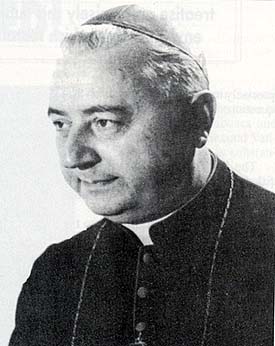
His Eminence Raymond Leo (Latin for “Lion”) Card. S.R.E. Burke was in England recently. He sang Mass for which my friend Fr. Finigan was one of the sacred ministers. He gave quite a talk. The full text is HERE. The diocesan Bishop, His Excellency Mark Davies of Shrewsbury was in attendance.

Here is the money quote:

“If we can’t get it straight with regard to the truth about marriage and the family, we really don’t have much to say about anything else.”

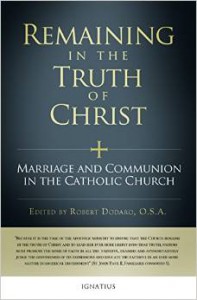
His Eminence made prominent reference to the “Five Cardinals Book™”, Remaining in the Truth of Christ: Marriage and Communion in the Catholic Church. This is an important book.

Some samples of the talk:

At the present moment in the Church, there is perhaps no more critical issue for us to address than the truth about marriage. In a world in which the integrity of marriage has been under attack for decades, the Church has remained a faithful herald of the truth about God’s plan for man and woman in the faithful, indissoluble and procreative union of marriage. In the present time, certainly under pressure from a totally secularized culture, a growing confusion and even error has entered into the Church, which would weaken seriously, if not totally compromise, the Church’s witness to the detriment of the whole of society.

The confusion and error became evident for the world during the recent session of the Third Extraordinary Assembly of the Synod of Bishops….

And…

As Christians today, we find ourselves in a completely secularized society.

I would add, “aided and abetted by catholics”.

And…

Recognizing the irreplaceable evangelizing power of the family in the whole of society, the Church is even more impelled to devote Herself to safeguarding and fostering the truth of married and family life.

And…

It is clear that, if a new evangelization is not taking place in marriages, in the family, then it will not take place in the Church or in society, in general. At the same time, marriages transformed by the Gospel are the first and most powerful agent of the transformation of society by the Gospel.

And… the point I have stressed for years about the central, indeed sine qua non function of worthy sacred liturgical worship…

At the heart of marriage and of family life is divine worship and prayer which give form to every other aspect of life. Sacred worship, the highest and most perfect expression of our life in Christ, is at the heart of family life. In the worship of God, in prayer, and in devotion the family receives the power to evangelize and, at the same time, evangelizes the world most powerfully.

And…

So often, today, a notion of tolerance of ways of thinking and acting contrary to the moral law seems to be the interpretative key for many Christians. Today’s popular notion of tolerance is not securely grounded in the moral tradition, yet it tends to dominate our approach to the extent that we end up claiming to be Christian while tolerating ways of thinking and acting which are diametrically opposed to the moral law revealed to us in nature and in the Sacred Scriptures. The approach, at times, becomes so relativistic and subjective that we do not even observe the fundamental logical principle of non-contradiction, that is, that a thing cannot both be and not be at the same time. In other words, certain actions cannot at the same time be both true to the moral law and not true to it.

In fact, charity alone must be the interpretive key of our thoughts and actions. In the context of charity, tolerance means unconditional love of the person who is involved in evil but firm abhorrence of the evil into which the person has fallen. …

And… a key… TRUTH…

The first constitutive element of the moral law is the truth about the inviolability of innocent human life and the integrity of the conjugal union of man and woman which is written upon every human heart.

And…

In our day, our witness to the splendor of the truth about marriage must be limpid and heroic. We must be ready to suffer, as Christians have suffered down the ages, to honor and foster Holy Matrimony. Let us take as our examples Saint John the Baptist, Saint John Fisher and Saint Thomas More, who were martyrs in defending the integrity of the fidelity and indissolubility of marriage.

Read the whole thing there.

You can obtain for yourself and your friends… maybe even the parish priest… the book Remaining in the Truth of Christ: Marriage and Communion in the Catholic Church which contains five essays of cardinals, of the archbishop secretary of the Vatican congregation for the Oriental Churches, and of three scholars on the ideas supported by Walter Card. Kasper in the opening discourse of the consistory in February 2014.

Also available now in the UK! HERE
Posted in SESSIUNCULA | Tagged , , , ,
20 Comments

ASK FATHER: Mass in the living room

From a reader…

QUAERITUR:

Our parish priest has agreed to say mass in our home living room. How should we set up furniture wise to accommodate this? Thank you.

If your manor house has a chapel, as in Brideshead Revisited, it is appropriate to have the Mass there, especially if the chapel has been duly blessed in accord with can. 1229. Even with a blessed private chapel, permission of the local ordinary is required for a licit celebration of Holy Mass in a private chapel (can. 1228).

If you have a family chaplain, as one does, local ordinary’s permission need not be obtained for the parish priest to offer Mass, though protocol would probably call for him to be at least informed.

If there is no chapel, consider having one constructed. Mass ought to be celebrated in a place specifically built for such an august occasion.  Furthermore, we may be needing them when the real persecutions come and civil authorities and other sue the Church out of all her holdings simply for remaining true to the Faith.  Consider priest holes as well.

The current Code of Canon Law requires that Mass be celebrated in a sacred space, “unless in a particular case necessity requires otherwise,” (can. 932). If there is a necessity for Mass to be offered in a home without a chapel (say, for example, Catholicism has been outlawed in one’s home territory and the churches are being closely watched by agents of the state in order to catch and prosecute priests) an appropriate table may be used, but there must always be an altar cloth and corporal on it. The Code does give to the priest the ability to determine whether this is a case of “necessity”. “Necessity” need not be as dire as the situation outlined above, but there should be a good reason for celebrating Mass outside of a sacred space that has been constructed and blessed for just such a purpose.

As to the specifics of how to set up a room that has not been built as a chapel, the principles applied to chapels would be used. Insofar as possible, a table set up, facing east, covered with a cloth and with the requisite number of candles, a crucifix, … of course altar cards. The priest needs space to stand and genuflect and turn about.  Sufficient space for the participants to stand and kneel as required.

The former law forbidding Mass in a bedroom is no longer in force.  However, that is still something to be avoided if possible.  There may be occasions when it must be so, for example, when Mass is being offered for Granpa, who is on his deathbed and unable to come to church, or a priest is on a trip in a place where churches are sparse.

Perhaps at the home Mass a collection could be taken up for the construction of a home chapel (and priest hole, as necessary) in the future.

Posted in "How To..." - Practical Notes, ASK FATHER Question Box, Liturgy Science Theatre 3000 | Tagged , , ,
18 Comments

Speaking of 50th anniversary of vernacular Masses… BUGNINICARE! (Revisited)

In some circles there has been some panting whoopdeedoo about the fact that 50 years ago Paul VI celebrated Mass for the first time in a Roman parish in Italian.

I posted on the parish once before, some time ago.  I noted a photo from a friend of mine in Rome of the marble plaque and inscription commemorating the event.  Apparently the first plaque was damaged.  The replacement they put waaay up high, though it shows signs of people having thrown things at it.  There are stains.   I guess the event wasn’t embraced with universal joy.

Anyway, I was reminded of my post called BUGNINICARE (after Annibale Bugnini who engineered the dismantling of the traditional Roman Rite and the so-far-wildly-successful Obamacare).  What a gift they both have been.

Here is, once again, BUGINICARE, written for the anniversary of Sacrosanctum Concilium.

____

Bugninicare!

Speaking of 50th anniversary of vernacular Masses... BUGNINICARE! (Revisited)UNIVERSAL SPIRITUAL-CARE REFORM FOR THE CATHOLIC CHURCH
(Socialized Worship)

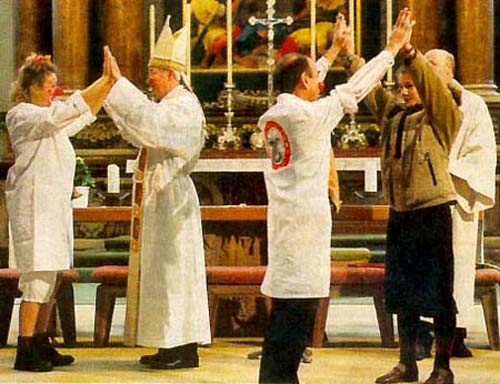
Taking his cue from post-war European national health care programs, Annibale Bugnini, assisted by a small circle of spiritual-care specialists and church policy makers, spearheaded a massive overhaul of the Catholic Church’s spiritual care system in the 1960s. The centerpiece of “Bugninicare” was a program known as Novus Ordo, so-called because it introduced a New Order into the regulation of the Church’s worship. The NO regulations were aimed at extending spiritual-care benefits to those for whom active participation was previously thought to be inaccessible. Bugninicare guaranteed that barriers to full participation were removed, thus permitting access to spiritual care on the part of ordinary believers. Bugnini and his consultants were convinced that the costs their programs would exact would not be excessive.

Special guarantees were built in to Bugnini’s socialized spiritual care system to protect the rights of women. The program also reached out to previously disenfranchised sectors of the general population, ensuring that mainline Protestants, Pentecostals and charismatics would no longer be excluded from participation. In fact, Bugninicare so lowered the bar of spiritual care throughout the Church that other obstacles to full participation, stemming from language, education, religion, gender and sexual orientation, were also effectively removed. The goal of equal distribution of spiritual care in the Church was now guaranteed. Novus Ordo was designed by Bugnini as a monopoly, a “single-provider” liturgy that would allow no room for competition from previous forms of spiritual care delivery. In order to ensure that élite types would not be able to opt out of the Novus Ordo, spiritual care decisions in the Church were left to a small circle of bureaucrats, headed by Bugnini.

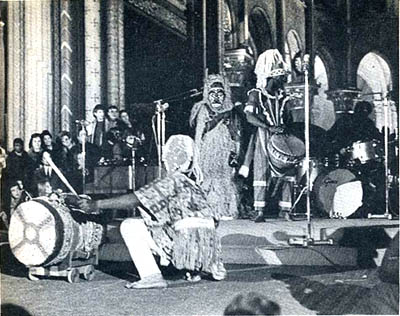
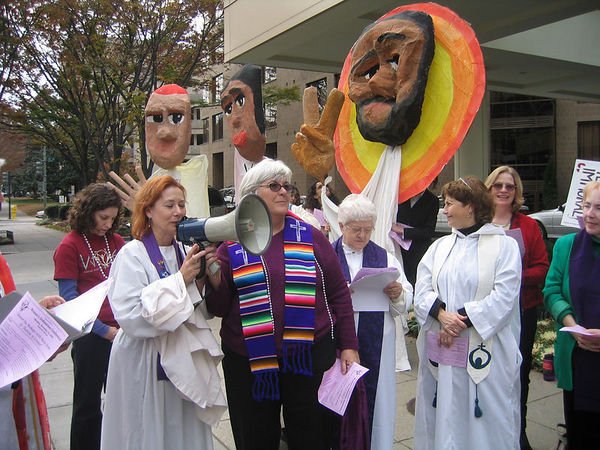
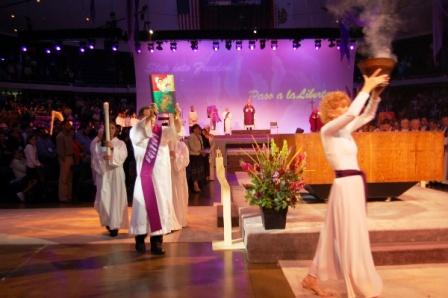
Images for your contemplation.

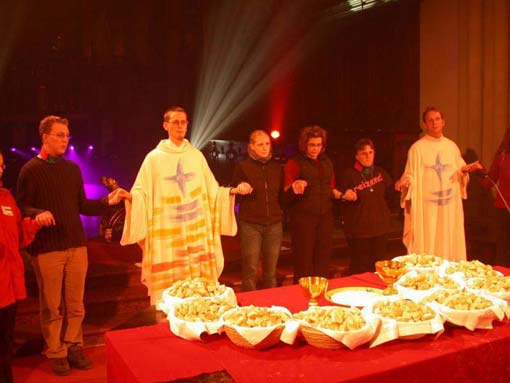
Speaking of 50th anniversary of vernacular Masses... BUGNINICARE! (Revisited)

Speaking of 50th anniversary of vernacular Masses... BUGNINICARE! (Revisited)

Speaking of 50th anniversary of vernacular Masses... BUGNINICARE! (Revisited)

Speaking of 50th anniversary of vernacular Masses... BUGNINICARE! (Revisited)

Speaking of 50th anniversary of vernacular Masses... BUGNINICARE! (Revisited)

Speaking of 50th anniversary of vernacular Masses... BUGNINICARE! (Revisited)

Speaking of 50th anniversary of vernacular Masses... BUGNINICARE! (Revisited)


Speaking of 50th anniversary of vernacular Masses... BUGNINICARE! (Revisited)

Speaking of 50th anniversary of vernacular Masses... BUGNINICARE! (Revisited)

Posted in Lighter fare, Linking Back, Liturgy Science Theatre 3000 | Tagged , , ,
70 Comments

Vocation as woman religious? Traditional Carmelites nuns.

I get questions from young women interested in religious life but with a traditional expression.   I received this and thought to share it with you.

Hello Fr. Z!
I hope all is going well. When I saw you recently in DC, we spoke about the Carmelites (O.C.D) in Elysburg, PA. You asked that I send you more information on them for you to post as you get asked for suggestions of religious orders by young ladies from time to time. Here we go:

The Carmel of Jesus, Mary and Joseph was founded in 2009 as an off-shoot of the Nuns in Valparaiso, NE. They are attached to the Extraordinary Form, while in full-communion with Rome and the Bishop of Harrisburg, PA. There are now 21 Nuns in this community with an average age of 30! They chant the old Office in common, wear the habit and are cloistered. They are truly devoted to a life of prayer and penance out of love for the Lord and keeping especially in mind, Priests and Seminarians.

It is this love of praying for Priests and Seminarians (and their outgrowing of their current monastery and its constant, costly maintenance issues) that has aided in the decision to build a newer and larger monastery, closer to Mount St. Mary’s Seminary. (Building on would be just as expensive.) They are planning to move to Fairfield, PA which is 23 minutes away from the Mount! It would be greatly appreciated if you would post the fact that they are in need of benefactors to make this happen. They already have the land picked out and the money for its purchase, permission from the Bishop and permits in process. All they need is money to actually build! I am sure there are a few readers who would be able to help, even a little. No amount is too small.

Inquiries from young women and donations can be sent to:
Rev. Mother Stella-Marie of Jesus
Carmel of Jesus, Mary and Joseph
430 Monastery Rd.
Elysburg, PA 17824

God reward you Father! And thank you for your blog, which I mentioned when I saw you, greatly helped me in my own vocation discernment.

P.S. The Sisters do not have their own website, but a support group does with some more information: www.friendsofcarmeljmj.org

Posted in Women Religious | Tagged , , ,
13 Comments

Your Sunday Sermon Notes

Was there a good point in the sermon that you heard for your Mass of obligation?

Let us know what it was.

Posted in SESSIUNCULA |
37 Comments

USA – Change those clocks! Spring Forward

In the United States of America it is time to spring forward.

Change your clocks when you go to bed.

Don’t be late for Sunday Mass.

Posted in SESSIUNCULA |
8 Comments

Archbp. Cordileone, Church in San Francisco under attack from without, within

This is another indication of what is coming our way in the near future.

Folks… start getting your heads into that mental place where you can deal with open persecution.

From LifeSite:

SAN FRANCISCO, March 6, 2015 (LifeSiteNews.com) – San Francisco’s Board of Supervisors says the archbishop’s effort to ensure the city’s Catholic schools uphold their faith is discriminatory, and one member of the board says the city is considering legal action.

At the same time, a reported 80 percent of teachers in the archdiocese’s four Catholic high schools have sent a petition to Archbishop Salvatore Cordileone that accuses him of fostering “mistrust and fear.” [What to do?  Fire everyone and start over?  Forget about schools?]

“We believe the recently proposed handbook language is harmful to our community and creates an atmosphere of mistrust and fear,” the letter said. “We believe our schools should be places of inquiry and the free exchange of ideas where all feel welcome and affirmed.” [B as in B. S as in S.  They are really talking about immoral sex.]

Organizers report that 355 teachers from Sacred Heart Catholic Prep, Serra High School, Archbishop Riordan, and Marin Catholic have signed the petition, according to CBS San Francisco.

The archdiocese announced plans in early February to add language from the Catechism of the Catholic Church spelling out Church teaching on sexual morality into faculty handbooks for the purpose of clarifying the long-standing expectation that Catholic school teachers uphold Church teaching and not publicly contradict it. Three new clauses clarifying the same were also proposed for teacher contracts in the four archdiocesan high schools.  [Imagine the nerve of quoting the Catechism!  That out-dated old thing!  It’s – what? – 23 years old now or something like that?  Sheesh.]

Part of the opposition was over the idea of classifying teachers as ministers, which some fear would make it more likely for teachers to face discrimination. [No… it isn’t “discrimination” to expect Catholic school teachers publicly to adhere to Catholic moral principles.] The archbishop has said they would not be defined as ministers, but the word ministry would be part of the contract language.

The archbishop has stressed throughout that the efforts to preserve Catholic principles in the schools are not meant to target anyone.

Earlier this week the San Francisco Board of Supervisors unanimously approved a resolution calling Archbishop Cordileone’s efforts to preserve the Church’s moral teaching “contrary to shared San Francisco values of non-discrimination, women’s rights, inclusion, and equality for all humans.”

The resolution pressed the archdiocese “to fully respect the rights of its teachers and administrators, and pursue contract terms with … educators that respects their individual rights, but also recognizes the informed conscience of each individual educator to make their own moral decisions and choices outside the workplace.”

According to the San Francisco Chronicle, supervisor Mark Farrell, who is Catholic, says “city officials are considering legal action to prevent what [Farrell] described as Cordileone’s discriminatory measures from going into effect.”

Eight San Francisco-area lawmakers sent Archbishop Cordileone a letter February 17 telling him   his efforts “conflict with settled law, foment a discriminatory environment, violate employees’ civil rights, send an alarming message of intolerance to youth, infringe upon personal freedoms, and strike a divisive tone.” [Translation: they hate the Catholic Church because they want to do immoral things and the Church says ‘No’.]

Archbishop Cordileone wrote the lawmakers back, asking whether they would hire a campaign manager who advocates policies contrary to what they stand for, and who shows them and their party disrespect.”

“My point is: I respect your right to employ or not employ whomever you wish to advance your mission,” said Archbishop Cordileone. “I simply ask the same respect from you.”  [Yah, right.  That’s going to happen.]

[And now, behold… how liberals and those who pursue immorality work…] Two of the Democrat legislators then called for an investigation of working conditions at the archdiocesan high schools by the California Assembly Labor and Employment Committee and Assembly Judiciary Committee.

A high-profile PR strategist was hired last month by as-of-yet unidentified individuals to counter the archbishop’s efforts in the court of public opinion. It’s not clear whether this week’s petition and related media coverage are a result of that.

[…]

Read the rest there.

It’s coming and we will have decisions to make.

Can you imagine how hard it would be to be bishop of, say, Sodom?

Posted in Liberals, New Evangelization, One Man & One Woman, Our Catholic Identity, Sin That Cries To Heaven, The Coming Storm, The Drill, The future and our choices, The Last Acceptable Prejudice | Tagged , , ,
86 Comments

ASK FATHER: Dealing with “blessings” from Extraordinary Ministers of Communion

From a reader…

QUAERITUR:

At Mass yesterday, I saw an Extraordinary Minister of Holy Communion dispensing “blessings” for those in line who have not yet received their First Communion or were choosing simply to come up for a blessing. As my wife and I expect our first child, I’m concerned that other well-intentioned EMHCs will try to “bless” our child (especially later in the future, when our children walk up with us to bow before the Lord). Short of a Heisman Trophy stance or going to an “ordinary” minister, do you have suggestions, especially later when children are more independent and walking up there on their own?

In my opinion, when it is feasible, the best course of action for those who are not going to receive Holy Communion is for them to not come forward for Holy Communion.

Ideally, one parent can sit with the kids while the other goes forward, and when that parent returns, the other goes forward. As the children get older, they can be trusted to stay in the pew and behave themselves when Mom and Dad go forward to receive.

What makes this tough is the widespread practice of row-by-row Communion, almost enforced by draconian ushers… err, excuse me, hospitality ministers.   We should end that practice.  While it is orderly, it creates more problems (especially psychological pressure to go forward with everyone else – when you shouldn’t) than it solves.

The ever more widespread practice of “blessings” at the time for Holy Communion can seem like an unstoppable juggernaut. Fathers!  Just stop!  Add to this the flawed theology of blessings that we have thanks in no small part to the dreadful Book of ‘Blessings’ and we have some major confusion.

A hand on the child’s forehead might discourage a would-be blesser.

As you rightly note, these blessings are usually given by well-intentioned persons. Nothing evil is imparted by someone giving such a blessing. I don’t children need to be protected from them.

A simple bit of catechesis afterwards can help, too, “Now Doris, that man who traced a cross on your forehead is not a priest or deacon, so he didn’t actually bless you, but he meant well. He is confused.  Do you want to pray for him?”

Side note… I had this from another reader:

From their youngest age we taught our children to form a cross with their fingers and hiss (as if warding off a vampire) if an EMHC tries to “bless” them. We’ve found that this gets the point across (excuse the pun), while causing only limited disruption in the Communion line.

I hope they don’t use the vampire-warding hiss when a layperson says, “God bless you,” after a sneeze.  Seriously, I know the fellow who sent this and he was being jocular.

Posted in "How To..." - Practical Notes, ASK FATHER Question Box, Liturgy Science Theatre 3000 | Tagged , , ,
35 Comments

WDTPRS 3rd Sunday of Lent (2001MR): “Sticking to a plan even though it is hard”

WDTPRS 3rd Sunday of Lent (2001MR): “Sticking to a plan even though it is hard"We can become weary in the midst of our Lenten discipline and the enemy is tirelessly working for our defeat.

In the Ordinary Form Collect for the 3rd Sunday of Lent we beg God to pick us up, and help us stay upright for the rest of the hard Lenten march.  Do not forget the military imagery of exercises and discipline we had in previous weeks.

Deus, omnium misericordiarum et totius bonitatis auctor,
qui peccatorum remedia
in ieiuniis, orationibus et eleemosynis demonstrasti,
hanc humilitatis nostrae confessionem propitius intuere,
ut, qui inclinamur conscientia nostra,
tua semper misericordia sublevemur
.

St. Augustine (+ 430) uses the example of Jesus and the woman who was caught in adultery (John 8) to teach about the mercy of God.  He said in a sermon (as if Jesus were talking): “Those others were restrained by conscience (conscientia) from punishing, mercy moves (inclinat misericordia) me to help you” (s. 13.5).   Even though in the Collect inclino is paired with conscientia rather than misericordia as it is in the sermon, the vocabulary suggests that this sermon may have been a partial inspiration for this ancient Collect, found in the Gelasian Sacramentary.

Misericordia means “mercy”, though its plural refers to works of mercy.  We have both a plural and a singular in today’s prayer.  Inclino is, “to cause to lean” and by extension, “to humble”.  Sublevo literally means “to lift up from beneath, support” and therefore “assist, console”.  Sublevo is in the beautiful 10th century Mozarabic Lenten hymn Attende, Domine:

“Give heed, O Lord, and be merciful, for we have sinned against you.
To you, O high King, Redeemer of all,
we raise up (sublevamus) our eyes weeping:
hear, O Christ, the prayers of those bent down begging.”

Confessio, in the Latin Vulgate (Heb 3:1) and St. Gregory the Great (+ 604 – ep. 7,5) is “a creed, avowal of belief” in the sense of an acknowledgment of Christ.  For St. Augustine confessio has three major meanings: profession of faith in God, praise of God, and admission to God of sins.

Our Collect reminds us of the remedies for sin identified by Jesus Himself: prayer, fasting (cf. Matthew 9:14), and almsgiving or works of mercy (cf Matthew 6:1; Luke 12:33).  When Jesus cures the epileptic demoniac, He says that that sort of demon is driven out only by both prayer and fasting (Mark 9:27 Vulgate).  In Acts 10 an angel tells the centurion Cornelius that his prayers and alms have been seen favorably by God (literally, they ascended as a memorial before God in the manner of a sacrifice).

Augustine said:

“Do you wish your prayer to fly toward God? Make for it two wings: fasting and almsgiving” (En. ps. 42, 8).

Conscientia signifies in the first place, “a knowing of a thing together with another person”.  Note the unity, of knowledge in the prefix con-.  It also means, “conscientiousness” in the sense of knowledge or feelings about a thing.  It also has a moral meaning also as, “a consciousness of right or wrong, the moral sense”.

LITERAL TRANSLATION:
O God, author of all acts of mercy and all goodness,
who in fasts, prayers, and acts of almsgiving indicated the remedies of sins,
look propitiously on this confession of our humility,
so that we who are being humbled in our conscience
may always be consoled by your mercy.

NEW CORRECTED ICEL (2011):
O God, author of every mercy and of all goodness,
who in fasting, prayer and almsgiving
have shown us a remedy for sin,
look graciously on this confession of our lowliness,
that we, who are bowed down by our conscience,
may always be lifted up by your mercy.

OBSOLETE ICEL (1973):
Father,
you have taught us to overcome our sins
by prayer, fasting and works of mercy.
When we are discouraged by our weakness,
give us confidence in your love.

An examination of conscience is a humbling experience.

We often find through our examen things which frighten and discourage us.  If we are weak in our habits and our faith, that inveterate enemy of ours souls, the Devil, “father of lies”, will rub us raw with our ugliness and tempt us to lose hope about the possibility of living a moral life or, in extreme cases, about our salvation.

On a less dramatic plane, falling down in our Lenten resolve on one day can cause a collapse of our will so that we will “flag” and give up.

This is why the Lenten discipline is so important.

By discipline, sticking to a plan even though it is hard, we learn to govern our appetites, examine our consciences, do penance, and learn the habits which are virtues.

Together with discipline, the recognition of sins and failures will “incline” us to call with humble confidence upon the mercy of Christ who paid the price for our salvation.

Finally… mercy cannot be divorced from the truth. Anyone who suggests that it can be, doesn’t get what mercy is or who Truth is.

Posted in Liturgy Science Theatre 3000, WDTPRS | Tagged ,
4 Comments

ASK FATHER: Father says that rubrics are only suggestions

coobookFrom a reader…

QUAERITUR:

I am a member of a consultative body for our parish. During a lively (for lack of a less-positive term) discussion at a recent meeting we were told by our pastor that the GIRM is, in essence, a set of recommendations for the pastor to consider when overseeing the Mass and liturgical celebrations in our parish. Further, the Pastor has wide latitude (my words) in interpretation.

My question is, in a nutshell, how should we read the General Instructions of the Roman Missal and how should its tenets be applied?

Ahhhh, the old “cookbook theory”. The nemesis of the faithful far and wide.

Back in the dark liturgical ages that were the 1980’s, in many places there was a line trumpeted by our mainline liturgist overlords. That is… The Sacramentary is not so much a set of ‘rigid’ rules to be strictly followed. It’s more like a cookbook. Good cooks know, almost instinctively, when to follow the recipe and when to make adaptations. The soup calls for a tablespoon of garlic, but the garlic on hand is older and less potent. Besides the family likes garlic, so the cook tosses in two tablespoons. The pound cake recipe is good, but adding a tablespoon of almond extract will make it taste that much better.

So too liturgy, according to this theory.

The good “presider” knows when to adapt certain words, phrases, and gestures to make the liturgy more meaningful for the congregation. That is… Hey! It’s Lent. We want to emphasize penance, so let’s lengthen the penitential rite, maybe parade about blowing a Jewish shofar to highlight the concept of atonement. Now it’s Easter! :et’s emphasize the resurrection by doing away with the penitential rite altogether. This congregation doesn’t have any connection to the saints listed in the Roman Canon, so lets substitute that with a list of famous social activists and notable founding parishioners. The local sports team is in a national contest! Let’s drape the altar with blue and green bunting to show our support.

It quickly gets absurd.

The Ordinary Form of Holy Mass offers the priest celebrant some latitude, some options at certain points (not all the time and in everything). For example, the priest can choose from several forms for the penitential rite and he can legitimately include or exclude the Sign of Peace. Rubrics of the previous editions of the Missal were studded with the dread phrase, “in these or similar words, the priest…”. The cookbook attitude was exacerbated by these ill-advised optative rubrics. Most of these rubrics are gone from the current edition. The priest is simply given the words he is to say.

Creating options where there are not options in the rubrics is … what’s the word…. wrong.

The General Institution of the Roman Missal is law. It has full legal force. It is as much binding law as the Code of Canon Law is. They are both on the same legal plane. Canon 2 of the Code of Canon Law states that, for the most part, liturgical law is outside the Code. It’s in the rubrics and the General Instruction.

Rubrics are laws, not suggestions. Purposely violating the law is a serious matter.

Posted in "How To..." - Practical Notes, ASK FATHER Question Box, Liturgy Science Theatre 3000, Our Catholic Identity |
35 Comments