Dennis Prager: High School Principal’s Manifesto

In my email I received a forward of a piece written by American radio show host Dennis Prager, one of the smartest guys on the air.

It may shock some of you to know that I am rather conservative.  When I listen to talk radio, and I occasionally do but only when recorded so I can skip the breaks and therefore save time, I listen to Rush (less these days, but still the standard), Mark Levin (great on constitutional questions – his website and audio downloads are free!  If you think I rant, you should hear Mr. Levin!), Bill Bennett (excellent for cultural issues and a genuinely nice guy – I used to be on his show with some frequency), Hugh Hewitt (who has a special interest in religion in the public square)… if you get my drift.

This is what Mr. Prager would announce were he a High School Principal.  This needs no emphases or comments from me.

To the students and faculty of our high school:

I am your new principal, and honored to be so. There is no greater calling than to teach young people.

I would like to apprise you of some important changes coming to our school. I am making these changes because I am convinced that most of the ideas that have dominated public education in America have worked against you, against your teachers and against our country.

First, this school will no longer honor race or ethnicity. I could not care less if your racial makeup is black, brown, red, yellow or white. I could not care less if your origins are African, Latin American, Asian or European, or if your ancestors arrived here on the Mayflower or on slave ships.

The only identity I care about, the only one this school will recognize, is your individual identity — your character, your scholarship, your humanity. And the only national identity this school will care about is American. This is an American public school, and American public schools were created to make better Americans.

If you wish to affirm an ethnic, racial or religious identity through school, you will have to go elsewhere. We will end all ethnicity-, race- and non-American nationality-based celebrations. They undermine the motto of America, one of its three central values — e pluribus unum, “from many, one.” And this school will be guided by America’s values.

This includes all after-school clubs. I will not authorize clubs that divide students based on any identities. This includes race, language, religion, sexual orientation or whatever else may become in vogue in a society divided by political correctness.

Your clubs will be based on interests and passions, not blood, ethnic, racial or other physically defined ties. Those clubs just cultivate narcissism — an unhealthy preoccupation with the self — while the purpose of education is to get you to think beyond yourself. So we will have clubs that transport you to the wonders and glories of art, music, astronomy, languages you do not already speak, carpentry and more. If the only extracurricular activities you can imagine being interesting in are those based on ethnic, racial or sexual identity, that means that little outside of yourself really interests you.

Second, I am uninterested in whether English is your native language. My only interest in terms of language is that you leave this school speaking and writing English as fluently as possible. The English language has united America’s citizens for over 200 years, and it will unite us at this school. It is one of the indispensable reasons this country of immigrants has always come to be one country. And if you leave this school without excellent English language skills, I would be remiss in my duty to ensure that you will be prepared to successfully compete in the American job market. We will learn other languages here — it is deplorable that most Americans only speak English — but if you want classes taught in your native language rather than in English, this is not your school.

Third, because I regard learning as a sacred endeavor, everything in this school will reflect learning’s elevated status. This means, among other things, that you and your teachers will dress accordingly. Many people in our society dress more formally for Hollywood events than for church or school. These people have their priorities backward. Therefore, there will be a formal dress code at this school.

Fourth, no obscene language will be tolerated anywhere on this school’s property — whether in class, in the hallways or at athletic events. If you can’t speak without using the f-word, you can’t speak. By obscene language I mean the words banned by the Federal Communications Commission, plus epithets such as “Nxxxxx,” even when used by one black student to address another black, or “bxxxx,” even when addressed by a girl to a girlfriend. It is my intent that by the time you leave this school, you will be among the few your age to instinctively distinguish between the elevated and the degraded, the holy and the obscene.

Fifth, we will end all self-esteem programs. In this school, self-esteem will be attained in only one way — the way people attained it until decided otherwise a generation ago — by earning it. One immediate consequence is that there will be one valedictorian, not eight.

Sixth, and last, I am reorienting the school toward academics and away from politics and propaganda. No more time will devoted to scaring you about smoking and caffeine, or terrifying you about sexual harassment or global warming. No more semesters will be devoted to condom wearing and teaching you to regard sexual relations as only or primarily a health issue. There will be no more attempts to convince you that you are a victim because you are not white, or not male, or not heterosexual or not Christian. We will have failed if any one of you graduates this school and does not consider him or herself inordinately lucky — to be alive and to be an American.

Now, please stand and join me in the Pledge of Allegiance to the flag of our country. As many of you do not know the words, your teachers will hand them out to you.

It’s nice to dream.

I’ll leave the combox open for as long as people can exercise a measure of self-editing and civility.

However, I ask that you do NOT… do NOT… engage EACH OTHER.

Make your points, briefly, and let other people make theirs.

Don’t intimidate, name call, or attack personally.
Posted in "How To..." - Practical Notes, The future and our choices | Tagged , , , , , ,
76 Comments

QUAERITUR: Why don’t priests use the Apostolic Pardon for the dying?

From a reader:

I understand that the Sacrament of the anointing is not the same as the apostolic pardon. Why is it that some priests do not say those words for this pardon and give both the blessing and the pardon? I had a card with the words on it and told my girlfriend who just died and she told the priest she wanted the apostolic pardon which he did give her and now she is in heaven without purgatory.

Thanks for being concerned about the good death of your friend.  We have to help each other.

We have great confidence that by using Holy Church’s sacraments, and also her authority to bind and loose, the “power of the keys”, we can even at the moment of death be forgiven both all of our sins, in the Sacrament of Penance or Anointing, and all of the temporal punishment due to sin with the Apostolic Pardon.

Of course we propose these things, but God disposes them according to His will.

The Apostolic Pardon, or Benediction, forgives temporal punishment due to our sins, not the sins themselves.  If anything remains from our lives, provided we die in the state of grace, for which we have not done adequate penance, the temporal punishment due to those sins, if we have not done adequate penance in life, is forgiven us through the Apostolic Pardon.  This is why the Apostolic Pardon is often given after the Last Rites of sacraments of penance, anointing, and Viaticum.

The older form of the Apostolic Blessing:

Ego facultate mihi ab Apostolica Sede tributa, indulgentiam plenariam et remissionem omnium peccatorum tibi concedo et benedico te. In nomine Patris, et Filii, + et Spirtus Sancti, Amen. … By the faculty given to me by the Apostolic See, I grant you a plenary indulgence and the remission of all your sins, and I bless you. In the Name of the Father and the Son + and the Holy Spirit. Amen.

In the newer form I think the words “et benedico te” were removed.

When it comes to forms of Anointing, Penance and the Apostolic Pardon, I always use Latin.

This is a marvelous faculty, given by Holy Church to the priest so that he can grant this remission of temporal punishment and forgive sins.  Used in conjunction with the Last Rites a soul is well prepared to go on to judgment.  Well prepared.  We cannot force God and force souls, but we have confidence that God’s promises to the Church and the Church’s teaching to us are all true.

Why don’t more priests use the Apostolic Pardon?

I am not sure that they don’t.  I know that my priest friends, my circle, as it were, know what it is and would use it.

Other priests?  Not sure.

If they don’t, then I suspect that it is simply because they may not know about it.  It is quite possible that, given the state of seminary training over the last decades, they were never taught about the Apostolic Pardon and perhaps their liberal, discontinuity pastors in their first assignments didn’t use it.  As the old not-quite-Latin adage goes, “nemo dat quod non ‘got‘”.

Another reason they may not use it is that they don’t think the circumstances warrant using it, namely that the person isn’t very close to death after all.

But I think that priests, being generally good men and being involved in the sometimes beautiful, sometimes frightening, always awe-filled moment of a person’s dying breaths and last heartbeats, would want to do everything they could to help the person to his or her judgment.  These are not moments to fool around.  I can’t imagine a priest who would not want to use the Apostolic Pardon appropriately – provided he knew it.

Therefore, it is not a bad idea to have the card with the prayer on it, just in case.

Also, for all you priests and seminarians out there, dig into what the Apostolic Pardon entails.  Don’t be ignorant of this powerful aid for a person’s dying challenge.

Posted in "How To..." - Practical Notes, ASK FATHER Question Box, The Drill | Tagged , , , , , , , ,
28 Comments

Critics of the new, corrected translation would have, back in the day, resisted also the King James Bible

It is often said, by liberals, that because in ancient Rome there was a shift from Greek to Latin for the Roman liturgy, and since Latin was the vernacular back then, we should abandon Latin now and use the vernacular which is English, pray the way people speak today.

The flaw in that argument is that when the shift was made away from Greek, the Latin that was adopted for the ancient Roman liturgy was not at all the “vernacular”.  The Latin used in liturgy was not the way people spoke in daily life.  The Latin was highly stylized, though remaining terse, with words used in a very different way than that which had been common, if the unlettered had ever even heard them at all.  Romans would have know that what was being said was Latin, and they would have heard intelligible prayers, but they would have been challenged to know what they meant without explanations.  Eventually, they would have become used to a new style of prayer and new vocabulary with the new concepts the vocabulary communicated.  Just as there was a sacral Latin style for prayer in the pagan era, Christian Romans would have recognized a Latin style for sacral use, for prayer.   It was more demanding.

I now see this in the UK’s best Catholic weekly, The Catholic Herald.  My emphases and comments.

The King James Bible, like the new Mass translation, would have been condemned as ‘inaccessible’

Both translations seek to avoid “Gas Board English” and create a suitable language to express transcendent truths

By Fr Alexander Lucie-Smith on Wednesday, 8 June 2011

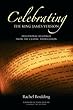
This year we are all supposed to be celebrating the 400th anniversary of the King James Bible, otherwise known as the Authorised Version. It is four centuries since King James VI and I (as he should properly be called) commissioned what was to become the standard English translation of the Bible. Of course the King James Bible is a Protestant Bible, and its publication stirred the Catholic Church into producing the Douai Bible for English Catholics, or so the story goes, but in fact the Douai Bible precedes the Authorised Version by several years, and may well have been an influence on it. Again, while the King James Bible dates from 1611, it drew on the work of Miles Coverdale and William Tyndale, who had worked about 80 years earlier. Moreover, as I have discovered through reading an excellent book produced to mark the anniversary, this drawing on older sources was done quite deliberately. In other words, the translators of the King James Bible did not want to use up-to-date English, but deliberately chose archaic language.

The book I have been reading is called Celebrating the King James Version and consists of a series of devotional readings and commentary by Rachel Boulding, who is the deputy editor of the Church Times. The book makes a good case for the idea that the King James anniversary is more than just a matter of Anglican celebration; insofar as the King Kames Version is a masterpiece of English prose, it is to be celebrated by everyone who speaks the language. The King James Version shows us to what heights language can rise. It is the opposite of what Ms Boulding calls “Gas Board English”.  [What would be an equivalent in the USA?  “Cereal Box English”?  “High School Graduate”?  “Social Security Administration”?  “Sit-Com”?  Rather different styles, but each incomprehensible and execrable.]

Ironically, though of course he would not see it that way, even Professor Dawkins is celebrating, though he does warn us that “It is important that religion should not be allowed to hijack this cultural resource”. [ROFL!]

The mention of Gas Board English is particularly significant for Catholics right now, facing as we do the imminent new translation of the Roman Missal. As the bishops’ recent pastoral letter made clear, the new translation is trying to do what the King James translators did so well, namely create a suitable language that will express transcendent truths. This is by no means easy, but it can be done. [And we shall see if the new, corrected translation does it.  But let’s not fool ourselves.  It ain’t King James English.] It is interesting to note that those who seemingly [?] oppose the new translation would presumably also have opposed the King James Version as archaic and no doubt “inaccessible”: [Of course they would have!] but, and here is the key point, the King James Version, which has lasted 400 years, is anything but inaccessible. It has been a huge success, and opened up the Bible to countless generations. [“anything but inaccessible”… well… I wonder if that is true today.  I do know, however, that with greater exposure to it would be gradually more accessible than at first glance or hearing.]

Let us hope that the new translation of the Roman Missal may do the same and open up the transcendent mystery that is the Mass to people of our own time, as well as to many generations to come.  [Do I hear an “Amen!”?]

Well done!

Discuss.

Posted in "How To..." - Practical Notes, Brick by Brick, New Evangelization, The Drill, The future and our choices | Tagged , , , , , , , , , ,
32 Comments

PRAYERCAzT/PODCAzT: Pentecost – the whole nine yards – WDTPRS POLL

I inflict my singing on you for most of this project.  There is also a POLL.  This is also PODCAzT 120.

Quite a while back I started a PRAYERCAzT series, wherein I read and/or sang the prayers and readings for upcoming Sundays and Feasts for the Extraordinary Form.  I meant to be helpful to men who were faced with singing the texts and who were, perhaps, not so familiar with what to do.  It was also meant to help people in the pews get the sounds of the Latin into their ears so that their participation at Mass would be more comfortable and fruitful.

Not long ago I received a very useful new book which published by the Canons regular at St. John Cantius in Chicago.  The book is called Canticum Clericorum Romanum, and it is the first volume.

In the celebration of the older, traditional form of Holy Mass in the Roman Rite, the Extraordinary Form, when Mass is celebrated with greater solemnity, the texts are sung.  The prayers or orations, the readings, the preface, every thing is sung.  This volume has all the texts for all the Sundays of the year and most major feasts in Gregorian musical notation.  Not only that, since there are different tones or melodies we can use to sing texts, the book has the alternative tones as well.

Some time ago I started an audio project, especially intended for priests, who might have to sing the texts during the Extraordinary but who may not be very familiar with these old Roman ways.  Priests, deacons (actual deacons and priests who serve as deacons), laymen who serve as “straw subdeacons”… must sing texts, which for some men is nerve wracking enough.  You wind up looking at examples of paradigmatic texts in, say, the Liber Usualis, and then you look at the Missale, perhaps making a photocopy, perhaps penciling in lines under the vowel where you are supposed to go up….

This new book from the canons in Chicago book has it all laid out.

What I do in this audio project is sing through all the texts of the Mass, in the different alternatives, for Pentecost Sunday.  For the collect there will be a festive tone and a solemn tone.  The epistle, from Acts, has its own tone.  There are three possibilities for the Gospel, the tonus evangelii, tonus antiquior, tonus ad libitum.  There is no tone, of course, for the Secret because it is silent.  And then the two tones we had for the Collect also used for the Post Communion.

This book does not have prefaces, which are in the Missale Romanum.  But there are three tones for the preface of the Holy Spirit, the most usual of which for Pentecost is the solemn tone. There is, however a more solemn tone, or tonus solemnior.  There is a ferial tone, which you would not probably use on Pentecost.  It would more likely be sung for a votive Mass of the Holy Spirit.

So, first I’ll sing through the prayers and texts using the new book from the canons.  Then I will switch books and sing all three versions of the Preface of the Holy Spirit. You will notice the different introductory dialogues.  I suggest before singing the tonus solemnior that perhaps you could start with the tone for the tonus solemnis, which people are more likely to know, and then switch seamlessly into the tonus solemnior.  That way, you don’t have chaos at the beginning.

I am doing this so that people can hear the different tones, with the same texts, and, if some priest or deacon out there finds them useful as he looks at the texts and wonders how to sing them, well… this is a public service as it were.


The little music clips the Grandes Heures Liturgiques à Notre-Dame de Paris by the Maitrise of Notre Dame in Paris.  I don’t think this is easily available.

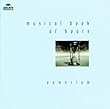
Veni Sancte Spiritus from Pomerium’s Musical Book of Hours.

Arvo Part’s Veni Sancte Spiritus from his fantastic album I Am The True Vine.

And I am very curious about the tones for the prayers, the Gospel, and the preface you prefer.

First, the orations or prayers such as the Collect and Post Communion.

Which tone for the orations (e.g., Collect) do you prefer?

View Results

Second, the tone for singing the Gospel.

Which tone for the Gospel do you prefer?

View Results

Lastly, the tone for the Preface, keeping in mind that the Ferial Tone, isn’t to be used on feasts and Sundays.

Which tone for the Preface you prefer?

View Results

Feel free to use the combox to say why you like one tone or the other.

Posted in "How To..." - Practical Notes, ASK FATHER Question Box, Brick by Brick, Our Catholic Identity, POLLS, SUMMORUM PONTIFICUM | Tagged , , , , , , , , , , , , , ,
3 Comments

Your iPhone: where chicken entrails, dice and Magic 8 Balls converge

Superstitious practices have abounded for as long as we have been around.  Even the snake in the garden, I suppose, was tempting our first parents into a sort of superstition when it, The Enemy, suggested that we could be as gods, knowing, plotting choosing our own courses, looking in a way inappropriate for creatures to have a grasp on the unknowable.

Baseball players are perhaps exempt from the sinful nature of most superstitions, because of the divine favor that rests on baseball.  Otherwise, the horoscope and fortune cookie thing is mostly still, except when it isn’t.

In ancient times, the Romans would look to the patterns of the flights of birds to discern divine favor on an endeavor.  Other celestial or weird phenomenon were taken as omens.  You could find out of a day was propitious for some undertaking by scattering grain in a pen of sacred chickens or, for a more intimate look, disembowel the chickens and read their entrails.

You could also cast lots.  People still do this when they flip a coin or consult their Magic 8 Ball.  A coin toss is fine for a kickoff, but anyone who makes real decisions based on the Magic 8 Ball deserves what happens next.

Sometimes people practiced bibliomancy, by opening a book, often Virgil, later the Bible, and reading the first passage they saw.   What Augustine did in the garden isn’t too far from that.  Divine inspiration?  Maybe.  I guess it depends on why you did it and how it turns out.

With that as a preamble, chicken entrails, rolls of the dice and Magic 8 Balls can now converge in your very own ancient Roman iPhone.

Into ancient omen gazing, divinizing?  There’s now an app for that.

I found here a story that amused, but left me feeling a little odd, given that this sort of thing can also – and I am not making this up – provide an entree to your life for the Enemy of your soul who desires your eternal suffering.

Astragalo, Greek and Roman Art of Divination for the iPhone and iPad

[prMac.com] Rome, Italy – Independent app developer Giampiero Rossi is glad to introduce the update to Astragalo for iOS. The Astragalomancy, Astragalomanteia in Latin, also known as Astragyromancy or Cleromancy, is an ancient Greek and Roman art of divination, performed by rolling dice. According to a Greek myth known thanks to the Proverbs Zenobia, first century A.D., it is said that Athena invented this art.

Near the altar of Aphrodite Ourania in Athens, marked astragali have been found, suggesting Astragalomancy was performed near the altar after about 500 BC. The emperor Tiberius often went to see the Oracle of Geryon at the Baths of Abano, where a priest foresaw the future by three golden dice. The systems in use in Roman times then passed in the Middle Ages.

Now with this modern version, you can consult the oracle and seek advice from the gods. Think and ask a question, shake your iPhone or your iPad and see the response. If you like dice games and prophecies, Astragalo is your app!

$0.99, O Quirites!

Posted in Lighter fare | Tagged
3 Comments

The Archbishop of Glasgow on the Holy Father’s provisions in Summorum Pontificum

All day long people have been filling my email with requests for me to react to the opinions of His Excellency, nay rather, His Grace, Mario Conti, Archbishop of Glasgow, who has spoken about the Holy Father’s provisions in  Summorum Pontificum.

In 2007 His Grace showed that he didn’t care much for Summorum Pontificum (SP).  It is hard to know why we should expect him to have changed his mind over the last four years.  Why would His Grace like the Holy Father’s law for the Latin Church any better now that Universae Ecclesiae (UE) has been issued?

How do I say this politely…. at 77, and after so many years of service, I guess he is entitled to his opinion.

Archbp. Conti wrote in his Ad Clerum (“To the Clergy”) letter to to the priests and religious of the Archdiocese of Glasgow:

However, even with the most recent instruction from Ecclesia Dei, there is no requirement or indeed encouragement for any of us to promote the so called Extraordinary Form. I venture to suggest that there is no call for it, or pastoral reason to change what has become the settled practice of the Archdiocese,….

While he may be right that there is “no requirement” in SP or UE to “promote” the Extraordinary Form, there actually is a requirement in SP and UE to make it available when there is a request for it from the People of God.

But Archbp. Conti says that there is no interest in the older Mass in Glasgow.

I guess we have to take his word on that.  There are no requests from any of the people of God for the older Mass there.  Not a single priest is interested in it either.  And there better not be any interest, either.  This is “settled practice”.

It may be that what we have here is an example of “special pleading”.

As my friend Fr. Finigan mentioned on his fine blog,  “I wonder why it should be necessary to warn priests so sternly against the usus antiquior if there is in fact “no call for it.”

If there is no requirement to “promote” the older form, UE 8.A makes it clearer than it was before that SP does “encourage” interest in and the use of the older form.  Reflect on this for a moment:

The Motu Proprio manifests his solicitude as Vicar of Christ and Supreme Pastor of the Universal Church, and has the aim of:
a.    offering to all the faithful the Roman Liturgy in the Usus Antiquior, considered as a precious treasure  to be preserved;

I can understand that some priests and bishops of a certain age, 77 for example, don’t like the older form of liturgy.  But do they have to run it down?  Publicly run it down?

The Holy Father doesn’t run it down.

His Grace, 77, who has the right to his opinion, seems to explain why he doesn’t like the older form of Mass. He offered this, still in his Ad Clerum letter to the priests of Glasgow:

I now speak frankly, a difference between mysterious and mystery. The mystery of the Mass is, to the wonderment of the priest and people, the presence of God in the sacrificial offering of the Body and Blood of His Son’s humanity, effective through the ministry of those called to be priests, ministering at the altar where the gifts of the faithful of bread and wine are laid. The awesomeness of the holy exchange can be manifested in the way in which we celebrate the Mass, avoiding all that could trivialise the sacred, without any extravagant gestures, but on the contrary taking advantage of the rich potential within the rites themselves to enhance the significance of what we do by way of the dignity of our actions, the singing of those parts of the Mass which are marked for song and wearing vestments of noble simplicity.

Since this is in a letter to priests, I cannot help but wonder how His Grace would view priests who see the Extraordinary Form of Mass as a precious treasure, something sacred, something for all the Catholic faithful.

Then there is this point of “mystery” in His Grace’s letter.

When it comes to experiencing mystery and awesomeness in the liturgical action, I – and I am speaking for myself – I have to experience them through outward  signs, symbols, gestures, etc.  I am just a man, and not terribly gifted when it comes to the category of mystery.  I need all the help I can get.  After all, when it comes to the transcendent, MYSTERY, I’m just a crackit gaberlunzie and a puir slow-witted gowk.

Again, speaking only for myself, I believe that an opportunity to encounter mystery deserves the most extravagant gestures and symbols we can provide.  That doesn’t mean circus clown stuff.  The rubrics themselves, of both rites, provide parameters for what is extravagant.  Go outside the rubrics, and you run the risk of extravagance in the wrong sense.  The severity of the traditional form of the Roman Rite provides the paradigm for the Ordinary Form of the Roman Rite.  The older form militates against the sort of extravagance that runs counter to the Roman Rite.  Could using both forms of the Roman Rite, according to their respective rubrics, be inappropriate?

Moreover, it seems to me that the Holy Father himself is pointing us towards many of those elements whereby we can encounter mystery, “awesomeness”, as His Grace puts it.  The Holy Father doesn’t seem to think that the Extraordinary Form is an inadequate means of worship for the people of God.  I suspect the Holy Father thinks that one can encounter mystery in the Extraordinary Form.

However, some people are so enlightened that they experience the awesomeness without the trivializing extravagance and gestures.  Like angels, they grasp the essence of things in themselves without sensible signs, or pesky composing and dividing in their intellects.   Other people, well… they don’t know what mystery is.  They’re stuck on the “mysterious”, extravagance gestures… well….

In any event, if he wants to show himself self to be out of step with the Vicar of Christ, His Grace, now 77 years of age, is entitled to speak his mind after all these years of service to the Church.  We are entitled to disagree and, nevertheless, make full use of the provisions of Summorum Pontificum whether he likes them or not.

The Holy Father has also spoken his mind in the provisions of Summorum Pontificum.

Posted in Crackit Gaberlunzie, O'Brian Tags, Puir Slow-Witted Gowk, SUMMORUM PONTIFICUM, The Drill, The future and our choices, Universae Ecclesiae | Tagged , , , , , , ,
41 Comments

D. Toowoomba: the power of prayer and adoration of the Bl. Sacrament

From CNA about the troubled Diocese of Toowoomba, whence Bp. William Morris was removed for his heterodoxy ideas and less than optimal governance. A liberal tumult has been raised since and Bp. Morris has become a cause célèbre.

In Toowoomba, a traditional approach is needed.  Some tried it.  Here’s what happened and what they have to say about it.

Catholics in Toowoomba see prayers answered through adoration

By David Kerr

Mavis Power says the turning point for the troubled Diocese of Toowoomba in Australia was Oct. 13, 2000, the Feast of Our Lady of Fatima. That was the day that Eucharistic adoration began at the heart of Toowoomba.
Power and others believe that Eucharistic devotion helped eventually lead to the ouster of the diocese’s Bishop Bill Morris. He was removed from office May 2 by Pope Benedict XVI, reportedly for his continued disregard for Catholic Church teaching during his 18 years as bishop.
“The power of prayer is the biggest factor in any change that’s occurred, really. I see a lot of power in adoration. It’s the best prayer outside the Mass and, of course, it flows from the Mass,” says Power, a mother of five who works with disabled people.
Power asked for permission to hold the adoration in the chapel of a former monastery that was turned into the diocesan office.
The decision to allow it was all the more surprising since it came from the man who encouraged people to call him “Bishop Bill.” Until then the bishop had been largely unsupportive of efforts to restore traditional Catholic devotional practices in his diocese.
Was Power surprised Bishop Morris allowed adoration?
“No. Everyone else was surprised. But we’d been praying, and I’d put all my trust in God,” she told EWTN News. “In fact, I got a lovely letter back from the bishop. Everybody was saying to me that he was only being nice because he was in trouble politically. But I don’t think so. I think he was being genuine.”
One of those also praying with Power – who asked not to be named – remembers the time well. [I’ll bet you a … a … bag of frozen peas that when she made the requests, she was polite and respectfull to the bishops]
“Mavis would never say this, but she’s a very holy woman. She came to us one day and told us to pray a novena as she was going to ask the bishop for Eucharistic adoration. We all said, ‘no way. He’ll never allow it.’ But ask she did and, incredibly, ‘yes’ was the answer.”  [Are you having trouble where you are getting a priest or bishop to listen to your legitimate aspirations?]
So for the past 11 years a group of Toowoomban Catholics have kept a prayerful vigil before the Blessed Sacrament.
Power says that one of their foremost petitions was “praying for the bishop’s conversion.”
“Not to get rid of him, just for his conversion,” she explained. And we also prayed for the Church in general, priests and families who’d left the Church.
[And then there is the Bux Protocol.]
“We always understood the power of prayer because we were a tiny minority in the diocese. So the only power we had was the power of prayer,” adds Powers’ friend. “We had to trust in God. What chance otherwise did we have, up against the powers-that-be and the establishment?”
Over those years the prayers of this committed group have yielded, they firmly believe, grace after grace.
“We used to have a bookshop in the building run by nuns. It was very New Age,” says Power, recounting just one such example. “I even remember my brother-in-law going in to ask for a book on Our Lady of Fatima. The nuns told him that Fatima had been discredited and directed him towards books on feminism instead.”
They’ve now gone out of business and a wonderful new bookshop – St. Paul’s Press – has opened selling lots of beautiful books. All Catholic. All good.
The prayers continue for renewal in Toowoomba, which spans more than 188,000 square miles and has a Catholic population of roughly 66,000 served by 35 parishes. [Any vocations?]
Pope Benedict has appointed Bishop Brian Finnegan of Brisbane as administrator of the diocese until a new bishop can be found.
In the meantime, Power and her friends they continue to pray for their departed and for Bishop Morris. As Power’s friend puts it:
“We’ve always been praying for the bishop – as people we were always charitable towards him – and so we’re still praying for him. At the end of the day he’s a soul, and nobody wants to see him lost.

If I had the opportunity to do so, I would ask these good people to pray for the National Catholic Reporter.

On the other hand, if I had the opportunity to do so, I would ask these good people to pray for me.

Posted in "How To..." - Practical Notes, Brick by Brick, Just Too Cool, New Evangelization, Our Catholic Identity, The future and our choices | Tagged ,
17 Comments

Our Sun has a flare for the dramatic

I learned of this via Spaceweather.com:

[wp_youtube]NJN0hWMrugE[/wp_youtube]

Solar flares.

You can see the material crashing back into the sun.

Want another view?

[wp_youtube]14vlh_537V8[/wp_youtube]

Apparently this wasn’t pointed directly at the Earth but we are getting some of the blast.  There will probably be auroras on 8-9 June.

Also,

The annual Arietid meteor shower peaks this week on June 7th and 8th. The Arietids are unusual because they are daytime meteors; the shower is most intense after sunrise. People who wake up early might notice a small number of Arietids during the dark hours before dawn. The real action, however, occurs in broad daylight. Tune into the meteor radar for echoes.

Posted in Look! Up in the sky! | Tagged ,
4 Comments

The challenges of moving from print to digital

From Catholic Culture comes this.  My emphases:

Vatican newspaper: reflections on future of Catholic publishing

In an essay that appeared in the June 6-7 edition of L’Osservatore Romano, the director of the Madrid-based Biblioteca de Autores Cristianos reflected upon the challenges facing Catholic publishers in the digital age.

“When printing was invented, the publication of books was controlled by a king, by the universities or in the hands of professional printers,” writes Jorge Fernandez Sangrador. “And if a new idea was born, a new book was written, so that the ideas of others expressed before or at the same time remained in other books. The objective of this was to allow for a permanence of a thought upon which, through integration or opposition, culture was constructed.”

He adds:

With the advent of the electronic book, how is this function exercised? How is the authenticity of a text of the Word of God, of the prayers of the Church or the Catechism guaranteed? The written word, guarded by the Church, needs to be transmitted in all of its purity to future generations. Decisive steps are now needed to clarify how to provide this service to the truth in an electronic universe.

It is by now clear that many younger people willingly receive their information from off screen, rather than the pages of books or other printed formats.  Smaller publishers will have a real challenge overcoming printing costs and, in some cases, mailing costs.

Down the line, will we be able to tell what it what?  Will their have to be an electronic certificate of authenticity papal documents, for example, to ensure that the document is what it claims to be?

Posted in The Drill, The future and our choices | Tagged , , ,
14 Comments

McBrien: Pope does not have full authority in the Church

The National Catholic Fishwrap is still running down Pope Benedict and defending Bp. William Morris, formerly of Toowomba, Australia, present cause célèbre of Catholic liberals.



The latest Fishwrap writer to use the ineffective and doctrinally odd Australian bishop to bash the Holy Father is theological luminary Richard McBrien.  My emphases.

Bishops and the Pope
by Richard McBrien on Jun. 06, 2011

Essays in Theology

The sacking of William Morris as bishop of the Australian diocese of Toowoomba raises more than a few theological questions about the relationship between bishops and the Bishop of Rome.

Many Catholics believe, and so apparently does Benedict XVI, that the Bishop of Rome is free, by the will of Christ, not only to appoint all bishops in the Roman Catholic church, but to dismiss them as well.

This is an incorrect assumption, and the firing of Bishop Morris provides us with a teachable moment in ecclesiology.

From the very beginning of church history, bishops were elected by the laity and clergy of the various local churches, or dioceses. And this included the Bishop of Rome, known more popularly as the pope.

[…]

Note his disdain for the title “Pope”.  Bishop of Rome is, of course, one of the titles which describes the Pope.  In fact, the Pope is the Pope because he is the Bishop of Rome, or the Roman Pontiff.  He is also the Vicar of Christ, though liberals like to say he is Vicar of Peter.  He is the Successor of Peter, but the Vicar of Christ. He is also called the Supreme Pontiff.  McBrien, however, in stressing “Bishop of Rome, seeks to reduce the authority of the Pope to that of any other bishop and to elevate the local churches to something like autonomy.

You don’t have to bother with the rest.  What follows is some spot reading of Patristic texts and tidbits about Popes in the ancient Church.  You would do better to spend some time with J.N.D. Kelly’s Oxford Dictionary of Popes.

This is McBrien’s main point: Popes and bishops should be chosen by popular election, and Popes don’t have any authority over other bishops.  The Pope is just barely a “first among equals”.

Keep this in mind when reading this stuff from the Fishwrap.  Liberals will with spittle-flecked righteousness fuss that the Vatican isn’t taking savage enough action against bishops whom they don’t think are in turn being savage enough in the pursuit of priests who are accused of harming children.

The liberal left loves to criticize Rome as slow to act, it is still slow to act, and it is acting too slowly.  “Why”, they shout, “isn’t the Vatican going after bishops?  Why are there no penalties from the VATICAN against bishops?”

Liberals want the Pope to remove bishops when it suits their own agenda to tear power from the hands of the duly appointed hierarchical pastors.  They can dovetail their agenda into everyone’s popular anger about priests who hurt children.  But when the Pope removes a bishop for a doctrinal problem, they become incensed that the Pope removed a bishop, that he has overstepped his bounds, that he doesn’t have the authority to remove bishops, and, by the way, all bishops should be elected by popular vote.

As intelligent as McBrien and those at the Fishwrap are supposed to be, how do they not see this double-standard?

Perhaps we should revive the protest!

Posted in The Drill, Throwing a Nutty | Tagged , , ,
74 Comments





















