ROME DAY 16: Saints, Stamps and Sole Music

7:23 is when the Sun rose, which in turn will set at 18:27 and the Ave Maria should – but won’t – ring at 18:45.

One of the things that was causing a lot of stress some time ago is slated to be resolved before too long.

This blog has to move.

I was informed by the Whatever From High Atop The Thing that their business model had changed and everything that was not going to be In The View had to skedaddle before a Certain Terminal Moment.

The clock has been ticking and Crack Team of Experts has been working the problem.   The Certain Terminal Moment is upon us.

In a matter of days, or even perhaps hours, this blog will wanish… vanish!

*PFFFT*

*

*

*

Only to reappear again, once the polarity has been reversed, Beamed to Another Place.

Let’s hope that all goes well and that The Blog doesn’t get caught in the… what was it they always had a problem with? … the Transporter Buffer?

I don’t always get the tech right.  After all, I’m a priest, not a server technician.

That said, I am convinced more than ever that a Catholic Signal Corps is necessary.   We need a Crack Team of Experts who are dedicated to helping with and maintaining Catholic sites and who will eventually be able to build an infrastructure that isn’t at the mercy of demonic agenda driven ideologues.

Meanwhile, just around the corner from where I say Mass in the evenings, and just up from the Ponte Sisto, is the little church of the Pallottine Fathers.  This is where you may venerate St. Vincent Pallotti.  It’s on the Via dei Pettinari,

This is a Roman saint, who developed schools for tradesmen, such as shoemakers and tailors and carpenters.  There were lots of these shops in the area when this church is, and the streets are still named for various trades.

When his body was exhumed as part of his cause in 1906 and in 1950, it was incorrupt.

A Blessed is here, Elisabetta Sanna, who died in 1857 and was beatified in 2016.   She was a widow, terribly disfigured by small pox and a collaborator with St. Vincent.

Some of the history.  It mentions the first activity here of a hermit named Paul in 1260.

Our Sorrowful Mother.   Today she is sad because of the Amazon Synod (“walking together”).  I think that that’s also an eye-roll.

When you leave San Salvatore in Onda, after your visit to St. Vincent and Bl. Elisabetta, by order of the Most Illustrious and Most Reverend Monsignore President of the Streets, you are NOT to liter or you will be fined 10 golden scudi and maybe given other punishments as well.

I popped my head into the Neapolitan church, Lo Spirito Santo dei Napolitani on the Via Guilia.

Mass was on for Knights of the Holy Sepulcher, so I couldn’t explore.  The sermon took boring to new depths of soul annihilation.

The old church, once dedicated to St. Aurea (thus unlocking the mystery of the name of a nearby alleyway), was built in 1574.   It was S. Aura in strada iulia and there were nuns here.  Dedicated to the same St. Aurea of Ostia in whose church on the edge of Ostia Antica St. Monica’s body was kept, before it was translated into Rome to Sant’Agostino.

A lovely crowned image of Joseph.  You don’t see these too often.  There is a great one at San Carlo al Corso.

This is nice.  Nicknamed, “Madonna del Fulmine”, for reasons that are not clear to me.

Here’s a nice probably 18th c. painting of St. Thomas Aquinas.

Today, walking through the market to collect some clams for supper, I spotted this, embedded in the sanpietrini.  If I’ve seen it, I haven’t remembered it.   Of course it is near the statue of Giordano Bruno, so it’s hatemail to the Church.

Here’s the little, charming (without the cars) Vicolo del Bollo.   A Roman “vicolo” isn’t just an alley or connecting passage.  They had there own microcultures and nearly their own climates.  This one runs between the Via dei Cappellari (where surely saturnos were made) and the Via del Pellegrino.

It was named at the office of the Bollo, or “stamp” which was founded in 1608 to certify the quality of silver and gold in metal works.  There were gold smiths and jewelers around here.  There still are.  In Roman parlance we still say, “oro de bollo” for something that’s the real Dr. McCoy.  I once had an short term apartment here.  At the right time of year, you enjoy wisteria and bougainvillea.

I have a 19th c. silver chalice which I found and had repaired.  It bears the silver stamp of the Papal States.  I’m pretty sure that stamp, that bollo, was set in this little street.

Speaking of silver, click the wavy flag!  Mass tonight for Benefactors at 6-ish, Rome time.

Meanwhile, at the fish monger, I spotted a net of telline… ahhhh… telline, and of razor clams.   I wasn’t quite sure what to do with razor clams, since I’ve never prepared them, so I didn’t get any.  I’ll have to check on that.  I’ve had really good razor clams in Spain.

These are called fazzolari.  If you ever wanted to make a platter of clams and garlic, maybe a little bread crumb or two, try these.

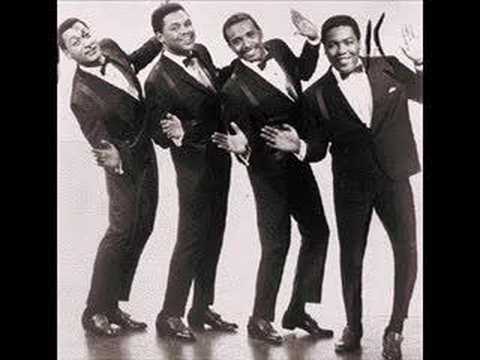
And this little group sends you off to your own day.  Kinda like a MoTown group, a little sole music

Sorry about the puns.  I can’t help myself.
YouTube thumbnailYouTube icon

COLD REPORT: It’s under control, but the cough remains. It’s infrequent, but it’s there.

Today, writing. Tomorrow, Vatican gardens and a checkup at the Vatican ATM. I found a zip cover for my Baronius Press Breviary the other day at the Paoline. So that’s done. Meanwhile, I’m reading, Newman, the book on Bernini and Borromini, Windswept House, and Weigel’s new book.

Posted in Fr. Z's Kitchen, On the road, What Fr. Z is up to | Tagged
14 Comments

First, FSSP presence and now @ChickfilA has opened its first UK restaurant

YES!

Reading is going to be a magnet!

FSSP and Chick-fil-A! OORAH!

Posted in Just Too Cool | Tagged ,
21 Comments

VIDEO: Bp. Hying on St. Margaret Mary and the Sacred Heart of Jesus

Bp. Hying of Diocese of Madison loves the Sacred Heart of Jesus.
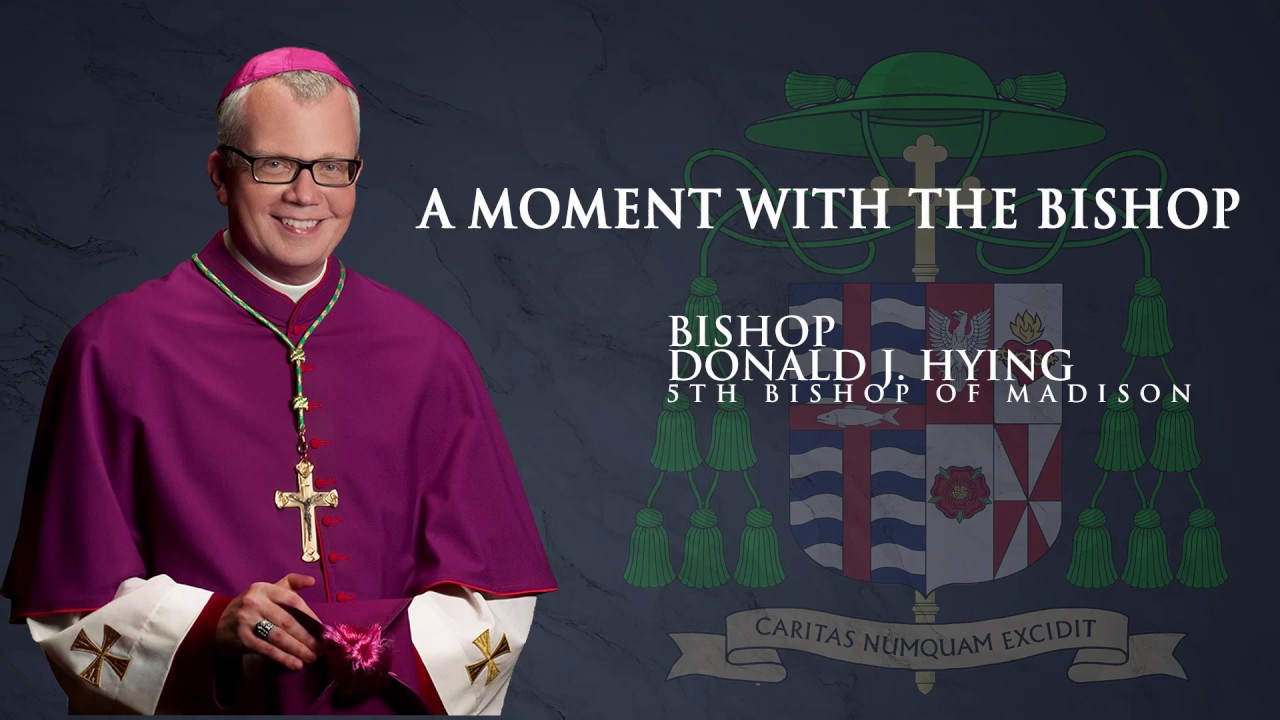
As a matter of fact, at his installation Mass he declined to wear the chasuble with his own new coat-of-arms we had made especially to match what everyone else was wearing in favor of a chasuble with the Sacred Heart on it!   Not that I’m, you know, filing these things or anything.

Seriously, I get it.  I was ordained a Deacon on the Feast of the Sacred Heart, by my choice.  I share the devotion, and Bp. Hying has it in spades… or rather in hearts.

Hying had a brief video today – in fact every day he has brief videos – for the feast of St. Margaret Mary Alacoque, the French nun and visionary of the Sacred Heart.  Less than 3 minutes.

YouTube thumbnailYouTube icon

The Postcommunion for St. Margaret Mary in the traditional Roman Rite (the choice of readings was superb). Addressed to the Son:

Córporis et Sánguinis tui, Dómine Iesu, sumptis mystériis: concéde nobis, qu?sumus, beáta Margaríta María Vírgine intercedénte; ut, supérbis s?culi vanitátibus exútis, mansuetúdinem et humilitátem Cordis tui indúere mereámur:…

Let us pray.
Having received the sacramental mysteries of Thy Body and Blood, we beseech Thee, O Lord Jesus, grant to us, the virgin blessed Margaret Mary interceding, that, having been stripped of the pride-filled empty-pomps of the world, we may warrant to clothe ourselves with the meekness and humility of Thy Heart.
Who livest and reignest with God the Father, in the unity of the Holy Spirit, one God, world without end.
R. Amen

Posted in The Campus Telephone Pole | Tagged , ,
3 Comments

ACTION ITEM! COMPETED! Baptismal Font for Rome’s Traditional Parish

UPDATE 17 Oct:

WE DID IT.

“For Luigi!”

Last night an American woman dropped in at the sacristy, knowing I would be there, with an envelope full of Euro. The pastor was there too, so she put it directly into his hands.  It was quite a bit.  Thanks, D!  You did a beautiful thing for a concrete project.

Between that and what we raised online, we have hit the goal. Hopefully, I’ll get a final figure.  Even if there is a little extra, the money will be used on that baptismal font somehow. (I suspect their estimate will turn out to be a little low.)  It’ll take a while to get it installed, and we will surely get photographic updates.

Happily, the dollar is strong, so your US donations were potent.

Meanwhile, the pastor of Ss. Trinità dei Pellegrini send me this message to pass on you all of you who contributed.

As Pastor of the Parish of Trinità dei Pellegrini I would like to sincerely thank all the readers of Fr Z’s blog who donated funds for the new baptismal font for our Parish. The generosity and speed with which you have responded to our call has been tremendous. Be sure that news of the installation and inauguration of the completed font will be posted to the blog in due course (probably in a few months’ time).
I would also like to express my thanks to Fr Z himself, who has been a great friend of our Parish over the years.
Please do not hesitate to drop by at Trinità dei Pellegrini if you are ever in Rome. May God bless you all.
Rev. Jean-Cyrille Sow, fssp
Pastor, Santissima Trinità dei Pellegrini, Rome

GENEROSITY AND SPEED!

I am so proud of you that even my black non-monsignor socks are tempted to roll up and down.

Of course I have another project ready in the wings… a helmet for a Swiss Guard. More to follow.

UPDATE 14 Oct:

I have a progress report.   From the USA we’ve raised so far about $5000.  From the UK, then amount is, frankly, pretty small.

This is what has to be replaced.    I came into church the other day and a baptism was concluding.

See that bronze urn?

No.  Just… No.

C’MON FOLKS!

Let’s get this over the top!

I know you can do it.

Remember that the traditional parish in Rome needs to set a standard.


Originally Published on: Oct 7


nce upon a time , as a seminarian in Rome, I came to know a young man, about my same age, who grew up in the neighborhood between San Carlo ai Catinari and Ss. Trinità dei Pellegrini, between the Campo de’ Fiori and the Ghetto, on the Piazza del Monte di Pietà.  He was deeply traditional and loved the Church and desired to be a priest.

In those years the church now held by the Fraternity of St. Peter, Ss. Trinità, was in bad shape and Tradition was being crushed in Rome on every side.  Neglected for years, the ultra-liberal Sant’Egidio community was encroaching.  Nevertheless Luigi did his part to keep alive the ancient Confraternity founded by St. Philip Neri.  He had the keys to the place and did his best, thanklessly, to tidy and preserve.

I developed a strong connection to that church before my ordination in 1991.  And it came to pass that I was ordained on 26 May, the feast of St. Philip Neri, who is Rome’s co-patron with Peter.  Therefore, I celebrated my third Mass at the main altar of Ss. Trinità, beneath the great painting by Guido Reni.  In a few short years, I would bury Luigi’s mother from the church, Elena, at his request, with the Traditional Rite.

Luigi overcame many obstacles, persecutions, and was eventually accepted as a seminarian for Rome at the Major Seminary at the Lateran.  Ordained in 2001, he was mistreated by his superiors for his traditional leanings and he was persecuted and his well-being neglected, though his health wasn’t good.   Don Luigi died in 2011 at 50 years of age, some 10 years a priest.

This is all a preamble to ask for your help for something that my friend don Luigi would have loved to see in life.

The church Ss. Trinità dei Pellegrini was historically the church of a confraternity.  It was not a parish church.  As a result, there was never a baptistery or baptismal font

However, it is now the Traditional Parish in Rome.  As a parish, it needs – precisely – a baptismal font!

11 years since its canonical founding and there’s no font.   And now, as a sign of great life, there are young families and children and baptisms.  Exactly as you would expect from traditional worship and Catholic life.

Here’s where you come in.

The parish is raising money to install a baptismal font from the 1600’s which they obtained in France.   They want 9000 euro for this, though I think that is a little optimistic.  That would provide for installation, etc.    I think we can do a little better.

So far, they’ve only scratched the surface of the campaign, but – in Rome, believe me – it’s hard going to raise money.

Friends, if we want Tradition to be alive where we are, let’s help the birth into new Christian life in the parish in Rome where a great example is being set to confound all naysayers.

We have to help.

I have spoken with the pastor of Ss. Trinità, and the other priests, about this project.

You can contribute to this project by making donations to the Fraternity of St. Peter.  If you are in the United States, go

HERE  

Donate to the US District.  At the bottom of the form there is a place for a commentEarmark the donation for

BAPTISMAL FONT FOR ROME PARISH

If you are in the UK go HERE.  Same deal.  Earmark.

Be sure to state that this is for the BAPTISMAL FONT FOR ROME PARISH.

Also the IBAN of the parish:
IT51A0200805205000105064222 – Account n° 706 105064222 for Parrocchia SS. Trinità dei Pellegrini with UniCredit, Largo di Torre Argentina, 14, 00186. BIC SWIFT è: UNCRITM1706

I’m not sure how, but I’ll try to collect progress reports.

As the Amazon Synod revs up, let’s make our own spiritual counter strike and with the battle cry “FOR LUIGI!” get this done.

Posted in "How To..." - Practical Notes, ACTION ITEM! | Tagged
10 Comments

You are all going to die. That’s not a threat, it’s a fact. Great AUDIO reflection on YOUR future.

I often write about the petition in the Litany that God preserve us from a “sudden” and especially “unprovided” death, that is, no time to repent and no opportunity for the last sacraments and, hopefully, Apostolic Pardon.

Ann Barnhardt, online might be likened to a hybrid of Hello Kitty and the Incredible Hulk, and I mean that with my most cordial respect.  Heck, I’ve been called, “A cross between Kung Fu Panda and Wolverine.”

In her Podcast #95, Ann has one of the best reflections on death, the reality that we are going to die, that I have ever heard, anywhere.  Start at 14:15.

In that podcast she also presents a position for which she is now well-known, namely, that Francis is an anti-pope.  Whether she is right or wrong is not, in this case, the important thing.

Her reflection on offering personal suffering, offering sufferings, aging, illness, and death is really good.

It is the sort of thing that I hope ALL of you think about, ponder – really weigh, every day or at least often.

The Four Last Things are not optional in our catechesis or our reflection or our prayer or in the preaching from the pulpit by priests and PLEASE bishops.  They merit attention just as other articles of Faith merit attention.

There are Three Divine Persons in One Godhead.  You are going to die.  Jesus is God and man.  You are going to die and be judged.  Christ died for our sins and rose again.  You are going to stop breathing one day and you will go to your eternal judgment.  Christ founded the One, Holy, Catholic, Apostolic Church and gave it His own authority.  Your heart will cease to beat, and soon.  The Seven Sacraments, instituted by Christ as the ordinary means of our salvation.  You just might be closer to the end than the beginning.

Get it?  When did you last hear a BISHOP talk about the Four Last Things?  A PRIEST?

But here is a lay woman getting this right.

You know the classic reasons for attending Holy Mass, namely, petition, adoration, atonement and thanksgiving.  The overarching reason that gives all of those their substance is the fact that we are all going to die and face judgment.

Want an reason to go to Mass?  You are going to die, my friend.   You don’t have to look farther than that.

What should we do with this final and firm realization that death is inescapable and judgment comes on right away?

Embrace it, dear readers.

There is a moment in the podcast when they talk about their friend, dying of cancer, called the priest to ask permission to let go.

WHOA!   Way to go dead friend!  Pray for us!

I would add that in my years as a priest, many times it occurred that when I began the final “commendation” beginning, “Go forth O Christian soul…”, the poor dying person died at that moment, breathing his or her last, at the commanding release of the priest, alter Christus.  Nurses will relate that sometimes they will whisper to a moribund person that their loved one’s have left the room and that it’s okay to let go.

Death is mysterious.   But it is unavoidable.  Start getting ready.   Like all aspects of “situational awareness”, running through scenarios in your head in preparedness for earthly challenges, how much more ought we to run through the scenarios about the most important moment of our life?

Fr. Z kudos to Ann for that.  For her podcast, click HERE. Start at 14:15.

Posted in Four Last Things, Fr. Z KUDOS | Tagged ,
8 Comments

ROME DAY 15: Folders, Funky Tomatoes, and Foolish Altars

Sunrise… 7:22… Sunset… 18:28 and the Ave Maria is at…. ? Why 18:45, of course.

And somebody finally bit and asked “What is that Ave Maria bell? Is that the Angelus?”

No, it is not the Angelus, which is said at 18:00, traditionally.  This is specific to the Roman Curia, upon whose calendar this appears by now by long custom, harking back to another day.

The “Ave Maria” indicates the time of the ringing of the Ave Maria Bell, which once upon a time let people know at what point in the day they were when there were not an abundance of clocks.   Think about how, in Rome, a canon sounds at noon, booming out over the City.  Noon was important, because that’s when appointments and contracts began.  Church appointments still begin at noon.   There was a great solar clock tracing the analemma on the floor of Santa Maria degli Angeli.  When the spotlight from the sun crossed the midday mark on the floor, a signal flag went up from the roof of the church.  Spotted from the Gianicolo, a canon sounded the hour.

The Ave Maria signaled a turning point in the work day in the Curia.  A bell rang, approximately one half hour after Sunset, 3 times, then 4 times, then 5 times, and then once.   That indicated the change of the religious day from day to night.

Approximately, because the sunset changes but the Ave Maria stays fixed for a while, then changes in 15 minute increments.   Hence, since right now the Ave Maria is rung at 18:45, as it is from for some days, then 17:45 is 23rd hour of the day and 19:45 is the 1st hour of the next day.

In the Roman Curia, Cardinals and other officials would still receive people in audience for the hour after the Ave Maria Bell rang. An hour after the Ave Maria, a single bell would toll, thus ending all business for the day, since it was the first hour of night.

Get it?

Meanwhile, here is the Chiesa Nuova in its sunny splendor.  Santa Maria in Vallicella.  This is the HQ of the Oratorians found by Rome’s co-patron with Peter and one of my favorites, St Philip Neri.  Next door is the Oratory, designed by Borromini, whom I mentioned yesterday.  Seized by the State, alas, and now a library.

I tried to sketch this the other day.  Disaster.  But I sure appreciate the detail more than ever now that I tried.  It is slightly concave.

Let’s go into the church.

Look what the barbarians set up in front of that glorious sanctuary and altar.  It is so blitheringly incoherent that you want to tear your hair.   Set that up in front of that?  And look how “permanent” made it.   Grrrrr.

Altar painting.  Interesting.  Rubens, oil on copper and slate.

This is one of the great Counter-Reformation churches in Rome, following the lead of the Gesù, the mighty church of the still-sane Jesuits.  Originally, St. Philip wanted it completely white, but, it got decorated as you can see.  There are paintings within by Barocci and Pietro da Cortona.

A side chapel.

Another side chapel, to the Gospel side of the sanctuary, with the tomb of the saint.  I have said Mass here many times.

A memorial inscription.  Maybe one of you would like to take a shot at it.  Some of these stones are poignant indeed.

Another inscription, which, sadly, we can see across the mensa of this altar, tells us who consecrated it and when.  This church is filled with side chapels once teaming with priests saying Masses.

You see where they are, along the nave.  That doesn’t show the transepts and other chapels.

When the City was filled with Oratorians for the canonization last week, many of them wound up at Ss. Trinità to say Mass.  Telling.

This side altar had a painting by Caravaggio, now in the Vatican Museum

Christ is being taken down from the Cross.  What you have to visualize, is a priest at the altar, saying Mass, at the moment of the Elevation.   Christ’s hand, on the lower, hanging arm, would by pointing directly to where the Host and the Chalice would be held during the Elevation.

Outside again, on my way to complete an errand on my Roman To Do List.

Do NOT litter here.

My bookbinder.

I need a couple of document folders made, for when decrees or something must be read.

Behind the Oratory, the lovely bell tower.

There is a nice little square across from Borromini’s Oratory.  At the back side of the square is a good restaurant, not stupendous, but good and reliable and pretty quiet where you can sit outside without traffic around you.  Polese.   The square has a statue ofNicola Spedalieri, was a priest who wrote some controversial things.  It is said that he was poisoned by Jesuits.  I can buy that!   The libs put up this statue to him.

Meanwhile, I stopped to get a supplí, around the corner at Supplizio.  I guess they are to die for.

While waiting I spotted this wonderful anchovy can.  “Marca Vaticano”.  There’s always something fishy in there.

My snack with caccio e pepe.

I also liked this…. Funky Tomatos.

Yes, that’s funky.

COLD REPORT: A little sniffly last night, so I took some cold meds that made me a little drowsy, but I got a good sleep and feel pretty good today.  Still that lingering cough, but it isn’t bad.

Tonight, Mass for a friend.

Tomorrow, Friday, some penance for the Church and Mass for the routing and conversion of the Church’s internal enemies.

Posted in On the road, What Fr. Z is up to | Tagged
4 Comments

#AmazonSynod through a lens from St John Henry Newman

Corruptio optimi pessima… the corruption of the best thing is the worst sort of corruption.

The other day I heard Australian author Tracey Rowland give a great talk in Rome about Newman’s idea of a university in juxtaposition with what’s going on in education today and what an “updated” Newmanian model might be given that not only must young men be trained to be Catholic gentlemen, but young women must be trained to be Catholic ladies.

That got me thinking more about Newman’s work, The Idea of the University, [US HERE – UK HERE] which I hadn’t read since the early 80s.  It was one of those works that the late Msgr. Schuler used to keep me on the hook during my journey toward and into the Church.   So, I’m reading it again.

I’m reading Newman’s Idea against the backdrop of Rome and the ongoing farcical pan-Amazonian (“walking together”) Synod.

So, along I read and arrive at this passage.    Read aloud and, in your mind, substitute “Ireland” and “England” with “Amazon”, “Celts and Saxons” with “indigenous tribes”, “Gregory” with “Francis”, etc.

In the first centuries of the Church all this practical sagacity of Holy Church was mere matter of faith, but every age, as it has come, has confirmed faith by actual sight; and shame on us, if, with the accumulated testimony of eighteen centuries, our eyes are too gross to see those victories which the Saints have ever seen by anticipation. Least of all can we, the Catholics of islands which have in the cultivation and diffusion of Knowledge heretofore been so singularly united under the auspices of the Apostolic See, least of all can we be the men to distrust its wisdom and to predict its failure, when it sends us on a similar mission now. I cannot forget that, at a time when Celt and Saxon were alike savage, it was the See of Peter that gave both of them, first faith, then civilization; and then again bound them together in one by the seal of a joint commission to convert and illuminate in their turn the pagan continent. I cannot forget how it was from Rome that the glorious St. Patrick was sent to Ireland, and did a work so great that he could not have a successor in it, the sanctity and learning and zeal and charity which followed on his death being but the result of the one impulse which he gave. I cannot forget how, in no long time, under the fostering breath of the Vicar of Christ, a country of heathen superstitions became the very wonder and asylum of all people,—the wonder by reason of its knowledge, sacred and profane, and the asylum of religion, literature and science, when chased away from the continent by the barbarian invaders. I recollect its hospitality, freely accorded to the pilgrim; its volumes munificently presented to the foreign student; and the prayers, the blessings, the holy rites, the solemn chants, which sanctified the while both giver and receiver.

Nor can I forget either, how my own England had meanwhile become the solicitude of the same unwearied eye: how Augustine was sent to us by Gregory; how he fainted in the way at the tidings of our fierceness, and, but for the Pope, would have shrunk as from an impossible expedition; how he was forced on “in weakness and in fear and in much trembling,” until he had achieved the conquest of the island to Christ. Nor, again, how it came to pass that, when Augustine died and his work slackened, another Pope, unwearied still, sent three saints from Rome, to ennoble and refine the people Augustine had converted. Three holy men set out for England together, of different nations: Theodore, an Asiatic Greek, from Tarsus; Adrian, an African; Bennett alone a Saxon, for Peter knows no distinction of races in his ecumenical work. They came with theology and science in their train; with relics, with pictures, with manuscripts of the Holy Fathers and the Greek classics; and Theodore and Adrian founded schools, secular and monastic, all over England, while Bennett brought to the north the large library he had collected in foreign parts, and, with plans and ornamental work from France, erected a church of stone, under the invocation of St. Peter, after the Roman fashion, “which,” says the historian, “he most affected.” I call to mind how St. Wilfrid, St. John of Beverley, St. Bede, and other saintly men, carried on the good work in the following generations, and how from that time forth the two islands, England and Ireland, in a dark and dreary age, were the two lights of Christendom, and had no claims on each other, and no thought of self, save in the interchange of kind offices and the rivalry of love.

Recruited by the Pope, sent to a savage place, driven by charity, “until he had achieved the conquest of the AMAZON to Christ”, is what you will not be reading in the future.

“They came [to the AMAZON] with theology and science in their train; with relics, with pictures, with manuscripts of the Holy Fathers and the Greek classics…”.  Nope.

Instead, from the Amazon they came to Rome with pagan carvings that they set up in the hall where bishops babble, “under the invocation of St. Peter”.  They come to Rome and her churches consecrated to the Triune God to set their demon idols up in front of picnic tables installed by modernists to displace the glorious main altars lovingly built by our forebears.

Pope Francis speaks at the start of the first session of the Synod of Bishops for the Amazon at the Vatican Oct. 7, 2019. (CNS photo/Paul Haring) See SYNOD-OPEN-POPE Oct. 7, 2019.

It’s enough to make you weep and gnash your teeth.

Consider what lofty aims are bruited in the “walking together” hall, how we of the Greco-Roman Judeo-Christian Western and especially Northern civilization must listen to the atavistic, pagan worshipers of idols, indeed, we must listen to the idolized trees and toads and snakes and raindrops, and gather into our own Catholic Thing their “wisdom”.   It is suggested that we set aside proven disciplines of literally millennial testing and adapt to their ways.  Why?   Because, well, the alternative is toooo haaaard.

Reprising…

Augustine [of Canterbury] was sent to us by Gregory [the Great]; how he fainted in the way at the tidings of our fierceness, and, but for the Pope, would have shrunk as from an impossible expedition; how he was forced on “in weakness and in fear and in much trembling,” until he had achieved the conquest of the island to Christ.

Even in the face of dire and even deadly prospect, Holy Mother Church’s sons and daughters, in unity with Peter and the Apostles, have been obedient to the Great Commission Christ bestowed at His Ascension: “Go therefore and make disciples of all nations, baptizing them in the name of the Father and of the Son and of the Holy Spirit, teaching them to observe all that I have commanded you”. (Matthew 29:19-20)

Holy Church has always done this very thing in the inevitable, inexorable and also profoundly desirable dynamic process of authentic inculturation.

In authentic inculturation, what the Church has to give to the world must always have logical priority in the simultaneous interchange of elements with the world.  Reverse that priority, and you wind up with disasters… such as, for example, grinning Jesuits who pressure the Church to change her teaching on sodomy, or “walking together” participants who think there ought to be an Amazonian liturgical rite, the ash-canning of clerical celibacy, and the embrace of the impossible ordination of women.

In finem citius.


Posted in Pò sì jiù, Synod, You must be joking! | Tagged , , ,
10 Comments

ASK FATHER: Is Francis an Antipope because Cardinals conspired and the conclave was invalid?

From a reader…

QUAERITUR:

In your podcast the other about [Fr. Thomas G.] Weinandy’s idea of an “internal papal schism” you said that nobody is saying that Bergoglio is an Antipope. But there are people saying that and Bergoglio is an Antipope because the conclave was invalid. There were Cardinals who conspired to elect Bergoglio and that means they were excommunicated and were forbidden to be in the conclave. Austen Ivereigh said Cardinal Cormac Murphy-O’Connor told him that he and others worked for Bergoglio and disgraced McCarrick said that he was approached by some powerful guy and then he campaigned for Bergoglio. At least some of the Cardinals in the conclave were not supposed to be able to vote. Bergoglio is an Antipope because the conclave was rigged!

Yes, I’ve seen this argument before. Since some electors incurred an excommunication automatically (latae sententiae) by conspiring and agreeing to elect Bergoglio (Universi dominici gregis 81), therefore they weren’t supposed to vote in the conclave. But they did vote and therefore the election is invalid.

The problem with this argument is the distinction between types of excommunication.

Latae sententiae excommunications can be incurred automatically, even in a hidden way. Other excommunications are publicly declared (ferendae sententiae).  Canon law indicates that a person who has incurred a censure latae sententiae would cast an illicit vote, whereas a person under a ferendae sententiae excommunication would cast an invalid vote. If an election turned on the number of votes cast by electors under ferendae sententiae excommunication then the election would be invalid (can. 171).

If a Cardinal elector is under ferendae sententiae excommunication he would be impeded from participating in the conclave and he would not be permitted even to enter the conclave.   And only a Pope determines whether a Cardinal has incurred a latae sententiae excommunication and then formally declare a ferendae sententiae excommunication (can. 1405).  But there is no Pope in the run up to a conclave.  That’s a problem.

If a bunch of Cardinal electors conspired after the death of the Pope and before the conclave, and they incurred the latae sententiae censure, there would be no Pope to declare the ferendae sententiae penalty.  Hence, those Cardinal electors would be admitted to the conclave and would vote illicitly but not invalidly.

Believe me: Cardinals know this stuff.   They know exactly how far they can go.

I have zero doubt that a group of Cardinals did go right up to the line in 2013.

An honest Cardinal elector, repenting of his conspiratorial whisperings, would have to tell the others that he had incurred latae sententiae an excommunication and, therefore, beg to be excused from fulfilling his duty to enter the conclave.   BUT… if he didn’t want to do that, he could enter and vote validly but illicitly… and wind up in Hell if he died before getting the censure lifted and, then, making a good confession.  Also, even if the excommunicated Cardinal elector did beg off, and the others agreed that he shouldn’t enter the conclave, the excommunicated elector could still change his mind and enter and vote.  It’s ferendae sententiae, not latae sententiae, that matters.

Let’s see the key canon:

Can. 171 §1 The following are legally incapable of casting a vote:
1° one incapable of a human act;
2° one lacking active voice;
3° one who is excommunicated, whether by judgement of a court or by a decree whereby this penalty is imposed or declared[ferendae sententiae, not latae sententiae]
4° one who notoriously defected from communion with the Church.
§2 If any of the above persons is admitted, the vote cast is invalid. The election, however, is valid, unless it is established that, without this vote, the person elected would not have gained the requisite number of votes.

So, in a conclave, the margin of the number of votes would also be considered.  If the conclave were deadlocked long enough to kick in the absolute majority rule, and the election were to turn on a slim margin of votes, there could be a problem.  Of course how formally declared excommunicates were present in the first place is a puzzle.

In the end, therefore, I don’t think that the theory of a conspiracy to elect Bergoglio is enough to invalidate the vote in the conclave.  Those who did conspire, and there is enough evidence to suspect at least a few electors, against the clear prescriptions of the rules for the electors in Universi dominici gregis 81, will wind up in Hell if they don’t repent and seek to have the censure lifted… ironically by the one whom they might have conspired to elect.

No.  If you are going to say that Francis is not a legitimate Pope, you need a better argument than an invalid conclave due to conspiracy.

I suppose you might have to argue that there shouldn’t have been a conclave at all, it wasn’t even really a conclave because the See of Peter wasn’t really empty and Benedict was really still Pope.  In other words, Benedict didn’t legitimately abdicate because he was a) forced under great pressure and as a result wasn’t completely free or b) he didn’t really mean what he clearly said and clearly wrote and then, in fact, clearly did.

But that’s another matter.

Posted in "How To..." - Practical Notes, ASK FATHER Question Box, Canon Law | Tagged , , , , , ,
27 Comments

Pagan Idols at the Amazon “walking together” Synod

More blah blah from the Holy See about the antics surrounding the Amazon (“walking together”) Synod… Amazoniana Synod… cha cha cha…


We’ve seen the photos of the ubiquitous carving of the pregnant woman, which is pretty obviously some sort of pagan thing.  Now an official of the panamazoniana walking together party has made a helpful, clarifying statement.

From CNA

.- Fr. Giacomo Costa, a communications official for the Amazon synod, said Wednesday a wooden figure of a nude pregnant woman, which has been present at events related to the synod, is not the Virgin Mary, but is instead a female figure representing life[Just… “life”.  Right.]

It is not the Virgin Mary, who said it is the Virgin Mary?[I sure didn’t!] Costa said Oct. 16 at a press conference for the Amazon synod, a meeting taking place in the Vatican Oct. 6-27 on the ministry of the Church in the region.

Costa referred to a controversial image of a female figure which was part of a tree-planting ceremony in the Vatican Oct. 4. The same figure has been present in the vicinity of the Vatican at various events happening during the synod, under the “Casa Comun” initiative.  [On a side note, I was with a group of writers recently, one of whom affirmed that that infamous and very obvious male carving made another apparition, but with a significantly reduced calling card.  For those who say that it was not, in fact, a… calling card…. FAIL.]

The wooden figure of a pregnant woman has been described as both a Marian image and as a traditional indigenous religious symbol of the goddess Pachamama, or Mother Earth[Which is more plausible.  Really. Think about it.  Marian or pagan?   You’ve seen it, right?]

When told “many people have said” the woman is a figure of the Virgin Mary, Costa added “‘many have said,’ okay, as you like, but I have never heard that.” [You haven’t heard that?  Then why are you in the job you are in?]

There is nothing to know. It is an indigenous woman who represents life,” he stated, adding that his information commission will look for more information about it, but “it is a feminine figure” and is “neither pagan nor sacred.”  [Uh huh.  I’m totally buying that explanation.  It’s nothing, just “life”… neutral.  That’s why you see it all the time.]

Paolo Ruffini, prefect of the Vatican communications dicastery, said Wednesday he sees the figure as “representing life.”  [Well that settles that!  HE sees it that way.  Okay.]

“Fundamentally, it represents life. And enough. I believe to try and see pagan symbols or to see… evil, it is not,” he said, adding that “it represents life through a woman.” He equated the image to that of a tree, saying “a tree is a sacred symbol.”  [I refer the readership to the incident with St. Boniface and an axe.  Yes, a tree can be a sacred symbol.  Think “Jesse Tree”, or the “Tree” of Calvary.  But those are made obvious by their contexts and the tradition behind them, not to mention their being rooted in the soil of Scripture.  That carved wooden thing?  Nope. ]

Ruffini said that interpretation is his personal opinion, and he was not speaking as the head of Vatican communications or synod communications.

He added that “We know that some things in history have many interpretations” and he would look for more information about the image and inform journalists about what he finds out.

Cristiane Murray, vice director of the Holy See press office, added that more information about the wooden figure should be sought from REPAM or the organizers of the events where the image has been present [Lemme get this straight.  No one in the Press Office has sought information from REPAM (massively funded by German money, by the way).   And no one knew what it was before it was allowed to be part of a … whatever the hell that was… in the Vatican gardens and then being seen all over the place ever since?  There was no vetting of this?  Good grief.  Spanky And The Gang Has A Synod.]

Mauricio Lopez, REPAM’s executive secretary, told CNA after the press conference that he could not comment on the press conference, directing CNA to Costa’s remarks, as the “official spokesperson” of the Synod.  [No one’s talking.]

REPAM (the Pan-Amazonian Ecclesial Network), a group backed by the bishops’ conferences in Latin America, describes itself as an advocacy organization for the rights and dignity of indigenous people in the Amazon. The network is involved in operations for the synod assembly and is one of 14 groups on the organizing committee of the Casa Comun initiative, which is promoting more than 115 events hosted by a loose network of groups, connected in varying degrees to the Catholic Church.

Okay.  Now we know.  It’s a pagan idol.  The other day they were out in front of S. M. Traspontina dancing around this stuff.

No matter how deluded these people might be, or well-meaning, what they are doing is actually summoning demons.

Yeah… “life”.

Meanwhile, here’s something by Piero della Francesca that doesn’t scream PAGAN WORSHIP.  His Madonna del Parto.


Overshadowed by the Holy Spirit, she becomes the New Ark.

Posted in Synod, You must be joking! | Tagged ,
38 Comments

ROME DAY 13: A Suicide, a Life Hack, and an ALERT to Roman Seminarians

You will want to know that the Sunrise in Rome was at 7:21 and that Colors should sound at 18:30, 15 minutes before the poor little Ave Maria bell sounds.

It has been a really busy couple of days, so I haven’t a lengthy photopost summary.  However, I do have a few things of interest.

Firstly, any one who is interested in a rich experience of Rome ought to read some art and architecture history.   To get you into an extremely important period for the development of the City, and must of what we most enjoy now, I might recommend a couple starting points.

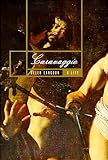
First, Caravaggio: A Life by Helen Langdon.

US HERE – UK HERE

This gets you into the Borromean spirituality at the foundation of the painter’s vision, and into the alleys and corners of Rome in his day, as well as into the salons of the cardinals and patrons.

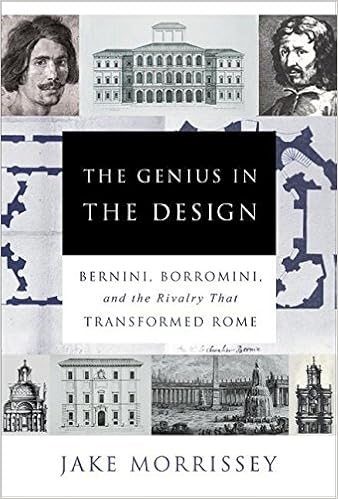
Then, The Genius in the Design: Bernini, Borromini, and the Rivalry That Transformed Rome by Jake Morrisey.

US HERE – UK HERE

It’s a terrific account of the careers of these two pivotal figures, once partners, then rivals, a huge success with ups and downs and a genius who committed suicide.

Speaking of Borromini, he is buried in this great barn of a church, San Giovanni dei Fiorentini, the locus of the Florentines in Rome.

It was built in an odd place, back in the day, and it is still an odd place.   The book by Morrisey talks a little about the church, which Borromini worked on and where he lurked, alone and sullen in his dark outfits.    Allow me to quote him:

The place where Borromini was buried, the church of San Giovanni dei Fiorentini, is a traditional Roman neighborhood church. It is stately but not imposing, grave but not commanding, neither large nor magnificent in a city bursting with churches that are both. Commissioned in the sixteenth century by Pope Leo X, a member of the Medici family, for the Florentines, who for generations lived in this neighborhood near the Tiber, San Giovanni stands near the north end of the Via Giulia, just where the river makes its lugubrious turn south. Begun in 1509 from a design by Jacopo Sansovino (before he left Rome for Venice) and built of traditional flat Roman brick (now gray with age and grime), San Giovanni is dedicated to Saint John the Baptist, the patron saint of Florence. It sits in a part of Rome that by the nineteenth century had, in Émile Zola’s words, “fallen into the silence, into the emptiness of abandonment, invaded by a kind of softness and clerical discretion.”

Visiting the church, it’s clear why it has been called “so large a church along so terrifying a river.” It is wedged into a narrow sliver of land whose constricted dimensions must have demanded a good deal of resourcefulness from the builders: When it was built, its altar end jutted out over the Tiber’s riverbed; the stone piers supporting it had to be sunk deep into the muddy shoreline. The result is a church that even now clings tenaciously to its place, like an old, nearly forgotten watchdog that knows he is no longer needed but nonetheless refuses to cede his place at the door.

San Giovanni’s two noteworthy architectural details are its elongated, crownlike dome, designed much later by the preeminent architect in Rome at the time, Carlo Maderno, and early on nicknamed the confetto succhiato—half-sucked sweet—by residents of the neighborhood, and its curious lantern, a tall, cylindrical shaft of slender windows that alternate with equally narrow stone buttresses coiled at their base like tightly wound ribbon. This unusual concoction was designed by a Lombard stonemason who worked as Maderno’s assistant, a young man named Castelli, who soon began calling himself Francesco Borromini.

Borromini knew this church well. It was one of the earliest buildings he worked on with Maderno, and the church’s grandiose Falconieri chapel—its convex high altar, a fantasy in marmi mischi (precious materials of brick red travertine and gilding) that presses out into the congregation—celebrates John the Baptist. It was one of Borromini’s last great commissions before he died.

For most of his life, Borromini lived in a house next to San Giovanni’s high, unwelcoming walls; he was familiar with the fashionable Via Giulia, the boulevard created by Pope Julius II early in the sixteenth century, and the shadowy tangle of streets of small houses stuccoed in the traditional Mediterranean colors of ocher, umber, and dun that twist out from it like cracks in glass. He knew the sounds of shouting river workers and bickering shopkeepers, the lingering odors of fetid water and rotting garbage, just as he knew the traditions and rituals of San Giovanni, which included the annual Easter blessing of the lambs. His lonely figure—always dressed in black, like the chief mourner at a funeral—was well known to the hatters, trunk makers, locksmiths, tailors, grocers, and booksellers who had shops throughout the area.

It was in this sestiere, in the house where he lived, soberly and alone, that Borromini died early on the morning of August 3, 1667.

Morrissey, Jake. The Genius in the Design (pp. 3-4). HarperCollins. Kindle Edition.

Now you have a feel for it.

Pippo Bbono!

More beautiful details.

That tabernacle.  What were they thinking?  And of course idiocy for the altar.

But notice in the floor….

What an amazing talent.  The account of his depression is in the book.

I was near the Vatican this morning and NOT for the audience… quod Deus avertat… but rather for a gathering of colleagues to catch up on stuff. While over there I wanted to find a zip-cover for my Baronius breviary.   Remembering that, last May, Leoniana was closed, I walked to it to see if there were changes.  It was open, but not open.  I walked in and it was as if abandoned in mid sale, some shelves cleaned out.

How sad.  I bought most of my books there for years, and Angelo was a good friend since the mid 80’s.

In the Via della Conciliazione I ran into two gals who are distributing for free special copies of the superb book about the Traditional Latin Mass, Treasure and Tradition (link always on the sidebar here).    St. Augustine Academy Press made translations into Spanish and Portuguese and a special flexible cover for the Canonization of Newman.  They had 7000 printed here and they’ve been giving them out: 3500 on canonization day alone.

They want to get them into the hands of SEMINARIANS in Rome.  They can provide BOXES of them!    I can get you in touch with them.  They have some 3500 to go!

If you haven’t seen this book (the regular edition has a different cover), you are missing something wonderful.  It’s super instructive and beautifully done.

Two great examples of faith, out there doing something concrete.

They got hassled by the police, “You aren’t those Church Militant people, are you?”  Anyway, they were shut down and forced to go to a permit office… which is like being sent to the depths of a bureaucratic hell that not even Dickens could fathom.   It seems that permissions are needed for flyers.   “But these aren’t flyers!”, they responded, “They’re books!

So, they are back in business with no problems.

A little detail from a wall.  Many buildings back in the day were owned by confraternities or religious.  Hence, their ownership was indicated in the walls.  This one was in the hands of the group that St. Frances of Rome founded and joined, the Benedictines of Tor de’ Specchi.   You can see Frances’ Guardian Angel.   I’ve had great affection for this saint, since when I first moved to Rome (having been rejected in my native place), I live in her old house, her family’s palazzo in Trastevere, when she also died.  She took me under her wing, as it were.

And now the food portion of the post.

This life hack has to do with food, in that I was irritated at dealing with a dull knife.. and the only real knife in this place.   Need to sharpen a knife and don’t have a sharpener?  I’ll bet you do have a sharpener.  Find a ceramic coffee mug that has an unglazed ring on the bottom or maybe a plate, flower pot, etc.

Hold the knife at about 20° and draw it firmly and smoothly and quickly across the roughish unglazed ring.  Repeat going the other way.

Think about it.  Lot’s of sharpeners are ceramic.

Now, instead of crushing a tomato or other thing, it neatly slices, as it did when I did a casual chiffonade of basil growing in my kitchen windows box (after I cleaned out the detritus left from some other decade).

Last night I was out with delightful people.  We ate at a good Sicilian place.

Caponata and focaccia.

Spaghetti with tomato, tuna, hot pepper.   I would have made it a little hotter and I ate about half the pasta.  Gotta cut back.

COLD REPORT: I’ve beaten the head part.  I still have a little cough.  Not bad.

Whew.

Many errands today, and writing.

I will say MASS FOR BENEFACTORS tonight at about 6PM Rome time.

Posted in Fr. Z's Kitchen, On the road, What Fr. Z is up to | Tagged
4 Comments