Bad priesthood vocations numbers? Not by accident. Wherein Fr. Z rants.

I posted this last year, to the day.

Any additional thoughts?

___ Originally Published on: May 3, 2016 ___

Ordination_First_Mass_cardAnd yet, do other parishes and dioceses and religious groups change what they are doing?

Not much.  It is if they really aren’t committed.

In life I have found that when I am going in the wrong direction, I have to, first, stop going in the wrong direction, turn around, go back, and then go in the right direction.

Right? Does that make sense?  Is that your experience too?  It’s not hard, right?

At California Catholic I read…

Why aren’t other dioceses looking to Lincoln?

[…]

According to the Official Catholic Directory and the Center for Applied Research in the Apostolate, Lincoln, NE is the only diocese in the United States to place in the Top 20 for the ratio of ordinands to population in every survey conducted from 1993-2012.
Despite having a Catholic population of only 97,000, the Lincoln diocese ordained 22 men from 2010-2012. Only seven dioceses in the entire country ordained more. One of those, the Archdiocese of Los Angeles (with a Catholic population over 4.2 million) ordained 34 men during those same three years. In other words, L.A. only ordained four more men per year on average despite having a population 44X greater than Lincoln.

The Lincoln blueprint can be narrowed down to a few foundational elements:

Orthodox Bishops[Yep.  This is a big one.]

Against all odds and the prevailing winds of the post-conciliar Church, Lincoln has avoided the craziness and irreverence that has afflicted so many other dioceses. This has largely been achieved through the stability and orthodoxy provided over the last fifty years by three men: Bishop Glennon Flavin (1967-1992), Bishop Fabian Bruskewitz (1992-2012), and Bishop James Conley (2012-present). They succeeded despite the occasional scorn of their brother bishops, and by making the Church’s perennial priorities their own.
The National Catholic Reporter (known as the Fishwrap to Fr. Z readers) [And not only to Fr Z readers…. pretty much everyone now calls it that.] once bemoaned that it was as if the “reforms” so prevalent in the aftermath of Vatican II had missed Lincoln altogether. Exactly.

The Male Only Sanctuary

To a large extent, Lincoln has preserved a male only sanctuary. In this area the diocese has simply given more weight to tradition and common sense instead of “modern sensibilities” that are more secular minded.
The diocese remains the only one in the country to maintain an altar serving policy of boys only.
Lincoln also utilizes installed acolytes and lectors for the Holy Mass. Since it is an instituted ministry, the role of an acolyte is only open to men. Both of these instituted ministries commenced during Bishop Flavin’s time during the 1970’s.

Tradition Friendly

Those in Lincoln will speak of the lack of Catholic tribalism and the absence of the liturgical wars so prevalent in other dioceses. In large part this is due to the environment established by Lincoln’s bishops. Reverent Novus Ordo liturgies have served the faithful well, preventing the frustration that so many encounter in other dioceses.
[… good stuff… but I want to keep this short… Suffice to say that during my last visit to NYC, I had a church full of young people from a High School in Lincoln.  They were reverent, received Communion on the tongue, kneeling, without batting an eye… impressive…]

Liturgical Continuity

As stated previously, the Lincoln diocese has intentionally avoided the modern tendency to clericalize the laity by delegating liturgical roles to the faithful. Thanks to its use of acolytes and lectors, instead of the more common excessive use of readers and extraordinary ministers, the diocese has not blurred the lines between ministers and laity, or between sanctuary and nave. It’s obvious to see how this would reinforce the ministerial priesthood in Lincoln, as well as the continuity between both forms of the Roman Rite.
Proper liturgical orientation has been further reinforced through the manner in which many masses are offered in Lincoln: with the priest facing toward the liturgical east, or Ad Orientem.

A Catholic Education

While I have saved this for last, in many ways education is the primary ingredient to Lincoln’s recipe for success. Bishop Glennon Flavin’s vision for a diocese that allowed its children to go to Catholic school at an affordable cost and to be taught authentic Catholicism by religious sisters and priests is integral to the diocesan mission.  [One of the parent/chaperons of the aforementioned group from Lincoln told me that tuition was in the neighborhood of $1200 per year. ]
[…]

Read the whole thing there.  It’s pretty interesting.

Here is the bottom line.

The percentages of men to be ordained, and who are now active, against those who are retiring or dying are getting grim.  I was recently in a diocese in Louisiana where some half of the priests are set to retire in the next five years.  Disaster, right?

Well, friends….

That percentage didn’t just happen.

It was engineered.

And the numbers in Lincoln, and in certain parishes, dioceses and religious groups known for good numbers of vocations didn’t just happen either!

You have probably seen the polls I have had here.  I’ll post them again.  Anyone can vote, but only registered and approved users here can comment.

Does an all-male sanctuary foster vocations to the priesthood? (Revisited)

View Results

Does female service at the altar harm or suppress vocations to the priesthood?

View Results

And… yes… there are only male and female on both my planet and on your planet.

And…no… I don’t want to just pray for all “Vocations”, lumping them together in one amorphous prayer salad.   Sure, pray that young people get married.  But pray explicitly for PRIESTS.


Posted in Hard-Identity Catholicism, POLLS, Priests and Priesthood, Seminarians and Seminaries, Wherein Fr. Z Rants | Tagged , , ,
30 Comments

For your Brick by Brick file.

And example of what young priests can do when they have a chance.

A chapel at a school: before and after.

17_05_03_Chapel

Our “worship spaces” don’t have to be ugly.

Our churches and chapels reflect what we believe (or at least what the designers believed, if anything).  But they also shape our belief.

Posted in Brick by Brick, Liturgy Science Theatre 3000 | Tagged ,
15 Comments

YOUNG ADULTS! ALERT! Of the TLM, WYD and You.

Juventutem_SquareI received a note from Juventutem.

Report of President Bertalan Kiss on WYD Conference in Rome

At the invitation of the Holy See, Bertalan Kiss – the President of the Fœderatio Internationalis Juventutem – spent much of the first week of passiontide in Rome, as a member of a conference which reviewed the lessons learned at the WYD festival in Krakow, began to plan the WYD festival in Panama, and advised ecclesiastics in preparation for 2018’s Synod of Bishops on youth and vocation.

Bertalan’s full report regarding the conference can be read in this pdf:
„From Krakow to Panama – the synod journeying with young people” – International Conference, Rome – 4 April to 9 April 2017

In order for the young adults of Juventutem to do their little part to continue to advocate around the world for the Roman Tradition of the Church, it is necessary to have the prayer and other support of young adults and not-young adults.  Please consider donating to support this year’s efforts!

Introduction:
Just before the most sacred of feasts, the death and resurrection of our Lord Jesus Christ began this year, the new dicastery of the Vatican for the Laity, Family, and Life organised a conference in Rome for the national delegates of episcopal conferences’ youth ministries and other various international youth associations. The Foederatio Internationalis Juventutem has also received an invitation to this event, and I took it upon myself to represent our federation. Accompanying me was the newest member of Juventutem Magyarország, and a fervent organiser of youth events in the Hungarian diocese of Vác, my friend Ervin Dér.

¡Hagan lío!

Posted in ¡Hagan lío!, "How To..." - Practical Notes, Our Catholic Identity | Tagged , ,
1 Comment

A college campus chapel goes ‘ad orientem’

Ad-Orientem-Cartoon-Meme-640x578Our leaders and pastors must open their eyes to the obvious.
For your Brick By Brick file from a reader…

I wanted to email you and let you know some good developments at the Newman Center at Wichita State University. The pastor has decided that during some renovation in the sanctuary, he is going to celebrate Mass ad orientem. The response has been very positive, and I think this is particularly important because this is at a college campus which, obviously, caters to younger people (who are looking for tradition).

The pastor released an explanatory insert in the bulletin, which has some great quotes by current students as well. You can see it HERE.

Some other local parishes have been adding ad orientem Masses, and this is just the most recent of those. Good news for the Diocese of Wichita!

Card. Sarah was right to call on more priests to celebrate Holy Mass ad orientem.  HERE

This is an important step in the revitalization of our sacred worship and the recovery of our identity.

Quotes from students in the aforementioned letter:

“My whole perception of the mass changed when all of our focus and direction, including the priest, was directed towards the Eucharist, It wasn’t me, the priest, and Jesus. It was just me and our Lord.”

“Celebrating Mass in this way has brought about a more rich understanding for me. I have been able to enter more deeply into the Mass…”

“Having Mass celebrated Ad Orientem gives me a greater sense of the reality of the Priest offering the sacrifice to God.”

¡Hagan lío!

Make it a movement.

Fr. Z kudos.

CLICK

Posted in ¡Hagan lío!, "How To..." - Practical Notes, Fr. Z KUDOS, Hard-Identity Catholicism, Liturgy Science Theatre 3000, The future and our choices, Turn Towards The Lord | Tagged , ,
6 Comments

New book about influences of Communism and Socialism on Pope Francis

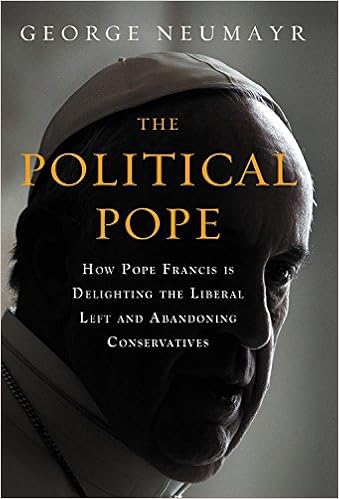
I arose today to a loud PING on my phone as a friend in Rome sent me a link to a piece in the American Spectator by the hardly-ever-subtle George Neumayr about the influence of Communism and Socialism on Pope Francis.

The Spectator provides an excerpt from Neumayr’s new book on the topic released today 2 May:

The Political Pope: How Pope Francis Is Delighting the Liberal Left and Abandoning Conservatives

US HERE – UK HERE

I’m not going to excerpt much from the excerpt.  However, this is of interest:

These biographical details throw light on the pope’s ideological instincts. Yet many commentators have ignored them, breezily casting his leftism as a bit confused but basically harmless.

I haven’t read this one yet, but I put it on my Kindle Wishlist.

It is good to know about our leaders, both secular and spiritual.  Each person is a puzzle.  No single work, or even several works, can give a perfect picture.  Pieces of their puzzle will inevitably be hard to sort out.  This is especially true when the person is still alive.

I’ve read several books about His Holiness, all offering some insights into this enigmatic figure.  I suspect that this new book will be – how to say this delicately – less than enthusiastic about Pope Francis.  However, I suspect it will also fill in gaps left by biographers and others, as Neumayr suggests.  For that reason alone, it could be helpful.  It might provide some more puzzle pieces.

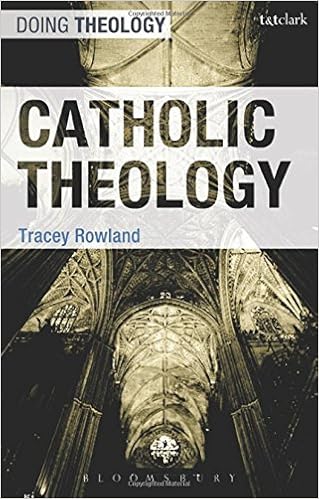
Also, one of the most useful things I’ve read of late about Pope Francis is a chapter on Liberation Theology in Tracey Rowland’s terrific new book, Catholic Theology – which I warmly recommend.  Her explanation of Pope Francis’ theological starting points seem to me to be dead on target.  Every seminarian and student of theology needs this book.

US HERE – UK HERE

Posted in Francis, REVIEWS, The Campus Telephone Pole, The Drill | Tagged , ,
25 Comments

ASK FATHER: The benefits of sacraments in the state of mortal sin

12_04_VanderWeyden_confirmationFrom a reader…

I’ve recently learned that the graces of the sacrament of marriage are not received until or unless the person is in a state of grace.

Looking back at my own life, how blind and foolish I was, this got me wondering if it’s a similar case for Confirmation. If confirmation is receive in a state of mortal sin, would we not receive the gifts of the Holy Spirit and graces until we made a good confession?

This is a good point.  It is important that everyone consider this.

You are right about the graces of sacraments.

There is an old distinction about sacraments of the dead (baptism and penance), and sacraments of the living (the other five).

Sacraments of the dead bring you out of spiritual death (Original sin and actual, mortal sins) into life.

Sacrament of the living are to be received by the spiritually alive, in the state of grace. Otherwise, they don’t bring you all that you need from them, even if they are validly conferred.

For example, a man and woman validly marry but they are in the state of mortal sin. They are validly, truly, married, but they don’t have the actual graces of the sacrament until they are in the state of grace.

Similarly, a confirmand or an ordinand in the state of mortal sin are ontologically changed by their sacraments, that is, they are really and truly confirmed or ordained, but they don’t enjoy all the benefits of being confirmed or ordained which the sacraments confer until they return to the state of grace.  Once they are in the state of grace, everything kicks into gear.

Remember this also for those who are in danger of death, who are sui compos, and who are to receive the sacrament of anointing.

Draw your own conclusions about receiving the Eucharist when not in the state of grace (hint: sacrilege).

So, and this is for everyone:

If you long to live your vocation well, whatever be your state of life, or if you are under fire or struggling or even drowning with problems, then you need all the spiritual aid that the sacraments can give you.  That means, of course, the Eucharist, received in the state of grace.  It also means benefiting from your confirmation character when the challenges come!  It means benefiting from the sacrament of matrimony to help you live your married lives!

Are you aware of yourself as being outside of God’s friendship because of unconfessed mortal sins?

GO TO CONFESSION!

GO TO CONFESSION!

Posted in "How To..." - Practical Notes, ASK FATHER Question Box, GO TO CONFESSION, Hard-Identity Catholicism, Liturgy Science Theatre 3000, Si vis pacem para bellum! | Tagged , , ,
13 Comments

IN THE WILD! Clement XIV goes to Rhode Island!

Our friend “iPadre“, Fr. Jay Finelli, pastor of Holy Ghost in Tiverton, Rhode Island, has wisely received a Papa Ganganelli mug.

17_04_28_mug_Finelli_01

I enjoy your In The Wild shots.

Clement_XVI_Mug_01 Clement_XVI_Mug_02

For all the selections click

>>HERE<<

… and you could have your very own Papa Ganganelli mug!

Surprise Jesuits! Irritate liberals!

Irritate them even more by enjoying your Mystic Monk Coffee or Tea in this glorious papal monument.

Posted in Mail from priests, The Campus Telephone Pole | Tagged , , ,
2 Comments

ASK FATHER: How to go to confession to an SSPX priest

penance_confession_stepsFrom a reader…

QUAERITUR:

I now happen to live 10 minutes’ walk from the local FSSPX chapel here in London.

I don’t intend to make it my customary place for Mass (tempting as that is) unless and until a regularisation occurs – and I’m not holding my breath.

I am however aware that going to confession with them remains valid for me and any other Catholic, following Pope Francis’ letter to that effect as a continuation of the permission granted for the Year of Mercy. There are times when it would be very handy for me.

My question is: is there anything different about the rite as celebrated by traditional priests versus, say, going to the Oratory or any other “sound” church? Any customary introductory prayer or act of contrition?

All best and hope to see you again in the UK before too long. [Me too!] Corpus Christi Maiden Lane now has a *spectacular* ad orientem sanctuary following the restoration work. http://www.corpuschristimaidenlane.org.uk/restoration/

First, I have been following the restoration work at the Maiden Lane church.  The parish priest includes me in his email updates.  He was very good to me during my last trip to London, which seems like a terrible long time ago. I celebrated Mass there.  The work is coming along very well.

To business.

Since I don’t know how you have usually made your confession, I can’t say if there will be anything different.  However, I am sure that the SSPXers are used to making the confession in the old fashioned, standard, Anglophone way.  That is, request for a blessing as you begin, statement of time since last confession, perhaps statement of state of life, confession of mortal sins in kind and number, a clear statement of sorrow and that you are finished.  Within that structure there are no codified elements.  Some people say, “For these and all the sins I cannot now remember, I ask a penance and absolution.”  Others might say, “My Jesus, mercy!”  However, make it clear that you are done.  Don’t just trickle off into ambiguous silence.

As far as the Act of Contrition is concerned, again, I suspect that an SSPX confessor would not freak out if a more modern act of contrition were used.  However, I always recommend the use of an old-fashioned Act of Contrition which has all the elements you need in sound language and order.

O my God, I am heartily sorry for having offended Thee, and I detest all my sins, because I dread the loss of heaven, and the pains of hell; but most of all because they offend Thee, my God, Who are all good and deserving of all my love. I firmly resolve, with the help of Thy grace to confess my sins, to do penance and to amend my life.

That has it all.  Or, with variations,

O my God, I am heartily sorry for having offended Thee, and I detest all my sins because of Thy just punishments, but most of all because they offend Thee, my God, Who art all-good and deserving of all my love. I firmly resolve, with the help of Thy grace, to sin no more and to avoid the near occasions of sin.

Of course you will hear from SSPX priests the traditional form of absolution. It is is a bit more involved, because it also contains the form for the lifting of censures.  The priest will say (in Latin):

May almighty God have mercy on you, forgive you your sins, and lead you to everlasting life. [R.: Amen.]

Then he raises the right hand toward you, saying (in Latin):

May the almighty and merciful Lord grant you pardon, absolution, + and remission of your sins. [R.: Amen.]

Then he says the form about censures you might have incurred and, after that, absolves your sins, saying (in Latin):

May our Lord Jesus Christ absolve you. And I by His authority release you from every bond of excommunication, ([for clerics] suspension) and interdict, in so far as I am empowered and you have need. And now I absolve you from your sins; in the name of the Father, and of the Son, + and of the Holy Spirit. [R.: Amen].

After giving you absolution the priest will probably add, though it isn’t strictly necessary, in English:

May the passion of our Lord Jesus Christ, the merits of the Blessed Virgin Mary, and all the saints, whatever good you have done, and whatever evil you have endured, achieve for you the forgiveness of your sins, an increase of grace and the reward to eternal life. Amen.

A beautiful prayer.

The older form is logical and orderly.  The logical procedure is echoed in the absolution at the beginning of the traditional Mass after the Confiteor.  The different ways of saying “forgive” (Indulgéntiam, ? absolutionem et remissiónem…), imply logical phases of reconciliation. But I digress.

That’s about it, except for an important final element: Thank the priest before you go.

Everyone: Keep in mind my

And …

GO TO CONFESSION!

Posted in "How To..." - Practical Notes, ASK FATHER Question Box, GO TO CONFESSION, Liturgy Science Theatre 3000, Our Catholic Identity | Tagged , , , ,
19 Comments

WDTPRS 2 May – St Athanasius: Propugnator, Doctor of the Church

St. AthanasiusIn both the traditional Roman calendar and the post-Conciliar calendar today is the feast of St. Athanasius, Doctor of the Church.

Let’s have a quick look at the Collect for the Mass for St. Athanasius in the Ordinary Form..

2002MR:
Omnipotens sempiterne Deus,
qui beatum Athanasium episcopum
divinitatis Filii tui propugnatorem eximium suscitasti,
concede propitius,
ut, eius doctrina et protectione gaudentes,
in tui cognitione et amore sine intermissione crescamus
.

A propugnator is one who fights “in the place of” another, as indicated in that proposition pro in this compound.  “Champion” is a good way to convey that subtlety.

OBSOLETE ICEL (1973):
Father,
you raised up St. Athanasius
to be an outstanding defender
of the truth of Christ’s divinity.
By his teaching and protection
may we grow in your knowledge and love
.

CURRENT ICEL (2011):
Almighty ever-living God,
who raised up the Bishop Saint Athanasius
as an outstanding champion of your Son’s divinity,
mercifully grant,
that, rejoicing in his teaching and his protection,
we may never cease to grow in knowledge and love of you
.

You decide.

Posted in Saints: Stories & Symbols | Tagged
2 Comments

Symbolon Quicumque

trinityI penned this for the Catholic Herald, the UK’s best Catholic weekly.

The mighty foe of Arians, St Athanasius of Alexandria (d 373), Bishop and Doctor of the Church, is celebrated on 2 May in both the newer and the traditional Roman calendars.  In his struggles to defend Catholic Truth, Athanasius took on gangs of heretics, bishops and emperors. For his efforts he was rewarded with exile five times.

Confusion reigns in many spheres of the Church right now about what the Church truly holds to be true about faith and morals.  Some well-placed pundits ignore the fact of the Church’s perennial interpretations and now imply that we can’t know for sure what the Lord taught.  Others respond that the doctrinal and practical controversies of these our own days bear a strong resemblance to the era when Holy Church was torn asunder by Arian heresy.

When controversies arose in the past, the Church issued Creeds, dense bullet points, which we could recite and, thereby, avoid error and maintain unity. We all know the common Creeds, such as the Apostles Creed and the Nicean-Constantinopolitan Creed recited at Mass.  But there are other Creeds.  For example, in 1968 Paul VI issued the comprehensive, non-liturgical “Credo of the People of God”.

Speaking of Athanasius, we also have the magnificent “Athanasian” Creed (Symbolon Quicumque), commonly attributed to the saintly doctor.  A mediaeval legend holds that Athanasius, during one of his exiles, gave the text to Pope Julius I.  J.N.D. Kelly, who wrote a book on this Creed, (USA HERE – UK HERE) suggests that St Vincent of Lérin (d c 435) might have been the author.  Authorship aside, it contains precise Trinitarian and Christological statements and ends with the less-than-ambiguous: “This is the Catholic Faith; which except a man believe truly and firmly, he cannot be saved.”

The “Athanasian Creed”, against Arianism, Sabellianism, Nestorianism, and Eutychianism, could be a wonderful starting point for study, prayer and meditation.

Our classical Creeds are for the head what our good works are for the heart.  We recite the basics of the Faith in which we believe (fides quae creditur) so that we, and others, can know who we are.  The Creeds are rehearsals of Faith and preparations for moments of truth called witness (martyrdom).

Look up the Athanasian Creed.  Print it out.  Pocket it.  Review it occasionally.  Host a gathering or a meal with friends. Hand out copies, stand up and recite it aloud with a full, strong voice. Savor the lack of ambiguity!

Here is the Athanasian Creed:

Whoever wants to be saved should above all cling to the Catholic faith.  Whoever does not guard it whole and inviolable will doubtless perish eternally. Now this is the Catholic faith: We venerate one God in trinity and the Trinity in unity (unum Deum in Trinitate, et Trinitatem in unitate veneremur), neither confusing the persons nor dividing the divine being. For the Father is one Person, the Son is another, and the Spirit is still another.  But the deity of the Father, Son, and Holy Spirit is one, equal in glory, coeternal in majesty.  What the Father is, the Son is, and so is the Holy Spirit.  Uncreated is the Father; uncreated is the Son; uncreated is the Spirit.  The Father is infinite; the Son is infinite; the Holy Spirit is infinite. Eternal is the Father; eternal is the Son; eternal is the Spirit: And yet there are not three eternal beings, but one who is eternal; as there are not three uncreated and unlimited beings, but one who is uncreated and unlimited.  Almighty is the Father; almighty is the Son; almighty is the Spirit: And yet there are not three almighty beings, but one who is almighty.  Thus the Father is God; the Son is God; the Holy Spirit is God: And yet there are not three gods, but one God. Thus the Father is Lord; the Son is Lord; the Holy Spirit is Lord:  And yet there are not three lords, but one Lord. As Christian truth compels us to acknowledge each distinct person as God and Lord, so Catholic religion forbids us to say that there are three gods or lords.  The Father was neither made nor created nor begotten; the Son was neither made nor created, but was alone begotten of the Father; the Spirit was neither made nor created, but is proceeding from the Father and the Son. Thus there is one Father, not three fathers; one Son, not three sons; one Holy Spirit, not three spirits.  And in this Trinity, no one is before or after, greater or less than the other; but all three Persons are in themselves, coeternal and coequal (coaeternae sibi sunt et coaequales); and so we must worship the Trinity in unity and the one God in three Persons.  Whoever wants to be saved should think thus about the Trinity.

Posted in Hard-Identity Catholicism, Patristiblogging | Tagged ,
11 Comments