Theologian opponent of ‘Humanae vitae’ reveals himself as an “active homosexual

Imagine how shocked I am at this news.

From Catholic Culture:

Theologians’ conflicts of interest

Gregory Baum, one of the influential theologians who led the charge against Humanae Vitae, has now revealed that he is, and has been since the 1960s, an active homosexual.  [What a shock. Still, I guess that’s better than being a passive homosexual.]

Are you surprised? No; it’s a familiar story. [Nah… I was just kidding about being surprised.] A theologian writes that it’s unrealistic to expect people to live in sexual continence, and eventually we learn that the theologian isn’t willing or able to control his own sexual impulses. So he has a vested interest in changing Church teaching; that teaching is an indictment of his behavior. [It’s like the seminary prof who taught moral theology – HAH! – at my old seminary.  He wrote and wrote against Veritatis splendor… before he outed himself and left active ministry (a good choice – fidelity would have been better, but I’ll take it.  It’s like a vocations director of my native place who… never mind.  You get the idea.]

The editors of medical journals understand the danger involved in conflicts of interest. If a researcher wants to publish an article on the effectiveness of a new drug or device, he is required to certify that he has no financial ties to the manufacturer. The reasons for that policy are obvious.

I propose a similar policy regarding the work of theologians who question the Church’s teachings on human sexuality. When submitting an article for publication, they should send along a signed statement, testifying that they have lived chastely, in accordance with their state in life, for the past ten years. Then at least readers can feel some degree of confidence that the article is not a special pleading, an elaborate excuse for the author’s personal weaknesses.

[…]

Look.  I have serious admiration for those who suffer from “same sex attraction” who live chaste lives.  They must bear a truly painful burden.  Yesterday I ranted for awhile about how we need to be willing to suffer when we resist temptations.  HERE  I imagine that that affliction must be a real cross to bear.  It could very well be that these people, striving for holiness, will eventually have very high places in Heaven because of what they endured in this life.

To all those out there who have this affliction (no, it is not a blessing), our prayers and high hopes are with you.  Avoid temptations and avoid scandal.  Be strong.  Persevere.

Posted in Sin That Cries To Heaven | Tagged , ,
25 Comments

17 Feb 1600: Giordano Bruno burned at the stake

Last night I watched a segment of The Hollow Crown.  Series 1 (Richard II, Henry IV Part 1, Henry IV Part 2, Henry V) US HERE – Series 1 UK HERE – Series 2 (Henry VI Part 1, Henry VI Part 2, Richard III) US HERE – Series 2 UK HERE.  These are a mini-series which connect history plays of Shakespeare with actor continuity with the roles.  So, Tom Hiddleston is Hal/Prince Harry/Henry V all the way through, Benedict Cumberbatch is Richard of Glouschester/Richard III, etc.  The acting is great, the sets and filming are marvelous.  The language is Shakespeare.  What’s not to like?

In any event, last night I watched Henry VI Part I, during which Joan of Arc is burned at the stake.  Did you, dear reader, know that St. Joan of Arc is depicted in a play by William Shakespeare?   Well, she is.  In The Hollow Crown series, she got a fairly decent treatment.  She was rather wild-eyed, but, hey, why not.  I had a sense that she was being mistreated – the whole burning at the stake being part of that, of course.

Turning the page, The Great Roman Fabrizio reminded me and my Roman SMS group that today is the anniversary of Giordano Bruno’s own meeting with the stake in the Campo de’ Fiori.  Anti-Catholics and masons put up a gloomy, ugly huge statue of him, the base decorated with plaques of famous heretics and Church haters.

Giordano Bruno was a seriously weird cat and a heretic.  He would find himself welcomed and right at home at the Fishwrap (aka National Schismatic Reporter).

A few years ago, The History Blog had a longish piece about the heretic.  It included a screen shot of a smart phone app which would let you burn Giordano at the stake.  Here is a shot:

giordano-bruno

So, it’s a little grisly.  Heresy is a serious matter, after all.

Don’t be a heretic!

On that note, please consider buying some well-roasted …

MYSTIC MONK COFFEE!

When your’re facing a hard day battling theological error and the miscreants who teach it, start out with a blazing hot Fr. Z swag mug of MYSTIC MONK Coffee!  It’s just what you need to get fired up to face that To Do List.  I like the dark roast.

The Wyoming Carmelites offer Mystic Monk TEA as well, if tea is your thing.  They also have lots of gear.

Yum!

Did you know that they have chocolate covered cherries?  Did you know that they have Sampler Gift Sets?  Well, they do.  And you can get them.

And don’t be stingy with your MYSTIC MONK COFFEE!  Buy lots of it and give it as gifts.  Talk your office manager into getting MYSTIC MONK coffee (using my link, of course… always use my link) for everyone!

MYSTIC MONK COFFEE!

It’s swell!

Posted in Events, Lighter fare | Tagged ,
9 Comments

80 M

During the night I happened to get up for a while and, as one does, I checked my email.

One message was entitled: “80 M!”

“That’s odd”, quoth I, “I’m not active these days on the 80 meter band.”  (That’s Ham Radio lingo, of course.)

Then it occurred to me that to “80 M!” might mean something else.

Here it is. I scrolled to the bottom of my sidebar and saw…

17_02_17_80_million

So, at least 80 million visits for this blog. I started counting the stats some time after the blog began, but, hey.

Many thanks to you readers who make this possible.

Posted in ¡Hagan lío!, Just Too Cool | Tagged ,
10 Comments

BREAKING Card. Burke NEWS!

In the wake of other news about Card. Burke….

From the often amusing Eye of the Tiber:

The Vatican announced today that Pope Francis has named Cardinal Raymond Burke to be the first prefect of the Congregation of Janitorial Services.

Francis’ decision to choose the staunch conservative to head the new department is a sign to many that Francis does see a role for Burke in his pontificate, despite disagreements the two have had in the past.

Several sources in the Vatican say that Francis chose Cardinal Burke because he is known to work well “cleaning up messes.”

“His Holiness is well aware of Burke’s obsession with cleaning things up,” said Vatican advisor Monsignor Leonardo Valdes. “[Pope Francis] is well aware that Burke has OCD [a staff of Carmelites?  Perhaps there is a new line of mops or brooms? “Carmelite Mops!  For The Filth!”] when it comes to filth, and would like to see him channel some of that energy in a different direction. Perhaps if Burke can focus more of his energy on making sure all the garbage cans are cleaned out every night and so on, he might finally be able to overlook some of the liturgical and moral messes.”  [He can multitask.]

The new Vatican office will have the responsibility for the promotion of clean work spaces for the curia and those working inside the walls of the Vatican, so that their mission to promote peace and to help proclaim the love of Christ will be easier to accomplish.

This could be a supplement or compliment to the Sacred Congregation that We shall found soon after Our elevation to the See of Peter.   We shall swiftly found the Sacred Congregation For The Dusting Of The Holy Door.  We shall assign quite a few prelates to this congregation from many places around the globe.  This congregation shall have a daily session of members at the major basilicas of Rome.  There will be a procession to the Holy Door, singing of the office, and dusting of the Door to the antiphon, Memento homo quia pulvis es….  

Posted in Lighter fare | Tagged
14 Comments

Commandments are NOT mere “ideals” from which some people are excused because they’re hard! Wherein Fr. Z rants.

two-roads-heaven-hellLook. I’m the first one to admit that I am a sinner.  I sin and I go to confession with a firm purpose of amendment.  When I fall, I get back up, again with a firm purpose of amendment.  I go to confession. I keep trying.

I do not think that, just because I sin and fall, God’s commandments are only “ideals” which some other people may be able to keep, but that I – poor wretch that I am – cannot and, therefore, I’m a special case whom the Church must tell, “There there, John, you don’t really have to change your ways.  Go ahead and receive Communion anyway! (cf Gen 3:1)”

Since I am a priest, the whole sin v. state of grace thing is officially a Big Deal™ which I must monitor on a daily basis, especially after reading the news, my email and writing this blog. It’s not like I can go to Mass (as celebrant) and not receive Communion, like a lay person. If I don’t receive, it isn’t Mass.  So, the pressure is on.

That said, let’s learn something from St. John Paul about the possibility of living in the state of grace.

This is from the 1993 encyclical Veritatis splendor, seemingly contradicted by the Post-Synodal Apostolic Exhortation, Amoris laetitia, chapter 8.  In fact, of the famous Five Dubia sent by the Four Cardinals to the Holy Father (the signer of Amoris laetitia) two Dubia concern Veritatis splendor.

Cf Veritatis splendor, 102-104 (my emphases and comments):

Grace and obedience to God’s law

102. Even in the most difficult situations man must respect the norm of morality so that he can be obedient to God’s holy commandment and consistent with his own dignity as a person. [This has to do with our dignity.] Certainly, maintaining a harmony between freedom and truth occasionally demands uncommon sacrifices, and must be won at a high price: it can even involve martyrdom. But, as universal and daily experience demonstrates, man is tempted to break that harmony: “I do not do what I want, but I do the very thing I hate… I do not do the good I want, but the evil I do not want” (Rom 7:15, 19).

What is the ultimate source of this inner division of man? His history of sin begins when he no longer acknowledges the Lord as his Creator and himself wishes to be the one who determines, with complete independence, what is good and what is evil. “You will be like God, knowing good and evil” (Gen 3:5): this was the first temptation, and it is echoed in all the other temptations to which man is more easily inclined to yield as a result of the original Fall. [This is the danger inherent in the cant that people can go to Communion if their “consciences” allow.  Conscience… formed how?]

But temptations can be overcome, sins can be avoided, because together with the commandments the Lord gives us the possibility of keeping them: “His eyes are on those who fear him, and he knows every deed of man. He has not commanded any one to be ungodly, and he has not given any one permission to sin” (Sir 15:19-20). Keeping God’s law in particular situations can be difficult, extremely difficult, but it is never impossible. [Did you get that?] This is the constant teaching of the Church’s tradition, and was expressed by the Council of Trent: “But no one, however much justified, ought to consider himself exempt from the observance of the commandments, nor should he employ that rash statement, forbidden by the Fathers under anathema, that the commandments of God are impossible of observance by one who is justified. [I posted on that HERE.] For God does not command the impossible, but in commanding he admonishes you to do what you can and to pray for what you cannot, and he gives his aid to enable you. [SEE?] His commandments are not burdensome (cf. 1 Jn 5:3); his yoke is easy and his burden light (cf. Mt 11:30)”.

103. Man always has before him the spiritual horizon of hope, thanks to the help of divine grace and with the cooperation of human freedom.

It is in the saving Cross of Jesus, in the gift of the Holy Spirit, in the Sacraments which flow forth from the pierced side of the Redeemer (cf. Jn 19:34), that believers find the grace and the strength always to keep God’s holy law, even amid the gravest of hardships. As Saint Andrew of Crete observes, the law itself “was enlivened by grace and made to serve it in a harmonious and fruitful combination. Each element preserved its characteristics without change or confusion. In a divine manner, he turned what could be burdensome and tyrannical into what is easy to bear and a source of freedom”.

Only in the mystery of Christ’s Redemption do we discover the “concrete” possibilities of man. [NB!] It would be a very serious error to conclude… that the Church’s teaching is essentially only an “ideal” which must then be adapted, proportioned, graduated to the so-called concrete possibilities of man, according to a “balancing of the goods in question”. [Did you get that?] But what are the “concrete possibilities of man”? And of which man are we speaking? Of man dominated by lust or of man redeemed by Christ? This is what is at stake: the reality of Christ’s redemption. Christ has redeemed us! This means that he has given us the possibility of realizing the entire truth of our being; he has set our freedom free from the domination of concupiscence. [NB!] And if redeemed man still sins, this is not due to an imperfection of Christ’s redemptive act, but to man’s will not to avail himself of the grace which flows from that act. God’s command is of course proportioned to man’s capabilities; but to the capabilities of the man to whom the Holy Spirit has been given; of the man who, though he has fallen into sin, can always obtain pardon and enjoy the presence of the Holy Spirit”.

104. In this context, appropriate allowance is made both for God’s mercy towards the sinner who converts and for the understanding of human weakness. Such understanding never means compromising and falsifying the standard of good and evil in order to adapt it to particular circumstances. It is quite human for the sinner to acknowledge his weakness and to ask mercy for his failings; what is unacceptable is the attitude of one who makes his own weakness the criterion of the truth about the good, so that he can feel self-justified, without even the need to have recourse to God and his mercy. An attitude of this sort corrupts the morality of society as a whole, since it encourages doubt about the objectivity of the moral law in general and a rejection of the absoluteness of moral prohibitions regarding specific human acts, and it ends up by confusing all judgments about values. [“Encouraging doubt” about those thing is, apparently, BAD.  As a matter of fact, it is scandalous, isn’t it?  As Killick would say, “Which it’s millstones ain’t in it!”]

[…]

Oh yes… that’s right.  I forgot.  Veritatis splendor came out in late 1993.  That’s 23, almost 24 whole years ago!  That’s really old!  Surely VS isn’t relevant today, is it?  Imagine paying attention to something that outdated!

If you were looking for the promised rant, look no farther.

Everyone, don’t be overly discouraged if you fall into sin, even something that is repetitive and truly hard to root out.  Sense the prevenient grace that God is extending to you!  Be truly sorry for your sins, resolve to sin no more, get up off your sorry backsides, go out the door and …

GO TO CONFESSION!

One of the effects of the Sacrament of Penance is a strengthening against sin.

We can do this.  We have to encourage each other and not make excuses.  We have to look at the truth straight on and not get mired in sloppy sentiment.  Truth doesn’t short-circuit compassion, but compassion doesn’t usurp truth.

Here’s a dose of truth.

One of the important things to know ahead of time about amending your life is that, when the temptations come, you have to be willing to suffer.

A firm purpose of amendment means embracing the Cross.  It means being willing to stay up there on your cross and suffering.  Saying “No!” to yourself, saying “No!” to a temptation is the hard path, but it is the path that leads to heaven.  As soon as you say “No!”, the suffering will begin, especially when it comes to more carnal matters.  The cross will be laid upon you.  Then you will carry it.  You might fall!  Then you will be nailed to it.  Then you will thirst and cry to God.  This is how we must face temptations and root out sins.  We face them with a plan and the foreknowledge of the suffering to follow.

On our own, we can’t do it.  With God, we can.  It is not impossible with God’s help.  It is impossible only if we are alone, and we are never alone.

God offers the crosses and the graces every time.   The cross, your daily cross and suffering is the road.  Suffering is bad, but it is good.  Suffering corrects us and tests us.  Suffering purifies us and strengthens us.  It’s all a question of what you love.  If you love God and want heaven enough, then with love you will stay up on that gift of a cross and you will suffer in sorrowfully joyful pain.  It will be bad.  But know also that it is, without question, suffering’s easy yoke.  It is the easy yoke because you are exactly where you ought to be in God’s plan for your rescue from sin into heaven.

Christ is already victorious.  We must live His victory in our bodies and souls.  His victory was through the Cross.  Our victory is through the Cross.   Reject the Cross and you cannot be saved.  Reject your crosses and you imperil your salvation.

The Church teaches with Christ’s authority.  The Church, faithful to Christ her spouse, wants your salvation, just as Christ wants your salvation.  Christ offers crosses to help you.  Therefore, some of the Church’s teachings will be occasions of crosses which you must bear for the sake of your salvation.

The Church isn’t trying to ruin what might otherwise be a good time in life.  She is trying to help you to Heaven, and that means saying “No!” to a lot of things, because there are a lot of things that can drag us to Hell if we are not careful.  Hell’s road is deception, to which we are lead by ease.  The road to Heaven is arduous, steep, long, fraught with challenges.  But Heaven’s road is the happier, even though it is the harder.

If someone comes along and tells you that you don’t need to stay up there on your cross… that’s from Hell.  It certainly is not from God.

Posted in "How To..." - Practical Notes, GO TO CONFESSION, Our Catholic Identity, Wherein Fr. Z Rants | Tagged , , ,
18 Comments

Card. Burke goes to Guam – What’s up with that?

cardinal burke hatYou may, by now, have read new stories about how His Eminence Raymond Card. Burke has been “sent to Guam”.  He will preside over a canonical trial of a bishop who has been accused of sexual abuse of minors.

This is not some sort of punishment or banishment.

Dear readers, don’t freak out about this.  I’m getting hysterical email.

“Cardinal Burke was sent to GUAM?!? The Holy Father must really hate him!  What about the Knights of Malta?  Was he stripped of the Knights of Malta too?!?  It’s a conspiracy!  AAAARRGH!  I’M LEAVING THE CHURCH!”

Okay, that’s a summary, a compression of emails, not an actual email.  It gives you the idea.

No, I respond.  You’ve got this all wrong.  This is a good thing.

Think it through.  Pope Francis needs Card. Burke.

First, there is no one more qualified to preside over such a trial.

Moreover, there is no one with greater integrity, and, seriously, reputation for integrity, whom the Pope could have found to preside over such a trial.

Even the Cardinal’s worst detractors know of his integrity, which is why they smear him so viciously.

The powers that be might not like or agree with Card. Burke, but they know that he is a man of impeccable integrity and unmatched canonical expertise.   They know that there is no one better, especially in the Anglophone world, to handle this situation.

Also, this was determined quite a while ago, before the SMOM thing blew up.

So, unclench your backsides, breathe, and calm down.

No comments are necessary after this perfect explanation.

Posted in What are they REALLY saying? | Tagged
Comments Off on Card. Burke goes to Guam – What’s up with that?

ASK FATHER: St. Patrick’s Day 2017 on Friday in Lent

st patricks day choicesFrom a reader…

QUAERITUR:

I am responsible for a brunch which is served after the Saint Patrick’s Day Mass at the Cathedral in my Archdiocese. This year, Saint Patrick falls on a Friday of Lent. I believe this means I should offer only meatless options, but I keep getting told that there is some type of dispensation for Saint Patrick’s feast.

As far as I can tell, the only dispensation from abstinence on Fridays during Lent is if a Solemnity were to fall on that day. On the General Roman Calendar, Saint Patrick is a Memorial. He gets a Solemnity on some national calendars (Ireland, I think maybe Australia). And I suppose he would also be celebrated as a Solemnity in a diocese where he is the principal patron, but only if that is officially designated.

Neither applies to many places in these United States

Am I missing anything here? I am sure I am not the only person facing this question, and this (I think) misinformation about how to handle it.

This year the feast of St. Patrick lands on a Friday in Lent.  Catholics are obliged to do penance on all Fridays of the year, and in particular during Lent.

First, can I just say that the way St. Patrick’s Day, like St. Valentine’s Day, is generally observed is appalling?  Hence, I do not think the Church ought to cave in when it comes to how it is generally celebrated.  So there.

To your point, these days I am not sure that the laws of Friday or Lenten penance mean anything any more.  Of course they do, don’t get me wrong.  It’s just that for a very long time now the Church’s pastors have done little or nothing to teach people about the need for penances.  Doing penance has fallen into desuetude.  Couple that with an anti-nomian spirit sweeping through society and we have a serious problem.

As you point out, the Church’s law requires that Catholic do penance on Fridays that are not liturgical Solemnities.  It can be argued that if the Friday is also a feast of a patronal saint of a place, then we can be dispensed from doing penance.

Also, remember that we can substitute one way of doing penance for abstinence from meat on most Fridays.  For example, instead of abstaining from eating meat (the common way of doing penance which the Church has designated since days of yore) we can, most Fridays of the year, not use the internet or turn on the television or abstain from other foods or drinks or activities, etc.  However, some conferences of bishops, such as in these USA, have determined that in Lent the obligation of doing penance on Fridays is fulfilled by abstinence from meat.  That wasn’t relaxed with the substitution option.  On Fridays of Lent, in these USA, Catholics are obliged to do their Friday penance by abstaining from meat.

Keeping that in mind, our pastors of our parishes can dispense from penance.  So can the local bishop.  That brings me to the next point about Friday penance in Lent, which includes abstinence.

You need to check with your local diocese to find out if your local bishop has dispensed his subjects (and others visiting the diocese) from the obligation to do penance on Friday, 17 March, the Feast of St. Patrick by abstaining from meat.  Many bishops in these USA do this.

In the decree of dispensation from abstain from meat on that particular Friday in Lent, usually published in the local diocesan newspaper or website, will generally also add language about celebrating the feast “with moderation and temperance”, which all Catholics are sure to observe – no doubt.  We are also admonished to perform works of charity, always a good idea.  Without question that’s what Catholics will do on Friday 19 March.

There is no blanket dispensation in force automatically for St. Patrick’s day in most places.  It must be given by each bishop in his own diocese.

Posted in "How To..." - Practical Notes, ASK FATHER Question Box, Canon Law, Hard-Identity Catholicism | Tagged , , , ,
26 Comments

Fr. Murray on Card. Coccopalmerio’s booklet defense of Communion for mortal sinners

I direct the readership to dash over to The Catholic Thing for a new column by my friend Fr. Gerald Murray.  He drills into the booklet offered to the public through the intermediary of the Vatican Press by His Eminence Francesco Card. Coccopalmerio: The Eighth Chapter of the Post-Synodal Apostolic Exhortation Amoris Laetitia (still in Italian.  I wrote about it HERE).  The booklet, a few dozen pages, had been hyped as The Response™ to the Five Dubia of the Four “intransigent” Cardinals, who have been labeled as dissenters because, ironically, they defend doctrine.  It isn’t and can’t be a response to the Five Dubia, of course, and that was clearly stated during the press conference, presentation of the booklet.  Nevertheless, its out there and we should look at it honestly and rationally.

Fr. Murray, looking at the key excerpt of the booklet which have been brought to public view, brings up honest and rational points from the get go.  Here’s a sample (my emphases):

Coccopalmerio writes:

The divorced and remarried, de facto couples, those cohabiting, are certainly not models of unions in sync with Catholic Doctrine, but the Church cannot look the other way. Therefore, the sacraments of Reconciliation and of Communion must be given even to those so-called wounded families and to however many who, despite living in situations not in line with traditional matrimonial canons, express the sincere desire to approach the sacraments after an appropriate period of discernment. . . .it is a gesture of openness and profound mercy on the part of Mother Church, who does not leave behind any of her children, aware that absolute perfection is a precious gift, but one which cannot be reached by everyone.

What do we find here? Slogans and euphemisms. A slogan is meant to stop discussion. Euphemisms intentionally steer the reader away from precise and accurate descriptions of reality. A seminary professor of mine once noted that verbal engineering always precedes social engineering. In this case, it’s doctrinal engineering

Slogans such as “look the other way” and “not leave behind any of her children,” and euphemisms such as “so-called wounded families” and “situations not in line with traditional matrimonial canons” show a decision not to present a carefully reasoned and precise defense of what is being endorsed. Rather, Coccopalmerio tries to sweep the reader along with emotional appeals and misdirection.

“Not looking the other way,” means that the Church should simply ignore the sinfulness of certain behaviors. In the case of unions involving adultery and fornication, the question is not about healing “so-called wounded families” but warning sinners that their behavior gravely offends God.

When he says that the Church should “not leave behind any of her children,” he means that the refusal to give Communion to those publicly living a seriously sinful life would be an unjust abandonment. Adulterous unions are now simply “situations not in line with traditional matrimonial canons.” God’s law on the indissolubility of marriage and the immorality of adultery is now a mere “tradition” embodied in a canon. Violating that law is only a “situation not in line” with that canon, which was written down somewhere, at some time, by someone. How important is a canon compared to actual people who “express the sincere desire to approach the sacraments after an appropriate period of discernment”?

Coccopalmerio describes observing the Sixth Commandment as “absolute perfection [that] is a precious gift, but one which cannot be reached by everyone.” But [NB] the Church has never taught that observing the Sixth Commandment is a state of “absolute perfection,” beyond the capability of any of her sons and daughters. It’s an error to consider marital fidelity as an ideal not reachable by many Christians. The grace of the sacrament of marriage is given by God to strengthen married persons in fulfilling their obligation to marital fidelity. Infidelity is a choice against one’s obligations to God and one’s spouse. It is not an authorized alternative for those who “cannot” reach “absolute perfection.

[…]

That bit about “perfection” and “ideal” that many cannot attain is one of the most pernicious elements in this whole dreadful kerfuffle.

The idea is that God might give commandments in his divine positive law, but they are ideals.  Some people simply can’t live according to the ideas that God gave for every member of the human race.  In so asserting, we also assert that God does not offer graces to people to live a holy life.  God, so to speak, places burdens on some people that they cannot bear and He doesn’t offer any help.  He abandons some people, in effect.  And, since that is so, then the Church shouldn’t hold people to bear burdens that are really only “ideals” that not all can attain.

From the Council of Trent. … mind you, the what the Council of Trent is still true.  Right?  Even though it was a few centuries ago, it is still true what that Council taught and we Catholics are obliged to accept what that Council taught.

ON JUSTIFICATION
FIRST DECREE
Celebrated on the thirteenth day of the month of January, 1547.

CHAPTER XI.

On keeping the Commandments, and on the necessity and possibility thereof.

But no one, how much soever justified, ought to think himself exempt from the observance of the commandments; no one ought to make use of that rash saying, one prohibited by the Fathers under an anathema,- that the observance of the commandments of God is impossible for one that is justified. For God commands not impossibilities, but, by commanding, both admonishes thee to do what thou are able, and to pray for what thou art not able (to do), and aids thee that thou mayest be able; whose commandments are not heavy; whose yoke is sweet and whose burthen light. [That, dear readers, is true compassion.] For, whoso are the sons of God, love Christ; but they who love him, keep his commandments, as Himself testifies; which, assuredly, with the divine help, they can do. For, although, during this mortal life, men, how holy and just soever, at times fall into at least light and daily sins, which are also called venial, not therefore do they cease to be just. For that cry of the just, Forgive us our trespasses, is both humble and true. And for this cause, the just themselves ought to feel themselves the more obligated to walk in the way of justice, in that, being already freed from sins, but made servants of God, they are able, living soberly, justly, and godly, to proceed onwards through Jesus Christ, by whom they have had access unto this grace.

[…]

CANON XVIII.-If any one saith, that the commandments of God are, even for one that is justified and constituted in grace, impossible to keep; let him be anathema.

Back to Fr. Murray.

At the end of his offering, Fr. Murray, whose French is exceptionally good, quotes from Robert Card. Sarah’s new book (still in French but coming soon in English – now available for pre-order):

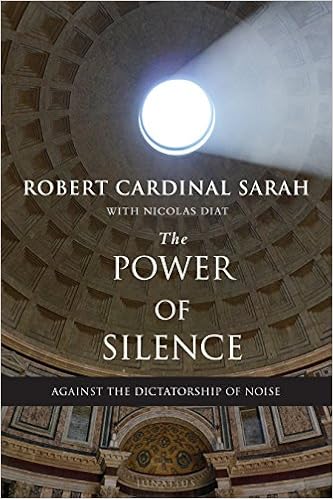
In contrast to all this, Cardinal Robert Sarah has published a second book-length interview with French journalist Nicholas Diat, which will soon appear in English: The Power of Silence, Against the Dictatorship of Noise. In this profound dialogue about the need for believers to recover a love for silence in our agitated world, Cardinal Sarah addresses the burning questions raised by chapter eight of Amoris Laetitia:

Christ is certainly afflicted in seeing and hearing priests and bishops who should protect the integrity of the teaching of the Gospel and of doctrine multiplying words and writings that dilute the rigor of the Gospel by their deliberately ambiguous and confused affirmations. To these priests and these prelates who give the impression of taking up the exact opposite of the traditional teaching of the Church in matters of doctrine and morality, it is not out of place to recall the severe words of Christ: “Therefore I tell you, every sin and blasphemy will be forgiven men, but the blasphemy against the Spirit will not be forgiven. And whoever says a word against the Son of man will be forgiven; but whoever speaks against the Holy Spirit will not be forgiven, either in this age or in the age to come.” “He is guilty of an eternal sin”, Mark adds. (Fr. Murray’s translation)

PRE-ORDER The Power of Silence in ENGLISH. It will be released on 15 April (Holy Saturday).  A great Eastertide reading gift to yourselves or friends.

US HERE – UK HERE

The original French, if you prefer…

US HERE – UK HERE

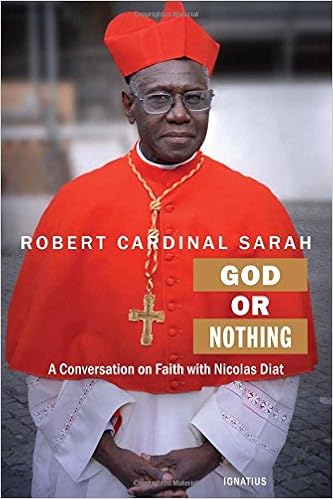
And if you haven’t read it yet…

US HERE – UK HERE

Posted in Mail from priests, One Man & One Woman, Our Catholic Identity, Pò sì jiù, The Drill, What are they REALLY saying? | Tagged , , , , ,
10 Comments

Knights of Malta to elect a new Grand Master – with a twist?

This is interesting.  Is someone backing off a little?

From the Sovereign Military Order of the Knights of Malta (SMOM):

The government of the Order of Malta to convene the Council Complete of State on 29 April to elect the successor of the Grand Master

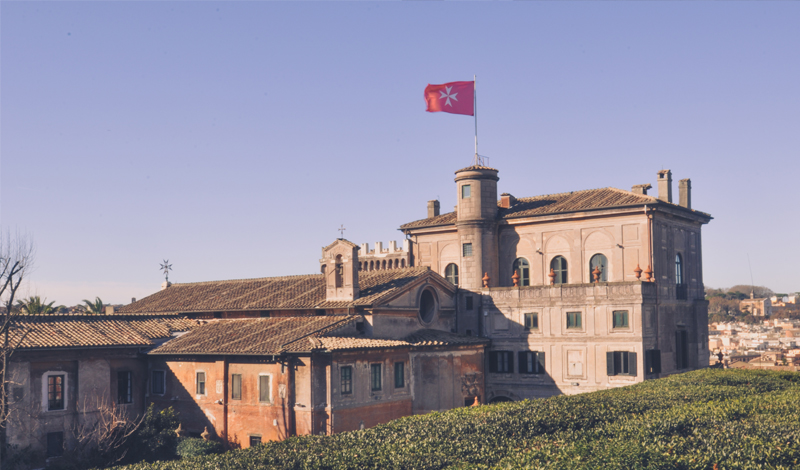
The electing body will meet in the Order’s Magistral Villa in Rome

On 29 April the Council Complete of State, the Order’s constitutional body, will elect the next Grand Master of the Sovereign Order of Malta (or, as provided for in the Constitution, a Lieutenant of the Grand Master, to hold office for a year). Following the resignation of the 79th Grand Master Fra’ Matthew Festing, on 28 January, the government of the Order of Malta – the Sovereign Council – met this morning in Rome, and established the April date.
The Council Complete of State will meet in the Election Chamber in the Magistral Villa in Rome, the extraterritorial seat of the Order of Malta.
The election of a Grand Master requires a vote of the majority plus one, according to Article 23 of the Constitutional Charter. Sixty members of the Order are eligible to vote: the Lieutenant ad interim, the members of the Sovereign Council, the Prelate of the Order, the professed bailiffs, two professed knights from each Priory, five Regents of the Sub-Priories and fifteen representatives of the National Associations.

The best English language vaticanist working in Rome these days, Edward Pentin, tweeted:

Isn’t that interesting?   Is someone, somewhere backing away a little?

Posted in ¡Hagan lío! | Tagged , ,
20 Comments

100th Anniversary of Fatima, Your Parishes and You

What are your parishes planning for the months of the 100th anniversary of the Fatima events?

Let us know.

Posted in ¡Hagan lío!, Our Solitary Boast | Tagged ,
16 Comments