CQ CQ CQ – #HamRadio Saturday : On a Catholic note

A DX contact from a fellow Ham Radio Operator…*

Remember that one of our readers here has made his Echolink node available to us: 554286 – WB0YLE-R  (Thanks!) Remember: You must be licensed to use Echolink. BTW… there is a great iPhone app for Echolink. I can see quite a few hams using that method to connect.

I created a page for the List of YOUR callsigns.  HERE  Chime in or drop me a note if your call doesn’t appear in the list.

73!

*.. / .- — / …- . .-. -.– / .– — .-. .-. .. . -.. / – …. .- – / .–. — .–. . / ..-. .-. .- -. -.-. .. … / .. … / -.. .-. .- –. –. .. -. –. / -.-. …. .-. .. … – … / -.-. …. ..- .-. -.-. …. / .. -. – — / …. . .-. . … -.– .-.-.- / .- — / .. / .– .-. — -. –. / — .-. / .– …. .- – ..–..

I respond:

… – / – . .-. . … .- / — ..-. / .- …- .. .-.. .- / .– .-. — – . —… / .-.. . – / -. — – …. .. -. –. / -.. .. … – ..- .-. -… / -.– — ..- .-.-.- / .-.. . – / -. — – …. .. -. –. / ..-. .-. .. –. …. – . -. / -.– — ..- .-.-.- / .- .-.. .-.. / – …. .. -. –. … / .- .-. . / .–. .- … … .. -. –. / .- .– .- -.– .-.-.- / –. — -.. / -. . …- . .-. / -.-. …. .- -. –. . … .-.-.- / .–. .- – .. . -. -.-. . / — -… – .- .. -. … / .- .-.. .-.. / – …. .. -. –. … .-.-.- / .– …. — . …- . .-. / …. .- … / –. — -.. / .-.. .- -.-. -.- … / -. — – …. .. -. –. .-.-.- / –. — -.. / .- .-.. — -. . / … ..- ..-. ..-. .. -.-. . … .-.-.- / -… -.-. -. ..- / — -… / –… …– / -.. . / .– —-. ..-. .-. –.. / –.- .-. –

Posted in Ham Radio | Tagged , , ,
7 Comments

WDTPRS – 6th Sunday of Ordinary Time: “kissing the porch”

kiss of peaceFor this Ordinary Form calendar Sunday, we have reached the 6th Sunday of Ordinary Time.  In the Extraordinary Form this Sunday is the purple-draped, pre-Lent Septuagesima Sunday (Alleluia Buh-bye!).

In the Ordinary Form we have a Collect based on a prayer in the 8th c. Liber sacramentorum Gellonensis (but not in the 1962 Missale Romanum) for the Sunday after Ascension Thursday… yes, Thursday, not Ascension Thursday Sunday.

Deus, qui te in rectis et sinceris manere pectoribus asseris,
da nobis tua gratia tales exsistere,
in quibus habitare digneris.

Pectus signifies a range of things from “the breast bone, chest”, “stomach” and therefore moral concepts like “courage” and other “feelings, dispositions”.  If we talk about a man having “chest”, he has a noble spirit and is brave, upright.  Pectus also refers to the “spirit, soul, mind, understanding.” In the ancient world, the heart was thought in some ways to be the seat also of the mind and understanding, not just of feelings and emotions. It is reasonable to translate this as “upright and pure hearts”. Exsisto “to step out, emerge” and also “spring forth, proceed, arise, become.” It also means “to be visible or manifest in any manner, to exist, to be.”

LITERAL RENDERING:

O God, who declared that You remain in upright and pure hearts, grant us to manifest ourselves to be, by Your grace, the sort of people in whom You deign to abide.

NEW CORRECTED ICEL (2011):

O God, who teach us that you abide in hearts that are just and true, grant that we may be so fashioned by your grace as to become a dwelling pleasing to you.

I think they did a back-flip here to avoid using the word “deign”.  We need more “deigning”.

OBSOLETE ICEL (1973):

God our Father, you have promised to remain for ever with those who do what is just and right. Help us to live in your presence.

No reference to “grace”, even though it is at the heart of the original.

In today’s Collect the distinction between “be” and “show forth” is tissue thin.

We must be on the outside what we are inside. 

Or rather, outwardly pious and practicing Christians must be sincerely and truly on the inside what we strive to show on the outside.

At baptism the Holy Spirit enters our lives in the manner of one coming to dwell in a temple.

Click!

With the indwelling of the Holy Spirit comes “habitual” or sanctifying grace and all His gifts and fruits by which we live both inwardly and outwardly in conformity with His presence. We manifest His presence outwardly when He is present within. There is nothing we do to merit this gift of His presence and yet, mysteriously, we still have a role to play in His deigning to dwell in our souls.

We can make choices about our lives. We can make use of the gifts and graces God gives, allow Him to make our hands strong enough to hold on to all He deigns to bequeath, and then cooperate in His bringing all good things to completion.

That phrase in today’s prayer, in the literal rendering, “the sort of people in whom you have deigned to dwell” forces us to reflect on our treatment of and conduct towards our neighbor, whom Christ commands us to love in accord with our love of God and self.

Paul writes in 2 Cor 13:11-13:

“Finally, brethren, farewell. Mend your ways, heed my appeal, agree with one another, live in peace, and the God of love and peace will be with you. Greet one another with a holy kiss. All the saints greet you. The grace of the Lord Jesus Christ and the love of God and the fellowship of the Holy Spirit be with you all.”

Of this verse St. John Chrysostom (+407) said,

What is a holy kiss? It is one that not hypocritical, like the kiss of Judas.  The kiss is given in order to stimulate love and instill the right attitude in us toward each other.  When we return after an absence, we kiss each other, for our souls hasten to bond together.  But there is something else which might be said about this.  We are the temple of Christ, and when we kiss each other we are kissing the porch and the entrance of the temple.”  (Homilies on the Letters of Paul to the Corinthians 30.2).

When we reflect on our treatment of other as temples, we might think about our comportment when “kissing the porch” within temples, our churches.

In the Ordinary Form, the “sign of peace” before Communion is an option a priest can chose or not chose to invoke.  Given its proximity to Communion, and given that the Blessed Sacrament is upon the altar, avoid long, distracting, undignified “signs of peace”, which are the formal liturgical echo of the “holy kiss” of which Paul speaks.

In Roman liturgical practice, the “kiss of peace” has a dignity which we must strive to reclaim.  Otherwise, let’s not do it at all.

Posted in Liturgy Science Theatre 3000, WDTPRS | Tagged , ,
3 Comments

ASK FATHER: Father doesn’t make Sign of the Cross when giving absolution

16_04_23_Francis_confession_01

Priest making Sign of the Cross when giving absolution

From a reader…

QUAERITUR:

Whether an absolution is valid if the priest prays the form of the sacrament correctly, but does not make the sign of the cross.

This might just be scruples, but recently, I went to confession to a priest who had a physical limitation and could not use his right arm.

Also, he has difficulty using his left arm. (He may have had a stroke.) Unfortunately, there was no way to go behind the grill, so when it came time for the absolution, I noticed he just prayed the words, and did not move either of his arms. He is a very good and faithful priest, so this is not a critique of him. Now, after several days, I have not been able to find an answer to this question, or to even if he can use his left arm in absolution.

Lastly, as a regular reader and prayer for this blog, I want to add my name to the many others who are grateful to you for promoting confession regularly. Thank you, Father Z.

Thanks for that last part. You are welcome.

All sacraments have both matter and form.  The matter of the Sacrament of Penance is the telling, to the best of the penitent’s ability, all mortal sins with sorrow and a purpose of amendment.  The form of the sacrament are the essential words of absolution spoken by the priest (with faculties to absolve).

The confessor’s gesture of the sign of the Cross is not essential to valid absolution.

FATHERS! This question reveals how attentive your penitents are to what you say, or don’t say, do, or don’t do.  They have the right not to doubt or to be confused, especially in that important moment of exposure and encounter with Christ.   In this case the priest probably can’t use his arm.  No one is held to do that which he cannot do.  However, you able-bodied priests should make the sign of the Cross at the place indicated in the Form.

Also, FATHERS!, use the proper form of absolution, either in the newer, post-Conciliar form or the older, traditional form.  SAY IT PROPERLY.  Don’t insert stuff, leave things out, or ad lib.  Just shut up and absolve!

And GO TO CONFESSION yourselves, Fathers!

Posted in "How To..." - Practical Notes, ASK FATHER Question Box, GO TO CONFESSION, Liturgy Science Theatre 3000, Priests and Priesthood | Tagged , , ,
7 Comments

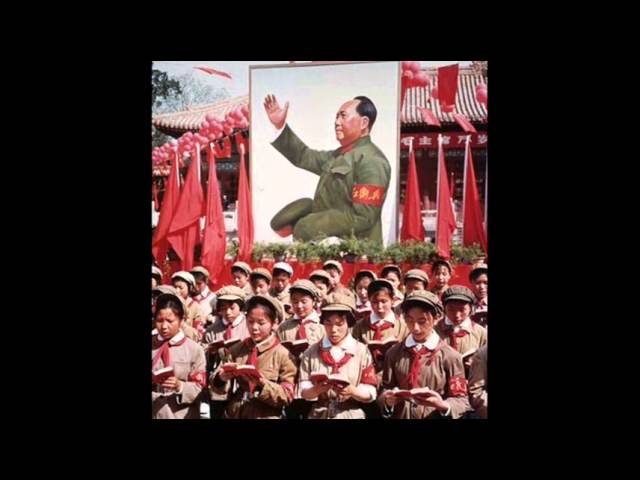
“PO SI JIU!” RED GUARDS ARISE! CRUSH THE REACTIONARIES!

cultural_revolutionThe liberal juggernaut … libbernaut? … is well-connected and organized.  They work together.

Perhaps you saw the NYT’s piece (aka Hell’s Bible) which managed (through fake news) to make an absurd connection between Card. Burke (whom libs hate with the intensity of a type O star), and chief advisor to Pres. Trump (whom libs hate with the intensity of a type O star), former Breitbart editor Steve Bannon (whom libs hate with the intensity of a type O star).  It was a tour de force of smear.   The objective: link Burke and Bannon and Trump with the liberal Alt-Right bugbear.  The upshot is that Burke, etc. are white supremacist, LifeSite reading rubes who watch Duck Dynasty. They are “rad-trads”, “church militant” types… real knuckle-draggers who stand in the way of the Revolution!  They must be crushed, publicly humiliated, sent to camps, thrown from windows.

Then there is the surreal piece at WaPo worthy of the Red Guard of China’s Cultural Revolution entitled, “How Pope Francis can cleanse the far-right rot from the Catholic Church”. Guess who’s picture surmounts the screed. But hey! It’s only an opinion piece, right? Let’s see the first paragraph:

Pope Francis needs to take tougher action against the United States’ most influential Catholic in Rome, Cardinal Raymond “Breitbart” Burke. [There’s the Breitbart bit.] The renegade cleric is not only undermining Francis’s reformist, compassionate papacy, and gospel teaching as it applies to refugees and Muslims, but the rebel prince of the church is also using his position within the walls of the Vatican to legitimize extremist forces that want to bring down Western liberal democracy, Stephen K. Bannon-style. [There’s Bannon.] Simply put, the Vatican is facing a political war between the modernizing Pope Francis and a conservative wing that wants to reassert white Christian dominance. [There’s the white supremacy bit.]

Added to this unhinged soup of hate is also the insinuation of Nazism and Italian Facism.  Staying consistent with the Red Guard libbernaut talking points, on the “rad-trad” theme, the writer gets a dig in at the late Archbp. Marcel Lefebvre.

Try a sample of this green-inked purple prose:

The options open to the pope in dealing with Burke are limited. Excommunication isn’t in the cards; Burke is not a heretic denying the Catholic faith. Nor is Burke refusing to submit to the pontiff like French archbishop Marcel Lefebvre, who was cast out by John Paul II after his ultra-conservative Society of Saint Pius X ordained its own bishops rather than take directions from the Vatican. [Because that’s what the libbernaut is all about now, right?  Anyone who doesn’t take directions from the Vatican is bad. And they were yhuge defenders of the Vatican before 2013, right?]

However, Francis, who has full authority over his cardinals, [Papal authority is in vogue again!] could fully remove Burke from his remaining sinecure with Knights of Malta, call him in for a pastoral correction on the issue of his unacceptable political interventions, [which Burke hasn’t made] investigate Dignitatis Humanae with a view to shutting it down for its subversive politicking, [Because free thought and free speech is unacceptable to the libbernaut.] and send the rebel cardinal back home to the United States. [Only the Left is allowed to “rebel”.] As Burke tries to run an insurgency and rebukes the pope for his doctrinal “ambiguities,” with the backing of thousands of priests, Francis could seize the agenda. In time-honored papal tradition, he could write an encyclical on the burning questions of populism and nationalism, with specific reference to migrants, Muslims and Jews, so priests including Burke know they are in breach of church teaching [‘Cause the writer is all about defending the Church’s teachings, right?  I wonder where she stands on abortion and contraception.] when they try to act as power brokers for the international extreme right. [Which Burke hasn’t done.  But don’t let facts get in the way of a good spittle-flecked nutty.]

The stakes could hardly be higher, especially as the pope seems on a collision course with a Trump-Bannon White House that has imposed a form of a Muslim ban and disparaged him during the election campaign for daring to suggest that building a wall on the United States’ southern border was un-Christian. If the pope doesn’t put the reactionary elements such as Burke and his cronies back in their place, [Straight out of China’s cultural revolution jargon.] they could force a real schism during his papacy and leave the church open to justifiable accusations it failed to stand up to enablers of extremism and neo-fascism within its ranks.

I am reminded of the “Four Olds” campaign in the 1960’s in China during the Cultural Revolution, perhaps the most evil of all of man’s cruelty to man.  Old Customs, Old Culture, Old Habits, and Old Ideas – DESTROY!

“Reactionaries” must be purged!  Send them to the country-side to learn from the wisdom of the worker peasants!

DOWN WITH BURKE!
DOWN WITH THE FOUR OLDS!
CLEANSE THE REACTIONARIES!
BAN THE COUNTER-REVOLUTIONARIES!

destroy_4_olds

YouTube thumbnailYouTube icon

About the meeting Card. Burke had.

YouTube thumbnailYouTube icon

The moderation queue is ON.

UPDATE:

Phil Lawler succinctly nailed it at Catholic Culture HERE

The three-pronged conspiracy theory is being promoted by the Pope’s most ardent defenders. (If you doubt me, sign up for the Twitter feed of Father Antonio Spadaro, and notice how often he makes or encourages cheap shots at Cardinal Burke.) From there it is picked up by secular journalists, who do not understand the Catholic controversy and are much more comfortable framing issues in political terms. The goal of the conspiracy theorists is to discredit Cardinal Burke—in this case exploiting the negative image of Bannon and using guilt-by-association to transfer that image onto the cardinal. And why discredit Cardinal Burke? Because Pope Francis cannot and/or will not answer his questions.

UPDATE:

Check out Carl Olson HERE. Quote:

I’d bet that some skinheads have been shown more respect and fairness in the pages of the Post. What, then, is her source for much of this? The New York Times piece discussed above, of course! This is the very definition of typical news nepotism, a combination of echo chamber thinking, obsession with politics and cult of personalities, and laziness. Far-right? Neo-fascist? White Christian dominance? I’d say this is hysterical, but hysterical seems mellow compared to this sort of vacuous, shrieking rot.

Also, at the top he includes a brilliant passage from Oscar Wilde about the press:

In old days men had the rack. Now they have the press. That is an improvement certainly. But still it is very bad, and wrong, and demoralising. Somebody – was it Burke? – called journalism the fourth estate. That was true at the time, no doubt. But at the present moment it really is the only estate. It has eaten up the other three. The Lords Temporal say nothing, the Lords Spiritual have nothing to say, and the House of Commons has nothing to say and says it. We are dominated by Journalism. In America the President reigns for four years, and Journalism governs for ever and ever. Fortunately, in America journalism has carried its authority to the grossest and most brutal extreme. As a natural consequence it has begun to create a spirit of revolt. People are amused by it, or disgusted by it, according to their temperaments. But it is no longer the real force it was.

Posted in Green Inkers, Liberals, New catholic Red Guards, Pò sì jiù, Semper Paratus, Si vis pacem para bellum!, The Coming Storm, The future and our choices | Tagged , , , , , , ,
35 Comments

A clear and present danger to Catholic doctrine, practice, identity

JuggernautThere is a clear and present danger to Catholic doctrine, practice, identity which has already risen over the horizon and which looms larger as the weeks pass.

The exaltation of “conscience”, no matter what.

We are not talking about properly formed consciences, in the Catholic sense.

The ambiguous Amoris Laetitia “Communion for those who are in the state of mortal sin and who lack a firm purpose of amendment” controversy heralded the danger.

We’ve now seen different conferences of bishops, and different individual bishops, come up with diametrically opposed interpretations of Amoris.  Look, friends, that’s just a fact, and its coming from Amoris, which is polarizing us.

As the horizon darkens, Cardinal Kasper continues to press his agenda.

Not long ago Kasper opined in a TV interview (HERE) that:

“In some cases, I think so, as they share the same faith in the Eucharist, it is assumed, and if they have the inner state, they can refer to their conscience to go to Communion, and this, I think, is also the position of the current pope. “

If you have a family or couple, “you can not divide them at the altar,” said the chairman emeritus of the Pontifical Council for Christian Unity.

There are cases in which the diocesan bishop is able to grant admission to the Eucharist by a non-Catholic.  However, it is the diocesan bishop who makes that determination.  What Kasper intimates is that the bishop has no role.  Instead, non-Catholics should simply receive if they want to.  That’s what the cant about “conscience” means.  He also had told the newspaper of the Italian bishops conference Avvenire that inter-communion is only a matter of time.   HERE

That would, of course, lead to an increase in sacrilegious Communions.  Msgr. Bux is right.  HERE Of course reasoned arguments and reference to the Magisterium means less and less these days.

What is it that we are seeing these days?  It looks as if the doctrine of the Eucharist is being undermined at an alarming rate.

Some will now leap to point out that Kasper said, “In some cases” and “they share the same faith”, etc.   Sure.   That, however, avoids the problem of how that is discerned.  In fact, Canon Law can. 843 provides for these situations: the diocesan bishop makes the determination.


Sure, it could happen that the diocesan bishop is squishy, permissive, and negligent.  Still, the buck still stops on his desk.  He will answer to the Lord for his decision.  At least there is a way to verify, however thinly, that the non-Catholic in question “shares the same faith” in the Eucharist as the Church (and not the same faith as her hubby, who might himself have only a vague notion of what Communion means).   Instead, the “conscience” of the individual becomes the ultimate arbiter and lawgiver.  And we all know about human nature, don’t we.   What starts as “in some cases” will turn into religious indifferentism.

What to do?

Most of us can do nothing about this, in the activist sense.  In worldly terms we are pretty much helpless in the face of the juggernaut.  Right now, the great lib carriage is crushing opposition beneath its wheels.

However, we can nevertheless do our part.

First, I suggest thorough examinations of conscience… there’s that word again… with brutal clarity, followed by making good, regular confessions.

So, … GO TO CONFESSION!

Thereupon, make good, pious, devout Holy Communions, offering them also for specific intentions.

Moreover, you can pray and you can offer mortifications such as fasting.  Join prayer and fasting to performing works of mercy, offering any and all discomfort or inconvenience to God for the sake of turning the tide in whatever way God might choose.

Finally, as good solider-pilgrims in this vale of tears, in this Church Militant, during the day in times of rest or in times of repetitive tasks and chores, offer brief prayers to sanctify your work and to make even in a sacrifice pleasing to God.

The moderation queue is ON.

Posted in Hard-Identity Catholicism, Liberals, Pò sì jiù, You must be joking! | Tagged , , , ,
26 Comments

ASK FATHER: Can priests serve as and vest as deacons in the Novus Ordo?

UPDATE:

I’ve received quite a bit of mail about my response.  The preponderance says that I was right in my argument, but also that the Caerimoniale‘s directions do NOT prohibit priests from vesting as deacons.  Here is an example:

When the GIRM speaks of priests acting as deacons, it only speaks of concelebrants. Yet, the document doesn’t prescribe, “A priest acting as a deacon must concelebrate”. Rather, the prescription is that if it is a case that a CONCELEBRANT fill this role, he should still wear chasuble. The understanding being that priests at the time of the council might have legitimately been confused on this point and wondered if they continued with an already accepted and common practice but desired to concelebrate would they need to wear a different vestment. [That makes sense.] The implication I take from this is that priests who fill this role, but do not concelebrate, need not worry. Such a practice was far too common to receive mention in the instruction. [True.] I am confident the document would be more clear if the reformers wanted to do away with the practice. [Maybe.]

What, then, can be made of the prescription in the Ceremonial? Well the ceremonial is aware of practices such as the vicar general serving as deacon for diocesan Masses. [!] It is suggesting that since deacons are present at these functions, they themselves should fill the role while the priests concelebrate with their bishop. [Right.]

Okay, I’m sold.  YES.  Priests who are not concelebrants can vest in the dalmatic and function as deacons in the Novus Ordo.

Of course, it goes without saying that if there are deacons present, they should take the diaconal roles.  Let deacons be deacons when deacons are there.

___ Originally Published on: Feb 9, 2017 ___

From a reader…

QUAERITUR:

Can priests (or bishops) serve as deacons in the Ordinary Form, analogous to how (as I understand it) this is sometimes done in the Extraordinary Form?

Yes.  Priests and bishops can serve as deacons in the Ordinary Form.

First, here are a couple shots of bishops vested as deacons, serving as deacons at a pontifical, papal Mass with Pope Francis, one on Peter and Paul, and another on Palm Sunday.  These are Cardinals, by the way.

17_02_09_cardinal_deacons 17_02_09_cardinal_deacons_02

So, that’s the Ordinary Form.  Those are bishops vested and acting as deacons.  Hence, yes, bishops can act as deacons in the Ordinary Form.  Now… just try to make that happen outside a Mass with the Pope of Rome.

Next, priests.  Yes, priests can act as deacons in the Ordinary Form.   GIRM 208 states:

GIRM 208. If a Deacon is not present, the functions proper to him are to be carried out by some of the concelebrants.

So, priests can act as deacons in the sense that they take diaconal functions.  But those are priest concelebrants and that is not what you mean.  You are talking about priests dressing in the dalmatic and acting as deacons without being concelebrants.

In the Extraordinary Form, clearly, yes, they can and they do.  It is common.  It has been the Church’s tradition for a looooong time that they do this.  A priest is still, after all, a deacon.  That’s one of the reasons why bishops put on the dalmatic under the priestly chasuble when they vest properly. That’s also why in the Ordinary Form a bishop will divest himself of his chasuble and wear the dalmatic when consecrating altars and when washing feet for the Mandatum: he wears the vestment most symbolic of his ministry of service.

Pope Benedict XVI once spoke about the ministry of deacons during one of his meetings with the clergy of the Diocese of Rome. HERE  Benedict said:

“On this occasion a small experience noted by Paul VI springs to mind – although it may not be quite relevant to our subject. Every day of the Council the Gospel was enthroned. The Pontiff once told the masters of ceremonies that he himself would like to be the one who enthroned the Gospel. They said: No, this is a task for deacons and not for the Pope, the Supreme Pontiff, or the Bishops. He noted in his diary: But I am also a deacon, I am still a deacon, and I too would like to exercise my diaconal ministry by enthroning the Word of God. Thus, this concerns us all. Priests remain deacons and deacons clarify this diaconal dimension of our ministry in the Church and in the world.”

This is a good reason for priests to serve as deacons once in a while.  It is good for priests to serve Mass once in a while, too.  I once had a cardinal serve Mass for me, by the way.  It was a humbling experience which taught me a lot.  But I digress.

Moving on, I note that the 2003 CDW document Redemptionis Sacramentum says:

[125.] The proper vestment of the Deacon is the dalmatic, to be worn over an alb and stole. In order that the beautiful tradition of the Church may be preserved, it is praiseworthy to refrain from exercising the option of omitting the dalmatic.

Given that

  1. sacred ministers at Mass should wear the prescribed vestments for their ministry,
  2. the vestment proper to the deacon is the dalmatic
  3. the priest and bishop both remain, in a sense, deacons
  4. bishops wear dalmatics and act as deacons in the Ordinary Form,
  5. the use of the dalmatic is encouraged,
  6. the functions of the deacon can be fulfilled by priests who aren’t the main celebrant,
  7. there is a centuries long tradition of priests acting as deacon before the Ordinary Form,

…I would say YES, a priest could put on the dalmatic and take the diaconal role at Mass in the Ordinary Form.

Sed contra

In the 1995 Caerimoniale Episcoporum for the Novus Ordo we find:

22. Presbyteri, qui celebrationes episcopales participant, id solum quod ad presbyteros spectat agant; (SC n. 28) absentibus vero diaconis, aliqua diaconorum ministeria suppeant, numquam tamen vestibus diaconalibus induti.

Presbyters [I dislike that “presbyters” thing.  Let’s say “priests”.] taking part in a liturgy with the bishop should do only what belongs to the order of presbyter; in the absence of deacons they may perform some of the ministries proper to the deacon, but should never wear diaconal vestments.”

Some argue that the Caerimoniale is prescriptive for the Missale Romanum as used also by priests.

It seems to me that there are strongly competing values here.

First, there is the value of more solemn liturgical worship, with defined roles.  There is also our Roman liturgical tradition.  Moreover, there is the value of distinguishing the Holy Order of Deacon from the Holy Order of Priest.

This is one of those ways in which there should be a correction of the Novus Ordo by way of contact with and recovery of values from the traditional Roman Rite.  Call it “mutual enrichment”.    If it is going to “mutual”, then the Novus Ordo must be enriched by the traditional Rite, and not just the traditional by the newer Rite.  Right?  As a matter of fact it is far more urgent to enrich the Novus Ordo with tradition than it is to enrich the traditional form with innovation.  Sacrosanctum Concilium 23 forbade innovations in the liturgy, “unless the good of the Church genuinely and certainly requires them; and care must be taken that any new forms adopted should in some way grow organically from forms already existing”.

It seems to me that the Ordinary Form should recover vesting priests as deacons.  That would mean that some would have to stop forcing incessant concelebration by priests.  But if a priest has already said Mass, or he is going to say Mass later in the day, why couldn’t he take the role of a deacon when there is no deacon present?

Why the stingy restriction?

In any event, even if common sense and tradition and a generous reading of most of the rubrics, etc., suggest that a priest can put on the dalmatic and serve as a deacon in the Novus Ordo, the Caerimoniale says no.  If the Caerimoniale applies to Mass when there is no bishop in sight, then, no, a priest can’t do that.

Would it be an abuse to do it?   Not much of one, I think.  And, hey!, isn’t this the age of mercy?  We don’t want to be restrictive doctors of the law, do we?  Dalmatics for priests!  Heck, make it blue dalmatics for priests!  ¡Hagan lío!

Posted in ¡Hagan lío!, "How To..." - Practical Notes, ASK FATHER Question Box, Liturgy Science Theatre 3000 | Tagged , , , , , ,
28 Comments

Such was SNAP

While we abominate the abuse of children by anyone, and even more strongly abhor by clergy, I also scorn those who used the horrid scandal to tear at the fabric of the Church.

Such was the group SNAP.

I read now that their chief operatives have gone down in disgrace.

Catholic League HERE

I haven’t seen much coverage of the story at the National Schismatic Reporter (aka Fishwrap).  Could that be because their aims were the same?  Fishwrap will use any means to break down the Church’s institutions and doctrine.  Maybe they have covered it.  Maybe I’m wrong.

There is an interesting commentary on the SNAP development by Fr. Gordon Macrae, improperly accused and imprisoned.  He has a blog called These Stone Walls.   Macrae has quite a bit of information and analysis of the situation.

You might have a look.

The moderation queue is ON.

Posted in Clerical Sexual Abuse | Tagged , ,
22 Comments

Singing nuns… they’re back!

Every month I get a small donation from the Marian Sisters of Santa Rosa.  They are great! And they sing.

Singing nuns… they’re back!

Have a look at this. On 7 Feb 2017, the sisters sang the National Anthem at a ball game.

Marian Sisters of Santa Rosa National Anthem 2-7-17 from rich hextrum on Vimeo.

Posted in Just Too Cool, Women Religious | Tagged ,
6 Comments

Concerning some bad ideas about how to “enrich” the traditional, Extraordinary Form

UPDATE:

Another reaction at NLM.

UPDATE:

Be sure to read a response posted at CWR by a priest who wrote his thesis on Universae Ecclesiae.  HERE


___ Originally Published on: Feb 8, 2017 ___

old and new massWhen I was around the Pontifical Commission “Ecclesia Dei“, in its early days, I had the opportunity fairly frequently to chat with the Prefect of the CDF (our offices were in the same building and our Cardinal and that Cardinal were friends).  Card. Ratzinger had ideas about the organic development of liturgical worship which touched on the interplay of the older form of the Roman Rite and the Novus Ordo.  Even then he wrote and spoke, though not always in the more current phrase, of a “mutual enrichment” of the rites.   Ratzinger held – correctly – that there was a rupture in our worship through the imposition on the Church of an artificially cobbled-up “new order” of Mass.  That rupture must be healed.  That will take time.  He thought it would be beneficial to have wide-spread (with the Novus Ordo) celebrations of Holy Mass using also the pre-Conciliar form.  The contact of the two rites would jump-start the slow, organic development of worship which had been so harmfully interrupted.


Back in the day, I think that Ratzinger believed that logical priority in the mutual enrichment should be with the Novus Ordo.  However, as time passed I had the impression that he shifted to the view that logical priority should be given to the older, traditional form.  That’s my impression from our conversations.

In Summorum Pontificum he was able to issue legislation for the universal Church that would, inter alia, effect that contact and that mutual enrichment.  Benedict’s Motu Proprio effected a juridical solution.  It did not solve or resolve the other questions, for example, is the Novus Ordo really in continuity with the traditional Roman Rite?  That is a matter for historians and theologians and liturgists.  Summorum Pontificum made an elegant juridical determination: For juridical purposes the two rites are the same and, hence, if a priest has faculties to say Mass, he can use either Missal.  Other questions remain.

The above serves to set up the following.

Fr. John Hunwicke has written at his blog Mutual Enrichment (sound familiar?) his brief comments on a proposal made by Fr. Peter Stravinskas at Catholic World Report about how the Novus Ordo, the Ordinary Form, should change the traditional, Extraordinary Form.   At the time it came out, I simply shook my head and moved on.  I disagreed with virtually everything he wrote and I wasn’t going to waste my time on it.

Fr. Hunwicke, on the other hand, did offer some reactions.  Here are a few of his points:

Enriching the EF
I am afraid that there is an immensely silly article in the CWR by a Fr Peter Stravinskas. He asks how the Ordinary Form could enrich the Extraordinary Form. [NB: no “mutual” involved.  It’s one way.]

The problem with his piece is that he goes on and on … and on … and on … having yet more bright ideas. One thing leads to another. You start off considering his ideas … but by the time he has finished with you he is proposing a completely new rite.

More to the point, and most disturbingly, he is apparently unaware of a large amount of work, academically, which has been done in the last twenty or so years. The 1960s changes were based on shabby and shallow scholarship. The last thing we want to do to the EF now is to make precisely the same blunder!

“The riches of prayers in the OF should be brought into the EF.” BUT it has been demonstrated that even where OF prayers have a pedigree in the old Sacramentaries, their selection and their conceptual bowdlerisation in the OF has made them very suspect.
“The OF Lectionaries should be brought into the EF.” BUT it has been demonstrated that, although the OF gives more Bible, it goes easy on certain Biblical themes, and so in fact it is something of an impoverishment; a censorship of Holy Scripture.
“The OF Calendar should be brought into the EF … for example, by shifting Christ the King to November.” BUT the (Evangelical Anglican) Bishop NT Wright has demonstrated what a very flawed move that was.

[…]

Fr Stravinskas’s proposed massive revision of the EF would provide a sort of intermediate use between the EF and the OF. His desires would much more easily be achieved by authorising certain optional changes in the OF[In other words, give logical priority to the older, traditional form.  Duh.  Right?]  for example, the silent Canon, disuse of the Acclamations after the Consecration, the restoration of the historical Roman Words of Consecration, and the authorisation of the old Offertory Prayers of the celebrant. These would all be a good thing, and could be done very simply by a decree which need hardly occupy more than one sheet of paper.

I’m with Ratzinger and Hunwicke in this.  Also, Fr. H mentions some things that can be done with the Extraordinary Form (e.g., introduce some more recently canonized saints to the calendar – today, for example, is the Feast of St. Josephine Bakhita, a marvelous saint who could be included in the older form’s calendar).  The changes Hunwicke would admit are discrete and would in no way affect the integrity of the Rite.

We need a period of long stability of the use of the older Rite, side by side, with the newer.  Stability.

There is nothing to be afraid of, by the way.  Let the two forms be offered side-by-side on an even field of play.  Let market forces work.  If, as some think, the Novus Ordo is so very superior to the traditional form, then people will choose to go to the Novus Ordo.  Right?  But let the playing field be even.  If the Extraordinary Form is relegated to 7 AM or 2 PM every time a 5th Sunday in a month occurs… that’s not a level playing field.  However, libs are terrified of the older, traditional form.  And because libs view the world and the Church through the lens of the zero sum game, they use brutal power to suppress whatever  (whomever!) competes with their progressivist notions.

Again, on the note of stability, some people inadvertently – alas! – allow Novus Ordo tinkeritis to take root in them.  Tinkeritis seems to be part and parcel of the Ordinary Form: don’t just let the rite be!  Provide option after option.  The effect is that the rite is ever fluid, always malleable, conformable to our desire and imagination.  Over decades the results have been disastrous for Catholic identity.

We need more and more celebrations of the older, traditional Roman Rite.  We need a period of stability.  It takes longer to build than it takes to demolish.

Brick by brick on a stable foundation.

The moderation queue is ON.

UPDATE:

At NLM Peter Kwasniewski systematically demolishes the 14 Theses which Fr. Stravinskas nailed to CWR.

UPDATE:

At CWR there is another response to Fr. Stravinskas’ ideas. HERE Fr. Albert P. Marcello, III gets to the core:

It would seem that if this entire article were to be put into practice, then the EF would not merely be “enriched by” the OF, but with a few minor exceptions, it would in fact become the OF.

Rem acu.

Posted in "How To..." - Practical Notes, Hard-Identity Catholicism, Liturgy Science Theatre 3000, Mail from priests | Tagged , , , , , ,
60 Comments

Doctrine of Ordination now under attack by Jesuits (who else?)

First, an amuse bouche, something light to work into something seriously wrong.

Here is an oldie but goody. We had this tacked up on the bulletin board in the rectory at St. Agnes in St. Paul for years.

This iteration is from NLM: a Jesuit reworking of the Roman Breviary.

17_02_07_Jesuit_breviary

Source.

“A very brief rite of reciting the Breviary. First Pater and Ave are said, then
a. b. c. d. (etc.)
V. By this complete alphabet, alleluia.
R. The complete Breviary is composed, alleluia.
Let us pray. O God, who from the twenty-four letters didst will that all the Sacred Scripture and this Breviary be composed, join, loose, make, dispose and receive from this twenty-four letters Matins with Lauds, Prime, (Terce?), Sext, None, Vespers and Compline. Through Christ Our Lord. Amen.”

I’m sure that the Alleluia was omitted at Septuagesima.   Or… who knows… Jesuits just probably omitted it all year.

Jesuits are legendary in their seeming lack of interest in liturgical prayer.   An old phrase to describe someone who is clueless is “As lost as a Jesuit in Holy Week”.

And now you see what Jesuits are doing to the Church’s doctrine on the ordination of women.   Jesuits run the publication La Civiltà Cattolica, a semi-official publication of the Holy See, reviewed by the Secretariat of State before publication.

Magister explains HERE

A real gem from the piece:

In the judgment of “La Civiltà Cattolica,” therefore, not only should the infallibility and definitiveness of John Paul II’s “no” to women priests be brought into doubt, but more important than this “no” are the “developments that the presence of woman in the family and society has undergone in the 21st century.”

Unreal. They will leave not a single thing standing in their wake.  Apply this principle what we will have left will be only smoking, salted ruins where there was once a serious Church, with clear doctrine.

Lord, have mercy on us.

Posted in Pò sì jiù | Tagged ,
25 Comments