Have I ever urged you …
GO CONFESSION!
Yes, I believe I have.
I have also urged priests and bishops to preach, teach, admonish, in season and out, about the Sacrament of Penance and to hear confessions. Get into the box. People will come. It’s not complicated.
First, an article with my comments. Afterward, some documentation from the Holy See about a CONCRETE way to increase the use of the Sacrament of Penance.
From Crux:
BALTIMORE – Confession has a confession to make: The sacrament of reconciliation isn’t the draw it once was.
A recent Pew Research Center study found that only 43 percent of American Catholics avail themselves of confession at least once a year. And from there, the numbers get grimmer. A paltry 17 percent go more than once a year, and a scant 7 percent go monthly. [And yet, even of the Catholics who go to Mass on Sundays, go to Communion? Each sacrilegious Communion harms the whole Body of Christ. Is it any surprise that the Church is a mess right now?]
Usually offered in the middle of the weekend on Saturday afternoons, confession can be a hard sell for busy Catholics. The subject matter, sin, also can be a stumbling block in a culture that can be, at times, too enamored with accentuating the positive. [Accentuating the positive? WHAT? It’s obsessed with exalting wickedness!]
Confessing our shortcomings – on social media, in the therapist’s office and elsewhere – is more popular than ever. But seeking absolution and greater connection with God? Not so much.
That’s why some priests are pushing back against empty confessionals in novel ways. It’s time for confession to make a comeback, they say. [“Novel ways”… okay. I’m game. What would they be, I wonder.]
“It wasn’t preached, and it wasn’t made available,” Father Michael DeAscanis said of the decline. “The more we talk about the benefits of confession and the more we make it available, make it easier for people. I think you’ll see this rediscovering of confession.” [Ummm… that’s novel? Telling people about it and then getting into the box? Mind you, I am NOT complaining!]
The priest is pastor of St. Philip Neri Parish in Linthicum Heights, Maryland, and parish administrator of St. Clement I Parish in Lansdowne, Maryland.
Father Brian Nolan joined St. Isaac Jogues Parish in Carney, in Baltimore County, as pastor about a year and a half ago and realized the regular Saturday afternoon confession time wasn’t going to cut it.
“Probably the worst time of anybody’s week,” Nolan told the Catholic Review, the news outlet of the Baltimore Archdiocese. “Like, who stops midday on a Saturday? What we say in general that is you meet people where they are. Everybody comes on Sunday.” [Gosh, I dunno about that. My home parish had confessions from 3:30-5:00 on Saturdays and then again 7:30-9:00 (or until done). More than one priest. There were lines.]
He started offering another session on Sunday night, right before St. Isaac Jogues’ most popular Mass. Nolan said the parish is making slow and steady progress encouraging more attendance.
“Some people could say, well, sin is negative, but it’s real. And to ignore it, it’s like ignoring cancer,” Nolan said. “Instead of being weighed down by sins and blocking at times the grace of God in your life, why not have a free, full availability of receptivity to God and his grace?” [Very good. Still waiting for the “novel” part. Is it possible that the writer, social media coordinator for the Catholic Review and the Archdiocese of Baltimore, hasn’t heard this before?]
Charles Strauss, associate professor of history Mount St. Mary’s University in Emmitsburg, said the decline in confession in the United States began in the 1960s. Before that, from about 1840 to the 1950s, the sacraments, including confession, were woven into the daily lives of many Catholics, especially recent European immigrants.
“Frequent confessions, weekly or monthly, just became part of the cycle. You know, part of the schedule of one’s life,” said Strauss, who also serves as executive secretary-treasurer of the American Catholic Historical Association. “And it was not just regulated by parents, but by authority figures like Catholic schoolteachers, mostly religious and by parish priests.” [Remember what I have said about the fusing of various forces into a single halcyon icon in the minds of those who grew up in the 60’s?]
The decline in confession can’t be traced to one cause, but many factors, said Strauss, a member of St. Francis Xavier Parish in Gettysburg, Pennsylvania. The suspects are many and varied: A general distrust in authority that became prominent in the 1970s; well-meaning reforms by the church that deemphasized sin also may have discouraged penance; and even the move toward a less formal society.
“If you’re not having a meal in your home together, is it going to be even realistic to think you’re going to follow other rituals of your religious denomination?” Strauss said. [Great point!]
Father James Boric is among the priests in the Baltimore Archdiocese championing the sacrament of reconciliation. He is rector of the Basilica of the National Shrine of the Assumption of the Blessed Virgin Mary in Baltimore.
Boric, who decided to become a priest after a particularly powerful confession, has vastly expanded the hours that the basilica offers the sacrament.
He offers confession before midday Masses daily from 11:30 a.m. to noon and also on Sunday. He stays after Masses and offers confessions on major – and well attended – celebrations such as Christmas and Easter. He also offers the sacrament Monday, Tuesday, Thursday and Friday from 5 p.m. to 6 p.m. [Again, not novel. Common sense. I applaud him!]
But Boric said more convenient times are only part of the solution. He regularly preaches about sin and confession, even though some parishioners may not like what could be seen as a negative message.
“We have to preach sin,” Boric said. “If there’s no sin in the world, then nothing’s wrong. Then why go to confession?”
“We’ve experienced a tremendous increase in confessions. [There it is!] Now, I’ve made a concerted effort over three years to preach about it often,” he added. “So on like big days, like Divine Mercy Sunday, when there are such great promises attached to the sacrament, I will hear confessions for three, four hours straight.”
In Linthicum Heights, DeAscanis is not only encouraging confession in general but also preaching the benefits of regular confession.
“Once a year good. Twice a month better,” is his mantra.
Regular confession can help you better interact with the people you love in your life, DeAscanis said.
He recommends that to get the most out of confession, parishioners should do an examination of their conscience beforehand to focus their thoughts. [Before!] He has a guide for doing that printed in his weekly church bulletin. Quality guides also can be found on line.
“We just need to repent. And I think that in some ways we’re afraid of doing that,” Boric said. “And it is hard. I mean, when you’re calling out the sins of the culture, you know, whether it’s promiscuity, whether it’s living together before marriage, whether it’s pornography and all the things that affect people.
And yet there’s a solution … salvation.”
I applaud the priests who are trying to rebuild practice of regular confession. In doing so, they are also helping themselves. Priests and bishop will have to give an account to God for what they did about the Sacrament of Penance, which they solemnly promised at the time of their ordinations to administer.
I will add two things.
First, check out Fr. Z’s 20 Tips For Making A Good Confession. It is always available at this blog, down towards the bottom in a menu.
Also, FATHERS! BISHOPS! Priests can hear confessions DURING MASS!
Of course they can’t hear confession why they themselves are saying Mass. But another priest can. If there is another priest available, that priest can hear confessions during Mass and then help with Holy Communion, thus eliminating the need in most cases for a lay person.
“But Father! But Father!,” some of you addlepated libs are mooing, “This is intolerable! How could you say that reconciliation is so needed that ordained ministers should do it during Eucharistic sharing? And then… then… to take away the rights of non-ordained ministers to fulfill their community authorized ministry of sharing the bread and cup? You … youuuuuuuu…. you HATE VATICAN II!”
CONFESSIONS DURING MASS!
While this is not really a novel idea, because it was a wide-spread custom back in the day, it is novel-er than the pretty much un-novel novel ideas underscored by the writer of the article, above. Also, it is authorized and even promoted by the Vatican’s Congregation for Divine Worship.
in Redemptionis Sacramentum 76 we read:
Furthermore, according to a most ancient tradition of the Roman Church, it is not permissible to unite the Sacrament of Penance to the Mass in such a way that they become a single liturgical celebration. This does not exclude, however, that Priests other than those celebrating or concelebrating the Mass might hear the confessions of the faithful who so desire, even in the same place where Mass is being celebrated, in order to meet the needs of those faithful. This should nevertheless be done in an appropriate manner.
Cf. Pope John Paul II, Apostolic Letter (Motu Proprio), Misericordia Dei, 7 April 2002, n. 2: AAS 94 (2002) p. 455; Cf. Congregation for Divine Worship and the Discipline of the Sacraments, Response to Dubium: Notitiae 37 (2001) pp. 259-260.
Also, here is something translated from the Latin found in Notitiae 37 (2001 – no. 419-420) pp. 259-260 with my emphases and comments:
Congregation for Divine Worship and the Discipline of the Sacraments (October 2001)
What are the dispositions governing the time for the celebration of the sacrament of Penance? For example, can the faithful have recourse to the sacrament of Penance during Mass?
The principal norms governing the time for the celebration of the sacrament of Penance are to be found in the Instruction Eucharisticum mysterium (25 May 1967), which states: The faithful are to be constantly encouraged to accustom themselves to going to confession outside the celebration of Mass, and especially at the prescribed times. [This is close to one of my 20 Tips! #3] In this way, the sacrament of Penance will be administered calmly and with genuine profit, and will not interfere with active participation in the Mass (no. 35). The same is reiterated in the Praenotanda of the Ordo Paenitentiae (no. 13), which states that: the reconciliation of penitents can be celebrated at any time and day. [Remember those people who claimed confessions couldn’t be heard during the Sacred Triduum? FAIL.]
Nevertheless this ought to be understood as a counsel [Not an imperative.] directed to the pastoral care of the faithful, who ought to be encouraged and helped to seek health of soul in the sacrament of Penance, and have recourse to it, as far as possible outside the place and time of the celebration of Mass. On the other hand, [Here we go…] this does not in any way prohibit priests, except the one who is celebrating Mass, from hearing confessions of the faithful who so desire, including during the celebration of Mass. [There it is, ladies and gentlemen.] Above all nowadays, when the ecclesial significance of sin and the sacrament of Penance is obscured in many people, and the desire to receive the sacrament of Penance has diminished markedly, pastors ought to do all in their power to foster frequent participation by the faithful in this sacrament. [In other words, this sacrament is really in crisis. We have to do all we can to revive it.] Hence canon 986.1 of the Code of Canon law states: All to whom by virtue of office the care of souls is committed,are bound to provide for the hearing of the confessions of the faithful entrusted to them, who reasonably request confession, and they are to provide these faithful with an opportunity to make individual confession on days and at times arranged to suit them.
The celebration of the sacrament of Penance is indeed one of the ministries proper to priests. The Christian faithful, on the one hand, are not only obliged to confess their sins (cf. can. 989), but on the other hand are fully entitled to be assisted by their Pastors from the spiritual riches of the Church, especially by the word of God and the sacraments (can. 213).
[Wait for it….] Consequently, it is clearly lawful, even during the celebration of Mass, to hear confessions when one foresees that the faithful are going to ask for this ministry. In the case of concelebrations, it is earnestly to be desired that some priests would abstain from concelebrating [DID YOU GET THAT, FATHERS and BISHOPS? Don’t always concelebrate. HEAR CONFESSIONS during the Mass! Advice from the CDW!] so as to be available to attend to the faithful who wish to receive the sacrament of Penance. It should be borne in mind, nevertheless, that it is not permitted to unite the sacrament of Penance with the Mass, making of them both a single liturgical celebration [This is done in the Novus Ordo sometimes with baptisms, for example, or even celebrations of liturgical hours such as vespers.].
Now, THERE is a novelty!
Less concelebration and more confessions DURING MASS.
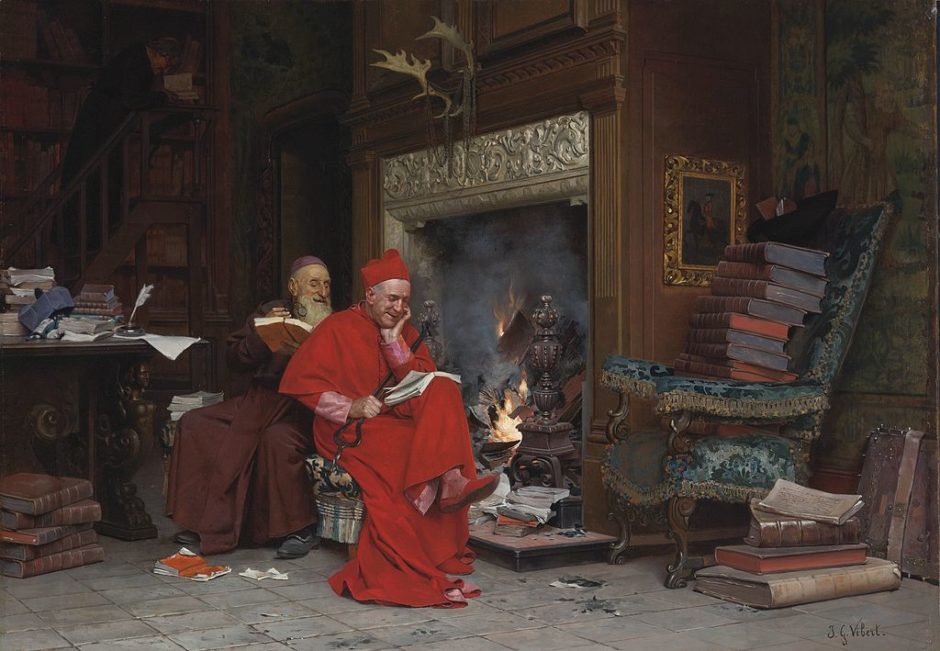
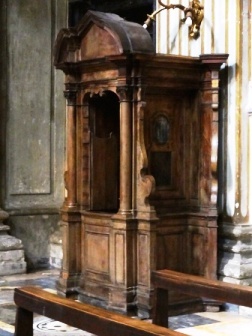 From a reader…
 From a reader…


 Have I ever urged you …
 This is not from Eye of the Tiber or The Onion…
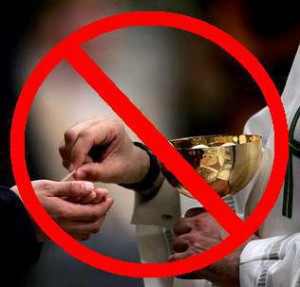 Communion on the hand, though permitted by an indult in most places, is appalling and a major factor in the statistically confirmed plummet in belief by Catholics in the Church’s teachings on the Eucharist. As soon as possible, Communion on the hand should be eliminated, especially by persuasion and teaching.



 waalaw on ROME 26/10– Day 22: Colors and courses and Coco: “Thank you, pestolover. I made sure that my solution was correct before posting it; but, as is my fatal flaw,…”