Excellent twist in Alaska about tax-payer funding of abortion

If it weren’t such a serious topic this would be a real hoot.

Alaska’s governor and legislature are against public funding of abortion.  However, the Alaska Supreme Court ruled that tax payers had to pay for abortions.

To deal with that problem, the governor used his gubernatorial power and deducted from the Court’s budget the amount that had to go to pay for abortions.

Sweeeeet.

The story is a LifeSite.

Posted in Emanations from Penumbras, Fr. Z KUDOS | Tagged ,
3 Comments

NEW VIDEO from Bp. Hying of @MadisonDiocese

The other day I posted a video from the new Bishop of Madison, Most Rev. Donald Hying, 5th to wield the pastoral staff in this diocese. Bp. Hying frequently made brief videos while he was still in Gary and he intends to do the same from the Dioecesis Madisonensis. They are worthwhile.

In any event, here is today’s offering. At the moment there are 473 views.

Okay, readers, let’s see if we can’t push that number a little higher! CLICK!

YouTube thumbnailYouTube icon

Posted in Just Too Cool | Tagged , ,
2 Comments

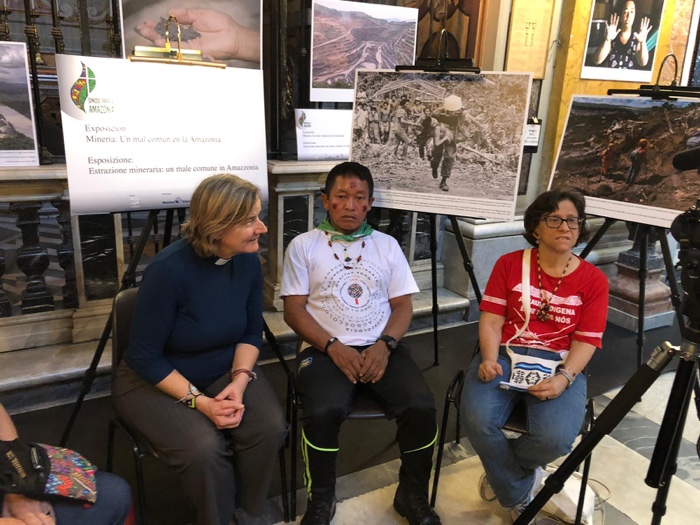
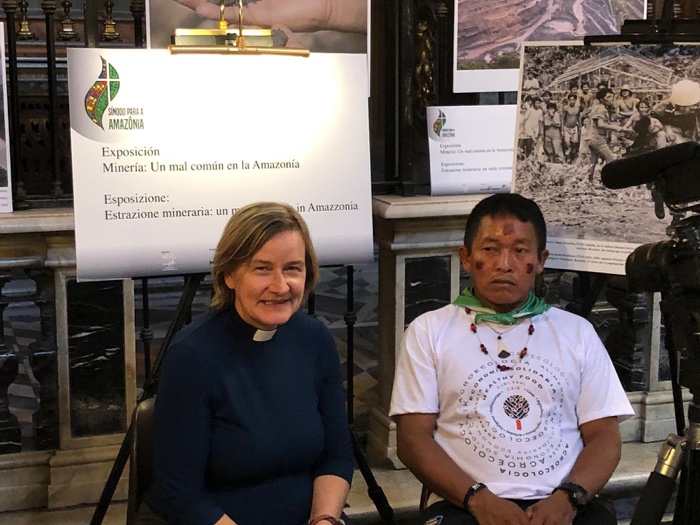
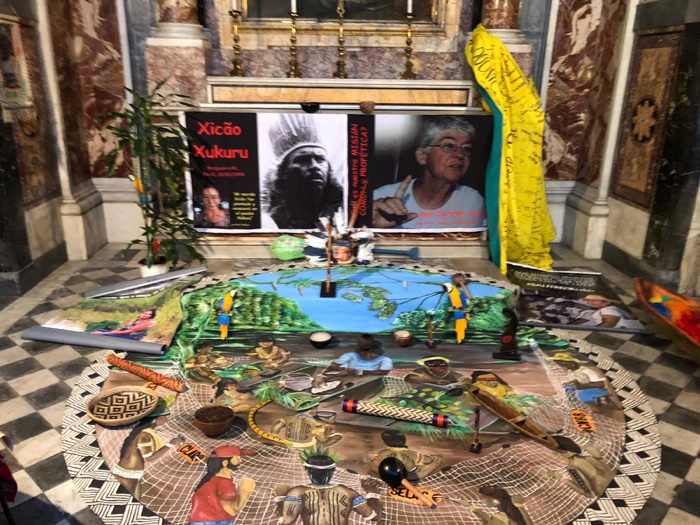
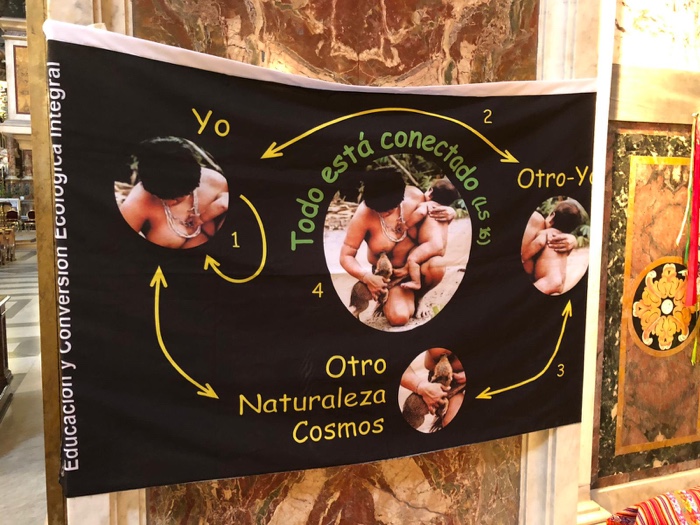
PODCAzT 173: A darkly humorous look at the Amazon Synod’s Instrumentum Laboris

Today we hear an outstanding offering of William Kilpatrick who writes at Crisis.  He has had a look at the Instrumentum Laboris for the upcoming Synod of Bishops in Rome in October about the Amazon.

He has nailed it.   A German Cardinal (Germans figure big in this, btw), Card. Brandmüller, examined the Instrumentum and blasted it to smitherines.   Kilpatrick takes up where he left off and stomped on the bits and pieces remaining, with great humor.

Really.  Just dig in and enjoy.  It’s fun, but sobering.  There are really strange things going on and we will have a lot to deal with.


Posted in Liberals, Pò sì jiù, PODCAzT, Synod, The Coming Storm, The Drill, The future and our choices, What are they REALLY saying?, You must be joking! | Tagged , , ,
7 Comments

CQ CQ CQ #HamRadio Wednesday: A Case in Point, ZedNet and Solar Cycles

I had a note today pointing me to SpaceWeather (which I regularly monitor) which has a post about new spots on your planet’s yellow star.   These spots herald Solar Cycle 25, because they have a distinct signature.

To wit:

SUNSPOTS FROM THE NEXT SOLAR CYCLE: Solar Minimum is here, but it won’t last forever. In fact, the next solar cycle made a brief appearance this week. On July 1st, a small sunspot materialized in the sun’s southern hemisphere (S21W02), then, hours later, vanished again. The polarity of its magnetic field marks it as a likely member of Solar Cycle 25:

Above: A magnetic map of the solar surface on July 1, 2019. Credit: NASA/SDO

Southern sunspots from old Solar Cycle 24 have a -/+ polarity. This ephemeral sunspot was the opposite: +/-. According to Hale’s Law, sunspots switch polarities from one solar cycle to the next. The unnumbered sunspot of July 1st appears to be a herald of Solar Cycle 25.

[…]

Earlier this year, an international panel of experts predicted that Solar Minimum would deepen in 2019 and begin to rebound sometime next year. The increasing pace of ephemeral sunspots from the next solar cycle is roughly consistent with their forecast.

For those who are not amateur radio operators, the lack of sun spots greatly decreases the activity in your planet’s atmosphere which allows for greater long-distance (DX) contacts between operators.

Eventually, we will emerge from this minimum in the 11-year long cycle.

Meanwhile, hams have gotten busy in other spheres of radio activity, using digital modes.  It is now possible, for example, using the internet to send to a repeater somewhere else in the world, which then transmits in that area.  There are other digital networks too.  These methods are not transceiver through to antenna, off the layers of the atmosphere and bouncing off your planet’s surface, to another antenna and then transceiver, but in the depths of solar minimum, its fun and a new field to develop.  And lots of hams are into tinkering and developing stuff.

Hence, ZedNet.  More HERE.   But quickly…

ZedNet is Brandmeister DMR worldwide talkgroup 31429.  It was developed by a highly skilled ham who is a longtime reader here, WB0YLE.   It was intended to get ham-readers here talking to each other.

WB0YLE gave me a Bill of Materials (everything you need to get involved).  Of course, you also need a license.  HERE

For you who are into this digital stuff, ZedNet still exists on the Yaesu System Fusion (Wires-X) “room” 28598, which is cross-linked to Brandmeister (BM) DMR worldwide talkgroup 31429.  This gives world-wide multi-mode access to a common ham radio network.

What are we doing with this?  Not much right now, but who knows.  And it’s fun to make it work.

In a previous post, I showed the little “hotspot” I use to connect to ZedNet through Brandmeister.  It’s made from a RaspberryPi.   It’s the gizmo that connects the hand-held transceiver to the internet.  I have reduced the elements to a small pouch and I can tether the “hotspot” (the Zumspot in the Bill of Materials compiled by WB0YLE) to my mobile phone and use its data, to to another mobile internet hotspot I have, the KeepGo I often use when travelling abroad.  You can see the Zumspot in the center, with its little antenna.

I like redundancy.  In other words I like backups.  I also like travel convenience.  For example, when I got a new laptop, I bought an extra power source and cord.  I leave one in my bag for travel and one in place at home.  It’s easier that way and I never forget it.

I figured redundancy with the ZedNet Zumspot would be a good thing.  That way I could simply leave everything set up at home and have a matching set in my bag.  Hence, after buying a duplicate handheld transceiver, I pulled up WB0YLE’s list of parts, bought them, and built a new hotspot, a Zumspot.  I used Ham Radio Outlet.  The links for everything are in WB0YLE’s list.  Have a look.

It was rather like putting together a puzzle.

There were a couple of tricky moments when you need to keep all the parts together before you tighten up the screws, but it didn’t take long.

Have you ever put something together, you think correctly, and, at the end, discovered parts you didn’t use?   “Hmm.. I wonder what these do?”   That was my experience with this.   I had a few parts left over.  I concluded that they were spares and one piece an alternate depending on the variation of Zumspot.  In any event, the little unit (this one has a diminutive screen, lacking on my travel unit), functions flawlessly.

NB: I had originally just bought the ZumSpot.  It came without a case.  As WB0YLE said, you don’t really need a case, but that makes it a bit more delicate.  I used the gizmo perfectly and places a clear plastic cup over it, until the case set (purchased later) arrived.   So, just buy the case at the same time, unless you perhaps want to get creative and make your own.

So, you too can build one of these.  If I can, you can.

The radio I use is an inexpensive Baofeng RD-5R.  US HERE – UK HERE.  Happily, it uses the same battery packs as its analogue twin.   It’s a great little radio, for not much bucks.

WB0YLE’s Bill of Materials (everything you need to get involved).  Of course, you also need a license.  HERE

I created a page for the List of YOUR callsigns.  HERE  Chime in or drop me a note if your call doesn’t appear in the list.

73

Posted in SESSIUNCULA | Tagged , , ,
3 Comments

What is he really saying?

Ideologues are totalitarians.

There is a group of hard-core ideologues grouped around Francis.

As always, these ideologues demand that you deny the evidence of your senses, including common sense, and ignore the principle of non-contradiction.  It’s the alternate universe of 2+2=5. Their positions are irrational.  With nearly sycophantic dedication they take everything Francis does as oracular, even the things that he gets wrong. And, if you decline to accept their zeal as your own, then their attitude and actions become like to the Red Guards of the Cultural Revolution, a New catholic Red Guard.

That said, here’s something to consider.

“Restored the role of conscience”.

What is he really saying?

That’s code for “Do whatever you want!” as in reception of Holy Communion by manifest adulterers and non-Catholics who don’t accept the Church’s teachings.

That’s code for pitting conscience against the teachings of the Church on a number of important issues including contraception and abortion.


Posted in Liberals, New catholic Red Guards | Tagged , ,
12 Comments

2nd Joyful Mystery: The Visitation (Traditional 2 July)

In the traditional calendar, the Feast of the Visitation, 2 July, came at the end of the long-suppressed Octave of John the Baptist.  In the Novus Ordo it now falls on 31 May, between the Annunciation and the Birth of John the Baptist.

Here is something that I wrote years ago for the Patristic Rosary Project.

___

We continue our Patristic Rosary Project today with:

2nd Joyful Mystery: The Visitation

Commenting on Luke 1:39-45, the when Mary journeys to visit her cousin Elizabeth, St. Augustine of Hippo (+430) speaks of the infant John, to be known as the Baptist, leaping in the womb at the sound of Mary’s voice:

We see instances of leaping not only in children but even in animals, although certainly not for any faith or religion of rational recognition of someone coming.  But this case stands out as utterly uncommon and new, because it tool place in the womb, and at the coming of her who was to bring forth the Savior of mankind.  Therefore this leaping, this greeting, so to speak, offered to the mother of the Lord is miraculous.  It is to be reckoned among the great signs.  It was not effected by human means by the infant, but by divine means in the infant, as miracles are usually wrought. [ep 187.23]

God wrought something in John at that moment.  What happened?  We can look to the Greek writer Origen (+ c.254) for his view:

Elizabeth, who was filled with the Holy Spirit at that moment, received the Spirit on account of her son.  The mother did not inherit the Holy Spirit first.  First John, still enclosed in her womb, received the Holy Spirit.  Then she too, after her son was sanctified, was filled with the Holy Spirit.  You will be able to believe this if you also learn something similar about the Savior.  (In a certain number of manuscripts, we have discovered that blessed Mary is said to prophesy.  We are not aware of the fact that, according to other copies of the Gospel, Elizabeth speaks these words of prophecy.)  Mary also was filled with the Holy Spirit hen she began to carry the Savior in her womb.  As soon as she received the Holy Spirit, who was the creator of the Lord’s Body, and the Son of God began to exist in her womb, she too was filled with the Holy Spirit.  [Homilies on the Gospel of Luke 7.3]

The concept of being “filled with the Holy Spirit” is interesting.  Perhaps some of you have heard of the glosses on this phrase which compare the Blessed Virgin, John the Baptist, and St. Stephen.  All were said to be filled with the Holy Spirit.  Mary was prevented from ever having any stain of original sin.  John was said to have been forgiven the guilt of original sin before his birth, which is the moment he leapt in the womb at the coming of the Lord.  Stephen, the Protodeacon, was also “filled with the Holy Spirit”, but after his birth.  In any event, the always creative and interesting Origen speaks of John’s sanctification in the womb at the coming of Mary who was bearing the Son of God.

Each of us must prepare to bear Christ and be filled with the Holy Spirit.  St. Ambrose, the bishop of Milan (+397) said:

You see that Mary did not doubt, but believed and therefore obtained the fruit of faith.  “Blessed … are you who have believed.”  But you also are blessed who have heard and believed.  For a soul that has believed has both conceived and bears the Word of God and declares His works.  Let the soul of Mary be in each of you, so that it magnifies the Lord.  Let the spirit of Mary be in each of you, so that it rejoices in God.  She is the one mother of Christ according to the flesh, yet Christ is the Fruit of all according to faith.  Every soul receives the Word of God, provided that, undefiled and unstained by vices, it guards its purity with inviolate modesty.  [Exposition of the Gospel of Luke 2.26]

Our baptism should remind us every day that we are deeply woven into the fabric of the Church, a Church which in many ways can said to stretch back into the depths of our great “Family History”  as God’s People.  In a comment on the Magnificat, which Mary pronounced during her mysterious Visitation, Venerable Bede (+735) says:

When blessed Mary was making mention of the memory of the fathers, she properly represented them by naming Abraham in particular.  Although many of the fathers and holy ones mystically brought forward testimony of the Lord’s incarnation, it was to Abraham that the hidden mysteries of this same Lord’s incarnation and of our redemption were first clearly predicted.  Also, to him it was specifically said, “And in you all the tribes of the earth witll be blessed.” (Gen 12:3)  None of the faithful doubts that this pertains to the Lord and Savior, who in order to give us an everlasting blessing deigned to come to us from the stock of Abraham.  However, “the seed of Abraham” does not refer only to those chosen ones who were brought forth physically from Abraham’s lineage, but also to us…. Having been gathered together to Christ from the nations, we are connected by the fellowship of faith to the fathers, from whom we are far separated by the origin of our fleshly bloodline.  We too are the seed and children of Abraham since we are reborn by the sacraments of our Redeemer, who assumed his flesh from the race of Abraham.  [Homilies on the Gospels 1.4]

Did you catch that great phrase?  “Mary was making mention of the memory of the fathers…”  Perhaps we can see how the Blessed Virgin is a good model for all patristicists and, of course, patristibloggers!

Posted in Liturgy Science Theatre 3000, Our Solitary Boast, Patristiblogging, Patristic Rosary Project | Tagged
2 Comments

1 July – Most Precious Blood and also…

Today is the Feast of the Most Precious Blood… in the older, traditional calendar of the Roman Rite.  Thus we inaugurate the month of July, during which in a special way, fire up our devotion to the Most Precious Blood of the Lord.

Every even tiny drop is worth the salvation of the souls of everyone who has ever lived.   While many have and will accept the gift Christ won by the pouring out of His Precious Blood, not all will.

Here is the Collect:

Omnípotens sempitérne Deus, qui unigénitum Fílium tuum mundi Redemptórem constituísti, ac eius Sánguine placári voluísti: concéde, quaesumus, salútis nostræ prétium sollémni cultu ita venerári, atque a præséntis vitæ malis eius virtúte deféndi in terris; ut fructu perpétuo lætémur in coelis.

Here is someone else’s translation:

Almighty, eternal God, Who made Your only-begotten Son the Redeemer of the world, and willed to be reconciled by His Blood, grant us, we beseech You, so to worship in this sacred rite the price of our salvation, and to be so protected by its power against the evils of the present life on earth, that we may enjoy its everlasting fruit in heaven.

And… by the way… today is also the feast of St. Aaron, brother of Moses.

Some people may not realize that many great figures of the Old Testament are considered saints and are listed in the Roman Martyrology.

Here is his entry in the 2005 Martyrologium Romanum:

1. Commemoratio sancti Aaron, de tribu Levi, qui a Moyse fratre oleo sacro unctus est sacerdos Veteris Testamenti et in monte Hor depositus.

Who wants to translate this for the readers?

Posted in SESSIUNCULA |
5 Comments

ASK FATHER: Why not St. Louis Jesuit Music at Traditional Latin Masses?

From a reader…

QUAERITUR:

What’s wrong with the St Louis jesuits?

A Director of Music for a Latin Mass community once said that, with regards to hymns, what we sing now as traditional hymns was once new and modern at the time. In fact many of our beloved Marian Hymns were once the equivalence to the St. Louis Jesuits. This leads me to wonder, what’s wrong about introducing stuff like the St. Louis Jesuits into the EF if it’s well-discerned and the song’s words are scriptural?

What’s wrong with the St Louis Jesuits?  Nothing.  As they say, their music isn’t nearly as bad as it sounds.

Really, the thought of this stuff during a TLM brought an audible chuckle.

There is a good book which explains something of the phenomenon of the bad music that has so tormented the Church since the Council was misappropriated.

Check out Thomas Day’s Why Catholics Can’t Sing: Revised and Updated With New Grand Conclusions and Good Advice

US HERE – UK HERE

Part of the problem was that, after the Council was hijacked and a false interpretation was imposed on liturgical reforms by a small group of modernists who had control of social communication back in the day, Latin was sidelined and all but banned.  Indeed, it was illicitly forbidden in many places.   That slammed the door on the Church’s vast treasury of Church music without anything to ready to fill in.  Nature abhors a vacuum.  Alas, people with the lowest musical skills started to fill in the vacuum, producing “music” that was neither artistic or sacred, and played on instruments entirely lacking a sacred idiom or body of compositions (guitars, pianos, drum sets… and don’t forget tambourines!).   Coupled with a complete lie about the purpose of sacred music, perpetrated by an advisory board on music of the committee for liturgy of the US bishops (that music was intended to produce a human experience), we got the so-called “hootenany” Mass and the rest began to spiral around the bowl on the way down.

Day also describes how the sickly sweet Irish song influenced what was sung in churches.  Many of the clergy who came to these USA from Ireland had zero sense of sacred music because they had zero chances to develop that sense under the thumb of anti-Catholic society they left.  There was no traditional of Church music or large choir tradition.  They did know their sickly sweet songs from the pub and field, however.  That’s why so many of the ditties that passed into hymnals sound like “I’ll Taaaaaake You Home Agaaaaain Kathleeeeeeen”.  (“Mother Deeeeeearest Mother Faaaaaaaairest….”) Not their fault, of course.  But they, speaking English, came to dominate the clergy over and above other imigrants from German, France, etc., who did have a huge heritage of church music.  If you look at church’s built in a certain era, you can see the differences.  German church’s tended to have big choir lofts and organs, while Irish churches didn’t.  Anyway, the influences and roots of the problem are manifold, but that’s part of the picture.

St. Louis Jesuits at a TLM.  LOL!

And so…

YouTube thumbnailYouTube icon

Posted in "How To..." - Practical Notes, ASK FATHER Question Box, Liturgy Science Theatre 3000 | Tagged
37 Comments

UPDATE- A confluence of promptings leads Fr. Z to rant and to make a plea to bishops.

UPDATE: 1 July 2019 (Precious Blood)

Concerning the video about the late Card. Bernardin (linked below) and my association with the novel Windswept House (which has identifiable real people as fictionalized characters), I bring an update.  This is one of the things that was ringing off the hook in the back of my mind.

I was contacted by someone with an autographed copy of Windswept House which he was given by the late and very traditional Fr. Alfred Kunz, whose unsolved murder in the Diocese of Madison is an open wound to this day.   He also had a list of the real people and places whom Martin fictionalized for his novel.

The linked video about Card. Bernardin demonstrates his close connection with the late Bp. John Russell (+1993) of Charleston SC.   In Windswept House Russell is recreated as Bp. “Leo” James Russeton, who is the prelate who directs and offers the parallel satanic rites (with the gory stuff) meant to complete the satanic desecration of the Church in the heart of the Vatican City in 1963.

This was ringing bells in the back of my mind.  I once had a copy of that list, which I recall tucking into a hardback of Windswept House which I now remember lending to someone and never getting back.  The copy I dug out of my storage unit was its replacement, but I had lost the list, many names on which lingered in distant memories.

___ Originally Published on: Jun 29, 2019

A confluence of promptings drove me to my storage locker.

  • There was a recent reading about the infiltration of the Church so as to obtain for the infiltrators high positions of influence. HERE The book didn’t make a strong case based on lots of evidence, but surely the main thesis of the book was dead on accurate.
  • There was the reading of the Instrumentum Laboris for the upcoming Amazonian Synod, which reads as a blueprint for making the Church more like to an NGO with interests in earth-mother worship than the Bride of Christ, indefectible and authoritative. On that, Card. Brandmüller HERE. The Instrumentum Laboris in English HERE
  • There was the video about revelations concerning the late Card. Bernardin.  HERE

In that last link, I was already starting to think about the late Malachi Martin’s Windswept House.  US HERE – UK HERE  Something about Bernardin’s connection to South Carolina stirred my memory.

Today, I cracked old Windswept House.  It’s a tangle of tortured prose and references which are usually slightly off enacted by thinly veiled real but fictionalized players.  It conveys a grim story that you can’t but help know is, its flaws aside, dead on.   In the first few rapids sections of prologue, Martin takes you from Pius XII reflecting on the Treaty of Rome in 1957, to John XXIII refusing to release the Third Secret in 1960, to 1963… specifically the Feast of Sts. Peter and Paul.

The Feast of Sts. Peter and Paul, the day I write this.

In that section of the novel’s prologue there is enacted simultaneously a Satanic ritual in the Pauline Chapel next to the Apostolic Palace in the Vatican and also a place in South Carolina (where the gory stuff was to be done) in order to enthrone Satan in the heart of the Church.  The perpetrators of this evil want not so much to destroy the Church but to transform it into a human institution for the sake of creating a new world order.  Of course 1963 is when the Second Vatican Council is in session and Martin, in this novel, was also hinting that the Third Secret warned about a council.  Get it?

“But Father!  But Father!”, some of you libs and pseudointellects are tittering to the clink of ice in your highball glasses, “This is pure traddy fantasy fueled by years of bitter disappointment at not getting your way.  Since 1963 a new springtime has been blowing through us – we are church, after all – and the fresh air is driving out the stale old incense and trappings of religion you cling to.  It was greater than the Council of Jerusalem, though it didn’t go nearly far enough and … and… crush all opposition.  You… youuuuuuu…. racist climate-change denying homophobic haters!  YOU HATE VATICAN II!”

I esteem Vatican II enough not to lie about it.

I am also now reminded of a story from 2018 about a dreadful occurrence in one of the most important places in the Vatican City, the Palazzo del Sant’Uffizio, where the Congregation for the Doctrine of the Faith is housed.  That palazzo has also some residence apartments for curial officials, normally of high rank.   There was a druggy orgy of some kind involving a low-ranking worker bee who managed, mysteriously, to get lodging there.   HERE

Certain kinds of sins, summon to and cause to attach to and oppress places and people.  They must be driven forth by exorcism.

What happened in 2018 was close to the very heart of the Church’s heart.  As I described it then:

The Devil is good at what he does and he tells us what he is up to.  Having drug/sodomy parties in the building where the CDF and where the office that oversees the use of the Traditional Roman Rite and the new traditional religious institutes are housed is a dead give away.  THAT’s precisely the sort of place to attach and infest with demonic presence.  It’s a stone’s throw from

a) the very place Peter was crucified
b) the tomb of Peter
c) the Paul VI audience hall, where the Synod (“walking together”) meets
d) the offices of the Congregation for the Doctrine of the Faith which also handles cases of abuse
e) the offices of the Pontifical Commission “Ecclesia Dei” which, reinforced by Benedict XVI’s Summorum Pontificum is providing support for that “Marshall Plan” for rebuilding that I’m always on about.

If I were looking at this from the eyes of an enemy, that’s exactly the sort of place I would seek to infiltrate.

The Enemy is real and really good at being an Enemy.  Demons and their activities are real.

If I were a diocesan bishop, I would immediately go through my entire cathedral and chancery and residence and exorcise the places using the older, traditional Roman Ritual.

If I were a diocesan bishop, I would tell pastors of parishes and chaplains of schools, etc., whom I trusted to do it right, to do the same in their places, church, sacristy, rectory, school, all around the grounds.   Otherwise, I would send delegated priests to all the other parishes, etc., to carry out the exorcisms.

If I were a diocesan bishop, I would pronounce an exorcism over the entire diocese entrusted to my care.

If I were a diocesan bishop, I would go to the four corners of the diocese and pronounce the exorcism again at each spot and also say Masses at each, Pro Remissione Peccatorum, Pro Defensibus Ab Hostibus, Ad Poscenda Suffragia Sanctorum, Pro Gratiarum Actione.

Repeat annually.

It would be like tracing the Sign of the Cross over the whole diocese.  I got the idea from what Archbp. Sample did when he was still in Marquette.

Do it in the dead of night in a locked church or in the full light of day with public concourse.  Just do it.

This will cost nothing but a little gas money, will not require a dithering committee, and could be done in a short period of time.  But what benefits!

I think that people would flock to these “Four Corners” Masses and would be deeply edified.   And, if bishops are concerned about bring young people to the Faith and keeping them strong, this will help.  Do you doubt it?

This is serious stuff and they want something serious.

There is no more important thing a bishop does than sanctify and he wields all the weapons of spiritual warfare.

There is no more important thing that a bishop does than say Mass for the welfare of his flock.   And with the might of successors of Apostles, they command the Enemy.

If you are a bishop, please heed my plea.  If you are the secretary to a bishop, or the friend of a bishop, please make this request.

¿You want to hacer some real lío?

Find the recipe between the covers of the Rituale Romanum and Missale Romanum.

Posted in "But Father! But Father!", GO TO CONFESSION, Hard-Identity Catholicism, Liberals, Si vis pacem para bellum!, Sin That Cries To Heaven, The Coming Storm, The Drill, The future and our choices, Wherein Fr. Z Rants | Tagged , , ,
26 Comments

ASK FATHER: Should I pray my Rosary in Latin?

From a reader…

QUAERITUR:

If one knows the Our Father, Hail Mary & Glory Be in Latin, but one’s mind can’t translate the words directly as one prays them, is it OK to pray the rosary this way or should one stick to English instead where the words are easily understood? I’d like to pray my rosary regularly in Latin now but am worried that it would be much less efficacious if I don’t understand the words as easily as I do in English.

Of course it’s okay to pray in Latin.  And, as one repeats the prayers, slowly but surely, they become more natural.  This is the nature of learning another language.  At first, the words remain “outside” you, as it were, even though intellectually you know their meaning.  Then, after a while, you internalize them until they become part of the warp and weft of your language and symbol woven mind.

This is how children learn to speak and to understand nuances of words.  It’s natural.  It takes time and repetition.

After a while they are second nature to you and their meanings broaden and strengthen concepts within you that you don’t get from the other languages in which you pray.  This is what I mean when, writing about the Latin of the orations of Holy Mass, I mention “tuning your Latin ear” or “hearing latinly”, and so forth.   There are layers and tendrils of meaning in the Latin vocabulary that don’t easily transfer into the English renderings.  Something is always lost.  The old phrase about the loss of meaning in translation is, “Tradutore, traditore… the translator is a traitor”.  Even that limps.  The idea is that the translator has to make choices about which direction to go in following the layers of meaning of a word.

Perhaps for a while, alternate your decades of the Rosary in Latin and English.  Ease in.


Posted in "How To..." - Practical Notes, ASK FATHER Question Box, WDTPRS | Tagged , ,
21 Comments