Recently Card. Sarah, Prefect of the Congregation for Divine Worship, encouraged priests to begin saying Holy Mass ad orientem.
Of course we all knew that that would not be allowed to stand.
I now see this in the UK’s best Catholic weekly, The Catholic Herald.
Cardinal Nichols discourages priests from celebrating Mass ad orientem
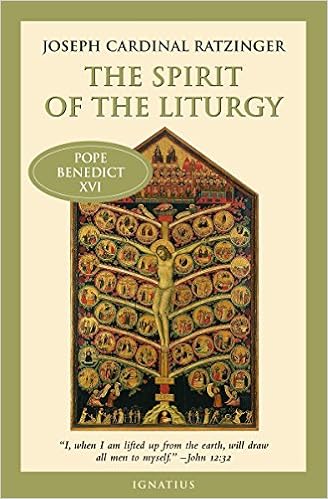 The Archbishop of Westminster has told clergy Mass is ‘not the time for priests to exercise personal preference or taste’ [So, it’s reduced to “taste” is it? I refer the readership, and His Eminence, to Ratzinger’s The Spirit of the Liturgy. UK HERE]
Cardinal Vincent Nichols has written to priests in Westminster diocese discouraging them from celebrating Mass facing east.
He issued the message to clergy days after the Vatican’s liturgy chief Cardinal Robert Sarah invited priests to celebrate Mass ad orientem from Advent onwards.
Cardinal Sarah was speaking at a liturgical conference in London.
Following Cardinal Robert Sarah’s appeal at the Sacra Liturgia conference in London, Cardinal Nichols wrote to priests reminding them that, “the General Instruction of the Roman Missal, approved by the highest authority in the Church, states in paragraph 299 that ‘The altar should be built apart from the wall, in such a way that it is possible to walk around it easily and that Mass can be celebrated at it facing the people, which is desirable wherever possible. The altar should, moreover, be so placed as to be truly the centre toward which the attention of the whole congregation of the faithful naturally turns. The altar is usually fixed and is dedicated.’” [The Cardinal Archbishop cited GIRM 299. However, he cited a MISTRANSLATION of 299. That is NOT what 299 really says. As a matter of fact, even though the Congregation for Divine Worship clarified what the Latin of 299 meant in an official response to a dubium, people still cite the mistranslation. What does 299 really say? “Altare maius exstruatur a pariete seiunctum, ut facile circumiri et in eo celebratio versus populum peragi possit, quod expedit ubicumque possibile sit. … The main altar should be built separated from the wall, which is useful wherever it is possible, so that it can be easily walked around and a celebration toward the people can be carried out.” The correct translation hangs on that quod. More on this below.]
While he noted that the Congregation for Divine Worship had confirmed in 2009 that this instruction still allows for Mass to be celebrated facing east, the cardinal wrote: “But it also ‘reaffirms that the position towards the assembly seems more convenient inasmuch as it makes communication easier’. Thus the expectations expressed in GIRM 299 remain in force whenever the Ordinary Form of Mass is celebrated.” [First, it really doesn’t “make communication easier”. Also, “communication” of what?]
Cardinal Nichols said that Mass was not the time for priests to “exercise personal preference or taste”, and “as the last paragraph of the GIRM states so clearly, ‘The Roman Missal, though in a diversity of languages and with some variety of customs, must in the future be safeguarded as an instrument and an outstanding sign of the integrity and unity of the Roman Rite’ (399).” [Let me simply ask. Has His Eminence also made a dramatic public appeal to priests to obey the rubrics in other respects? I’m sincerely asking this because I don’t know if he has or not.]
After the Sacra Liturgia Conference last week, Cardinal Sarah paid a personal visit to Cardinal Vincent Nichols.
Meanwhile, [no less an oracle than] Fr Antonio Spadaro, [SJ] a papal adviser and editor of the influential journal La Civiltà Cattolica, has shown his support for Mass facing the people on Twitter. [So what? BTW… Spadaro is deeply fascinated with Pier Vittorio Tondelli and he has studied him and written about him extensively.]
Following Cardinal Sarah’s widely reported comments, Fr Spadaro tweeted quotes from the General Instruction of the Roman Missal, such as: “The altar should be built apart from the wall in such a way that Mass can be celebrated at it facing the people” and “the priest, facing the people and extending and then joining his hands, invites the people to pray.” [This is a DECEPTIVE.]
Card. Sarah, during his address in which he made his appeal for ad orientem worship, also said:
At this point I repeat what I have said elsewhere, that Pope Francis has asked me to continue the liturgical work Pope Benedict began (see: Message to Sacra Liturgia USA2015, New York City). Just because we have a new pope does not mean that his predecessor’s vision is now invalid. On the contrary, as we know, our Holy Father Pope Francis has the greatest respect for the liturgical vision and measures Pope Benedict implemented in utter fidelity to the intentions and aims of the Council Fathers.
Here’s the problem with the Spadaro blurb at the end.
First, just because an altar is built in such a way that Mass can be celebrated “facing the people” (otherwise known priest and people in a closed circle focusing on themselves), that doesn’t mean that Mass must be celebrated that way.
Second, the current rubrics in the Ordinary Form’s Missale Romanum has the words “ad populum conversus”, which, were Spadaro paying attention to what the Missal really says, means, “having turned around toward the people.” It means that in Italian, too, by the way. Note also that the concept of “facing” isn’t included. In a nutshell, what is behind that “facing” is a directive to the priest to turn around. That means that the priest wasn’t “facing the people” before.
More about GIRM 299, which was mistranslated.
Congregation for Divine Worship and Discipline of the Sacraments issued a clarification (Prot. No. 2036/00/L) regarding 299 in the Latin GIRM. That clarification says:
The Congregation for Divine Worship and the Discipline of the Sacraments has been asked whether the expression in n. 299 of the Institutio Generalis Missalis Romani [aka GIRM] constitutes a norm according to which the position of the priest versus absidem [facing the apse] is to be excluded. The Congregation for Divine Worship and the Discipline of the Sacraments, after mature reflection and in light of liturgical precedents, responds:
Negatively, and in accordance with the following explanation.
The explanation includes different elements which must be taken into account. First, the word expedit does not constitute a strict obligation but a suggestion that refers to the construction of the altar a pariete sejunctum (detached from the wall). It does not require, for example, that existing altars be pulled away from the wall. The phrase ubi possibile sit (where it is possible) refers to, for example, the topography of the place, the availability of space, the artistic value of the existing altar, the sensibility of the people participating in the celebrations in a particular church, etc.
I gave you a correct translation, above.
Finally, about reducing this all to a matter of taste.
NO.
 There are serious theological and spiritual reasons for chosing the orientation of Holy Mass, one way or the other. There is nothing shallow about this matter.
Again, I refer the readership to the aforementioned book by Ratzinger, not to mention also Turning Towards The Lord by my friend Fr. Lang. UK HERE And then there’s the amazing work of Klaus Gamber. UK HERE
Ratzinger, and Lang after him, speak about the eschatological meaning of ad orientem worship. Not exactly shallow. Gamber argues that the single most damaging misapplication of the liturgical reforms mandated by the Second Vatican Council was the turning around of altars. Not exactly shallow.
Cardinal Sarah said: “I ask you to implement this practice wherever possible […] with a pastor’s confidence that this is something good for the Church, something good for our people.” In his talk, His Eminence laid out his reasons for this appeal to priests.
Card. Nichols has a different perspective. Fine. I would only respond, please, let’s have a real reason for such a perspective.
To reduce the question of orientation of Holy Mass to a matter of “taste” is to avoid the serious questions inherent in the orientation of Holy Mass.
Moderation queue is ON.
UPDATE:
The Machine has begun to grind away at Card. Sarah’s credibility.
Spadaro, SJ, sent out a tweet with a photo/image of a communique from the Holy See Press Office. “Chiarimenti… Clarifications on the celebration of Mass.” It is dated 11 July.

Here is the image itself. As of this writing I have not found the text on the Holy See’s website or anywhere else.
This says, in effect, that Card. Sarah did not say anything official. Fine. He didn’t. Then it goes a bit off the rails.
Beginning with “Perciò…”
Therefore, it is good to recall that in the Institutio Generalis Missalis Romani (GIRM), which contains the norms relative to the Eucharistic celebration and still fully in force, at n. 299 it reads: “Altare maius exstruatur a pariete seiunctum, ut facile circumiri et in eo celebratio versus populum peragi possit, quod expedit ubicumque possibile sit. Altare eum autem occupet locum, ut revera centrum sit ad quod totius congregationis fidelium attentio sponte convertatur” (namely: [It continues in Italian … which in English is:] The altar is to be constructed detached from the wall, in order to go round it easily and celebrate turned toward the people, which thing is suitable where it is possible. The altar is then situated in a way so as really to constitute the center towards which the attention of the faithful spontaneously converges”). [End Italian “translation” of the Latin – I will add that separating an altar from the wall doesn’t automatically draw everyone’s attention to it. For instance, many churches were designed to draw the eye to the main altar, which in the case of many older churches was at the wall. Also, the Italian “translation” also gets the Latin wrong. What’s wrong with these people?] For his part, Pope Francis, on the occasion of his visit to the Dicastery of Divine Worship, mentioned specifically that the “ordinary” form of the celebration of Mass is that which is foreseen in the Missal promulgated by Paul VI, [Yep… and…so?] while that which is “extraordinary”, which was permitted by Benedict XVI [OOPS. wrong.] for the purpose and the manner explained by him in the Motu Proprio Summorum Pontificum, should not take the place of that which is “ordinary”. [Look at the Letter which Benedict sent out with Summorum Pontificum. Benedict wrote: “As for the use of the 1962 Missal as a Forma extraordinaria of the liturgy of the Mass, I would like to draw attention to the fact that this Missal was never juridically abrogated and, consequently, in principle, was always permitted. At the time of the introduction of the new Missal, it did not seem necessary to issue specific norms for the possible use of the earlier Missal.” Note that “in principle”. De facto, however, because of the fury of hell that bishops would rain down on priests who dared to say Mass in the way it was said for centuries, priests needed permission.] There are not, therefore, foreseen new liturgical directives beginning with next Advent, as some has improperly deduced from some of the words of Cardinal Sarah, and it is better to avoid the use of the expression “reform of the reform”, in making reference to the liturgy, given that sometimes is was the source of misinterpretatations. [Card. Sarah said in his now famous speech “I do not think that we can dismiss the possibility or the desirability of an official reform of the liturgical reform”. But what could these misinterpretations be?] All this was mutually expressed in the course of a recent audience granted by the Pope to the same Cardinal Prefect of the Congregation for Divine Worship. [The Bolletino of 9 July says that Card. Sarah had an audience. ]
There are a couple of misleading notes in this communique along with an ominous note about the audience.
So, there it is. The discrediting is in full swing now.
Some of that language seemed vaguely familiar. I rummaged around and found that in February of 2015 Pope Francis made some off-the-cuff remarks to clergy in Rome. HERE You decide.
ASIDE: Am I wrong, or did Joseph Cardinal Ratzinger use the phrase “reform of the reform”? Either way, I think that Fr. Joseph Fessio (an old student of Ratzinger) popularized it.
Also ASIDE: If we are to abandon the phrase “reform of the reform”, doesn’t that imply that we are to abandon the concept of “reform of the reform” as well? What, then, would the “mutual enrichment” of the two Forms in the Roman Rite foreseen by Benedict XVI look like? Wouldn’t that – ironically – make the Novus Ordo into the proverbial fly in amber which many liberals accuse the Traditional Roman Rite of being?
In his talk in London last week, Card. Sarah said in April 2015, Pope Francis asked him “to study the question of the ‘reform of the reform,’ looking at how the two forms can enrich one another.”
In any event, we must keep an eye on Card. Sarah even as we keep him in our prayers.
Moderation queue is ON.
UPDATE:
The English of the Communique is out.
 I was sent the text of the official letter that His Eminence Vincent Card. Nichols sent to the priests of the Archdiocese of Westminster as a reaction to the unofficial, personal appeal made by Robert Card. Sarah, Prefect of the CDW, to priests to say Holy Mass ad orientem.