My View For Awhile: Northward Bound

Time to head home. In other words, it’s time for another bout with Delta.

On my computer screen in that photo, is the text of a comment posted under my last travel post extravagantly defending Delta!  HERE.   To which I respond: HA!

In any event, it was a successful visit.  A successful visit includes at least a couple dozen oysters.

UPDATE

So far it’s a smooth boarding, probably less complicated because it’s a Saturday.

I’m into Peter Kwasniewski’s new book.  Outstanding.   More HERE!

UPDATE

We made it.  There were a few serious, attention getting bumps along the way, the sort that pitch liquids out of glasses.  The real problem, however, was the lack of AC before, during and after the flight.  Hence, it was incredibly hot inside that plane, drenched-hair hot.

Now, in the new lounge.  They are finally beginning to catch up with their European counterparts.

I have enough time here for my shirt to dry out a bit and to grab a bite before the bell rings for the next round.

They are trying new ways to channel people into boarding at the proper time and not block the corridor.


UPDATE:

Seated. The boarding is going on… not water boarding, but there’s still time for that.

I just read on Twitter:

29 July 1941 | During selection for starvation death Father Maksymilian Kolbe asked SS to take him instead of Franciszek Gajowniczek. https://t.co/dLTiiPmOpw

Today his cause would surely be on the new path, oblatio vitae.

Meanwhile…

Here is a great quote from my book:


We are being told that the boarding process went so smoothly that we can leave early but… the taxi will be longer than usual. It’s a wash.

Posted in On the road, What Fr. Z is up to |
14 Comments

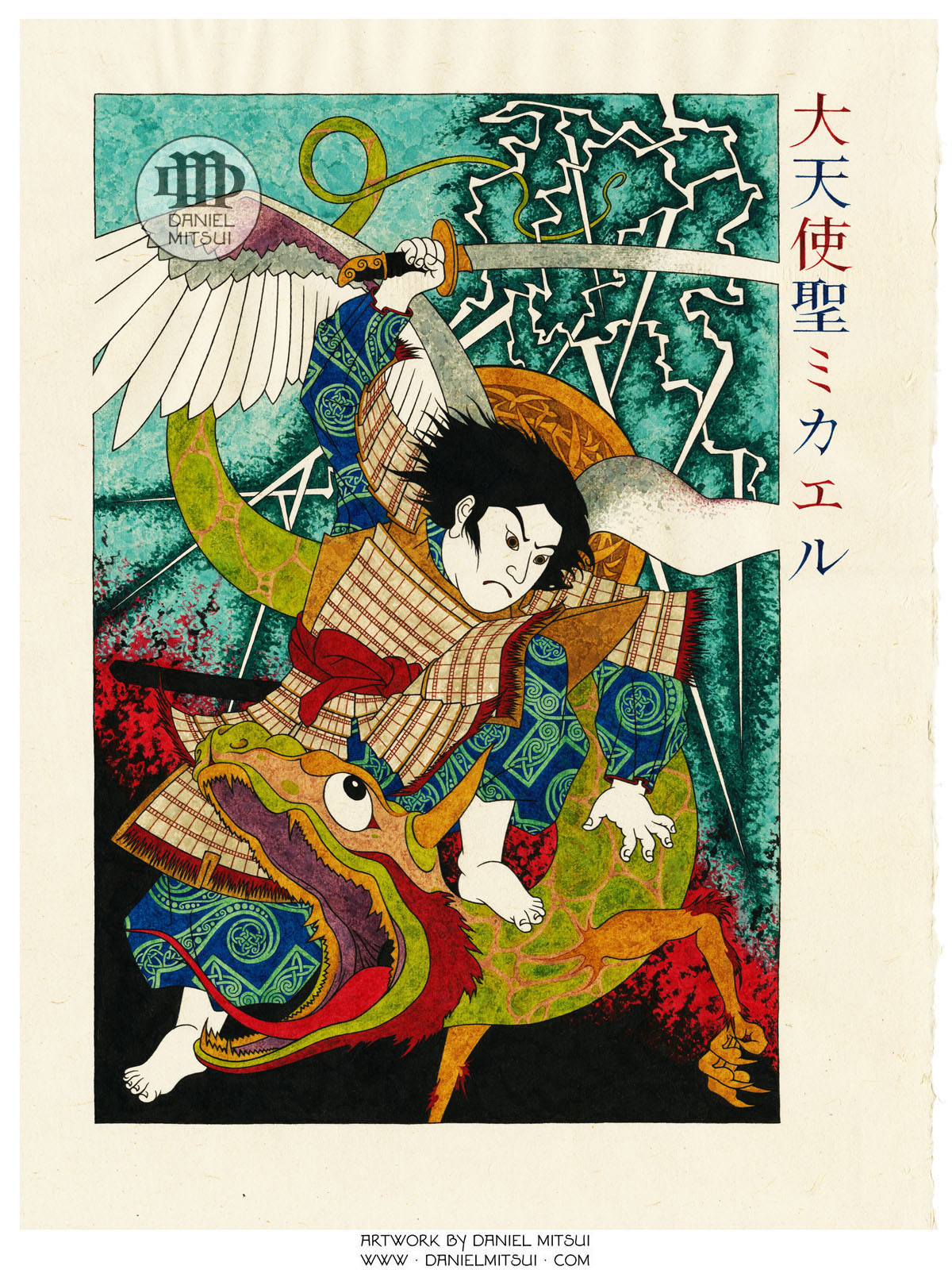
ASK FATHER: Was St. Michael Prayer after Mass suppressed by Vatican II?

St. Michael by Daniel Mitsui. Click for more.

From a reader…

QUAERITUR:

I recently heard a priest announce to his congregation that the St. Michael Prayer had been “suppressed” by Vatican II. [No.] People could still pray it privately, but it could not be recited in congregation after mass. Is this correct? This was at a Novus Ordo mass, not the Extraordinary Form.

Interesting.  I was just talking about this issue not long ago with a priest friend.

Vatican II did not suppress the St. Michael Prayer.

The Sacred Congregation of Rites, in the 1964 instruction on the implementation of  Sacrosanctum Concilium called Inter Oecumenicisaid:

j. The last gospel is omitted; the Leonine Prayers are suppressed.

Of course the St. Michael Prayer, by itself, is not the sum and total of the Leonine Prayers. It is only one of the Leonine Prayers.  So, that 1964 suppression is irrelevant to the recitation of the St. Michael Prayer by itself.

Also, I think we can say about Inter Oecumenici, who cares?  We have had several editions of the Roman Missal since then, including massive overhauls in 1965 and 1969 and an edition that had to be immediately withdrawn because it had heresy in the introduction. We now also have a desirable process of “mutual enrichment” underway with Summorum Pontificum.

Moreover, in 2013, the Bishops Conference of the Philippines authorized the St. Michael Prayer for use in all churches nationwide and recommended its use especially in troubled regions. HERE  I am not sure that they had to authorize it for it to be used after Mass.  It’s after Mass, after all.  However, they put their official stamp of approval on the practice.

In these USA, the great Bp. Thomas Paprocki of Springfield did the same for his diocese in 2011.  HERE

In a 1994 Regina Caeli Address, St. John Paul II – who should be named Doctor of the Church – recommended that people pray the St. Michael prayer for the Church.

This prayer is coming back far and wide.  I’ll bet readers here know parishes where it is a regular feature after Mass.

If people are moved to pray such a prayer after Mass, why should they be stopped?   Is there some other important official business that has to be conducted at that very moment?  Other than the fact that Father wants to leave?

It isn’t as if people are attempting glossalalia.  They aren’t babbling incoherently.

The St. Michael was written by Pope Leo XIII who had a frightening vision the battle between the Church and Satan. He wrote the prayer and ordered that it be added to the prayers Pius IX had commanded to be recited after Low Masses (Pius X added the three-fold invocation of the Sacred Heart), which continued until 1964.

One must ask: Does anyone think that Satan has stopped waging war on the Church?   We still need to say prayers precisely like this.  Is there a better time than when people are together in church?

It doesn’t take very long to say it.  People can have their moment of silent prayer and say their thanksgiving prayers directly after.

If once the Leonine Prayers, with the St. Michael Prayer, were associated with the conversion of Russia, couldn’t they be used nowfor the conversion of these USA?   How about for defense of our Christian brethren in the Middle East and Africa from the hellish attacks by Islamic terrorists?  Is that a good enough reason?  How about for an end to abortion?

Specific intentions come and go.  The prayers we recite can be reapplied for other intentions.  You could have a different intention each day of the week.

I think that people should pray not only the St. Michael Prayer, but the whole of the so-called Leonine Prayers, including the collect:

O God, our refuge and our strength, look down with mercy upon the people who cry to Thee; and by the intercession of the glorious and immaculate Virgin Mary, Mother of God, of Saint Joseph her spouse, of the blessed Apostles Peter and Paul, and of all the saints, in Thy mercy and goodness hear our prayers for the conversion of sinners, and for the liberty and exaltation of the Holy Mother the Church. Through the same Christ Our Lord. Amen.

What’s wrong with that prayer?  It even mentions mercy, which is quite fashionable these days.  It mentions mercy twice.

We need prayers like these now more than ever.

Bishops and pastors everywhere, and the Holy Father too, should reinstate the Leonine Prayers after Masses.

There are urgent and burning intentions to pray for and these prayers are just the thing.

So, circling back to the question.  No. The priest is wrong.  Vatican II did not suppress the St. Michael Prayer.   The SCR suppress the Leonine Prayers (which were mandatory after Low Masses).  However, it the pastor doesn’t want this, he must be respected.

It is, however, entirely reasonable to to keep working on him, perhaps with the St. Michael Prayer!

Posted in "How To..." - Practical Notes, ASK FATHER Question Box, Our Catholic Identity | Tagged
48 Comments

NLM: Useful study of creation of the Novus Ordo Lectionary

Have you followed the tennis match back and forth that has resulted since Card. Sarah’s suggestion in La Nef that the Extraordinary and the Ordinary Forms of Mass should have a coordinated Lectionary?

Some were cool about that suggestion and others were more enthusiastic.  Those who were enthusiastic tend to argue that more pericopes (selections) of Scripture for Mass, as in the Novus Ordo v. the TLM, is better, mostly because there’s more.  Those who are cool tend to argue that the introduction of more to the TLM isn’t automatically better and would, in fact, be disruptive in a harmful way.

You can follow this debate HERE.

Now I see that at NLM,  Matthew Hazell has started a 3 part series about the creation of the Novus Ordo Lectionary.  He has posted Part 1 and it is not to be missed.

Hazell holds that the integration of the Novus Ordo Lectionary into the older, traditional form of Mass would do irreparable damage to the traditional form.  He is qualified to have a position about this question, inter alia he assembled the useful and instructive:

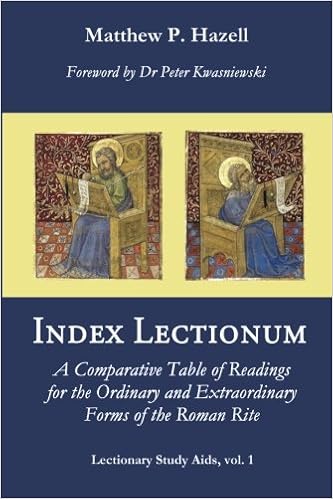
Index Lectionum: A Comparative Table of Readings for the Ordinary and Extraordinary Forms of the Roman Rite (Lectionary Study Aids) (Volume 1)

US HERE – UK HERE

Every priest, at least, should have this useful book.   It compares, side by side, the use of Scripture selections in the Novus Ordo and the TLM, going through the Bible in order.  So, if you want to find out on what days a specific verse of Scripture is used in the Novus Ordo and the TLM, this is your book.

Hazell says:

[T]he integration of one lectionary into the other form is simply impossiblewithout irreparable damage is, in my opinion, quite correct. So, if some sort of “convergence” of the two lectionaries is to happen, it cannot be on done on this basis. [1Furthermore, in this author’s opinion, it is an open question as to whether or not the specific, practical reforms mentioned in Sacrosanctum Concilium, such as the readings being intra praestitutum annorum spatium in SC 51 or the abolition of Prime in SC 89, should still be part of any potential future liturgical reform.] A comprehensive examination of their strengths and shortcomings is required—and, for the Ordinary Form lectionary in particular, this will involve a detailed critique of the rationale and work of Group 11 of the Consilium. [There’s the infamous Consilium!  I am reminded of my post on BUGNINICARE!]

However, another important part of this study is the following question: what sort of reform did the Council Fathers and the periti envisage? Looking at the liturgy constitution in itself, it would seem difficult to answer this question. On the one hand, “there must be no innovations unless the good of the Church genuinely and certainly requires them; and care must be taken that any new forms adopted should in some way grow organically from forms already existing” (SC 23); on the other hand, the stated desire for some sort of multi-year cycle of readings in SC 51 is an innovation without precedent in the liturgical tradition. [Incoherent, no?]

So, in this short series, I hope to provide some of the background material necessary for a deeper examination of this question—not just from the Second Vatican Council itself, but also from the preparatory work done before the Council.

“But Father! But Father!”, some libs sputter, “How dare you post about this?!?  It is clear to everyone who agrees with us that more Scripture is better, especially when all the bits we don’t like are edited out.  All that stuff about sin is such a downer… a pre-Conciliar downer!  You just want to disturb people with these texts from the Council and … and… facts.   Why?  Because YOU HATE VATICAN II!”

Is that so?  Let’s learn what the Council really said, learn with the Council Fathers really initiated, before we come to conclusions.

Posted in "But Father! But Father!", "How To..." - Practical Notes, Liturgy Science Theatre 3000 | Tagged , , , ,
24 Comments

Wisdom from Hugh of St. Victor

Hugh of St. Victor addressing listeners.  One of them seems to have had an "Ah ha!" moment.

Hugh of St. Victor addressing listeners. One of them seems to have had an “Ah ha!” moment.

I picked up this great quote on Sententiae AntiquaeMy emphases and comments:

Hugo of St. Victor, Didascalion

On the Study of Reading – Preface (Part I)

“There are many whom nature has left so destitute of intellect that they are unable to grasp even those things which are easiest to understand; of these people, there seem to be two types. There are certain people who, granting that they are not ignorant of their own dullness, eagerly strive for knowledge with whatever effort they can, and apply themselves to the task with unremitting zeal; though they achieve little from the realization of the work, they seem to deserve something for their efforts. But there are other people who understand that they will never be able to understand the highest things, so they neglect even the smallest ones, and resting secure in their own indolence, we find that the more they waste the light of truth in the most important things, the more they flee from learning the smallest things, which they are actually able to understand. For this reason, the Psalm has it, ‘They did not wish to understand how they could do well.’ Not knowing is, indeed, a far different thing from not wanting to know. Indeed, ignorance is a kind of weakness, but the detestation of knowledge is the sign of a depraved will.

There is, however, yet another group of people whom nature has so enriched that she has offered them a clear approach to the truth. For these people, even if the strength of their mind is not equal to the task, there is not the same virtue or will for cultivating the senses through exercise and natural instruction. For, there are many people who, wrapped up in the business and concerns of this age more than is really necessary, are entirely given to the vices and pleasures of the body, and they bury the treasure of God in the ground; they neither seek the fruit of wisdom, nor the use of good work – these people are on the whole rather detestable. Again, for some people, family poverty or their slender means diminishes the opportunity of learning. Yet, I think that these people can hardly be excused on this account, since we see so many people laboring under famine, thirst, and even want of clothes, who yet attain the fruit of knowledge. Indeed, it is one thing when you are not able (or, I should say, are not easily able) to learn, and it is an entirely different thing when you are able to learn but unwilling to do so. Just as it is more glorious to attain wisdom by virtue alone, when no other opportunities rush to assist you, so too it is much more shameful to have a vigorous intellect and to overflow with wealth while wasting away in idleness.”

For those of you who enjoy the Latin:

[770C] Multi sunt quos ipsa adeo natura ingenio destitutos reliquit ut ea etiam quae facilia sunt intellectu vix capere possint, et horum duo genera mihi esse videntur. [770D] nam sunt quidam, qui, licet suam hebetudinem non ignorent, eo tamen quo valent conamine ad scientiam anhelant, et indesinenter studio insistentes, quod minus habent effectu operis, obtinere merentur effectu voluntatis. ast alii quoniam summa se comprehendere nequaquam posse sentiunt, minima etiam negligunt, et quasi in suo torpore securi quiescentes eo amplius in maximis lumen veritatis perdunt, quo minima quae intelligere possent discere fugiunt. unde psalmista: Noluerunt, inquit, intelligere ut bene agerent. longe enim aliud est nescire atque aliud nolle scire. nescire siquidem infirmitatis est, scientiam vero detestari, pravae voluntatis. est aliud hominum genus quos admodum natura ingenio ditavit et facilem ad veritatem veniendi aditum praestitit, quibus, [771A] etsi impar sit valitudo ingenii, non eadem tamen omnibus virtus aut voluntas est per exercitia et doctrinam naturalem sensum excolendi. nam sunt plerique qui negotiis huius saeculi et curis super quam necesse sit impliciti aut vitiis et voluptatibus corporis dediti, talentum Dei terra obruunt, et ex eo nec fructum sapientiae, nec usuram boni operis quaerunt, qui profecto valde detestabiles sunt. rursus aliis rei familiaris inopia et tenuis census discendi facultatem minuit. quos tamen plene per hoc excusari minime posse credimus, cum plerosque fame siti nuditate laborantes ad scientiae fructum pertingere videamus. [771B] et tamen aliud est cum non possis, aut ut verius dicam, facile non possis discere, atque aliud posse et nolle scire. sicut enim gloriosius est, cum nullae suppetant facultates, sola virtute sapientiam apprehendere, sic profecto turpius est vigere ingenio, divitiis affluere, et torpere otio.

Posted in "How To..." - Practical Notes, Lighter fare | Tagged ,
4 Comments

ASK FATHER: Msgr. Mannion supports ordination of deaconettes. Fail.

Screen Shot 2017-07-28 at 14.53.57From a reader…

QUAERITUR:

One of our Diocesan (Salt Lake City) Priests [Msgr. M. Francis Mannion] wrote an op-ed for our local Diocese Newspaper entitled “Some Items That Caught My Attention Recently”. In this piece, (HERE) he talks about how the Eastern Rite has ordained numerous Deaconesses (Africa). He then goes on to opine how he agrees with women Deacons and see this move by our Eastern friends as a boon and boost to the cause for women Deacons in the Roman Rite.

First, is it true that women have been ordained in the Eastern Church Rite as Deaconesses?

If so, is there merit to it lending support to the same in our beloved Rite?

Let’s drill down in what the good Monsignor posted concerning deaconesses (aka deaconettes).

What did Msgr. Mannion publish?  He has several topics, but eventually gets down to the issue of deaconettes.  He wrote (with my numbers):

On Deaconesses: [1] The Catholic Church is always concerned never to do anything that would offend the theology and practice of the Orthodox Churches. [2] On the matter of the ordination of deaconesses, however, the Orthodox Churches might be ahead of us.
[3] Recently, the Patriarch of Alexandria appointed six deaconesses. [4] The Patriarch is no minor ecclesiastic; he is, in fact, the head of the entire Orthodox Church in Africa.
[5] The move follows years of discussion within the various branches of Orthodoxy on whether to reinstate the office of women deacons. [6] Closer to home, this comes at a time when the Greek Orthodox Church in the Americas is studying the matter.
As one who favors the institution of the diaconate for women in the Catholic Church, I think the decision of the Patriarch of Alexandria should give a boost to the current Vatican study about the diaconate for Catholic women.

There is not a single sentence in what Msgr. Mannion wrote that is correct.

Let’s break it down… in a moment

Some of you might be saying, “Who?”  Msgr. Mannion is pastor emeritus of St. Vincent de Paul parish in Salt Lake City. He was founding president of The Society for Catholic Liturgy in 1995 and the founding editor of the Society’s journal, Antiphon, which I really like. He founded the Mundelein Liturgical Institute in 2000.  So, he is is considered to have some chops.  However, he took a position against Benedict XVI and Summorum Pontificum.  HERE

That aside, let’s drill into Msgr. Mannion’s claims about deaconettes and Orthodoxy.

First sentence: “The Catholic Church is always concerned never to do anything that would offend the theology and practice of the Orthodox Churches.”

No, the Catholic Church isn’t concerned never to do anything that would offend, etc.  Is he kidding? True, the Catholic Church would prefer not to offend the theology and practice of the Orthodox Churches, but, no, the Catholic Church does not let that preference stop it from contradicting Orthodox Church theology and practice.

For example, the Catholic Church continues to elect Popes who claim universal jurisdiction (Lumen gentium 22; CCC 882: “For the Roman Pontiff, by reason of his office as Vicar of Christ, and as pastor of the entire Church has full, supreme, and universal power over the whole Church, a power which he can always exercise unhindered”, a claim that the Orthodox Churches reject out of hand.  Might I add that Pope Francis has not shown himself reluctant to exercise this power?

Other examples are the infallible proclamations of the dogmas of the Immaculate Conception and of the Assumption of the Blessed Virgin Mary, which the Orthodox Churches reject completely.

So, no. WRONG.  Let’s move on.

Second sentence: “On the matter of the ordination of deaconesses, however, the Orthodox Churches might be ahead of us.”

Apart from the assumption in this statement that ordination of deaconettees would represent some kind of theological progress, the statement errs by implying that all of the many Orthodox Churches ordain women to the diaconate. In fact, only 1 out of 14 does.

This is not a matter of what the Roman Catholic Church does versus what the Orthodox Churches do. But if the Roman Catholic Church were to ordain women to the diaconate, then the Catholic Church and the vast majority (and certainly the largest) of Orthodox Churches would be at odds!

WRONG.  Next.

Third sentence:

“Recently, the Patriarch of Alexandria appointed six deaconesses.”

Technically speaking, this statement can be read as true. But it is also somewhat incomplete and could be misleading.

Firstly, there are three Patriarchs of Alexandria, two “Orthodox” and one Catholic. Msgr. Mannion referred to the Greek Orthodox Patriarch of Alexandria and All Africa.  However, there is also a Coptic Orthodox Patriarch of Alexandria and a Coptic Catholic Patriarch of Alexandria, the latter of whom is in communion with the Pope of Rome.

The Greek Orthodox Patriarchate of Alexandria today numbers only 300,000 members, mostly in Egypt and East Africa, though its jurisdiction includes the entire African continent.  The Coptic Orthodox Church claims millions of followers.

Folks, there are American Catholic dioceses with more members than some Orthodox Churches, for example the Greek Orthodox Patriarchate of Alexandria, just to put matters in perspective. It doesn’t take an ecclesiologist to recognize that in Eastern Orthodoxy it is certainly easier for a Synod of a small autocephalous Church to arrive at a major decision that involves significant change than it would be, say, for the Greek Orthodox Church in Greece, or the Moscow Patriarchate of the Russian Orthodox Church, let alone for a Pan-Orthodox Council.  It’s a matter of scale.

The other troubling detail is Monsignor’s word “appointed”.

We are told by Mannion that the Patriarch “appointed” six deaconesses.  So, were these women “appointed” or were they “ordained”?  That’s unclear.  Some reports of the ceremony claim that the Patriarch “blessed” the women, a technical term which introduces a distinction that is NOT without a difference.

In antiquity there is a difference between the “ordination” of deaconettes and the “blessing” of deaconettes. The different understandings of the nature and intent of the ritual act and the specific functions it authorized remains today a matter of scholarly debate.

Nor does the use of the title “deaconess” add clarity.  It is not prima facie apparent whether a claim is being made that the women were sacramentally ordained to holy orders or, instead, instituted into a public ecclesial ministry that does not entail a sacrament, an ordination, or an order.

It is also not clear how the Greek Orthodox Church of Alexandria and All Africa understands the relation between these six “deaconesses”, on the one hand, and ordained male deacons within its Church.  Nor is it clear how the 13 other autocephalous Orthodox Churches understand the ecclesial status of these women. They are an anomaly within Orthodoxy. Most likely they could not exercise their ministry outside of their own autocephalous Orthodox Church.

So it is patently false to claim, as Msgr. Mannion does, that the Orthodox Churches recognize the ordination of women to the diaconate.

WRONG.  Next?

Fourth sentence:

“The Patriarch is no minor ecclesiastic; he is, in fact, the head of the entire Orthodox Church in Africa.”

This, again, is erroneous to the point of being risible.

First of all, there is no such thing as “the entire Orthodox Church in Africa”. The Coptic Orthodox Church in Africa claims to be Orthodox as much as the Greek Orthodox Patriarchate of Alexandria. The two Churches trace their divergence back to the sixth century schism that finalized the break between the Chalcedonian (Melkite or Greek) patriarchs or popes and the the Non-Chalcedonian (Coptic) patriarchs or popes. There are estimated to be between 10 and 14 million Coptic Orthodox Christians in Egypt alone, and hundreds of thousands elsewhere in Africa (though these are not called Copts because they are not Egyptian). And let’s be clear: the Coptic Orthodox Christians are NOT the subjects of the Greek Orthodox Patriarch of Alexandria, which, as I said before, has about 300,000 members total. Moreover, there are millions of Ethiopian Orthodox Christians currently living in Ethiopia. Hence, the Greek Orthodox Patriarch of Alexandria is in no way the head of the entire Orthodox Church in Africa; in fact, he is the leader of the smallest.

None of the others ordain women to the diaconate.

Ergo… WRONG.  Moving on.

Fifth and Sixth sentences:

“The move follows years of discussion within the various branches of Orthodoxy on whether to reinstate the office of women deacons. Closer to home, this comes at a time when the Greek Orthodox Church in the Americas is studying the matter.”

This statement is true.  But … it misleads by making it appear that the issue is a more important one for the Orthodox Churches than it really is.

Ordination of women deaconettes was nowhere near the agenda of the Pan-Orthodox Council held in June 2016 in Crete. Discussions between bishops and theologians in the Orthodox Church rarely have the kind of official significance that they can have in the Roman Catholic Church because of vast differences in ecclesiology and Church governance. Hence, the actions of individual bishops within any Orthodox Church has far less significance than an action of a bishop within the Roman Catholic Church, because of the relation of the Catholic bishop to the Pope (papal primacy).

Need I say… WRONG?

So much for Msgr. Mannion’s support of deaconettes in the Catholic Church based on this Orthodox aberration.

Finally, don’t be confused about “Eastern” Churches.  There is no attempt in any of the Eastern Catholic Churches to ordain women to the diaconate. Nor could there be, given the current state of the question.

I hope this helps.

Posted in ASK FATHER Question Box, Deaconettes, The Drill | Tagged , , ,
47 Comments

@MichaelSWinters nasty remark about converts. Wherein Fr. Z rants.

wile e coyote knife forkToday there is a “Defense of Converts” in First Things.  

There is a defense because there was an attack.

A couple days back, at the Fishwrap (aka National Sodomitic Reporter), the Wile E. Coyote of the catholic Left, Michael Sean Winters, attacked converts.

At Al Jazeera, Austen Ivereigh debates Matthew Schmitz from First Things. I am so tired of converts telling us that the pope is not Catholic.

What a snotty thing to say. Typical Fishwrap.  Liberals have a streak of moral superiority which leads them to all sorts of  humorless, condescending lapses.

Leaving aside whether or not any converts really are saying that Pope is or is not Catholic, why should converts not have the right to respect from cradle Catholics?

WINTERS: They can’t say anything because they’re converts.

Guess what.  I know a heck of a lot of cradle Catholics who couldn’t tell you what a sacrament is. And some of them would then object to its definition if you told them.  What’s so automatically great about being a cradle Catholic if the majority of them have only a vague notion of the tenets of the Faith, neglected as they have been for decades by their cradle Catholic non-observant, contracepting, parents, their cradle Catholic priests, their cradle Catholic bishops?  Let’s compare Mass attendance of converts and cradle Catholics.  Let’s compare rates of marrying in the Church and of divorce and remarriage.  Name your category.  How about the number of cradle Catholics who are going to “mega-Churches” compared to coverts?

Let’s see the piece at First Things with my usual:

IN DEFENSE OF CONVERTS
by Stephen Bullivant

Over at the National Catholic [sic] Reporter blog, Michael Sean Winters [aka Wile E.] is pointing readers to a recent Al-Jazeera clip discussing Pope Francis’s record as a reformer. The clip itself I’ve yet to watch; it’s Winters’s gloss on it that I wish to discuss: “I am so tired of converts telling us that the pope is not Catholic. ”

The convert in question is, I presume, First Things literary editor Matthew Schmitz. Of the two pundits featured in the clip, Schmitz is, I believe, the only convert. (The other is British Catholic commentator Austen Ivereigh. We had a very nice chat at a wedding once, but I didn’t think to ask.) Schmitz also regularly contributes to Europe’s finest Catholic magazine, The Catholic Herald—which, let’s face it, probably also implies that he’s an all-round good egg. What really interests me, though, is Winters’s slight against converts.

He is by no means alone in casting such aspersions. Massimo [“Beans”] Faggioli, a US-based theologian and Church historian, retweeted Winters’s remark and added, “I am so tired too.” Earlier this year, Faggioli had tweeted, somewhat gnomically: “One could teach an entire course on fact that in top US universities the course on Vatican II is taught by recent converts to Catholicism.” [It may be that, percentage-wise, more converts have read the V2 documents than have cradle Catholics.]

Nor is such sniffiness towards converts an exclusively American phenomenon. The day after Anglicanorum Coetibus was issued, providing personal ordinariates for Anglicans entering into communion with the Catholic Church, I recall a Jesuit friend remarking: “Yes, but they’re the wrong sort of Anglicans.” One wonders, of course, who the “right” ones would be. [I don’t.]

According to the “regulars” commenting on my own forays in blogging, chief among my own failings is my being a Johnny-come-lately “neo-Catholic.” (Though to be fair, I did once teach a course on Vatican II at a top UK university, after having been Catholic for only two years. So I guess it’s a fair cop.)

Maybe I’m being preciously oversensitive here. Lord knows, it wouldn’t be the first time. Nevertheless, I do find such condescension strange in an avowedly missionary religion. [RIGHT!  Make more Catholics, as Christ commanded.  Converts are therefore something to be grateful for, not to abuse.] A Church whose very raison d’être is to “go and make disciples of all nations” should, one might imagine, be a little gladder to have them. Not least since, as a group, converts tend to be more knowledgeable, more committed, more active, and more generous than cradle Catholics in general.

Don’t get me wrong, we “baby Catholics” give our older siblings plenty to criticize. [Perhaps impatience with heterodoxy is one of them.] What else would you expect in a faith proclaiming “there is no one righteous, not even one” (Romans 3.10)? But the sneering at converts, qua converts, is a bit much. I have a great many faults and failings as a Catholic (and indeed as a human being); but having become a Catholic, however poor a one I might be, is surely one of the few points in my favor.

Furthermore, at the risk, in my arriviste enthusiasm and naïveté, of sounding a little gauche . . . I seem to recall from my catechumenal days that Jesus himself had something to say on the matter.  [The perfect passage about the laborers coming at different times of the day.]

Stephen Bullivant is professor of theology and the sociology of religion at St Mary’s University, London, and directs the Benedict XVI Centre for Religion and Society.

Really sad, isn’t it.  It is pathetically sad.

“OMG aren’t converts stooopid?  They’re too stoooopid to have an opinion.”
“Yeah!  I know, right?  I’m sooo tired of them.”
“Yeah!  Me too! They’re soooo conservative.
“I said they were stoooopid already!”
“Yeah!”
“Yeah!”
*snicker”

Full disclosure: I am a convert to the Catholic Church.  As such, I made a choice, after a long period of study and liturgical frequency, to become a Catholic based on my conviction that the Catholic Church is the Church founded by Christ – who is GOD and man.  Since He founded it, there is no other place to be.  Furthermore, I accept Holy Mother Church’s doctrines because, as the Act of Faith concludes: “I believe these and all the truths which the Holy Catholic Church teaches, because Thou, O God, hast revealed them, Who canst neither deceive nor be deceived.”  I made these choices as an adult convert and I have not looked back.

I sense myself, as a convert, to have been the recipient of particular graces which have, along with a lot of decidedly anti-Pelagian elbow grease diluted with tears and sweat, brought me to where I am now, according to the will of the God who chose me, unworthy as I am, and who uses me, crooked, to write straight with my crooked lines.  God does not choose those who are worthy, as the TLM constantly reminds the priest.  He chooses those whom it pleaseth Him to choose.

On the other hand, …

My experience of being a convert – which is ongoing – is that time does make a difference, though perhaps not exactly in the sense of “time is greater than space” (whatever that means).  Certainly not in the sense that Wile E. and Beans would mean it.

Sticking with the “Beans” thing, in cooking, as in conversion, there is no substitute for “slow”.  Fast preparations can be spectacular, but slow preps satisfy in a different way.

In Italy, for example, you could put dry, hard beans into an empty wine bottle, give them some seasoning and oil and then put the bottle into the hot ashes and embers of the hearth before turning in to sleep, letting them slowly cook over night. They need time.  Spaghetti aglio, olio e pepperoncino comes swiftly from the fire and it is great.  True ragù alla bolognese takes hours to prepare properly.  They satisfy differently.

It takes time for the Catholic “thing” to get down into the marrow.  Speaking of marrow – not ossobuco – I am reminded of the scene in the Aubrey/Maturin novel by Patrick O’Brian‘s HMS Surprise.  (UK HERE) The ship’s surgeon, an eminent naturalist, Dr. Stephen Maturin was conducting an experiment on some rats.  He had been feeding them madder.  He intended eventually to dissect them to see if the red stuff had colored their bones and penetrated to the marrow.

Coverts often have an initial burning zeal which carries them rapidly apace.  However, as they cool down and begin to live the with cooler zeal, their experience of the Faith changes.  Converts need to learn to live with a different kind of zeal after that.  This is something that many cradle Catholics don’t experience, unless perhaps they are reverts or newly inspired.

Some converts take to it and settle in as if they’ve never been anything else.  Others, however, I’d guess the large majority, need years, maybe even decades.  That’s something a new convert – a zealous convert (nearly a tautology, I know) might have a hard time understanding until he’s been inside for a long time.

Frankly, all Catholics should foster the zeal of conversion.  If conversion is a constant feature of our Catholic identity, shouldn’t we be constantly zealous?  Zeal becomes tempered in time and travail but it shouldn’t rust and fail.

The experiences of cradle Catholics and of covert Catholics and of revert Catholics are not in competition.  They are complimentary… as the lives of the saints demonstrate.  These modes of living converge, merge, and un-ravel and re-ravel.

I said, above, that there are lots of Catholics who know hardly anything about the Faith.  At the same time, there are a lot of converts who don’t know about living the Faith for a long time… yet.

That said, the principle of non-contradiction is not, in itself, a Catholic truth.

Catholics at any stage, if they are honest and half-way intelligent, see the difference between clearly taught truths of the Faith and statements which run contrary to the same or undermine the truth.

Could it be that Wile E. and “Beans”  reacted from a scratched conscience?

Faithful Catholics who are converts are their constant reminder.


Posted in Green Inkers, Hard-Identity Catholicism, Liberals, New Evangelization, Our Catholic Identity, Wherein Fr. Z Rants | Tagged , , , ,
12 Comments

Did Pope Francis insult some young priests? Fr. Z opines and tells a story.

Francis scowl frown glareThis isn’t the sort of thing that should pull much of our attention or energy.  However, I have been asked about it in email by a surprising number of people, including priests.

It seems that the site Messa in latino picked up on an anecdote recounted by a French site Benoit etmoi.  Here’s my translation from the French, which seems to be the original of the anecdote.  I’m cutting out the first part, just to get at the core of the anecdote itself.   Mind you, we are dealing with something that happened recently, after this spring or early summers traditional round of diocesan ordinations to the priesthood.  However, we are also dealing with something that it second hand at best.

A group of young priests from the same diocese, who were just ordained, made a pilgrimage together to Rome. They were not traditionalists, but young priests of today, white shirt with discreet collar, [in some European countries you will see during the summer priests in a white clerical shirt with “tab” collar] classic, pious, normal, very happy with the gift of Christ they had just received. Naturally, they asked and obtained (the chance) to have dinner at Santa Marta and to be presented to the Pope, and also to concelebrate with him at Mass the next day.

They arrived at Santa Marta at the designated time, and went to the place indicated. A secretary pointed them out to the Pope who was approaching. The Pope: “Where are you from?” They, proudly: “Of the Diocese of X”.  And he, with a sour expression [avec la mine des mauvais jours]: “Ah, X, there are still many priests there. That means that there is a problem, a problem of discernment.” And he continues his journey.

The young priests, dismayed, looked at each other, conferred, and left without eating.  And the next day, they spared themselves the concelebration at Santa Marta.

Okay… what to do with this.  And, mind you, I’m doing this here because I’ve had a lot of requests.

It could be that these young men mistook the Pope’s expression.  Some people’s default face isn’t always cheerful looking.

It could be that these young men mistook the Pope’s words.  There could be a language difference.

However, since there were a few of them, they probably were not all mistaken in their interpretation and it drove them to leave and not come back.

Popes kid around with seminarians and priests.  John Paul II sure did.  Here is one of my own anecdotes with John Paul.  I’ve never told this one here before.

Since my seminary in Rome was named after JPII, we seminarians were often called to serve his Masses.  Hence, I had quite a few opportunities as a seminarian and as a deacon.  I was a deacon often enough that the Holy Father got to know me.  One day, as deacon, I brought the thurible into the small sacristy tucked away near the altar of the Pietà (they laid our our dalmatics, etc., on the altar beneath the Pietà – that wasn’t cool or anything…) for the Pope, as celebrant, to “charge”.  As I approached he said in Italian, “You again!”  As I held it up he said, “Which seminary are you from?”  Of course he knew.  He asked every time.  “The John Paul the Second International Seminary, Your Holiness.”  With clearly mock dismay, he almost bellowed, “Terribile! Terribile!”  Everyone was amused, including myself.  Then he became very grave.  Leaning in almost nose to nose, he repeatedly pounded me hard on the chest with his finger and said, punctuating every word, “Tu… deve essere serio.  You… have to be serious.”  “Serio” means “serious”, but also “focused, earnest”.

That experience was a little frightening, to be frank.  First, that was the POPE.  Also, that was Pope Wojtyla.  It is a bit cliché to speak of what it felt like when he came into a room, but I guarantee you he was like no one else I’ve seen.  Seeing him come in or meeting him briefly is one thing.  Having him pound you repeatedly on the chest nose to nose is another.

Clearly the saint was trying in an extremely personal moment to inspire a man to something more than mediocrity.  After all, my seminary had his name.  Ergo, we reflected him, in a way.  We had to live up to that.

Let’s just say that I have not forgotten that moment.

It could be that Pope Francis was trying to do something similar with these young priests, but missed the mark.

“Ah, X, there are still many priests there. That means that there is a problem, a problem of discernment.”

It could be a kind of joking, “Is this the best they can do in X?”

Hah! Hah! Hah!… or not.

One of the things that I have learned over the years is that priests – men in general, but priests and military especially – often show affection through hard ribbing.  And it can get a little sharp.

Another thing that this anecdote can teach us is that pebbles, when dropped from a great height, even when small can, do damage.  Fathers… bishops… be careful out there.

Yet another thing that this anecdote can teach us is that we mustn’t allow ourselves to melt like snowflakes when something rough comes along.

We priests especially have to have a thick hide.  I’m concerned that the young men who have grown up in the relative peace of the JPII and BXVI years of aspiration to priesthood and then then beginning seminary, are not – how to say this – acquainted with battle yet.  They don’t have the slightest idea what seminary was like a couple decades ago, or what the majority of lib pastors did to new priests – and can do – who are of faithful Catholic disposition.  Those days are returning, I’m afraid.  We have to buckle it on and get ready.

In any event, I am not entirely sure what happened between the Pope and those young priests.  It seems to have left them with a less than optimal impression.

If any of them every read this, my reaction to a second hand anecdote, I would just say:

  • Don’t let this get you down.
  • You have a lot of time ahead as priests.
  • Stick together.
  • Be serious.

The moderation queue is ON.

Posted in "How To..." - Practical Notes, Francis, Mail from priests, Priests and Priesthood, Seminarians and Seminaries, The Drill | Tagged , ,
22 Comments

A timely review, including the ULTIMATE priest gift.

UPDATE:

From a priest, just now:

Just a note to let you know that I bought a portable altar from St. Joseph’s Apprentice a few months back. I couldn’t be happier with it — it is absolutely beautiful! And Rick was a pleasure to work with — a personified blessing!

Thanks for mentioning his work and business from time to time.

And congratulations on your 25th! As I will likely not make a 50th (ordained at 38), I am taking a cue from you and will design a challenge coin for 2021, when I will be ordained 25 years. I already have a crest, so it shouldn’t be too hard, but I wouldn’t have thought of it were it not for you.

If priests out there have their own challenge coins, I’d be open to an exchange… same for military and LEOs.

If you need help with a coat of arms, you might consider the fellow who did mine… on the side bar.

___

One year ago, I posted three posts, each one has some review value.

First, this gets my special attention.  I have been readying for a trip for which I will bring the portable altar “St Joseph’s Apprentice” made for my 25th (… which reminds me that I have I to send him a challenge coin).  I need a Pelican case for it (… I really want him to build an altar directly into the case itself).   A couple days ago I got an email from a chaplain who going to Afghanistan.  He ordered one of these portable altars before he is to be deployed.

The ULTIMATE GIFT for a priest revisited: Portable altar from St. Joseph’s Apprentice

In the wake of the martyrdom of the French priest Fr. Hamel…

“Sandwiched between two forms of dhimmitude: Koran or Agenda-driven”

And we can always derive some inspiration from Card. Burke!

Card. Burke’s new book: Hope for the World – To Unite All Things in Christ

And, even though it is not Lent, you might choose to say the Stations of the Cross, or listen to them, as a good Friday devotion.  HERE

Pray today.

Examine your consciences.  Tomorrow is Saturday.  You might…

GO TO CONFESSION!

Posted in Linking Back |
1 Comment

To the defeatists

Some years back, 19 March 2013 to be exact, I published here a manifesto entitled “Dear Traditionalists” to which I return from time to time. I still adhere to it.

In that piece I featured a photo of aspiring Navy SEALs during BUD/S working and suffering together as teams to control heavy logs.

Now in my email and elsewhere I see defeatist grizzling about what might happen… boo hoo.  People are listening to the enemy and taking it to heart, which is what the enemy wants.  They want you to freak out and then watch your heads explode.

I say, we must never give up.

After all, when it comes to working and fighting and praying and sacrificing for what we need to get to heaven, the only easy day was yesterday.

Today I visited the US Navy Seal Museum in Ft. Pierce, FL.

It was a great visit.  All through the place there were reminders of the SEAL ethos.  At the core of that ethos is

I WILL NEVER QUIT.  I WILL NOT FAIL.

During the hell and sifting that is BUD/S, when men have had enough and decide to quit, they can “ring out”.  All they have to do is ring the bell that is out in an open visible place, and they are out.  No problem.   Ring = Quit.   Unless… you get through and graduate.  Then all the successful aspirants can ring the bell as they leave.

Which are YOU going to be?

Are you quitters?

Are you satisfied with failure?

When are YOU going to ring that bell?

¡Hagan lío!

From my manifesto…

Dear Traditionalists:

[…]

Those of you who want the older form of the liturgy, and all that comes with it, should…

1) Work with sweat and money to make it happen. If you thought you worked hard before?   Been at this a long time?  HAH!  Get to work!  “Oooo! It’s tooo haaard!”  BOO HOO!

2) Get involved with all the works of charity that your parishes or groups sponsor. Make a strong showing. Make your presence known. If Pope Francis wants a Church for the poor, then we respond, “OORAH!!” [aka HOOYAH] The “traditionalists” will be second-to-none in getting involved.  “Dear Father… you can count on the ‘Stable Group of TLM Petitioners-For-By-Now-Several-Months” to help with the collection of clothing for the poor!  Tell us what you need!”

3) Pray and fast and give alms. Think you have been doing that? HAH!  Think again.  If you love, you can do more.

4) Form up and get organized.  You can do this.  Find like minded people and get that request for the implementation of Summorum Pontificum together, how you will raise the money to help buy the stuff the parish will need and DO IT.  Make a plan. Find people. Execute!

5) Get your ego and your own petty little personal interpretations and preferences of how Father ought to wiggle his pinky at the third word out of the way.  It is team-work time.  If we don’t sacrifice individually, we will stay divided and we won’t achieve our objectives.

At the midway point of SEAL training, BUD/S, there is a “Hell Week” to see how much you want it to keep going.

Do you want this?  Do you?  Or, when you don’t get what you want handed to you, are you going to whine about it and then blame others?

The legislation is in place.  The young priests and seminarians are dying to get into this stuff.  Give them something to do.

And to those of you will you blurt out “But Father! But Father!… I don’t like your militaristic imagery”… in order to derail the entry, here’s a new image from your own back yard.

Pope Benedict gave you, boys and girls, over the course of his 8 years, a beautiful new bicycle!  He gave you a direction, some encouragement, a snow cone, and a running push.  Now, take off the training wheels and RIDE THE DAMN BIKE!

Fathers, lay people.

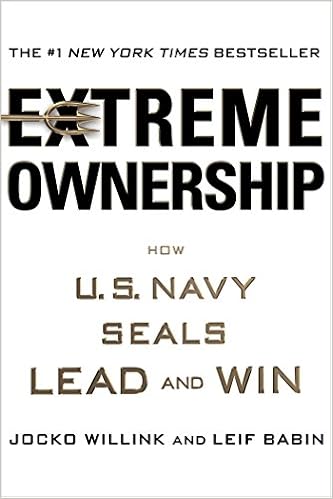
Read this.  I’ve been recommending it to priest friends for a while now:

US HERE – UK HERE

Let’s not sit back and relax.  SEALs want to win because they always want another mission.

We must be the same.  We want another mission.


SEALS Die First Then Quit

Posted in ¡Hagan lío!, "How To..." - Practical Notes, Be The Maquis, Hard-Identity Catholicism, Liturgy Science Theatre 3000, Our Catholic Identity, Si vis pacem para bellum!, SUMMORUM PONTIFICUM, The Coming Storm, The future and our choices | Tagged ,
31 Comments

Some good things are happening

I have had notes from reader about good things going on.

First, I call your attention to a good initiative in the Diocese of Burlington (Vermont).  A new group has been established called the St. Philip Neri Latin Mass Chaplaincy.   I am very much in favor of St. Philip Neri.   Included in the email was this:

There will be a special High Mass in the Extraordinary Form on
Tuesday, August 1, 2017, at 6pm, for the feast day of Saint Peter in Chains, followed by veneration of the relic of the chain of Saint Peter. The Diocese of Burlington is the only diocese outside of Rome to possess a link of the chain of Saint Peter. It was brought to Vermont by the first bishop of the diocese, Bishop Louis de Goesbriand (served 1853 to 1899), given to him by Blessed Pius IX. The chain link is stored in the diocesan archives and is only taken out for special occasions, so this is a rare opportunity to see and venerate the relic. The Mass will be celebrated in the basement chapel of the Co-Cathedral of Saint Joseph, 20 Allen Street, Burlington, Vt., by Father Brian O’Donnell, the chaplain of the Saint Philip Neri Latin Mass Chaplaincy, recently erected by Bishop Christopher J. Coyne. Father O’Donnell celebrates the Extraordinary Form six days a week there.

Facebook event: HERE

In other news, my friend Fr. Dave Ireland wrote with news about the Solemn Mass celebrated there by His Eminence Francis Card. Arinze (Card. Bp of my diocese!) at their parish in S. Euclid, OH.  PHOTOS

Screen Shot 2017-07-27 at 09.33.00

Moreover, in Philadelphia there has revitalized a community of Carmelite women, who have now a chaplain from the FSSP.

From the Office for Clergy in the Archdiocese of Philadelphia:

Dear Brother Priests and Deacons,

On behalf of Bishop Fitzgerald, who works closely with the many religious communities serving our local Church as part of his pastoral and administrative responsibilities, I write to share joyful news.

Today, six nuns from the Carmelite Monastery of Valpraiso, Nebraska, and four nuns from the Carmelite Monastery of Elysburg, Pennsylvania, transferred to the Carmelite Monastery of Saint Joseph and Saint Anne in Philadelphia. As a result of these transfers, there is now a community of twelve nuns in the Philadelphia Carmel, which was founded in 1902. Since that time it has been home to generations of Discalced Carmelite nuns who have dedicated themselves to a cloistered life of contemplation and prayer for the good of us all.

Tomorrow, Wednesday, July 26th, the Feast of Saints Joachim and Anne, all are invited to a Solemn High Mass at the Carmel and are welcome to greet the new sisters in the “speakroom” of the convent following the liturgy. Details are below.

Philadelphia Carmel
 1400 66th Avenue
 Philadelphia, PA 19126
 
 Concert of Sacred Music at 6:15 p.m.
 
 Solemn High Mass at 7:00 p.m.
 Celebrant: Rev. William Allen, FSSP, Chaplain for the Philadelphia Carmel
 Homilist: Most Reverend Michael J. Fitzgerald 

N.B. Clergy in attendance are requested to wear choir dress.

For additional information on the Philadelphia Carmel, please visit http://www.discalcedcarmelitesphila.org/. Kindly consider sharing this invitation broadly with others and join in praying for the Carmelite community in Philadelphia. Thank you.

Sincerely in Christ,

Rev. Msgr. Daniel J. Sullivan
Vicar for Clergy

In the balance this is great news.

Good things are happening.  The riches of the Church’s treasury have been opened up and put to good use again.  The ripple effects will be manifold.  It takes a while to build a beautiful thing, and so we must be patient and we must – above all – persevere in our efforts.

Never allow yourselves to be discouraged.  Go forward.  Get organized.  “Don’t let the bastards grind you down”, with rumors – probably designed to make the trad community go bananas, react sharply and without filters.  Then they can point and say, “See how awful they are? The old Mass needs to be suppressed!”   Think about it.

¡Hagan lío!


Posted in ¡Hagan lío!, Be The Maquis, Liturgy Science Theatre 3000, The Coming Storm, The future and our choices | Tagged , ,
15 Comments