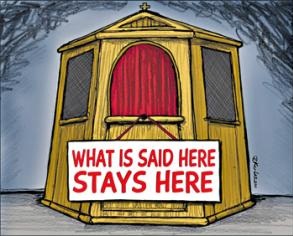
Double (anti-Christian) standard in Colorado

bake the cake beatingRemember my post about when homosexualists come to destroy your Christian business? HERE

Now there is this!

At Town Hall I saw that someone is fought back.

Colorado Double Standard: Bakers Should Not Be Forced to Make Anti-Gay Cakes

Bill Jack wants to make one thing perfectly clear: Bakers should not be forced to make a cake that would violate their conscience or freedom of expression.

Jack, of Castle Rock, Colo., is making national headlines over an experiment he conducted in the wake of attacks on Christian business owners who refuse to provide services for same-sex marriages.

Last year, the Colorado Civil Rights Commission ruled that the Masterpiece Cakeshop in Lakewood unlawfully discriminated against a gay couple who wanted a wedding cake. Jack Phillips, the owner of the cake shop, is a devout Christian, and his attorneys argued that to force him to participate in the gay wedding would violate his religious beliefs.

The Civil Rights Commission saw it differently.

So if Christian bakers who oppose gay marriage are compelled under law to violate their beliefs – what about bakers who support gay marriage? Would they be compelled to make an anti-gay marriage cake? [Who wants to make a bet?]

Jack, who is a devout Christian, asked three bakeries to produce two cakes – each shaped like an open Bible.

On one side of one cake he requested the words, “God hates sin – Psalm 45:7.” On the other side he wanted the words, “Homosexuality is a detestable sin – Leviticus 18:22.”

On the second cake he asked them to write another Bible verse: “While we were yet sinners Christ died for us – Romans 5:8” along with the words “God loves sinners.”

And finally, Jack wanted the bakers to create an image – two grooms holding hands, with a red “X” over them – the universal symbol for “not allowed.”

Now if you read the national news accounts of Jack’s experiment – you would’ve read that he wanted gay slurs written on the cakes. But that wasn’t true.

According to the commission’s own report, there’s no mention of Jack using any gay slurs – unless you consider Bible verses to be gay slurs.

Mark Silverstein, the legal director for Colorado’s chapter of the American Civil Liberties Union, accused Jack of wanting obscenities written on the cakes.  [Figures.  It’s the ACLU.]

“There’s no law that says that a cake-maker has to write obscenities in the cake just because the customer wants it,” he told the Associated Press.

Does the ACLU consider the Bible to be obscene?

As you probably guessed, the bakeries rejected Jack’s request for what some would call “anti-gay” cakes.

“If he wants to hate people, he can hate them not here in my bakery,” Azucar Bakery owner Marjorie Silva told 7NEWS. She called the writing and imagery “hateful and offensive.”

So Jack filed a discrimination complaint with the Colorado Civil Rights Commission – just as the gay couple did in the Masterpiece Cakeshop case.

Using the commission’s logic – if a Christian baker is forced to violate his beliefs, shouldn’t all bakers be forced to violate theirs, too?

Absolutely not, says the Colorado Civil Rights Commission.

It ruled that Azucar did not discriminate against Jack based on his creed. It argued that the bakery refused to make the cakes because of the “derogatory language and imagery,” The Denver Channel reported.

Jack told me it’s a double standard – pure and simple.

“I think it is hypocritical,” he said. “It’s unequal treatment before the law. The Colorado Anti-Discrimination Act is being used to coerce businesses to participate in events that violate their consciences.”

Jack said he decided to conduct his experiment to prove the Colorado law was “only being applied to Christian business people.”

[NB] “Christians need to understand that this is the state of Christianity in the United States,” he said. “We are now second-class citizens. Our free speech is being censored.”

[…]

Read the rest there.

This is coming to us, my friends.  It’s coming fast, too.

Posted in One Man & One Woman, Our Catholic Identity, Si vis pacem para bellum!, The Coming Storm, The future and our choices, The Last Acceptable Prejudice | Tagged , , , , , ,
31 Comments

Why is Religion News Service – RNS – so liberal?

It’s almost always the case that when I post anything about Religion News Service (RNS), it’s because what they publish is liberal editorializing rather than religious news.  David Gibson of RNS seems to go out of his way to make conservative Catholics look bad.  Remember what he did recently to Cardinal Burke?  Keep reading.

In a National Catholic Register/CNA piece today we read about funding to RNS from homosexual groups.

A Homosexual-Rights News Service? RNS Denies LGBT Money Influences Its Religion Coverage

WASHINGTON — The editor of Religion News Service has denied that a grant from a wealthy LGBT advocacy funder has biased its coverage of traditional religion, which includes a recent controversial story on Cardinal Raymond Burke.  [This explains quite a bit.]
The Arcus Foundation [arcus is Latin “bow”, as in “rainbow”] dispenses millions of dollars in grants every year to support LGBT activism. Its 2014 grants included $120,000 to the Religion Newswriters Foundation, the owner of the widely syndicated Religion News Service.  [I wonder what their $120K bought them?]
The Arcus Foundation’s grant listing said the one year of support was intended “to recruit and equip LGBT supportive leaders and advocates to counter rejection and antagonism within traditionally conservative Christian churches.”  [Back in the 80’s the LGBT crowd, when they protested, just wanted to be “left alone”.  Now they use mainstream media outlets to shove their advocacy in people’s faces.]
The foundation’s Sept. 23, 2014, announcement said the grant aimed at “fostering a culture of LGBT understanding through the media” by funding the production of feature stories and blog posts “about religion and LGBT peoples of color.” [And to do so by smearing the reputations of traditional Catholics such as Card. Burke and others.]
Kevin Eckstrom, RNS editor in chief, told CNA that receiving money from the advocacy group did not influence editorial choices.
“All editorial decisions about coverage of the LGBT community, or any other issue, are made independent of any foundation support, including Arcus,” he said, adding that RNS welcomes support “from any individual or foundation that supports our aim of informing and challenging our readers.” [Is that so?  Would they take money from a conservative donor?  QUAERITUR: Have any conservative donors wanted to give money to RNS?]

David Gibson Article

RNS coverage of some Catholic figures has drawn criticism.
On March 27, RNS distributed a story by David Gibson entitled: “Cardinal Raymond Burke: Gays, Remarried Catholics, Murderers Are All the Same.” [Which is simply a falsehood and intellectually dishonest.  That’s not what the Cardinal said.  On the other hand, Gibson’s RNS piece – reprinted by Fishwrap makes Card. Kasper out to be 5th apparition of Vishnu.  To read him, you’d think you were reading the 2nd nocturne.]

[…]

For its part, the Arcus Foundation’s self-described social-justice program aims to cultivate “positive religious leaders and advocates” and to develop “effective faith messages and messengers” that have an impact in target communities. The foundation’s grants also oppose “the abuse of religious freedoms” through religious exemptions[?] and aim to develop “religious and legal strategies to hold exemptions in check,” while challenging “religious opponents of LGBT people in the U.S. and internationally.” [Am I wrong or does that sound like Arcus wants to prevent people such as small business – or even large business – owners from saying “No” when approached by homosexualists for work, such as baking a “gay” cake?]
The foundation’s grant application page said it considers grant applications from organizations whose work “aligns with our values, strategic priorities and EEO requirement.” [Ergo, RNS aligns with the values Arcus describes.  And RNS took their money.]
Eckstrom said that the RNS grant proposal to the Arcus Foundation stressed the need to “increase and improve domestic and international coverage of how religion affects a diverse range of LGBT communities.”
“Our job is to offer readers a window into the personalities, theology and institutions that are shaping a momentous social and civic debate,” Eckstrom told CNA.
The $120,000 grant appears significant compared to the Religion Newswriters Foundation’s past revenue. Its tax forms show a total revenue of $216,000 in 2012 and $166,000 in 2011. Religion News LLC, the nonprofit corporation that operates RNS, had $1.8 million in revenue for Fiscal Year 2012-2013.

RNS Reporter Worked for Arcus

One Arcus-sponsored RNS feature story was by Jay Michaelson, a former vice president for social-justice programs at the Arcus Foundation. On March 31, RNS ran a different story by Michaelson about the controversy over Indiana’s religious-freedom bill.

[…]

Interesting.  Make up your own minds about this.

Posted in Biased Media Coverage, Green Inkers, One Man & One Woman, Religious Liberty, Sin That Cries To Heaven, The Coming Storm, The Drill, The future and our choices, The Last Acceptable Prejudice | Tagged , , ,
19 Comments

ASK FATHER: Non-seminarian Lectors and Acolytes

From a reader…

QUAERITUR:

Can laymen who are not in the seminary, upon request, receive the orders of lector and acolyte? My parish likes having me read, they say I am good at it, but I am not sure that I feel comfortable doing it unless I receive the minor orders.

First, keep in mind that the are no longer, in the Latin Church, minor orders, although the institutes set up under the Pontifical Commission “Ecclesia Dei” regularly have the men go through the rites for them.

According to the 1983 Code of Canon Law, now, there are two instituted ministries, lector and acolyte and the clerical state begins with ordination as a deacon, not with the tonsure.

I would just as soon see a revival of the minor orders.

That said, yes, it is possible for laymen (and men only) who are not seminarians to be instituted as lectors and acolytes.

In my opinion, it would be good for us to have more instituted lectors and acolytes in parishes.

Posted in "How To..." - Practical Notes, ASK FATHER Question Box, Liturgy Science Theatre 3000, Our Catholic Identity | Tagged , , ,
55 Comments

Five Cardinals Book™ in a new language!

5 cardinals polishI received the great news that the Five Cardinals Book™ is now out in POLISH.  HERE

It isn’t just out in Polish, it received an endorsement from the Polish Bishops Conference.

That is quite a step.  That means that the Polish Bishops Conference is taking a strong stand, in advance of the October Synod on the Family, against the “German” or “Kasperite” position.

Why would they do such a thing?  Because, not only do they want to defend faithfully the Church’s doctrine, they also probably sense that the efforts of the Kasperites, so far, have aimed at undermining the Magisterium of St. Pope John Paul II.

The book was originally released, simultaneously, in English, Italian, French, Spanish and German.  In English it is entitled, Remaining in the Truth of Christ: Marriage and Communion in the Catholic Church.   It contains five essays of cardinals, of the archbishop secretary of the Vatican congregation for the Oriental Churches, and of three scholars on the ideas supported by Walter Card. Kasper in the opening discourse of the consistory in February 2014.

These are the nine chapters of the book:

  • The Argument in Brief- Robert Dodaro, O.S.A.
  • Dominical Teaching on Divorce and Remarriage: The Biblical Data – Paul Mankowski, S.J.
  • Divorce and Remarriage in the Early Church: Some Historical and Cultural Reflections – John M. Rist
  • Separation, Divorce, Dissolution of the Bond, and Remarriage: Theological and Practical Approaches of the Orthodox Churches – Archbishop Cyril Vasil’, S.J.
  • Unity and Indissolubility of Marriage: From the Middle Ages to the Council of Trent – Walter Cardinal Brandmüller
  • Testimony to the Power of Grace: On the Indissolubility of Marriage and the Debate concerning the Civilly Remarried and the Sacraments – Gerhard Ludwig Cardinal Müller
  • Sacramental Ontology and the Indissolubility of Marriage – Carlo Cardinal Caffarra
  • The Divorced and Civilly Remarried and the Sacraments of the Eucharist and Penance  – Velasio Cardinal De Paolis, C.S.
  • The Canonical Nullity of the Marriage Process as the Search for the Truth – Raymond Leo Cardinal Burke

Buy in USA HERE
Buy in UK HERE

Don’t have a Kindle yet.  What on earth are you waiting for?  USA HERE (for one type, a Paperwhite, you can surf to others) and UK HERE

Posted in One Man & One Woman, Our Catholic Identity | Tagged , ,
10 Comments

ASK FATHER: Sequence ‘Victimae paschali laudes’ on Divine Mercy Sunday

From a priest…

QUAERITUR:

Our Canadian Ordo says we may use the sequence Victimae paschale laudes on this coming Second Sunday of Easter, which sequence I dearly love.

Such was not the case in the Missal of St Pius V, including St John XXIII’s 1962 version.

Such was not the case?, in Blessed Paul VI’s missal.

Was there a change in the 2002 Missale romanum? Can you or one of your readers see what the Roman Ordo says?

I would be grateful if you would be so kind as to help me, and I thank you for your wonderful apostolic blog. May God reward you, especially for helping souls to get to confession.

I don’t happen to have a copy of the Roman Ordo for the Novus Ordo.

Can anyone help?

Posted in "How To..." - Practical Notes, ASK FATHER Question Box, Liturgy Science Theatre 3000, Mail from priests | Tagged , ,
11 Comments

ASK FATHER: Can the pre-1955 Holy Week Rites be used?

From a reader…

QUAERITUR:

Is there a specific rule banning the use of the pre-55 holy week rites, and really the pre-55 missal as a whole? Or may a priest use it if he desires?

Some say, and with good reason, that the pre-1955 rites were richer and reflected a more organic development of liturgy than the edited and revised version imposed by Pius XII.  Others say that the imposition of the 1955 rites, which were plugged into the 1962 typical edition of the Missale Romanum, were a trial run for what the Consilium would do to the Roman Rite in the name of the Council.

The legislation that guides the use of the Extraordinary Form says that the 1962 typical edition of the Missale Romanum can be used.  1962, not pre-1955.

I have heard of claims of permissions to use the pre-1955 Holy Week rite, but I don’t believe that any permissions have ever been given by legitimate authority.

I think that, unless the the people who want to use the pre-1955 rites can show documentation that they have permission from legitimate authority, they should just use them and stop claiming that they have permission.  Just let it roll! Man up! Be willing to take the consequences if there are any.  Pecca fortiter and all that.


Posted in "How To..." - Practical Notes, ASK FATHER Question Box, Liturgy Science Theatre 3000, SUMMORUM PONTIFICUM | Tagged , , ,
50 Comments

Terrorists in Kenya tormented students before killing them

From The Christian Post I learned another horrible thing about terrorists of the Religion of Peace.

As the death toll from the Garissa University College massacre climbed to 148 Friday, eyewitness accounts from survivors revealed a harrowing picture of how students were made to wait in line to be shot in the head. Some were even forced to make calls to their parents to tell them they were about to die.

The family of 20-year-old Garissa student, Elizabeth Namarome Musinai, told Yahoo News that she called her father during the attack at dawn on Thursday and said: “There are gunshots everywhere! Tell Mum to pray for me — I don’t know if I will survive.”

[…]

Survivor Maureen Manyego, 21, told Standard Media that she heard the terrorists taunting students as she hid in a wardrobe.

“We are not bad guys, we are just here to make your Easter holiday better,” Mayengo recalls a gunman saying.

[…]

Sts. Nunilo and Alodia, pray for us.

St. Lawrence of Brindisi, pray for us.

St. Pius V, pray for us.

Posted in Si vis pacem para bellum!, The Coming Storm, The future and our choices, The Religion of Peace | Tagged , , ,
12 Comments

ASK FATHER: Haven’t been to confession for 40 years

seal of confessionFrom a reader…

QUAERITUR:

I’m 49 and haven’t been to confession since I was about 9 I say prayers every day and pop into church now and then to light candles the thing is I’ve not been to well recently and would like to make a confession but not to sure what to say could you please help

How about,

“Bless me Father, for I have sinned. It’s been about 40 years since my last confession. I think I’m going to need some help from you for this confession.”

It would probably be best to make an appointment for this confession, since it might take some time. Father can help you out through the mechanics of the sacrament.

It would be helpful to make a good examination of conscience beforehand. Sit down, grab a pen and paper (just remember to keep anything your write secret, and burn it or destroy it some other way once you’ve made your confession). Organize your sins in, say, chronological order if you want, taking each decade and thinking back on what you’ve done.

While everyone should confess all mortal sins in kind and number, when we’re talking of a confession covering 40 years, it’s okay if the numbers aren’t exact (e.g. “I missed Mass a lot when I was in my twenties, Father. There were a couple years there when I only went on Easter and Christmas, and at my best during that time, I probably only went ten-twelve times a year.”  Still, try and be as thorough as possible.

Don’t gloss over sins.

Don’t try and make yourself look better so that the priest won’t think ill of you (the priest will already think you are a hero for coming to the sacrament).

Don’t meander and tell stories. That time you got rollicking drunk with your buddy and sole the enemy school’s goat mascot might be a hilarious anecdote, but this is not the time. Stick to the sins: getting intoxicated, stealing, leading someone else into sin.

In the end, just do it.

Just go.

At the end, say, “for these and all of the sins of my past which I cannot now remember, I am sorry and I beg the Lord’s forgiveness.”

And mean it.

You’ll be okay.

Posted in "How To..." - Practical Notes, ASK FATHER Question Box, GO TO CONFESSION, Liturgy Science Theatre 3000 |
19 Comments

ASK FATHER: Blessed Sacrament in unattended church

From a reader…

QUAERITUR:

I attend a local parish in a rural area that is a small mission church from a larger one 20 miles away. There is no daily Mass here, but the Blessed Sacrament is reserved in the Tabernacle during the week.
Yesterday I inquired if anyone ever came to visit Our Lord during the week (since the church is locked at all times except for one Mass on Sundays). I was told that no one comes at all. They offered to make me a key so that I could come with my children to pray the Rosary. I am wondering if it is okay to leave the Blessed Sacrament alone like that all week? It is only a few minutes from my house, I can go every day… but I’m so bothered by the fact that no one seemed to be concerned about this?

By law, the Blessed Sacrament may be reserved in a church or oratory which is not a parish church only under certain conditions. Mass must be celebrated there at least twice a month, an individual person must be entrusted with the care of the Blessed Sacrament, and the church must be open for at least some time each day for the faithful to pray (canons 934 and 937).

The hosts reserved therein are to be renewed frequently (at least twice a month), a lamp must be kept burning before the Blessed Sacrament, and an annual period of solemn adoration must be held (canons 938-942).

It sounds like the situation of your chapel is, shall we say, less than optimal.

The idea of passing out keys to the faithful to have access to prayer before the Blessed Sacrament is one of those things that can frequently get out of hand at a parish, to the point that even having a lock on the door is superfluous. Yet, someone should ensure that the mission church is open at least for some hours of the day so that the faithful can access it.

Also, this church is probably under the care of some pastor of a parish. One of the first and most important duties a pastor has is care of the Blessed Sacrament. Somebody is responsible.

Posted in "How To..." - Practical Notes, ASK FATHER Question Box, Hard-Identity Catholicism, Liturgy Science Theatre 3000, Priests and Priesthood | Tagged , , ,
6 Comments

ASK FATHER: Miscarried babies and heaven

From a reader…

QUAERITUR:

Does a miscarriage baby go to heaven if not baptized?

One of God’s greatest attributes is His mercy. We read in the letter of James 2:13, that mercy triumphs over judgment. Mercy is a reflection of His being Almighty.

We know that, in justice, none of us deserves heaven. The sin of Adam and Eve broke our friendship with God. In justice, we stand condemned.

But God, in His mercy, sent His Son to suffer and die for us and to pay the price of Adam’s sin. Jesus Christ unlocked the gate to heaven and showed us the way to ascend to the destiny that our first parents lost. He told us that the way we follow Him, the narrow path set out for our salvation, includes baptism. In baptism we become members of His divine family and of His Body. Through baptism, we once again gain the opportunity to go to heaven.

We know with firm faith in what He has revealed that we know that baptism is necessary for salvation.

The Catechism of the Catholic Church 1257 states:

“The Lord himself affirms that baptism is necessary for salvation [John 3:5]. . . . Baptism is necessary for salvation for those to whom the Gospel has been proclaimed and who have had the possibility of asking for this sacrament (Mark 16:16)”.

This is a normative necessity. It is not absolute in the sense that exceptions are not possible. We can’t place limitations on what God can do.

And so we also know, with the same firm faith in revelation, that God is also merciful.

What happens to those who are not baptized, including infants and all those who never even had a chance to be baptized? We don’t know. This fact can cause us some discomfort, especially in families grieving the loss of an unbaptized child. This discomfort also felt by converts who were the first in their family to hear and accept the love of Christ into their hearts. They think back to deceased loved ones who never had a chance to hear the Gospel.

But we know that God is merciful.

Can he bring to heaven someone who is unbaptized? YES, no question about that. On the Cross, Christ said to the unbaptized Good Thief, “this day you will be with Me in paradise.” Can he bring to heaven our beloved children – born and unborn – who are not baptized? Yes.

How does He do this without baptism? We don’t know, but He most certainly can.

He tells us clearly that baptism is essential. We should have no doubt of that fact. This knowledge should make us strive to bring all those we love to the grace of the baptismal font.

God is merciful.

Again, the Catechism of the Catholic Church states (cf. CCC 1260–1, 1283):

“Those who die for the faith, those who are catechumens, and all those who, without knowing of the Church but acting under the inspiration of grace, seek God sincerely and strive to fulfill his will, are saved even if they have not been baptized.”

The salvation of unbaptized infants is also possible, in God’s great mercy.

Even as we thank God for all the gifts He gives us, give Him also your cares and questions, always gratefully and with tear-tinged joy asking for mercy and graces for all your loved ones. We look forward to our joyous reunion in the life to come.

Posted in ASK FATHER Question Box, Hard-Identity Catholicism, Liturgy Science Theatre 3000, Our Catholic Identity, SESSIUNCULA | Tagged , , ,
29 Comments