QUAERITUR: Size of the amice.

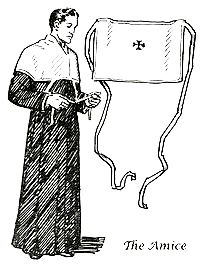
amiceFrom a deacon about to be ordained priest:

What would you consider an ideal size for an amice? If it helps, I use
46 L suits.

PS I will be ordained to the priesthood this upcoming Saturday 28th.
Would you remember me in your prayers?

Congratulations for your next step.

Ideal size for an amice?

To paraphrase an old saying, an amice, like a paragraph, is a bit like a lady’s skirt.  It has to be long enough to cover the essentials and short enough to be interesting.

Seriously, the purpose of the amice is two-fold.

First, there is the spiritual significance.  The vesting prayers traditionally recited by sacred ministers when vesting view the amice as a helmet, guarding against attacks of the Enemy.  Therefore, it is draped over the head before it is lowered around the next.

Second, there is the practical purpose.  Our “street clothes” (cassock included) are to be covered from view when we wear sacred vestments.  This means that even our Roman, or “military” clerical collars must be hidden from view when we vest for Mass.  The amice covers our street clothes.  The amice also serves to keep our vestments clean.

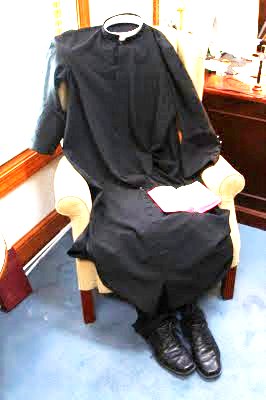
I think the size of the amice in the graphic I included at the top is just about right for the size of the rectangular cloth.  If the amice, when placed around the next, goes down to about your solar plexus, even if there is a gap in the neck of your alb, your cassock should be covered.

NB: be sure that the attached ribbons are long enough to pass, crossed, over your chest, around your back, to the front again and still have enough of the ribbons left to be able to tie them in a box knot.

So, the amice has to be large enough, the ribbons long enough, to cover the essentials.

Posted in "How To..." - Practical Notes, ASK FATHER Question Box, Mail from priests | Tagged ,
15 Comments

Weigel about the huge ( ____ ) in the John Jay Report.

Did you see the analysis by George Weigel about the John Jay Study?  I am just getting to it.   Weigel makes good points for National Review Online.

My emphases and comments.

May 19, 2011 4:00 A.M.
Priests, Abuse, and the Meltdown of a Culture
The lessons of an important new study.

The American narrative of the Catholic Church’s struggles with the clerical sexual abuse of the young has been dominated by several tropes firmly set in journalistic concrete: [1] that this was and is a “pedophilia” crisis; [2] that the sexual abuse of the young is an ongoing danger in the Church; [3] that the Catholic Church was and remains a uniquely dangerous environment for young people; [4] that a high percentage of priests were abusers; [5] that abusive behavior is more likely from celibates, such that a change in the Church’s discipline of priestly celibacy would be important in protecting the young; [5] that the Church’s bishops were, as a rule, willfully negligent in handling reports of abuse; [6] that the Church really hasn’t learned any lessons from the revelations that began in the Long Lent of 2002.

But [But…] according to an independent, $1.8 million [1.8 million?] study conducted by New York’s John Jay College of Criminal Justice, commissioned by the United States Conference of Catholic Bishops and released on May 18, every one of these tropes is false.

One: Most clerical abusers were not pedophiles, that is, men with a chronic and strong sexual attraction to pre-pubescent children. Most of those abused (51 percent) were aged eleven to fourteen and 27 percent of victims were fifteen to seventeen; [78% over 11] 16 percent were eight to ten and 6 percent were younger than seven. Males between eleven and fourteen account for more than 40 percent of all victims. Clerical ephebophilia (a sexual attraction to adolescents, often boys) was clearly a serious problem. But to label this a “pedophilia crisis” is ignorant, sloppy, or malicious. [We sometimes use terms in loose ways, as a kind of shorthand.  However, when the context is more technical, it is necessary to use more accurate terms.  I think some people, by avoiding some of the technical terms, are actually applying misdirection.]

Two: The “crisis” of clerical sexual abuse in the United States was time-specific. The incidence of abuse spiked in the late 1960s and began to recede dramatically in the mid-1980s. In 2010, seven credible cases of abuse were reported in a church that numbers over 65 million adherents. [I recall also that most incidents of abuse emerged on an average of 13 years after ordination.  Perhaps a reader can help verify that, but that is what I remember reading.  That has some implications for the seminary training those priests received.]

Three: Abusers were a tiny minority of Catholic priests. Some 4 percent of Catholic priests in active ministry in the United States were accused of abuse between the 1950s and 2002. There is not a shred of evidence indicating that priests abuse young people at rates higher than do people in the rest of society. On the contrary: Most sexual abuse takes place within families. The John Jay study concludes that, in 2001, whereas five young people in 100,000 may have been abused by a priest, the average rate of abuse throughout the United States was 134 for every 100,000 young people. The sexual abuse of the young is a widespread and horrific societal problem; it is by no means uniquely, or principally, a Catholic problem, or a specifically priestly problem.  [This suggests that a married clergy is not going to solve the problem… a problem that that is rapidly vanishing in the Catholic Church among priests in active ministry.]

Four: The bishops’ response to the burgeoning abuse crisis between the late 1960s and the early 1980s was not singularly woodenheaded or callous. In fact, according to the John Jay study, the bishops were as clueless as the rest of society about the magnitude of the abuse problem and, again like the rest of society, tended to focus on the perpetrators of abuse rather than the victims. This, in turn, led to an overdependence on psychiatry and psychology in dealing with clerical perpetrators, in the false confidence that they could be “cured” and returned to active ministry — a pattern that again mirrored broader societal trends. In many pre-1985 cases, the principal request of victims’ families was that the priest-abuser be given help and counseling. [I had never heard that, but given the respect for priests and for bishops, in the past, indeed for the Church as an institution, that makes sense.] Yes, the bishops should have been more alert than the rest of an increasingly coarsened society to the damage done to victims by sexual abuse; but as the John Jay report states, “like the general public, the leaders of the Church did not recognize the extent or harm of victimization.” And this, in turn, was “one factor that likely led to the continued perpetration of offenses.”  [Well… they sure know now, don’t they?]

Five: As for today, the John Jay study affirms that the Catholic Church may well be the safest environment for young people in American society. It is certainly a safer environment than the public schools. Moreover, no other American institution has undertaken the extensive self-study that the Church has, in order to root out the problem of the sexual abuse of the young. It will be interesting to see when editorials in the New York Times and the Boston Globe demand in-depth studies of the sexual abuse of the young by members of the teachers’ unions, and zero-tolerance policies for teacher/abusers.  [Yahhhh… riiiight… that’s going to happen.]

So: If the standard media analytic tropes on clergy sexual abuse in the Catholic Church in the United States have been proven false by a vigorous empirical study conducted by a neutral research institute, [then… quaeritur…] what, in fact, did happen? Why did the incidence of abuse spike dramatically from the late 1960s through the mid-1980s? [Yes, this is a good question, isn’t it.  I was in a US seminary in the late 80’s, and I have a few ideas.  But the study commissioned by the USCCB for 1.8 million has a different view.] The John Jay researchers propose that the crumbling of sexual mores in the turbulence of the sexual revolution played a significant role. As the report puts it, “The rise in abuse cases in the 1960s and 1970s was influenced by social factors in American society generally. [Remember, 1.8 million to be told that men are influenced by age they live it.  Okay…. and?] The increase in abusive behavior is consistent with the rise in other types of ‘deviant’ behavior, such as drug use and crime, as well as changes in social behavior, such as an increase in pre-marital sexual behavior and divorce.”  [uh huh… anything else?  When I look at questions concerning the Church I usually try to view them both ad extra (how the Church influences the world at large or, conversely, the world impacts the Church) or ad intra (matters within the Church herself).  This is why I say that in order to renew our Catholic identity we must revitalize our worship.]

This is not the entire picture, of course. [Mr. Weigel may lose some friends now… ] A Church that was not in doctrinal and moral confusion from the late 1960s until the 1978 election of John Paul II might have been better armored against the worst impacts of the sexual free-for-all unleashed in the mid-1960s. [In fact, yes.  Doctrinal confusion … nay rather, chaos, dominated.  Though let’s be honest about this issue of the period of doctrinal confusion.  It’s still going on.] A Church that had not internalized unhealthy patterns of clericalism might have run seminary programs that would have more readily weeded out the unfit. [There’s that clericalism thing again.  But I sense that Weigel may have a different view of this than, say The Tablet.  Am I wrong?] A Church that placed a high value on evangelical zeal in its leadership might have produced bishops less inclined to follow the lead of the ambient culture in imagining that grave sexual abusers could be “fixed.” All that can, and must, be said.  [A higher value on “evangelical zeal in its leadership”?  What does that mean?  Adherence to Gospel values in their decision making rather than adherence to prevailing mores?]

But if the Times, the Globe, and others [including not a few lawyers] who have been chewing this story like an old bone for almost a decade are genuinely interested in helping prevent the crime and horror of the sexual abuse of the young, [then] a good, long, hard look will be taken at the sexual libertinism that has been the default cultural position on the American left for two generations. [Sooo… is the John Jay Study also right on this point?  Sure it is.  But the point here is the hypocrisy of Hell’s Bible (NYT) and its minions.] Catholic “progressives” who continue to insist that the disciplinary and doctrinal meltdown of the post–Vatican II years had nothing to do with the abuse crisis might also rethink their default understanding of that period. [Think about this.  Among the things “progressives” push for is a changing in the Church’s teachings concerning morals.] The ecclesiastical chaos of that decade and a half was certainly a factor in the abuse crisis, although that meltdown is not a one-size-fits-all explanation for the crisis and the way it was handled. [You mean… it’s complicated?]

[Here we go…] The John Jay study is less than illuminating on one point, and that is the relationship of all this to homosexuality. The report frankly states that “the majority of victims (81 percent) were male, in contrast to the distribution by victim gender in the United States [where] national incidence studies have consistently shown that in general girls are three times more likely to be abused than boys.” [Three times?  These large numbers might means something.] But then the report states that “the clinical data do not support the hypothesis that priests with a homosexual identity or those who committed same-sex sexual behavior with adults are significantly more likely to sexually abuse children than those with a heterosexual orientation or behavior.”  [If the “clinical data” do not support this, perhaps “common sense” might.]

The disconnect, to the lay mind, seems obvious: Eighty-one percent [81%] of the victims of sexual abuse by priests are adolescent males, and yet this has nothing to do with homosexuality? [Does that seem right to you?] Perhaps it doesn’t from the clinicians’ point of view (especially clinicians ideologically committed to the notion that there is nothing necessarily destructive about same-sex behaviors). [Perhaps they have a skewed hermeneutic?] But surely the attempt by some theologians to justify what is objectively immoral behavior had something to do with the disciplinary meltdown that the report notes from the late 1960s through the early 1980s; it might be remembered that it was precisely in this period that the Catholic Theological Society of America issued a study, Human Sexuality, that was in clear dissent from the Church’s settled teaching on fornication, self-abuse, and homosexual acts, and even found a relatively kind word to say about bestiality. [Did you get that?  The Catholic Theological Society of America.] And is there no connection to be found between the spike in abuse cases between the mid-1960s and the early 1980s, with its victimization of adolescent males, and the parallel spike in homoerotic culture in U.S. Catholic seminaries and religious orders in that same period? Given the prevailing shibboleths in the American academy (including the Catholic academy), it may be that no clinically or statistically demonstrable linkage will be found, but it strains credulity to suggest that there wasn’t a cultural connection here, one that bears serious reflection.

Empirical evidence is unlikely to shift the attention of the mainstream media or the plaintiffs’ bar from the Catholic Church in this matter of the sexual abuse of the young. [Don’t both Hell’s Bible with the facts.] It would be a good thing for the entire society, however, if the defenders of the sexual revolution would take seriously the question of the relationship between their commitment to lifestyle libertinism and this plague. If the John Jay study on the “causes ands context” of clerical-sexual-abuse problems in the Catholic Church prompts a broader public reflection on the fact that the sexual revolution has not been, and is not, cost-free, and that its victims are often the vulnerable young, then the Church will have done all of American society a signal service in commissioning this study that looks into its own heart of darkness.

— George Weigel is Distinguished Senior Fellow of Washington’s Ethics and Public Policy Center, where he holds the William E. Simon Chair in Catholic Studies. His book on the abuse crisis, The Courage To Be Catholic, is available from Basic Books.

A great piece and good analysis.

Posted in Biased Media Coverage, Clerical Sexual Abuse, New Evangelization, One Man & One Woman, Our Catholic Identity, The Drill, The future and our choices | Tagged ,
57 Comments

Bishops of England and Wales on the New Corrected Translation

The bishops of England and Wales are asking that a Pastoral Letter about the new, corrected translation of the Roman Missal be read on Sunday 29 May.  I noticed it on the blog Caritas in Veritate of my friend Fr. John Boyle

Let’s have a look with my emphases and comments.

CATHOLIC BISHOPS’ CONFERENCE OF ENGLAND AND WALES
NATIONAL PASTORAL LETTER
ON THE
NEW TRANSLATION OF THE ROMAN MISSAL
TO BE READ ON THE SIXTH SUNDAY OF EASTER, 29 MAY 2011

Dear Brothers and Sisters in Christ

At the beginning of Advent this year, when we gather for Mass, we shall be using the new translation of the Roman Missal. This will be the case not only in England and Wales but throughout the English?speaking world. The Mass will remain the same but parts of it will sound different.

Since the Second Vatican Council, the Church has produced three Latin editions of the Roman Missal. [Three issues of the Novus Ordo.  There were transitional editions.] At present, we are still using a [“]translation[“] of the first edition which was published in 1973. Although the texts we have been using have served us well, [!?!?] since that time there has been much development in the liturgical texts themselves and in our understanding of them. [In other words, more people started looking at the Latin again.]

We all become very accustomed to the words we hear; and the fact that we have been praying in a certain way for so long has imprinted that style of language and words upon our consciousness and made them very special. [read: familiar] The changes in the language now to be introduced, however, do not represent change for change’s sake, but are being made in order to ensure greater fidelity to the liturgical tradition of the Church. In the earlier translation not all the meaning of the original Latin text was fully expressed and a number of the terms that were used to convey the teachings of the faith were lost. This was readily acknowledged by the bishops of the Church, even back in the 1970s, and has become an increasing cause of concern since then.

There is an old adage in Latin which states that the way we pray forms the way we believe. So words and language are important for the teaching and the handing?on of the faith.

[Quaeritur:] So what does this new translation offer us? [1] First of all, there is a fuller expression of the content of the original texts. Then, [2] there is a closer connection with the Sacred Scriptures which inspire so much of our liturgy. Also, [3] there is a recovery of a vocabulary that enriches our understanding of the mystery we celebrate. [Good to see “mystery” here.] All of this requires a unique style of language and expression, one that takes us out of ourselves and draws us into the sacred, the transcendent and the divine. [Do I hear an “Amen!”?]

The publication of the new translation of the Missal is a special moment of grace [not to mention relief] in the English speaking world. It offers an opportunity to deepen our knowledge and understanding of the mystery we celebrate each week. This itself will help us to move towards that fuller and more conscious and active participation in the liturgy to which the Church invites us. It will help us also to examine the dignity with which we celebrate the ‘source and summit’ of the Church’s life.

At the end of his visit last year, Pope Benedict asked us to use this moment for genuine renewal. He said: “I encourage you now to seize the opportunity that the new translation offers for in depth catechesis on the Eucharist, and renewed devotion in the manner of its celebration. ‘The more lively the Eucharistic faith of the people of God, the deeper is its sharing in ecclesial life in steadfast commitment to the mission entrusted by Christ to his disciples’” (Sacramentum Caritatis, 6). [When we talk about “Eucharist” we are talking not only about the Blessed Sacrament and the graces it imparts to those who are disposed to receive them, but also the liturgical celebration of the sacrament, which is Holy Mass, the the graces conveyed to those disposed to receive them.]

In order to achieve this, the bishops have produced resources for all our parishes and, as from September, we will gradually begin to use the new liturgical texts at Mass [starting already in September] and hear why certain changes have been made. Each diocese is already preparing its priests and deacons, catechists and liturgical ministers. Programmes for schools are being developed and new musical settings are being composed. From September until Advent everyone will have the opportunity to study the new texts and familiarise themselves with the prayers and chants. In addition, this period of preparation will allow us to pray these new texts.

The Liturgy of the Eucharist is a gift, something we receive from God through the Church. Saint Paul spoke of it as coming from the Lord Jesus himself. Writing to the Church in Corinth, he said, “for I received from the Lord what I in turn also handed on to you” (1 Corinthians 11:23). So Eucharist is not something of our making but a gift received. [This is very good news for Catholics in England and Wales who are attached to the Extraordinary Form.] Like Saint Paul, therefore, let us receive it with reverence and care, knowing that we are being faithful to what the Lord himself passed on to the Apostles, which has been handed on since, in faithfulness, by their successors to every generation of the Church.  [I just can’t help it.  A biological generation has certainly shifted, become longer over the centuries.  A biblical generation is roughly 40 years.  So there has been about a generation since the Novus Ordo went into effect, Advent 1969.  Right?  Even though the older form of Mass, the Usus Antiquior goes back before 1570, there have been roughly 11 generations since the 1570 Missale Romanum was issued.  Universae Ecclesiae reminds us that the older form is a treasure and it is for all Catholics.  Sorry… I couldn’t help it.  Let’s go on.]

Let us welcome the new translation of the Roman Missal as a sign of our unity and a powerful instrument of God’s grace in our lives.

Published by the Catholic Bishops of England and Wales
Thursday 12 May 2011
To be read on the Sixth Sunday of Easter, 29 May 2011

When the waters rise, all boats rise with the waters.

A good letter.

Posted in Brick by Brick, New Evangelization, Our Catholic Identity, SUMMORUM PONTIFICUM, The Drill, The future and our choices, Universae Ecclesiae | Tagged , , , ,
15 Comments

Visit by visit for Fr. Finigan: 3,000,000 mark!

WDTPRS KUDOS to my good friend His Hermeneuticalness, Fr. Tim Finigan, whose great blog has hit the 3 million visitors mark.

Visit by visit.

Now, dear readers, please go spike his stats by clicking…

HERE!

It’ll take a just few seconds.

Posted in Fr. Z KUDOS | Tagged
Comments Off on Visit by visit for Fr. Finigan: 3,000,000 mark!

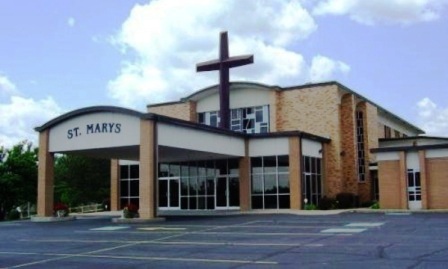
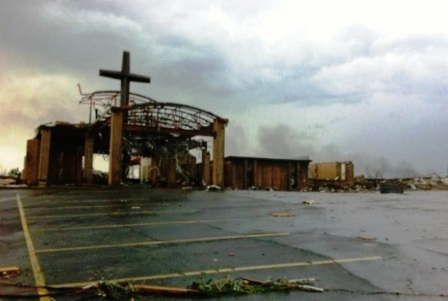
Catholic Church destroyed by Tornado in Joplin, MO

Last night a large tornado tore into Joplin, MO.

A church was destroyed. The priest is, I hear, safe.

Catholic Church destroyed by Tornado in Joplin, MO

Catholic Church destroyed by Tornado in Joplin, MO

You might say a prayer for the priest and parishioners as they rebuild.

Sometimes a set back like this can result in a blessing.

Brick by brick.

Posted in Brick by Brick | Tagged ,
25 Comments

CRABBY ALERT!

I am not saying Post hoc ergo propter hoc, but… you decide.

“DANGER! CRABBY LIBERALS! DANGER!”

There was a photo on Astronomy Pic of the Day:

Crab Nebula

Just before the release of Universae Ecclesiae there was a flare from the

Crab Nebula.

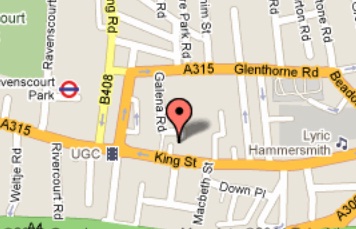
This flare may have struck earth with possibly full force in London.  It’s apparent.  My calculations, based on what I learned from dealing with a dangerous and portentous Vortex in Kansas City, suggest an upsurge of sheer crabbiness right here:

The Tablet

Additional research confirms that this is the location of the offices of The Tablet, yes… The Bitter Pill, the crabbiest catholic publication in England.

“But Father! But Father!”, some of you will be asking aloud.  “Can you tell they became crabbier … crabbier than usual?  They are pretty crabby all the time!  You are too clerical.”

You’ve got me there.  That is the weakness in my argument and I admit it.  Call it a clerical error.

Make liberals even crabbier!  Send money to Fr. Z because of what they write.


Posted in Just Too Cool, Lighter fare, Look! Up in the sky! | Tagged , ,
6 Comments

QUAERITUR: TLM readings in the vernacular and UE 26

QUAERITUR: TLM readings in the vernacular and UE 26From a reader:

I know this is not the same as an official dubium to the PCED, but your view would be appreciated. (I ask these questions because of the situations at two different parishes in the Archdiocese of ___ which offer the Mass according to the 1962 Missal, but which have some unusual practices with regard to the readings.)

In view of Universae Ecclesiae n. 26 regarding use of the vernacular in the Mass readings, what do you think about:

1. Would it be permissible in a sung Mass (or a low Mass) for the priest to read the epistle in Latin quietly while a layman acting as commentator read it out loud in the vernacular simultaneously? [Reid’s reworking of Fortescue/O’Connell suggested that they could be sung in the vernacular in the Missa Cantata.  UE seems to say no. “26. As foreseen by article 6 of the Motu Proprio Summorum Pontificum, the readings of the Holy Mass of the Missal of 1962 can be proclaimed either solely in the Latin language, or in Latin followed by the vernacular or, in Low Masses, solely in the vernacular.” So, in the Solemn Mass and the Sung Mass, no singing of readings in the vernacular. Simultaneous in the Low Mass?  I don’t think so. UE 26 says “veracula sequente versione”.]
2. Would it be permissible in a solemn Mass for the subdeacon and deacon to sing the epistle and gospel directly in the vernacular, without proclaiming them in Latin? [No.]
3. If the gospel is sung in Latin, then afterwards repeated in the vernacular, should there be the same full liturgical ceremonies (i.e.
“The Lord be with you,” the small signs of the cross, the acolytes holding candles at the lectern where the vernacular reading is done, etc.)? [No.]
Thank you for your consideration of these matters. Your well-informed views could really help to clear up questions about how things should be done.

It is human nature, isn’t it.  As soon as people see that there is some leeway or an option, they want to know how far it can be pushed.  Options make sense for special circumstances.  Otherwise, let’s admit it … they are dangerous for liturgical worship.  They rapidly become the norm and drive the real norm into desuetude.   Tricky business, in a time when we have had liturgical nutty pretty much everywhere for decades.

I am not picking on you, dear questioner.  But I can hear some people now.  The gears in their heads are making that whhhhrrrrrr  POP whhhhrrrrr sound as they think stuff up.

“But Father! But Father! Our priest is able to do hand stands.  Would be it possible for the priest, at a Low Mass, to read right side up when in Latin and upside down in the vernacular?  Would it? And how about when he sings?  Also, if at the end of Mass you are not supposed the close the book until the final prayer is completed, should the priest – if he can stand on his hands but just for a little while – stay on his hands even though he wobbles or can he get right side up again before the conclusion is complete?”

I think the best solution is just to do everything in Latin, right side up, and read the readings in English from the ambo …. or not, and get on with it.

Keep it simple.  Sure some variations are permitted, and for good reason.  But while we are in an important time of revival of this treasure, is it wise to tinker?

The Holy Father said that there would be some “mutual enrichment” along the way.  Fine.  Maybe there will be.

But maybe for now we ought to just use the Extraordinary Form as is for a good long time before exploring all sorts of options.  Yes, I think it was the intent of the Council Fathers to have the readings in the vernacular and the rest of the Mass still in Latin. At this point, however, our liturgical worship is pretty screwed up.  We need some time to get used to our Extraordinary Form again.  Fewer variations might be the better way to go.  And Latin is the language of worship in the Latin Church.

I can foresee a situation in which a priest is from some other country than that of the place were he is going to say the TLM, and he doesn’t know the local tongue well enough to read the readings in the vernacular in anything like language.  Then there would be some commentator.  Say I, for example, went to Hong Kong and said Mass for the Chinese congregation whose English may be pretty dodgy.  I don’t have Cantonese at all or Mandarin anywhere near well enough to read or preach.  Have the commentator if it is really necessary to have the readings in the vernacular.   A little common sense helps solve some of these problems.

Also, in many places people have hand missals or sheets they can read.  Is it really necessary to have the readings in the vernacular all the time? It seems to me that by now the cat is out of the bag when it comes to knowing that the Extraordinary Form is in Latin.

Options only sparingly.

Posted in "But Father! But Father!", "How To..." - Practical Notes, ASK FATHER Question Box, Liturgy Science Theatre 3000, SUMMORUM PONTIFICUM, Universae Ecclesiae | Tagged , , , ,
26 Comments

RAPTURE UPDATE: WDPTRS POLL

Just checking with you all.  I am still here, it seems.

Pick your best answer and, if you picked “Yes”, please indicate in the combox the names of the meds you ought to be taking right now but, in fact, are not.

Concerned the predicted Rapture.

View Results

Loading ...

Via Caritate non ficta.

raptured

Posted in Lighter fare, POLLS |
41 Comments

QUAERITUR: Altar girls dressed as clerics. What to say?

From a reader:

What would be a proper response to a priest who not only allows his female altar servers to wear the black cassock and white surplice, but also tells the parishioners that it is perfectly acceptable to do so?
It doesn’t seem right and I am uncomfortable telling my children that it is o.k when they have questioned it. This priest also feels that Exposition in front of the Blessed Sacrament is of no additional benefit, would not allow a display of Vatican approved Eucharistic Miracles because it encouraged the “superstitious”, and wants nothing to do with our Perpetual Eucharistic Adoration Chapel. Thank you for your help…..

What would be a proper response?

Wow. Ummmm….

How about:

I would prefer there there not be altar girls at all.  But if you are going to do this anyway, the least you could do is not dress them as if they were clerics, which they can never be.  Cassock and surplice are the choir dress of clerics.  Male servers at least have the potential to be clerics, whereas females never do.  Vesting females as if they were clerics sends the wrong signals.

Another response:

I am not going to give you any more of my money until you stop this.

Another response:

It has been nice knowing you.  Perhaps we shall meet again some day. I am moving to Lincoln, Nebraska.

One of the points made at the time of the (very bad) interpretation of CIC 1983 can.230 §2 was that the situation should be explained so that confusion could be avoided.  Avoiding confusion was, at the time and now, important.  Furthermore, the letter from the CDW said, that “the obligation to support groups of altar boys will always remain, not least of all due to the well known assistance that such programs have provided since time immemorial in encouraging future priestly vocations .”

Given the age of many servers, I don’t see how dressing the girls in the same manner as the boys does anything to encourage boys to serve.  There ought to be a distinction.

That said, if the pastor opens up to changing the vesture of the girls, then be prepared to cough up money to help it happen.  Church stuff isn’t free.

Posted in "How To..." - Practical Notes, ASK FATHER Question Box, Liturgy Science Theatre 3000, Our Catholic Identity | Tagged , , , ,
33 Comments

Where you are!

Here is a snapshot from the last few minutes of where some of you are (rough estimations).

The stats change so fast I can just give a few.

Colorado Springs, Color…
Brighton, East Sussex
Helsinki, Southern Finl…
Rome, Lazio
Indiana, Pennsylvania
Albuquerque, New Mexico
Detroit, Michigan
New York
O Fallon, Missouri
Saint Paul, Minnesota
Tarrytown, New York
Arlington, Texas
Stoke-on-Trent
Toronto, Ontario
Bethpage, New York
Burlingame, California
Mountain View, California
Naperville, Illinois
Akron, Ohio
Lewisville, Texas
Pullman, Washington
Newington, Connecticut
West Palm Beach, Florida
Mansfield, Pennsylvania
Chicago, Illinois
Waynesville, North Caro…
Braintree, Massachusetts
Hicksville, New York
Norfolk, Virginia
Syosset, New York
Raleigh, North Carolina
Leuven, Vlaams-Brabant
Edmonton, Alberta
Letterkenny, Donegal
Middlesbrough
Wallingford, Pennsylvania
Grand Junction, Colorado
Los Angeles, California
Dublin
New Baltimore, Michigan
Bolingbrook, Illinois
Philadelphia, Pennsylva…
Astoria, New York
Saint Louis, Missouri
Zagreb, Grad Zagreb
Washington, District of…
San Bernardino, Califor…
San Diego, California
Pearl City, Hawaii
Manchester
Waco, Texas
Sacramento, California
Rome, Lazio
Philadelphia, Pennsylva…
Rogers, Minnesota
Cincinnati, Ohio
Holiday, Florida
Collegeville, Minnesota
Indianola, Pennsylvania
Cedar Rapids, Iowa
Dover, Delaware
Winnipeg, Manitoba
Lubbock, Texas
Washington, District of…
Stockton, California
Eggenstein-Leopoldshafe…
Leavenworth, Kansas
Auburn University, Alab…
Reading, Pennsylvania
Basildon, Essex
Columbus, Ohio
Baltimore, Maryland
Chicago, Illinois
Great Falls, Montana
Pottsville, Pennsylvania
Warsaw, Indiana
Las Vegas, Nevada
Perryville, Missouri
Horsham, Pennsylvania
New York
Austin, Texas
Lexington, Kentucky
Chicoutimi, Quebec
Albuquerque, New Mexico
Rochester, New York
Horsham, West Sussex
Raleigh, North Carolina
Sevilla, Andalucia
Cary, Illinois
Anaheim, California
Bedford, Bedfordshire
Cleveland, Ohio
Nashville, Tennessee
Jackson Heights, New York
Berkeley, California
College Station, Texas
Sunbury, Greater London
Salt Lake City, Utah

Posted in Just Too Cool |
16 Comments