A few quick and crazy notes for readers

The new blog software is more exacting about selecting comments for the moderation queue.  Don’t freak out if your comments sometimes wind up in moderation.  Then again, something I flag people for moderation.

There is crazy finch traffic at the feeders today.  You can watch in insanity on the Z-CamThey come and go, but when they come, rather swarm, it is amazing.  BTW… Ustream imposes really stupid and annoying commercials over which I have no control.  They charge huge fees to have a feed without their commercials.

Z-Cam and RADIO SABINA

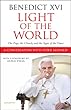
Thanks to TLC for my copy of the Holy Father’s book interview.  Also, thanks to MW for the book of homilies for the Extraordinary Form.  Some of my friends wrote a few of them.  Also, DL sent a book on Shakespeare and also, as did MK, the amusing novel Hadrian VII which I haven’t read for years.  These were on my amazon wish list.

Posted in LIVE STREAMING, The Feeder Feed |
Comments Off on A few quick and crazy notes for readers

QUAERITUR: using really old Holy Water

From a reader:

Retrieving some books from storage this afternoon, I came across a bottle of holy water that I filled at the shrine of Our Lady of Walsingham a *long* time ago — more than 20 years ago.  The bottle is tightly sealed, and there’s no obvious growth in the water.  That is to say, I don’t see any readily apparent reason why it shouldn’t still be used.

Are there are any rules, guidelines, or traditions about how long holy water may (or should) be kept?

I don’t think there are any guidelines beyond common sense.

That said, some people have added Holy Water in the preparation of foods.  I wouldn’t do that with old Holy Water.  Frankly, I wouldn’t do that with any Holy Water that I hadn’t just blessed.  As a matter of fact I have never added Holy Water in food preparation.  I am sure there is something witty to be said about this, but I can’t get my brain into that gear at the moment.

It might be of interest to note that in the traditional form of blessing Holy Water, with the older Rituale Romanum, exorcised and blessed salt is added to the water.  The salt can act as a preservative, reducing the possibility that algae might grow in the water.

Posted in ASK FATHER Question Box | Tagged
16 Comments

Do your sins bug you?

Been to confession lately?

Preachers often reach for analogies to help people understand spiritual realities.

Here is a good one, picked up from Ironic Catholic.

If you are squeamish, read this anyway whether it is fiction or not.

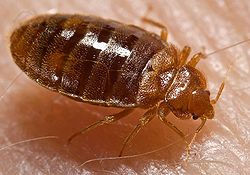
New York, NY: [There has been a resurgence of Cimex lectularius in the Big Apple.] Fr. Amos Hardy didn’t realize he was about to have the most successful advent reconciliation service on record.

But this past Sunday afternoon, St. Albert the Great Church had 100% participation in the prayer service, with everyone stampeding to the individual confessional lines. The secret? Bedbugs.

“The first Sunday of advent, I typically take the occasion to remind people that we are called to repentance during advent, a chance allow God to purify us, ready us for the coming of the Son of God. Spiritual warfare is a reality in our fallen world, and I thought this year the best way to describe that was through comparing evil spirits to bedbugs. It seemed to have struck a nerve,” explained Fr. Hardy.

Dcn. Thomas Wetterman had more dramatic words for the effect the homily had on the congregation. “When Father mentioned that satanic spirits roamed through our lives just like bedbugs, there was this collective shudder in the whole Church. Then kids began screaming, and half the adults began compulsively scratching,” he said. “The communion line twitched like a hoard of people with poison ivy doing the conga.” [Before or after they went to confession?]

bedbugsFr. Hardy extended the metaphor in ways described as “horrifying” by long time parishioners Leonard and Sandy Bianci. Sandy reported, “First he said that once we’ve fallen, we crawl into bed with Satan every night. Then we get bit and bit and bit, and carry the evil spirits around town. You think you can rely on your own hot water washing machine to take care of the bugs, but NO! They find a way back. The only one who can protect you from the Satanic bedbugs is Jesus, the Great Exterminator, in the sacrament of penance. Then you can sleep in clean sheets of peace. Or something like that.” [I have thought of the Lord in terms of Liberator, but never Exterminator.]

However unusual the theology, it apparently brought people in the door. The afternoon’s scheduled advent prayer and reconciliation opportunity, which usually has 30% participation, had 100% of the parish present. More, in fact, since parishioners invited in fallen away Catholics from the street. Afterward, Fr. Hardy was in conversation with 40 unnerved people who were not Catholic but wanted the protection of penance immediately.

When asked what inspired him to use this analogy, Fr. Hardy smiled. “Oh, it was easy. People are actually worried about bedbugs.”

OORAH!

People don’t think about how the Enemy can give a purchase, a lever, on your life once you are not in the state of grace.

Of course the Sacrament of Penance both forgives your post-baptismal sins, but also strengthens you against sinning.

Been to confession lately?

Posted in "How To..." - Practical Notes, Just Too Cool, New Evangelization | Tagged , ,
16 Comments

QUAERITUR: Hanukkah

From a reader:

Is it okay for us to observe Hanukkah in anyway?

It think it depends on what you mean by “observe”. We can sure watch with respect what Jews do at this time of year. After all, the Jewish festivals are our heritage as well. They have significance for Christians because they concern the history of our salvation.

I don’t see anything wrong with making use of some Jewish customs, especially so as to impress on children the fact that Christianity and Judaism are deeply interconnected. But there must always be the clear instruction that the New Covenant in Christ fulfills and surpasses the Old Covenant and all its observances just as the real thing surpasses its images or shadows.

Whatever you might do, do with respect and without substituting their customs for our own beautiful practices.

Also, I fully endorse taking advantage of some of the traditional foods which the Jews prepare at this time!  Have at.

For those of you who might not know much about Hanukkah, the Festival of Lights, let’s have a review.

This year, Hanukkah starts today, 1 December. Sometimes it is written with a “Ch”.  There will be variant spellings depending on who is doing the writing.  That first letter in the Hebrew word חנוכה involves a glottal fricative, which can be hard for English speakers.

Hanukkah commemorates the reclaiming of the Second Temple in Jerusalem after the Maccabean Revolt during the 2nd c. B.C.   The Temple had been violated by the invaders of the Seleucid Empire.  When the Jews under the Maccabees rededicated the Temple, they found just enough olive oil to light the Temple’s flame for only one day.  It burned for eight days, the length of time needed to prepare new oil for the Temple’s flame.  The events are in Maccabees 1 and 2.

On the first night of Hanukkah, when the first light is kindled, this is the prayer which is recited or sung:

1. Blessed are You, Lord our God, King of the universe, who has sanctified us with His commandments, and commanded us to kindle the Hanukkah light.
2. Blessed are You, Lord our God, King of the universe, who performed miracles for our forefathers in those days, at this time.
3. Blessed are You, Lord our God, King of the universe, who has granted us life, sustained us, and enabled us to reach this occasion.

Some Jews will also sing psalms and other hymns, presents are exchanged and children are encouraged also to perform works of charity.

As you might guess, there are special foods for Hanukkah.

Since the holiday concerns what happened with oil, some of them are fried.  You might be able to find latkes, fritters and doughnuts in your stores these days.

Cranach the Elder - Judith and HolofernesAnd because of the story of Judith and Holofernes there may be some cheese or other milk products involved.  Judith fed Holofernes salty cheese in order to make him very thirsty, thus provoking him to drink lots of wine.  The wine went to his head.  Judith thereafter removed said head from said Holofernes’ neck.  The connection: Judith is thought to have been connected to the Maccabees; her intervention parallels that of the Maccabees with the miracle of the oil, and thus she is also a figure revered at Hanukkah.

There are some great paintings of the scene of Judith sawing away at poor old Holofernes.  One of my favorites is the version by Artemisia.  She has a look of real satisfaction on her face as she hacks away.  I have included here, however, a less common depiction of the meal wherein Judith is setting Holofernes up for his demise with the meal of cheese and wine.  It is by Cranach the Elder.  A few other versions here.   But I digress.

dreidel

Children also play with the famous little top called a “dreidel”.  The top, which sometimes the children make from clay (there is a famous song about that which I learned from a childhood friend), is decorated with the letters. Nun (נ), Gimel (ג), Hey (ה) and Shin (ש), and acronym for “A great miracle happened there”. Some driedels from the Holy Land have the last letter as Pe (פ) to make the acronym say “here” instead of “there”. To play, you spin the top and, depending on the letter that turns up, you get a little prize or perhaps nothing. There are variations, as you can imagine.

There are all sorts of symbolic meanings for every part of the dreidel, which developed over time, much in the same way that we developed symbolic meanings for all our vestments and gestures during Holy Mass, just to put a Catholic spin on it.

John 10:22, by the way, mentions Hanukkah. The Lord was in Jerusalem for the observance of the festival.

Ἐγένετο δὲ τὰ ἐγκαίνια ἐν τοῖς Ἱεροσολύμοις καὶ χειμὼν ἦν.

Posted in "How To..." - Practical Notes, ASK FATHER Question Box, Saints: Stories & Symbols |
22 Comments

Benedict’s Christ is not a teddy bear: Analysis by Samuel Gregg

My friend Samuel Gregg of the Acton Institute is one of the smartest writers, commentators I know.

He has a very good piece on the blog of the Acton Institute about Pope Benedict’s book-length interview which goes beyond the Condom Conundrum.

Gregg says that the image of Benedict that emerges from the interview is that of a “Christian radical”, properly understood.

Here is a taste… with my emphases:

[…]

At Christianity’s center, Benedict states, is the person of Jesus Christ. But this person, the pope insists, is not whoever we want him to be. Christ is not the self-help guru proclaimed by the charlatans of the Prosperity Gospel. Nor is he the proto-Marxist beloved by devotees of the now-defunct liberation theologies. Still less is Christ a “compassionate, super-intelligent gay man”, as once opined by that noted biblical scholar, Elton John.

According to Benedict, Christ is who Christ says he is: the Son of God. Hence, there is no contradiction between what some call “the Christ of faith” and “the Christ of history.” In Light of the World, Benedict confirms that underscoring this point was why he wrote his best-selling Jesus of Nazareth (2007). “The Jesus in whom we believe,” Benedict claims, “is really also the historical Jesus.

[…]

But why, we might ask, does Benedict belabor the point? One reason is surely the damage done to Christian faith by scholars parading various pet theories as “facts.” Another reason, however, may be Benedict’s sense that even many faithful Christians have forgotten the radical implications of accepting Christ as whom he says he is.

First, such an acceptance rescues Christianity from becoming what the German philosopher Rüdiger Safranski calls “a cold religious project”: a “mix of social ethics, institutional power thinking, psychotherapy, techniques of meditation, museum curation, cultural project management, and social work.” That’s a concise description of the “liberal Christianity” that’s helped empty Western Europe’s churches, particularly in Benedict’s German homeland.

Second, it forces us to take seriously aspects of Christianity that have disappeared from public view over the past forty years.

In recent decades, Benedict claims, Christian preaching has stopped mentioning the Last Things revealed by Christ: i.e., heaven, hell, and the fact that all of us will be judged. Instead, preaching has become “one-sided, in that it is largely directed toward the creation of a better world, while hardly anyone talks any more about the other, truly better world.”

For confirmation, just look at the websites of those religious orders which talk endlessly about social justice without relating it to Christian belief in the limits of earthly justice and the reality of divine justice. This diminishes Christianity to either what Benedict calls “political moralism, as happened in liberation theology” or “psychotherapy and wellness.” It also, some might interject, encourages us to conjure up secular messiahs who, not being God, cannot possibly fulfill religious-like expectations of hope and change.

In the end, it results in the same thing: practical atheism, at the heart of which is a teddy-bear Christ who, as Benedict wrote years ago, “demands nothing, never scolds, who accepts everyone and everything, who no longer does anything but affirm us.”

[…]

Dr. Gregg doesn’t pull punches.

Do go over there and read the whole thing.

Posted in The Drill | Tagged ,
11 Comments

WDTPRS POLL: Your Advent practices

Advent is a season of preparation for the Second Coming of the Lord as well as celebration of the First Coming, the Nativity of the Lord.

Many include in their observance of Advent many of the trimmings and trappings of Christmas.

What about you?

Is Advent just Advent?  Is Advent your pre-Christmas?  Is Advent already Christmas?

Chose the best answer and give your reasons in the combox below.

During Advent I, or I with my family, usually...

View Results

Posted in POLLS | Tagged ,
33 Comments

Critics and criticisms of Benedict XVI and his condom comments

Sandro Magister, Italian Vaticanista, has a thought provoking piece today which deals with criticisms of Pope Benedict XVI and what he said offered by his supporters.

I’ll include here just the first part.  Go to Magister’s site for the whole thing.

But this part speaks to something I have been repeating all along.

It is one thing to have concerns about whether Pope Benedict should have said what he said in an interview, and it is another to say that what he said was wrong.   My position is that, properly understood, what the Pope said was correct.  I have strong doubts about whether or not he should have said it.  I know that the Pope isn’t naive, but… he isn’t just a working theologian anymore.

My emphases and comments.

Friendly Fire on Benedict XVI. And a Condom’s to Blame

The pope’s openness to the use of condoms is provoking lively reactions from some fervent “Ratzingerians.” They include Jesuit Fr. Joseph Fessio, his publisher in America, and authoritative members of the Pontifical Academy for Life. Here are their criticisms

by Sandro Magister

Peter Seewald

CLICK TO BUY

ROME, December 1, 2010 – As was to be expected, Benedict XVI’s comments on condoms in the book-length interview “Light of the World” have ignited a very lively discussion within the Catholic Church.In two previous articles, www.chiesa presented the pope’s words in a way that prompted immediate reactions from prominent Catholic figures in the field of sexual morality.

The criticisms are not focused only on www.chiesa and on Professor Martin Rhonheimer, the theologian of the Pontifical University of the Holy Cross whose essay was reprinted.

Nor only on “L’Osservatore Romano” or on Fr. Federico Lombardi, accused of fostering a misunderstanding of the pope’s thought.

At the end of it all, the real target of the criticism is Benedict XVI himself.

“Our Holy Father should stop talking about aberrant sex and talk more about Jesus,” [whew!] was the peremptory comment sent to us by Christine Vollmer, president of the Miami-based Alliance for the Family and a member of the Pontifical Academy for Life.

Another authoritative member of this academy, Professor Luke Gormally, former director of the Linacre Centre for Healthcare Ethics in London and a professor at the Ave Maria School of Law in Ann Arbor, Michigan, castigated the pope for wanting to speak as a mere theologian on matters “in which he possesses no particular competence.[He has a point, no?] With these results:

“It seems to many people I know that it is both irresponsible (because it creates confusion in the general populace about the exercise of the papal magisterium) and self-indulgent; self indulgent because it is a case of the Pope retreating to his ‘comfort zone’ of writing and talking while neglecting urgent tasks of governance.[Ouch!  Again, it is hard to say that this is off base.]

Christine Vollmer and Luke Gormally were, in the spring of 2009, among those who accused Archbishop Rino Fisichella, at the time president of the Pontifical Academy for Life, of nearly [NB: nearly] going so far as to justify in “L’Osservatore Romano” the double abortion that had been procured for an underage Brazilian mother. The two, together with other members of the academy, appealed to the pope against Fisichella and obtained a note of clarification from the congregation for the doctrine of the faith.

But this time, in their judgment, it is Benedict XVI who is opening up cracks of “ambiguity” in Catholic morality.

[…]

Posted in Emanations from Penumbras, The Drill | Tagged ,
32 Comments

Canadian Anglicans seek Rome

Benedict XVI is the Pope of Christian Unity.

From the Canada.com.

CALGARY — A Calgary Anglican parish is the first in Canada to take up an invitation made by Pope Benedict XVI last year to return to the Roman Catholic fold.

After nearly 10 months of research, meetings and soul searching, 90 per cent of the 70-member congregation at St. John the Evangelist in southeast Calgary have voted in favour of the shift.

St. John the Evangelist has long been considered a traditionalist church, referring to itself on its website as a “centre of orthodox Anglo-Catholicism.”

This isn’t the Pope . . . poaching Anglicans,” [Exactly.] parish priest Father Lee Kenyon said Tuesday. “It’s the Pope actually responding to persistent requests from Anglicans for many, many years for full communion. But a communion which is united but not absorbed.”

The invitation, or Anglicanorum Coetibus, allows for the new converts to retain parts of their liturgy and traditions.

Kenyon said that while liberalizing forces in the Anglican Church that have resulted in the acceptance of women as ordained priests and a recognition of same-sex marriages may form an underlying disenchantment, the choice to join the Catholic Church is much more complex.

“We recognize those tensions that exist, those issues that do create division,” said Kenyon, who will be ordained as a Catholic priest despite being married with two children.

They may well be the causes for people leaving the Anglican Church of Canada, but they can never be the reason for people then entering into the Catholic Church. This move into the Catholic Church must be underscored by a personal sense of conversion. If it’s not about positively embracing something and celebrating something which is new and unique, then there’d be no point.[This guy is on the mark.]

Vera Reid, a parishioner and the people’s warden at St. John said the decision to accept the Pope’s offer was a natural progression for the parish.

“This parish has been an Anglo-Catholic church for many, many years, and basically the Anglican Church of Canada does not hold the same feeling as the parish does,” said Reid. “Did we move away or did they move away? That’s a very interesting question and I can’t answer for anybody else, but in my opinion, yeah, they moved away from the way I personally believe.”

The vote to return to Rome took place Nov. 21.

One of the first issues that will have to be settled is the ownership of the church in Calgary’s Inglewood neighbourhood, just east of downtown. The church itself was erected in 1911.

The Bishop of the Anglican Diocese of Calgary, Rt. Rev. Derek Hoskin, and Archdeacon Barry Foster did not return phone calls from Postmedia News.

But Foster told CBC the building was owned by the diocese.

Richard Harding, the rector’s warden at St. John, said that isn’t true.

“The title was placed in the name of the elected lay wardens of the parish,” said Harding. “It is parish property. The diocese may not be aware of that.

Harding said the ownership of St. John is unique; the diocese does own the majority of the property at other parishes. He said the membership at St. John definitely wants to hold on to the building.

We have parishioners who’ve been in that church for 60 years,” said Harding. “They certainly want to stay there.

It’s believed that other Anglican parishes in Canada are also contemplating the Catholic offer. They would join with the Anglican Catholic Church of Canada, which split from the Anglican Church of Canada more than 30 years ago. It has two parishes in Calgary that share the All Saints’ church in Calgary’s Renfrew neighbourhood.

An Anglican ordinariate is to be established by the Catholic Archbishop of Toronto, Thomas Collins. It will help convert Anglican priests and ordain them as Catholics.

Collins declined an interview request saying it is too early in the process to comment.

In England, five bishops, 50 priests and about 500 Anglican followers have formed an ordinariate that will ordain priests by June.

No timeline has been set for Canada.

Similar ordinariates are to be established in the United States and Australia.

The original motivation for all this was the Anglican Church, the Anglican communion as a whole, had begun to make all kinds of compromises, which were less and less acceptable if you wanted to stick by the original faith and order and morals of the church,” said Father Ernest Skublics, priest of the All Saints’ parish.

“The Catholic movement in the Anglican Church started (in the 19th century) and eventually produced a situation where those who were faithful to original Catholic roots of Anglicanism could no longer live with a church that had homosexual marriages and female priests and various non-biblical and non-traditional doctrines and customs.

“It has grown and matured into a desire for a proper conversion to the fullness of the Catholic faith.”

The Anglican Church split from the Roman Catholic Church in 1534.

Posted in Brick by Brick, Pope of Christian Unity | Tagged ,
14 Comments

A St. Andrew’s Day surprise

Did any of you notice this?

This took me a bit by surprise.

Card. Bertone went to Kazakhstan and gave the Orthodox Church there a major relic of St. Andrew from those venerated in Amalfi.

I recall a few years ago when John Paul II gave the relics of St. Gregory Nazianzen and St. John Chrysostom.

They had been preserved in the Vatican Basilica.

Posted in Saints: Stories & Symbols | Tagged , , ,
13 Comments

Benedict XVI’s Prayer For The Unborn

From CNA:

Pope Benedict XVI composes prayer for the unborn

Vatican City, Nov 30, 2010 / 05:50 pm (CNA).- The Pope prayed for the protection of life and the family at the conclusion of the Prayer Vigil for the Unborn on Nov. 27. The prayer, which was composed by Benedict XVI, asks God to bless families and to inspire society to embrace each and every life.

Below is the complete prayer translated into English by Vatican Radio:

Lord Jesus,
You who faithfully visit and fulfill with your Presence
the Church and the history of men;
You who in the miraculous Sacrament of your Body and Blood
render us participants in divine Life
and allow us a foretaste of the joy of eternal Life;
We adore and bless you.

Prostrated before You, source and lover of Life,
truly present and alive among us, we beg you.

Reawaken in us respect for every unborn life,
make us capable of seeing in the fruit of the maternal womb
the miraculous work of the Creator,
open our hearts to generously welcoming every child
that comes into life.

Bless all families,
sanctify the union of spouses,
render fruitful their love.

Accompany the choices of legislative assemblies
with the light of your Spirit,
so that peoples and nations may recognize and respect
the sacred nature of life, of every human life.

Guide the work of scientists and doctors,
so that all progress contributes to the integral well-being of the person,
and no one endures suppression or injustice.

Give creative charity to administrators and economists,
so they may realize and promote sufficient conditions
so that young families can serenely embrace
the birth of new children.

Console the married couples who suffer
because they are unable to have children
and in Your goodness provide for them.

Teach us all to care for orphaned or abandoned children,
so they may experience the warmth of your Charity,
the consolation of your divine Heart.

Together with Mary, Your Mother, the great believer,
in whose womb you took on our human nature,
we wait to receive from You, our Only True Good and Savior,
the strength to love and serve life,
in anticipation of living forever in You,
in communion with the Blessed Trinity.

Posted in Emanations from Penumbras, New Evangelization, Pope of Christian Unity | Tagged
3 Comments