
From a reader:
Except when he translates for or overhears another person’s confession, is a layman ever bound–like the priest–by the seal of Confession, such that he cannot mention either what he confessed or what he was told? I was not able to determine this with certainty, but obviously it would be important to know with certainty if the answer is yes.
Except in the cases you mention, that is, when he may serve as a translator or when he overhears the confession of another, a layperson is not bound to keep secret what he or she says or hears from the priest in the confessional. If a translator or "over-hearer" were to reveal the contents of a confession, they could under the Church’s law be punished with a suitable penalty. The "Seal" which applies to the confessor does not apply in the same way to the penitent, even if the penitent is a priest. In the case of a cleric overhearing a confession and then revealing the contents, I suppose a penalty might include dismissal from the clerical state.
But in general a person can reveal he contents of his own confession and what the priest says.
That said, it is probably better for the penitent not to speak too much about what occurs in the confessional under normal circumstances. The less said about concrete instances of the sacrament of penance the better.
There are some exception to this, of course. Off the top of my head I can think of both positive reasons and negative reasons. For example, if a priest gave a particularly good piece of advice, perhaps that might be shared if you were not also going to reveal your own sins as a result. Otherwise, if a priest were to do something outrageously stupid or attempt a crime or the like, the penitent could and should address himself to the priest’s superior about what happened. The difficulty is, of course, that the priest remains bound by the seal and it could wind up being a matter of the word of penitent "A" against Fr. "B".
So, the long and the short is that a penitent in general can speak of his own confession and the advice and penance received, but in normal circumstances it is better to leave it for the most part in silence.


 Dear Parishioners,
 root and has made the U.S. Catholic Church very vital and a shining example of true Christianity. [Has the writer not reviewed lately statistics about Mass attendance, use of the sacrament of penance, marriage, and belief in doctrines of the Church? Unless, though it is hard to imagine this, the plummeting statistics are what he is talking about.] The recent efforts of faithless and hypocritical people to make the church go backward are ill conceived and will fail. [So, anyone who has what Pope John Paul II referred do as a "legitimate aspiration" is faithless and hypocritical. Benedict XVI is also "faithless and hypocritical" by the fact of the provisions of Summorum Pontificum and his statements about "continuity" and the clear explanation that what was sacred in the past is sacred also now.] What a mistake it was for the Pope (who had the best of intentions) to lift a ban on those reactionary groups who want a dead church of Latin language and a rejection of Vatican II. [Once again, the example of a liberal who invokes a Council he has never read: Latin remains the language of the liturgy, something required by the Second Vatican Council. Furthermore, the word "ban" is inaccurate. The writer is no doubt poorly imformed.] One of the Bishops of one group even publicly takes a stand saying that the Holocaust is a myth. [That would be SSPX Bp. Williamson. Now get this…] These people [He is no longer talking about just SSPX Bp. Williamson…] who may appear very pious (as the Pharisees did!) are really whitewashed sepulchers (to use the words of Jesus). [I think he just called John Paul II, Pope Benedict, every bishop who has ever granted use of the older Mass, or participated in one, every priest who uses the older forms and all the lay people who desire the opportunity to participate in the older forms… or even in the Novus Ordo in Latin… "whitewashed sepulchers". Does that set well with you? Does that set well with the Bishop of Springfield-Cape Girardeau? I think I recently saw His Eminence Card. Baum at the National Shrine of the Immaculate Conception on 24 April – a former bishop of the writer’s diocese – participating at a Pontifical Mass with the older form. He must be a "whitewashed sepulcher" also.] The Holy Spirit always leads us into the future, not into the past. [What confused claptrap. The writer pretends to know what the motions and urgings of the Holy Spirit are. This is part of the writer’s gnostic approach.] As we celebrate this faith-moment honoring God, the Holy Spirit let us be aware that trust as well as faith is needed…trust in the leadership of the Holy Spirit, trust in the Spirit’s healing powers as well as creativity under the Spirit’s egis. [sic]
 I have solved my skype voicemail problems …. at least in part.
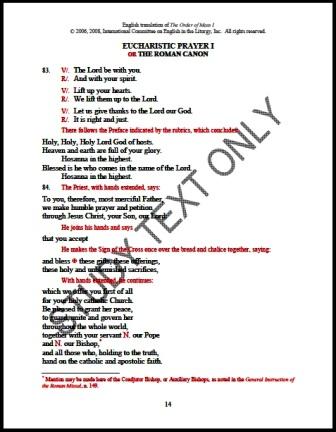 The other day my good friend Fr. Ray Blake of Brighton posted an entry on his blog St. Mary Magdalen about ad experimentum use of the new ICEL translation for Holy Mass.
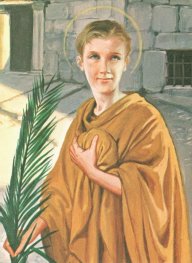 A while back I called for those groups who do training for priests and seminarians for the older forms of the Roman Rite, the Extraordinary Use, also to provide more training for lay people who will be called upon to serve those liturgies.


 Fr. John Zuhlsdorf on Daily Rome Shot 1117 – A *POLL* about 2026-27: “Sorry… my bad. It is indeed SIX. 1. Rh8+! Kxh8 2. Qh2+ Kg8 3. Qh7+ Kf8 4. Qh8+ Ke7 5.…”




























